Friday, May 01, 2026

Answers to yesterday's Bee

Jump to answers for


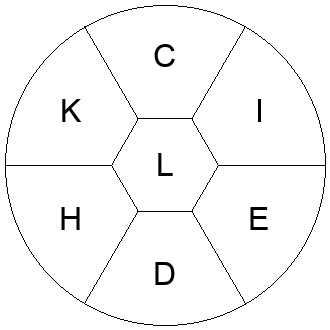
The official answers for today's puzzle are:

Click on the arrow to show the definition.
Click outside the pop-up to close it.


Number of Pangrams: 1

Maximum Puzzle Score: 212

Number of Answers: 49

Points Needed for Genius: 148

Genius requires between 22 and 42 words. You need at least a 7-letter word to reach genius. If you don't get the pangram, you need 76% of the total points to reach genius. If you get the pangram, you only need 67% of the remaining points to reach genius.

Other days with this pangram:

The button below will reveal a chart with the number of words by each letter. Red bars indicate that there is a pangram(s) starting with that letter.


How does this puzzle compare to other puzzles?

Today's score of 212 was in the 68th percentile of all puzzles.
The last time there was a score this high was on April 28, 2026.
The highest score ever was 537 on January 22, 2021.
The lowest score ever was 47 on March 27, 2023.

This puzzle's 49 possible answers rank it in the 73rd percentile of all puzzles.
The last time there were more answers than this was on April 26, 2026.
The highest number of answers was 81 on June 08, 2019.
The lowest number of answers was 16 on March 27, 2023.

It takes a 7-letter word for genius.
The last time this happened was on April 29, 2026.

Today's puzzle has an average word length of 5.3.
For all Bees, the average word length has been 5.3.


Haven't I seen these letters before?

Hover over a letter to see its first and most recent appearance in the Bee!


Haven't I seen these words before?

The most common words in the Bee are:

  • noon 239
  • loll 218
  • toot 214
  • nana 198
  • naan 198
  • nene 157
  • tilt 155
  • till 155
  • lilt 155
  • mamma 151
  • mama 151
  • tint 149
  • onion 145
  • toon 144
  • onto 144
  • acai 141
  • acacia 141
  • anal 134
  • anon 133
  • olio 129
  • papa 125
  • baba 125
  • tact 124
  • lulu 124
  • lull 124
  • dodo 124
  • poop 120
  • booboo 120
  • boob 120
  • moon 118
  • mono 118
  • mitt 118
  • cocci 117
  • loon 116
  • calla 116
  • call 116
  • tartar 115
  • tart 115
  • ratatat 115
  • tattoo 114
  • attar 114
  • tutu 113
  • ally 113
  • allay 113
  • momma 111
  • ammo 111
  • tatty 110
  • aria 110
  • meme 109
  • roar 108


How long are words in the Bee?

There have been 117,138 answers ever accepted in the Bee - with 10,974 unique words.
Below are the distributions of the lengths of these words.


Valid dictionary words not in today's official answers

You may be wondering why these words aren't here*:

  • ceil
  • ceiled
  • ceili
  • ceilidh
  • chiel
  • chield
  • childe
  • chile
  • chilli
  • cilice
  • cleek
  • cleeked
  • decile
  • deckel
  • deil
  • dele
  • deled
  • diel
  • dilled
  • echelle
  • edile
  • eellike
  • elhi
  • heddle
  • heil
  • heiled
  • helled
  • hili
  • icelike
  • icicled
  • keckle
  • keckled
  • kidlike
  • killdee
  • killick
  • killie
  • klick
  • klik
  • leched
  • leechlike
  • leke
  • lekked
  • lich
  • lichee
  • lichi
  • lilied

*Because the New York Times considers them obscure or offensive.

cell

Etymology 1

noun
  1. A single-room dwelling for a hermit.
  2. A small monastery or nunnery dependent on a larger religious establishment.
  3. A small room in a monastery or nunnery accommodating one person.
  4. A room in a prison or jail for one or more inmates.
  5. Each of the small hexagonal compartments in a honeycomb.
  6. Any of various chambers in a tissue or organism having specific functions.
  7. The discal cell of the wing of a lepidopteran insect.
  8. Specifically, any of the supposed compartments of the brain, formerly thought to be the source of specific mental capacities, knowledge, or memories.
  9. A section or compartment of a larger structure.
  10. Any small dwelling; a remote nook, a den.
  11. A device which stores electrical power; used either singly or together in batteries; the basic unit of a battery.
  12. The basic unit of a living organism, consisting of a quantity of protoplasm surrounded by a cell membrane, which is able to synthesize proteins and replicate itself.
  13. A small thunderstorm, caused by convection, that forms ahead of a storm front.
  14. The minimal unit of a cellular automaton that can change state and has an associated behavior.
  15. In FreeCell-type games, a space where one card can be placed.
  16. A small group of people forming part of a larger organization, often an outlawed one.
  17. (communication) A short, fixed-length packet as in asynchronous transfer mode.
  18. (communication) A region of radio reception that is a part of a larger radio network.
  19. A three-dimensional facet of a polytope.
  20. The unit in a statistical array (a spreadsheet, for example) where a row and a column intersect.
  21. The space between the ribs of a vaulted roof.
  22. A cella.
  23. An area of an insect wing bounded by veins
verb
  1. To place or enclose in a cell.

Etymology 2

noun
  1. A cellular phone.

celled

No Definition Found.

celli

No Definition Found.

chicle

noun
  1. The milky latex of the sapodilla tree, used after coagulation as the principal ingredient of chewing gum

child

Etymology 1

noun
  1. A person who has not yet reached adulthood, whether natural (puberty), cultural (initiation), or legal (majority)
  2. (specifically) A female child, a girl.
  3. (with possessive) One's direct descendant by birth, regardless of age; a son or daughter.
  4. The thirteenth Lenormand card.
  5. A figurative offspring, particularly:
noun
  1. A child of noble birth.
  2. The cognomen given to the oldest son prior to his taking his father's title.

Etymology 2

verb
  1. To give birth; to beget or procreate.

childlike

adjective
  1. Innocent and trustful; credulous; artless.
  2. Of, like, or suitable for a child.

chili

Etymology 1

noun
  1. The pungent, spicy fresh or dried fruit of any of several cultivated varieties of capsicum peppers, used in cooking.
  2. Powdered chili pepper, used as a spice or flavouring in cooking.
  3. (Indian Chinese cuisine) a spicy stew of chicken or paneer, capsicum and onion, eaten as an appetizer.

Etymology 2

noun
  1. A dish made with chili peppers and other ingredients, such as beans and beef.
  2. (Cincinnati) Cincinnati chili.

chill

noun
  1. A moderate, but uncomfortable and penetrating coldness.
  2. A sudden penetrating sense of cold, especially one that causes a brief trembling nerve response through the body; the trembling response itself; often associated with illness: fevers and chills, or susceptibility to illness.
  3. An uncomfortable and numbing sense of fear, dread, anxiety, or alarm, often one that is sudden and usually accompanied by a trembling nerve response resembling the body's response to biting cold.
  4. An iron mould or portion of a mould, serving to cool rapidly, and so to harden, the surface of molten iron brought in contact with it.
  5. The hardened part of a casting, such as the tread of a carriage wheel.
  6. A lack of warmth and cordiality; unfriendliness.
  7. Calmness; equanimity.
  8. A sense of style; trendiness; savoir faire.
verb
  1. To lower the temperature of something; to cool
  2. To become cold
  3. To harden a metal surface by sudden cooling
  4. To become hard by rapid cooling
  5. To relax, lie back
  6. To "hang", hang out; to spend time with another person or group. Also chill out.
  7. To smoke marijuana
  8. To discourage, depress
adjective
  1. Moderately cold or chilly.
  2. Unwelcoming; not cordial.
  3. Calm, relaxed, easygoing.
  4. "Cool"; meeting a certain hip standard or garnering the approval of a certain peer group.
  5. Okay, not a problem.

chilled

verb
  1. To lower the temperature of something; to cool
  2. To become cold
  3. To harden a metal surface by sudden cooling
  4. To become hard by rapid cooling
  5. To relax, lie back
  6. To "hang", hang out; to spend time with another person or group. Also chill out.
  7. To smoke marijuana
  8. To discourage, depress
adjective
  1. Cooled.

cichlid

noun
  1. Any of many tropical fish, of the family Cichlidae, popular as aquarium fish.

cliche

noun
  1. Something, most often a phrase or expression, that is overused or used outside its original context, so that its original impact and meaning are lost. A trite saying; a platitude.
  2. A stereotype (printing plate).
verb
  1. To use a cliché; to make up a word or a name that sounds like a cliché.

cliched

verb
  1. To use a cliché; to make up a word or a name that sounds like a cliché.
adjective
  1. Repeated so often that it has become stale or commonplace; hackneyed.

click

Etymology 1

noun
  1. A brief, sharp, not particularly loud, relatively high-pitched sound produced by the impact of something small and hard against something hard, such as by the operation of a switch, a lock or a latch, or a finger pressed against the thumb and then released to strike the hand.
  2. An ingressive sound made by coarticulating a velar or uvular closure with another closure.
  3. Sound made by a dolphin.
  4. The act of operating a switch, etc., so that it clicks.
  5. The act of pressing a button on a computer mouse, both as a physical act and a reaction in the software.
  6. A pawl or similar catch.
verb
  1. To cause to make a click; to operate (a switch, etc) so that it makes a click.
  2. To press and release (a button on a computer mouse).
  3. To select a software item using, usually, but not always, the pressing of a mouse button.
  4. To visit a web site.
  5. To navigate by clicking a mouse button.
  6. To emit a click.
  7. To make sense suddenly.
  8. To get on well.
  9. To tick.
  10. To take (a photograph) with a camera.
interjection
  1. The sound of a click.

Etymology 2

noun
  1. A brief, sharp, not particularly loud, relatively high-pitched sound produced by the impact of something small and hard against something hard, such as by the operation of a switch, a lock or a latch, or a finger pressed against the thumb and then released to strike the hand.
  2. An ingressive sound made by coarticulating a velar or uvular closure with another closure.
  3. Sound made by a dolphin.
  4. The act of operating a switch, etc., so that it clicks.
  5. The act of pressing a button on a computer mouse, both as a physical act and a reaction in the software.
  6. A pawl or similar catch.
noun
  1. A detent, pawl, or ratchet, such as that which catches the cogs of a ratchet wheel to prevent backward motion.
  2. The latch of a door.
noun
  1. A kilometer.
  2. (usually in the plural) Kilometres per hour.

Etymology 3

noun
  1. A detent, pawl, or ratchet, such as that which catches the cogs of a ratchet wheel to prevent backward motion.
  2. The latch of a door.

Etymology 4

verb
  1. To snatch.

clicked

verb
  1. To cause to make a click; to operate (a switch, etc) so that it makes a click.
  2. To press and release (a button on a computer mouse).
  3. To select a software item using, usually, but not always, the pressing of a mouse button.
  4. To visit a web site.
  5. To navigate by clicking a mouse button.
  6. To emit a click.
  7. To make sense suddenly.
  8. To get on well.
  9. To tick.
  10. To take (a photograph) with a camera.
verb
  1. To snatch.

deckle

noun
  1. (paper-making) A frame or edge which limits the pulp and, consequently, the size of the resulting paper.
  2. A membrane covering the outermost side of a brisket of beef, where it was attached to the rib cage
  3. (Jewish cuisine) The fattier, smaller point-cut portion of a brisket of beef, being the superficial pectoral muscle.

deli

noun
  1. A shop that sells cooked or prepared food ready for serving.
  2. Food sold at a delicatessen.

dell

Etymology 1

noun
  1. A valley, especially in the form of a natural hollow, small and deep.

Etymology 2

noun
  1. A young woman; a wench.

diddle

noun
  1. In percussion, two consecutive notes played by the same hand (either RR or LL), similar to the drag, except that by convention diddles are played the same speed as the context in which they are placed.
  2. The penis.
verb
  1. To cheat; to swindle.
  2. To have sex with.
  3. To masturbate (especially of women).
  4. To waste time.
  5. To totter, like a child learning to walk; to daddle.
  6. To manipulate a value at the level of individual bits (binary digits).
interjection
  1. A meaningless word used when singing a tune or indicating a rhythm.

diddled

verb
  1. To cheat; to swindle.
  2. To have sex with.
  3. To masturbate (especially of women).
  4. To waste time.
  5. To totter, like a child learning to walk; to daddle.
  6. To manipulate a value at the level of individual bits (binary digits).

dill

Etymology 1

noun
  1. Anethum graveolens (the type species of the genus Anethum), a herb, the seeds of which are moderately warming, pungent, and aromatic, formerly used as a soothing medicine for children; also known as dillseed.
  2. A cucumber pickled with dill flavoring
  3. A fool.
verb
  1. To cook or flavor with dill

Etymology 2

verb
  1. To still; to assuage; to calm; to soothe, as one in pain.

elide

verb
  1. To leave out or omit (something).
  2. To cut off, as a vowel or a syllable.
  3. To conflate; to smear together; to blur the distinction between.

elided

verb
  1. To leave out or omit (something).
  2. To cut off, as a vowel or a syllable.
  3. To conflate; to smear together; to blur the distinction between.

heckle

noun
  1. An instrument with steel pins used to comb out flax or hemp.
  2. (usually now in the plural) One of the long, narrow feathers on the neck of birds, most noticeable on the rooster.
  3. A feather used to make a fishing lure or a fishing lure incorporating a feather.
  4. (usually now in the plural) By extension (because the hackles of a rooster are lifted when it is angry), the hair on the nape of the neck in dogs and other animals; also used figuratively for humans.
  5. A plate with rows of pointed needles used to blend or straighten hair.
  6. A feather plume on some soldier's uniforms, especially the hat or helmet.
  7. Any flimsy substance unspun, such as raw silk.
noun
  1. The long shining feathers on a cock's neck.
  2. A feather ornament in the full-dress bonnets of Highland regiments.
verb
  1. To question harshly in an attempt to find or reveal weaknesses.
  2. To insult, tease, make fun of or badger.
  3. To prepare flax for spinning using special combs called hackles

heckled

verb
  1. To question harshly in an attempt to find or reveal weaknesses.
  2. To insult, tease, make fun of or badger.
  3. To prepare flax for spinning using special combs called hackles

heel

Etymology 1

noun
  1. The rear part of the foot, where it joins the leg.
  2. The part of a shoe's sole which supports the foot's heel.
  3. The rear part of a sock or similar covering for the foot.
  4. The part of the palm of a hand closest to the wrist.
  5. (usually in the plural) A woman's high-heeled shoe.
  6. The back, upper part of the stock.
  7. The last or lowest part of anything.
  8. A crust end-piece of a loaf of bread.
  9. The base of a bun sliced in half lengthwise.
  10. A contemptible, inconsiderate or thoughtless person.
  11. A headlining wrestler regarded as a "bad guy," whose ring persona embodies villainous or reprehensible traits and demonstrates characteristics of a braggart and a bully.
  12. The cards set aside for later use in a patience or solitaire game.
  13. Anything resembling a human heel in shape; a protuberance; a knob.
  14. The lower end of a timber in a frame, as a post or rafter.
  15. (specifically) The obtuse angle of the lower end of a rafter set sloping.
  16. (workman slang) A cyma reversa.
  17. The short side of an angled cut.
  18. The part of a club head's face nearest the shaft.
  19. The lower end of the bit (cutting edge) of an axehead; as opposed to the toe (upper end).
  20. In a carding machine, the part of a flat nearest the cylinder.
verb
  1. To follow at somebody's heels; to chase closely.
  2. To add a heel to, or increase the size of the heel of (a shoe or boot).
  3. To kick with the heel.
  4. To perform by the use of the heels, as in dancing, running, etc.
  5. To arm with a gaff, as a cock for fighting.
  6. To hit (the ball) with the heel of the club.
  7. To make (a fair catch) standing with one foot forward, the heel on the ground and the toe up.

Etymology 2

noun
  1. The act of inclining or canting from a vertical position; a cant.
verb
  1. To incline to one side; to tilt.

Etymology 3

verb
  1. To make better from a disease, wound, etc.; to revive or cure.
  2. To become better or healthy again.
  3. To reconcile, as a breach or difference; to make whole; to free from guilt.
verb
  1. To hide, conceal, and keep secret, especially for a secret society (such as the masons).
  2. (now especially in the phrase "hele in") To cover or conceal (a seedling, plant, roots, etc).

heeled

verb
  1. To make better from a disease, wound, etc.; to revive or cure.
  2. To become better or healthy again.
  3. To reconcile, as a breach or difference; to make whole; to free from guilt.
verb
  1. To follow at somebody's heels; to chase closely.
  2. To add a heel to, or increase the size of the heel of (a shoe or boot).
  3. To kick with the heel.
  4. To perform by the use of the heels, as in dancing, running, etc.
  5. To arm with a gaff, as a cock for fighting.
  6. To hit (the ball) with the heel of the club.
  7. To make (a fair catch) standing with one foot forward, the heel on the ground and the toe up.
verb
  1. To incline to one side; to tilt.
adjective
  1. Having a heel (often of a specified type, as in high-heeled etc.).
  2. Prepared, especially armed with a weapon.
  3. Wealthy; having enough money.
verb
  1. To hide, conceal, and keep secret, especially for a secret society (such as the masons).
  2. (now especially in the phrase "hele in") To cover or conceal (a seedling, plant, roots, etc).

held

verb
  1. To grasp or grip.
  2. To contain or store.
  3. (heading) To maintain or keep to a position or state.
  4. (heading) To maintain or keep to particular opinions, promises, actions.
  5. To win one's own service game.
  6. To take place, to occur.
  7. To organise an event or meeting (usually in passive voice).
  8. To derive right or title.
  9. In a food or drink order at an informal restaurant etc., requesting that a component normally included in that order be omitted.
  10. To be in possession of illicit drugs for sale.

hell

No Definition Found.

hill

noun
  1. An elevated location smaller than a mountain.
  2. A sloping road.
  3. A heap of earth surrounding a plant.
  4. A single cluster or group of plants growing close together, and having the earth heaped up about them.
  5. The pitcher’s mound.
verb
  1. To form into a heap or mound.
  2. To heap or draw earth around plants.

hilled

verb
  1. To form into a heap or mound.
  2. To heap or draw earth around plants.
adjective
  1. Having hills.
  2. (in combination) Having particular kind or number of hills.

icicle

noun
  1. A drooping, tapering shape of ice.

idle

noun
  1. An idle animation.
  2. An idle game.
verb
  1. To spend in idleness; to waste; to consume.
  2. To lose or spend time doing nothing, or without being employed in business.
  3. Of an engine: to run at a slow speed, or out of gear; to tick over.
adjective
  1. Empty, vacant.
  2. Not being used appropriately; not occupied; (of time) with no, no important, or not much activity.
  3. Not engaged in any occupation or employment; unemployed; inactive; doing nothing in particular.
  4. Averse to work, labor or employment; lazy; slothful.
  5. Of no importance; useless; worthless; vain; trifling; thoughtless; silly.
  6. Light-headed; foolish.

idled

verb
  1. To spend in idleness; to waste; to consume.
  2. To lose or spend time doing nothing, or without being employed in business.
  3. Of an engine: to run at a slow speed, or out of gear; to tick over.

keel

Etymology 1

noun
  1. Red chalk; ruddle.
verb
  1. To mark with ruddle.

Etymology 2

verb
  1. To put to death; to extinguish the life of.
  2. To render inoperative.
  3. To stop, cease or render void; to terminate.
  4. To amaze, exceed, stun or otherwise incapacitate.
  5. To cause great pain, discomfort or distress to.
  6. To produce feelings of dissatisfaction or revulsion in.
  7. To use up or to waste.
  8. To exert an overwhelming effect on.
  9. To overpower, overwhelm or defeat.
  10. To force a company out of business.
  11. To produce intense pain.
  12. To punish severely.
  13. To strike (a ball, etc.) with such force and placement as to make a shot that is impossible to defend against, usually winning a point.
  14. To cause (a ball, etc.) to be out of play, resulting in a stoppage of gameplay.
  15. To succeed with an audience, especially in comedy.
  16. To cause to assume the value zero.
  17. (IRC) To disconnect (a user) involuntarily from the network.
  18. To deadmelt.

keeled

verb
  1. To mark with ruddle.
adjective
  1. Furnished with a keel, especially a keel of a specified type
verb
  1. To put to death; to extinguish the life of.
  2. To render inoperative.
  3. To stop, cease or render void; to terminate.
  4. To amaze, exceed, stun or otherwise incapacitate.
  5. To cause great pain, discomfort or distress to.
  6. To produce feelings of dissatisfaction or revulsion in.
  7. To use up or to waste.
  8. To exert an overwhelming effect on.
  9. To overpower, overwhelm or defeat.
  10. To force a company out of business.
  11. To produce intense pain.
  12. To punish severely.
  13. To strike (a ball, etc.) with such force and placement as to make a shot that is impossible to defend against, usually winning a point.
  14. To cause (a ball, etc.) to be out of play, resulting in a stoppage of gameplay.
  15. To succeed with an audience, especially in comedy.
  16. To cause to assume the value zero.
  17. (IRC) To disconnect (a user) involuntarily from the network.
  18. To deadmelt.

kill

Etymology 1

noun
  1. The act of killing.
  2. Specifically, the death blow.
  3. The result of killing; that which has been killed.
  4. The grounding of the ball on the opponent's court, winning the rally.
verb
  1. To put to death; to extinguish the life of.
  2. To render inoperative.
  3. To stop, cease or render void; to terminate.
  4. To amaze, exceed, stun or otherwise incapacitate.
  5. To cause great pain, discomfort or distress to.
  6. To produce feelings of dissatisfaction or revulsion in.
  7. To use up or to waste.
  8. To exert an overwhelming effect on.
  9. To overpower, overwhelm or defeat.
  10. To force a company out of business.
  11. To produce intense pain.
  12. To punish severely.
  13. To strike (a ball, etc.) with such force and placement as to make a shot that is impossible to defend against, usually winning a point.
  14. To cause (a ball, etc.) to be out of play, resulting in a stoppage of gameplay.
  15. To succeed with an audience, especially in comedy.
  16. To cause to assume the value zero.
  17. (IRC) To disconnect (a user) involuntarily from the network.
  18. To deadmelt.

Etymology 2

noun
  1. (north-east US) A creek; a body of water; a channel or arm of the sea.

Etymology 3

noun
  1. A kiln.

killed

verb
  1. To put to death; to extinguish the life of.
  2. To render inoperative.
  3. To stop, cease or render void; to terminate.
  4. To amaze, exceed, stun or otherwise incapacitate.
  5. To cause great pain, discomfort or distress to.
  6. To produce feelings of dissatisfaction or revulsion in.
  7. To use up or to waste.
  8. To exert an overwhelming effect on.
  9. To overpower, overwhelm or defeat.
  10. To force a company out of business.
  11. To produce intense pain.
  12. To punish severely.
  13. To strike (a ball, etc.) with such force and placement as to make a shot that is impossible to defend against, usually winning a point.
  14. To cause (a ball, etc.) to be out of play, resulting in a stoppage of gameplay.
  15. To succeed with an audience, especially in comedy.
  16. To cause to assume the value zero.
  17. (IRC) To disconnect (a user) involuntarily from the network.
  18. To deadmelt.
adjective
  1. (of steel) deoxidized

lech

Etymology 1

noun
  1. A strong, lecherous desire or craving.
  2. A lecher.
verb
  1. To behave lecherously

Etymology 2

noun
  1. The capstone of a cromlech.

lede

Etymology 1

noun
  1. (singular) A man; person.
  2. (collective plural) Men; people, folk.
  3. (singular) A people or nation.
  4. (plural) Tenements; holdings; possessions.

Etymology 2

noun
  1. (chiefly US) The introductory paragraph(s) of a newspaper or other news article.

leech

Etymology 1

noun
  1. An aquatic blood-sucking annelid of class Hirudinea, especially Hirudo medicinalis.
  2. A person who derives profit from others in a parasitic fashion.
  3. A glass tube designed for drawing blood from damaged tissue by means of a vacuum.
verb
  1. To apply a leech medicinally, so that it sucks blood from the patient.
  2. To drain (resources) without giving back.

Etymology 2

noun
  1. A physician.
  2. (Heathenry) A healer.

Etymology 3

verb
  1. To treat, cure or heal.

Etymology 4

noun
  1. The vertical edge of a square sail.
  2. The aft edge of a triangular sail.

leeched

verb
  1. To apply a leech medicinally, so that it sucks blood from the patient.
  2. To drain (resources) without giving back.
verb
  1. To treat, cure or heal.

leek

noun
  1. The vegetable Allium ampeloprasum var. porrum, having edible leaves and an onion-like bulb but with a milder flavour than the onion.
  2. Any of several species of Allium, broadly resembling the domesticated plant in appearance in the wild.

lice

noun
  1. A small parasitic wingless insect of the order Psocodea.
  2. (not usually used in plural form) A contemptible person; one who is deceitful or causes harm.

lick

noun
  1. The act of licking; a stroke of the tongue.
  2. The amount of some substance obtainable with a single lick.
  3. A quick and careless application of anything, as if by a stroke of the tongue.
  4. A place where animals lick minerals from the ground.
  5. A small watercourse or ephemeral stream. It ranks between a rill and a stream.
  6. A stroke or blow.
  7. A small amount; a whit.
  8. An attempt at something.
  9. A short motif.
  10. A rate of speed. (Always qualified by good, fair, or a similar adjective.)
  11. An act of cunnilingus.
verb
  1. To stroke with the tongue.
  2. To lap; to take in with the tongue.
  3. To beat with repeated blows.
  4. To defeat decisively, particularly in a fight.
  5. To overcome.
  6. To perform cunnilingus.
  7. To do anything partially.
  8. (of flame, waves etc.) To lap.

licked

verb
  1. To stroke with the tongue.
  2. To lap; to take in with the tongue.
  3. To beat with repeated blows.
  4. To defeat decisively, particularly in a fight.
  5. To overcome.
  6. To perform cunnilingus.
  7. To do anything partially.
  8. (of flame, waves etc.) To lap.

lidded

No Definition Found.

lied

Etymology 1

noun
  1. An art song, sung in German and accompanied on the piano.

Etymology 2

verb
  1. To give false information intentionally with intent to deceive.
  2. To convey a false image or impression.
  3. To be mistaken or unintentionally spread false information.

like

Etymology 1

noun
  1. (usually in the plural) Something that a person likes (prefers).
  2. An individual vote showing support for, or approval of, something posted on the Internet.
verb
  1. To enjoy, be pleased by; favor; be in favor of.
  2. To please.
  3. To derive pleasure of, by or with someone or something.
  4. To prefer and maintain (an action) as a regular habit or activity.
  5. To have an appearance or expression; to look; to seem to be (in a specified condition).
  6. To come near; to avoid with difficulty; to escape narrowly.
  7. To find attractive; to prefer the company of; to have mild romantic feelings for.
  8. To liken; to compare.
  9. To show support for, or approval of, something posted on the Internet by marking it with a vote.
  10. (with 'would' and in certain other phrases) To want, desire. See also would like.

Etymology 2

noun
  1. (sometimes as the likes of') Someone similar to a given person, or something similar to a given object; a comparative; a type; a sort.
  2. The stroke that equalizes the number of strokes played by the opposing player or side.
adjective
  1. Similar.
  2. Likely; probable.
adverb
  1. Likely.
  2. In a like or similar manner.
preposition
  1. Similar to, reminiscent of.
  2. Typical of
  3. Approximating
  4. In the manner of, similarly to.
  5. Such as
  6. As if there would be.
conjunction
  1. As, the way.
  2. As if; as though.
interjection
  1. Used to place emphasis upon a statement.

Etymology 3

verb
  1. To be likely.

liked

verb
  1. To enjoy, be pleased by; favor; be in favor of.
  2. To please.
  3. To derive pleasure of, by or with someone or something.
  4. To prefer and maintain (an action) as a regular habit or activity.
  5. To have an appearance or expression; to look; to seem to be (in a specified condition).
  6. To come near; to avoid with difficulty; to escape narrowly.
  7. To find attractive; to prefer the company of; to have mild romantic feelings for.
  8. To liken; to compare.
  9. To show support for, or approval of, something posted on the Internet by marking it with a vote.
  10. (with 'would' and in certain other phrases) To want, desire. See also would like.
verb
  1. To be likely.