Sunday, May 03, 2026

Answers to yesterday's Bee

Jump to answers for


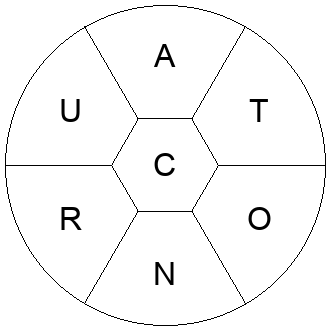
The official answers for today's puzzle are:

Click on the arrow to show the definition.
Click outside the pop-up to close it.


Number of Pangrams: 1

Maximum Puzzle Score: 383

Number of Answers: 69

Points Needed for Genius: 268

Genius requires between 37 and 56 words. You need at least a 7-letter word to reach genius. If you don't get the pangram, you need 73% of the total points to reach genius. If you get the pangram, you only need 69% of the remaining points to reach genius.

Other days with this pangram:

The button below will reveal a chart with the number of words by each letter. Red bars indicate that there is a pangram(s) starting with that letter.


How does this puzzle compare to other puzzles?

Today's score of 383 was in the 99th percentile of all puzzles.
The last time there was a score this high was on March 08, 2026.
The highest score ever was 537 on January 22, 2021.
The lowest score ever was 47 on March 27, 2023.

This puzzle's 69 possible answers rank it in the 98th percentile of all puzzles.
The last time there were more answers than this was on March 22, 2026.
The highest number of answers was 81 on June 08, 2019.
The lowest number of answers was 16 on March 27, 2023.

It takes a 7-letter word for genius.
The last time this happened was on May 02, 2026.

Today's puzzle has an average word length of 6.0.
For all Bees, the average word length has been 5.3.


Haven't I seen these letters before?

Hover over a letter to see its first and most recent appearance in the Bee!


Haven't I seen these words before?

The most common words in the Bee are:

  • noon 239
  • loll 218
  • toot 214
  • nana 198
  • naan 198
  • nene 157
  • tilt 155
  • till 155
  • lilt 155
  • mamma 151
  • mama 151
  • tint 149
  • onion 145
  • toon 144
  • onto 144
  • acai 141
  • acacia 141
  • anal 134
  • anon 133
  • olio 129
  • tact 125
  • papa 125
  • baba 125
  • lulu 124
  • lull 124
  • dodo 124
  • poop 120
  • booboo 120
  • boob 120
  • moon 118
  • mono 118
  • mitt 118
  • cocci 117
  • loon 116
  • calla 116
  • call 116
  • tartar 115
  • tart 115
  • ratatat 115
  • tattoo 114
  • attar 114
  • tutu 113
  • ally 113
  • allay 113
  • momma 111
  • ammo 111
  • tatty 110
  • aria 110
  • meme 109
  • roar 108


How long are words in the Bee?

There have been 117,273 answers ever accepted in the Bee - with 10,977 unique words.
Below are the distributions of the lengths of these words.


Valid dictionary words not in today's official answers

You may be wondering why these words aren't here*:

  • acro
  • acta
  • ancon
  • caca
  • canto
  • caracara
  • carn
  • carr
  • coact
  • coactor
  • coco
  • cocoanut
  • cocurator
  • concoctor
  • conn
  • connor
  • contactor
  • conto
  • contra
  • coocoo
  • coon
  • cooncan
  • coranto
  • cornu
  • cornua
  • cornuto
  • cotan
  • cotta
  • cottar
  • courant
  • couranto
  • craton
  • croton
  • cruor
  • crura
  • cuatro
  • cunctator
  • cunt
  • curacoa
  • curara
  • curn
  • curr
  • curran
  • curtana
  • nocturn
  • nonactor
  • nonconcur
  • noncontact
  • noncontract
  • noncount
  • octan
  • octoroon
  • outact
  • outcount
  • racon
  • racoon
  • rancour
  • tacan
  • taroc
  • toco
  • torc
  • touraco
  • trocar
  • turaco
  • turacou
  • unco

*Because the New York Times considers them obscure or offensive.

account

Etymology 1

noun
  1. A registry of pecuniary transactions; a written or printed statement of business dealings or debts and credits, and also of other things subjected to a reckoning or review.
  2. A sum of money deposited at a bank and subject to withdrawal.
  3. A statement in general of reasons, causes, grounds, etc., explanatory of some event; a reason of an action to be done.
  4. A reason, grounds, consideration, motive; a person's sake.
  5. A business relationship involving the exchange of money and credit.
  6. A record of events; recital of transactions; a relation or narrative; a report; a description.
  7. An estimate or estimation; valuation; judgment.
  8. Importance; worth; value; esteem; judgement.
  9. An authorization to use a service.
  10. A reckoning; computation; calculation; enumeration; a record of some reckoning.
  11. Profit; advantage.

Etymology 2

verb
  1. To provide explanation.
  2. To count.

accountant

Etymology 1

noun
  1. One who renders account; one accountable.
  2. A reckoner, or someone who maintains financial matters for a person(s).
  3. One who is skilled in, keeps, or adjusts, accounts; an officer in a public office, who has charge of the accounts.
  4. One whose profession includes organizing, maintaining and auditing the records of another. The records are usually, but not always, financial records.

Etymology 2

adjective
  1. Accountable.

acorn

noun
  1. The fruit of the oak, being an oval nut growing in a woody cup or cupule.
  2. A cone-shaped piece of wood on the point of the spindle above the vane, on the mast-head.
  3. See acorn-shell.
  4. (usually in the plural) A testicle.

actor

noun
  1. A person who performs, plays a part in a theatrical play or film.
  2. One who acts; a doer.
  3. One who takes part in a situation.
  4. An advocate or proctor in civil courts or causes.
  5. One who institutes a suit; plaintiff or complainant.
  6. (policy debate) One who enacts a certain policy action.
  7. The entity that performs a role (in use case analysis).
  8. (grammar) The most agent-like argument of a clause, e.g. 'the torpedo' in "The torpedo sank the boat" and "The torpedo fired".

actuator

noun
  1. Something that actuates something else, especially a usually electric device that causes a mechanical device (i.e. a mechanism) to be switched on or off, for example an electric motor that opens and closes a valve
  2. The mechanism that moves the head assembly on a disk drive
  3. A relay that controls the flow of electricity

arcana

noun
  1. Specialized knowledge that is mysterious to the uninitiated.
noun
  1. A mystery or deep secret.
  2. An elixir or secret remedy.

arco

adverb
  1. A note in string instrument musical notation indicating that the bow is to be used in the usual way, usually following a passage that is played pizzicato.

attract

verb
  1. To pull toward without touching.
  2. To arouse interest.
  3. To draw by moral, emotional or sexual influence; to engage or fix, as the mind, attention, etc.; to invite or allure.

attractant

noun
  1. Anything that attracts, but especially a substance (such as a pheromone) that attracts insects or other animals.

attractor

No Definition Found.

autocrat

noun
  1. An absolute ruler with infinite power.
  2. A title borne by some such monarchs, as in Byzantium and tsarist Russia.

cacao

noun
  1. A tree, Theobroma cacao, whose seed is used to make chocolate.
  2. This tree's seed, the cocoa bean.

cancan

noun
  1. A high-kicking chorus line dance originating in France.
  2. (motocross) A trick where one leg is brought over the seat, so that both legs are on one side.
verb
  1. To dance the cancan.

canna

Etymology 1

noun
  1. Any member of the genus Canna of tropical plants with large leaves and often showy flowers.

Etymology 2

noun
  1. A measure of length in Italy, varying from six to seven feet.

cannon

noun
  1. A complete assembly, consisting of an artillery tube and a breech mechanism, firing mechanism or base cap, which is a component of a gun, howitzer or mortar. It may include muzzle appendages.
  2. Any similar device for shooting material out of a tube.
  3. A bone of a horse's leg, between the fetlock joint and the knee or hock.
  4. A cannon bit.
  5. A large muzzle-loading artillery piece.
  6. A carom.
  7. The arm of a player that can throw well.
  8. A hollow cylindrical piece carried by a revolving shaft, on which it may, however, revolve independently.
  9. (Chinese chess) A piece which moves horizontally and vertically like a rook but captures another piece by jumping over a different piece in the line of attack.
verb
  1. To bombard with cannons.
  2. To play the carom billiard shot. To strike two balls with the cue ball
  3. To fire something, especially spherical, rapidly.
  4. To collide or strike violently, especially so as to glance off or rebound.
noun
  1. A generally accepted principle; a rule.
  2. A group of literary works that are generally accepted as representing a field.
  3. The works of a writer that have been accepted as authentic.
  4. A eucharistic prayer, particularly the Roman Canon.
  5. A religious law or body of law decreed by the church.
  6. A catalogue of saints acknowledged and canonized in the Roman Catholic Church.
  7. In monasteries, a book containing the rules of a religious order.
  8. A member of a cathedral chapter; one who possesses a prebend in a cathedral or collegiate church.
  9. A piece of music in which the same melody is played by different voices, but beginning at different times; a round.
  10. (Roman law) A rent or stipend payable at some regular time, generally annual, e.g., canon frumentarius
  11. Those sources, especially including literary works, which are considered part of the main continuity regarding a given fictional universe.
  12. A rolled and filleted loin of meat; also called cannon.
  13. A large size of type formerly used for printing the church canons, standardized as 48-point.
  14. The part of a bell by which it is suspended; the ear or shank of a bell.
  15. A carom.
noun
  1. A clergy member serving a cathedral or collegiate church.
  2. A canon regular, a member of any of several Roman Catholic religious orders.
noun
  1. A Near Eastern and Caucasian musical instrument related to the zither, dulcimer, or harp having either 26 strings and a single bridge, or twice that number and two bridges.

cannot

noun
  1. Something that cannot be done.
verb
  1. Can not (be unable to).
  2. Be forbidden or not permitted to

canon

Etymology 1

noun
  1. A generally accepted principle; a rule.
  2. A group of literary works that are generally accepted as representing a field.
  3. The works of a writer that have been accepted as authentic.
  4. A eucharistic prayer, particularly the Roman Canon.
  5. A religious law or body of law decreed by the church.
  6. A catalogue of saints acknowledged and canonized in the Roman Catholic Church.
  7. In monasteries, a book containing the rules of a religious order.
  8. A member of a cathedral chapter; one who possesses a prebend in a cathedral or collegiate church.
  9. A piece of music in which the same melody is played by different voices, but beginning at different times; a round.
  10. (Roman law) A rent or stipend payable at some regular time, generally annual, e.g., canon frumentarius
  11. Those sources, especially including literary works, which are considered part of the main continuity regarding a given fictional universe.
  12. A rolled and filleted loin of meat; also called cannon.
  13. A large size of type formerly used for printing the church canons, standardized as 48-point.
  14. The part of a bell by which it is suspended; the ear or shank of a bell.
  15. A carom.

Etymology 2

noun
  1. A clergy member serving a cathedral or collegiate church.
  2. A canon regular, a member of any of several Roman Catholic religious orders.

Etymology 3

noun
  1. A Near Eastern and Caucasian musical instrument related to the zither, dulcimer, or harp having either 26 strings and a single bridge, or twice that number and two bridges.

cant

Etymology 1

noun
  1. An argot, the jargon of a particular class or subgroup.
  2. A private or secret language used by a religious sect, gang, or other group.
  3. A language spoken by some Irish Travellers; Shelta.
  4. Empty, hypocritical talk.
  5. Whining speech, such as that used by beggars.
  6. A blazon of a coat of arms that makes a pun upon the name (or, less often, some attribute or function) of the bearer, canting arms.
  7. A call for bidders at a public fair; an auction.
verb
  1. To speak with the jargon of a class or subgroup.
  2. To speak in set phrases.
  3. To preach in a singsong fashion, especially in a false or empty manner.
  4. Of a blazon, to make a pun that references the bearer of a coat of arms.
  5. To sell by auction, or bid at an auction.

Etymology 2

noun
  1. Side, edge, corner, niche.
  2. Slope, the angle at which something is set.
  3. A corner (of a building).
  4. An outer or external angle.
  5. An inclination from a horizontal or vertical line; a slope or bevel; a tilt.
  6. A movement or throw that overturns something.
  7. A sudden thrust, push, kick, or other impulse, producing a bias or change of direction; also, the bias or turn so given.
  8. (coopering) A segment forming a side piece in the head of a cask.
  9. A segment of the rim of a wooden cogwheel.
  10. A piece of wood laid upon the deck of a vessel to support the bulkheads.
verb
  1. To set (something) at an angle.
  2. To give a sudden turn or new direction to.
  3. To bevel an edge or corner.
  4. To overturn so that the contents are emptied.

Etymology 3

noun
  1. A parcel, a division.
verb
  1. To divide or parcel out.

Etymology 4

adjective
  1. Lively, lusty.

cantata

noun
  1. A vocal composition accompanied by instruments and generally containing more than one movement, typical of 17th and 18th century Italian music.

canton

Etymology 1

noun
  1. A division of a political unit.
  2. A small community or clan.
  3. A subdivision of a flag, the rectangular inset on the upper hoist (i.e., flagpole) side (e.g., the stars of the US national flag are in a canton).
  4. A division of a shield occupying one third of the chief, usually on the dexter side, formed by a perpendicular line from the top meeting a horizontal line from the side.
verb
  1. To delineate as a separate district.
  2. To divide into cantons.
  3. To allot quarters to troops.

Etymology 2

noun
  1. A song or canto.

cantor

noun
  1. Singer, especially someone who takes a special role of singing or song leading at a ceremony.
  2. A prayer leader in a Jewish service; a hazzan.

carat

noun
  1. A unit of weight for precious stones and pearls, equivalent to 200 milligrams.
  2. Any of several units of weight, varying from 189 to 212 mg, the weight of a carob seed.
  3. A measure of the purity of gold, pure gold being 24 carats.

carrot

noun
  1. A vegetable with a nutritious, juicy, sweet root that is often orange in colour, Daucus carota, especially the subspecies sativus in the family Apiaceae.
  2. A shade of orange similar to the flesh of most carrots (also called carrot orange).
  3. Any motivational tool.
verb
  1. To treat (an animal pelt) with a solution of mercuric nitrate as part of felt manufacture.

cart

Etymology 1

noun
  1. A small, open, wheeled vehicle, drawn or pushed by a person or animal, more often used for transporting goods than passengers.
  2. A small motor vehicle resembling a car; a go-cart.
  3. A shopping cart.
verb
  1. To carry goods.
  2. To carry or convey in a cart.
  3. To remove, especially involuntarily or for disposal.
  4. To expose in a cart by way of punishment.

Etymology 2

noun
  1. A tape cartridge used for pre-recorded material such as jingles and advertisements.
  2. A cartridge for a video game system.

carton

noun
  1. An inexpensive, disposable box-like container fashioned from either paper, paper with wax-covering (wax paper), or other lightweight material.
  2. A pack of cigarettes, usually ten, wrapped in cellophane or packed in a light cardboard box.
  3. A cardboard box that holds (usually 24) beer bottles or cans.
  4. A kind of thin pasteboard.
  5. A small disc within the bullseye of a target.
  6. A shot that strikes this disc.
verb
  1. To put in a carton.

cartoon

noun
  1. A humorous drawing, often with a caption, or a strip of such drawings.
  2. A drawing satirising current public figures.
  3. An artist's preliminary sketch.
  4. An animated piece of film which is often but not exclusively humorous.
  5. A diagram in a scientific concept.
verb
  1. To draw a cartoon, a humorous drawing.
  2. To make a preliminary sketch.

cataract

noun
  1. A waterspout
  2. A large waterfall; steep rapids in a river.
  3. A flood of water
  4. An overwhelming downpour or rush
  5. A clouding of the lens in the eye leading to a decrease in vision.

coat

noun
  1. An outer garment covering the upper torso and arms.Wp
  2. A covering of material, such as paint.Wp
  3. The fur or feathers covering an animal's skin.Wp
  4. Canvas painted with thick tar and secured round a mast or bowsprit to prevent water running down the sides into the hold (now made of rubber or leather).
  5. A petticoat.
  6. The habit or vesture of an order of men, indicating the order or office; cloth.
  7. A coat of arms.Wp
  8. A coat card.
verb
  1. To cover with a coating of some material.
  2. To cover like a coat.
  3. To clothe.

coca

Etymology 1

noun
  1. Any of the four cultivated plants which belong to the family Erythroxylaceae, native to western South America.
  2. The dried leaf of one of these plants, the South American shrub (Erythroxylum coca), widely cultivated in Andean countries, which is the source of cocaine.

Etymology 2

noun
  1. A pastry typically made and consumed in the Spanish Mediterranean coast.

cocoa

Etymology 1

noun
  1. The dried and partially fermented fatty seeds of the cacao tree from which chocolate is made.
  2. An unsweetened brown powder made from roasted, ground cocoa beans, used in making chocolate, and in cooking.
  3. A hot drink made with milk, cocoa powder, and sugar.
  4. A serving of this drink.
  5. A light to medium brown colour.
adjective
  1. Of a light to medium brown colour, like that of cocoa powder.

Etymology 2

noun
  1. Coconut palm.
  2. Coconut, the fruit of the coconut palm.

coconut

noun
  1. A fruit of the coconut palm (not a true nut), Cocos nucifera, having a fibrous husk surrounding a large seed.
  2. A hard-shelled seed of this fruit, having white flesh and a fluid-filled central cavity.
  3. The edible white flesh of this fruit.
  4. The coconut palm.
  5. A Hispanic or dark-skinned person who acts “white” (Caucasian), alluding to the fact that a coconut is brown on the outside and white on the inside.
  6. A black person who thinks or acts "white" (European).
  7. A Pacific islander.
  8. A female breast.
  9. The human head (often used in cricket broadcasts when a ball hits or nearly hits a batsman on the head).

cocoon

noun
  1. The silky protective case spun by the larvae of some insects in which they metamorphose, the pupa.
  2. Any similar protective case, whether real or metaphorical.
verb
  1. To envelop in a protective case
  2. To withdraw into such a case.

concoct

verb
  1. To prepare something by mixing various ingredients, especially to prepare food for cooking.
  2. To contrive something using skill or ingenuity.
  3. To digest.

concur

verb
  1. To unite or agree (in action or opinion); to have a common opinion; to coincide; to correspond.
  2. To meet in the same point; to combine or conjoin; to contribute or help towards a common object or effect.
  3. To run together; to meet.
  4. To converge.

contact

noun
  1. The act of touching physically; being in close association.
  2. The establishment of communication (with).
  3. A nodule designed to connect a device with something else.
  4. Someone with whom one is in communication.
  5. A contact lens.
  6. A device designed for repetitive connections.
  7. (by ellipsis) Contact juggling.
  8. The plane between two adjacent bodies of dissimilar rock.
verb
  1. To touch; to come into physical contact with.
  2. To establish communication with something or someone

contort

verb
  1. To twist in a violent manner.
  2. To twist into or as if into a strained shape or expression.

contour

noun
  1. An outline, boundary or border, usually of curved shape.
  2. A line on a map or chart delineating those points which have the same altitude or other plotted quantity: a contour line or isopleth.
  3. A speech sound which behaves as a single segment, but which makes an internal transition from one quality, place, or manner to another.
verb
  1. To form a more or less curved boundary or border upon.
  2. To mark with contour lines.
  3. To practise the makeup technique of contouring.

contract

Etymology 1

noun
  1. An agreement between two or more parties, to perform a specific job or work order, often temporary or of fixed duration and usually governed by a written agreement.
  2. An agreement which the law will enforce in some way. A legally binding contract must contain at least one promise, i.e., a commitment or offer, by an offeror to and accepted by an offeree to do something in the future. A contract is thus executory rather than executed.
  3. A part of legal studies dealing with laws and jurisdiction related to contracts.
  4. An order, usually given to a hired assassin, to kill someone.
  5. The declarer's undertaking to win the number of tricks bid with a stated suit as trump.
adjective
  1. Contracted; affianced; betrothed.
  2. Not abstract; concrete.

Etymology 2

verb
  1. To draw together or nearer; to shorten, narrow, or lessen.
  2. (grammar) To shorten by omitting a letter or letters or by reducing two or more vowels or syllables to one.
  3. To enter into a contract with.
  4. To enter into, with mutual obligations; to make a bargain or covenant for.
  5. To make an agreement or contract; to covenant; to agree; to bargain.
  6. To bring on; to incur; to acquire.
  7. To gain or acquire (an illness).
  8. To draw together so as to wrinkle; to knit.
  9. To betroth; to affiance.

contractor

noun
  1. A person or company that builds or improves buildings.
  2. A person or company that performs specific tasks like electrical or plumbing work in construction projects.
  3. A person or company hired to maintain existing facilities like air conditioning systems, groundskeeping, etc.
  4. A person hired to do a job on a business contract, as opposed to a permanent employee.

coot

noun
  1. Any of various aquatic birds of the genus Fulica that are mainly black with a prominent frontal shield on the forehead.
  2. A foolish or eccentric fellow
  3. (with the) A success; something excellent.
  4. Body louse (Pediculus humanus).

corn

Etymology 1

noun
  1. The main cereal plant grown for its grain in a given region, such as oats in parts of Scotland and Ireland, and wheat or barley in England and Wales.
  2. Maize, a grain crop of the species Zea mays.
  3. A grain or seed, especially of a cereal crop.
  4. A small, hard particle.
verb
  1. To granulate; to form a substance into grains
  2. To preserve using coarse salt, e.g. corned beef
  3. To provide with corn (typically maize; or, in Scotland, oats) for feed
  4. To render intoxicated

Etymology 2

noun
  1. A type of callus, usually on the feet or hands.

Etymology 3

noun
  1. Something (e.g. acting, humour, music, or writing) which is deemed old-fashioned or intended to induce emotion.

Etymology 4

noun
  1. A type of granular snow formed by repeated melting and re-freezing, often in mountain spring conditions.

corona

Etymology 1

noun
  1. The luminous plasma atmosphere of the Sun or other star, extending millions of kilometres into space, most easily seen during a total solar eclipse.
  2. A circle or set of circles visible around a bright celestial object, especially the Sun or the Moon, attributable to an optical phenomenon produced by the diffraction of its light by small water droplets or tiny ice crystals.
  3. (by extension) Any luminous or crownlike ring around an object or person.
  4. A luminous appearance caused by corona discharge, often seen as a bluish glow in the air adjacent to pointed metal conductors carrying high voltages.
  5. The large, flat, projecting member of a cornice which crowns the entablature, situated above the bed moulding and below the cymatium.
  6. A large, round pendent chandelier, with spikes around its upper rim to hold candles or lamps, usually hung from the roof of a church.
  7. A crown or garland bestowed among the Romans as a reward for distinguished services.
  8. Any appendage of an organism that resembles a crown or corona.
  9. An upper or crownlike portion of certain parts of the body.
  10. A manifestation of secondary syphilis, consisting of papular lesions along the hairline, often bordering the scalp in the manner of a crown.
  11. An oval-shaped astrogeological feature, present on both the planet Venus and Uranus's moon Miranda, probably formed by upwellings of warm material below the surface.
  12. A mineral zone, consisting of one or more minerals, which surrounds another mineral or lies at the interface of two minerals, typically in a radial arrangement; a reaction rim.
verb
  1. To surround with a luminous or crownlike ring as if by the solar corona.

Etymology 2

noun
  1. A coronavirus, especially SARS-CoV-2.
  2. A coronavirus disease, especially COVID-19.

Etymology 3

noun
  1. A series of sonnets linked together in a particular manner.

Etymology 4

noun
  1. A long, straight-sided cigar with a roundly blunt end.

cotton

Etymology 1

noun
  1. Gossypium, a genus of plant used as a source of cotton fiber.
  2. Any plant that encases its seed in a thin fiber that is harvested and used as a fabric or cloth.
  3. Any fiber similar in appearance and use to Gossypium fiber.
  4. The textile made from the fiber harvested from a cotton plant, especially Gossypium.
  5. An item of clothing made from cotton.
verb
  1. To provide with cotton.
  2. To make or become cotton-like
  3. To protect from harsh stimuli, coddle, or muffle.
  4. To rub or burnish with cotton.
adjective
  1. Made of cotton.

Etymology 2

verb
  1. To get on with someone or something; to have a good relationship with someone.

count

Etymology 1

noun
  1. The act of counting or tallying a quantity.
  2. The result of a tally that reveals the number of items in a set; a quantity counted.
  3. A countdown.
  4. A charge of misconduct brought in a legal proceeding.
  5. The number of balls and strikes, respectively, on a batter's in-progress plate appearance.
  6. An object of interest or account; value; estimation.
verb
  1. To recite numbers in sequence.
  2. To determine the number (of objects in a group).
  3. To be of significance; to matter.
  4. To be an example of something: often followed by as and an indefinite noun.
  5. To consider something an example of something.
  6. To take account or note (of).
  7. To plead orally; to argue a matter in court; to recite a count.
adjective
  1. (grammar) Countable.

Etymology 2

noun
  1. The male ruler of a county.
  2. A nobleman holding a rank intermediate between dukes and barons.
  3. Any of various nymphalid butterflies of the genus Tanaecia. Other butterflies in this genus are called earls and viscounts.

court

noun
  1. An enclosed space; a courtyard; an uncovered area shut in by the walls of a building, or by different buildings; also, a space opening from a street and nearly surrounded by houses; a blind alley.
  2. (social) Royal society.
  3. Attention directed to a person in power; behaviour designed to gain favor; politeness of manner; civility towards someone
  4. The administration of law.
  5. A place arranged for playing the games of tennis, basketball, squash, badminton, volleyball and some other games
verb
  1. To seek to achieve or win.
  2. To risk (a consequence, usually negative).
  3. To try to win a commitment to marry from.
  4. To engage in behavior leading to mating.
  5. To attempt to attract.
  6. To attempt to gain alliance with.
  7. To engage in activities intended to win someone's affections.
  8. To engage in courtship behavior.
  9. To invite by attractions; to allure; to attract.

croc

Etymology 1

noun
  1. A crocodile.

Etymology 2

noun
  1. A plastic slip-on shoe.

croon

noun
  1. A soft or sentimental hum or song.
verb
  1. To hum or sing softly or in a sentimental manner.
  2. To say softly or gently
  3. To soothe by singing softly.
  4. To make a continuous hollow moan, as cattle do when in pain.

crouton

noun
  1. A small, often seasoned, piece of dry or fried bread.

curacao

noun
  1. A liqueur, made from eau-de-vie, sugar and, as flavor, dried peel of sweet and sour oranges.

curator

noun
  1. A person who manages, administers or organizes a collection, either independently or employed by a museum, library, archive or zoo.
  2. One appointed to act as guardian of the estate of a person not legally competent to manage it, or of an absentee; a trustee.
  3. A member of a curatorium, a board for electing university professors, etc.

currant

noun
  1. A small dried grape, usually the Black Corinth grape, rarely more than 4mm diameter when dried.
  2. The fruit of various shrubs of the genus Ribes, white, black or red.
  3. A shrub bearing such fruit.

curt

verb
  1. To cut, cut short, shorten.
adjective
  1. Brief or terse, especially to the point of being rude.
  2. Short or concise.

cutout

noun
  1. A hole or space produced when something is removed by cutting.
  2. A piece cut out of something.
  3. A trusted middleman or intermediary, especially in espionage.
  4. Clip art.
  5. Any of several devices that halts the flow of a current, especially an electric current; a trip-switch or trip.
  6. A switch that changes the current from one circuit to another, or for shortening a circuit.
  7. A railway cutting.
  8. The separation of a group of cattle from a herd; the place where they are collected.

narc

Etymology 1

noun
  1. A narcotics squad police officer.

Etymology 2

noun
  1. A police spy or informer.
  2. An unpleasant person, especially one who makes things difficult for others.
verb
  1. To watch; to observe.
  2. To serve or behave as a spy or informer.
  3. To annoy or irritate.
  4. To complain.
  5. (often imperative) To stop.

Etymology 3

verb
  1. (underwater diving) To suffer from impaired judgment due to nitrogen narcosis (for example, while scuba diving).

Etymology 4

noun
  1. A narcissist.

narco

Etymology 1

noun
  1. Narcotics.
  2. A South American drug baron.
  3. A police officer specializing in drug crimes

Etymology 2

noun
  1. Someone suffering from narcolepsy

occur

verb
  1. To happen or take place.
  2. To present or offer itself.
  3. To come or be presented to the mind; to suggest itself.
  4. To be present or found.

octant

noun
  1. The eighth part of a circle; an arc of 45 degrees.
  2. The aspect of two planets that are 45°, or one-eighth of a circle, apart.
  3. The eighth part of a disc; a sector of 45 degrees; half a quadrant.
  4. An instrument for measuring angles, particularly of elevation.

orca

noun
  1. A sea mammal (Orcinus orca) related to dolphins and porpoises, commonly called the killer whale.

raccoon

noun
  1. A nocturnal omnivore native to North America, typically with a mixture of gray, brown, and black fur, a mask-like marking around the eyes and a striped tail; Procyon lotor.
  2. Any mammal of the genus Procyon.
  3. Any mammal of the subfamily Procyoninae, a procyonine.
  4. Any mammal of the family Procyonidae, a procyonid.

rancor

noun
  1. The deepest malignity or spite; deep-seated enmity or malice; inveterate hatred.

rococo

noun
  1. A style of baroque architecture and decorative art, from 18th-century France, having elaborate ornamentation.
adjective
  1. Of or relating to the rococo style.
  2. Over-elaborate or complicated; opulent.
  3. Old-fashioned.

taco

noun
  1. A Mexican snack food; a small tortilla (soft or hard shelled), with typically some type of meat, rice, beans, cheese, diced vegetables (usually tomatoes and lettuce, as served in the United States, and cilantro, onion, and avocado, as served in México) and salsa.
  2. The vulva.
  3. A yellow stain on a shirt armpit caused by sweat or deodorant.
verb
  1. To fold or cause to buckle in half, similar to the way a taco is folded.

tact

noun
  1. The sense of touch; feeling.
  2. The stroke in beating time.
  3. Sensitive mental touch; special skill or faculty; keen perception or discernment; ready power of appreciating and doing what is required by circumstances; the ability to say the right thing.
  4. A verbal operant which is controlled by a nonverbal stimulus (such as an object, event, or property of an object) and is maintained by nonspecific social reinforcement (praise).
verb
  1. To use a tact (a kind of verbal operant; see noun sense).
noun
  1. A maneuver, or action calculated to achieve some end.
  2. A maneuver used against an enemy.
  3. A sequence of moves that limits the opponent's options and results in an immediate and tangible advantage, typically in the form of material.

toccata

noun
  1. A piece of music (usually for a keyboard instrument) designed to emphasise the dexterity of the performer.

toucan

noun
  1. Any of various neotropical frugivorous birds from the family Ramphastidae, with a large colorful beak.

tract

Etymology 1

noun
  1. An area or expanse.
  2. A series of connected body organs, as in the digestive tract.
  3. A small booklet such as a pamphlet, often for promotional or informational uses.
  4. A brief treatise or discourse on a subject.
  5. A commentator's view or perspective on a subject.
  6. Continued or protracted duration, length, extent
  7. Part of the proper of the liturgical celebration of the Eucharist for many Christian denominations, used instead of the alleluia during Lenten or pre-Lenten seasons, in a Requiem Mass, and on a few other penitential occasions.
  8. Continuity or extension of anything.
  9. Traits; features; lineaments.
  10. The footprint of a wild animal.
  11. Track; trace.
  12. Treatment; exposition.

Etymology 2

verb
  1. To pursue, follow; to track.
  2. To draw out; to protract.

tractor

noun
  1. A vehicle used in farms e.g. for pulling farm equipment and preparing the fields.
  2. A truck (or lorry) for pulling a semi-trailer or trailer.
  3. Any piece of machinery that pulls something.
  4. An airplane where the propeller is located in front of the fuselage
  5. (rail transportation) A British Rail Class 37 locomotive.
  6. A metal rod used in tractoration, or Perkinism.
verb
  1. To prepare (land) with a tractor.
  2. To move with a tractor beam.
  3. To treat by means of tractoration, or Perkinism.

turncoat

noun
  1. A traitor; one who turns against a previous affiliation or allegiance.

uncut

adjective
  1. Not cut.
  2. (of a gemstone) Not cut or ground to the desired shape.
  3. (of a book) Not having the page edges trimmed.
  4. (of a play, film etc) Not edited or abridged by a censor.
  5. Not circumcised.