Saturday, May 16, 2026

Answers to yesterday's Bee

Jump to answers for


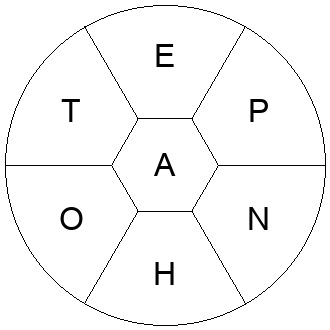
The official answers for today's puzzle are:

Click on the arrow to show the definition.
Click outside the pop-up to close it.


Number of Pangrams: 3

Maximum Puzzle Score: 286

Number of Answers: 64

Points Needed for Genius: 200

Genius requires between 26 and 56 words. You need at least a 7-letter word to reach genius. If you don't get the pangrams, you need 82% of the total points to reach genius. If you get the pangrams, you only need 65% of the remaining points to reach genius.

Other days with this pangram:

The button below will reveal a chart with the number of words by each letter. Red bars indicate that there is a pangram(s) starting with that letter.


How does this puzzle compare to other puzzles?

Today's score of 286 was in the 91st percentile of all puzzles.
The last time there was a score this high was on May 10, 2026.
The highest score ever was 537 on January 22, 2021.
The lowest score ever was 47 on March 27, 2023.

This puzzle's 64 possible answers rank it in the 94th percentile of all puzzles.
The last time there were more answers than this was on May 03, 2026.
The highest number of answers was 81 on June 08, 2019.
The lowest number of answers was 16 on March 27, 2023.

It takes a 7-letter word for genius.
The last time this happened was on May 15, 2026.

Today's puzzle has an average word length of 5.4.
For all Bees, the average word length has been 5.3.


Haven't I seen these letters before?

Hover over a letter to see its first and most recent appearance in the Bee!


Haven't I seen these words before?

The most common words in the Bee are:

  • noon 239
  • loll 219
  • toot 214
  • nana 199
  • naan 199
  • nene 158
  • tilt 156
  • till 156
  • lilt 156
  • mamma 152
  • mama 152
  • tint 149
  • onion 145
  • toon 144
  • onto 144
  • acai 142
  • acacia 142
  • anon 134
  • anal 134
  • olio 131
  • tact 126
  • papa 126
  • baba 125
  • lulu 124
  • lull 124
  • dodo 124
  • poop 120
  • booboo 120
  • boob 120
  • mitt 119
  • moon 118
  • mono 118
  • cocci 118
  • loon 117
  • calla 117
  • call 117
  • tartar 116
  • tart 116
  • ratatat 116
  • tattoo 115
  • attar 115
  • tutu 113
  • ally 113
  • allay 113
  • momma 111
  • aria 111
  • ammo 111
  • tatty 110
  • meme 109
  • cancan 109


How long are words in the Bee?

There have been 117,869 answers ever accepted in the Bee - with 10,985 unique words.
Below are the distributions of the lengths of these words.


Valid dictionary words not in today's official answers

You may be wondering why these words aren't here*:

  • anatto
  • anent
  • anna
  • annona
  • anoa
  • anta
  • antae
  • aphtha
  • aphthae
  • apnoea
  • appetent
  • atap
  • attent
  • eath
  • enate
  • epha
  • ephah
  • etape
  • etna
  • haen
  • haet
  • haha
  • hant
  • hapten
  • haptene
  • honan
  • nanna
  • nano
  • napa
  • naphtha
  • naphthene
  • nappa
  • nappe
  • nepenthean
  • nepeta
  • nona
  • nonane
  • nota
  • opah
  • paan
  • paeon
  • pahoehoe
  • panne
  • panto
  • pantothenate
  • paten
  • patoot
  • pattee
  • patten
  • pean
  • penna
  • pennae
  • pennate
  • petnap
  • phenate
  • phonathon
  • tannate
  • tanto
  • tapeta
  • tappet
  • tate
  • tathata
  • teopan
  • tepa
  • thae
  • toea

*Because the New York Times considers them obscure or offensive.

aeon

noun
  1. (preferred spelling, with æon) A spirit being emanating from the Godhead.
  2. (Cosmology) Each universe in a series of universes, according to conformal cyclic cosmology.
noun
  1. Eternity.
  2. A period of 1,000,000,000 years.
  3. The longest time period used in geology.
  4. A long period of time.
  5. (usually spelled aeon or æon) A spirit being emanating from the Godhead.

annatto

noun
  1. A tropical American evergreen shrub, Bixa orellana; the lipstick tree; the fruit of the tree.
  2. The seed of this tree used as a colouring or in Latin American cooking.
  3. An orange-red dye obtained from this seed.

annotate

verb
  1. To add annotation to.

anon

Etymology 1

adverb
  1. Straight away; at once.
  2. Soon; in a little while.
  3. At another time; then; again.

Etymology 2

noun
  1. An anonymous person, especially an author.
  2. A work with an unknown author.
  3. A work without a title.
adjective
  1. Anonymous

ante

noun
  1. A price or cost, as in up the ante.
  2. In poker and other games, the contribution made by all players to the pot before dealing the cards.
verb
  1. To pay the ante in poker. Often used as ante up.
  2. To make an investment in money, effort, or time before knowing one's chances.

antenna

noun
  1. A feeler organ on the head of an insect, crab, or other animal.
  2. An apparatus to receive or transmit electromagnetic waves and convert respectively to or from an electrical signal.
  3. The faculty of intuitive astuteness.
  4. A fragment of an oligosaccharide
  5. The spar to which a lateen sail is attached, which is then hoisted up the mast.

antennae

noun
  1. A feeler organ on the head of an insect, crab, or other animal.
  2. An apparatus to receive or transmit electromagnetic waves and convert respectively to or from an electrical signal.
  3. The faculty of intuitive astuteness.
  4. A fragment of an oligosaccharide
  5. The spar to which a lateen sail is attached, which is then hoisted up the mast.

apnea

noun
  1. The cessation of breathing.

atone

verb
  1. To make reparation, compensation, amends or satisfaction for an offence, crime, mistake or deficiency.
  2. To bring at one or at concordance; to reconcile; to suffer appeasement.
  3. To agree or accord; to be in accordance or harmony.
  4. To unite in making.
  5. To absolve (someone else) of wrongdoing, especially by standing as an equivalent.

atop

adverb
  1. On, to, or at the top.
preposition
  1. On the top of.
  2. On the top, with "of".

eaten

verb
  1. To ingest; to be ingested.
  2. To use up.
  3. To cause (someone) to worry.
  4. To take the loss in a transaction.
  5. To be injured or killed by (something such as a firearm or its projectile), especially in the mouth.
  6. To corrode or erode.
  7. To perform oral sex (on a person or body part).
adjective
  1. (especially in combination) That has been consumed by eating

ethane

noun
  1. An aliphatic hydrocarbon, C2H6, gaseous at normal temperatures and pressures, being a constituent of natural gas.
  2. The same compound, subjected to modification by replacing one or more of the hydrogen atoms with other radicals.

happen

verb
  1. To occur or take place.
  2. To happen to; to befall.
  3. (with infinitive) To do or occur by chance or unexpectedly.
  4. (followed by on or upon) To encounter by chance.
adverb
  1. Maybe, perhaps.

hate

noun
  1. An object of hatred.
  2. Hatred.
  3. Negative feedback, abusive behaviour.
verb
  1. To dislike intensely or greatly.
  2. To experience hatred.

hath

verb
  1. To possess, own.
  2. To hold, as something at someone's disposal.
  3. Used to state the existence or presence of someone in a specified relationship with the subject.
  4. To partake of (a particular substance, especially food or drink, or action or activity).
  5. To be scheduled to attend, undertake or participate in.
  6. To experience, go through, undergo.
  7. To be afflicted with, suffer from.
  8. (auxiliary verb, taking a past participle) Used in forming the perfect aspect.
  9. Used as an interrogative verb before a pronoun to form a tag question, echoing a previous use of 'have' as an auxiliary verb or, in certain cases, main verb. (For further discussion, see the appendix English tag questions.)
  10. (auxiliary verb, taking a to-infinitive) See have to.
  11. To give birth to.
  12. To engage in sexual intercourse with.
  13. To accept as a romantic partner.
  14. (transitive with bare infinitive) To cause to, by a command, request or invitation.
  15. (transitive with adjective or adjective-phrase complement) To cause to be.
  16. (transitive with bare infinitive) To be affected by an occurrence. (Used in supplying a topic that is not a verb argument.)
  17. (transitive with adjective or adjective-phrase complement) To depict as being.
  18. To defeat in a fight; take.
  19. (obsolete outside Ireland) To be able to speak (a language).
  20. To feel or be (especially painfully) aware of.
  21. To trick, to deceive.
  22. (often with present participle) To allow; to tolerate.
  23. (often used in the negative) To believe, buy, be taken in by.
  24. To host someone; to take in as a guest.
  25. To get a reading, measurement, or result from an instrument or calculation.
  26. (of a jury) To consider a court proceeding that has been completed; to begin deliberations on a case.
  27. To make an observation of (a bird species).

heap

noun
  1. A crowd; a throng; a multitude or great number of people.
  2. A pile or mass; a collection of things laid in a body, or thrown together so as to form an elevation.
  3. A great number or large quantity of things.
  4. A data structure consisting of trees in which each node is greater than all its children.
  5. Memory that is dynamically allocated.
  6. A dilapidated place or vehicle.
  7. A lot, a large amount
verb
  1. To pile in a heap.
  2. To form or round into a heap, as in measuring.
  3. To supply in great quantity.
adverb
  1. (representing broken English stereotypically or comically attributed to Native Americans; may be offensive) Very.

heat

Etymology 1

noun
  1. Thermal energy.
  2. The condition or quality of being hot.
  3. An attribute of a spice that causes a burning sensation in the mouth.
  4. A period of intensity, particularly of emotion.
  5. An undesirable amount of attention.
  6. The police.
  7. One or more firearms.
  8. A fastball.
  9. A condition where a mammal is aroused sexually or where it is especially fertile and therefore eager to mate.
  10. A preliminary race, used to determine the participants in a final race
  11. One cycle of bringing metal to maximum temperature and working it until it is too cool to work further.
  12. A hot spell.
  13. Heating system; a system that raises the temperature of a room or building.
  14. The output of a heating system.
  15. In omegaverse fiction, a cyclical period in which alphas and omegas experience an intense, sometimes irresistible biological urge to mate.

Etymology 2

verb
  1. To cause an increase in temperature of (an object or space); to cause to become hot (often with "up").
  2. To become hotter.
  3. To excite or make hot by action or emotion; to make feverish.
  4. To excite ardour in; to rouse to action; to excite to excess; to inflame, as the passions.
  5. To arouse, to excite (sexually).

heath

noun
  1. A tract of level uncultivated land with sandy soil and scrubby vegetation; heathland.
  2. Any small evergreen shrub of the family Ericaceae.
  3. Certain butterflies and moths

heathen

noun
  1. An adherent of the Germanic neo-pagan faith of Heathenry.
adjective
  1. Pertaining or adhering to the Germanic neo-pagan faith Heathenry.
noun
  1. A person who does not follow a Christian religion; a pagan.
  2. (by extension) An uncultured or uncivilized person, philistine.
adjective
  1. Not adhering to Christian religion; pagan.
  2. (by extension) Uncultured; uncivilized; savage, philistine.

henna

noun
  1. A shrub, Lawsonia inermis, having fragrant reddish flowers
  2. A reddish plant substance, prepared from the dried leaves of this plant, used for temporary tattoos and hair coloring. Hair colorings range from bright red to earth brown to near black.
  3. A rich reddish-brown colour.
verb
  1. To dye or tattoo with henna.
adjective
  1. Of a rich reddish-brown colour.

heptane

noun
  1. Any of the nine isomers of the saturated aliphatic hydrocarbon C7H16, obtained from petroleum, especially n-heptane (CH3(CH2)5CH3)

naan

noun
  1. A type of round, flat bread baked in a tandoor popular in South and Central Asian cuisine.

nana

Etymology 1

noun
  1. A banana
  2. A fool

Etymology 2

noun
  1. (term of endearment) one's grandmother
  2. A nanny

nape

Etymology 1

noun
  1. The back part of the neck.
  2. The part of a fish or bird immediately behind the head.

Etymology 2

noun
  1. A tablecloth.

Etymology 3

noun
  1. Napalm.
verb
  1. To bombard with napalm.

natant

adjective
  1. Floating or swimming (in water)
  2. In a horizontal position, as if swimming

neap

Etymology 1

noun
  1. The tongue or pole of a cart or other vehicle drawn by two animals.

Etymology 2

noun
  1. A neap tide.
verb
  1. To trap a ship (or ship and crew) in water too shallow to move, due to the smaller tidal range occurring in a period of neap tides.
  2. To ooze, to sink, to subside, to tail
adjective
  1. (of a tide) Low; lowest; the ebb or lowest point of a tide.
  2. Designating a tide which occurs just after the first and third quarters of the moon, when there is the least difference between high tide and low tide.

Etymology 3

noun
  1. The swede (rutabaga), called "turnip" in Scotland.

neat

Etymology 1

noun
  1. An artificial intelligence researcher who believes that solutions should be elegant, clear and provably correct. Compare scruffy.
adjective
  1. Clean, tidy; free from dirt or impurities.
  2. Free from contaminants; unadulterated, undiluted. Particularly of liquor and cocktails; see usage below.
  3. Conditions with a liquid reagent or gas performed with no standard solvent or cosolvent.
  4. With all deductions or allowances made; net.
  5. Having a simple elegance or style; clean, trim, tidy, tasteful.
  6. Well-executed or delivered; clever, skillful, precise.
  7. Facile; missing complexity or details in the favor of convenience or simplicity.
  8. Good, excellent, desirable.

Etymology 2

noun
  1. A bull or cow.
  2. Cattle collectively.

neaten

verb
  1. To make neat; arrange in an orderly, tidy way; to tidy.

neath

preposition
  1. Beneath.

neonate

noun
  1. A newborn infant; recently born baby.

notate

verb
  1. To mark with spots or lines, which are often colored.
  2. To add notes to; to annotate
  3. To create notation (i.e. music); to record/put down in the form of notation
adjective
  1. Marked with coloured spots or lines.

oaten

adjective
  1. Made of oats

oath

noun
  1. A solemn pledge or promise, appealing to a deity, a ruler, or another entity (not necessarily present) to attest to the truth of a statement or sincerity of one's desire to fulfill a contract or promise.
  2. A statement or promise which is strengthened (affirmed) by such a pledge.
  3. A light, irreverent or insulting appeal to a deity or other entity.
  4. A curse, a curse word.
verb
  1. To pledge.

paean

noun
  1. A chant or song, especially a hymn of thanksgiving for deliverance or victory, to Apollo or sometimes another god or goddess; hence any song sung to solicit victory in battle.
  2. (by extension) Any loud and joyous song; a song of triumph.
  3. (by extension) An enthusiastic expression of praise.
verb
  1. To sing a paean; to praise.

pane

noun
  1. An individual sheet of glass in a window, door, etc.
  2. A layer in the build-up of a GUI.
  3. A division; a distinct piece or compartment of any surface.
  4. A square of a checkered or plaid pattern.
  5. One of the openings in a slashed garment, showing the bright colored silk, or the like, within; hence, the piece of colored or other stuff so shown.
  6. A compartment of a surface, or a flat space; hence, one side or face of a building.
  7. A subdivision of an irrigated surface between a feeder and an outlet drain.
  8. One of the flat surfaces, or facets, of any object having several sides.
  9. One of the eight facets surrounding the table of a brilliant-cut diamond.
verb
  1. To fit with panes.
noun
  1. The (often spherical) end of the head of a hammer opposite the main hammering end.

panettone

noun
  1. A soft Italian sourdough brioche from Milan, with candied fruit, usually prepared for Christmas as a dessert.

pant

Etymology 1

noun
  1. A quick breathing; a catching of the breath; a gasp.
  2. Eager longing.
  3. A violent palpitation of the heart.
verb
  1. To breathe quickly or in a labored manner, as after exertion or from eagerness or excitement; to respire with heaving of the breast; to gasp.
  2. To long eagerly; to desire earnestly.
  3. To long for (something); to be eager for (something).
  4. Of the heart, to beat with unnatural violence or rapidity; to palpitate.
  5. To sigh; to flutter; to languish.
  6. To heave, as the breast.
  7. To bulge and shrink successively, of iron hulls, etc.

Etymology 2

noun
  1. A pair of pants (trousers or underpants).
  2. (used attributively as a modifier) Of or relating to pants.

Etymology 3

noun
  1. (Scotland and northeast England) Any public drinking fountain.

pantheon

noun
  1. A temple dedicated to all the gods.
  2. All the gods of a particular people or religion, particularly the ancient Greek gods residing on Olympus, considered as a group.
  3. (by extension) A category or classification denoting the most honored persons of a group.

papa

noun
  1. Dad, daddy, father; a familiar or old-fashioned term of address to one’s father.
  2. A pet name for one's grandfather.
  3. A parish priest in the Greek Orthodox Church.
  4. The letter P in the ICAO spelling alphabet.

pate

Etymology 1

noun
  1. (somewhat obsolete) The head, particularly the top or crown.
  2. Wit, cleverness, cognitive abilities.

Etymology 2

noun
  1. The interior body, or non-rind portion of cheese, described by its texture, density, and color.
noun
  1. A finely-ground paste of meat, fish or vegetables, sometimes with the addition of alcohol.

patent

Etymology 1

noun
  1. A declaration issued by a government agency declaring someone the inventor of a new invention and having the privilege of stopping others from making, using or selling the claimed invention; a letter patent.
  2. A specific grant of ownership of a piece of property; a land patent.
  3. License; formal permission.
  4. Patent leather: a varnished, high-gloss leather typically used for shoes and accessories.
verb
  1. To successfully register an invention with a government agency; to secure a letter patent.

Etymology 2

adjective
  1. Open, unobstructed, expanded.
  2. Explicit and obvious.
  3. (of flour) That is fine, and consists mostly of the inner part of the endosperm.
  4. Open; unconcealed; conspicuous.
  5. Open to public perusal; said of a document conferring some right or privilege.
  6. Protected by a legal patent.

patentee

noun
  1. One to whom a grant is made, or a privilege secured, by patent.

path

Etymology 1

noun
  1. A trail for the use of, or worn by, pedestrians.
  2. A course taken.
  3. A Pagan tradition, for example witchcraft, Wicca, druidism, Heathenry.
  4. A metaphorical course.
  5. A method or direction of proceeding.
  6. A human-readable specification for a location within a hierarchical or tree-like structure, such as a file system or as part of a URL.
  7. A sequence of vertices from one vertex to another using the arcs (edges). A path does not visit the same vertex more than once (unless it is a closed path, where only the first and the last vertex are the same).
  8. A continuous map f from the unit interval I = [0,1] to a topological space X.
  9. A slot available for allocation to a railway train over a given route in between other trains.
verb
  1. To make a path in, or on (something), or for (someone).

Etymology 2

noun
  1. (abbreviation) Pathology.

peahen

noun
  1. A female peafowl.

peat

Etymology 1

noun
  1. Soil formed of dead but not fully decayed plants found in bog areas, often burned as fuel.

Etymology 2

noun
  1. A pet, a darling; a woman.

pennant

noun
  1. A flag normally used by naval vessels to represent a special condition.
  2. The winning of a competition, represented by a flag.
  3. A rope or strap to which a purchase is hooked.
  4. A sandstone between coal measures in parts of South Wales

pentane

noun
  1. An aliphatic hydrocarbon of chemical formula C5H12; either of the three isomers n-pentane, methyl-butane (isopentane), and di-methyl-propane (neopentane); volatile liquids under normal conditions.

phaeton

noun
  1. A light four-wheeled open carriage drawn by four horses
  2. A large open touring motorcar with a folding top

phat

adjective
  1. (originally African American Vernacular English) Excellent; cool; very good.
  2. Sexy.
  3. Rich in texture; prominent.

phonate

verb
  1. To make sounds with the voice.
  2. To use the voice to make (specific sounds).
adjective
  1. Voiced

poppa

noun
  1. (sometimes childish) father, papa.

potato

noun
  1. The tuber of a plant, Solanum tuberosum, eaten as a starchy vegetable, particularly in the Americas and Europe; this plant.
  2. A conspicuous hole in a sock or stocking
  3. A camera that takes poor-quality pictures.
  4. A mentally handicapped person.
  5. An underpowered computer or other device, especially when small in size.

potentate

noun
  1. A powerful leader; a monarch; a ruler.
  2. A powerful polity or institution.
  3. A self-important person.
adjective
  1. Regnant, powerful, dominant.

tapa

Etymology 1

noun
  1. A kind of cloth prepared by the Polynesians from the inner bark of the paper mulberry.

Etymology 2

noun
  1. Any appetizer or snack served in the evening as part of tapas.

Etymology 3

noun
  1. Seasoned slices of dried or cured meat in Filipino cuisine.

tape

noun
  1. Flexible material in a roll with a sticky surface on one or both sides; adhesive tape.
  2. Thin and flat paper, plastic or similar flexible material, usually produced in the form of a roll.
  3. Finishing tape, stretched across a track to mark the end of a race.
  4. Magnetic or optical recording media in a roll; videotape or audio tape.
  5. (by extension) Any video or audio recording, regardless of the method used to produce it.
  6. An unthinking, patterned response triggered by a particular stimulus.
  7. (from ticker tape) The series of prices at which a financial instrument trades.
  8. The wrapping of the primary puck-handling surface of a hockey stick
  9. A strong flexible band rotating on pulleys for directing the sheets in a printing machine.
verb
  1. To bind with adhesive tape.
  2. To record, particularly onto magnetic tape.
  3. (passive) To understand, figure out.

tattoo

Etymology 1

noun
  1. An image made in the skin with ink and a needle.
  2. A method of decorating the skin by inserting colored substances under the surface with a sharp instrument (usually a solenoid-driven needle).
verb
  1. To apply a tattoo to (someone or something).
  2. To hit the ball hard, as if to figuratively leave a tattoo on the ball.

Etymology 2

noun
  1. A signal played five minutes before taps (lights out).
  2. A signal by drum or bugle ordering soldiers to return to their quarters.
  3. A military display or pageant.
verb
  1. To tap rhythmically on, to drum.

Etymology 3

noun
  1. A breed of pony from India; a pony of that breed.

teapot

noun
  1. A vessel for brewing and serving tea.

teat

noun
  1. The projection of a mammary gland from which, on female mammals, milk is secreted.
  2. Something resembling a teat, such as a small protuberance or nozzle.
  3. An artificial nipple used for bottle-feeding infants.

tenant

noun
  1. One who pays a fee (rent) in return for the use of land, buildings, or other property owned by others.
  2. One who has possession of any place.
  3. One who holds a property by any kind of right, including ownership.
  4. Any of a number of customers serviced through the same instance of an application.
verb
  1. To hold as, or be, a tenant.
  2. To inhabit.

than

adverb
  1. At that time; then.
preposition
  1. Introduces a comparison, and is associated with comparatives, and with words such as more, less, and fewer. Typically, it seeks to measure the force of an adjective or similar description between two predicates.
conjunction
  1. Used in comparisons, to introduce the basis of comparison.
  2. (obsolete outside dialectal, usually used with for) Because; for.

thane

noun
  1. A rank of nobility in pre-Norman England, roughly equivalent to baron.

that

noun
  1. Something being indicated that is there; one of those.
adverb
  1. (degree) To a given extent or degree.
  2. (degree) To a great extent or degree; very, particularly (in negative constructions).
  3. To such an extent; so. (in positive constructions).
pronoun
  1. (demonstrative) The thing, person, idea, quality, event, action or time indicated or understood from context, especially if more remote geographically, temporally or mentally than one designated as "this", or if expressing distinction.
  2. The known (thing); used to refer to something just said.
  3. (demonstrative) The aforementioned quality or proposition; used to emphatically affirm or deny a previous statement or question.
  4. (relative) (plural that) Which, who; representing a subject, direct object, indirect object, or object of a preposition.
  5. Used in place of relative adverbs such as where or when; often omitted.
conjunction
  1. Introducing a clause which is the subject or object of a verb (such as one involving reported speech), or which is a complement to a previous statement.
  2. Introducing a subordinate clause expressing a reason or cause: because, in that.
  3. Introducing a subordinate clause that expresses an aim, purpose or goal ("final"), and usually contains the auxiliaries may, might or should: so, so that.
  4. Introducing — especially, but not exclusively, with an antecedent like so or such — a subordinate clause expressing a result, consequence or effect.
  5. Introducing a premise or supposition for consideration: seeing as; inasmuch as; given that; as would appear from the fact that.
  6. Introducing a subordinate clause modifying an adverb.
  7. Introducing an exclamation expressing a desire or wish.
  8. Introducing an exclamation expressing a strong emotion such as sadness or surprise.

theta

noun
  1. The eighth letter of the Modern Greek alphabet, ninth in Old Greek: Θ, θ.
  2. The measure of an angle.
  3. The sensitivity of the value of a derivative with respect to time; the "time decay".
  4. Designating a level of brain activity as measured by electroencephalography having a frequency of between four and seven cycles per second (associated with drowsiness in adults).
  5. The voiceless dental fricative represented by θ.

hatha

No Definition Found.