Thursday, May 28, 2026

Answers to yesterday's Bee

Jump to answers for


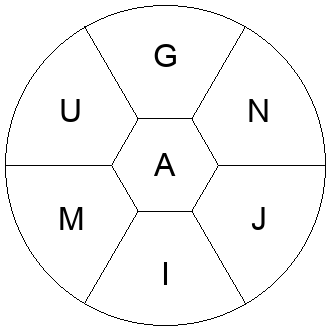
The official answers for today's puzzle are:

Click on the arrow to show the definition.
Click outside the pop-up to close it.


Number of Pangrams: 1

Maximum Puzzle Score: 245

Number of Answers: 47

Points Needed for Genius: 172

Genius requires between 25 and 39 words. You need at least a 7-letter word to reach genius. If you don't get the pangram, you need 75% of the total points to reach genius. If you get the pangram, you only need 68% of the remaining points to reach genius.

Other days with this pangram:

The button below will reveal a chart with the number of words by each letter. Red bars indicate that there is a pangram(s) starting with that letter.


How does this puzzle compare to other puzzles?

Today's score of 245 was in the 80th percentile of all puzzles.
The last time there was a score this high was on May 23, 2026.
The highest score ever was 537 on January 22, 2021.
The lowest score ever was 47 on March 27, 2023.

This puzzle's 47 possible answers rank it in the 68th percentile of all puzzles.
The last time there were more answers than this was on May 23, 2026.
The highest number of answers was 81 on June 08, 2019.
The lowest number of answers was 16 on March 27, 2023.

It takes a 7-letter word for genius.
The last time this happened was on May 27, 2026.

Today's puzzle has an average word length of 5.7.
For all Bees, the average word length has been 5.3.


Haven't I seen these letters before?

Hover over a letter to see its first and most recent appearance in the Bee!


Haven't I seen these words before?

The most common words in the Bee are:

  • noon 241
  • loll 222
  • toot 215
  • nana 201
  • naan 201
  • nene 158
  • tilt 156
  • till 156
  • lilt 156
  • mamma 153
  • mama 153
  • tint 150
  • onion 147
  • toon 145
  • onto 145
  • acai 143
  • acacia 143
  • anon 135
  • anal 134
  • olio 133
  • papa 127
  • tact 126
  • baba 126
  • lulu 125
  • lull 125
  • dodo 124
  • poop 120
  • mitt 120
  • booboo 120
  • boob 120
  • loon 119
  • moon 118
  • mono 118
  • cocci 118
  • calla 118
  • call 118
  • tartar 117
  • tart 117
  • ratatat 117
  • tattoo 116
  • attar 116
  • tutu 114
  • ally 113
  • allay 113
  • momma 111
  • aria 111
  • ammo 111
  • tatty 110
  • cancan 110
  • roar 109


How long are words in the Bee?

There have been 118,392 answers ever accepted in the Bee - with 10,995 unique words.
Below are the distributions of the lengths of these words.


Valid dictionary words not in today's official answers

You may be wondering why these words aren't here*:

  • agama
  • agin
  • agma
  • ajuga
  • amain
  • amia
  • amiga
  • amin
  • amnia
  • anga
  • animi
  • anna
  • gaging
  • gagman
  • gaijin
  • gama
  • gamming
  • gaum
  • gauming
  • gaun
  • giga
  • guan
  • guanin
  • gumma
  • iguanian
  • imaum
  • inia
  • jagg
  • jnana
  • juga
  • magian
  • majagua
  • mana
  • manana
  • manganin
  • mannan
  • maun
  • mina
  • naga
  • nagana
  • nanna
  • numina
  • umma
  • unaging
  • unai
  • unau
  • ungag

*Because the New York Times considers them obscure or offensive.

again

adverb
  1. Another time; once more.
  2. Over and above a factor of one.
  3. Used metalinguistically, with the repetition being in the discussion, or in the linguistic or pragmatic context of the discussion, rather than in the subject of discussion.
  4. Back in the reverse direction, or to an original starting point.
  5. Back (to a former place or state).
  6. In return, as a reciprocal action; back.
  7. In any other place.
  8. On the other hand.
  9. Moreover; besides; further.
preposition
  1. (obsolete or dialectal) Against.

aging

verb
  1. To cause to grow old; to impart the characteristics of age to.
  2. To postpone an action that would extinguish something, as a debt.
  3. To categorize by age.
  4. To grow aged; to become old; to show marks of age.
noun
  1. The process of becoming older or more mature.
  2. The deliberate process of making something (such as an antique) appear (or, in science fiction, become) older than it is.
  3. Becoming senescent; accumulating damage to macromolecules, cells, tissues and organs with the passage of time; progressing loss of health, mobility, vibrancy and body functionality, resulting in biological death.
  4. Wear, wear and tear.
adjective
  1. Becoming elderly.

aiming

verb
  1. To point or direct a missile, or a weapon which propels as missile, towards an object or spot with the intent of hitting it
  2. To direct the intention or purpose; to attempt the accomplishment of a purpose; to try to gain; to endeavor;—followed by at, or by an infinitive
  3. To direct or point (e.g. a weapon), at a particular object; to direct, as a missile, an act, or a proceeding, at, to, or against an object
  4. To direct (something verbal) towards a certain person, thing, or group
  5. To guess or conjecture.
noun
  1. The act of one who aims.

angina

noun
  1. An inflammatory infection of the throat, particularly quinsy.
  2. Short for angina pectoris.
  3. A chest pain or shortness of breath occurring with lesser degrees of arterial blockage.

anima

noun
  1. The soul or animating principle of a living thing, especially as contrasted with the animus.
  2. (Jungian psychology) The inner self (not the external persona) of a person that is in touch with the unconscious as opposed to the persona.
  3. (Jungian psychology) The unconscious feminine aspect of a person.

gaga

Etymology 1

adjective
  1. Mentally senile.
  2. Crazy.
  3. Infatuated.

Etymology 2

noun
  1. A variant of dodgeball played inside a fenced area, usually a hexagon or octagon.

gagging

verb
  1. To experience the vomiting reflex.
  2. To cause to heave with nausea.
  3. To restrain someone's speech by blocking his or her mouth.
  4. To pry or hold open by means of a gag.
  5. To restrain someone's speech without using physical means.
  6. To choke; to retch.
  7. To deceive (someone); to con.
noun
  1. A gag motion or reflex.

gain

Etymology 1

noun
  1. The act of gaining; acquisition.
  2. What is gained.
  3. The factor by which a signal is multiplied.
verb
  1. To acquire possession of.
  2. To have or receive advantage or profit; to acquire gain; to grow rich; to advance in interest, health, or happiness; to make progress.
  3. To come off winner or victor in; to be successful in; to obtain by competition.
  4. To increase.
  5. To be more likely to catch or overtake an individual.
  6. To reach.
  7. To draw into any interest or party; to win to one's side; to conciliate.
  8. To put on weight.
  9. (of a clock or watch) To run fast.

Etymology 2

preposition
  1. Against.

Etymology 3

adjective
  1. Straight, direct; near; short.
  2. Suitable; convenient; ready.
  3. Easy; tolerable; handy, dexterous.
  4. Honest; respectable; moderate; cheap.
adverb
  1. Straightly; quickly; by the nearest way or means.
  2. Suitably; conveniently; dexterously; moderately.
  3. Tolerably; fairly.

Etymology 4

noun
  1. A square or bevelled notch cut out of a girder, binding joist, or other timber which supports a floor beam, so as to receive the end of the floor beam.

gaining

verb
  1. To acquire possession of.
  2. To have or receive advantage or profit; to acquire gain; to grow rich; to advance in interest, health, or happiness; to make progress.
  3. To come off winner or victor in; to be successful in; to obtain by competition.
  4. To increase.
  5. To be more likely to catch or overtake an individual.
  6. To reach.
  7. To draw into any interest or party; to win to one's side; to conciliate.
  8. To put on weight.
  9. (of a clock or watch) To run fast.
noun
  1. Gain; profit.

gamin

noun
  1. A homeless boy; a male street urchin; also (more generally), a cheeky, street-smart boy.

gaming

verb
  1. To gamble.
  2. To play card games, board games, or video games.
  3. To exploit loopholes in a system or bureaucracy in a way which defeats or nullifies the spirit of the rules in effect, usually to obtain a result which otherwise would be unobtainable.
  4. (of males) To perform premeditated seduction strategy.
noun
  1. The playing of a game or games, including but not limited to video games and games of chance.
  2. Careful, strategic use of rules to achieve one's purposes, as one would use the rules of a game.

gamma

noun
  1. The third letter of the Greek alphabet (Γ, γ), preceded by beta (Β, β) and followed by delta, (Δ, δ).
  2. The Gamma function, symbolized by Γ.
  3. A constant approximately equal to 0.55721566, symbolized by γ (also known as the Euler–Mascheroni constant).
  4. A non-SI unit of measure of magnetic flux density, equal to 1 nT.
  5. (industries) slope of log-log plot of video input and luminance output.
  6. A second-order measure of derivative price sensitivity, expressed as the rate of change in delta with respect to changes in the underlying asset price.
noun
  1. A nonlinear operation used to encode and decode luminance or tristimulus values in video or still image systems.

gang

Etymology 1

verb
  1. To go; walk; proceed.

Etymology 2

noun
  1. A number going in company; a number of friends or persons associated for a particular purpose.
  2. A group of laborers under one foreman; a squad.
  3. A criminal group with a common cultural background and identifying features, often associated with a particular section of a city.
  4. A group of criminals or alleged criminals who band together for mutual protection and profit.
  5. A group of politicians united in furtherance of a political goal.
  6. A chain gang.
  7. A combination of similar tools or implements arranged so as, by acting together, to save time or labor; a set.
  8. A set; all required for an outfit.
  9. (electrics) A number of switches or other electrical devices wired into one unit and covered by one faceplate.
  10. (electrics) A group of wires attached as a bundle.
  11. A going, journey; a course, path, track.
  12. An outhouse: an outbuilding used as a lavatory.
verb
  1. To attach similar items together to form a larger unit.

Etymology 3

verb
  1. (obsolete outside Northumbria) To go.

Etymology 4

verb
  1. To participate in a gangbang.
  2. To beat one or a smaller amount of people as a gang.
  3. To belong to a gang; to commit criminal acts as part of a gang.

Etymology 5

noun
  1. The earthy waste substances occurring in metallic ore.

ganging

verb
  1. To go; walk; proceed.
verb
  1. To attach similar items together to form a larger unit.
verb
  1. To participate in a gangbang.
  2. To beat one or a smaller amount of people as a gang.
  3. To belong to a gang; to commit criminal acts as part of a gang.
noun
  1. A leader used to attach a fishhook to the main line, especially in commercial fishing

ganja

noun
  1. Marijuana, as used for smoking.

gauging

verb
  1. To measure or determine with a gauge; to measure the capacity of.
  2. To estimate.
  3. To appraise the character or ability of; to judge of.
  4. To draw into equidistant gathers by running a thread through it.
  5. To mix (a quantity of ordinary plaster) with a quantity of plaster of Paris.
  6. To chip, hew or polish (stones, bricks, etc) to a standard size and/or shape.
noun
  1. Measurement or estimation, with or as if with a gauge.
  2. The addition of various materials to lime mortar.
  3. A shirring.

gunman

noun
  1. A criminal armed with a gun, especially a professional killer.

iguana

noun
  1. A green iguana (Iguana iguana), a large tropical American lizard often kept as a pet
  2. In zoology, any member of the genus Iguana
  3. Colloquially, in America and the Pacific, any of several members of the lizard family Iguanidae.
  4. Colloquially, in Africa, any large member of the genus Varanus, especially the aquatic Nile monitor -- see leguan
  5. Colloquially, in Australia, any member of the genus Varanus -- see goanna

imaging

verb
  1. To represent by an image or symbol; to portray.
  2. To reflect, mirror.
  3. To create an image of.
  4. To create a complete backup copy of a file system or other entity.
noun
  1. The technique or practice of creating images of otherwise invisible aspects of an object, especially of body parts.
  2. The use of mental images to alter a person's perceptions or behaviors.

imagining

verb
  1. To form a mental image of something; to envision or create something in one's mind.
  2. To believe in something created by one's own mind.
  3. To assume
  4. To conjecture or guess
  5. To use one's imagination
  6. To contrive in purpose; to scheme; to devise.
noun
  1. Something imagined; a figment of the imagination.

imam

noun
  1. (usually capitalized) A Shi'ite Muslim leader.
  2. One who leads the salat prayers in a mosque.

jagging

verb
  1. To cut unevenly.
  2. To tease.

jamming

verb
  1. To get something stuck in a confined space.
  2. To brusquely force something into a space; cram, squeeze.
  3. To cause congestion or blockage. Often used with "up"
  4. To block or confuse a broadcast signal.
  5. To throw a pitch at or near the batter's hands.
  6. To play music (especially improvisation as a group, or an informal unrehearsed session).
  7. To injure a finger or toe by sudden compression of the digit's tip.
  8. To attempt to score points.
  9. To bring (a vessel) so close to the wind that half her upper sails are laid aback.
  10. To give up on a date or some joint endeavour; stand up, chicken out, jam out.
noun
  1. The act or process by which something is jammed.
adjective
  1. Great; awesome.

magi

noun
  1. A magician, wizard or sorcerer.
noun
  1. (common usage) magician, and derogatorily sorcerer, trickster, conjurer, charlatan
  2. (special usage) a Zoroastrian priest

magma

noun
  1. The molten matter within the earth, the source of the material of lava flows, dikes of eruptive rocks, etc.
  2. A basic algebraic structure consisting of a set equipped with a single binary operation.
  3. Any soft doughy mass.
  4. The residuum after expressing the juice from fruits.

magnum

noun
  1. A bottle of wine containing 1.5 liters of fluid, double the volume of a standard bottle.
  2. A powerful firearm cartridge, often derived from a shorter, less powerful cartridge calibre that uses the same bullet.
  3. A handgun that fires a cartridge of this calibre; chiefly a revolver, but rarely an autoloader firing an unusually powerful calibre.

maim

noun
  1. A serious wound
verb
  1. To wound seriously; to cause permanent loss of function of a limb or part of the body.

maiming

verb
  1. To wound seriously; to cause permanent loss of function of a limb or part of the body.
noun
  1. The act by which somebody is maimed.

main

Etymology 1

verb
  1. Short for mainline.
  2. To mainly play a specific character, or side, during a game.
  3. Of a road: to convert into a main or primary road.
adjective
  1. Of chief or leading importance; prime, principal.
  2. Chief, most important, or principal in extent, size, or strength; consisting of the largest part.
  3. (of force, strength, etc.) Full, sheer, undivided.
  4. Big; angry.
  5. Belonging to or connected with the principal mast in a vessel.
  6. Great in size or degree; important, powerful, strong, vast.
adverb
  1. Exceedingly, extremely, greatly, mightily, very, very much.

Etymology 2

noun
  1. That which is chief or principal; the chief or main portion; the bulk, the greater part, gross.
  2. A large cable or pipe providing utility service to an area or a building, such as a water main or electric main.
  3. Short for main course.
  4. The high seas.
  5. The mainland.
  6. Short for mainsail.
  7. (except in might and main) Force, power, strength, violent effort.

Etymology 3

noun
  1. A hand or match in a game of dice.
  2. The largest throw in a match at dice; in the game of hazard, a number from one to nine called out by a person before the dice are thrown.
  3. A stake played for at dice.
  4. A sporting contest or match, especially a cockfighting match.
  5. A banker's shovel for coins.

Etymology 4

noun
  1. A basket for gathering grapes.

mama

noun
  1. (hypocoristic, usually childish) Mother, female parent.

mamma

Etymology 1

noun
  1. The milk-secreting organ of female humans and other mammals which includes the mammary gland and the nipple or teat; a breast; an udder. (plural: mammae)
  2. An accessory cloud like a mammary in appearance, which can form on the underside of most cloud genera

Etymology 2

noun
  1. (hypocoristic, usually childish) Mother, female parent.

managing

verb
  1. To direct or be in charge of.
  2. To handle or control (a situation, job).
  3. To handle with skill, wield (a tool, weapon etc.).
  4. To succeed at an attempt.
  5. To achieve (something) without fuss, or without outside help.
  6. To train (a horse) in the manège; to exercise in graceful or artful action.
  7. To treat with care; to husband.
  8. To bring about; to contrive.
noun
  1. Management

manga

Etymology 1

noun
  1. A comic originating in Japan.
  2. An artistic style heavily used in, and associated with, Japanese comics, and that has also been adopted by a comparatively low number of comics from other countries.
  3. A comic in manga style, regardless of the country of origin.

Etymology 2

noun
  1. A covering for a crucifix.

mania

noun
  1. Violent derangement of mind; madness; insanity.
  2. Excessive or unreasonable desire; insane passion affecting one or many people; fanaticism.
  3. The state of abnormally elevated or irritable mood, arousal, and/or energy levels.

manna

noun
  1. Food miraculously produced for the Israelites in the desert in the book of Exodus.
  2. (by extension) Any boon which comes into one's hands by good luck.
  3. The sugary sap of the manna gum tree which oozes out from holes drilled by insects and falls to the ground around the tree.http//www.museum.vic.gov.au/forest/plants/gum.html

manning

verb
  1. To supply (something) with staff or crew (of either sex).
  2. To take up position in order to operate (something).
  3. (possibly obsolete) To brace (oneself), to fortify or steel (oneself) in a manly way. (Compare man up.)
  4. To wait on, attend to or escort.
  5. To accustom (a raptor or other type of bird) to the presence of people.

minima

noun
  1. The lowest limit.
  2. The smallest amount.
  3. A period of minimum brightness or energy intensity (of a star).
  4. A lower bound of a set which is also an element of that set.
  5. The smallest member of a batch or sample or the lower bound of a probability distribution.

naan

noun
  1. A type of round, flat bread baked in a tandoor popular in South and Central Asian cuisine.

nagging

verb
  1. To continuously remind or complain to (someone) in an annoying way, often about insignificant or unnecessary matters.
  2. To bother with persistent thoughts or memories.
  3. To bother or disturb persistently in any way.
noun
  1. The action of the verb nag.
adjective
  1. Causing persistent mild pain, or annoyance.

naming

verb
  1. (ditransitive) To give a name to.
  2. To mention, specify.
  3. To identify as relevant or important
  4. To publicly implicate.
  5. To designate for a role.
  6. (Westminster system politics) To initiate a process to temporarily remove a member of parliament who is breaking the rules of conduct.
noun
  1. The process of giving names to things.
  2. A ritual or ceremony in which a person's name is given or announced.
adjective
  1. Giving a name to a person or thing.

nana

Etymology 1

noun
  1. A banana
  2. A fool

Etymology 2

noun
  1. (term of endearment) one's grandmother
  2. A nanny

ninja

noun
  1. An adult male human.
  2. (collective) All human males collectively: mankind.
  3. A human, a person of either gender, usually an adult. (See usage notes.)
  4. (collective) All humans collectively: mankind, humankind, humanity. (Sometimes capitalized as Man.)
  5. A member of the genus Homo, especially of the species Homo sapiens.
  6. An male person, usually an adult; a (generally adult male) sentient being, whether human, supernatural, elf, alien, etc.
  7. An adult male who has, to an eminent degree, qualities considered masculine, such as strength, integrity, and devotion to family; a mensch.
  8. Manliness; the quality or state of being manly.
  9. A husband.
  10. A lover; a boyfriend.
  11. A male enthusiast or devotee; a male who is very fond of or devoted to a specified kind of thing. (Used as the last element of a compound.)
  12. A person, usually male, who has duties or skills associated with a specified thing. (Used as the last element of a compound.)
  13. A person, usually male, who can fulfill one's requirements with regard to a specified matter.
  14. A male who belongs to a particular group: an employee, a student or alumnus, a representative, etc.
  15. An adult male servant.
  16. A vassal; a subject.
  17. A piece or token used in board games such as chess.
  18. Used to refer to oneself or one's group: I, we; construed in the third person.
  19. A term of familiar address often implying on the part of the speaker some degree of authority, impatience, or haste.
  20. A friendly term of address usually reserved for other adult males.
  21. A player on whom another is playing, with the intent of limiting their attacking impact.
noun
  1. A person trained in ninjutsu, especially one used for espionage, assassination, and other tasks requiring stealth during Japan's shogunate period.
  2. A person considered similarly skillful to the historical ninja, especially in covert or stealthy operation.
  3. A person considered to look like the historical ninja in some way, including (Mongolia) amateur private miners.
verb
  1. To act or move like a ninja, particularly with regard to a combination of speed, power, and stealth.
  2. To claim an item through abuse of game mechanics.
adjective
  1. Of or related to ninjas in their various senses.
verb
  1. To appropriate something (before someone else does).
  2. To displace something, or take precedence over something.
  3. To secure (land, etc.) by the right of preemption.
  4. To make a preemptive bid at bridge.

umami

noun
  1. One of the five basic tastes, the savory taste of foods such as seaweed, cured fish, aged cheeses and meats.

unjam

No Definition Found.

unjamming

No Definition Found.

unman

verb
  1. To castrate; to remove the manhood of.
  2. To sap (a person) of the strength, whether physical or emotional, required to deal with a situation.
  3. To deprive of men.

unmanning

verb
  1. To castrate; to remove the manhood of.
  2. To sap (a person) of the strength, whether physical or emotional, required to deal with a situation.
  3. To deprive of men.
noun
  1. The removal of manly qualities.
adjective
  1. That destroys manly virtues or qualities; that renders effeminate or helpless.