Monday, June 01, 2026

Answers to yesterday's Bee

Jump to answers for


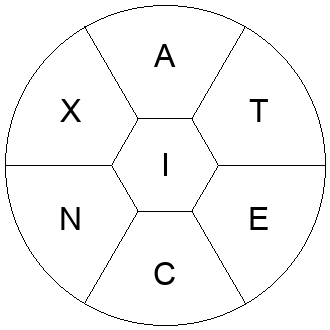
The official answers for today's puzzle are:

Click on the arrow to show the definition.
Click outside the pop-up to close it.


Number of Pangrams: 1

Maximum Puzzle Score: 223

Number of Answers: 44

Points Needed for Genius: 156

Genius requires between 23 and 36 words. You need at least a 6-letter word to reach genius. If you don't get the pangram, you need 75% of the total points to reach genius. If you get the pangram, you only need 68% of the remaining points to reach genius.

Other days with this pangram:

The button below will reveal a chart with the number of words by each letter. Red bars indicate that there is a pangram(s) starting with that letter.


How does this puzzle compare to other puzzles?

Today's score of 223 was in the 72nd percentile of all puzzles.
The last time there was a score this high was on May 30, 2026.
The highest score ever was 537 on January 22, 2021.
The lowest score ever was 47 on March 27, 2023.

This puzzle's 44 possible answers rank it in the 61st percentile of all puzzles.
The last time there were more answers than this was on May 30, 2026.
The highest number of answers was 81 on June 08, 2019.
The lowest number of answers was 16 on March 27, 2023.

It takes a 6-letter word for genius.
The last time this happened was on May 29, 2026.

Today's puzzle has an average word length of 5.6.
For all Bees, the average word length has been 5.3.


Haven't I seen these letters before?

Hover over a letter to see its first and most recent appearance in the Bee!


Haven't I seen these words before?

The most common words in the Bee are:

  • noon 242
  • loll 223
  • toot 216
  • nana 201
  • naan 201
  • nene 158
  • tilt 156
  • till 156
  • lilt 156
  • mamma 153
  • mama 153
  • tint 151
  • onion 148
  • toon 146
  • onto 146
  • acai 144
  • acacia 144
  • anon 136
  • olio 134
  • anal 134
  • papa 127
  • tact 126
  • baba 126
  • lulu 125
  • lull 125
  • dodo 124
  • poop 120
  • mitt 120
  • loon 120
  • booboo 120
  • boob 120
  • cocci 119
  • moon 118
  • mono 118
  • calla 118
  • call 118
  • tattoo 117
  • tartar 117
  • tart 117
  • ratatat 117
  • attar 116
  • tutu 114
  • ally 113
  • allay 113
  • momma 111
  • aria 111
  • ammo 111
  • tatty 110
  • cancan 110
  • roar 109


How long are words in the Bee?

There have been 118,565 answers ever accepted in the Bee - with 11,038 unique words.
Below are the distributions of the lengths of these words.


Valid dictionary words not in today's official answers

You may be wondering why these words aren't here*:

  • acetin
  • acini
  • acinic
  • actin
  • actinia
  • actiniae
  • actinian
  • actinic
  • aecia
  • antiacne
  • antitax
  • atactic
  • ataxic
  • attaint
  • axenic
  • axite
  • cain
  • cannie
  • cantic
  • cattie
  • centai
  • cine
  • ectatic
  • enatic
  • encaenia
  • enceinte
  • encina
  • entia
  • etic
  • excitant
  • exine
  • ictic
  • incent
  • incitant
  • inia
  • inti
  • intine
  • ixia
  • nannie
  • nictate
  • nictitant
  • nictitate
  • niente
  • nixe
  • nixie
  • taenia
  • taeniae
  • taenite
  • tain
  • tattie
  • taxite
  • taxitic
  • tectite
  • tein
  • tenia
  • teniae
  • tentie
  • tetanic
  • tian
  • tictac
  • tinea
  • titanate
  • titania
  • titanite
  • titi
  • titian
  • tittie
  • xenia
  • xenic

*Because the New York Times considers them obscure or offensive.

acacia

Etymology 1

noun
  1. A shrub or tree of the tribe Acacieae.
  2. The thickened or dried juice of several species in Acacieae, in particular Vachellia nilotica (syn. Acacia nilotica), the Egyptian acacia.
  3. A false acacia; robinia tree, Robinia pseudoacacia.
  4. Gum arabic; gum acacia.
  5. Any of several related trees, such as the locust tree.
  6. A light to moderate greenish yellow with a hint of red.

Etymology 2

noun
  1. (history) A roll or bag, filled with dust, borne by Byzantine emperors, as a memento of mortality. It is represented on medals.

acai

noun
  1. Any of several South American palms, of the genus Euterpe, having a dark purple drupe.
  2. The fruit of these trees, harvested for its juice.

acetic

adjective
  1. Of, pertaining to, or producing vinegar
  2. Of or pertaining to acetic acid or its derivatives

ancient

Etymology 1

noun
  1. A person who is very old.
  2. A person who lived in ancient times.
  3. One of the senior members of the Inns of Court or of Chancery.
  4. A senior; an elder; a predecessor.
adjective
  1. Having lasted from a remote period; having been of long duration; of great age, very old.
  2. Existent or occurring in time long past, usually in remote ages; belonging to or associated with antiquity; old, as opposed to modern.
  3. (history) Relating to antiquity as a primarily European historical period; the time before the Middle Ages.
  4. Experienced; versed.
  5. Former; sometime.

Etymology 2

noun
  1. A flag, banner, standard or ensign.
  2. The bearer of a flag; ensign

anti

noun
  1. A person opposed to a concept or principle.
adjective
  1. Opposed to something.
  2. That has a torsion angle between 90° and 180°
preposition
  1. Alternative form of anti-

antic

Etymology 1

noun
  1. A grotesque representation of a figure; a gargoyle.
  2. A caricature.
  3. (often in plural) A ludicrous gesture or act; ridiculous behaviour; caper.
  4. A grotesque performer or clown, buffoon.
verb
  1. To perform antics, caper.
  2. To make a fool of, to cause to look ridiculous.
  3. To perform (an action) as an antic; to mimic ridiculously.
adjective
  1. Playful, funny, absurd
  2. Grotesque, incongruous.
  3. Grotesque, bizarre
adjective
  1. Having existed in ancient times, descended from antiquity; used especially in reference to Greece and Rome.
  2. Belonging to former times, not modern, out of date, old-fashioned.
  3. Designating a style of type.
  4. Embossed without gilt.

Etymology 2

noun
  1. A pose, often exaggerated, in anticipation of an action; for example, a brief squat before jumping

ataxia

noun
  1. Lack of coordination while performing voluntary movements, which may appear to be clumsiness, inaccuracy, or instability.
  2. The condition of a polymer in which the orientation of the subunits is random
  3. Disorder; irregularity.

attain

verb
  1. To gain (an object or desired result).
  2. To reach or come to, by progression or motion; to arrive at (a place, time, state, etc.).
  3. To come or arrive, by motion, growth, bodily exertion, or efforts toward a place, object, state, etc.
  4. To get at the knowledge of.
  5. To reach in excellence or degree.
  6. To reach a person after being behind them.

attic

noun
  1. The space, often unfinished and with sloped walls, directly below the roof in the uppermost part of a house or other building, generally used for storage or habitation.

cacti

noun
  1. Any member of the family Cactaceae, a family of flowering New World succulent plants suited to a hot, semi-desert climate.
  2. Any succulent plant with a thick fleshy stem bearing spines but no leaves, such as euphorbs.

canine

noun
  1. Any member of Caninae, the only living subfamily of Canidae.
  2. Any of certain extant canids regarded as similar to the dog or wolf (including coyotes, jackals, etc.) but distinguished from the vulpines, which are regarded as fox-like.
  3. In heterodont mammals, the pointy tooth between the incisors and the premolars; a cuspid.
  4. A king and a nine as a starting hand in Texas hold 'em due to phonetic similarity.
adjective
  1. Of, or pertaining to, a dog or dogs.
  2. Dog-like.
  3. Of or pertaining to mammalian teeth which are cuspids or fangs.
  4. Of an appetite: depraved or inordinate; used to describe eating disorders.

cantina

noun
  1. A drinking establishment, often specifically of the type found in Latin America.
  2. Abbreviated form of cantina truck, cantina wagon or cantina trailer

cite

Etymology 1

verb
  1. To quote; to repeat, as a passage from a book, or the words of another.
  2. To list the source(s) from which one took information, words or literary or verbal context.
  3. To summon officially or authoritatively to appear in court.

Etymology 2

noun
  1. A citation

entice

verb
  1. To lure; to attract by arousing desire or hope.

excite

verb
  1. To stir the emotions of.
  2. To arouse or bring out (e.g. feelings); to stimulate.
  3. To cause an electron to move to a higher than normal state; to promote an electron to an outer level.
  4. To energize (an electromagnet); to produce a magnetic field in.

exit

noun
  1. An act of going out or going away, or leaving; a departure.
  2. A way out.
  3. The act of departing from life; death.
verb
  1. To go out or go away from a place or situation; to depart, to leave.
  2. To depart from life; to die.
  3. To end or terminate (a program, subroutine, etc.)
  4. (originally United States) To depart from or leave (a place or situation).

extinct

verb
  1. To make extinct; to extinguish or annihilate.
adjective
  1. Extinguished, no longer alight (of fire, candles etc.)
  2. No longer used; obsolete, discontinued.
  3. (of a group of organisms, as a species) No longer in existence; having died out.
  4. No longer active.

inane

noun
  1. That which is void or empty.
adjective
  1. Lacking sense or meaning (often to the point of boredom or annoyance)
  2. Purposeless; pointless

incant

verb
  1. To state solemnly, to chant.
  2. To recite an incantation.

incite

verb
  1. To stir up or excite; to rouse or goad into action.

inexact

adjective
  1. Imperfectly conforming; exceeding or falling short in some respect.
  2. Imprecisely or indefinitely conceived or stated.
  3. (of a differential) having a path-dependent integral

initiate

noun
  1. A new member of an organization.
  2. One who has been through a ceremony of initiation.
verb
  1. To begin; to start.
  2. To instruct in the rudiments or principles; to introduce.
  3. To confer membership on; especially, to admit to a secret order with mysterious rites or ceremonies.
  4. To do the first act; to perform the first rite; to take the initiative.
adjective
  1. Unpractised; untried; new.
  2. Begun; commenced; introduced to, or instructed in, the rudiments; newly admitted.

innate

verb
  1. To cause to exist; to call into being.
adjective
  1. Inborn; existing or having existed since birth.
  2. Originating in, or derived from, the constitution of the intellect, as opposed to acquired from experience.
  3. Instinctive; coming from instinct.
  4. Joined by the base to the very tip of a filament.

intact

adjective
  1. Left complete or whole; not touched, defiled, sullied or otherwise damaged
  2. Of animals, not castrated: an intact bull.
  3. Uncircumcised; commonly used to describe a penis with a foreskin in intactivism.

intent

noun
  1. A purpose; something that is intended.
  2. The state of someone’s mind at the time of committing an offence.
adjective
  1. Firmly fixed or concentrated on something.
  2. Engrossed.
  3. Unwavering from a course of action.

niacin

noun
  1. A water-soluble vitamin, a component of vitamin B complex, found in meat, yeast, and dairy products; it is essential to metabolism.

nice

Etymology 1

noun
  1. Niceness.
adjective
  1. Pleasant, satisfactory.
  2. Of a person: friendly, attractive.
  3. Respectable; virtuous.
  4. (with and) Shows that the given adjective is desirable, or acts as a mild intensifier; pleasantly, quite.
  5. Silly, ignorant; foolish.
  6. Particular in one's conduct; scrupulous, painstaking; choosy.
  7. Particular as regards rules or qualities; strict.
  8. Showing or requiring great precision or sensitive discernment; subtle.
  9. Easily injured; delicate; dainty.
  10. Doubtful, as to the outcome; risky.
adverb
  1. Nicely.
interjection
  1. Used to signify a job well done.
  2. Used to signify approval.

Etymology 2

verb
  1. To run a process with a specified (usually lower) priority.

niece

noun
  1. A daughter of one’s sibling, brother-in-law, or sister-in-law; either the daughter of one's brother ("fraternal niece"), or of one's sister ("sororal niece").

nine

noun
  1. The digit or figure 9.
  2. A playing card with nine pips.
  3. A nine-millimeter semi-automatic pistol.
  4. (usually in the plural) A statistical unit of proportion (of reliability, purity, etc.).
  5. A baseball club, team, or lineup (composed of nine players).
numeral
  1. A numerical value equal to 9; the number following eight and preceding ten.
  2. Describing a group or set with nine elements.

nineteen

numeral
  1. The cardinal number occurring after eighteen and before twenty, represented in Roman numerals as XIX and in Arabic numerals as 19. It is the last/largest of the "teens".

nite

noun
  1. The period between sunset and sunrise, when a location faces far away from the sun, thus when the sky is dark.
  2. (Astronomy) The period of darkness beginning at the end of evening astronomical twilight when the sun is 18 degrees below the horizon, and ending at the beginning of morning astronomical twilight.
  3. (Legal) Often defined in the legal system as beginning 30 minutes after sunset, and ending 30 minutes before sunrise.
  4. An evening or night spent at a particular activity.
  5. A night (and part of the days before and after it) spent in a place away from home, e.g. a hotel.
  6. Nightfall.
  7. Darkness (due to it being nighttime).
  8. A dark blue colour, midnight blue.
  9. A night's worth of competitions, generally one game.

tacit

adjective
  1. Expressed in silence; implied, but not made explicit; silent.
  2. Not derived from formal principles of reasoning; based on induction rather than deduction.

tactic

noun
  1. A maneuver, or action calculated to achieve some end.
  2. A maneuver used against an enemy.
  3. A sequence of moves that limits the opponent's options and results in an immediate and tangible advantage, typically in the form of material.
adjective
  1. Tactical; of or relating to the art of military and naval tactics.
  2. Describing a polymer whose repeat units are identical.

tactician

noun
  1. A person skilled in the planning and execution of tactics.

taint

Etymology 1

noun
  1. A contamination, decay or putrefaction, especially in food
  2. A mark of disgrace, especially on one's character; blemish
  3. Tincture; hue; colour
  4. Infection; corruption; deprivation
  5. A marker indicating that a variable is unsafe and should be subjected to additional security checks.
verb
  1. To contaminate or corrupt (something) with an external agent, either physically or morally.
  2. To spoil (food) by contamination.
  3. To be infected or corrupted; to be touched by something corrupting.
  4. To be affected with incipient putrefaction.
  5. To mark (a variable) as unsafe, so that operations involving it are subject to additional security checks.
  6. To invalidate (a share capital account) by transferring profits into it.

Etymology 2

noun
  1. A thrust with a lance, which fails of its intended effect.
  2. An injury done to a lance in an encounter, without its being broken; also, a breaking of a lance in an encounter in a dishonorable or unscientific manner.
verb
  1. To damage, as a lance, without breaking it; also, to break, as a lance, but usually in an unknightly or unscientific manner.
  2. To hit or touch lightly, in tilting.
  3. To thrust ineffectually with a lance.

Etymology 3

noun
  1. The perineum.

tannic

adjective
  1. Pertaining to, containing, or obtained from tannin.

tannin

noun
  1. Tannic acid or any of its derivatives.

taxi

noun
  1. A vehicle that may be hired for single journeys by members of the public, driven by a taxi driver.
  2. A share taxi.
verb
  1. To move an aircraft on the ground under its own power.
  2. To travel by taxicab.

tinct

No Definition Found.

tine

Etymology 1

noun
  1. A spike or point on an implement or tool, especially a prong of a fork or a tooth of a comb.
  2. A small branch, especially on an antler or horn.
  3. A wild vetch or tare.

Etymology 2

adjective
  1. Small, diminutive

Etymology 3

noun
  1. Trouble; distress; teen.

Etymology 4

verb
  1. To kindle; to set on fire.
  2. To rage; to smart.

Etymology 5

verb
  1. To shut in, or enclose.

tint

noun
  1. A slight coloring.
  2. A pale or faint tinge of any color; especially, a variation of a color obtained by adding white (contrast shade)
  3. A color considered with reference to other very similar colors.
  4. A shaded effect in engraving, produced by the juxtaposition of many fine parallel lines.
verb
  1. To shade, to color.

titan

noun
  1. Something or someone of very large stature, greatness, or godliness.

titanic

Etymology 1

adjective
  1. Having great size, or great strength, force or power.

Etymology 2

adjective
  1. Of or relating to titanium, especially tetravalent titanium

innie

noun
  1. A navel that is formed of a hollow in the abdomen (as opposed to one that protrudes from the abdomen).
  2. A vagina with inner labia minora