Friday, June 12, 2026

Answers to yesterday's Bee

Jump to answers for


The official answers for today's puzzle are:

Click on the arrow to show the definition.
Click outside the pop-up to close it.


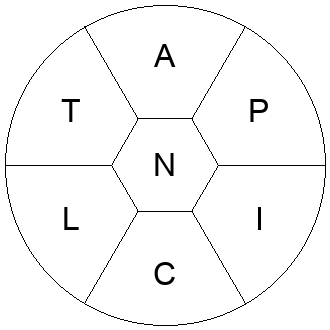
Number of Pangrams: 1

Maximum Puzzle Score: 306

Number of Answers: 60

Points Needed for Genius: 214

Genius requires between 31 and 50 words. You need at least a 7-letter word to reach genius. If you don't get the pangram, you need 74% of the total points to reach genius. If you get the pangram, you only need 68% of the remaining points to reach genius.

Other days with this pangram:

The button below will reveal a chart with the number of words by each letter. Red bars indicate that there is a pangram(s) starting with that letter.


How does this puzzle compare to other puzzles?

Today's score of 306 was in the 94th percentile of all puzzles.
The last time there was a score this high was on May 30, 2026.
The highest score ever was 537 on January 22, 2021.
The lowest score ever was 47 on March 27, 2023.

This puzzle's 60 possible answers rank it in the 91st percentile of all puzzles.
The last time there were more answers than this was on June 09, 2026.
The highest number of answers was 81 on June 08, 2019.
The lowest number of answers was 16 on March 27, 2023.

It takes a 7-letter word for genius.
The last time this happened was on June 10, 2026.

Today's puzzle has an average word length of 5.7.
For all Bees, the average word length has been 5.3.


Haven't I seen these letters before?

Hover over a letter to see its first and most recent appearance in the Bee!


Haven't I seen these words before?

The most common words in the Bee are:

  • noon 244
  • loll 225
  • toot 217
  • nana 202
  • naan 202
  • nene 158
  • tilt 156
  • till 156
  • lilt 156
  • mamma 154
  • mama 154
  • tint 152
  • onion 150
  • toon 147
  • onto 147
  • acai 145
  • acacia 145
  • olio 136
  • anon 136
  • anal 135
  • papa 128
  • tact 127
  • baba 126
  • lulu 125
  • lull 125
  • dodo 124
  • loon 122
  • mitt 121
  • poop 120
  • booboo 120
  • boob 120
  • cocci 119
  • moon 118
  • mono 118
  • calla 118
  • call 118
  • tattoo 117
  • tartar 117
  • tart 117
  • ratatat 117
  • attar 116
  • tutu 114
  • ally 113
  • allay 113
  • tatty 111
  • momma 111
  • cancan 111
  • aria 111
  • ammo 111
  • meme 110


How long are words in the Bee?

There have been 119,047 answers ever accepted in the Bee - with 11,045 unique words.
Below are the distributions of the lengths of these words.


Valid dictionary words not in today's official answers

You may be wondering why these words aren't here*:

  • acapnia
  • acini
  • acinic
  • aclinic
  • actin
  • actinal
  • actinia
  • actinian
  • actinic
  • alan
  • alanin
  • alant
  • allicin
  • anaclitic
  • ancilla
  • ancipital
  • anil
  • anilin
  • anna
  • anta
  • anticlinal
  • antipapal
  • antipill
  • aplanat
  • aplanatic
  • attaint
  • cain
  • callan
  • callant
  • calpain
  • cantal
  • cantala
  • cantic
  • caplin
  • captan
  • catlin
  • clinal
  • incipit
  • incitant
  • inclip
  • inia
  • inti
  • lallan
  • lanital
  • lapin
  • latina
  • lattin
  • liana
  • linac
  • linin
  • linn
  • lipin
  • nala
  • nanna
  • napa
  • nappa
  • nictitant
  • nill
  • nipa
  • paan
  • palpitant
  • papain
  • patin
  • pian
  • piani
  • pianic
  • pina
  • pinna
  • pinnal
  • pinta
  • platan
  • platina
  • platinic
  • tacan
  • tain
  • taipan
  • tantalic
  • tian
  • tincal
  • titania
  • titian

*Because the New York Times considers them obscure or offensive.

anal

noun
  1. Any of the anal scales of a reptile.
  2. Anal sex.
adjective
  1. Of, related to, intended for or involving the anus.
  2. Of the stage in psychosexual development when the child's interest is alleged to be concentrated on the anal region.
  3. Of a person, compulsive and stubborn, obsessed with neatness and accuracy, supposedly from not having progressed beyond the anal stage.
  4. (of a vein) Proximate to the thorax.

annal

noun
  1. The record of a single event or item.

anti

noun
  1. A person opposed to a concept or principle.
adjective
  1. Opposed to something.
  2. That has a torsion angle between 90° and 180°
preposition
  1. Alternative form of anti-

antic

Etymology 1

noun
  1. A grotesque representation of a figure; a gargoyle.
  2. A caricature.
  3. (often in plural) A ludicrous gesture or act; ridiculous behaviour; caper.
  4. A grotesque performer or clown, buffoon.
verb
  1. To perform antics, caper.
  2. To make a fool of, to cause to look ridiculous.
  3. To perform (an action) as an antic; to mimic ridiculously.
adjective
  1. Playful, funny, absurd
  2. Grotesque, incongruous.
  3. Grotesque, bizarre
adjective
  1. Having existed in ancient times, descended from antiquity; used especially in reference to Greece and Rome.
  2. Belonging to former times, not modern, out of date, old-fashioned.
  3. Designating a style of type.
  4. Embossed without gilt.

Etymology 2

noun
  1. A pose, often exaggerated, in anticipation of an action; for example, a brief squat before jumping

anticipant

No Definition Found.

apian

noun
  1. (very rare) A bee.
adjective
  1. Relating to bees.

applicant

noun
  1. One who applies for something; one who makes a request; a petitioner.
  2. The third coordinate (or z-coordinate) in a three-dimensional coordinate system.

attain

verb
  1. To gain (an object or desired result).
  2. To reach or come to, by progression or motion; to arrive at (a place, time, state, etc.).
  3. To come or arrive, by motion, growth, bodily exertion, or efforts toward a place, object, state, etc.
  4. To get at the knowledge of.
  5. To reach in excellence or degree.
  6. To reach a person after being behind them.

canal

noun
  1. An artificial waterway or artificially improved river used for travel, shipping, or irrigation.
  2. A tubular channel within the body.
  3. One of the faint, hazy markings resembling straight lines on early telescopic images of the surface of Mars.
verb
  1. To dig an artificial waterway in or to (a place), especially for drainage
  2. To travel along a canal by boat

cancan

noun
  1. A high-kicking chorus line dance originating in France.
  2. (motocross) A trick where one leg is brought over the seat, so that both legs are on one side.
verb
  1. To dance the cancan.

canna

Etymology 1

noun
  1. Any member of the genus Canna of tropical plants with large leaves and often showy flowers.

Etymology 2

noun
  1. A measure of length in Italy, varying from six to seven feet.

cant

Etymology 1

noun
  1. An argot, the jargon of a particular class or subgroup.
  2. A private or secret language used by a religious sect, gang, or other group.
  3. A language spoken by some Irish Travellers; Shelta.
  4. Empty, hypocritical talk.
  5. Whining speech, such as that used by beggars.
  6. A blazon of a coat of arms that makes a pun upon the name (or, less often, some attribute or function) of the bearer, canting arms.
  7. A call for bidders at a public fair; an auction.
verb
  1. To speak with the jargon of a class or subgroup.
  2. To speak in set phrases.
  3. To preach in a singsong fashion, especially in a false or empty manner.
  4. Of a blazon, to make a pun that references the bearer of a coat of arms.
  5. To sell by auction, or bid at an auction.

Etymology 2

noun
  1. Side, edge, corner, niche.
  2. Slope, the angle at which something is set.
  3. A corner (of a building).
  4. An outer or external angle.
  5. An inclination from a horizontal or vertical line; a slope or bevel; a tilt.
  6. A movement or throw that overturns something.
  7. A sudden thrust, push, kick, or other impulse, producing a bias or change of direction; also, the bias or turn so given.
  8. (coopering) A segment forming a side piece in the head of a cask.
  9. A segment of the rim of a wooden cogwheel.
  10. A piece of wood laid upon the deck of a vessel to support the bulkheads.
verb
  1. To set (something) at an angle.
  2. To give a sudden turn or new direction to.
  3. To bevel an edge or corner.
  4. To overturn so that the contents are emptied.

Etymology 3

noun
  1. A parcel, a division.
verb
  1. To divide or parcel out.

Etymology 4

adjective
  1. Lively, lusty.

cantata

noun
  1. A vocal composition accompanied by instruments and generally containing more than one movement, typical of 17th and 18th century Italian music.

cantina

noun
  1. A drinking establishment, often specifically of the type found in Latin America.
  2. Abbreviated form of cantina truck, cantina wagon or cantina trailer

captain

noun
  1. A chief or leader.
  2. The person lawfully in command of a ship or other vessel.
  3. An army officer with a rank between the most senior grade of lieutenant and major.
  4. A naval officer with a rank between commander and commodore.
  5. A commissioned officer in the United States Navy, Coast Guard, NOAA Corps, or PHS Corps of a grade superior to a commander and junior to a rear admiral (lower half). A captain is equal in grade or rank to an Army, Marine Corps, or Air Force colonel.
  6. One of the athletes on a sports team who is designated to make decisions, and is allowed to speak for his team with a referee or official.
  7. The leader of a group of workers.
  8. The head boy of a school.
  9. A maître d', a headwaiter.
  10. An honorific title given to a prominent person. See colonel.
verb
  1. To act as captain
  2. To exercise command of a ship, aircraft or sports team.

catnap

Etymology 1

noun
  1. A brief, light sleep.
verb
  1. To take a catnap, to take a short sleep or nap.

Etymology 2

verb
  1. To kidnap a cat.

catnip

noun
  1. Any of the about 250 species of flowering plant of the genus Nepeta, family Lamiaceae, certain of which are said to have medicinal qualities.
  2. Something that causes excitement or interest.

clan

noun
  1. A group of people all descended from a common ancestor, in fact or belief.
  2. A traditional social group of families in the Scottish Highlands having a common hereditary chieftain
  3. Any group defined by family ties with some sort of political unity.
  4. A group of players who habitually play on the same team in multiplayer games.
  5. A badger colony.

clinic

noun
  1. A medical facility, such as a hospital, especially one for the treatment and diagnosis of outpatients.
  2. (by extension) A hospital session to diagnose or treat patients.
  3. A school, or a session of a school or class, in which medicine or surgery is taught by the examination and treatment of patients in the presence of the pupils.
  4. A group practice of several physicians.
  5. A meeting for the diagnosis of problems, or training, on a particular subject.
  6. A temporary office arranged on a regular basis to allow politicians to meet their constituents.
  7. A series of workouts used to build skills of practitioners regardless of team affiliation.
  8. One confined to bed by sickness.
  9. One who receives baptism on a sickbed.

clinical

noun
  1. A medical student's session spent in a real-world nursing environment.
adjective
  1. Of or pertaining to a medical clinic or facility.
  2. Dealing with practical management of patients; contrasting with prehealth sciences.
  3. Cool and emotionless.
  4. Of or relating to a bed.

clinician

noun
  1. A healthcare provider working in a clinic or hospital.

inapt

adjective
  1. Unapt

incant

verb
  1. To state solemnly, to chant.
  2. To recite an incantation.

initial

noun
  1. The first letter of a word or a name.
  2. In plural, the first letter of each word of a person's full name considered as a unit.
  3. A distinguished initial letter of a chapter or section of a document.
  4. Onset, part of a syllable that precedes the syllable nucleus in phonetics and phonology.
verb
  1. To sign one's initial(s), as an abbreviated signature.
adjective
  1. Chronologically first, early; of or pertaining to the beginning, cause or origin.
  2. Spatially first, placed at the beginning, in the first position; especially said of the first letter of a word.

intact

adjective
  1. Left complete or whole; not touched, defiled, sullied or otherwise damaged
  2. Of animals, not castrated: an intact bull.
  3. Uncircumcised; commonly used to describe a penis with a foreskin in intactivism.

lain

Etymology 1

verb
  1. To rest in a horizontal position on a surface.
  2. To be placed or situated.
  3. To abide; to remain for a longer or shorter time; to be in a certain state or condition.
  4. Used with in: to be or exist; to belong or pertain; to have an abiding place; to consist.
  5. Used with with: to have sexual relations with.
  6. Used with on/upon: to be incumbent (on); to be the responsibility of a person.
  7. To lodge; to sleep.
  8. To be still or quiet, like one lying down to rest.
  9. To be sustainable; to be capable of being maintained.

Etymology 2

verb
  1. To conceal, keep quiet about.

lanai

noun
  1. (Florida) A Hawaiian-style roofed patio.

lantana

noun
  1. Any member of the genus Lantana of perennial verbenas with aromatic flower clusters.

lint

Etymology 1

noun
  1. A fine material made by scraping cotton or linen cloth; used for dressing wounds.
  2. Clinging fuzzy fluff that clings to fabric or accumulates in one's pockets or navel etc.
  3. The fibrous coat of thick hairs covering the seeds of the cotton plant.
  4. Raw cotton ready for baling.

Etymology 2

verb
  1. To perform a static check on (source code) to detect stylistic or programmatic errors.

naan

noun
  1. A type of round, flat bread baked in a tandoor popular in South and Central Asian cuisine.

nail

Etymology 1

noun
  1. The thin, horny plate at the ends of fingers and toes on humans and some other animals.
  2. The basal thickened portion of the anterior wings of certain hemiptera.
  3. The terminal horny plate on the beak of ducks, and other allied birds.
  4. The claw of a bird or other animal.
  5. A spike-shaped metal fastener used for joining wood or similar materials. The nail is generally driven through two or more layers of material by means of impacts from a hammer or other device. It is then held in place by friction.
  6. A round pedestal on which merchants once carried out their business, such as the four nails outside The Exchange, Bristol.
  7. An archaic English unit of length equivalent to 1/20 of an ell or 1/16 of a yard (2 1/4 inches or 5.715 cm).

Etymology 2

verb
  1. To fix (an object) to another object using a nail.
  2. To drive a nail.
  3. To stud or boss with nails, or as if with nails.
  4. To catch.
  5. To expose as a sham.
  6. To accomplish (a task) completely and successfully.
  7. To hit (a target) effectively with some weapon.
  8. Of a male, to engage in sexual intercourse with.
  9. To spike, as a cannon.
  10. To nail down: to make certain, or confirm.

nana

Etymology 1

noun
  1. A banana
  2. A fool

Etymology 2

noun
  1. (term of endearment) one's grandmother
  2. A nanny

natal

Etymology 1

adjective
  1. Of or relating to birth.

Etymology 2

adjective
  1. Of or relating to the buttocks.

natant

adjective
  1. Floating or swimming (in water)
  2. In a horizontal position, as if swimming

niacin

noun
  1. A water-soluble vitamin, a component of vitamin B complex, found in meat, yeast, and dairy products; it is essential to metabolism.

pain

Etymology 1

noun
  1. An ache or bodily suffering, or an instance of this; an unpleasant sensation, resulting from a derangement of functions, disease, or injury by violence; hurt.
  2. The condition or fact of suffering or anguish especially mental, as opposed to pleasure; torment; distress
  3. (from pain in the neck) An annoying person or thing.
  4. Suffering inflicted as punishment or penalty.
  5. (chiefly in the plural) Labour; effort; great care or trouble taken in doing something.
verb
  1. To hurt; to put to bodily uneasiness or anguish; to afflict with uneasy sensations of any degree of intensity; to torment; to torture.
  2. To render uneasy in mind; to disquiet; to distress; to grieve.
  3. To inflict suffering upon as a penalty; to punish.

Etymology 2

noun
  1. Any of various breads stuffed with a filling.

paint

noun
  1. A substance that is applied as a liquid or paste, and dries into a solid coating that protects or adds color/colour to an object or surface to which it has been applied.
  2. (in the plural) A set of containers or blocks of paint of different colors/colours, used for painting pictures.
  3. The free-throw lane, construed with the.
  4. Paintballs.
  5. A face card (king, queen, or jack).
  6. Graphics drawn using an input device, not scanned or generated.
  7. Makeup.
  8. Any substance fixed with latex to harden it.
verb
  1. To apply paint to.
  2. To apply in the manner that paint is applied.
  3. To cover (something) with spots of colour, like paint.
  4. To create (an image) with paints.
  5. To practise the art of painting pictures.
  6. To draw an element in a graphical user interface.
  7. To depict or portray.
  8. To color one's face by way of beautifying it.
  9. To direct a radar beam toward.

panic

Etymology 1

noun
  1. Overpowering fright, often affecting groups of people or animals.
  2. Rapid reduction in asset prices due to broad efforts to raise cash in anticipation of continuing decline in asset prices.
  3. A kernel panic or system crash.
verb
  1. To feel overwhelming fear.
  2. To cause somebody to panic.
  3. (by extension) To crash.
  4. (by extension) To cause the system to crash.
adjective
  1. Pertaining to the god Pan.
  2. Of fear, fright etc: sudden or overwhelming (attributed by the ancient Greeks to the influence of Pan).

Etymology 2

noun
  1. A plant of the genus Panicum.

panini

noun
  1. A type of grilled sandwich made of a small loaf of bread, cut horizontally, filled with meat such as salami or ham, cheese or other food.

pant

Etymology 1

noun
  1. A quick breathing; a catching of the breath; a gasp.
  2. Eager longing.
  3. A violent palpitation of the heart.
verb
  1. To breathe quickly or in a labored manner, as after exertion or from eagerness or excitement; to respire with heaving of the breast; to gasp.
  2. To long eagerly; to desire earnestly.
  3. To long for (something); to be eager for (something).
  4. Of the heart, to beat with unnatural violence or rapidity; to palpitate.
  5. To sigh; to flutter; to languish.
  6. To heave, as the breast.
  7. To bulge and shrink successively, of iron hulls, etc.

Etymology 2

noun
  1. A pair of pants (trousers or underpants).
  2. (used attributively as a modifier) Of or relating to pants.

Etymology 3

noun
  1. (Scotland and northeast England) Any public drinking fountain.

patina

noun
  1. A paten, flat type of dish
  2. The colour or incrustation which age and wear give to (mainly metallic) objects; especially, the green rust which covers works of art such as ancient bronzes, coins and medals.
  3. A green colour, tinted with grey, like that of bronze patina.
  4. A gloss or superficial layer.
adjective
  1. Of a green colour, tinted with grey, like that of bronze patina.

picnic

noun
  1. An informal social gathering, usually in a natural outdoor setting, to which the participants bring their own food and drink.
  2. The meal eaten at such a gathering.
  3. An easy or pleasant task.
  4. An entertainment at which each person contributed some dish to a common table.
verb
  1. To take part in a picnic.

pinata

noun
  1. (Latin American culture) A doll or other decorated container that is filled with candy and hit with a hammer or a stick by blindfolded children during birthday parties or other celebrations until the candy falls out.
verb
  1. To hit something or someone with sticks after having filled them with candy.

pint

noun
  1. A unit of volume, equivalent to:
  2. (metonym) A pint of milk.
  3. (metonymy) A glass of beer or cider, served by the pint.

pintail

noun
  1. A pintail duck, a type of dabbling duck with a characteristic pointed tail.
  2. A pin-tailed snipe, Gallinago stenura.
  3. The end of a fastening pin or mandrel on a Huckbolt or pop rivet that is broken off when installation is complete.
  4. A surfboard with a pointed back end.

pippin

Etymology 1

noun
  1. A seed

Etymology 2

noun
  1. Any of several varieties of eating apple that have a yellow or green skin with patches of red
  2. Any of several roundish or oblate apple varieties
  3. An apple tree raised from a seed (not grafted)

plain

Etymology 1

adjective
  1. Flat, level.
  2. Simple.
  3. Obvious.
  4. Open.
  5. Not unusually beautiful; unattractive.
  6. Not a trump.
adverb
  1. Simply.
  2. Plainly; distinctly.

Etymology 2

noun
  1. A lamentation.
verb
  1. To complain.
  2. To lament, bewail.

Etymology 3

noun
  1. A land area free of woodland, cities, and towns; open country.
  2. A wide, open space that is usually used to grow crops or to hold farm animals.
  3. A place where competitive matches are carried out.
  4. Any of various figurative meanings, regularly dead metaphors.
noun
  1. An expanse of land with relatively low relief, usually exclusive of forests, deserts, and wastelands.
verb
  1. To level; to raze; to make plain or even on the surface.
  2. To make plain or manifest; to explain.
noun
  1. A level or flat surface.
  2. A flat surface extending infinitely in all directions (e.g. horizontal or vertical plane).
  3. A level of existence or development. (eg, astral plane)
  4. A roughly flat, thin, often moveable structure used to create lateral force by the flow of air or water over its surface, found on aircraft, submarines, etc.
  5. (Unicode) Any of a number of designated ranges of sequential code points.
  6. An imaginary plane which divides the body into two portions.
noun
  1. A tool for smoothing wood by removing thin layers from the surface.
noun
  1. An airplane; an aeroplane.
  2. Any of various nymphalid butterflies, of various genera, having a slow gliding flight. Also called aeroplanes.
  3. The butterfly Bindahara phocides, family Lycaenidae, of Asia and Australasia.
noun
  1. A deciduous tree of the genus Platanus.
  2. (Northern UK) A sycamore.

plaint

noun
  1. A lament or woeful cry.
  2. A complaint.
  3. A sad song.
  4. An accusation.

plan

noun
  1. A drawing showing technical details of a building, machine, etc., with unwanted details omitted, and often using symbols rather than detailed drawing to represent doors, valves, etc.
  2. A set of intended actions, usually mutually related, through which one expects to achieve a goal.
  3. A two-dimensional drawing of a building as seen from above with obscuring or irrelevant details such as roof removed, or of a floor of a building, revealing the internal layout; as distinct from the elevation.
  4. A method; a way of procedure; a custom.
  5. A subscription to a service.
verb
  1. To design (a building, machine, etc.).
  2. To create a plan for.
  3. To intend.
  4. To make a plan.

plant

noun
  1. An organism that is not an animal, especially an organism capable of photosynthesis. Typically a small or herbaceous organism of this kind, rather than a tree.
  2. An organism of the kingdom Plantae; now specifically, a living organism of the Embryophyta (land plants) or of the Chlorophyta (green algae), a eukaryote that includes double-membraned chloroplasts in its cells containing chlorophyll a and b, or any organism closely related to such an organism.
  3. Now specifically, a multicellular eukaryote that includes chloroplasts in its cells, which have a cell wall.
  4. Any creature that grows on soil or similar surfaces, including plants and fungi.
  5. A factory or other industrial or institutional building or facility.
  6. An object placed surreptitiously in order to cause suspicion to fall upon a person.
  7. Anyone assigned to behave as a member of the public during a covert operation (as in a police investigation).
  8. A person, placed amongst an audience, whose role is to cause confusion, laughter etc.
  9. A play in which the cue ball knocks one (usually red) ball onto another, in order to pot the second; a set.
  10. Machinery, such as the kind used in earthmoving or construction.
  11. A young tree; a sapling; hence, a stick or staff.
  12. The sole of the foot.
  13. A plan; a swindle; a trick.
  14. An oyster which has been bedded, in distinction from one of natural growth.
  15. A young oyster suitable for transplanting.
verb
  1. To place (a seed or plant) in soil or other substrate in order that it may live and grow.
  2. To place (an object, or sometimes a person), often with the implication of intending deceit.
  3. To place or set something firmly or with conviction.
  4. To place in the ground.
  5. To furnish or supply with plants.
  6. To engender; to generate; to set the germ of.
  7. To furnish with a fixed and organized population; to settle; to establish.
  8. To introduce and establish the principles or seeds of.
  9. To set up; to install; to instate.

plantain

Etymology 1

noun
  1. A plant of the genus Plantago, with a rosette of sessile leaves about 10 cm long with a narrow part instead of a petiole, and with a spike inflorescence with the flower spacing varying widely among the species. See also psyllium.

Etymology 2

noun
  1. A plant in the genus Musa, the genus that includes banana, but with lower sugar content than banana.
  2. The fruit of the plant, usually cooked before eating and used like potatoes.

pliant

adjective
  1. Capable of plying or bending; readily yielding to force or pressure without breaking
  2. Easily influenced; tractable.

tactician

noun
  1. A person skilled in the planning and execution of tactics.

taint

Etymology 1

noun
  1. A contamination, decay or putrefaction, especially in food
  2. A mark of disgrace, especially on one's character; blemish
  3. Tincture; hue; colour
  4. Infection; corruption; deprivation
  5. A marker indicating that a variable is unsafe and should be subjected to additional security checks.
verb
  1. To contaminate or corrupt (something) with an external agent, either physically or morally.
  2. To spoil (food) by contamination.
  3. To be infected or corrupted; to be touched by something corrupting.
  4. To be affected with incipient putrefaction.
  5. To mark (a variable) as unsafe, so that operations involving it are subject to additional security checks.
  6. To invalidate (a share capital account) by transferring profits into it.

Etymology 2

noun
  1. A thrust with a lance, which fails of its intended effect.
  2. An injury done to a lance in an encounter, without its being broken; also, a breaking of a lance in an encounter in a dishonorable or unscientific manner.
verb
  1. To damage, as a lance, without breaking it; also, to break, as a lance, but usually in an unknightly or unscientific manner.
  2. To hit or touch lightly, in tilting.
  3. To thrust ineffectually with a lance.

Etymology 3

noun
  1. The perineum.

tannic

adjective
  1. Pertaining to, containing, or obtained from tannin.

tannin

noun
  1. Tannic acid or any of its derivatives.

tinct

No Definition Found.

tint

noun
  1. A slight coloring.
  2. A pale or faint tinge of any color; especially, a variation of a color obtained by adding white (contrast shade)
  3. A color considered with reference to other very similar colors.
  4. A shaded effect in engraving, produced by the juxtaposition of many fine parallel lines.
verb
  1. To shade, to color.

titan

noun
  1. Something or someone of very large stature, greatness, or godliness.

titanic

Etymology 1

adjective
  1. Having great size, or great strength, force or power.

Etymology 2

adjective
  1. Of or relating to titanium, especially tetravalent titanium