Thursday, June 18, 2026

Answers to yesterday's Bee

Jump to answers for


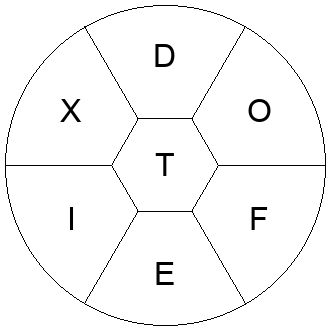
The official answers for today's puzzle are:

Click on the arrow to show the definition.
Click outside the pop-up to close it.


Number of Pangrams: 2

Maximum Puzzle Score: 168

Number of Answers: 40

Points Needed for Genius: 118

Genius requires between 17 and 36 words. You need at least a 6-letter word to reach genius. If you don't get the pangrams, you need 87% of the total points to reach genius. If you get the pangrams, you only need 63% of the remaining points to reach genius.

Other days with this pangram:

The button below will reveal a chart with the number of words by each letter. Red bars indicate that there is a pangram(s) starting with that letter.


How does this puzzle compare to other puzzles?

Today's score of 168 was in the 47th percentile of all puzzles.
The last time there was a score this low was on June 16, 2026.
The highest score ever was 537 on January 22, 2021.
The lowest score ever was 47 on March 27, 2023.

This puzzle's 40 possible answers rank it in the 50th percentile of all puzzles.
The last time there were more answers than this was on June 16, 2026.
The highest number of answers was 81 on June 08, 2019.
The lowest number of answers was 16 on March 27, 2023.

It takes a 6-letter word for genius.
The last time this happened was on June 11, 2026.

Today's puzzle has an average word length of 5.1.
For all Bees, the average word length has been 5.3.


Haven't I seen these letters before?

Hover over a letter to see its first and most recent appearance in the Bee!


Haven't I seen these words before?

The most common words in the Bee are:

  • noon 244
  • loll 225
  • toot 218
  • nana 202
  • naan 202
  • nene 158
  • tilt 157
  • till 157
  • lilt 157
  • mamma 154
  • mama 154
  • tint 152
  • onion 150
  • toon 147
  • onto 147
  • acai 145
  • acacia 145
  • olio 136
  • anon 136
  • anal 135
  • papa 128
  • tact 127
  • baba 126
  • lulu 125
  • lull 125
  • dodo 124
  • loon 122
  • mitt 121
  • poop 120
  • booboo 120
  • boob 120
  • cocci 119
  • moon 118
  • mono 118
  • calla 118
  • call 118
  • tattoo 117
  • tartar 117
  • tart 117
  • ratatat 117
  • attar 116
  • tutu 114
  • ally 114
  • allay 114
  • tatty 111
  • momma 111
  • cancan 111
  • aria 111
  • ammo 111
  • roar 110


How long are words in the Bee?

There have been 119,288 answers ever accepted in the Bee - with 11,046 unique words.
Below are the distributions of the lengths of these words.


Valid dictionary words not in today's official answers

You may be wondering why these words aren't here*:

  • deet
  • dite
  • dittoed
  • dixit
  • doit
  • doited
  • fetted
  • fixit
  • fixt
  • foetid
  • ootid
  • otto
  • tedded
  • teiid
  • tiffed
  • titi
  • tittie
  • toff
  • toft
  • toit
  • toited
  • totted
  • toxoid

*Because the New York Times considers them obscure or offensive.

deft

adjective
  1. Quick and neat in action; skillful.

detox

noun
  1. Detoxification, especially of the body from alcohol or illegal, addictive drugs.
  2. A detoxification unit.
verb
  1. To detoxify, especially from alcohol or recreational drugs.

detoxed

verb
  1. To detoxify, especially from alcohol or recreational drugs.

detoxified

verb
  1. To remove foreign and harmful substances from something.

diet

Etymology 1

noun
  1. The food and beverage a person or animal consumes.
  2. A controlled regimen of food and drink, as to gain or lose weight or otherwise influence health.
  3. (by extension) Any habitual intake or consumption.
adjective
  1. (of a food or beverage) Containing less fat, salt, sugar, or calories than normal, or claimed to have such.
  2. Having certain traits subtracted.

Etymology 2

verb
  1. To regulate the food of (someone); to put on a diet.
  2. To modify one's food and beverage intake so as to decrease or increase body weight or influence health.
  3. To eat; to take one's meals.
  4. To cause to take food; to feed.

Etymology 3

noun
  1. (usually capitalized as a proper noun) A council or assembly of leaders; a formal deliberative assembly.
  2. A session of exams
  3. The proceedings under a criminal libel.
  4. A clerical or ecclesiastical function in Scotland.

dieted

verb
  1. To regulate the food of (someone); to put on a diet.
  2. To modify one's food and beverage intake so as to decrease or increase body weight or influence health.
  3. To eat; to take one's meals.
  4. To cause to take food; to feed.

ditto

noun
  1. That which was stated before, the aforesaid, the above, the same, likewise.
  2. A duplicate or copy of a document, particularly one created by a spirit duplicator.
  3. A copy; an imitation.
  4. A symbol, represented by two apostrophes, inverted commas, or quotation marks (" "), when indicating that the item preceding is to be repeated.
  5. (in the plural) A suit of clothes of the same colour throughout.
verb
  1. To repeat the aforesaid, the earlier action etc.
adverb
  1. As said before, likewise.
interjection
  1. Used as an expression of agreement with what another person has said, or to indicate that what they have said equally applies to the person being addressed.

dote

noun
  1. A darling, a cutie.
  2. An imbecile; a dotard.
verb
  1. (usually with on) To be weakly or foolishly fond of somebody.
  2. To act in a foolish manner; to be senile.

doted

verb
  1. (usually with on) To be weakly or foolishly fond of somebody.
  2. To act in a foolish manner; to be senile.
adjective
  1. Stupid; foolish
  2. Half-rotten

dotted

verb
  1. To cover with small spots (of some liquid).
  2. To add a dot (the symbol) or dots to.
  3. To mark by means of dots or small spots.
  4. To mark or diversify with small detached objects.
  5. To punch (a person).
adjective
  1. (of a line) Made up of a series of dots.
  2. (usually computing) That contains dots.
  3. (of notes and rests) With a dot after, increasing the value of the duration by half of the basic note.
  4. Covered with irregularly scattered objects.

edit

noun
  1. A change to the text of a document.
  2. A change in the text of a file, a website or the code of software.
  3. An interruption or change to an improvised scene.
  4. An alteration to the DNA sequence of a chromosome; an act of gene splicing.
verb
  1. To change a text, or a document.
  2. To be the editor of a publication.
  3. To change the contents of a file, website, etc.
  4. To alter the DNA sequence of a chromosome; to perform gene splicing.
  5. To alter a film by cutting and splicing frames.
  6. To cut short or otherwise alter an improvised scene.
  7. To lend itself to editing in a certain way.

edited

verb
  1. To change a text, or a document.
  2. To be the editor of a publication.
  3. To change the contents of a file, website, etc.
  4. To alter the DNA sequence of a chromosome; to perform gene splicing.
  5. To alter a film by cutting and splicing frames.
  6. To cut short or otherwise alter an improvised scene.
  7. To lend itself to editing in a certain way.
adjective
  1. Having been altered from the original version.

effete

adjective
  1. Of substances, quantities etc: exhausted, spent, worn-out.
  2. Lacking strength or vitality; feeble, powerless, impotent.
  3. Decadent, weak through self-indulgence.
  4. (of a person) Affected, overrefined

exit

noun
  1. An act of going out or going away, or leaving; a departure.
  2. A way out.
  3. The act of departing from life; death.
verb
  1. To go out or go away from a place or situation; to depart, to leave.
  2. To depart from life; to die.
  3. To end or terminate (a program, subroutine, etc.)
  4. (originally United States) To depart from or leave (a place or situation).

exited

verb
  1. To go out or go away from a place or situation; to depart, to leave.
  2. To depart from life; to die.
  3. To end or terminate (a program, subroutine, etc.)
  4. (originally United States) To depart from or leave (a place or situation).

feet

Etymology 1

noun
  1. A biological structure found in many animals that is used for locomotion and that is frequently a separate organ at the terminal part of the leg.
  2. Specifically, a human foot, which is found below the ankle and is used for standing and walking.
  3. (often used attributively) Travel by walking.
  4. The base or bottom of anything.
  5. The part of a flat surface on which the feet customarily rest.
  6. The end of a rectangular table opposite the head.
  7. A short foot-like projection on the bottom of an object to support it.
  8. A unit of measure equal to twelve inches or one third of a yard, equal to exactly 30.48 centimetres.
  9. A unit of measure for organ pipes equal to the wavelength of two octaves above middle C, approximately 328 mm.
  10. (collective) Foot soldiers; infantry.
  11. (cigars) The end of a cigar which is lit, and usually cut before lighting.
  12. The part of a sewing machine which presses downward on the fabric, and may also serve to move it forward.
  13. The bottommost part of a typed or printed page.
  14. The base of a piece of type, forming the sides of the groove.
  15. The basic measure of rhythm in a poem.
  16. The parsing of syllables into prosodic constituents, which are used to determine the placement of stress in languages along with the notions of constituent heads.
  17. The bottom edge of a sail.
  18. The end of a billiard or pool table behind the foot point where the balls are racked.
  19. In a bryophyte, that portion of a sporophyte which remains embedded within and attached to the parent gametophyte plant.
  20. The muscular part of a bivalve mollusc or a gastropod by which it moves or holds its position on a surface.
  21. The globular lower domain of a protein.
  22. The point of intersection of one line with another that is perpendicular to it.
  23. Fundamental principle; basis; plan.
  24. Recognized condition; rank; footing.

Etymology 2

noun
  1. Fact; performance; feat.

fete

noun
  1. A festival open to the public, the proceeds from which are often given to charity.
  2. A feast, celebration or carnival.
verb
  1. (usually in the passive) To celebrate (a person).

feted

verb
  1. (usually in the passive) To celebrate (a person).
adjective
  1. Honoured; celebrated.

fetid

noun
  1. The foul-smelling asafoetida plant, or its extracts.
adjective
  1. Foul-smelling, stinking.

fitted

verb
  1. To be suitable for.
  2. To conform to in size and shape.
  3. To be of the right size and shape
  4. (with to) To make conform in size and shape.
  5. To be in agreement with.
  6. To adjust.
  7. To attach, especially when requiring exact positioning or sizing.
  8. To equip or supply.
  9. To make ready.
  10. To be seemly.
  11. To be proper or becoming.
  12. To be in harmony.
verb
  1. To suffer a fit.
adjective
  1. (of a kitchen, bathroom, etc.) Incorporating all of the fittings into connected units.

foot

noun
  1. A biological structure found in many animals that is used for locomotion and that is frequently a separate organ at the terminal part of the leg.
  2. Specifically, a human foot, which is found below the ankle and is used for standing and walking.
  3. (often used attributively) Travel by walking.
  4. The base or bottom of anything.
  5. The part of a flat surface on which the feet customarily rest.
  6. The end of a rectangular table opposite the head.
  7. A short foot-like projection on the bottom of an object to support it.
  8. A unit of measure equal to twelve inches or one third of a yard, equal to exactly 30.48 centimetres.
  9. A unit of measure for organ pipes equal to the wavelength of two octaves above middle C, approximately 328 mm.
  10. (collective) Foot soldiers; infantry.
  11. (cigars) The end of a cigar which is lit, and usually cut before lighting.
  12. The part of a sewing machine which presses downward on the fabric, and may also serve to move it forward.
  13. The bottommost part of a typed or printed page.
  14. The base of a piece of type, forming the sides of the groove.
  15. The basic measure of rhythm in a poem.
  16. The parsing of syllables into prosodic constituents, which are used to determine the placement of stress in languages along with the notions of constituent heads.
  17. The bottom edge of a sail.
  18. The end of a billiard or pool table behind the foot point where the balls are racked.
  19. In a bryophyte, that portion of a sporophyte which remains embedded within and attached to the parent gametophyte plant.
  20. The muscular part of a bivalve mollusc or a gastropod by which it moves or holds its position on a surface.
  21. The globular lower domain of a protein.
  22. The point of intersection of one line with another that is perpendicular to it.
  23. Fundamental principle; basis; plan.
  24. Recognized condition; rank; footing.
verb
  1. To use the foot to kick (usually a ball).
  2. To pay (a bill).
  3. To tread to measure or music; to dance; to trip; to skip.
  4. To walk.
  5. To tread.
  6. To set on foot; to establish; to land.
  7. To renew the foot of (a stocking, etc.).
  8. To sum up, as the numbers in a column; sometimes with up.

footed

Etymology 1

verb
  1. To use the foot to kick (usually a ball).
  2. To pay (a bill).
  3. To tread to measure or music; to dance; to trip; to skip.
  4. To walk.
  5. To tread.
  6. To set on foot; to establish; to land.
  7. To renew the foot of (a stocking, etc.).
  8. To sum up, as the numbers in a column; sometimes with up.

Etymology 2

adjective
  1. (in combination) Having a specified form or type of foot or number of feet.
  2. (usually in combination) Consisting of, or having been put into, metrical feet (of a specified character or number).

footie

noun
  1. (especially in plural) pyjamas or a similar covering that covers the feet
noun
  1. Alternative spelling of footy

idiot

noun
  1. A person of low general intelligence.
  2. A person who makes stupid decisions; a fool.
  3. A person of the lowest intellectual standing, a person who lacks the capacity to develop beyond the mental age of a normal four-year-old; a person with an IQ below 30.
adjective
  1. Idiotic, stupid

teed

verb
  1. To draw; lead.
  2. To draw away; go; proceed.
verb
  1. To place a ball on a tee

teff

noun
  1. A love grass, Eragrostis tef, with small seeds, grown as a cereal and for forage in Ethiopia and parts of Arabia.
  2. The fine grain of this plant.

text

noun
  1. A writing consisting of multiple glyphs, characters, symbols or sentences.
  2. A book, tome or other set of writings.
  3. A brief written message transmitted between mobile phones.
  4. Data which can be interpreted as human-readable text.
  5. A verse or passage of Scripture, especially one chosen as the subject of a sermon, or in proof of a doctrine.
  6. (by extension) Anything chosen as the subject of an argument, literary composition, etc.
  7. A style of writing in large characters; also, a kind of type used in printing.
verb
  1. To send a text message to; i.e. to transmit text using the Short Message Service (SMS), or a similar service, between communications devices, particularly mobile phones.
  2. To send and receive text messages.
  3. To write in large characters, as in text hand.

texted

verb
  1. To send a text message to; i.e. to transmit text using the Short Message Service (SMS), or a similar service, between communications devices, particularly mobile phones.
  2. To send and receive text messages.
  3. To write in large characters, as in text hand.

tide

Etymology 1

noun
  1. The periodic change of the sea level, particularly when caused by the gravitational influence of the sun and the moon.
  2. A stream, current or flood.
  3. (chronology, except in liturgy) Time, notably anniversary, period or season linked to an ecclesiastical feast.
  4. A time.
  5. A point or period of time identified or described by a qualifier (found in compounds).
  6. The period of twelve hours.
  7. Something which changes like the tides of the sea.
  8. Tendency or direction of causes, influences, or events; course; current.
  9. Violent confluence
verb
  1. To cause to float with the tide; to drive or carry with the tide or stream.
  2. To pour a tide or flood.
  3. To work into or out of a river or harbor by drifting with the tide and anchoring when it becomes adverse.

Etymology 2

verb
  1. To happen, occur.

tided

verb
  1. To cause to float with the tide; to drive or carry with the tide or stream.
  2. To pour a tide or flood.
  3. To work into or out of a river or harbor by drifting with the tide and anchoring when it becomes adverse.
verb
  1. To happen, occur.
adjective
  1. Affected by the tide; having a tide.

tidied

verb
  1. To make tidy; to neaten.

tied

verb
  1. To twist (a string, rope, or the like) around itself securely.
  2. To form (a knot or the like) in a string or the like.
  3. To attach or fasten (one thing to another) by string or the like.
  4. To secure (something) by string or the like.
  5. To have the same score or position as another in a competition or ordering.
  6. To have the same score or position as (another) in a competition or ordering.
  7. To unite (musical notes) with a line or slur in the notation.
  8. To believe; to credit.
  9. In the Perl programming language, to extend (a variable) so that standard operations performed upon it invoke custom functionality instead.
adjective
  1. Closely connected or associated.
  2. Restricted.
  3. Conditional on other agreements being upheld.
  4. That resulted in a tie.
  5. Provided for use by an employer for as long as one is employed, often with restrictions on the conditions of use.
  6. Having walls that are connected in a few places by a single stone overlapping from one wall to another.

tiff

Etymology 1

noun
  1. A small argument; a petty quarrel.
  2. Liquor; especially, a small draught of liquor.
verb
  1. To quarrel.

Etymology 2

verb
  1. To deck out; to dress.

Etymology 3

verb
  1. (British India) To have lunch.

toed

Etymology 1

adjective
  1. (chiefly in combination) Having (a specified number or type of) toes.

Etymology 2

verb
  1. To furnish (a stocking, etc.) with a toe.
  2. To touch, tap or kick with the toes.
  3. To touch or reach with the toes; to come fully up to.
  4. To fasten (a piece) by driving a fastener at a near-45-degree angle through the side (of the piece) into the piece to which it is to be fastened.
  5. To mishit a golf ball with the toe of the club.
adjective
  1. Having the end secured by nails driven obliquely; said of a board, plank, or joist serving as a brace, and in general of any part of a frame secured to other parts by diagonal nailing.

toffee

noun
  1. A type of confectionery made by boiling sugar (or treacle, etc) with butter or milk, then cooling the mixture so that it becomes hard
  2. A small, individual piece of toffee
  3. Any kind of sweets; candy
verb
  1. To coat in toffee.

toot

Etymology 1

noun
  1. The noise of a horn or whistle.
  2. (by extension) A fart; flatus.
  3. Cocaine.
  4. A portion of cocaine that a person snorts.
  5. A spree of drunkness.
  6. (pronounced /tʊt/) Rubbish; tat.
  7. A message on the social networking software Mastodon.
verb
  1. To stand out, or be prominent.
  2. To peep; to look narrowly.
  3. To see; to spy.
  4. To flatulate.
  5. To make the sound of a horn or whistle.
  6. To cause a horn or whistle to make its sound.
  7. To go on a drinking binge.
  8. To snort (a recreational drug).
  9. To post a message on a Mastodon instance (a self-hosted version of the networking software).

Etymology 2

noun
  1. A toilet.

tooted

verb
  1. To stand out, or be prominent.
  2. To peep; to look narrowly.
  3. To see; to spy.
  4. To flatulate.
  5. To make the sound of a horn or whistle.
  6. To cause a horn or whistle to make its sound.
  7. To go on a drinking binge.
  8. To snort (a recreational drug).
  9. To post a message on a Mastodon instance (a self-hosted version of the networking software).

tote

Etymology 1

noun
  1. A tote bag.
  2. A heavy burden.
  3. (logistics) A kind of plastic box used for transporting goods.
verb
  1. To carry or bear.

Etymology 2

verb
  1. To add up; to calculate a total.

Etymology 3

noun
  1. A pari-mutuel machine; a totalizator.
  2. Pari-mutuel betting.

toted

verb
  1. To carry or bear.
verb
  1. To add up; to calculate a total.

toxified

verb
  1. To make or render toxic.