Wednesday, June 24, 2026

Answers to yesterday's Bee

Jump to answers for


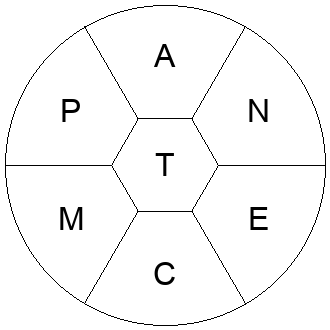
The official answers for today's puzzle are:

Click on the arrow to show the definition.
Click outside the pop-up to close it.


Number of Pangrams: 1

Maximum Puzzle Score: 292

Number of Answers: 64

Points Needed for Genius: 204

Genius requires between 27 and 55 words. You need at least an 8-letter word to reach genius. If you don't get the pangram, you need 74% of the total points to reach genius. If you get the pangram, you only need 68% of the remaining points to reach genius.

Other days with this pangram:

The button below will reveal a chart with the number of words by each letter. Red bars indicate that there is a pangram(s) starting with that letter.


How does this puzzle compare to other puzzles?

Today's score of 292 was in the 91st percentile of all puzzles.
The last time there was a score this high was on June 20, 2026.
The highest score ever was 537 on January 22, 2021.
The lowest score ever was 47 on March 27, 2023.

This puzzle's 64 possible answers rank it in the 94th percentile of all puzzles.
The last time there were more answers than this was on June 09, 2026.
The highest number of answers was 81 on June 08, 2019.
The lowest number of answers was 16 on March 27, 2023.

It takes an 8-letter word for genius.
The last time this happened was on June 13, 2026.

Today's puzzle has an average word length of 5.6.
For all Bees, the average word length has been 5.3.


Haven't I seen these letters before?

Hover over a letter to see its first and most recent appearance in the Bee!


Haven't I seen these words before?

The most common words in the Bee are:

  • noon 244
  • loll 225
  • toot 218
  • nana 203
  • naan 203
  • nene 158
  • tilt 157
  • till 157
  • lilt 157
  • mamma 156
  • mama 156
  • tint 152
  • onion 150
  • toon 147
  • onto 147
  • acai 147
  • acacia 147
  • olio 136
  • anon 136
  • anal 135
  • tact 128
  • papa 128
  • baba 126
  • lulu 125
  • lull 125
  • dodo 124
  • loon 122
  • mitt 121
  • poop 120
  • booboo 120
  • boob 120
  • cocci 119
  • calla 119
  • call 119
  • moon 118
  • mono 118
  • tattoo 117
  • tartar 117
  • tart 117
  • ratatat 117
  • attar 116
  • tutu 114
  • ally 114
  • allay 114
  • aria 112
  • tatty 111
  • momma 111
  • cancan 111
  • ammo 111
  • roar 110


How long are words in the Bee?

There have been 119,576 answers ever accepted in the Bee - with 11,050 unique words.
Below are the distributions of the lengths of these words.


Valid dictionary words not in today's official answers

You may be wondering why these words aren't here*:

  • acceptant
  • acceptee
  • aceta
  • acta
  • ament
  • amenta
  • anent
  • anta
  • antae
  • appetence
  • appetent
  • ataman
  • atap
  • atma
  • atman
  • attent
  • captan
  • cate
  • catena
  • catenae
  • catenate
  • cementa
  • cetane
  • cete
  • emanant
  • emmet
  • enate
  • enemata
  • epact
  • etape
  • etna
  • mammate
  • mammet
  • manat
  • matt
  • meatman
  • meatmen
  • menta
  • metate
  • metepa
  • nepeta
  • nett
  • pataca
  • paten
  • pattee
  • patten
  • peccant
  • pectate
  • pecten
  • pennate
  • pentene
  • petnap
  • tacan
  • tace
  • tampan
  • tannate
  • tapeta
  • tappet
  • tate
  • tecta
  • tenace
  • tenne
  • tenpence
  • tepa

*Because the New York Times considers them obscure or offensive.

accent

Etymology 1

noun
  1. A higher-pitched or stronger articulation of a particular syllable of a word or phrase in order to distinguish it from the others or to emphasize it.
  2. Emphasis or importance in general.
  3. A mark or character used in writing, in order to indicate the place of the spoken accent, or to indicate the nature or quality of the vowel marked.
  4. Modulation of the voice in speaking; the manner of speaking or pronouncing; a peculiar or characteristic modification of the voice, expressing emotion; tone.
  5. The distinctive manner of pronouncing a language associated with a particular region, social group, etc., whether of a native speaker or a foreign speaker; the phonetic and phonological aspects of a dialect.
  6. (sign languages) A distinctive manner of producing a sign language, such as someone who does not normally use a certain sign language might have when using it.
  7. A word; a significant tone or sound.
  8. (usually plurale tantum) Expressions in general; speech.
  9. Stress laid on certain syllables of a verse.
  10. A regularly recurring stress upon the tone to mark the beginning, and, more feebly, the third part of the measure.
  11. A special emphasis of a tone, even in the weaker part of the measure.
  12. The rhythmical accent, which marks phrases and sections of a period.
  13. The expressive emphasis and shading of a passage.
  14. A mark used to represent specific stress on a note.
  15. A mark placed at the right hand of a letter, and a little above it, to distinguish magnitudes of a similar kind expressed by the same letter, but differing in value, as y', y''.
  16. A mark at the right hand of a number, indicating minutes of a degree, seconds, etc., as in 12' 27'', meaning twelve minutes and twenty-seven seconds.
  17. A mark used to denote feet and inches, as in 6' 10'', meaning six feet ten inches.
  18. Emphasis laid on a part of an artistic design or composition; an emphasized detail, in particular a detail in sharp contrast to its surroundings.
  19. A very small gemstone set into a piece of jewellery.
  20. A distinctive feature or quality.
  21. Utterance.

Etymology 2

verb
  1. To express the accent of vocally; to utter with accent.
  2. To mark emphatically; to emphasize; to accentuate; to make prominent.
  3. To mark with written accents.

accept

verb
  1. To receive, especially with a consent, with favour, or with approval.
  2. To admit to a place or a group.
  3. To regard as proper, usual, true, or to believe in.
  4. To receive as adequate or satisfactory.
  5. To receive or admit to; to agree to; to assent to; to submit to.
  6. To endure patiently.
  7. To agree to pay.
  8. To receive officially.
  9. To receive something willingly.
adjective
  1. Accepted.

acceptance

noun
  1. The act of accepting; a receiving of something offered, with acquiescence, approbation, or satisfaction; especially, favourable reception; approval.
  2. Belief in something; agreement, assent.
  3. The state of being accepted.
  4. The usual or accepted meaning of a word or expression.
  5. An assent and engagement by the person on whom a bill of exchange is drawn, to pay it when due according to the terms of the acceptance; the bill of exchange itself when accepted.
  6. An agreeing to the action, proposals, or terms of another by some act which results in the conclusion of a legally binding contract; the reception or taking of a thing bought as that for which it was bought, or as that agreed to be delivered, or the taking of possession of a thing as owner.
  7. The act of an authorized representative of the government by which the government assents to ownership of existing and identified supplies, or approves specific services rendered, as partial or complete performance of a contract.
  8. A list of horses accepted as starters in a race.
noun
  1. A conserved property of the light in an optical system which characterizes how "spread out" the light is in terms of angle and area: it is the product of its cross-sectional area (normal to the direction of propagation) and the solid angle it subtends.

acetate

noun
  1. Any salt or ester of acetic acid.
  2. Cellulose acetate.
  3. A transparent sheet used for overlays.
  4. Ellipsis of acetate disc: a disc of aluminium covered in a wax used to make demonstration copies of a phonograph record.

ante

noun
  1. A price or cost, as in up the ante.
  2. In poker and other games, the contribution made by all players to the pot before dealing the cards.
verb
  1. To pay the ante in poker. Often used as ante up.
  2. To make an investment in money, effort, or time before knowing one's chances.

antenna

noun
  1. A feeler organ on the head of an insect, crab, or other animal.
  2. An apparatus to receive or transmit electromagnetic waves and convert respectively to or from an electrical signal.
  3. The faculty of intuitive astuteness.
  4. A fragment of an oligosaccharide
  5. The spar to which a lateen sail is attached, which is then hoisted up the mast.

antennae

noun
  1. A feeler organ on the head of an insect, crab, or other animal.
  2. An apparatus to receive or transmit electromagnetic waves and convert respectively to or from an electrical signal.
  3. The faculty of intuitive astuteness.
  4. A fragment of an oligosaccharide
  5. The spar to which a lateen sail is attached, which is then hoisted up the mast.

attempt

noun
  1. The action of trying at something.
  2. An assault or attack, especially an assassination attempt.
verb
  1. To try.
  2. To try to move, by entreaty, by afflictions, or by temptations; to tempt.
  3. To try to win, subdue, or overcome.
  4. To attack; to make an effort or attack upon; to try to take by force.

cant

Etymology 1

noun
  1. An argot, the jargon of a particular class or subgroup.
  2. A private or secret language used by a religious sect, gang, or other group.
  3. A language spoken by some Irish Travellers; Shelta.
  4. Empty, hypocritical talk.
  5. Whining speech, such as that used by beggars.
  6. A blazon of a coat of arms that makes a pun upon the name (or, less often, some attribute or function) of the bearer, canting arms.
  7. A call for bidders at a public fair; an auction.
verb
  1. To speak with the jargon of a class or subgroup.
  2. To speak in set phrases.
  3. To preach in a singsong fashion, especially in a false or empty manner.
  4. Of a blazon, to make a pun that references the bearer of a coat of arms.
  5. To sell by auction, or bid at an auction.

Etymology 2

noun
  1. Side, edge, corner, niche.
  2. Slope, the angle at which something is set.
  3. A corner (of a building).
  4. An outer or external angle.
  5. An inclination from a horizontal or vertical line; a slope or bevel; a tilt.
  6. A movement or throw that overturns something.
  7. A sudden thrust, push, kick, or other impulse, producing a bias or change of direction; also, the bias or turn so given.
  8. (coopering) A segment forming a side piece in the head of a cask.
  9. A segment of the rim of a wooden cogwheel.
  10. A piece of wood laid upon the deck of a vessel to support the bulkheads.
verb
  1. To set (something) at an angle.
  2. To give a sudden turn or new direction to.
  3. To bevel an edge or corner.
  4. To overturn so that the contents are emptied.

Etymology 3

noun
  1. A parcel, a division.
verb
  1. To divide or parcel out.

Etymology 4

adjective
  1. Lively, lusty.

cantata

noun
  1. A vocal composition accompanied by instruments and generally containing more than one movement, typical of 17th and 18th century Italian music.

canteen

noun
  1. A small cafeteria or snack bar, especially one in a military establishment, school, or place of work.
  2. A temporary or mobile café used in an emergency or on a film location etc.
  3. A box with compartments for storing eating utensils, silverware etc.
  4. A military mess kit.
  5. A water bottle used by a soldier or camper.

catnap

Etymology 1

noun
  1. A brief, light sleep.
verb
  1. To take a catnap, to take a short sleep or nap.

Etymology 2

verb
  1. To kidnap a cat.

cement

noun
  1. A powdered substance produced by firing (calcining) calcium carbonate (limestone) and clay that develops strong cohesive properties when mixed with water. The main ingredient of concrete.
  2. The paste-like substance resulting from mixing such a powder with water, or the rock-like substance that forms when it dries.
  3. Any material with strong adhesive and cohesive properties such as binding agents, glues, grout.
  4. A bond of union; that which unites firmly, as persons in friendship or in society.
  5. The layer of bone investing the root and neck of a tooth; cementum.
verb
  1. To affix with cement.
  2. To overlay or coat with cement.
  3. To unite firmly or closely.
  4. To make permanent.

cent

noun
  1. (money) A subunit of currency equal to one-hundredth of the main unit of currency in many countries. Symbol: ¢.
  2. A small sum of money.
  3. (money) A subunit of currency equal to one-hundredth of the euro.
  4. (money) A coin having face value of one cent (in either of the above senses).
  5. A hundredth of a semitone or half step.
noun
  1. The point in the interior of a circle that is equidistant from all points on the circumference.
  2. The point in the interior of a sphere that is equidistant from all points on the circumference.
  3. The middle portion of something; the part well away from the edges.
  4. The point on a line that is midway between the ends.
  5. The point in the interior of any figure of any number of dimensions that has as its coordinates the arithmetic mean of the coordinates of all points on the perimeter of the figure (or of all points in the interior for a center of volume).
  6. The subgroup (respectively, subring), denoted Z(G), of those elements of a given group (respectively, ring) G that commute with every element of G.
  7. A place where the greater part of some function or activity occurs.
  8. A topic that is particularly important in a given context.
  9. A player in the middle of the playing area
  10. A player who can go all over the court, except the shooting circles.
  11. A pass played into the centre of the pitch.
  12. One of the backs operating in a central area of the pitch, either the inside centre or outside centre.
  13. A temporary structure upon which the materials of a vault or arch are supported in position until the work becomes self-supporting.
  14. One of the two conical steel pins in a lathe, etc., upon which the work is held, and about which it revolves.
  15. A conical recess or indentation in the end of a shaft or other work, to receive the point of a center, on which the work can turn, as in a lathe.
  16. The ensemble of moderate or centrist political parties.
noun
  1. A centigrade temperature scale having the freezing point of water defined as 0° and its boiling point defined as 100° at standard atmospheric pressure. Known as the Celsius scale since 1948.
  2. A single degree on this scale.
  3. A unit of angle equal to the hundredth part of a quadrant. Its symbol is gon.
noun
  1. (Sanskrit and other Indian philology) satakam, set of one hundred verses connected by the same metre or topic
  2. Perfect score on a board exam
noun
  1. A period of 100 consecutive years; often specifically a numbered period with conventional start and end dates, e.g., the twentieth century, which stretches from (strictly) 1901 through 2000, or (informally) 1900 through 1999. The first century AD was from 1 to 100.
  2. A unit in ancient Roman army, originally of 100 army soldiers as part of a cohort, later of more varied sizes (but typically containing 60 to 70 or 80) soldiers or other men (guards, police, firemen), commanded by a centurion.
  3. A political division of ancient Rome, meeting in the Centuriate Assembly.
  4. A hundred things of the same kind; a hundred.
  5. A hundred runs scored either by a single player in one innings, or by two players in a partnership.
  6. A score of one hundred points.
  7. A race a hundred units (as meters, kilometres, miles) in length.
  8. A banknote in the denomination of one hundred dollars.

cetacean

noun
  1. An animal belonging to the order Cetacea, including dolphins, porpoises, and whales.
adjective
  1. Pertaining to the zoologic order Cetacea, or associated with species falling under that taxonomic hierarchy.
  2. (by extension, sometimes figurative) Resembling or relating to large aquatic mammals.

eaten

verb
  1. To ingest; to be ingested.
  2. To use up.
  3. To cause (someone) to worry.
  4. To take the loss in a transaction.
  5. To be injured or killed by (something such as a firearm or its projectile), especially in the mouth.
  6. To corrode or erode.
  7. To perform oral sex (on a person or body part).
adjective
  1. (especially in combination) That has been consumed by eating

emanate

verb
  1. To come from a source; issue from.
  2. To send or give out; manifest.

enact

noun
  1. Purpose; determination
verb
  1. To make (a bill) into law
  2. To act the part of; to play
  3. To do; to effect

enactment

noun
  1. The act of enacting, or the state of being enacted.
  2. A piece of legislation that has been properly authorized by a legislative body.

encampment

noun
  1. A campsite.
  2. A group of temporary living quarters and/or other temporary structures.

entente

noun
  1. An informal alliance or friendly understanding between two states.

manatee

noun
  1. Any of several plant-eating marine mammals, of family Trichechidae, found in tropical regions.

manta

noun
  1. A kind of fabric or blanket used in Latin America and southwestern United States.
noun
  1. Any of several very large pelagic rays of the genus Manta, with winglike pectoral fins, a long tail, and two fins resembling horns that project from the head.

mate

Etymology 1

noun
  1. A fellow, comrade, colleague, partner or someone with whom something is shared, e.g. shipmate, classmate.
  2. (especially of a non-human animal) A breeding partner.
  3. A friend, usually of the same sex.
  4. Friendly term of address to a stranger, usually male, of similar age
  5. In naval ranks, a non-commissioned officer or his subordinate (e.g. Boatswain's Mate, Gunner's Mate, Sailmaker's Mate, etc).
  6. A ship's officer, subordinate to the master on a commercial ship.
  7. A first mate.
  8. A technical assistant in certain trades (e.g. gasfitter's mate, plumber's mate); sometimes an apprentice.
  9. The other member of a matched pair of objects.
  10. A suitable companion; a match; an equal.
verb
  1. To match, fit together without space between.
  2. To copulate.
  3. To pair in order to raise offspring
  4. To arrange in matched pairs.
  5. To introduce (animals) together for the purpose of breeding.
  6. (of an animal) To copulate with.
  7. To marry; to match (a person).
  8. To match oneself against; to oppose as equal; to compete with.
  9. To fit (objects) together without space between.
  10. To move (a space shuttle orbiter) onto the back of an aircraft that can carry it.

Etymology 2

noun
  1. The conclusive victory in a game of chess that occurs when an opponent's king is threatened with unavoidable capture.
  2. (by extension) Any losing situation with no escape; utter defeat.
verb
  1. To put the king of an opponent into checkmate.
  2. (by extension) To place in a losing situation that has no escape.
verb
  1. To confuse; to confound.

Etymology 3

noun
  1. The abovementioned plant; the leaves and shoots used for the tea
noun
  1. An evergreen tree, Ilex paraquariensis, native to South America, cultivated for its leaves.
  2. A beverage, resembling tea, made from the dried leaves of this plant.
  3. A cup of this drink.

matte

noun
  1. A decorative border around a picture used to inset and center the contents of a frame.
  2. A background, often painted or created with computers
  3. (pyrometallurgy) The molten metal sulfide phases typically formed during smelting of copper, nickel, and other base metals.
adjective
  1. Dull; not reflective of light.

meant

verb
  1. To intend.
  2. To convey (a meaning).
  3. To have conviction in (something said or expressed); to be sincere in (what one says).
  4. To cause or produce (a given result); to bring about (a given result).
  5. (usually with to) To be of some level of importance.

meat

noun
  1. The flesh (muscle tissue) of an animal used as food.
  2. A type of meat, by anatomic position and provenance.
  3. Food, for animals or humans, especially solid food. See also meat and drink.
  4. A type of food, a dish.
  5. A meal.
  6. Meal; flour.
  7. Any relatively thick, solid part of a fruit, nut etc.
  8. A penis.
  9. The best or most substantial part of something.
  10. The sweet spot of a bat or club (in cricket, golf, baseball etc.).
  11. A meathead.
  12. (Australian Aboriginal) A totem, or (by metonymy) a clan or clansman which uses it.

meet

Etymology 1

noun
  1. A sports competition, especially for track and field (a track meet) or swimming (a swim meet).
  2. A gathering of riders, horses and hounds for foxhunting; a field meet for hunting.
  3. A meeting of two trains in opposite directions on a single track, when one is put into a siding to let the other cross.
  4. A meeting.
  5. The greatest lower bound, an operation between pairs of elements in a lattice, denoted by the symbol ∧.
  6. An act of French kissing someone.
verb
  1. To make contact (with) while in proximity.
  2. (Of groups) To come together.
  3. To make physical or perceptual contact.
  4. To satisfy; to comply with.
  5. To balance or come out correct.
  6. To perceive; to come to a knowledge of; to have personal acquaintance with; to experience; to suffer.
  7. To be mixed with, to be combined with aspects of.

Etymology 2

adjective
  1. Suitable; right; proper.

mentee

noun
  1. A person who is being mentored

meta

Etymology 1

adjective
  1. Self-referential; structured analogously, but at a higher level.

Etymology 2

noun
  1. Boundary marker.
  2. Either of the conical columns at each end of an Ancient Roman circus.

Etymology 3

noun
  1. Metagame; the most effective tactics and strategies used in a competitive video game.
adjective
  1. Prominent in the metagame; effective and frequently used in competitive gameplay.

Etymology 4

noun
  1. Metoidioplasty.

mete

Etymology 1

verb
  1. To measure.
  2. (usually with “out”) To dispense, measure (out), allot (especially punishment, reward etc.).

Etymology 2

noun
  1. A boundary or other limit; a boundary-marker; mere.

Etymology 3

adjective
  1. Suitable; right; proper.

nametape

noun
  1. A kind of nametag that can be sewn onto clothing.

natant

adjective
  1. Floating or swimming (in water)
  2. In a horizontal position, as if swimming

neat

Etymology 1

noun
  1. An artificial intelligence researcher who believes that solutions should be elegant, clear and provably correct. Compare scruffy.
adjective
  1. Clean, tidy; free from dirt or impurities.
  2. Free from contaminants; unadulterated, undiluted. Particularly of liquor and cocktails; see usage below.
  3. Conditions with a liquid reagent or gas performed with no standard solvent or cosolvent.
  4. With all deductions or allowances made; net.
  5. Having a simple elegance or style; clean, trim, tidy, tasteful.
  6. Well-executed or delivered; clever, skillful, precise.
  7. Facile; missing complexity or details in the favor of convenience or simplicity.
  8. Good, excellent, desirable.

Etymology 2

noun
  1. A bull or cow.
  2. Cattle collectively.

neaten

verb
  1. To make neat; arrange in an orderly, tidy way; to tidy.

pact

noun
  1. An agreement; a compact; a covenant.
  2. An agreement between two or more nations
verb
  1. To form a pact; to agree formally.

pancetta

noun
  1. A cured belly or pork; bacon.

pant

Etymology 1

noun
  1. A quick breathing; a catching of the breath; a gasp.
  2. Eager longing.
  3. A violent palpitation of the heart.
verb
  1. To breathe quickly or in a labored manner, as after exertion or from eagerness or excitement; to respire with heaving of the breast; to gasp.
  2. To long eagerly; to desire earnestly.
  3. To long for (something); to be eager for (something).
  4. Of the heart, to beat with unnatural violence or rapidity; to palpitate.
  5. To sigh; to flutter; to languish.
  6. To heave, as the breast.
  7. To bulge and shrink successively, of iron hulls, etc.

Etymology 2

noun
  1. A pair of pants (trousers or underpants).
  2. (used attributively as a modifier) Of or relating to pants.

Etymology 3

noun
  1. (Scotland and northeast England) Any public drinking fountain.

pate

Etymology 1

noun
  1. (somewhat obsolete) The head, particularly the top or crown.
  2. Wit, cleverness, cognitive abilities.

Etymology 2

noun
  1. The interior body, or non-rind portion of cheese, described by its texture, density, and color.
noun
  1. A finely-ground paste of meat, fish or vegetables, sometimes with the addition of alcohol.

patent

Etymology 1

noun
  1. A declaration issued by a government agency declaring someone the inventor of a new invention and having the privilege of stopping others from making, using or selling the claimed invention; a letter patent.
  2. A specific grant of ownership of a piece of property; a land patent.
  3. License; formal permission.
  4. Patent leather: a varnished, high-gloss leather typically used for shoes and accessories.
verb
  1. To successfully register an invention with a government agency; to secure a letter patent.

Etymology 2

adjective
  1. Open, unobstructed, expanded.
  2. Explicit and obvious.
  3. (of flour) That is fine, and consists mostly of the inner part of the endosperm.
  4. Open; unconcealed; conspicuous.
  5. Open to public perusal; said of a document conferring some right or privilege.
  6. Protected by a legal patent.

patentee

noun
  1. One to whom a grant is made, or a privilege secured, by patent.

peat

Etymology 1

noun
  1. Soil formed of dead but not fully decayed plants found in bog areas, often burned as fuel.

Etymology 2

noun
  1. A pet, a darling; a woman.

pennant

noun
  1. A flag normally used by naval vessels to represent a special condition.
  2. The winning of a competition, represented by a flag.
  3. A rope or strap to which a purchase is hooked.
  4. A sandstone between coal measures in parts of South Wales

pent

Etymology 1

verb
  1. To enclose in a pen.
noun
  1. Confinement; concealment.
adjective
  1. Confined in a pen, imprisoned.

Etymology 2

noun
  1. A pentatonic scale.

Etymology 3

noun
  1. A pentacle or pentagram.

pentane

noun
  1. An aliphatic hydrocarbon of chemical formula C5H12; either of the three isomers n-pentane, methyl-butane (isopentane), and di-methyl-propane (neopentane); volatile liquids under normal conditions.

tacet

No Definition Found.

tact

noun
  1. The sense of touch; feeling.
  2. The stroke in beating time.
  3. Sensitive mental touch; special skill or faculty; keen perception or discernment; ready power of appreciating and doing what is required by circumstances; the ability to say the right thing.
  4. A verbal operant which is controlled by a nonverbal stimulus (such as an object, event, or property of an object) and is maintained by nonspecific social reinforcement (praise).
verb
  1. To use a tact (a kind of verbal operant; see noun sense).
noun
  1. A maneuver, or action calculated to achieve some end.
  2. A maneuver used against an enemy.
  3. A sequence of moves that limits the opponent's options and results in an immediate and tangible advantage, typically in the form of material.

tame

Etymology 1

verb
  1. To make (an animal) tame; to domesticate.
  2. To become tame or domesticated.
  3. To make gentle or meek.
adjective
  1. Not or no longer wild; domesticated
  2. (chiefly of animals) Mild and well-behaved; accustomed to human contact
  3. Not exciting.
  4. Crushed; subdued; depressed; spiritless.
  5. (of a knot) Capable of being represented as a finite closed polygonal chain.

Etymology 2

verb
  1. To broach or enter upon; to taste, as a liquor; to divide; to distribute; to deal out.

tamp

verb
  1. (blasting) To plug up with clay, earth, dry sand, sod, or other material, as a hole bored in a rock.
  2. To drive in or pack down by frequent gentle strokes
  3. To reduce the intensity of.

tapa

Etymology 1

noun
  1. A kind of cloth prepared by the Polynesians from the inner bark of the paper mulberry.

Etymology 2

noun
  1. Any appetizer or snack served in the evening as part of tapas.

Etymology 3

noun
  1. Seasoned slices of dried or cured meat in Filipino cuisine.

tape

noun
  1. Flexible material in a roll with a sticky surface on one or both sides; adhesive tape.
  2. Thin and flat paper, plastic or similar flexible material, usually produced in the form of a roll.
  3. Finishing tape, stretched across a track to mark the end of a race.
  4. Magnetic or optical recording media in a roll; videotape or audio tape.
  5. (by extension) Any video or audio recording, regardless of the method used to produce it.
  6. An unthinking, patterned response triggered by a particular stimulus.
  7. (from ticker tape) The series of prices at which a financial instrument trades.
  8. The wrapping of the primary puck-handling surface of a hockey stick
  9. A strong flexible band rotating on pulleys for directing the sheets in a printing machine.
verb
  1. To bind with adhesive tape.
  2. To record, particularly onto magnetic tape.
  3. (passive) To understand, figure out.

team

noun
  1. A set of draught animals, such as two horses in front of a carriage.
  2. Any group of people involved in the same activity, especially sports or work.
  3. A group of animals moving together, especially young ducks.
  4. A royalty or privilege granted by royal charter to a lord of a manor, of having, keeping, and judging in his court, his bondmen, neifes, and villains, and their offspring, or suit, that is, goods and chattels, and appurtenances thereto.
verb
  1. To form a group, as for sports or work.
  2. (by extension) To go together well; to harmonize.
  3. To convey or haul with a team.
  4. To form together into a team.
  5. To give work to a gang under a subcontractor.

teammate

noun
  1. One who is on the same team.

teat

noun
  1. The projection of a mammary gland from which, on female mammals, milk is secreted.
  2. Something resembling a teat, such as a small protuberance or nozzle.
  3. An artificial nipple used for bottle-feeding infants.

teem

Etymology 1

verb
  1. To be stocked to overflowing.
  2. To be prolific; to abound; to be rife.
  3. To bring forth young, as an animal; to produce fruit, as a plant; to bear; to be pregnant; to conceive; to multiply.

Etymology 2

verb
  1. To empty.
  2. To pour (especially with rain)
  3. To pour, as steel, from a melting pot; to fill, as a mould, with molten metal.

Etymology 3

verb
  1. To think fit.

teen

Etymology 1

noun
  1. A teenager.
adjective
  1. Of or having to do with teenagers; teenage

Etymology 2

noun
  1. Grief; sorrow; trouble.
  2. Vexation; anger; hate.

Etymology 3

verb
  1. To excite; to provoke; to vex; to afflict; to injure.
  2. To become angry or distressed.

Etymology 4

verb
  1. (provincial) To hedge or fence in; to enclose.

teepee

verb
  1. To toilet paper; to throw toilet paper in rolls over a structure, so the structure becomes draped with it.

temp

noun
  1. Abbreviation of tempore.
noun
  1. A temporary employee, usually in an office.
  2. A temporary storage location.
verb
  1. To work as a temporary employee.
noun
  1. A measure of cold or heat, often measurable with a thermometer.
  2. An elevated body temperature, as present in fever and many illnesses.
  3. A property of macroscopic amounts of matter that serves to gauge the average intensity of the random actual motions of the individually mobile particulate constituents. http//arxiv.org/pdf/physics/0004055
  4. The state or condition of being tempered or moderated.
  5. The balance of humours in the body, or one's character or outlook as considered determined from this; temperament.
adjective
  1. Not permanent; existing only for a period or periods of time.
  2. Existing only for a short time or short times; transient, ephemeral.

tempt

verb
  1. To provoke someone to do wrong, especially by promising a reward; to entice.
  2. To attract; to allure.
  3. To provoke something; to court.

tenant

noun
  1. One who pays a fee (rent) in return for the use of land, buildings, or other property owned by others.
  2. One who has possession of any place.
  3. One who holds a property by any kind of right, including ownership.
  4. Any of a number of customers serviced through the same instance of an application.
verb
  1. To hold as, or be, a tenant.
  2. To inhabit.

tenement

noun
  1. A building that is rented to multiple tenants, especially a low-rent, run-down one.
  2. Any form of property that is held by one person from another, rather than being owned.
  3. Dwelling; abode; habitation.

tenet

noun
  1. An opinion, belief, or principle that is held as absolute truth by someone or especially an organization.

tent

Etymology 1

noun
  1. A pavilion or portable lodge consisting of skins, canvas, or some strong cloth, stretched and sustained by poles, used for sheltering people from the weather.
  2. The representation of a tent used as a bearing.
  3. A portable pulpit set up outside to accommodate worshippers who cannot fit into a church.
  4. A trouser tent; a piece of fabric, etc. protruding outward like a tent.
verb
  1. To go camping.
  2. To prop up aluminum foil in an inverted "V" (reminiscent of a pop-up tent) over food to reduce splatter, before putting it in the oven.
  3. To form into a tent-like shape.

Etymology 2

noun
  1. Attention; regard, care.
  2. Intention; design.
verb
  1. To attend to; to heed
  2. To guard; to hinder.

Etymology 3

noun
  1. A roll of lint or linen, or a conical or cylindrical piece of sponge or other absorbent, used chiefly to dilate a natural canal, to keep open the orifice of a wound, or to absorb discharges.
  2. A probe for searching a wound.
verb
  1. (sometimes figurative) To probe or to search with a tent; to keep open with a tent.

Etymology 4

noun
  1. A kind of wine of a deep red color, chiefly from Galicia or Malaga in Spain; called also tent wine, and tinta.

tepee

noun
  1. Alternative form of teepee