Saturday, June 27, 2026

Answers to yesterday's Bee

Jump to answers for


The official answers for today's puzzle are:

Click on the arrow to show the definition.
Click outside the pop-up to close it.


Number of Pangrams: 1

Maximum Puzzle Score: 99

Number of Answers: 24

Points Needed for Genius: 69

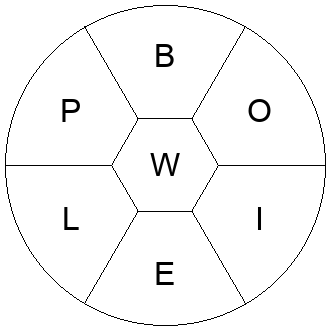
Genius requires between 10 and 21 words. You need at least a 6-letter word to reach genius. If you don't get the pangram, you need 82% of the total points to reach genius. If you get the pangram, you only need 64% of the remaining points to reach genius.

Other days with this pangram:

The button below will reveal a chart with the number of words by each letter. Red bars indicate that there is a pangram(s) starting with that letter.


How does this puzzle compare to other puzzles?

Today's score of 99 was in the 12th percentile of all puzzles.
The last time there was a score this low was on June 07, 2026.
The highest score ever was 537 on January 22, 2021.
The lowest score ever was 47 on March 27, 2023.

This puzzle's 24 possible answers rank it in the 9th percentile of all puzzles.
The last time there were fewer answers than this was on June 07, 2026.
The highest number of answers was 81 on June 08, 2019.
The lowest number of answers was 16 on March 27, 2023.

It takes a 6-letter word for genius.
The last time this happened was on June 25, 2026.

Today's puzzle has an average word length of 5.1.
For all Bees, the average word length has been 5.3.


Haven't I seen these letters before?

Hover over a letter to see its first and most recent appearance in the Bee!


Haven't I seen these words before?

The most common words in the Bee are:

  • noon 244
  • loll 225
  • toot 218
  • nana 203
  • naan 203
  • nene 158
  • tilt 157
  • till 157
  • mamma 157
  • mama 157
  • lilt 157
  • tint 152
  • onion 150
  • toon 147
  • onto 147
  • acai 147
  • acacia 147
  • olio 136
  • anon 136
  • anal 135
  • tact 128
  • papa 128
  • baba 126
  • lulu 125
  • lull 125
  • dodo 124
  • loon 122
  • mitt 121
  • poop 120
  • booboo 120
  • boob 120
  • cocci 119
  • calla 119
  • call 119
  • moon 118
  • mono 118
  • tattoo 117
  • tartar 117
  • tart 117
  • ratatat 117
  • attar 116
  • tutu 114
  • ally 114
  • allay 114
  • aria 112
  • tatty 111
  • momma 111
  • cancan 111
  • ammo 111
  • roar 110


How long are words in the Bee?

There have been 119,668 answers ever accepted in the Bee - with 11,050 unique words.
Below are the distributions of the lengths of these words.


Valid dictionary words not in today's official answers

You may be wondering why these words aren't here*:

  • beweep
  • eeew
  • lowe
  • lwei
  • plew
  • weel
  • weewee
  • wellie
  • willie
  • woolie
  • woopie
  • wowee

*Because the New York Times considers them obscure or offensive.

bellow

noun
  1. The deep roar of a large animal, or any similar loud noise.
verb
  1. To make a loud, deep, hollow noise like the roar of an angry bull.
  2. To shout in a deep voice.

below

adverb
  1. In a lower place.
  2. On a lower storey.
  3. Further down.
  4. On a lower deck.
  5. (of a temperature) Below zero.
preposition
  1. Lower in spatial position than.
  2. Within the writing of a given document which follows a particular appearance of the word "below".
  3. Lower in value, price, rank or concentration than.
  4. Downstream of.
  5. South of.
  6. Unsuitable to the rank or dignity of; beneath.
  7. (stage directions) Downstage of.

billow

noun
  1. A large wave, swell, surge, or undulating mass of something, such as water, smoke, fabric or sound
verb
  1. To surge or roll in billows.
  2. To swell out or bulge.

blew

verb
  1. To produce an air current.
  2. To propel by an air current.
  3. To be propelled by an air current.
  4. To create or shape by blowing; as in to blow bubbles, to blow glass.
  5. To force a current of air upon with the mouth, or by other means.
  6. To clear of contents by forcing air through.
  7. To cause to make sound by blowing, as a musical instrument.
  8. To make a sound as the result of being blown.
  9. (of a cetacean) To exhale visibly through the spout the seawater which it has taken in while feeding.
  10. To explode.
  11. (with "up" or with prep phrase headed by "to") To cause to explode, shatter, or be utterly destroyed.
  12. To cause sudden destruction of.
  13. To suddenly fail destructively.
  14. (used to express displeasure or frustration) Damn.
  15. To be very undesirable. (See also suck.)
  16. To recklessly squander.
  17. To fellate; to perform oral sex on (usually a man)
  18. To leave, especially suddenly or in a hurry.
  19. To make flyblown, to defile, especially with fly eggs.
  20. To spread by report; to publish; to disclose.
  21. To inflate, as with pride; to puff up.
  22. To breathe hard or quick; to pant; to puff.
  23. To put out of breath; to cause to blow from fatigue.
  24. To talk loudly; to boast; to storm.
  25. To sing.
  26. To leave the Church of Scientology in an unauthorized manner.
verb
  1. To blossom; to cause to bloom or blossom.
noun
  1. The colour of the clear sky or the deep sea, between green and violet in the visible spectrum, and one of the primary additive colours for transmitted light; the colour obtained by subtracting red and green from white light using magenta and cyan filters; or any colour resembling this.
  2. A blue dye or pigment.
  3. Any of several processes to protect metal against rust.
  4. Blue clothing
  5. (in the plural) A blue uniform. See blues.
  6. A member of law enforcement
  7. The sky, literally or figuratively.
  8. The ocean; deep waters.
  9. The far distance; a remote or distant place.
  10. Anything blue, especially to distinguish it from similar objects differing only in color.
  11. A dog or cat with a slaty gray coat.
  12. One of the colour balls used in snooker, with a value of five points.
  13. Any of the butterflies of the subfamily Polyommatinae in the family Lycaenidae, most of which have blue on their wings.
  14. A bluefish.
  15. An argument.
  16. A liquid with an intense blue colour, added to a laundry wash to prevent yellowing of white clothes.
  17. A type of firecracker.
  18. A bluestocking.
  19. One of the three color charges for quarks.
adjective
  1. Of the colour blue.
  2. Depressed, melancholic, sad.
  3. Pale, without redness or glare; said of a flame.
  4. Supportive of, run by (a member of), pertaining to, or dominated by a political party represented by the colour blue.
  5. Of the higher-frequency region of the part of the electromagnetic spectrum which is relevant in the specific observation.
  6. (of steak) Extra rare; left very raw and cold.
  7. (of a dog or cat) Having a coat of fur of a slaty gray shade.
  8. Severe or overly strict in morals; gloomy.
  9. (of women) literary; bluestockinged.
  10. Having a color charge of blue.
  11. (entertainment) Risque or obscene
adjective
  1. (entertainment) Pornographic or profane.

blow

Etymology 1

noun
  1. A strong wind.
  2. A chance to catch one’s breath.
  3. Cocaine.
  4. Cannabis.
  5. (US Chicago Regional) Heroin.
verb
  1. To produce an air current.
  2. To propel by an air current.
  3. To be propelled by an air current.
  4. To create or shape by blowing; as in to blow bubbles, to blow glass.
  5. To force a current of air upon with the mouth, or by other means.
  6. To clear of contents by forcing air through.
  7. To cause to make sound by blowing, as a musical instrument.
  8. To make a sound as the result of being blown.
  9. (of a cetacean) To exhale visibly through the spout the seawater which it has taken in while feeding.
  10. To explode.
  11. (with "up" or with prep phrase headed by "to") To cause to explode, shatter, or be utterly destroyed.
  12. To cause sudden destruction of.
  13. To suddenly fail destructively.
  14. (used to express displeasure or frustration) Damn.
  15. To be very undesirable. (See also suck.)
  16. To recklessly squander.
  17. To fellate; to perform oral sex on (usually a man)
  18. To leave, especially suddenly or in a hurry.
  19. To make flyblown, to defile, especially with fly eggs.
  20. To spread by report; to publish; to disclose.
  21. To inflate, as with pride; to puff up.
  22. To breathe hard or quick; to pant; to puff.
  23. To put out of breath; to cause to blow from fatigue.
  24. To talk loudly; to boast; to storm.
  25. To sing.
  26. To leave the Church of Scientology in an unauthorized manner.

Etymology 2

adjective
  1. Blue.

Etymology 3

noun
  1. The act of striking or hitting.
  2. A sudden or forcible act or effort; an assault.
  3. A damaging occurrence.

Etymology 4

noun
  1. A mass or display of flowers; a yield.
  2. A display of anything brilliant or bright.
  3. A bloom, state of flowering.
verb
  1. To blossom; to cause to bloom or blossom.

blowpipe

noun
  1. A narrow tube through which a jet of air is directed onto a flame; used in the analysis of minerals etc and in jewelry manufacture
  2. A weapon through which darts may be shot by blowing; a blowgun
  3. A long narrow pipe, rotated in the hands, upon which glassware is blown

bowel

noun
  1. A part or division of the intestines, usually the large intestine.
  2. (in the plural) The entrails or intestines; the internal organs of the stomach.
  3. (in the plural) The (deep) interior of something.
  4. (in the plural) The seat of pity or the gentler emotions; pity or mercy.
  5. (in plural) offspring
verb
  1. To disembowel.

bowl

Etymology 1

noun
  1. A roughly hemispherical container used to hold, mix or present food, such as salad, fruit or soup, or other items.
  2. As much as is held by a bowl.
  3. A dish comprising a mix of different foods, not all of which need be cooked, served in a bowl.
  4. A haircut in which straight hair is cut at an even height around the edges, forming a bowl shape.
  5. The round hollow part of anything.
  6. A round crater (or similar) in the ground.
  7. An elliptical-shaped stadium or amphitheater resembling a bowl.
  8. A postseason football competition, a bowl game (i.e. Rose Bowl, Super Bowl)

Etymology 2

noun
  1. The ball rolled by players in the game of lawn bowls.
  2. The action of bowling a ball.
  3. (in the plural, but used with a singular verb) The game of bowls.
verb
  1. To roll or throw (a ball) in the correct manner in cricket and similar games and sports.
  2. To throw the ball (in cricket and similar games and sports).
  3. To roll or carry smoothly on, or as on, wheels.
  4. To pelt or strike with anything rolled.

bowwow

No Definition Found.

elbow

noun
  1. The joint between the upper arm and the forearm.
  2. (by extension) Any turn or bend like that of the elbow, in a wall, building, coastline, etc.; an angular or jointed part of any structure, such as the raised arm of a chair or sofa, or a short pipe fitting, turning at an angle or bent.
  3. A detective.
  4. Part of a basketball court located at the intersection of the free-throw line and the free-throw lane.
  5. A hit with the elbow.
verb
  1. To push with the elbow.
  2. (by extension) To nudge, jostle or push.

peewee

Etymology 1

noun
  1. A short or small person; a small object.
  2. A kind of small marble in children's games.
  3. A player in a sports league for very young children.

Etymology 2

noun
  1. (New South Wales and Queensland) A magpie-lark or mudlark, Grallina cyanoleuca.
  2. A pewee.

pewee

noun
  1. The common American tyrant flycatcher (of the genus Contopus).
  2. A woodcock.
  3. An American version of the children's game gilli-danda.

pillow

noun
  1. A soft cushion used to support the head in bed.
  2. A pillow lava.
  3. A piece of metal or wood, forming a support to equalize pressure; a brass; a pillow block.
  4. A block under the inner end of a bowsprit.
  5. The socket of a pivot.
  6. A kind of plain, coarse fustian.
verb
  1. To rest as on a pillow.

plow

noun
  1. The notional area of land able to be farmed in a year by a team of 8 oxen pulling a carruca plow, usually reckoned at 120 acres.
noun
  1. A device pulled through the ground in order to break it open into furrows for planting.
  2. The use of a plough; tillage.
  3. Alternative form of Plough (Synonym of Ursa Major)
  4. A joiner's plane for making grooves.
  5. A bookbinder's implement for trimming or shaving off the edges of books.
verb
  1. To use a plough on to prepare for planting.
  2. To use a plough.
  3. To have sex with, penetrate.
  4. To move with force.
  5. To furrow; to make furrows, grooves, or ridges in.
  6. To run through, as in sailing.
  7. To trim, or shave off the edges of, as a book or paper, with a plough.
  8. (joinery) To cut a groove in, as in a plank, or the edge of a board; especially, a rectangular groove to receive the end of a shelf or tread, the edge of a panel, a tongue, etc.
  9. (university slang) To fail (a student).
noun
  1. Land that has been or is meant to be ploughed

powwow

noun
  1. A ritual conducted by a Native American shaman.
  2. A Native American shaman.
  3. A Native American council or meeting.
  4. A short, private conference.
  5. A large gathering during which Indigenous songs and dances are showcased for an audience, essentially a recital or concert. Often also doubles as a fundraiser, or can be held in conjunction with a non-indigneous fair or exhibition in order to attract a large crowd, as at the Calgary Stampede and K-Days.
verb
  1. (of Native Americans) To hold a meeting; to gather together in council.
  2. (of Native Americans and by extension other groups, such as the Pennsylvania Dutch) To conduct a ritual in which magic is used.
  3. To hold a private conference.

weep

Etymology 1

noun
  1. A session of crying.
verb
  1. To cry; shed tears.
  2. To lament; to complain.
  3. (of a wound or sore) To produce secretions.
  4. To flow in drops; to run in drops.
  5. To hang the branches, as if in sorrow; to be pendent; to droop; said of a plant or its branches.
  6. To weep over; to bewail.

Etymology 2

noun
  1. A lapwing; wipe, especially, a northern lapwing (Vanellus vanellus).

weepie

noun
  1. A sad or sentimental film, often portraying troubled romance, designed to elicit a tearfully emotional response from its audience.

well

Etymology 1

adjective
  1. In good health.
  2. Good, content.
  3. Prudent; good; well-advised.
adverb
  1. (manner) Accurately, competently, satisfactorily.
  2. (manner) Completely, fully.
  3. (degree) To a significant degree.
  4. (degree) Very (as a general-purpose intensifier).
  5. In a desirable manner; so as one could wish; satisfactorily; favourably; advantageously.
interjection
  1. Used to acknowledge a statement or situation.
  2. An exclamation of surprise (often doubled or tripled).
  3. An exclamation of indignance.
  4. Used in speech to express the overcoming of reluctance to say something.
  5. Used in speech to fill gaps, particularly at the beginning of a response to a question; filled pause.
  6. (Hiberno-English) Used as a greeting

Etymology 2

noun
  1. A hole sunk into the ground as a source of water, oil, natural gas or other fluids.
  2. A place where a liquid such as water surfaces naturally; a spring.
  3. A small depression suitable for holding liquid or other objects.
  4. A source of supply.
  5. A vertical, cylindrical trunk in a ship, reaching down to the lowest part of the hull, through which the bilge pumps operate.
  6. The cockpit of a sailboat.
  7. A compartment in the middle of the hold of a fishing vessel, made tight at the sides, but having holes perforated in the bottom to let in water to keep fish alive while they are transported to market.
  8. A vertical passage in the stern into which an auxiliary screw propeller may be drawn up out of the water.
  9. A hole or excavation in the earth, in mining, from which run branches or galleries.
  10. An opening through the floors of a building, as for a staircase or an elevator; a wellhole.
  11. The open space between the bench and the counsel tables in a courtroom.
  12. The lower part of a furnace, into which the metal falls.
  13. A well drink.
  14. The playfield of Tetris and similar video games, into which the blocks fall.
  15. In a microtiter plate, each of the small equal circular or square sections which serve as test tubes.

Etymology 3

verb
  1. To issue forth, as water from the earth; to flow; to spring.
  2. To have something seep out of the surface.

wile

verb
  1. To pass (time) idly.
  2. To occupy or entertain (someone) in order to let time pass.
  3. To loiter.
noun
  1. (usually in the plural) A trick or stratagem practiced for ensnaring or deception; a sly, insidious artifice
verb
  1. To entice or lure

will

Etymology 1

verb
  1. (now uncommon or literary) To wish, desire (something).
  2. (nowadays rare) To wish or desire (that something happen); to intend (that).
  3. (auxiliary) To habitually do (a given action).
  4. (auxiliary) To choose to (do something); used to express intention but without any temporal connotations (+ bare infinitive), often in negation.
  5. (auxiliary) Used to express the future tense, sometimes with some implication of volition when used in the first person. Compare shall.
  6. (auxiliary) To be able to, to have the capacity to.
  7. (auxiliary) Expressing a present tense with some conditional or subjective weakening: "will turn out to", "must by inference".

Etymology 2

noun
  1. One's independent faculty of choice; the ability to be able to exercise one's choice or intention.
  2. One's intention or decision; someone's orders or commands.
  3. The act of choosing to do something; a person’s conscious intent or volition.
  4. Law A formal declaration of one's intent concerning the disposal of one's property and holdings after death; the legal document stating such wishes.
  5. That which is desired; one's wish.
  6. Desire, longing. (Now generally merged with later senses.)

Etymology 3

verb
  1. To wish, desire.
  2. To instruct (that something be done) in one's will.
  3. To try to make (something) happen by using one's will (intention).
  4. To bequeath (something) to someone in one's will (legal document).

willow

noun
  1. Any of various deciduous trees or shrubs in the genus Salix, in the willow family Salicaceae, found primarily on moist soils in cooler zones in the northern hemisphere.
  2. The wood of these trees.
  3. A cricket bat.
  4. (1800s) The baseball bat.
  5. A rotating spiked drum used to open and clean cotton heads.
verb
  1. To open and cleanse (cotton, flax, wool, etc.) by means of a willow.
  2. To form a shape or move in a way similar to the long, slender branches of a willow.

wipe

Etymology 1

noun
  1. The act of wiping something.
  2. A soft piece of cloth or cloth-like material used for wiping.
  3. A kind of film transition where one shot replaces another by travelling from one side of the frame to another or with a special shape.
  4. A sarcastic remark; a reproof, a jibe.
verb
  1. To move an object over, maintaining contact, with the intention of removing some substance from the surface. (Compare rub.)
  2. To remove by rubbing; to rub off; to obliterate; usually followed by away, off, or out.
  3. To cheat; to defraud; to trick; usually followed by out.
  4. To erase.
  5. To make (a joint, as between pieces of lead pipe), by surrounding the junction with a mass of solder, applied in a plastic condition by means of a rag with which the solder is shaped by rubbing.
  6. To remove an expression from one's face.
  7. To deperm (a ship).

Etymology 2

noun
  1. A lapwing, especially a northern lapwing (Vanellus vanellus).

Etymology 3

noun
  1. An instance of all members of a party dying in a single campaign, event, or battle; a wipeout.
verb
  1. To have all members of a party die in a single campaign, event, or battle; to be wiped out.

wobble

noun
  1. An unsteady motion.
  2. A tremulous sound.
  3. A low-frequency oscillation sometimes used in dubstep
verb
  1. To move with an uneven or rocking motion, or unsteadily to and fro.
  2. To tremble or quaver.
  3. To vacillate in one's opinions.
  4. To cause to wobble.

wool

noun
  1. The hair of the sheep, llama and some other ruminants.
  2. A cloth or yarn made from the wool of sheep.
  3. Anything with a texture like that of wool.
  4. A fine fiber obtained from the leaves of certain trees, such as firs and pines.
  5. Short, thick hair, especially when crisped or curled.
  6. Yarn (including that which is made from synthetic fibers.)
  7. Derogatory term for residents of the satellite towns outside Liverpool, such as St Helens or Warrington. See also Yonner.