Thursday, July 02, 2026

Answers to yesterday's Bee

Jump to answers for


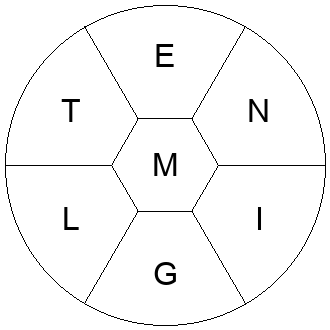
The official answers for today's puzzle are:

Click on the arrow to show the definition.
Click outside the pop-up to close it.


Number of Pangrams: 1

Maximum Puzzle Score: 258

Number of Answers: 53

Points Needed for Genius: 181

Genius requires between 24 and 45 words. You need at least a 7-letter word to reach genius. If you don't get the pangram, you need 74% of the total points to reach genius. If you get the pangram, you only need 68% of the remaining points to reach genius.

The button below will reveal a chart with the number of words by each letter. Red bars indicate that there is a pangram(s) starting with that letter.


How does this puzzle compare to other puzzles?

Today's score of 258 was in the 84th percentile of all puzzles.
The last time there was a score this high was on July 11, 2026.
The highest score ever was 537 on January 22, 2021.
The lowest score ever was 47 on March 27, 2023.

This puzzle's 53 possible answers rank it in the 80th percentile of all puzzles.
The last time there were more answers than this was on July 13, 2026.
The highest number of answers was 81 on June 08, 2019.
The lowest number of answers was 16 on March 27, 2023.

It takes a 7-letter word for genius.
The last time this happened was on July 14, 2026.

Today's puzzle has an average word length of 5.8.
For all Bees, the average word length has been 5.3.


Haven't I seen these letters before?

Hover over a letter to see its first and most recent appearance in the Bee!


Haven't I seen these words before?

The most common words in the Bee are:

  • noon 245
  • loll 226
  • toot 219
  • nana 204
  • naan 204
  • tilt 159
  • till 159
  • lilt 159
  • nene 158
  • mamma 158
  • mama 158
  • tint 153
  • onion 150
  • acai 148
  • acacia 148
  • toon 147
  • onto 147
  • anon 138
  • olio 137
  • anal 136
  • papa 129
  • tact 128
  • baba 127
  • dodo 126
  • lulu 125
  • lull 125
  • mitt 123
  • loon 122
  • poop 121
  • calla 121
  • call 121
  • booboo 120
  • boob 120
  • moon 119
  • mono 119
  • cocci 119
  • tattoo 117
  • tartar 117
  • tart 117
  • ratatat 117
  • attar 116
  • tutu 115
  • ally 114
  • allay 114
  • momma 113
  • cancan 113
  • aria 113
  • ammo 113
  • tatty 111
  • roar 111


How long are words in the Bee?

There have been 120,434 answers ever accepted in the Bee - with 11,058 unique words.
Below are the distributions of the lengths of these words.


Valid dictionary words not in today's official answers

You may be wondering why these words aren't here*:

  • elemi
  • emetin
  • emetine
  • emmet
  • gemming
  • gimel
  • gimleting
  • gimmie
  • gleemen
  • glim
  • glime
  • gliming
  • ilmenite
  • imine
  • immingle
  • immingling
  • intime
  • iteming
  • legmen
  • liegemen
  • limen
  • liming
  • meinie
  • melilite
  • melinite
  • mell
  • melling
  • migg
  • miggle
  • miling
  • mille
  • millieme
  • millime
  • milline
  • milt
  • milting
  • mimetite
  • minimill
  • neem
  • nimming
  • tegmen
  • telemen
  • tinmen
  • titmen

*Because the New York Times considers them obscure or offensive.

element

noun
  1. One of the simplest or essential parts or principles of which anything consists, or upon which the constitution or fundamental powers of anything are based.
  2. A small part of the whole.
  3. The sky.
  4. (with "the") Atmospheric forces such as strong winds and rains.
  5. A place or state of being that an individual or object is best suited to.
  6. (usually in the plural) The bread and wine taken at Holy Communion.
  7. A group of people within a larger group having a particular common characteristic.
  8. A component in electrical equipment, often in the form of a coil, having a high resistance, thereby generating heat when a current is passed through it.
  9. One of the conceptual objects in a markup language, usually represented in text by tags.
verb
  1. To compound of elements.
  2. To constitute and be the elements of.

eminent

adjective
  1. High, lofty.
  2. Noteworthy, remarkable, great.
  3. (of a person) distinguished, important, noteworthy.

emit

verb
  1. To send out or give off

emitting

verb
  1. To send out or give off

entitlement

noun
  1. The right to have something, whether actual or perceived.
  2. Power, authority to do something.
  3. Something that one is entitled to.
  4. A legal obligation on a government to make payments to a person, business, or unit of government that meets the criteria set in law, such as social security in the US.

gentlemen

noun
  1. A man of gentle but not noble birth, particularly a man of means (originally ownership of property) who does not work for a living but has no official status in a peerage; an armiferous man ranking below a knight.
  2. Any well-bred, well-mannered, or charming man.
  3. An effeminate or oversophisticated man.
  4. (polite term of address) Any man.
  5. (usually historical, sometimes derogatory) An amateur or dabbler in any field, particularly those of independent means.
  6. An amateur player, particularly one whose wealth permits him to forego payment.
noun
  1. Possessive case of gentlemen: belonging to some or all gentlemen.
noun
  1. A lavatory intended for use by men, often including urinals in addition to toilets.
  2. Other rooms intended for use by men, as waiting rooms, dressing rooms, locker rooms, etc.

gimlet

noun
  1. A small screw-tipped tool for boring holes.
  2. A cocktail, usually made with gin and lime juice.
verb
  1. To pierce or bore holes (as if using a gimlet).
  2. To turn round (an anchor) as if turning a gimlet.

gimme

noun
  1. That which is easily obtained, or certain to occur.

imminent

adjective
  1. About to happen, occur, or take place very soon, especially of something which won't last long.

item

noun
  1. A distinct physical object.
  2. (by extension) An object that can be picked up for later use.
  3. A line of text having a legal or other meaning; a separate particular in an account.
  4. (psychometrics) A question on a test, which may include its answers.
  5. A matter for discussion in an agenda.
  6. Two people who are having a relationship with each other.
  7. A short article in a newspaper.
  8. A hint; an innuendo.
verb
  1. To make a note of.
adverb
  1. Likewise

lemming

noun
  1. A small Arctic and Subarctic rodent from any of six genera of similar rodents.
  2. Any member of a group given to conformity or groupthink, especially a group poised to follow a leader off a cliff.

lime

Etymology 1

noun
  1. Any inorganic material containing calcium, usually calcium oxide (quicklime) or calcium hydroxide (slaked lime).
  2. Any gluey or adhesive substance; something which traps or captures someone; sometimes a synonym for birdlime.
verb
  1. To treat with calcium hydroxide or calcium oxide (lime).
  2. To smear with birdlime.
  3. To apply limewash.

Etymology 2

noun
  1. A deciduous tree of the genus Tilia, especially Tilia × europaea; the linden tree, or its wood.

Etymology 3

noun
  1. Any of several green citrus fruit, somewhat smaller and sharper-tasting than a lemon.
  2. Any of the trees that bear limes, especially Key lime, Citrus aurantiifolia.
  3. A brilliant, sometimes yellowish, green colour associated with the fruits of a lime tree.
  4. A fan fiction story which contains sexual references, but stops short of full, explicit descriptions of sexual activity (coined by analogy with lemon).
adjective
  1. Containing lime or lime juice.
  2. Having the aroma or flavor of lime.
  3. Lime-green.

Etymology 4

verb
  1. To hang out/socialize in an informal, relaxed environment, especially with friends, for example at a party or on the beach.

Etymology 5

noun
  1. A leash.

limit

Etymology 1

noun
  1. A restriction; a bound beyond which one may not go.
  2. A value to which a sequence converges. Equivalently, the common value of the upper limit and the lower limit of a sequence: if the upper and lower limits are different, then the sequence has no limit (i.e., does not converge).
  3. Any of several abstractions of this concept of limit.
  4. The cone of a diagram through which any other cone of that same diagram can factor uniquely.
  5. Fixed limit.
  6. The final, utmost, or furthest point; the border or edge.
  7. The space or thing defined by limits.
  8. That which terminates a period of time; hence, the period itself; the full time or extent.
  9. A restriction; a check or curb; a hindrance.
  10. A determining feature; a distinguishing characteristic.
  11. The first group of riders to depart in a handicap race.
  12. (as "the limit") A person who is exasperating, intolerable, astounding, etc.
adjective
  1. Being a fixed limit game.

Etymology 2

verb
  1. To restrict; not to allow to go beyond a certain bound, to set boundaries.
  2. To have a limit in a particular set.
  3. To beg, or to exercise functions, within a certain limited region.

limiting

verb
  1. To restrict; not to allow to go beyond a certain bound, to set boundaries.
  2. To have a limit in a particular set.
  3. To beg, or to exercise functions, within a certain limited region.
noun
  1. A limitation.

limn

verb
  1. To draw or paint; to delineate.
  2. To illuminate, as a manuscript; to decorate with gold or some other bright colour.

limning

verb
  1. To draw or paint; to delineate.
  2. To illuminate, as a manuscript; to decorate with gold or some other bright colour.
noun
  1. A depiction.

linemen

noun
  1. A person who installs and repairs overhead cables (either power or telephone); a linesman
  2. A player who specializes in play at the line of scrimmage

liniment

noun
  1. A topical medical preparation intended to be rubbed into the skin with friction, as for example to relieve symptoms of arthritis.
verb
  1. To apply liniment to.

meet

Etymology 1

noun
  1. A sports competition, especially for track and field (a track meet) or swimming (a swim meet).
  2. A gathering of riders, horses and hounds for foxhunting; a field meet for hunting.
  3. A meeting of two trains in opposite directions on a single track, when one is put into a siding to let the other cross.
  4. A meeting.
  5. The greatest lower bound, an operation between pairs of elements in a lattice, denoted by the symbol ∧.
  6. An act of French kissing someone.
verb
  1. To make contact (with) while in proximity.
  2. (Of groups) To come together.
  3. To make physical or perceptual contact.
  4. To satisfy; to comply with.
  5. To balance or come out correct.
  6. To perceive; to come to a knowledge of; to have personal acquaintance with; to experience; to suffer.
  7. To be mixed with, to be combined with aspects of.

Etymology 2

adjective
  1. Suitable; right; proper.

meeting

Etymology 1

noun
  1. (gerund) The act of persons or things that meet.
  2. A gathering of persons for a purpose; an assembly.
  3. (collective) The people at such a gathering.
  4. An encounter between people, even accidental.
  5. A place or instance of junction or intersection; a confluence.
  6. A religious service held by a charismatic preacher in small towns in the United States.
  7. An administrative unit in the Religious Society of Friends (Quakers).

Etymology 2

verb
  1. To make contact (with) while in proximity.
  2. (Of groups) To come together.
  3. To make physical or perceptual contact.
  4. To satisfy; to comply with.
  5. To balance or come out correct.
  6. To perceive; to come to a knowledge of; to have personal acquaintance with; to experience; to suffer.
  7. To be mixed with, to be combined with aspects of.

melee

noun
  1. A battle fought at close range; hand-to-hand combat; brawling.
  2. A noisy, confused or tumultuous fight, argument or scrap.
  3. Any any confused, disorganised, disordered or chaotic situation.
  4. Lively contention or debate, skirmish.
  5. A cavalry exercise in which two groups of riders try to cut paper plumes off the helmets of their opponents, the contest continuing until no member of one group retains his plume.
  6. Small cut and polished gemstones sold in lots.
verb
  1. To physically hit in close quarters, as opposed to shooting, blowing up, or other ranged means of damage. Often refers to the usage of a hand-to-hand weapon.

melt

noun
  1. Molten material, the product of melting.
  2. The transition of matter from a solid state to a liquid state.
  3. The springtime snow runoff in mountain regions.
  4. A melt sandwich.
  5. A wax-based substance for use in an oil burner as an alternative to mixing oils and water.
  6. An idiot.
verb
  1. To change (or to be changed) from a solid state to a liquid state, usually by a gradual heat.
  2. To dissolve, disperse, vanish.
  3. To soften, as by a warming or kindly influence; to relax; to render gentle or susceptible to mild influences; sometimes, in a bad sense, to take away the firmness of; to weaken.
  4. To be discouraged.
  5. To be emotionally softened or touched.
  6. To be very hot and sweat profusely.

melting

verb
  1. To change (or to be changed) from a solid state to a liquid state, usually by a gradual heat.
  2. To dissolve, disperse, vanish.
  3. To soften, as by a warming or kindly influence; to relax; to render gentle or susceptible to mild influences; sometimes, in a bad sense, to take away the firmness of; to weaken.
  4. To be discouraged.
  5. To be emotionally softened or touched.
  6. To be very hot and sweat profusely.
noun
  1. The process of changing the state of a substance from solid to liquid by heating it past its melting point.
  2. The act of softening or mitigating.
adjective
  1. Which is melting, dissolving or liquefying.
  2. Given over to strong emotion; tender; aroused; emotional, tearful.
  3. That causes one to melt with emotion; able to make others feel tender and emotional.

meme

noun
  1. Any unit of cultural information, such as a practice or idea, that is transmitted verbally or by repeated action from one mind to another in a comparable way to the transmission of genes.
  2. Something, usually humorous, which is copied and circulated online with slight adaptations, including quizzes, basic pictures, video templates etc.
  3. A myth circulating as truth; something ineffective presented as effective, or similar.
verb
  1. To turn into a meme; to use a meme, especially to achieve something in real life.
  2. To create and use humorous memes.
  3. To joke around.

mentee

noun
  1. A person who is being mentored

mete

Etymology 1

verb
  1. To measure.
  2. (usually with “out”) To dispense, measure (out), allot (especially punishment, reward etc.).

Etymology 2

noun
  1. A boundary or other limit; a boundary-marker; mere.

Etymology 3

adjective
  1. Suitable; right; proper.

meting

verb
  1. To measure.
  2. (usually with “out”) To dispense, measure (out), allot (especially punishment, reward etc.).
noun
  1. The act of one who metes; a distribution or handing out.

mettle

noun
  1. A quality of endurance and courage.
  2. Good temperament and character.
  3. Metal; a metallic substance.

mien

noun
  1. Demeanor; facial expression or attitude, especially one which is intended by its bearer.
  2. A specific facial expression.

mile

noun
  1. The international mile: a unit of length precisely equal to 1.609344 kilometers established by treaty among Anglophone nations in 1959, divided into 5,280 feet or 1,760 yards.
  2. Any of several customary units of length derived from the 1593 English statute mile of 8 furlongs, equivalent to 5,280 feet or 1,760 yards of various precise values.
  3. Any of many customary units of length derived from the Roman mile (mille passus) of 8 stades or 5,000 Roman feet.
  4. The Scandinavian mile: a unit of length precisely equal to 10 kilometers defined in 1889.
  5. Any of many customary units of length from other measurement systems of roughly similar values, as the Chinese (里) or Arabic mile (al-mīl).
  6. (travel) An airline mile in a frequent flier program.
  7. Any similarly large distance.
  8. A race of 1 mile's length; a race of around 1 mile's length (usually 1500 or 1600 meters)
  9. One mile per hour, as a measure of speed.

mill

Etymology 1

noun
  1. A grinding apparatus for substances such as grains, seeds, etc.
  2. The building housing such a grinding apparatus.
  3. A machine used for expelling the juice, sap, etc., from vegetable tissues by pressure, or by pressure in combination with a grinding, or cutting process.
  4. A machine for grinding and polishing.
  5. The raised or ridged edge or surface made in milling anything, such as a coin or screw.
  6. A manufacturing plant for paper, steel, textiles, etc.
  7. A building housing such a plant.
  8. An establishment that handles a certain type of situation or procedure routinely, or produces large quantities of an item without much regard to quality, such as a divorce mill, a puppy mill, etc.
  9. An institution awarding educational certificates not officially recognised
  10. An engine.
  11. A boxing match, fistfight.
  12. (die sinking) A hardened steel roller with a design in relief, used for imprinting a reversed copy of the design in a softer metal, such as copper.
  13. An excavation in rock, transverse to the workings, from which material for filling is obtained.
  14. A passage underground through which ore is shot.
  15. A milling cutter.
  16. A treadmill.
  17. A typewriter used to transcribe messages received.
verb
  1. To grind or otherwise process in a mill or other machine.
  2. To shape, polish, dress or finish using a machine.
  3. To engrave one or more grooves or a pattern around the edge of (a cylindrical object such as a coin).
  4. (followed by around, about, etc.) To move about in an aimless fashion.
  5. To cause to mill, or circle around.
  6. (of air-breathing creatures) To swim underwater.
  7. (of a whale) To swim suddenly in a new direction.
  8. To beat; to pound.
  9. To pass through a fulling mill; to full, as cloth.
  10. To roll (steel, etc.) into bars.
  11. To make (drinking chocolate) frothy, as by churning.
  12. To undergo hulling.
  13. To take part in a fistfight; to box.
  14. To fill (a winze or interior incline) with broken ore, to be drawn out at the bottom.
  15. (thieves' cant) To commit burglary.

Etymology 2

noun
  1. An obsolete coin worth one thousandth of a US dollar, or one tenth of a cent.
  2. One thousandth part, particularly in millage rates of property tax.

Etymology 3

noun
  1. An angular mil, a unit of angular measurement equal to 1⁄6400 of a complete circle. At 1000 metres one mil subtends about one metre (0.98 m). Also 1⁄6000 and 1⁄6300 are used in other countries.
  2. A unit of measurement equal to 1⁄1000 of an inch, usually used for thin objects, such as sheets of plastic.
  3. A former subdivision (1/1000) of the Maltese lira
  4. (plural "mil") Abbreviation of million.
noun
  1. A unit of measure of capacity, being one thousandth of a litre. Symbol: ml

Etymology 4

noun
  1. A line of three matching pieces in nine men's morris and related games.

Etymology 5

noun
  1. (trading card games) Discarding a card from one's deck.
  2. (trading card games) A strategy centered on depleting the opponent's deck.
verb
  1. (trading card games) To move (a card) from a deck to the discard pile.
  2. (Hearthstone) To destroy (a card) due to having a full hand.

millet

Etymology 1

noun
  1. Any of a group of various types of grass or its grains used as food, widely cultivated in the developing world.

Etymology 2

noun
  1. A semi-autonomous confessional community under the Ottoman Empire, especially a non-Muslim one.

milling

verb
  1. To grind or otherwise process in a mill or other machine.
  2. To shape, polish, dress or finish using a machine.
  3. To engrave one or more grooves or a pattern around the edge of (a cylindrical object such as a coin).
  4. (followed by around, about, etc.) To move about in an aimless fashion.
  5. To cause to mill, or circle around.
  6. (of air-breathing creatures) To swim underwater.
  7. (of a whale) To swim suddenly in a new direction.
  8. To beat; to pound.
  9. To pass through a fulling mill; to full, as cloth.
  10. To roll (steel, etc.) into bars.
  11. To make (drinking chocolate) frothy, as by churning.
  12. To undergo hulling.
  13. To take part in a fistfight; to box.
  14. To fill (a winze or interior incline) with broken ore, to be drawn out at the bottom.
  15. (thieves' cant) To commit burglary.
verb
  1. (trading card games) To move (a card) from a deck to the discard pile.
  2. (Hearthstone) To destroy (a card) due to having a full hand.
noun
  1. A grinding process using a mill.
  2. The series of notches around the edge of a coin, placed there during minting so that it can be told if some of the metal from the edge is removed. Removing metal from a coin was common practice during earlier times when coins made of precious metals circulated.
  3. A circular or random motion of a herd or a crowd.

mime

noun
  1. A form of acting without words; pantomime.
  2. A pantomime actor.
  3. A classical theatrical entertainment in the form of farce.
  4. A performer of such a farce.
  5. A person who mimics others in a comical manner.
  6. Any of various papilionid butterflies of the genus Chilasa or Papilio, that mimic other species in appearance.
verb
  1. To mimic.
  2. To act without words.
  3. To represent an action or object through gesture, without the use of sound.

miming

verb
  1. To mimic.
  2. To act without words.
  3. To represent an action or object through gesture, without the use of sound.
noun
  1. A performance in mime.

mine

Etymology 1

pronoun
  1. My; belonging to me; that which belongs to me.

Etymology 2

noun
  1. An excavation from which ore or solid minerals are taken, especially one consisting of underground tunnels.
  2. Any source of wealth or resources.
  3. A passage dug toward or underneath enemy lines, which is then packed with explosives.
  4. A device intended to explode when stepped upon or touched, or when approached by a ship, vehicle, or person.
  5. A type of firework that explodes on the ground, shooting sparks upward.
  6. The cavity made by a caterpillar while feeding inside a leaf.
  7. A machine or network of machines used to extract units of a cryptocurrency.
verb
  1. To remove (ore) from the ground.
  2. To dig into, for ore or metal.
  3. To sow mines (the explosive devices) in (an area).
  4. To damage (a vehicle or ship) with a mine (an explosive device).
  5. To dig a tunnel or hole; to burrow in the earth.
  6. To dig away, or otherwise remove, the substratum or foundation of; to lay a mine under; to sap; to undermine.
  7. (by extension) To ruin or destroy by slow degrees or secret means.
  8. To pick one's nose.
  9. To earn new units of cryptocurrency by doing certain calculations.

Etymology 3

noun
  1. Demeanor; facial expression or attitude, especially one which is intended by its bearer.
  2. A specific facial expression.

mingle

noun
  1. A mixture.
  2. The act of informally meeting numerous people in a group
verb
  1. To intermix; to combine or join, as an individual or part, with other parts, but commonly so as to be distinguishable in the product
  2. To associate or unite in a figurative way, or by ties of relationship
  3. To cause or allow to intermarry
  4. To intermarry.
  5. To deprive of purity by mixture; to contaminate.
  6. To make or prepare by mixing the ingredients of.
  7. To put together; to join.
  8. To become mixed or blended.
  9. To socialize with different people at a social event.

mingling

verb
  1. To intermix; to combine or join, as an individual or part, with other parts, but commonly so as to be distinguishable in the product
  2. To associate or unite in a figurative way, or by ties of relationship
  3. To cause or allow to intermarry
  4. To intermarry.
  5. To deprive of purity by mixture; to contaminate.
  6. To make or prepare by mixing the ingredients of.
  7. To put together; to join.
  8. To become mixed or blended.
  9. To socialize with different people at a social event.
noun
  1. A mixture; a blending.

mini

Etymology 1

adjective
  1. Miniature, tiny, small.

Etymology 2

noun
  1. A miniskirt.
  2. A minicomputer.

minim

noun
  1. A half note, drawn as a semibreve with a stem.
  2. A unit of volume, in the Imperial and U.S. customary systems, 1/60 fluid drachm. Approximately equal to 1 drop, 62 μL or 0.9 grain (weight) of water.
  3. A short vertical stroke used in handwriting.
  4. Anything very minute; applied to animalcula and the like.
  5. The smallest kind of worker in a leaf-cutter ant colony.
  6. A little man or being; a dwarf.
  7. A small fish; a minnow.
  8. A short poetical encomium.

mining

verb
  1. To remove (ore) from the ground.
  2. To dig into, for ore or metal.
  3. To sow mines (the explosive devices) in (an area).
  4. To damage (a vehicle or ship) with a mine (an explosive device).
  5. To dig a tunnel or hole; to burrow in the earth.
  6. To dig away, or otherwise remove, the substratum or foundation of; to lay a mine under; to sap; to undermine.
  7. (by extension) To ruin or destroy by slow degrees or secret means.
  8. To pick one's nose.
  9. To earn new units of cryptocurrency by doing certain calculations.
noun
  1. The activity of removing solid valuables from the earth.
  2. Any activity that extracts or undermines.
  3. The activity of placing explosives underground, rigged to explode
  4. Creation of new units of cryptocurrency by validating transactions and demonstrating proof-of-work

mint

Etymology 1

noun
  1. A building or institution where money (originally, only coins) is produced under government licence.
  2. A large amount of money. A vast sum or amount, etc.
  3. Any place regarded as a source of unlimited supply; the supply itself.
verb
  1. To reproduce (coins), usually en masse, under licence.
  2. To invent; to forge; to fabricate; to fashion.
adjective
  1. (with condition) Like new.
  2. In near-perfect condition; uncirculated.
  3. Unused with original gum; as issued originally.
  4. Very good.
  5. Attractive; beautiful; handsome.

Etymology 2

noun
  1. Any plant in the genus Mentha in the family Lamiaceae, typically aromatic with square stems.
  2. The flavouring of the plant, either a sweet, a jelly or sauce.
  3. Any plant in the mint family, Lamiaceae.
  4. A green colour, like that of mint.
  5. A mint-flavored candy, often eaten to sweeten the smell of the breath.
adjective
  1. Of a green colour, like that of the mint plant.

Etymology 3

noun
  1. (provincial) Intent, purpose; an attempt, try; effort, endeavor.
verb
  1. (provincial) To try, attempt; take aim.
  2. (provincial) To try, attempt, endeavor; to take aim at; to try to hit; to purpose.
  3. To hint; suggest; insinuate.

minting

verb
  1. To reproduce (coins), usually en masse, under licence.
  2. To invent; to forge; to fabricate; to fashion.
verb
  1. (provincial) To try, attempt; take aim.
  2. (provincial) To try, attempt, endeavor; to take aim at; to try to hit; to purpose.
  3. To hint; suggest; insinuate.
noun
  1. The act by which money is minted.

mite

noun
  1. Any of many minute arachnids which, along with the ticks, comprise subclass Acarina (aka Acari).
  2. A small coin formerly circulated in England, rated at about a third of a farthing.
  3. A lepton, a small coin used in Palestine in the time of Christ.
  4. A small weight; one twentieth of a grain.
  5. (sometimes used adverbially) Anything very small; a minute object; a very little quantity or particle
  6. (often used affectionately) A small or naughty person, or one you take pity on; rascal

mitt

noun
  1. A mitten
  2. An oversized, protective glove such as an oven mitt or a baseball mitt.
  3. (especially in plural) A hand.

mitten

noun
  1. A type of glove or garment that covers a hand with a separate sheath for the thumb, but not for other fingers, which are either enclosed in a single section or left uncovered.
  2. A cat's or dog's paw that is a different colour from the main body.
  3. (as "the mitten") A romantic rejection; dismissal of a lover.
verb
  1. To dress in mittens; to put a mitten on.

teem

Etymology 1

verb
  1. To be stocked to overflowing.
  2. To be prolific; to abound; to be rife.
  3. To bring forth young, as an animal; to produce fruit, as a plant; to bear; to be pregnant; to conceive; to multiply.

Etymology 2

verb
  1. To empty.
  2. To pour (especially with rain)
  3. To pour, as steel, from a melting pot; to fill, as a mould, with molten metal.

Etymology 3

verb
  1. To think fit.

teeming

verb
  1. To be stocked to overflowing.
  2. To be prolific; to abound; to be rife.
  3. To bring forth young, as an animal; to produce fruit, as a plant; to bear; to be pregnant; to conceive; to multiply.
verb
  1. To empty.
  2. To pour (especially with rain)
  3. To pour, as steel, from a melting pot; to fill, as a mould, with molten metal.
verb
  1. To think fit.
adjective
  1. Abundantly filled with especially living things.
  2. Referring to large quantities of rain.

tenement

noun
  1. A building that is rented to multiple tenants, especially a low-rent, run-down one.
  2. Any form of property that is held by one person from another, rather than being owned.
  3. Dwelling; abode; habitation.

time

noun
  1. The inevitable progression into the future with the passing of present and past events.
  2. A duration of time.
  3. An instant of time.
  4. The measurement under some system of region of day or moment.
  5. Ratio of comparison.
  6. (grammar) Tense.
  7. The measured duration of sounds; measure; tempo; rate of movement; rhythmical division.
verb
  1. To measure or record the time, duration, or rate of.
  2. To choose when something begins or how long it lasts.
  3. To keep or beat time; to proceed or move in time.
  4. To pass time; to delay.
  5. To regulate as to time; to accompany, or agree with, in time of movement.
  6. To measure, as in music or harmony.
interjection
  1. Reminder by the umpire for the players to continue playing after their pause.
  2. The umpire's call in prizefights, etc.
  3. A call by a bartender to warn patrons that the establishment is closing and no more drinks will be served.

timeline

noun
  1. A graphical representation of a chronological sequence of events (past or future); a chronology.
  2. A schedule of activities; a timetable.
  3. An individual universe or reality, especially a parallel/alternate one in which events differ from actual history, or differ from the established canon of a fictional world.
verb
  1. To analyse a sequence of events or activities.
  2. To display such a sequence graphically.
noun
  1. A metaphorical conception of time as a stream, or flowing body of water.

timing

verb
  1. To measure or record the time, duration, or rate of.
  2. To choose when something begins or how long it lasts.
  3. To keep or beat time; to proceed or move in time.
  4. To pass time; to delay.
  5. To regulate as to time; to accompany, or agree with, in time of movement.
  6. To measure, as in music or harmony.
noun
  1. An occurrence or event.
  2. The regulation of the pace of e.g. an athletic race, the speed of an engine, the delivery of a joke, or the occurrence of a series of events.
  3. The time when something happens.
  4. The synchronization of the firing of the spark plugs in an internal combustion engine.
  5. An instance of recording the time of something.

meming

No Definition Found.