Monday, July 13, 2026

Answers to yesterday's Bee

Jump to answers for


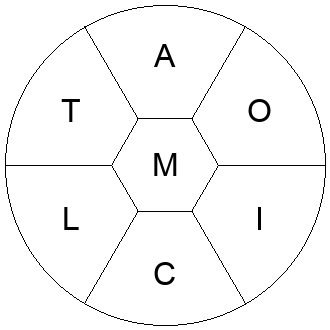
The official answers for today's puzzle are:

Click on the arrow to show the definition.
Click outside the pop-up to close it.


Number of Pangrams: 1

Maximum Puzzle Score: 194

Number of Answers: 53

Points Needed for Genius: 136

Genius requires between 20 and 47 words. You need at least a 7-letter word to reach genius. If you don't get the pangram, you need 76% of the total points to reach genius. If you get the pangram, you only need 67% of the remaining points to reach genius.

The button below will reveal a chart with the number of words by each letter. Red bars indicate that there is a pangram(s) starting with that letter.


How does this puzzle compare to other puzzles?

Today's score of 194 was in the 60th percentile of all puzzles.
The last time there was a score this high was on July 11, 2026.
The highest score ever was 537 on January 22, 2021.
The lowest score ever was 47 on March 27, 2023.

This puzzle's 53 possible answers rank it in the 80th percentile of all puzzles.
The last time there were more answers than this was on July 11, 2026.
The highest number of answers was 81 on June 08, 2019.
The lowest number of answers was 16 on March 27, 2023.

It takes a 7-letter word for genius.
The last time this happened was on July 12, 2026.

Today's puzzle has an average word length of 5.1.
For all Bees, the average word length has been 5.3.


Haven't I seen these letters before?

Hover over a letter to see its first and most recent appearance in the Bee!


Haven't I seen these words before?

The most common words in the Bee are:

  • noon 244
  • loll 226
  • toot 218
  • nana 204
  • naan 204
  • tilt 158
  • till 158
  • nene 158
  • mamma 158
  • mama 158
  • lilt 158
  • tint 153
  • onion 150
  • acai 148
  • acacia 148
  • toon 147
  • onto 147
  • olio 137
  • anon 137
  • anal 136
  • papa 129
  • tact 128
  • baba 127
  • lulu 125
  • lull 125
  • dodo 125
  • mitt 122
  • loon 122
  • poop 121
  • calla 121
  • call 121
  • booboo 120
  • boob 120
  • cocci 119
  • moon 118
  • mono 118
  • tattoo 117
  • tartar 117
  • tart 117
  • ratatat 117
  • attar 116
  • tutu 115
  • ally 114
  • allay 114
  • cancan 113
  • aria 113
  • momma 112
  • ammo 112
  • tatty 111
  • roar 111


How long are words in the Bee?

There have been 120,262 answers ever accepted in the Bee - with 11,056 unique words.
Below are the distributions of the lengths of these words.


Valid dictionary words not in today's official answers

You may be wondering why these words aren't here*:

  • acmatic
  • acmic
  • alamo
  • alma
  • amatol
  • amia
  • amici
  • amitotic
  • atma
  • atomical
  • calamata
  • calami
  • camail
  • climatal
  • cocomat
  • comal
  • comatic
  • comitia
  • comitial
  • comm
  • commata
  • commo
  • lactam
  • lamia
  • macaco
  • maill
  • maiolica
  • malacca
  • malm
  • malolactic
  • maloti
  • maltol
  • mamilla
  • mammati
  • mammilla
  • matt
  • milia
  • milo
  • milt
  • mimical
  • miotic
  • mitotic
  • mola
  • molal
  • molto
  • momi
  • mool
  • motmot
  • mott
  • oomiac
  • tallitim
  • tamal
  • timolol
  • toom

*Because the New York Times considers them obscure or offensive.

acclaim

Etymology 1

verb
  1. To shout; to call out.
  2. To express great approval (for).
  3. To salute or praise with great approval; to compliment; to applaud; to welcome enthusiastically.
  4. To claim.
  5. To declare by acclamations.
  6. To elect to an office by having no opposition.

Etymology 2

noun
  1. An acclamation; a shout of applause.
  2. A claim.

ammo

noun
  1. Ammunition.
verb
  1. To load up on ammunition.

atom

noun
  1. The smallest possible amount of matter which still retains its identity as a chemical element, now known to consist of a nucleus surrounded by electrons.
  2. (history of science) A hypothetical particle posited by Greek philosophers as an ultimate and indivisible component of matter.
  3. The smallest, indivisible constituent part or unit of something.
  4. In logical atomism, a fundamental fact that cannot be further broken down.
  5. The smallest medieval unit of time, equal to fifteen ninety-fourths of a second.
  6. A mote of dust in a sunbeam.
  7. A very small amount; a whit.
  8. (Lisp) An individual number or symbol, as opposed to a list; a scalar value.
  9. A non-zero member of a Boolean algebra that is not a union of any other elements. Or, a non-zero member of a Boolean lattice that has only zero below it.
  10. An element of a set that is not itself a set; an urelement.
  11. (usually capitalised as "Atom") A member of an age group division in hockey for ten- to 11-year-olds.

atomic

noun
  1. An atomic operation.
adjective
  1. Of or relating to atoms; composed of atoms; monatomic.
  2. Employing or relating to nuclear energy or processes.
  3. Infinitesimally small.
  4. Unable to be split or made any smaller.
  5. Of an operation: guaranteed to complete either fully or not at all while waiting in a pause, and running synchronously when called by multiple asynchronous threads.
  6. (of a commit in a VCS) Containing a single change, as opposed to involving numerous unrelated changes.

calm

noun
  1. (in a person) The state of being calm; peacefulness; absence of worry, anger, fear or other strong negative emotion.
  2. (in a place or situation) The state of being calm; absence of noise and disturbance.
  3. A period of time without wind.
verb
  1. To make calm.
  2. To become calm.
adjective
  1. (of a person) Peaceful, quiet, especially free from anger and anxiety.
  2. (of a place or situation) Free of noise and disturbance.
  3. (of water) with few or no waves on the surface; not rippled.
  4. Without wind or storm.

cami

noun
  1. A camisole.

camo

noun
  1. A pattern on clothing consisting of irregularly shaped patches that are either greenish/brownish, brownish/whitish, or bluish/whitish, as used by ground combat forces.
  2. Clothes made from camouflage fabric, for concealment in combat or hunting.
verb
  1. To camouflage.
  2. To put on camouflage clothing.

claim

noun
  1. A demand of ownership made for something.
  2. The thing claimed.
  3. The right or ground of demanding.
  4. A new statement of something one believes to be the truth, usually when the statement has yet to be verified or without valid evidence provided.
  5. A demand of ownership for previously unowned land.
  6. A legal demand for compensation or damages.
verb
  1. To demand ownership of.
  2. To state a new fact, typically without providing evidence to prove it is true.
  3. To demand ownership or right to use for land.
  4. To demand compensation or damages through the courts.
  5. To be entitled to anything; to deduce a right or title; to have a claim.
  6. To cause the loss of, usually by violent means.
  7. To proclaim.
  8. To call or name.

clam

Etymology 1

noun
  1. A bivalve mollusk of many kinds, especially those that are edible; for example the soft-shell clam (Mya arenaria), the hard clam (Mercenaria mercenaria), the sea clam or hen clam (Spisula solidissima), and other species. The name is said to have been given originally to the Tridacna gigas, a huge East Indian bivalve.
  2. Strong pincers or forceps.
  3. A kind of vise, usually of wood.
  4. A dollar (usually used in the plural).
  5. A Scientologist.
  6. A vagina.
  7. One who clams up; a taciturn person, one who refuses to speak.
verb
  1. To dig for clams.

Etymology 2

noun
  1. A crash or clangor made by ringing all the bells of a chime at once.
verb
  1. To produce, in bellringing, a clam or clangor; to cause to clang.

Etymology 3

noun
  1. Clamminess; moisture
verb
  1. To be moist or glutinous; to stick; to adhere.
  2. To clog, as with glutinous or viscous matter.
adjective
  1. Clammy.

Etymology 4

noun
  1. Acronym of Clip-on Load Adjusting Mechanism. A device that can be fitted onto an oar to adjust set.

climactic

adjective
  1. Of, pertaining to, or constituting a climax; reaching a decisive moment or point of greatest tension.

climatic

adjective
  1. Of, relating to or influenced by climate.

coma

Etymology 1

noun
  1. A state of unconsciousness from which one may not wake up, usually induced by some form of trauma.

Etymology 2

noun
  1. A cloud of dust surrounding the nucleus of a comet.
  2. A defect characterized by diffuse, pear-shaped images that in an ideal image would appear as points.
  3. A tuft or bunch, such as the assemblage of branches forming the head of a tree, a cluster of bracts when empty and terminating the inflorescence of a plant, or a tuft of long hairs on certain seeds.

comic

noun
  1. A comedian.
  2. A story composed of cartoon images arranged in sequence, usually with textual captions; a graphic novel.
  3. A children's newspaper.
adjective
  1. Funny; amusing; comical.
  2. Relating to comedy.

comical

adjective
  1. Originally, relating to comedy.
  2. Funny, whimsically amusing.
  3. Laughable; ridiculous.

comma

noun
  1. The punctuation mark ⟨,⟩ used to indicate a set off parts of a sentence or between elements of a list.
  2. A similar-looking subscript diacritical mark.
  3. Any of various nymphalid butterflies of the genus Polygonia, having a comma-shaped white mark on the underwings, especially Polygonia c-album and Polygonia c-aureum of North Africa, Europe, and Asia.
  4. A difference in the calculation of nearly identical intervals by different ways.
  5. A delimiting marker between items in a genetic sequence.
  6. In Ancient Greek rhetoric, a short clause, something less than a colon, originally denoted by comma marks. In antiquity it was defined as a combination of words having no more than eight syllables in all. It was later applied to longer phrases, e.g. the Johannine comma.
  7. A brief interval.
verb
  1. To place a comma or commas within text; to follow, precede, or surround a portion of text with commas.

commit

noun
  1. The act of committing (e.g. a database transaction or source code into a source control repository), making it a permanent change.
verb
  1. To give in trust; to put into charge or keeping; to entrust; to consign; used with to or formerly unto.
  2. To put in charge of a jailer; to imprison.
  3. To have (a person) enter an establishment, such as a hospital or asylum, as a patient.
  4. To do (something bad); to perpetrate, as a crime, sin, or fault.
  5. To join a contest; to match; followed by with.
  6. To pledge or bind; to compromise, expose, or endanger by some decisive act or preliminary step. (Traditionally used only reflexively but now also without oneself etc.)
  7. To make a set of changes permanent.
  8. (Latinism) To confound.
  9. To commit an offence; especially, to fornicate.
  10. To be committed or perpetrated; to take place; to occur.

committal

noun
  1. The act of entrusting something to someone.
  2. The act of committing someone to confinement; an order for someone's imprisonment.
  3. The act of perpetrating an offence.
  4. The act of committing a body to the grave at a burial or to the furnace at a cremation.
adjective
  1. Of or relating to a committee.
  2. Of or relating to commitment.

imam

noun
  1. (usually capitalized) A Shi'ite Muslim leader.
  2. One who leads the salat prayers in a mosque.

lama

Etymology 1

noun
  1. A master of Tibetan Buddhism.

Etymology 2

noun
  1. A South American mammal of the camel family, Lama glama, used as a domestic beast of burden and a source of wool and meat.

lima

No Definition Found.

limit

Etymology 1

noun
  1. A restriction; a bound beyond which one may not go.
  2. A value to which a sequence converges. Equivalently, the common value of the upper limit and the lower limit of a sequence: if the upper and lower limits are different, then the sequence has no limit (i.e., does not converge).
  3. Any of several abstractions of this concept of limit.
  4. The cone of a diagram through which any other cone of that same diagram can factor uniquely.
  5. Fixed limit.
  6. The final, utmost, or furthest point; the border or edge.
  7. The space or thing defined by limits.
  8. That which terminates a period of time; hence, the period itself; the full time or extent.
  9. A restriction; a check or curb; a hindrance.
  10. A determining feature; a distinguishing characteristic.
  11. The first group of riders to depart in a handicap race.
  12. (as "the limit") A person who is exasperating, intolerable, astounding, etc.
adjective
  1. Being a fixed limit game.

Etymology 2

verb
  1. To restrict; not to allow to go beyond a certain bound, to set boundaries.
  2. To have a limit in a particular set.
  3. To beg, or to exercise functions, within a certain limited region.

limo

noun
  1. An automobile body with seats and permanent top like a coupe, and with the top projecting over the driver and a projecting front.
  2. An automobile with such a body.
  3. A luxury sedan or saloon car, especially one with a lengthened wheelbase or driven by a chauffeur.
  4. An automobile for transportation to or from an airport, including sedans, vans, and buses.

llama

noun
  1. A South American mammal of the camel family, Lama glama, used as a domestic beast of burden and a source of wool and meat.

loam

noun
  1. A type of soil; an earthy mixture of sand, silt and clay, with organic matter to which its fertility is chiefly due.
  2. A mixture of sand, clay, and other materials, used in making moulds for large castings, often without a pattern.
verb
  1. To cover, smear, or fill with loam.
adjective
  1. Made of loam; consisting of loam.

loom

Etymology 1

noun
  1. A utensil; tool; a weapon; (usually in compound) an article in general.
  2. A frame or machine of wood or other material, in which a weaver forms cloth out of thread; a machine for interweaving yarn or threads into a fabric, as in knitting or lace making.
  3. The part of an oar which is between the grip or handle and the blade, the shaft.

Etymology 2

noun
  1. Loon (bird of order Gaviiformes)

Etymology 3

noun
  1. A distorted appearance of something as seen indistinctly or from afar.
verb
  1. To appear indistinctly, eg. when seen on the horizon or through the murk.
  2. To appear in an exaggerated or threatening form; to be imminent.
  3. To rise and to be eminent; to be elevated or ennobled, in a moral sense.

mail

Etymology 1

noun
  1. A bag or wallet.
  2. A bag containing letters to be delivered by post.
  3. The material conveyed by the postal service.
  4. A stagecoach, train or ship that delivers such post.
  5. The postal service or system in general.
  6. The letters, parcels, etc. delivered to a particular address or person.
  7. Electronic mail, e-mail: a computer network–based service for sending, storing, and forwarding electronic messages.
  8. A trunk, box, or bag, in which clothing, etc., may be carried.
verb
  1. (ditransitive) To send (a letter, parcel, etc.) through the mail.
  2. (ditransitive) To send by electronic mail.
  3. To contact (a person) by electronic mail.

Etymology 2

noun
  1. Armour consisting of metal rings or plates linked together.
  2. A contrivance of interlinked rings, for rubbing off the loose hemp on lines and white cordage.
  3. Any hard protective covering of an animal, as the scales and plates of reptiles, shell of a lobster, etc.
  4. A spot on a bird's feather; by extension, a spotted feather.
verb
  1. To arm with mail.
  2. To pinion.

Etymology 3

noun
  1. An old French coin worth half a denier.
  2. A monetary payment or tribute.
  3. Rent.
  4. Tax.

maillot

noun
  1. A one-piece swimsuit (for women)
  2. A leotard or tights of stretchable jersey fabric, generally worn by dancers and gymnasts.

maim

noun
  1. A serious wound
verb
  1. To wound seriously; to cause permanent loss of function of a limb or part of the body.

malic

No Definition Found.

mall

noun
  1. A pedestrianised street, especially a shopping precinct.
  2. An enclosed shopping centre.
  3. An alley where the game of pall mall was played.
  4. A public walk; a level shaded walk, a promenade.
  5. A heavy wooden mallet or hammer used in the game of pall mall.
  6. The game of polo.
  7. An old game played with malls or mallets and balls; pall mall.
verb
  1. To beat with a mall, or mallet; to beat with something heavy; to bruise
  2. To build up with the development of shopping malls
  3. To shop at the mall

malt

noun
  1. Malted grain (sprouted grain) (usually barley), used in brewing and otherwise.
  2. Malt liquor, especially malt whisky.
  3. A milkshake with malted milk powder added for flavor.
  4. Maltose-rich sugar derived from malted grain.
verb
  1. To convert a cereal grain into malt by causing it to sprout (by soaking in water) and then halting germination (by drying with hot air) in order to develop enzymes that can break down starches and proteins in the grain.
  2. To become malt.
  3. To drink malt liquor.

mama

noun
  1. (hypocoristic, usually childish) Mother, female parent.

mamma

Etymology 1

noun
  1. The milk-secreting organ of female humans and other mammals which includes the mammary gland and the nipple or teat; a breast; an udder. (plural: mammae)
  2. An accessory cloud like a mammary in appearance, which can form on the underside of most cloud genera

Etymology 2

noun
  1. (hypocoristic, usually childish) Mother, female parent.

mammal

noun
  1. An animal of the class Mammalia, characterized by being warm-blooded, having hair and feeding milk to its young.
  2. A vertebrate with three bones in the inner ear and one in the jaw.

mica

noun
  1. Any of a group of hydrous aluminosilicate minerals characterized by highly perfect cleavage, so that they readily separate into very thin leaves, more or less elastic.

militia

noun
  1. An army of trained civilians, which may be an official reserve army, called upon in time of need, the entire able-bodied population of a state which may also be called upon, or a private force not under government control.
noun
  1. The police in the Soviet Union and some related or successor states (e.g. modern Belarus).

mill

Etymology 1

noun
  1. A grinding apparatus for substances such as grains, seeds, etc.
  2. The building housing such a grinding apparatus.
  3. A machine used for expelling the juice, sap, etc., from vegetable tissues by pressure, or by pressure in combination with a grinding, or cutting process.
  4. A machine for grinding and polishing.
  5. The raised or ridged edge or surface made in milling anything, such as a coin or screw.
  6. A manufacturing plant for paper, steel, textiles, etc.
  7. A building housing such a plant.
  8. An establishment that handles a certain type of situation or procedure routinely, or produces large quantities of an item without much regard to quality, such as a divorce mill, a puppy mill, etc.
  9. An institution awarding educational certificates not officially recognised
  10. An engine.
  11. A boxing match, fistfight.
  12. (die sinking) A hardened steel roller with a design in relief, used for imprinting a reversed copy of the design in a softer metal, such as copper.
  13. An excavation in rock, transverse to the workings, from which material for filling is obtained.
  14. A passage underground through which ore is shot.
  15. A milling cutter.
  16. A treadmill.
  17. A typewriter used to transcribe messages received.
verb
  1. To grind or otherwise process in a mill or other machine.
  2. To shape, polish, dress or finish using a machine.
  3. To engrave one or more grooves or a pattern around the edge of (a cylindrical object such as a coin).
  4. (followed by around, about, etc.) To move about in an aimless fashion.
  5. To cause to mill, or circle around.
  6. (of air-breathing creatures) To swim underwater.
  7. (of a whale) To swim suddenly in a new direction.
  8. To beat; to pound.
  9. To pass through a fulling mill; to full, as cloth.
  10. To roll (steel, etc.) into bars.
  11. To make (drinking chocolate) frothy, as by churning.
  12. To undergo hulling.
  13. To take part in a fistfight; to box.
  14. To fill (a winze or interior incline) with broken ore, to be drawn out at the bottom.
  15. (thieves' cant) To commit burglary.

Etymology 2

noun
  1. An obsolete coin worth one thousandth of a US dollar, or one tenth of a cent.
  2. One thousandth part, particularly in millage rates of property tax.

Etymology 3

noun
  1. An angular mil, a unit of angular measurement equal to 1⁄6400 of a complete circle. At 1000 metres one mil subtends about one metre (0.98 m). Also 1⁄6000 and 1⁄6300 are used in other countries.
  2. A unit of measurement equal to 1⁄1000 of an inch, usually used for thin objects, such as sheets of plastic.
  3. A former subdivision (1/1000) of the Maltese lira
  4. (plural "mil") Abbreviation of million.
noun
  1. A unit of measure of capacity, being one thousandth of a litre. Symbol: ml

Etymology 4

noun
  1. A line of three matching pieces in nine men's morris and related games.

Etymology 5

noun
  1. (trading card games) Discarding a card from one's deck.
  2. (trading card games) A strategy centered on depleting the opponent's deck.
verb
  1. (trading card games) To move (a card) from a deck to the discard pile.
  2. (Hearthstone) To destroy (a card) due to having a full hand.

mimic

noun
  1. A person who practices mimicry, or mime.
  2. An imitation.
verb
  1. To imitate, especially in order to ridicule.
  2. To take on the appearance of another, for protection or camouflage.
adjective
  1. Pertaining to mimicry; imitative.
  2. Mock, pretended.
  3. Imitative; characterized by resemblance to other forms; applied to crystals which by twinning resemble simple forms of a higher grade of symmetry.

mitt

noun
  1. A mitten
  2. An oversized, protective glove such as an oven mitt or a baseball mitt.
  3. (especially in plural) A hand.

moat

noun
  1. A deep, wide defensive ditch, normally filled with water, surrounding a fortified habitation.
  2. An aspect of a business which makes it more "defensible" from competitors, either because of the nature of its products, services, franchise or other reason.
  3. A circular lowland between a resurgent dome and the walls of the caldera surrounding it.
  4. A hill or mound.
verb
  1. To surround with a moat.

moil

Etymology 1

noun
  1. Hard work.
  2. Confusion, turmoil.
  3. A spot; a defilement.
verb
  1. To toil, to work hard.
  2. To churn continually; to swirl.
  3. To defile or dirty.

Etymology 2

noun
  1. The glass circling the tip of a blowpipe or punty, such as the residual glass after detaching a blown vessel, or the lower part of a gather.
  2. (blow molding) The excess material which adheres to the top, base, or rim of a glass object when it is cut or knocked off from a blowpipe or punty, or from the mold-filling process. Typically removed after annealing as part of the finishing process (e.g. scored and snapped off).
  3. The metallic oxide from a blowpipe which has adhered to a glass object.

moll

Etymology 1

noun
  1. A female companion of a gangster, especially a former or current prostitute.
  2. A prostitute or woman with loose sexual morals.
  3. Bitch, slut; an insulting epithet applied to a female.
  4. A girlfriend of a bikie.
  5. A girlfriend of a surfie; blends with pejorative sense.
  6. A female fan of extreme metal, grunge or hardcore punk, especially the girlfriend of a musician of those aforementioned genres.

Etymology 2

adjective
  1. Minor; in the minor mode

molt

Etymology 1

noun
  1. The process of shedding or losing a covering of fur, feathers or skin etc.
  2. The skin or feathers cast off during the process of moulting.
verb
  1. To shed or lose a covering of hair or fur, feathers, skin, horns, etc, and replace it with a fresh one.
  2. To shed in such a manner.

Etymology 2

verb
  1. To change (or to be changed) from a solid state to a liquid state, usually by a gradual heat.
  2. To dissolve, disperse, vanish.
  3. To soften, as by a warming or kindly influence; to relax; to render gentle or susceptible to mild influences; sometimes, in a bad sense, to take away the firmness of; to weaken.
  4. To be discouraged.
  5. To be emotionally softened or touched.
  6. To be very hot and sweat profusely.

momma

noun
  1. Mother
  2. A voluptuous woman.
  3. One's wife or girlfriend.

moola

noun
  1. Money, cash.

moot

Etymology 1

noun
  1. A moot court.
  2. A system of arbitration in many areas of Africa in which the primary goal is to settle a dispute and reintegrate adversaries into society rather than assess penalties.
  3. A gathering of Rovers, usually in the form of a camp lasting 2 weeks.
  4. A social gathering of pagans, normally held in a public house.
  5. An assembly (usually for decision-making in a locality).
  6. A ring for gauging wooden pins.
adjective
  1. Subject to discussion (originally at a moot); arguable, debatable, unsolved or impossible to solve.
  2. Being an exercise of thought; academic.
  3. Having no practical impact or relevance.

Etymology 2

noun
  1. A whisper, or an insinuation, also gossip or rumors.
  2. (rural) Talk.
verb
  1. To bring up as a subject for debate, to propose.
  2. To discuss or debate.
  3. To make or declare irrelevant.
  4. To argue or plead in a supposed case.
  5. To talk or speak.
  6. To say, utter, also insinuate.

Etymology 3

noun
  1. Vagina.

Etymology 4

noun
  1. The stump of a tree; the roots and bottom end of a felled tree.
verb
  1. To take root and begin to grow.
  2. To turn up soil or dig up roots, especially an animal with the snout.

motto

noun
  1. A sentence, phrase, or word, forming part of an heraldic achievement.
  2. A sentence, phrase, or word, prefixed to an essay, discourse, chapter, canto, or the like, suggestive of its subject matter; a short, suggestive expression of a guiding principle; a maxim.
  3. A paper packet containing a sweetmeat, cracker, etc., together with a scrap of paper bearing a motto.

omit

verb
  1. To leave out or exclude.
  2. To fail to perform.
  3. To neglect or take no notice of.

tatami

noun
  1. Straw matting, in a standard size, used as a floor covering in Japanese houses

tomatillo

noun
  1. A plant of the nightshade family originating in Mexico, Physalis philadelphica, cultivated for its tomato-like green to green-purple fruit surrounded by a thin papery skin.

tomato

noun
  1. A widely cultivated plant, Solanum lycopersicum, having edible fruit.
  2. The savory fruit of this plant, red when ripe, treated as a vegetable in horticulture and cooking.
  3. A shade of red, the colour of a ripe tomato.
  4. A desirable-looking woman.
  5. A stupid act or person.
verb
  1. To pelt with tomatoes
  2. To add tomatoes to (a dish)

tomcat

noun
  1. A tom, a male cat.
verb
  1. To prowl for sexual gratification.

tomtit

noun
  1. Petroica macrocephala, the miromiro or New Zealand tit, a bird of the Petroicidae (Australasian robin) family.