Friday, July 17, 2026

Answers to yesterday's Bee

Jump to answers for


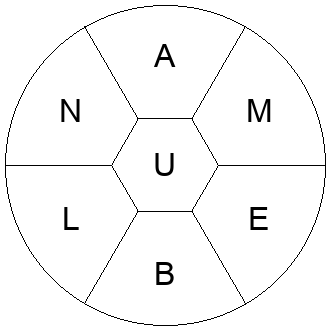
The official answers for today's puzzle are:

Click on the arrow to show the definition.
Click outside the pop-up to close it.


Number of Pangrams: 1

Maximum Puzzle Score: 183

Number of Answers: 44

Points Needed for Genius: 128

Genius requires between 19 and 38 words. You need at least a 6-letter word to reach genius. If you don't get the pangram, you need 76% of the total points to reach genius. If you get the pangram, you only need 67% of the remaining points to reach genius.

The button below will reveal a chart with the number of words by each letter. Red bars indicate that there is a pangram(s) starting with that letter.


How does this puzzle compare to other puzzles?

Today's score of 183 was in the 55th percentile of all puzzles.
The last time there was a score this high was on July 13, 2026.
The highest score ever was 537 on January 22, 2021.
The lowest score ever was 47 on March 27, 2023.

This puzzle's 44 possible answers rank it in the 61st percentile of all puzzles.
The last time there were more answers than this was on July 15, 2026.
The highest number of answers was 81 on June 08, 2019.
The lowest number of answers was 16 on March 27, 2023.

It takes a 6-letter word for genius.
The last time this happened was on July 10, 2026.

Today's puzzle has an average word length of 5.2.
For all Bees, the average word length has been 5.3.


Haven't I seen these letters before?

Hover over a letter to see its first and most recent appearance in the Bee!


Haven't I seen these words before?

The most common words in the Bee are:

  • noon 246
  • loll 227
  • toot 219
  • nana 204
  • naan 204
  • tilt 159
  • till 159
  • lilt 159
  • nene 158
  • mamma 158
  • mama 158
  • tint 153
  • onion 151
  • acai 148
  • acacia 148
  • toon 147
  • onto 147
  • olio 138
  • anon 138
  • anal 136
  • papa 129
  • tact 128
  • baba 127
  • lulu 126
  • lull 126
  • dodo 126
  • mitt 123
  • loon 123
  • poop 121
  • calla 121
  • call 121
  • booboo 121
  • boob 121
  • moon 119
  • mono 119
  • cocci 119
  • tattoo 117
  • tartar 117
  • tart 117
  • ratatat 117
  • attar 116
  • tutu 115
  • ally 114
  • allay 114
  • momma 113
  • cancan 113
  • aria 113
  • ammo 113
  • tatty 111
  • roar 111


How long are words in the Bee?

There have been 120,562 answers ever accepted in the Bee - with 11,064 unique words.
Below are the distributions of the lengths of these words.


Valid dictionary words not in today's official answers

You may be wondering why these words aren't here*:

  • abubble
  • alula
  • alulae
  • babu
  • babul
  • baubee
  • blellum
  • blub
  • blueball
  • blume
  • bubal
  • bubale
  • bubbe
  • bubu
  • bulbel
  • bulbul
  • bulla
  • bullae
  • buna
  • bunn
  • emeu
  • labellum
  • lauan
  • luma
  • lumenal
  • lunule
  • maun
  • mulla
  • mullen
  • mumm
  • mumu
  • nebule
  • neum
  • neume
  • numen
  • ulama
  • ulan
  • ulema
  • umbel
  • umbellule
  • umbelule
  • umma
  • unamenable
  • unau
  • unbale
  • unbe
  • unnamable
  • unnameable

*Because the New York Times considers them obscure or offensive.

album

noun
  1. A book specially designed to keep photographs, stamps, or autographs.
  2. A collection, especially of literary items
  3. A phonograph record that is composed of several tracks
  4. A jacket or cover for such a phonograph record.
  5. A group of audio recordings, on any medium, intended for distribution as a group.
  6. In Ancient Rome, a white tablet or register on which the praetor's edicts and other public notices were recorded.

albumen

noun
  1. The white part of an egg; being mostly the protein albumin and water.

alum

Etymology 1

noun
  1. An astringent salt, usually occurring in the form of pale crystals, much used in the dyeing and tanning trade and in certain medicines, and now understood to be a double sulphate of potassium and aluminium (K2SO4·Al2(SO4)3·24H2O).
  2. Any similar double sulphate in which either or both of the potassium and aluminium is wholly or partly replaced by other univalent or tervalent cations.
verb
  1. To steep in, or otherwise impregnate with, a solution of alum; to treat with alum.

Etymology 2

noun
  1. (shortening) A past attendee or graduate (of either gender) of a college, university or other educational institution.

alumna

noun
  1. A female pupil or student (especially of a university or college).
  2. A female graduate.

alumnae

noun
  1. A female pupil or student (especially of a university or college).
  2. A female graduate.

annual

noun
  1. An annual publication; a book, periodical, journal, report, comic book, yearbook, etc., which is published serially once a year, which may or may not be in addition to regular weekly or monthly publication.
  2. An annual plant; a plant with a life span of just one growing season; a plant which naturally germinates, flowers and dies in one year. Compare biennial, perennial.
  3. A medical checkup taking place once a year.
  4. A pantomime taking place once a year.
adjective
  1. Happening once every year.
  2. Of, for, or relating to a whole year, often as a recurring cycle; determined or reckoned by the year; accumulating in the course of a year; performed, executed, or completed over the course of a year. See also circannual.
  3. (of a plant) Having a life cycle that is completed in only one growing season; e.g. beans, corn, marigold. See Annual plant in Wikipedia. Compare biennial, perennial.
  4. Living or lasting just one season or year, as certain insects or insect colonies.

annul

verb
  1. To formally revoke the validity of.
  2. To dissolve (a marital union) on the grounds that it is not valid.

bauble

noun
  1. A cheap showy ornament piece of jewellery; a gewgaw.
  2. A club or sceptre carried by a jester.
  3. A small shiny spherical decoration, commonly put on Christmas trees.

beau

noun
  1. A man with a reputation for fine dress and etiquette; a dandy or fop.
  2. A male lover; a boyfriend.
  3. A male escort.
  4. A suitor of a lady.

benumb

verb
  1. To make numb, as by cold or anesthetic.
  2. To deaden, dull (the mind, faculties, etc.).

blue

Etymology 1

noun
  1. The colour of the clear sky or the deep sea, between green and violet in the visible spectrum, and one of the primary additive colours for transmitted light; the colour obtained by subtracting red and green from white light using magenta and cyan filters; or any colour resembling this.
  2. A blue dye or pigment.
  3. Any of several processes to protect metal against rust.
  4. Blue clothing
  5. (in the plural) A blue uniform. See blues.
  6. A member of law enforcement
  7. The sky, literally or figuratively.
  8. The ocean; deep waters.
  9. The far distance; a remote or distant place.
  10. Anything blue, especially to distinguish it from similar objects differing only in color.
  11. A dog or cat with a slaty gray coat.
  12. One of the colour balls used in snooker, with a value of five points.
  13. Any of the butterflies of the subfamily Polyommatinae in the family Lycaenidae, most of which have blue on their wings.
  14. A bluefish.
  15. An argument.
  16. A liquid with an intense blue colour, added to a laundry wash to prevent yellowing of white clothes.
  17. A type of firecracker.
  18. A bluestocking.
  19. One of the three color charges for quarks.
verb
  1. To make or become blue.
  2. To treat the surface of steel so that it is passivated chemically and becomes more resistant to rust.
  3. (laundry) To brighten by treating with blue (laundry aid)
  4. To spend (money) extravagantly; to blow.
adjective
  1. Of the colour blue.
  2. Depressed, melancholic, sad.
  3. Pale, without redness or glare; said of a flame.
  4. Supportive of, run by (a member of), pertaining to, or dominated by a political party represented by the colour blue.
  5. Of the higher-frequency region of the part of the electromagnetic spectrum which is relevant in the specific observation.
  6. (of steak) Extra rare; left very raw and cold.
  7. (of a dog or cat) Having a coat of fur of a slaty gray shade.
  8. Severe or overly strict in morals; gloomy.
  9. (of women) literary; bluestockinged.
  10. Having a color charge of blue.
  11. (entertainment) Risque or obscene

Etymology 2

adjective
  1. (entertainment) Pornographic or profane.

bluebell

noun
  1. Various flowering plants with blue, usually pendulous, flowers.

bubba

noun
  1. Brother; used as term of familiar address.
  2. A working-class white male from the southern US, stereotyped as loutish.

bubble

noun
  1. A spherically contained volume of air or other gas, especially one made from soapy liquid.
  2. A small spherical cavity in a solid material.
  3. (by extension) Anything resembling a hollow sphere.
  4. Anything lacking firmness or solidity; a cheat or fraud; an empty project.
  5. A period of intense speculation in a market, causing prices to rise quickly to irrational levels as the metaphorical bubble expands, and then fall even more quickly as the bubble bursts.
  6. The emotional and/or physical atmosphere in which the subject is immersed.
  7. An officer's station in a prison dormitory, affording views on all sides.
  8. Someone who has been ‘bubbled’ or fooled; a dupe.
  9. A small, hollow, floating bead or globe, formerly used for testing the strength of spirits.
  10. The globule of air in the chamber of a spirit level.
  11. A laugh.
  12. A Greek.
  13. Any of the small magnetized areas that make up bubble memory.
  14. The point in a poker tournament when the last player without a prize loses all their chips and leaves the game, leaving only players that are going to win prizes. (e.g., if the last remaining 9 players win prizes, then the point when the 10th player leaves the tournament)
  15. A group of people who are in quarantine together.
verb
  1. To produce bubbles, to rise up in bubbles (such as in foods cooking or liquids boiling).
  2. To churn or foment, as if wishing to rise to the surface.
  3. To rise through a medium or system, similar to the way that bubbles rise in liquid.
  4. To cheat, delude.
  5. To cry, weep.
  6. To pat a baby on the back so as to cause it to belch.
  7. To cause to feel as if bubbling or churning.
  8. To express in a bubbly or lively manner.
  9. To form into a protruding round shape.
  10. To cover with bubbles.
  11. To bubble in; to mark a response on a form by filling in a circular area (‘bubble’).

bulb

noun
  1. Any solid object rounded at one end and tapering on the other, possibly attached to a larger object at the tapered end.
  2. A light bulb.
  3. The bulb-shaped root portion of a plant such as a tulip, from which the rest of the plant may be regrown.
  4. A bulbous protuberance at the forefoot of certain vessels to reduce turbulence.
  5. The medulla oblongata.
verb
  1. To take the shape of a bulb; to swell.

bull

Etymology 1

noun
  1. An adult male of domesticated cattle or oxen.
  2. A male of domesticated cattle or oxen of any age.
  3. Any adult male bovine.
  4. An adult male of certain large mammals, such as whales, elephants, camels and seals.
  5. A large, strong man.
  6. An investor who buys (commodities or securities) in anticipation of a rise in prices.
  7. A policeman.
  8. A crown coin; its value, 5 shillings.
  9. (Philadelphia) A man.
  10. A man who has sex with another man's wife or girlfriend with the consent of both.
  11. A drink made by pouring water into a cask that previously held liquor.
adjective
  1. Large and strong, like a bull.
  2. (of large mammals) adult male
  3. Of a market in which prices are rising (compare bear)
  4. Stupid
noun
  1. The centre of a target, inside the inner and magpie.
  2. A shot which hits the centre of a target.
  3. The two central rings on a dartboard.
  4. A hard striped peppermint-flavoured boiled sweet.
  5. Thick glass set into the side of a ship to let in light.
  6. A hand-cancelled postmark issued by a counter clerk at a post office, typically done on a receipt for proof of mailing.
  7. The central part of a crown glass disk, with concentric ripple effect.
  8. A convex glass lens which is placed in front of a lamp to concentrate the light so as to make it more conspicuous as a signal; also the lantern itself.
  9. A £50 banknote.
  10. Any of the first postage stamps produced in Brazil from 1843.
noun
  1. The faeces of a bull.
  2. False or exaggerated statements made to impress and deceive the listener rather than inform; nonsense.
  3. A card game in which the object is to bluff about cards laid down and to determine when one's opponents are bluffing.
  4. An object of frustration and/or disgust, often caused by a perceived deception.
  5. Statements that may be true but misleading nonetheless.
  6. Statements made without any particular reference to their truth value.

Etymology 2

verb
  1. To force oneself (in a particular direction).
  2. To lie, to tell untruths.
  3. To be in heat; to manifest sexual desire as cows do.
  4. To polish boots to a high shine.
  5. To endeavour to raise the market price of.
  6. To endeavour to raise prices in.

Etymology 3

noun
  1. A papal bull, an official document or edict from the Pope.
  2. A seal affixed to a document, especially a document from the Pope.
verb
  1. (17th century) to publish in a Papal bull

Etymology 4

noun
  1. A lie.
  2. Nonsense.
verb
  1. To mock; to cheat.

Etymology 5

noun
  1. (16th century) A bubble.

bumble

Etymology 1

noun
  1. A confusion; a jumble.
verb
  1. To act in an inept, clumsy or inexpert manner; to make mistakes.

Etymology 2

noun
  1. A bumble-bee.
  2. The bittern.
verb
  1. To boom, as a bittern; to buzz, as a fly.

bumblebee

noun
  1. Any of several species of large bee in the genus Bombus

luau

noun
  1. An elaborate Hawaiian feast featuring traditional foods and entertainment.

lube

Etymology 1

noun
  1. Lubricant

Etymology 2

verb
  1. To lubricate

lull

noun
  1. A period of rest or soothing.
  2. A period of reduced activity; a respite
  3. A period without waves or wind.
  4. An extended pause between sets of waves.
verb
  1. To cause to rest by soothing influences; to compose; to calm
  2. To become gradually calm; to subside; to cease or abate.

lulu

noun
  1. A remarkable person, object or idea.
  2. A very attractive or alluring person.
  3. A very bad mistake or error.
  4. A fixed allowance paid to a legislator in lieu of reimbursement for actual expenses.

lumen

noun
  1. In the International System of Units, the derived unit of luminous flux; the light that is emitted in a solid angle of one steradian from a source of one candela. Symbol: lm.
  2. The cavity or channel within a tube or tubular organ.
  3. The cavity bounded by a plant cell wall.
  4. The bore of a tube such as a hollow needle or catheter.

luna

No Definition Found.

lune

Etymology 1

noun
  1. A fit of lunacy or madness; a period of frenzy; a crazy or unreasonable freak.

Etymology 2

noun
  1. A concave figure formed by the intersection of the arcs of two circles on a plane, or on a sphere the intersection between two great semicircles.
  2. Anything crescent-shaped.

Etymology 3

noun
  1. (hawking) A leash for a hawk.

lunula

noun
  1. Something shaped like a crescent or half-moon; especially the pale area at the base of the fingernail.

lunulae

noun
  1. Something shaped like a crescent or half-moon; especially the pale area at the base of the fingernail.

manual

Etymology 1

noun
  1. A handbook.
  2. A booklet that instructs on the usage of a particular machine or product.
  3. A drill in the use of weapons, etc.
  4. An old office-book like the modern Roman Catholic ritual.
  5. A keyboard for the hands on a harpsichord, organ, or other musical instrument.
  6. A manual transmission; a gearbox, especially of a motorized vehicle, shifted by the operator.
  7. (by synecdoche) A vehicle with a manual transmission.
  8. A bicycle technique whereby the front wheel is held aloft by the rider, without the use of pedal force.
  9. Manual measurement of the blood pressure, done with a manual sphygmomanometer.

Etymology 2

adjective
  1. Performed with the hands (of an activity).
  2. Operated by means of the hands (of a machine, device etc.).
  3. Performed by a human rather than a machine.

Etymology 3

noun
  1. Mechanical transmission which shifts gears by the action of the driver's hand on the gearstick or gear lever, rather than automatically; a manual gearbox.

maul

noun
  1. A heavy long-handled hammer, used for splitting logs by driving a wedge into them, or in combat.
  2. A situation where the player carrying the ball, who must be on his feet, is held by one or more opponents, and one or more of the ball carrier's team mates bind onto the ball carrier.
verb
  1. To handle someone or something in a rough way.
  2. To savage; to cause serious physical wounds (usually used of an animal).
  3. To criticise harshly.
  4. To beat with the heavy hammer called a maul.

menu

noun
  1. The details of the food to be served at a banquet; a bill of fare.
  2. A list of dishes offered in a restaurant.
  3. A list from which the user may select an operation to be performed, often done with a keyboard, mouse, or controller under a graphical user interface

mule

Etymology 1

noun
  1. The generally sterile male or female hybrid offspring of a male donkey and a female horse.
  2. The generally sterile hybrid offspring of any two species of animals.
  3. A hybrid plant.
  4. A stubborn person.
  5. A person paid to smuggle drugs.
  6. A coin or medal minted with obverse and reverse designs not normally seen on the same piece, either intentionally or in error.
  7. A MMORPG character, or NPC companion in a tabletop RPG, used mainly to store extra inventory for the owner's primary character.
  8. Any of a group of cocktails involving ginger ale or ginger beer, citrus juice, and various liquors.
  9. A kind of triangular sail for a yacht.
  10. A kind of cotton-spinning machine.
verb
  1. To smuggle (illegal drugs).

Etymology 2

noun
  1. A shoe that has no fitting or strap around the heel, but which covers the foot.

mull

Etymology 1

noun
  1. A thin, soft muslin.
  2. Marijuana that has been chopped to prepare it for smoking.
  3. A stew of meat, broth, milk, butter, vegetables, and seasonings, thickened with soda crackers.
  4. The gauze used in bookbinding to adhere a text block to a book's cover.
  5. An inferior kind of madder prepared from the smaller roots or the peelings and refuse of the larger.
verb
  1. (usually with over) To work (over) mentally; to cogitate; to ruminate.
  2. To powder; to pulverize.
  3. To chop marijuana so that it becomes a smokable form.
  4. To heat and spice something, such as wine.
  5. To join two or more individual windows at mullions.
  6. To dull or stupefy.

Etymology 2

noun
  1. A promontory.
  2. A snuffbox made of the small end of a horn.

Etymology 3

noun
  1. Dirt; rubbish

mumble

noun
  1. A quiet or unintelligible vocalization; a low tone of voice.
verb
  1. To speak unintelligibly or inaudibly; to fail to articulate.
  2. To chew something gently with closed lips.

muumuu

noun
  1. A long loose-fitting dress made of lightweight fabric printed with bright, stylized Hawaiian themes (such as flowers and palm branches).

nebula

noun
  1. A cloud in outer space consisting of gas or dust (e.g. a cloud formed after a star explodes).
  2. A white spot or slight opacity of the cornea.
  3. A cloudy appearance in the urine

nebulae

noun
  1. A cloud in outer space consisting of gas or dust (e.g. a cloud formed after a star explodes).
  2. A white spot or slight opacity of the cornea.
  3. A cloudy appearance in the urine

nubble

noun
  1. A small knob or lump.
verb
  1. To beat or bruise with the fist.

null

noun
  1. A non-existent or empty value or set of values.
  2. Zero quantity of expressions; nothing.
  3. Something that has no force or meaning.
  4. The ASCII or Unicode character (␀), represented by a zero value, that indicates no character and is sometimes used as a string terminator.
  5. The attribute of an entity that has no valid value.
  6. One of the beads in nulled work.
  7. Null hypothesis.
verb
  1. To nullify; to annul.
  2. To form nulls, or into nulls, as in a lathe.
  3. To crack; to remove restrictions or limitations in (software).
adjective
  1. Having no validity; "null and void"
  2. Insignificant.
  3. Absent or non-existent.
  4. Of the null set.
  5. Of or comprising a value of precisely zero.
  6. (of a mutation) Causing a complete loss of gene function, amorphic.

numb

verb
  1. To cause to become numb (physically or emotionally).
  2. To cause (a feeling) to be less intense.
  3. To cause (the mind, faculties, etc.) to be less acute.
  4. To become numb (especially physically).
adjective
  1. Physically unable to feel, not having the power of sensation.
  2. Emotionally unable to feel or respond in a normal way.
  3. Causing numbness.

ulna

noun
  1. The bone of the forearm that extends from the elbow to the wrist on the side opposite to the thumb, corresponding to the fibula of the hind limb. Also, the corresponding bone in the forelimb of any vertebrate.

ulnae

noun
  1. The bone of the forearm that extends from the elbow to the wrist on the side opposite to the thumb, corresponding to the fibula of the hind limb. Also, the corresponding bone in the forelimb of any vertebrate.

unable

Etymology 1

adjective
  1. Not able; lacking a certain ability.

Etymology 2

verb
  1. To render unable; disable

unban

verb
  1. To lift a ban against.

unman

verb
  1. To castrate; to remove the manhood of.
  2. To sap (a person) of the strength, whether physical or emotional, required to deal with a situation.
  3. To deprive of men.