Monday, July 20, 2026

Answers to yesterday's Bee

Jump to answers for


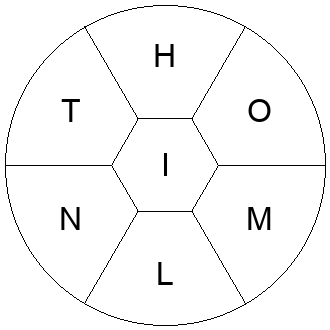
The official answers for today's puzzle are:

Click on the arrow to show the definition.
Click outside the pop-up to close it.


Number of Pangrams: 2

Maximum Puzzle Score: 136

Number of Answers: 38

Points Needed for Genius: 95

Genius requires between 13 and 35 words. You need at least a 7-letter word to reach genius. If you don't get the pangrams, you need 90% of the total points to reach genius. If you get the pangrams, you only need 61% of the remaining points to reach genius.

Other days with this pangram:

The button below will reveal a chart with the number of words by each letter. Red bars indicate that there is a pangram(s) starting with that letter.


How does this puzzle compare to other puzzles?

Today's score of 136 was in the 32nd percentile of all puzzles.
The last time there was a score this low was on July 14, 2026.
The highest score ever was 537 on January 22, 2021.
The lowest score ever was 47 on March 27, 2023.

This puzzle's 38 possible answers rank it in the 45th percentile of all puzzles.
The last time there were fewer answers than this was on July 19, 2026.
The highest number of answers was 81 on June 08, 2019.
The lowest number of answers was 16 on March 27, 2023.

It takes a 7-letter word for genius.
The last time this happened was on July 18, 2026.

Today's puzzle has an average word length of 4.9.
For all Bees, the average word length has been 5.3.


Haven't I seen these letters before?

Hover over a letter to see its first and most recent appearance in the Bee!


Haven't I seen these words before?

The most common words in the Bee are:

  • noon 246
  • loll 227
  • toot 219
  • nana 204
  • naan 204
  • tilt 160
  • till 160
  • lilt 160
  • nene 158
  • mamma 158
  • mama 158
  • tint 154
  • onion 152
  • acai 149
  • acacia 149
  • toon 147
  • onto 147
  • olio 139
  • anon 138
  • anal 136
  • tact 129
  • papa 129
  • baba 127
  • lulu 126
  • lull 126
  • dodo 126
  • mitt 124
  • loon 123
  • calla 122
  • call 122
  • poop 121
  • booboo 121
  • boob 121
  • moon 119
  • mono 119
  • cocci 119
  • tattoo 117
  • tartar 117
  • tart 117
  • ratatat 117
  • attar 116
  • tutu 115
  • ally 114
  • allay 114
  • momma 113
  • cancan 113
  • aria 113
  • ammo 113
  • tatty 111
  • roar 111


How long are words in the Bee?

There have been 120,702 answers ever accepted in the Bee - with 11,066 unique words.
Below are the distributions of the lengths of these words.


Valid dictionary words not in today's official answers

You may be wondering why these words aren't here*:

  • hili
  • hillo
  • hominin
  • imino
  • inion
  • inti
  • lilo
  • linin
  • linn
  • lino
  • lintol
  • loti
  • millimho
  • milliohm
  • milo
  • milt
  • minimill
  • momi
  • monition
  • monotint
  • nihil
  • nill
  • ninon
  • nitinol
  • niton
  • noil
  • nomoi
  • nonillionth
  • oolith
  • otolith
  • thill
  • thio
  • thiol
  • thionin
  • tholoi
  • timolol
  • titi
  • toit

*Because the New York Times considers them obscure or offensive.

hill

noun
  1. An elevated location smaller than a mountain.
  2. A sloping road.
  3. A heap of earth surrounding a plant.
  4. A single cluster or group of plants growing close together, and having the earth heaped up about them.
  5. The pitcher’s mound.
verb
  1. To form into a heap or mound.
  2. To heap or draw earth around plants.

hilt

noun
  1. The handle of a sword, consisting of grip, guard, and pommel, designed to facilitate use of the blade and afford protection to the hand.
  2. The base of the penis.
verb
  1. To provide with a hilt.
  2. To insert (a bodily extremity) as far as it can go into a sexual orifice so that it is impeded by the wider base to which it is attached (finger until palm, penis until pelvis).

hint

noun
  1. A clue.
  2. A tacit suggestion that avoids a direct statement.
  3. A small, barely detectable amount of.
  4. Information in a computer-based font that suggests how the outlines of the font's glyphs should be distorted in order to produce, at specific sizes, a visually appealing pixel-based rendering. Also known as hinting.
  5. An opportunity; occasion; fit time.
verb
  1. To suggest tacitly without a direct statement; to provide a clue.
  2. To bring to mind by a slight mention or remote allusion; to suggest in an indirect manner.
  3. To develop and add hints to a font.

into

preposition
  1. To or towards the inside of.
  2. To or towards the region of.
  3. Against, especially with force or violence.
  4. Indicates transition into another form or substance.
  5. After the start of.
  6. Interested in or attracted to.
  7. Expressing the operation of multiplication.
  8. Expressing the operation of division, with the denominator given first. Usually with "goes".
  9. Investigating the subject (of).

lilt

noun
  1. Animated, brisk motion; spirited rhythm; sprightliness.
  2. A lively song or dance; a cheerful tune.
  3. A cheerful or melodious accent when speaking.
verb
  1. To do something rhythmically, with animation and quickness, usually of music.
  2. To sing cheerfully, especially in Gaelic.
  3. To utter with spirit, animation, or gaiety; to sing with spirit and liveliness.

limit

Etymology 1

noun
  1. A restriction; a bound beyond which one may not go.
  2. A value to which a sequence converges. Equivalently, the common value of the upper limit and the lower limit of a sequence: if the upper and lower limits are different, then the sequence has no limit (i.e., does not converge).
  3. Any of several abstractions of this concept of limit.
  4. The cone of a diagram through which any other cone of that same diagram can factor uniquely.
  5. Fixed limit.
  6. The final, utmost, or furthest point; the border or edge.
  7. The space or thing defined by limits.
  8. That which terminates a period of time; hence, the period itself; the full time or extent.
  9. A restriction; a check or curb; a hindrance.
  10. A determining feature; a distinguishing characteristic.
  11. The first group of riders to depart in a handicap race.
  12. (as "the limit") A person who is exasperating, intolerable, astounding, etc.
adjective
  1. Being a fixed limit game.

Etymology 2

verb
  1. To restrict; not to allow to go beyond a certain bound, to set boundaries.
  2. To have a limit in a particular set.
  3. To beg, or to exercise functions, within a certain limited region.

limn

verb
  1. To draw or paint; to delineate.
  2. To illuminate, as a manuscript; to decorate with gold or some other bright colour.

limo

noun
  1. An automobile body with seats and permanent top like a coupe, and with the top projecting over the driver and a projecting front.
  2. An automobile with such a body.
  3. A luxury sedan or saloon car, especially one with a lengthened wheelbase or driven by a chauffeur.
  4. An automobile for transportation to or from an airport, including sedans, vans, and buses.

lint

Etymology 1

noun
  1. A fine material made by scraping cotton or linen cloth; used for dressing wounds.
  2. Clinging fuzzy fluff that clings to fabric or accumulates in one's pockets or navel etc.
  3. The fibrous coat of thick hairs covering the seeds of the cotton plant.
  4. Raw cotton ready for baling.

Etymology 2

verb
  1. To perform a static check on (source code) to detect stylistic or programmatic errors.

lion

noun
  1. A big cat, Panthera leo, native to Africa, India and formerly much of Europe.
  2. (by extension) Any of various extant and extinct big cats, especially the mountain lion.
  3. A Chinese foo dog.
  4. An individual who shows strength and courage, attributes associated with the lion.
  5. A famous person regarded with interest and curiosity.
  6. A light brown color that resembles the fur of a lion.
  7. An old Scottish coin, with a lion on the obverse, worth 74 shillings.
adjective
  1. Of the light brown color that resembles the fur of a lion.

litho

verb
  1. To lithograph.
adjective
  1. Related to the method of lithography.

loin

noun
  1. The part of the body (of humans and quadrupeds) at each side of the backbone, between the ribs and hips
  2. Any of several cuts of meat taken from this part of an animal

lotion

noun
  1. A low- to medium-viscosity topical preparation intended for application to unbroken skin.
  2. A washing, especially of the skin for the purpose of beautification.
verb
  1. To cover or treat with a lotion.

mill

Etymology 1

noun
  1. A grinding apparatus for substances such as grains, seeds, etc.
  2. The building housing such a grinding apparatus.
  3. A machine used for expelling the juice, sap, etc., from vegetable tissues by pressure, or by pressure in combination with a grinding, or cutting process.
  4. A machine for grinding and polishing.
  5. The raised or ridged edge or surface made in milling anything, such as a coin or screw.
  6. A manufacturing plant for paper, steel, textiles, etc.
  7. A building housing such a plant.
  8. An establishment that handles a certain type of situation or procedure routinely, or produces large quantities of an item without much regard to quality, such as a divorce mill, a puppy mill, etc.
  9. An institution awarding educational certificates not officially recognised
  10. An engine.
  11. A boxing match, fistfight.
  12. (die sinking) A hardened steel roller with a design in relief, used for imprinting a reversed copy of the design in a softer metal, such as copper.
  13. An excavation in rock, transverse to the workings, from which material for filling is obtained.
  14. A passage underground through which ore is shot.
  15. A milling cutter.
  16. A treadmill.
  17. A typewriter used to transcribe messages received.
verb
  1. To grind or otherwise process in a mill or other machine.
  2. To shape, polish, dress or finish using a machine.
  3. To engrave one or more grooves or a pattern around the edge of (a cylindrical object such as a coin).
  4. (followed by around, about, etc.) To move about in an aimless fashion.
  5. To cause to mill, or circle around.
  6. (of air-breathing creatures) To swim underwater.
  7. (of a whale) To swim suddenly in a new direction.
  8. To beat; to pound.
  9. To pass through a fulling mill; to full, as cloth.
  10. To roll (steel, etc.) into bars.
  11. To make (drinking chocolate) frothy, as by churning.
  12. To undergo hulling.
  13. To take part in a fistfight; to box.
  14. To fill (a winze or interior incline) with broken ore, to be drawn out at the bottom.
  15. (thieves' cant) To commit burglary.

Etymology 2

noun
  1. An obsolete coin worth one thousandth of a US dollar, or one tenth of a cent.
  2. One thousandth part, particularly in millage rates of property tax.

Etymology 3

noun
  1. An angular mil, a unit of angular measurement equal to 1⁄6400 of a complete circle. At 1000 metres one mil subtends about one metre (0.98 m). Also 1⁄6000 and 1⁄6300 are used in other countries.
  2. A unit of measurement equal to 1⁄1000 of an inch, usually used for thin objects, such as sheets of plastic.
  3. A former subdivision (1/1000) of the Maltese lira
  4. (plural "mil") Abbreviation of million.
noun
  1. A unit of measure of capacity, being one thousandth of a litre. Symbol: ml

Etymology 4

noun
  1. A line of three matching pieces in nine men's morris and related games.

Etymology 5

noun
  1. (trading card games) Discarding a card from one's deck.
  2. (trading card games) A strategy centered on depleting the opponent's deck.
verb
  1. (trading card games) To move (a card) from a deck to the discard pile.
  2. (Hearthstone) To destroy (a card) due to having a full hand.

million

numeral
  1. (long and short scales) The cardinal number 1,000,000: 106; a thousand thousand.
  2. An unspecified very large number.

millionth

noun
  1. The person or thing in the millionth position.
  2. One of a million equal parts of a whole. Term ppm (parts per million) is also used.
adjective
  1. The ordinal form of the number one million.

mini

Etymology 1

adjective
  1. Miniature, tiny, small.

Etymology 2

noun
  1. A miniskirt.
  2. A minicomputer.

minim

noun
  1. A half note, drawn as a semibreve with a stem.
  2. A unit of volume, in the Imperial and U.S. customary systems, 1/60 fluid drachm. Approximately equal to 1 drop, 62 μL or 0.9 grain (weight) of water.
  3. A short vertical stroke used in handwriting.
  4. Anything very minute; applied to animalcula and the like.
  5. The smallest kind of worker in a leaf-cutter ant colony.
  6. A little man or being; a dwarf.
  7. A small fish; a minnow.
  8. A short poetical encomium.

minion

noun
  1. The lowest limit.
  2. The smallest amount.
  3. A period of minimum brightness or energy intensity (of a star).
  4. A lower bound of a set which is also an element of that set.
  5. The smallest member of a batch or sample or the lower bound of a probability distribution.
noun
  1. A loyal servant of another, usually a more powerful being.
  2. A sycophantic follower.
  3. A loved one; one highly esteemed and favoured.
  4. An ancient form of ordnance with a calibre of about three inches.
  5. The size of type between nonpareil and brevier, standardized as 7-point.
adjective
  1. Favoured, beloved; "pet".

mint

Etymology 1

noun
  1. A building or institution where money (originally, only coins) is produced under government licence.
  2. A large amount of money. A vast sum or amount, etc.
  3. Any place regarded as a source of unlimited supply; the supply itself.
verb
  1. To reproduce (coins), usually en masse, under licence.
  2. To invent; to forge; to fabricate; to fashion.
adjective
  1. (with condition) Like new.
  2. In near-perfect condition; uncirculated.
  3. Unused with original gum; as issued originally.
  4. Very good.
  5. Attractive; beautiful; handsome.

Etymology 2

noun
  1. Any plant in the genus Mentha in the family Lamiaceae, typically aromatic with square stems.
  2. The flavouring of the plant, either a sweet, a jelly or sauce.
  3. Any plant in the mint family, Lamiaceae.
  4. A green colour, like that of mint.
  5. A mint-flavored candy, often eaten to sweeten the smell of the breath.
adjective
  1. Of a green colour, like that of the mint plant.

Etymology 3

noun
  1. (provincial) Intent, purpose; an attempt, try; effort, endeavor.
verb
  1. (provincial) To try, attempt; take aim.
  2. (provincial) To try, attempt, endeavor; to take aim at; to try to hit; to purpose.
  3. To hint; suggest; insinuate.

mitt

noun
  1. A mitten
  2. An oversized, protective glove such as an oven mitt or a baseball mitt.
  3. (especially in plural) A hand.

moil

Etymology 1

noun
  1. Hard work.
  2. Confusion, turmoil.
  3. A spot; a defilement.
verb
  1. To toil, to work hard.
  2. To churn continually; to swirl.
  3. To defile or dirty.

Etymology 2

noun
  1. The glass circling the tip of a blowpipe or punty, such as the residual glass after detaching a blown vessel, or the lower part of a gather.
  2. (blow molding) The excess material which adheres to the top, base, or rim of a glass object when it is cut or knocked off from a blowpipe or punty, or from the mold-filling process. Typically removed after annealing as part of the finishing process (e.g. scored and snapped off).
  3. The metallic oxide from a blowpipe which has adhered to a glass object.

monolith

noun
  1. A large, single block of stone which is a natural feature; or a block of stone or other similar material used in architecture and sculpture, especially one carved into a monument in ancient times.
  2. Anything massive, uniform, and unmovable, especially a towering and impersonal cultural, political, or social organization or structure.
  3. A substrate having many tiny channels that is cast as a single piece, which is used as a stationary phase for chromatography, as a catalytic surface, etc.
  4. A dead tree whose height and size have been reduced by breaking off or cutting its branches.
verb
  1. To create (something) as, or convert (one or more things) into, a monolith.

moonlit

adjective
  1. Lit by moonlight.

motion

noun
  1. A state of progression from one place to another.
  2. A change of position with respect to time.
  3. A change from one place to another.
  4. A parliamentary action to propose something. A similar procedure in any official or business meeting.
  5. An entertainment or show, especially a puppet show.
  6. From κίνησις (kinesis); any change. Traditionally of four types: generation and corruption, alteration, augmentation and diminution, and change of place.
  7. Movement of the mind, desires, or passions; mental act, or impulse to any action; internal activity.
  8. A formal request, oral or written, made to a judge or court of law to obtain an official court ruling or order for a legal action to be taken by, or on behalf of, the movant.
  9. A movement of the bowels; the product of such movement.
  10. Change of pitch in successive sounds, whether in the same part or in groups of parts. (Conjunct motion is that by single degrees of the scale. Contrary motion is when parts move in opposite directions. Disjunct motion is motion by skips. Oblique motion is when one part is stationary while another moves. Similar or direct motion is when parts move in the same direction.)
  11. A puppet, or puppet show.
  12. A piece of moving mechanism, such as on a steam locomotive.
verb
  1. To gesture indicating a desired movement.
  2. To introduce a motion in parliamentary procedure.
  3. To make a proposal; to offer plans.

ninth

noun
  1. The person or thing in the ninth position.
  2. One of nine equal parts of a whole.
  3. The compound interval between any tone and the tone represented on the ninth degree of the staff above it, as between one of the scale and two of the octave above; the octave of the second, consisting of 13 or 14 semitones (called minor and major ninth).
verb
  1. To lose a ninth
  2. To divide by nine
adjective
  1. The ordinal form of the number nine.

nonillion

No Definition Found.

notion

noun
  1. Mental apprehension of whatever may be known, thought, or imagined; idea, concept.
  2. A sentiment; an opinion.
  3. Sense; mind.
  4. An invention; an ingenious device; a knickknack.
  5. Any small article used in sewing and haberdashery, either for attachment to garments or as a tool, such as a button, zipper, or thimble.
  6. Inclination; intention; disposition.

olio

noun
  1. A rich, thick, Spanish stew consisting of meat and vegetables.
  2. A medley or mixture; a hotchpotch.
  3. A collection of various musical, theatrical or other artistic works; a miscellany.
  4. (by extension) Vaudeville or similar miscellaneous musical or theatrical entertainment skits presented between the main acts of burlesque or minstrel shows.

omit

verb
  1. To leave out or exclude.
  2. To fail to perform.
  3. To neglect or take no notice of.

onion

noun
  1. A monocotyledonous plant (Allium cepa), allied to garlic, used as vegetable and spice.
  2. The bulb of such a plant.
  3. The genus as a whole.
  4. A ball.
  5. A person from Bermuda or of Bermudian descent.

thin

noun
  1. A loss or tearing of paper from the back of a stamp, although not sufficient to create a complete hole.
  2. Any food produced or served in thin slices.
verb
  1. To make thin or thinner.
  2. To become thin or thinner.
  3. To dilute.
  4. To remove some plants or parts of plants in order to improve the growth of what remains.
adjective
  1. Having little thickness or extent from one surface to its opposite.
  2. Very narrow in all diameters; having a cross section that is small in all directions.
  3. Having little body fat or flesh; slim; slender; lean; gaunt.
  4. Of low viscosity or low specific gravity.
  5. Scarce; not close, crowded, or numerous; not filling the space.
  6. Describing a poorly played golf shot where the ball is struck by the bottom part of the club head. See fat, shank, toe.
  7. Lacking body or volume; small; feeble; not full.
  8. Slight; small; slender; flimsy; superficial; inadequate; not sufficient for a covering.
adverb
  1. Not thickly or closely; in a scattered state.

till

Etymology 1

preposition
  1. Until; to, up to; as late as (a given time).
  2. To, up to (physically).
  3. To make it possible that.
conjunction
  1. Until, until the time that.

Etymology 2

noun
  1. A cash register.
  2. A removable box within a cash register containing the money.
  3. The contents of a cash register, for example at the beginning or end of the day or of a cashier's shift.
  4. A tray or drawer in a chest.

Etymology 3

verb
  1. To develop so as to improve or prepare for usage; to cultivate (said of knowledge, virtue, mind etc.).
  2. To work or cultivate or plough (soil); to prepare for growing vegetation and crops.
  3. To cultivate soil.
  4. To prepare; to get.

Etymology 4

noun
  1. Glacial drift consisting of a mixture of clay, sand, pebbles and boulders
  2. Manure or other material used to fertilize land

Etymology 5

noun
  1. A vetch; a tare.

tilt

Etymology 1

noun
  1. A slope or inclination.
  2. The inclination of part of the body, such as backbone, pelvis, head, etc.
  3. The controlled vertical movement of a camera, or a device to achieve this.
  4. A jousting contest.
  5. An attempt at something, such as a tilt at public office.
  6. A thrust, as with a lance.
  7. A tilt hammer.
verb
  1. To slope or incline (something); to slant.
  2. (jousting) To charge (at someone) with a lance.
  3. To be at an angle.
  4. To point or thrust a weapon at.
  5. To point or thrust (a weapon).
  6. To forge (something) with a tilt hammer.
  7. To play worse than usual (often as a result of previous bad luck or losses).
  8. (of a machine) To intentionally let the ball fall down to the drain by disabling flippers and most targets, done as a punishment to the player when the machine is nudged too violently or frequently.

Etymology 2

noun
  1. A canvas covering for carts, boats, etc.
  2. Any covering overhead; especially, a tent.
verb
  1. To cover with a tilt, or awning.

tilth

noun
  1. Agricultural labour; husbandry.
  2. The state of being tilled, or prepared for a crop; culture.
  3. Rich cultivated soil.

tint

noun
  1. A slight coloring.
  2. A pale or faint tinge of any color; especially, a variation of a color obtained by adding white (contrast shade)
  3. A color considered with reference to other very similar colors.
  4. A shaded effect in engraving, produced by the juxtaposition of many fine parallel lines.
verb
  1. To shade, to color.

toil

noun
  1. Labour, work, especially of a grueling nature.
  2. Trouble, strife.
  3. (usually in plural) A net or snare; any thread, web, or string spread for taking prey.
verb
  1. To labour; work.
  2. To struggle.
  3. To work (something); often with out.
  4. To weary through excessive labour.

tomtit

noun
  1. Petroica macrocephala, the miromiro or New Zealand tit, a bird of the Petroicidae (Australasian robin) family.