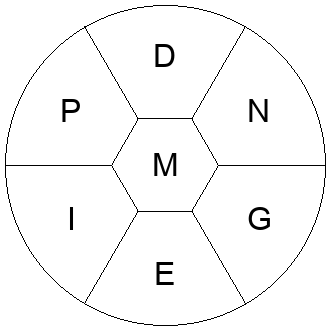
Tuesday, July 28, 2026

Answers to yesterday's Bee

Jump to answers for


The official answers for today's puzzle are:

Click on the arrow to show the definition.
Click outside the pop-up to close it.


Number of Pangrams: 3

Maximum Puzzle Score: 244

Number of Answers: 44

Points Needed for Genius: 171

Genius requires between 22 and 38 words. You need at least a 7-letter word to reach genius. If you don't get the pangrams, you need 86% of the total points to reach genius. If you get the pangrams, you only need 63% of the remaining points to reach genius.

The button below will reveal a chart with the number of words by each letter. Red bars indicate that there is a pangram(s) starting with that letter.


How does this puzzle compare to other puzzles?

Today's score of 244 was in the 79th percentile of all puzzles.
The last time there was a score this high was on July 26, 2026.
The highest score ever was 537 on January 22, 2021.
The lowest score ever was 47 on March 27, 2023.

This puzzle's 44 possible answers rank it in the 61st percentile of all puzzles.
The last time there were more answers than this was on July 26, 2026.
The highest number of answers was 81 on June 08, 2019.
The lowest number of answers was 16 on March 27, 2023.

It takes a 7-letter word for genius.
The last time this happened was on July 27, 2026.

Today's puzzle has an average word length of 5.8.
For all Bees, the average word length has been 5.3.


Haven't I seen these letters before?

Hover over a letter to see its first and most recent appearance in the Bee!


Haven't I seen these words before?

The most common words in the Bee are:

  • noon 246
  • loll 228
  • toot 220
  • nana 204
  • naan 204
  • tilt 160
  • till 160
  • lilt 160
  • nene 158
  • mamma 158
  • mama 158
  • tint 156
  • onion 153
  • acai 150
  • acacia 150
  • toon 147
  • onto 147
  • olio 140
  • anon 138
  • anal 136
  • tact 130
  • papa 129
  • baba 127
  • lulu 126
  • lull 126
  • dodo 126
  • mitt 125
  • loon 123
  • calla 122
  • call 122
  • poop 121
  • booboo 121
  • boob 121
  • cocci 120
  • moon 119
  • mono 119
  • tattoo 118
  • tartar 118
  • tart 118
  • ratatat 118
  • attar 117
  • tutu 115
  • ally 114
  • allay 114
  • momma 113
  • cancan 113
  • aria 113
  • ammo 113
  • meme 112
  • tatty 111


How long are words in the Bee?

There have been 121,018 answers ever accepted in the Bee - with 11,073 unique words.
Below are the distributions of the lengths of these words.


Valid dictionary words not in today's official answers

You may be wondering why these words aren't here*:

  • deme
  • demining
  • denimed
  • gemmed
  • gemming
  • gimmie
  • gimp
  • gimped
  • gimping
  • idem
  • imid
  • imide
  • imine
  • imped
  • impi
  • imping
  • medii
  • meed
  • meinie
  • midden
  • migg
  • neem
  • nimmed
  • nimming
  • piemen

*Because the New York Times considers them obscure or offensive.

deem

noun
  1. An opinion, a judgment, a surmise.
verb
  1. To judge, to pass judgment on; to doom, to sentence.
  2. To adjudge, to decree.
  3. To dispense (justice); to administer (law).
  4. (ditransitive) To hold in belief or estimation; to adjudge as a conclusion; to regard as being; to evaluate according to one's beliefs; to account.
  5. To think, judge, or have or hold as an opinion; to decide or believe on consideration; to suppose.

deemed

verb
  1. To judge, to pass judgment on; to doom, to sentence.
  2. To adjudge, to decree.
  3. To dispense (justice); to administer (law).
  4. (ditransitive) To hold in belief or estimation; to adjudge as a conclusion; to regard as being; to evaluate according to one's beliefs; to account.
  5. To think, judge, or have or hold as an opinion; to decide or believe on consideration; to suppose.
adjective
  1. An accreditation awarded to higher educational institutions in India.

deeming

verb
  1. To judge, to pass judgment on; to doom, to sentence.
  2. To adjudge, to decree.
  3. To dispense (justice); to administer (law).
  4. (ditransitive) To hold in belief or estimation; to adjudge as a conclusion; to regard as being; to evaluate according to one's beliefs; to account.
  5. To think, judge, or have or hold as an opinion; to decide or believe on consideration; to suppose.

denim

noun
  1. A textile often made of cotton with a distinct diagonal pattern.

dime

Etymology 1

noun
  1. A coin worth one-tenth of a U.S. dollar.
  2. A coin worth one-tenth of a Canadian dollar.
  3. A small amount of money
  4. An assist
  5. A playing card with the rank of ten
  6. Ten dollars
  7. A thousand dollars
  8. A measurement of illicit drugs (usually marijuana) sold in ten dollar bags.
  9. Payment responsibility
  10. A beautiful woman (10 on a 10-point scale)
  11. A defensive formation with six defensive backs, one of whom is a dimeback.

Etymology 2

verb
  1. (with "on") To inform on, to turn in to the authorities, to rat on, especially anonymously.
  2. To operate an audio amplifier (especially an electric guitar amplifier) at level "10" (typically the highest amplification level).

dimmed

verb
  1. To make something less bright.
  2. To become darker.
  3. To render dim, obscure, or dark; to make less bright or distinct
  4. To deprive of distinct vision; to hinder from seeing clearly, either by dazzling or clouding the eyes; to darken the senses or understanding of.

dimming

verb
  1. To make something less bright.
  2. To become darker.
  3. To render dim, obscure, or dark; to make less bright or distinct
  4. To deprive of distinct vision; to hinder from seeing clearly, either by dazzling or clouding the eyes; to darken the senses or understanding of.
noun
  1. The process of becoming dim.

emend

verb
  1. To correct and revise (text or a document).

emended

verb
  1. To correct and revise (text or a document).

emending

verb
  1. To correct and revise (text or a document).

gimme

noun
  1. That which is easily obtained, or certain to occur.

impede

verb
  1. To get in the way of; to hinder.

impeded

verb
  1. To get in the way of; to hinder.

impeding

verb
  1. To get in the way of; to hinder.

impend

verb
  1. To hang or be suspended over (something); to overhang.
  2. Figuratively to hang over (someone) as a threat or danger.
  3. To threaten to happen; to be about to happen, to be imminent.
  4. To pay.

impended

verb
  1. To hang or be suspended over (something); to overhang.
  2. Figuratively to hang over (someone) as a threat or danger.
  3. To threaten to happen; to be about to happen, to be imminent.
  4. To pay.

impending

verb
  1. To hang or be suspended over (something); to overhang.
  2. Figuratively to hang over (someone) as a threat or danger.
  3. To threaten to happen; to be about to happen, to be imminent.
  4. To pay.
noun
  1. Something that impends or threatens; an expected event.
adjective
  1. Approaching; drawing near; about to happen or expected to happen.

impinge

verb
  1. To make a physical impact on.
  2. To interfere with.
  3. To have an effect upon, especially a negative one.

impinged

verb
  1. To make a physical impact on.
  2. To interfere with.
  3. To have an effect upon, especially a negative one.

impinging

verb
  1. To make a physical impact on.
  2. To interfere with.
  3. To have an effect upon, especially a negative one.

meme

noun
  1. Any unit of cultural information, such as a practice or idea, that is transmitted verbally or by repeated action from one mind to another in a comparable way to the transmission of genes.
  2. Something, usually humorous, which is copied and circulated online with slight adaptations, including quizzes, basic pictures, video templates etc.
  3. A myth circulating as truth; something ineffective presented as effective, or similar.
verb
  1. To turn into a meme; to use a meme, especially to achieve something in real life.
  2. To create and use humorous memes.
  3. To joke around.

mend

noun
  1. A place, as in clothing, which has been repaired by mending.
  2. The act of repairing.
verb
  1. To repair, as anything that is torn, broken, defaced, decayed, or the like; to restore from partial decay, injury, or defacement.
  2. To alter for the better; to set right; to reform; hence, to quicken; as, to mend one's manners or pace.
  3. To help, to advance, to further; to add to.
  4. To grow better; to advance to a better state; to become improved.

mended

verb
  1. To repair, as anything that is torn, broken, defaced, decayed, or the like; to restore from partial decay, injury, or defacement.
  2. To alter for the better; to set right; to reform; hence, to quicken; as, to mend one's manners or pace.
  3. To help, to advance, to further; to add to.
  4. To grow better; to advance to a better state; to become improved.

mending

verb
  1. To repair, as anything that is torn, broken, defaced, decayed, or the like; to restore from partial decay, injury, or defacement.
  2. To alter for the better; to set right; to reform; hence, to quicken; as, to mend one's manners or pace.
  3. To help, to advance, to further; to add to.
  4. To grow better; to advance to a better state; to become improved.
noun
  1. The act by which something is mended or repaired.

midge

noun
  1. Any of various small two-winged flies, for example, from the family Chironomidae or non-biting midges, the family Chaoboridae or phantom midges, and the family Ceratopogonidae or biting midges, all belonging to the order Diptera
  2. Any bait or lure designed to resemble a midge

midi

noun
  1. A native or inhabitant of Berlin.
  2. A doughnut with a sweet filling.
  3. A newspaper format with pages normally measuring about 315 by 470 millimetres (12.4 in × 18.5 inches), slightly taller and wider than a tabloid but narrower and shorter than a broadsheet.
noun
  1. A coat or skirt having such a hemline.
adjective
  1. Having a hemline at mid-calf length.

mien

noun
  1. Demeanor; facial expression or attitude, especially one which is intended by its bearer.
  2. A specific facial expression.

mime

noun
  1. A form of acting without words; pantomime.
  2. A pantomime actor.
  3. A classical theatrical entertainment in the form of farce.
  4. A performer of such a farce.
  5. A person who mimics others in a comical manner.
  6. Any of various papilionid butterflies of the genus Chilasa or Papilio, that mimic other species in appearance.
verb
  1. To mimic.
  2. To act without words.
  3. To represent an action or object through gesture, without the use of sound.

mimed

verb
  1. To mimic.
  2. To act without words.
  3. To represent an action or object through gesture, without the use of sound.

miming

verb
  1. To mimic.
  2. To act without words.
  3. To represent an action or object through gesture, without the use of sound.
noun
  1. A performance in mime.

mind

noun
  1. The ability for rational thought.
  2. The ability to be aware of things.
  3. The ability to remember things.
  4. The ability to focus the thoughts.
  5. Somebody that embodies certain mental qualities.
  6. Judgment, opinion, or view.
  7. Desire, inclination, or intention.
  8. A healthy mental state.
  9. The non-material substance or set of processes in which consciousness, perception, affectivity, judgement, thinking, and will are based.
  10. Continual prayer on a dead person's behalf for a period after their death.
verb
  1. (originally and chiefly in negative or interrogative constructions) To dislike, to object to; to be bothered by.
  2. To look after, to take care of, especially for a short period of time.
  3. (chiefly in the imperative) To make sure, to take care (that).
  4. To be careful about.
  5. Take note; used to point out an exception or caveat.
  6. To attend to, concern oneself with, heed, be mindful of.
  7. To remember.
  8. To have in mind; to intend.
  9. To put in mind; to remind.

minded

verb
  1. (originally and chiefly in negative or interrogative constructions) To dislike, to object to; to be bothered by.
  2. To look after, to take care of, especially for a short period of time.
  3. (chiefly in the imperative) To make sure, to take care (that).
  4. To be careful about.
  5. Take note; used to point out an exception or caveat.
  6. To attend to, concern oneself with, heed, be mindful of.
  7. To remember.
  8. To have in mind; to intend.
  9. To put in mind; to remind.
adjective
  1. Having a mind (inclination) for something or a certain way of thinking about things.
  2. Having a preference for doing something; having a likelihood, or disposition to carry out an act.

minding

Etymology 1

noun
  1. The act of taking heed of something.

Etymology 2

verb
  1. (originally and chiefly in negative or interrogative constructions) To dislike, to object to; to be bothered by.
  2. To look after, to take care of, especially for a short period of time.
  3. (chiefly in the imperative) To make sure, to take care (that).
  4. To be careful about.
  5. Take note; used to point out an exception or caveat.
  6. To attend to, concern oneself with, heed, be mindful of.
  7. To remember.
  8. To have in mind; to intend.
  9. To put in mind; to remind.

mine

Etymology 1

pronoun
  1. My; belonging to me; that which belongs to me.

Etymology 2

noun
  1. An excavation from which ore or solid minerals are taken, especially one consisting of underground tunnels.
  2. Any source of wealth or resources.
  3. A passage dug toward or underneath enemy lines, which is then packed with explosives.
  4. A device intended to explode when stepped upon or touched, or when approached by a ship, vehicle, or person.
  5. A type of firework that explodes on the ground, shooting sparks upward.
  6. The cavity made by a caterpillar while feeding inside a leaf.
  7. A machine or network of machines used to extract units of a cryptocurrency.
verb
  1. To remove (ore) from the ground.
  2. To dig into, for ore or metal.
  3. To sow mines (the explosive devices) in (an area).
  4. To damage (a vehicle or ship) with a mine (an explosive device).
  5. To dig a tunnel or hole; to burrow in the earth.
  6. To dig away, or otherwise remove, the substratum or foundation of; to lay a mine under; to sap; to undermine.
  7. (by extension) To ruin or destroy by slow degrees or secret means.
  8. To pick one's nose.
  9. To earn new units of cryptocurrency by doing certain calculations.

Etymology 3

noun
  1. Demeanor; facial expression or attitude, especially one which is intended by its bearer.
  2. A specific facial expression.

mined

verb
  1. To remove (ore) from the ground.
  2. To dig into, for ore or metal.
  3. To sow mines (the explosive devices) in (an area).
  4. To damage (a vehicle or ship) with a mine (an explosive device).
  5. To dig a tunnel or hole; to burrow in the earth.
  6. To dig away, or otherwise remove, the substratum or foundation of; to lay a mine under; to sap; to undermine.
  7. (by extension) To ruin or destroy by slow degrees or secret means.
  8. To pick one's nose.
  9. To earn new units of cryptocurrency by doing certain calculations.

mini

Etymology 1

adjective
  1. Miniature, tiny, small.

Etymology 2

noun
  1. A miniskirt.
  2. A minicomputer.

minim

noun
  1. A half note, drawn as a semibreve with a stem.
  2. A unit of volume, in the Imperial and U.S. customary systems, 1/60 fluid drachm. Approximately equal to 1 drop, 62 μL or 0.9 grain (weight) of water.
  3. A short vertical stroke used in handwriting.
  4. Anything very minute; applied to animalcula and the like.
  5. The smallest kind of worker in a leaf-cutter ant colony.
  6. A little man or being; a dwarf.
  7. A small fish; a minnow.
  8. A short poetical encomium.

mining

verb
  1. To remove (ore) from the ground.
  2. To dig into, for ore or metal.
  3. To sow mines (the explosive devices) in (an area).
  4. To damage (a vehicle or ship) with a mine (an explosive device).
  5. To dig a tunnel or hole; to burrow in the earth.
  6. To dig away, or otherwise remove, the substratum or foundation of; to lay a mine under; to sap; to undermine.
  7. (by extension) To ruin or destroy by slow degrees or secret means.
  8. To pick one's nose.
  9. To earn new units of cryptocurrency by doing certain calculations.
noun
  1. The activity of removing solid valuables from the earth.
  2. Any activity that extracts or undermines.
  3. The activity of placing explosives underground, rigged to explode
  4. Creation of new units of cryptocurrency by validating transactions and demonstrating proof-of-work

penmen

noun
  1. A scribe, or person who copies texts
  2. A journalist or other author

pimp

Etymology 1

noun
  1. Someone who solicits customers for prostitution and acts as manager for a group of prostitutes; a pander.
  2. A man who can easily attract women.
verb
  1. To act as a procurer of prostitutes; to pander.
  2. To prostitute someone.
  3. To excessively customize something, especially a vehicle, according to ghetto standards (also pimp out).
  4. To ask progressively harder and ultimately unanswerable questions of a resident or medical student (said of a senior member of the medical staff).
  5. To promote, to tout.
  6. To persuade, smooth talk or trick another into doing something for your benefit.
adjective
  1. Excellent, fashionable, stylish

Etymology 2

numeral
  1. Five in Cumbrian and Welsh sheep counting

pimped

verb
  1. To act as a procurer of prostitutes; to pander.
  2. To prostitute someone.
  3. To excessively customize something, especially a vehicle, according to ghetto standards (also pimp out).
  4. To ask progressively harder and ultimately unanswerable questions of a resident or medical student (said of a senior member of the medical staff).
  5. To promote, to tout.
  6. To persuade, smooth talk or trick another into doing something for your benefit.

pimping

verb
  1. To act as a procurer of prostitutes; to pander.
  2. To prostitute someone.
  3. To excessively customize something, especially a vehicle, according to ghetto standards (also pimp out).
  4. To ask progressively harder and ultimately unanswerable questions of a resident or medical student (said of a senior member of the medical staff).
  5. To promote, to tout.
  6. To persuade, smooth talk or trick another into doing something for your benefit.
noun
  1. The practise of procuring prostitutes.
  2. The process of modifying a vehicle (usually a car), predominantly focusing on its appearance and audiovisual system as opposed to performance.
adjective
  1. Little or petty.
  2. Puny; sickly
  3. Consisting of or having the qualities of a pimp.

memed

No Definition Found.

meming

No Definition Found.