Thursday, October 29, 2026

Answers to yesterday's Bee

Jump to answers for


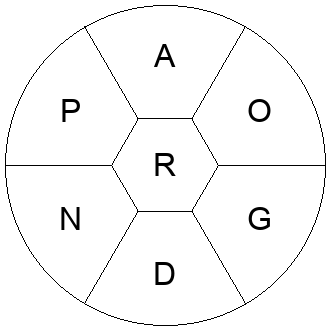
The official answers for today's puzzle are:

Click on the arrow to show the definition.
Click outside the pop-up to close it.


Number of Pangrams: 2

Maximum Puzzle Score: 227

Number of Answers: 53

Points Needed for Genius: 159

Genius requires between 23 and 47 words. You need at least a 7-letter word to reach genius. If you don't get the pangrams, you need 82% of the total points to reach genius. If you get the pangrams, you only need 65% of the remaining points to reach genius.

Other days with this pangram:

The button below will reveal a chart with the number of words by each letter. Red bars indicate that there is a pangram(s) starting with that letter.


How does this puzzle compare to other puzzles?

Today's score of 227 was in the 73rd percentile of all puzzles.
The last time there was a score this high was on October 28, 2026.
The highest score ever was 537 on January 22, 2021.
The lowest score ever was 47 on March 27, 2023.

This puzzle's 53 possible answers rank it in the 80th percentile of all puzzles.
The last time there were more answers than this was on October 28, 2026.
The highest number of answers was 81 on June 08, 2019.
The lowest number of answers was 16 on March 27, 2023.

It takes a 7-letter word for genius.
The last time this happened was on October 25, 2026.

Today's puzzle has an average word length of 5.2.
For all Bees, the average word length has been 5.3.


Haven't I seen these letters before?

Hover over a letter to see its first and most recent appearance in the Bee!


Haven't I seen these words before?

The most common words in the Bee are:

  • noon 251
  • loll 230
  • toot 224
  • nana 215
  • naan 215
  • tilt 166
  • till 166
  • lilt 166
  • nene 164
  • mamma 164
  • mama 164
  • tint 163
  • onion 156
  • acai 156
  • acacia 156
  • toon 152
  • onto 152
  • olio 142
  • anon 142
  • anal 142
  • papa 133
  • tact 132
  • baba 132
  • mitt 131
  • dodo 131
  • lulu 127
  • lull 127
  • booboo 126
  • boob 126
  • poop 124
  • loon 124
  • cocci 123
  • calla 122
  • call 122
  • moon 121
  • mono 121
  • tattoo 120
  • tartar 120
  • tart 120
  • ratatat 120
  • cancan 119
  • attar 119
  • natant 118
  • tutu 117
  • momma 116
  • aria 116
  • ammo 116
  • ally 116
  • allay 116
  • meme 115


How long are words in the Bee?

There have been 125,282 answers ever accepted in the Bee - with 11,174 unique words.
Below are the distributions of the lengths of these words.


Valid dictionary words not in today's official answers

You may be wondering why these words aren't here*:

  • aggro
  • agro
  • andro
  • dorp
  • dorr
  • drongo
  • gadroon
  • garda
  • garron
  • gnar
  • gnarr
  • godroon
  • grana
  • nard
  • nardoo
  • nonpar
  • nonpoor
  • orad
  • ordo
  • organa
  • organon
  • orra
  • padrona
  • pandoor
  • pandora
  • para
  • parador
  • parang
  • pard
  • pargo
  • parr
  • podagra
  • prana
  • prang
  • prao
  • proa
  • prog
  • ragg
  • ragga
  • randan

*Because the New York Times considers them obscure or offensive.

adorn

noun
  1. Adornment
verb
  1. To make more beautiful and attractive; to decorate.
adjective
  1. Adorned; ornate

agar

noun
  1. A gelatinous material obtained from red algae, especially Gracilaria species, used as a bacterial culture medium, in electrophoresis and as a food additive.
  2. A culture medium based on this material.

agora

Etymology 1

noun
  1. A place for gathering.
  2. A marketplace, especially in Classical Greece.

Etymology 2

noun
  1. Since 1960, a monetary unit and coin of Israel, the 100th part of a shekel / sheqel.

angora

noun
  1. An angora cat.
  2. A goat of a domesticated breed that produces mohair.
  3. A rabbit belonging to the Angora rabbit breed, one of the oldest domestic breeds of rabbits in the world, raised chiefly in Europe for its silky and long hair (a subspecies of the European rabbit, Oryctolagus cuniculus)
  4. The hair of angora rabbits or angora goats, used to make textiles.
  5. The fabric made from the hair of angora rabbits or angora goats.

apron

noun
  1. An article of clothing worn over the front of the torso and/or legs for protection from spills; also historically worn by Freemasons and as part of women's fashion.
  2. The short cassock ordinarily worn by English bishops.
  3. A hard surface bordering a structure or area.
  4. The sides of a tree's canopy.
  5. The cap of a cannon; a piece of lead laid over the vent to keep the priming dry.
  6. A removable cover for the passengers' feet and legs in an open horse carriage.
verb
  1. To cover with, or as if with, an apron.

ardor

noun
  1. Great warmth of feeling; fervor; passion.
  2. Spirit; enthusiasm; passion.
  3. Intense heat.

argon

noun
  1. The chemical element (symbol Ar) with an atomic number of 18. The third most abundant gas in the Earth's atmosphere, it is a colourless, odourless, inert noble gas.
  2. A single atom of this element.

darn

Etymology 1

verb
  1. Euphemism of damn.
adjective
  1. Damn.
adverb
  1. (degree) Damned.
interjection
  1. Damn.

Etymology 2

noun
  1. A place mended by darning.
verb
  1. To repair by stitching with thread or yarn, particularly by using a needle to construct a weave across a damaged area of fabric.

donor

noun
  1. One who makes a donation.
  2. A group or molecule that donates either a radical, electrons or a moiety in a chemical reaction. Compare acceptor.

door

noun
  1. A portal of entry into a building, room, or vehicle, consisting of a rigid plane movable on a hinge. Doors are frequently made of wood or metal. May have a handle to help open and close, a latch to hold the door closed and a lock that ensures the door cannot be opened without the key.
  2. Any flap, etc. that opens like a door.
  3. (immigration) An entry point.
  4. A means of approach or access.
  5. A barrier.
  6. A software mechanism by which a user can interact with a program running remotely on a bulletin board system. See BBS door.
verb
  1. To cause a collision by opening the door of a vehicle in front of an oncoming cyclist or pedestrian.

dorado

noun
  1. Coryphaena hippurus, the mahi-mahi or dolphin, a species of fish with a dorsal fin that runs the length of the body, also known for iridescent coloration.

drag

Etymology 1

noun
  1. Resistance of the air (or some other fluid) to something moving through it.
  2. (foundry) The bottom part of a sand casting mold.
  3. A device dragged along the bottom of a body of water in search of something, e.g. a dead body, or in fishing.
  4. A puff on a cigarette or joint.
  5. Someone or something that is annoying or frustrating, or disappointing; an obstacle to progress or enjoyment.
  6. A long open horse-drawn carriage with transverse or side seats.
  7. Street, as in 'main drag'.
  8. The scent-path left by dragging a fox, or some other substance such as aniseed, for training hounds to follow scents.
  9. A large amount of backspin on the cue ball, causing the cue ball to slow down.
  10. A heavy harrow for breaking up ground.
  11. A kind of sledge for conveying heavy objects; also, a kind of low car or handcart.
  12. The bottom part of a flask or mould, the upper part being the cope.
  13. A steel instrument for completing the dressing of soft stone.
  14. The difference between the speed of a screw steamer under sail and that of the screw when the ship outruns the screw; or between the propulsive effects of the different floats of a paddle wheel.
  15. Anything towed in the water to retard a ship's progress, or to keep her head up to the wind; especially, a canvas bag with a hooped mouth (drag sail), so used.
  16. A skid or shoe for retarding the motion of a carriage wheel.
  17. Motion affected with slowness and difficulty, as if clogged.
  18. Witch house music.
  19. The last position in a line of hikers.
  20. (aerodynamics) The act of suppressing wind flow to slow an aircraft in flight, as by use of flaps when landing.
  21. A push somewhat under the centre of the cue ball, causing it to follow the object ball a short way.
  22. A device for guiding wood to the saw.
  23. A mailcoach.
verb
  1. To pull along a surface or through a medium, sometimes with difficulty.
  2. To move onward heavily, laboriously, or slowly; to advance with weary effort; to go on lingeringly.
  3. To act or proceed slowly or without enthusiasm; to be reluctant.
  4. To draw along (something burdensome); hence, to pass in pain or with difficulty.
  5. To serve as a clog or hindrance; to hold back.
  6. To move (an item) on the computer display by means of a mouse or other input device.
  7. (chiefly of a vehicle) To unintentionally rub or scrape on a surface.
  8. To hit or kick off target.
  9. To fish with a dragnet.
  10. To search for something, as a lost object or body, by dragging something along the bottom of a body of water.
  11. To break (land) by drawing a drag or harrow over it; to harrow.
  12. To search exhaustively, as if with a dragnet.
  13. To roast, say negative things about, or call attention to the flaws of (someone).

Etymology 2

noun
  1. Women's clothing worn by men for the purpose of entertainment.
  2. A men's party attended in women's clothing.
  3. Any type of clothing or costume associated with a particular occupation or subculture.
verb
  1. To perform as a drag queen or drag king.

dragon

Etymology 1

noun
  1. A legendary serpentine or reptilian creature.
  2. An animal of various species that resemble a dragon in appearance:
  3. (with definite article, often capitalized) The constellation Draco.
  4. A fierce and unpleasant woman; a harridan.
  5. (with definite article, often capitalized) The (historical) Chinese empire or the People's Republic of China.
  6. Something very formidable or dangerous.
  7. A type of playing-tile (red dragon, green dragon, white dragon) in the game of mahjong.
  8. A luminous exhalation from marshy ground, seeming to move through the air like a winged serpent.
  9. A short musket hooked to a swivel attached to a soldier's belt; so called from a representation of a dragon's head at the muzzle.
  10. A background process similar to a daemon.
  11. A variety of carrier pigeon.

Etymology 2

noun
  1. A transvestite man, or more broadly a male-to-female transgender person.

dragoon

noun
  1. A horse soldier; a cavalryman, who uses a horse for mobility, but fights dismounted.
  2. A carrier of a dragon musket.
  3. A variety of pigeon.
verb
  1. To force (someone) into doing something; to coerce.
  2. To surrender (a person) to the fury of soldiers.

droop

noun
  1. Something which is limp or sagging
  2. A condition or posture of drooping
verb
  1. To hang downward; to sag.
  2. To slowly become limp; to bend gradually.
  3. To lose all energy, enthusiasm or happiness; to flag.
  4. To allow to droop or sink.
  5. To proceed downward, or toward a close; to decline.

drop

gorgon

noun
  1. A vicious female monster from Greek mythology with sharp fangs and hair of living, venomous snakes. One of the three sisters: Medusa, Stheno and Euryale
  2. An intimidating, ugly, or disgusting woman; anything hideous or horrid.
adjective
  1. Like a gorgon; very ugly or terrifying.

gorp

noun
  1. A loose mixture of dried fruit, nuts, frequently salt, and sometimes other ingredients; designed as an energy supplement for use while hiking, climbing, canoeing, etc.

grad

Etymology 1

noun
  1. A unit of angle equal to 0.9 degrees, so that there are 100 gradians in a right angle.
noun
  1. A person who is recognized by a university as having completed the requirements of a degree studied at the institution.
  2. A person who is recognized by a high school as having completed the requirements of a course of study at the school.
  3. A person who is recognized as having completed any level of education.
  4. A graduated (marked) cup or other container, thus fit for measuring.
noun
  1. The action or process of graduating and receiving a diploma for completing a course of study (such as from an educational institution).
  2. A commencement ceremony.
  3. A marking (e.g., on a container) indicating a measurement, usually one of many such markings that are each separated by a constant interval.
  4. The exposure of a liquid in large surfaces to the air, so as to hasten its evaporation.

Etymology 2

noun
  1. A type of Soviet artillery multiple rocket launcher, or a rocket fired by this.

gran

noun
  1. (usually affectionate) a grandmother
  2. A grandfather

grand

Etymology 1

noun
  1. (plural "grand") A thousand of some unit of currency, such as dollars or pounds. (Compare G.)
  2. (plural "grands") A grand piano
adjective
  1. Of a large size or extent; great.
  2. Great in size, and fine or imposing in appearance or impression; illustrious, dignified, magnificent.
  3. Having higher rank or more dignity, size, or importance than other persons or things of the same name.
  4. (usually in compound forms) Standing in the second or some more remote degree of parentage or descent.
  5. Fine; lovely.
  6. Containing all the parts proper to a given form of composition.

Etymology 2

noun
  1. A grandparent or grandchild.

grandad

noun
  1. Grandfather
  2. A familiar or disparaging term of address to an old man.

granddad

noun
  1. Grandfather
  2. A familiar or disparaging term of address to an old man.

grandpa

noun
  1. Grandfather

grandpapa

noun
  1. Grandfather

grappa

noun
  1. An Italian grape-based spirit of between 80 and 100 proof, made from the distillation of pomace.
  2. A variety or serving of grappa.

groan

noun
  1. A low, mournful sound uttered in pain or grief.
  2. A low, guttural sound uttered in frustration, disapproval, or ecstasy.
  3. (of an object) A low creaking sound from applied pressure or weight.
verb
  1. To make a groan.
  2. To strive after earnestly, as if with groans.

grog

noun
  1. (original meaning) An alcoholic beverage made with rum and water, especially that once issued to sailors of the Royal Navy.
  2. (by extension) Any alcoholic beverage.
  3. A glass or serving of an alcoholic beverage.
  4. An alcoholic beverage made with hot water or tea, sugar and rum, sometimes also with lemon or lime juice and spices, particularly cinnamon.
  5. A type of pre-fired clay that has been ground and screened to a specific particle size.

odor

noun
  1. Any smell, whether fragrant or offensive.
  2. A strong, pervasive quality.
  3. Esteem.
  4. Something which produces a scent; incense, a perfume.

orang

noun
  1. An orangutan.

organ

noun
  1. A larger part of an organism, composed of tissues that perform similar functions.
  2. (by extension) A body of an organization dedicated to the performing of certain functions.
  3. A musical instrument that has multiple pipes which play when a key is pressed (the pipe organ), or an electronic instrument designed to replicate such.
  4. An official magazine, newsletter, or similar publication of an organization.
  5. Short for organ pipe cactus.
  6. The penis.
verb
  1. To supply with an organ or organs; to fit with organs.

paradrop

noun
  1. A delivery of goods or equipment by dropping of a parachute
verb
  1. To deliver goods or equipment by dropping of a parachute

paragon

noun
  1. A person of preeminent qualities, who acts as a pattern or model for others.
  2. A companion; a match; an equal.
  3. Comparison; competition.
  4. The size of type between great primer and double pica, standardized as 20-point.
  5. A flawless diamond of at least 100 carats.
verb
  1. To compare; to parallel; to put in rivalry or emulation with.
  2. To compare with; to equal; to rival.
  3. To serve as a model for; to surpass.
  4. To be equal; to hold comparison.

pardon

poor

noun
  1. (with "the") Those who have little or no possessions or money, taken as a group.
adjective
  1. With no or few possessions or money, particularly in relation to contemporaries who do have them.
  2. Of low quality.
  3. Used to express pity.
  4. Deficient in a specified way.
  5. Inadequate, insufficient.
  6. Free from self-assertion; not proud or arrogant; meek.

porn

noun
  1. Pornography.
  2. (chiefly in the plural) A pornographic work.
  3. Material, usually visual, presenting something desirable in a sensational manner.
  4. Material that provides illicit gratification of an obsessive or unhealthy interest in something.

porno

noun
  1. Pornography.
  2. A pornographic film.
adjective
  1. Pornographic

prod

Etymology 1

noun
  1. A device (now often electrical) used to goad livestock into moving.
  2. A prick or stab with such a pointed instrument.
  3. A poke.
  4. A light kind of crossbow; a prodd.
verb
  1. To poke, to push, to touch.
  2. To encourage, to prompt.
  3. To prick with a goad.

Etymology 2

noun
  1. A production.

prong

noun
  1. A thin, pointed, projecting part, as of an antler or a fork or similar tool. A tine.
  2. A branch; a fork.
  3. The penis.
verb
  1. To pierce or poke with, or as if with, a prong

prop

Etymology 1

noun
  1. An object placed against or under another, to support it; anything that supports.
  2. The player on either side of the hooker in a scrum.
  3. One of the seashells in the game of props.
verb
  1. (sometimes figurative) To support or shore up something.
  2. To play rugby in the prop position
  3. (usually with "up" - see prop up) To position the feet of (a person) while sitting, lying down, or reclining so that the knees are elevated at a higher level.

Etymology 2

noun
  1. An item placed on a stage or set to create a scene or scenario in which actors perform.
  2. An item placed within an advertisement in order to suggest a style of living etc.

Etymology 3

noun
  1. The propeller of an aircraft.
verb
  1. To manually start the engine of a propeller-driven aircraft with no electric starter by pulling vigorously on one of the propeller blades using the hands, so that the propeller can catch ignition.

Etymology 4

noun
  1. A proposition, especially on an election-day ballot.

Etymology 5

noun
  1. Propellant

propaganda

noun
  1. A concerted set of messages aimed at influencing the opinions or behavior of large numbers of people.

radar

noun
  1. A method of detecting distant objects and determining their position, velocity, or other characteristics by analysis of sent radio waves (usually microwaves) reflected from their surfaces
  2. A type of system using such method, differentiated by platform, configuration, frequency, power, and other technical attributes.
  3. An installation of such a system or of the transmitting and receiving apparatus.
  4. A superior ability to detect something.
verb
  1. To scan with radar, or as if with radar.

radon

noun
  1. The chemical element (symbol Rn, formerly Ro) with atomic number 86. It is an odorless, colorless, chemically inert but radioactive noble gas.

raga

noun
  1. Any of various melodic forms used in Indian classical music, or a piece of music composed in such a form.
  2. Passion, love, lust.

rand

Etymology 1

noun
  1. The border of an area of land, especially marshland.
  2. A strip of meat; a long fleshy piece of beef, cut from the flank or leg; a sort of steak.
  3. A border, edge or rim.
  4. A strip of leather used to fit the heels of a shoe.
  5. (basket-making) A single rod woven in and out of the stakes.

Etymology 2

noun
  1. A rocky slope, especially the area over a river valley; specifically, the Rand
  2. The currency of South Africa, divided into 100 cents.

Etymology 3

verb
  1. To rant; to storm.

rang

verb
  1. Of a bell, etc., to produce a resonant sound.
  2. To make (a bell, etc.) produce a resonant sound.
  3. To produce (a sound) by ringing.
  4. To produce the sound of a bell or a similar sound.
  5. Of something spoken or written, to appear to be, to seem, to sound.
  6. To telephone (someone).
  7. To resound, reverberate, echo.
  8. To produce music with bells.
  9. To repeat often, loudly, or earnestly.

road

noun
  1. A way used for travelling between places, originally one wide enough to allow foot passengers and horses to travel, now (US) usually one surfaced with asphalt or concrete and designed to accommodate many vehicles travelling in both directions. In the UK both senses are heard: a country road is the same as a country lane.
  2. A road; or particularly a car, as a means of transportation.
  3. A path chosen in life or career.
  4. An underground tunnel in a mine.
  5. A railway or a single railway track.
  6. The act of riding on horseback.
  7. A hostile ride against a particular area; a raid.
  8. (often in the plural) A partly sheltered area of water near a shore in which vessels may ride at anchor; a roadstead.
  9. A journey, or stage of a journey.
  10. A way or route.
adjective
  1. At the venue of the opposing team or competitor; on the road.
  2. (Slang) Having attributes, primarily masculine, suggesting a tendency towards minor crime. Usually used by youths endearingly; glorifying crime.

roan

Etymology 1

noun
  1. An animal such as a horse that has a coat of a dark base color with individual white hairs mixed in.
  2. The color of such an animal.
  3. A kind of leather used for slippers, bookbinding, etc., made from sheepskin, tanned with sumac and colored to imitate ungrained morocco.
adjective
  1. Especially of a horse, having a coat of a dark base color with individual white hairs mixed in
  2. Made of the leather called roan.

Etymology 2

noun
  1. Sorbus aucuparia, the European rowan.
  2. Any of various small deciduous trees or shrubs of genus Sorbus, belonging to the rose family, with pinnate leaves, corymbs of white flowers, and usually with orange-red berries.

roar

noun
  1. A long, loud, deep shout, as of rage or laughter, made with the mouth wide open.
  2. The cry of the lion.
  3. The deep cry of the bull.
  4. A loud resounding noise.
  5. A show of strength or character.
verb
  1. To make a loud, deep cry, especially from pain, anger, or other strong emotion.
  2. To laugh in a particularly loud manner.
  3. Of animals (especially the lion), to make a loud deep noise.
  4. Generally, of inanimate objects etc., to make a loud resounding noise.
  5. To proceed vigorously.
  6. To cry aloud; to proclaim loudly.
  7. To be boisterous; to be disorderly.
  8. To make a loud noise in breathing, as horses do when they have a certain disease.
  9. (North Midlands) to cry

rondo

noun
  1. A musical composition, commonly of a lively, cheerful character, in which the first strain recurs after each of the other strains.
  2. A small, disk-shaped piece of food, especially a single-serving dessert or small piece of candy.
  3. A dark-skinned grape, a hybrid of Vitis vinifera with Vitis amurensis and others.
  4. A game resembling keep-away, used to train soccer players: one group is tasked with completing a number of passes while the other group tries to take possession of the ball.
  5. A gambling game played with small balls on a table.

rood

noun
  1. A crucifix, cross, especially in a church.
  2. A measure of land area, equal to a quarter of an acre.
  3. A measure of five and a half yards in length.

grandpop

noun
  1. Grandfather

rando

Etymology 1

noun
  1. An arbitrary person with whom one has no shared social connection.
  2. A person going to a party without being invited.
  3. Anything selected at random.
adjective
  1. Random; arbitrary.

Etymology 2

adjective
  1. Pertaining to randonnée or uphill skiing.