Monday, November 16, 2026

Answers to yesterday's Bee

Jump to answers for


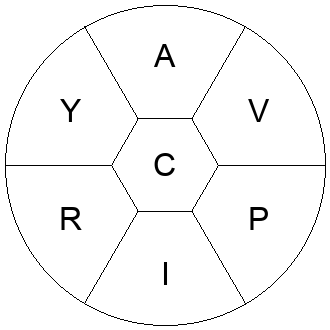
The official answers for today's puzzle are:

Click on the arrow to show the definition.
Click outside the pop-up to close it.


Number of Pangrams: 1

Maximum Puzzle Score: 97

Number of Answers: 21

Points Needed for Genius: 68

Genius requires between 11 and 18 words. You need at least a 6-letter word to reach genius. If you don't get the pangram, you need 82% of the total points to reach genius. If you get the pangram, you only need 65% of the remaining points to reach genius.

Other days with this pangram:

The button below will reveal a chart with the number of words by each letter. Red bars indicate that there is a pangram(s) starting with that letter.


How does this puzzle compare to other puzzles?

Today's score of 97 was in the 11th percentile of all puzzles.
The last time there was a score this low was on October 23, 2026.
The highest score ever was 537 on January 22, 2021.
The lowest score ever was 47 on March 27, 2023.

This puzzle's 21 possible answers rank it in the 2nd percentile of all puzzles.
The last time there were fewer answers than this was on November 11, 2026.
The highest number of answers was 81 on June 08, 2019.
The lowest number of answers was 16 on March 27, 2023.

It takes a 6-letter word for genius.
The last time this happened was on November 13, 2026.

Today's puzzle has an average word length of 5.1.
For all Bees, the average word length has been 5.3.


Haven't I seen these letters before?

Hover over a letter to see its first and most recent appearance in the Bee!


Haven't I seen these words before?

The most common words in the Bee are:

  • noon 251
  • loll 231
  • toot 228
  • nana 216
  • naan 216
  • tilt 168
  • till 168
  • lilt 168
  • nene 164
  • mamma 164
  • mama 164
  • tint 163
  • acai 158
  • acacia 158
  • onion 156
  • toon 152
  • onto 152
  • olio 144
  • anal 143
  • anon 142
  • papa 134
  • tact 133
  • baba 132
  • mitt 131
  • dodo 131
  • lulu 128
  • lull 128
  • poop 126
  • booboo 126
  • boob 126
  • loon 125
  • calla 124
  • call 124
  • cocci 123
  • tattoo 122
  • tartar 121
  • tart 121
  • ratatat 121
  • moon 121
  • mono 121
  • cancan 121
  • attar 120
  • natant 119
  • tutu 118
  • momma 116
  • aria 116
  • ammo 116
  • ally 116
  • allay 116
  • roar 115


How long are words in the Bee?

There have been 126,147 answers ever accepted in the Bee - with 11,176 unique words.
Below are the distributions of the lengths of these words.


Valid dictionary words not in today's official answers

You may be wondering why these words aren't here*:

  • acari
  • airvac
  • caca
  • capric
  • capricci
  • caracara
  • carr
  • cavy
  • civvy
  • crip
  • paca
  • pacy
  • paprica
  • picara
  • picric
  • pyic
  • pyric
  • ricrac
  • vacay

*Because the New York Times considers them obscure or offensive.

acacia

Etymology 1

noun
  1. A shrub or tree of the tribe Acacieae.
  2. The thickened or dried juice of several species in Acacieae, in particular Vachellia nilotica (syn. Acacia nilotica), the Egyptian acacia.
  3. A false acacia; robinia tree, Robinia pseudoacacia.
  4. Gum arabic; gum acacia.
  5. Any of several related trees, such as the locust tree.
  6. A light to moderate greenish yellow with a hint of red.

Etymology 2

noun
  1. (history) A roll or bag, filled with dust, borne by Byzantine emperors, as a memento of mortality. It is represented on medals.

acai

noun
  1. Any of several South American palms, of the genus Euterpe, having a dark purple drupe.
  2. The fruit of these trees, harvested for its juice.

capri

No Definition Found.

carp

Etymology 1

noun
  1. Any of various freshwater fish of the family Cyprinidae, especially the common carp, Cyprinus carpio.

Etymology 2

verb
  1. To complain about a fault; to harp on.
  2. To say; to tell.
  3. To find fault with; to censure.

carpi

noun
  1. The group of bones that make up the wrist.

carry

noun
  1. A manner of transporting or lifting something; the grip or position in which something is carried.
  2. A tract of land over which boats or goods are carried between two bodies of navigable water; a portage.
  3. The bit or digit that is carried in an addition operation.
  4. The benefit or cost of owning an asset over time.
  5. The distance travelled by the ball when struck, until it hits the ground.
  6. Carried interest.
  7. The sky; cloud-drift.
verb
  1. To lift (something) and take it to another place; to transport (something) by lifting.
  2. To transfer from one place (such as a country, book, or column) to another.
  3. To convey by extension or continuance; to extend.
  4. To move; to convey using force
  5. To lead or guide.
  6. To stock or supply (something); to have in store.
  7. To adopt (something); take (something) over.
  8. To adopt or resolve on, especially in a deliberative assembly
  9. In an addition, to transfer the quantity in excess of what is countable in the units in a column to the column immediately to the left in order to be added there.
  10. To have, hold, possess or maintain (something).
  11. To be transmitted; to travel.
  12. To insult, to diss.
  13. To capture a ship by coming alongside and boarding.
  14. To transport (the ball) whilst maintaining possession.
  15. To have on one's person.
  16. To be pregnant (with).
  17. To have propulsive power; to propel.
  18. To hold the head; said of a horse.
  19. To have earth or frost stick to the feet when running, as a hare.
  20. To bear or uphold successfully through conflict, for example a leader or principle
  21. To succeed in (e.g. a contest); to succeed in; to win.
  22. To get possession of by force; to capture.
  23. To contain; to comprise; have a particular aspect; to show or exhibit
  24. To bear (oneself); to behave or conduct.
  25. To bear the charges or burden of holding or having, as stocks, merchandise, etc., from one time to another.
  26. To have a weapon on one's person; to be armed.
  27. To be disproportionately responsible for a team's success.

cava

Etymology 1

noun
  1. A Spanish white sparkling wine made using the méthode champenoise.

Etymology 2

noun
  1. The vena cava.

Etymology 3

noun
  1. A cavity

caviar

noun
  1. Roe of the sturgeon or other large fish, considered a delicacy.
  2. Something whose flavour is too fine for the vulgar taste.

circa

preposition
  1. Approximately, about, around (typically in relation to time)

cirri

noun
  1. A tendril.
  2. A thin tendril-like appendage.
  3. A principal high-level cloud type characterised by white, delicate filaments or wisps, of white (or mostly white) patches, or of narrow bands, found at an altitude of above 7000 metres.

civic

adjective
  1. Of, relating to, or belonging to a city, a citizen, or citizenship; municipal or civil.
  2. Of or relating to the citizen, or of good citizenship and its rights and duties.

crap

Etymology 1

noun
  1. The husk of grain; chaff.
  2. (mildly) Something worthless or of poor quality; junk.
  3. (mildly) Nonsense; something untrue.
  4. (mildly) Faeces/feces.
  5. (mildly) An act of defecation.
verb
  1. To defecate.
  2. To defecate in or on (clothing etc.).
  3. To bullshit.
adjective
  1. (mildly) Of poor quality.
interjection
  1. Expression of worry, fear, shock, surprise, disgust, annoyance or dismay.

Etymology 2

noun
  1. A losing throw of 2, 3, or 12 in craps.

crappy

adjective
  1. (mildly) Of very poor quality; unpleasant; distasteful.
  2. (mildly, especially with "feel") Bad, sick, or depressed.
  3. (mildly) Covered in crap (faeces/feces).

papacy

noun
  1. The office of the pope.
  2. The period of a particular pope's reign.
  3. Roman Catholicism generally.

pica

Etymology 1

noun
  1. A disorder characterized by craving and appetite for non-edible substances, such as ice, clay, chalk, dirt, or sand.

Etymology 2

noun
  1. A size of type between small pica and English, standardized as 12-point.
  2. (usually with qualifier) A font of this size.
  3. A unit of length equivalent to 12 points, officially 35/83 cm (0.166 in) after 1886 but now 1/6 in.
  4. A pie or directory: the book directing Roman Catholic observance of saints' days and other feasts under various calendars.

Etymology 3

noun
  1. Any of several small, furry mammals, similar to guinea pigs, but related to rabbits, of the family Ochotonidae, from the mountains of North America and Asia.

Etymology 4

noun
  1. A magpie.

piracy

noun
  1. Robbery at sea, a violation of international law; taking a ship away from the control of those who are legally entitled to it.
  2. A similar violation of international law, such as hijacking of an aircraft.
  3. The unauthorized duplication of goods protected by intellectual property law.
  4. The operation of an unlicensed radio or television station.
  5. Kleptoparasitism.

priapic

adjective
  1. Phallic.
  2. Related to or overly concerned with male sexual activity or exhibiting excessive male sexual activity.
  3. Excessively masculine; excessively concerned with masculinity.

pricy

adjective
  1. Expensive, dear.

privacy

noun
  1. The state of being secluded from the presence, sight, or knowledge of others.
  2. Freedom from unwanted or undue disturbance of one private life.
  3. Freedom from damaging publicity, public scrutiny, surveillance, and disclosure of personal information, usually by a government or a private organization.
  4. A place of seclusion.
  5. A relationship between parties seen as being a result of their mutual interest or participation in a given transaction, contract etc.; Privity.
  6. Secrecy.
  7. A private matter; a secret.

racy

adjective
  1. Mildly risqué.
  2. Having a strong flavor indicating origin; of distinct characteristic taste; tasting of the soil.
  3. (by extension) Exciting to the mind by a strong or distinctive character of thought or language; peculiar and piquant; fresh and lively.
  4. Involving a data race or a race condition.

vicar

noun
  1. In the Church of England, the priest of a parish, receiving a salary or stipend but not tithes.
  2. In the Roman Catholic and some other churches, a cleric acting as local representative of a higher ranking member of the clergy.
  3. A person acting on behalf of, or representing, another person.