Tuesday, June 24, 2025

Answers to yesterday's Bee

Jump to answers for


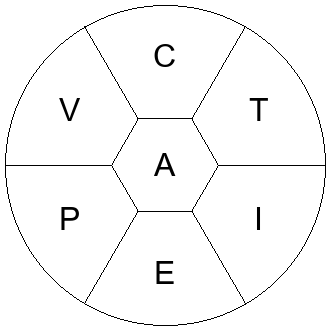
The official answers for today's puzzle are:

Click on the arrow to show the definition.
Click outside the pop-up to close it.


Number of Pangrams: 2

Maximum Puzzle Score: 212

Number of Answers: 46

Points Needed for Genius: 148

Genius requires between 20 and 40 words. You need at least a 7-letter word to reach genius. If you don't get the pangrams, you need 81% of the total points to reach genius. If you get the pangrams, you only need 65% of the remaining points to reach genius.

Other days with this pangram:

The button below will reveal a chart with the number of words by each letter. Red bars indicate that there is a pangram(s) starting with that letter.


How does this puzzle compare to other puzzles?

Today's score of 212 was in the 70th percentile of all puzzles.
The last time there was a score this high was on June 22, 2025.
The highest score ever was 537 on January 22, 2021.
The lowest score ever was 47 on March 27, 2023.

This puzzle's 46 possible answers rank it in the 67th percentile of all puzzles.
The last time there were more answers than this was on June 22, 2025.
The highest number of answers was 81 on June 8, 2019.
The lowest number of answers was 16 on March 27, 2023.

It takes a 7-letter word for genius.
The last time this happened was on June 22, 2025.

Today's puzzle has an average word length of 5.5.
For all Bees, the average word length has been 5.3.


Haven't I seen these letters before?

Hover over a letter to see its first and most recent appearance in the Bee!


Haven't I seen these words before?

The most common words in the Bee are:

  • noon 203
  • loll 198
  • toot 191
  • naan 173
  • nana 173
  • lilt 140
  • till 140
  • tilt 140
  • tint 138
  • nene 135
  • mama 133
  • mamma 133
  • onto 126
  • toon 126
  • acacia 125
  • acai 125
  • onion 122
  • anal 118
  • anon 116
  • olio 116
  • boob 112
  • booboo 112
  • dodo 112
  • papa 111
  • tact 110
  • baba 109
  • poop 109
  • call 106
  • calla 106
  • lull 106
  • lulu 106
  • mitt 106
  • ratatat 105
  • tart 105
  • tartar 105
  • attar 104
  • tatty 104
  • mono 103
  • moon 103
  • tattoo 103
  • allay 102
  • ally 102
  • ammo 102
  • momma 102
  • cocci 101
  • tutu 101
  • epee 100
  • peep 100
  • loon 99
  • roar 97


How long are words in the Bee?

There have been 103,073 answers ever accepted in the Bee - with 10,632 unique words.
Below are the distributions of the lengths of these words.


Valid dictionary words not in today's official answers

You may be wondering why these words aren't here*:

  • acceptee
  • acceptive
  • aceta
  • acta
  • aecia
  • apatetic
  • apatite
  • atactic
  • atap
  • atavic
  • aviatic
  • caca
  • caeca
  • capacitate
  • capacitive
  • capita
  • capitate
  • cate
  • cattie
  • cavetti
  • cavie
  • cavitate
  • ceca
  • ectatic
  • epact
  • etape
  • icecap
  • paca
  • pappi
  • pataca
  • pattee
  • pattie
  • peccavi
  • pectate
  • pieta
  • pipa
  • pitta
  • tace
  • tapeta
  • tappet
  • tate
  • tattie
  • tecta
  • tepa
  • tictac
  • tipcat
  • tittivate
  • vatic
  • viatic
  • viatica
  • vita
  • vitae
  • vitta
  • vittae
  • vittate
  • viva
  • vivat

*Because the New York Times considers them obscure or offensive.

acacia

Etymology 1

noun
  1. A shrub or tree of the tribe Acacieae.
  2. The thickened or dried juice of several species in Acacieae, in particular Vachellia nilotica (syn. Acacia nilotica), the Egyptian acacia.
  3. A false acacia; robinia tree, Robinia pseudoacacia.
  4. Gum arabic; gum acacia.
  5. Any of several related trees, such as the locust tree.
  6. A light to moderate greenish yellow with a hint of red.

Etymology 2

noun
  1. (history) A roll or bag, filled with dust, borne by Byzantine emperors, as a memento of mortality. It is represented on medals.

acai

noun
  1. Any of several South American palms, of the genus Euterpe, having a dark purple drupe.
  2. The fruit of these trees, harvested for its juice.

accept

verb
  1. To receive, especially with a consent, with favour, or with approval.
  2. To admit to a place or a group.
  3. To regard as proper, usual, true, or to believe in.
  4. To receive as adequate or satisfactory.
  5. To receive or admit to; to agree to; to assent to; to submit to.
  6. To endure patiently.
  7. To agree to pay.
  8. To receive officially.
  9. To receive something willingly.
adjective
  1. Accepted.

acetate

noun
  1. Any salt or ester of acetic acid.
  2. Cellulose acetate.
  3. A transparent sheet used for overlays.
  4. Ellipsis of acetate disc: a disc of aluminium covered in a wax used to make demonstration copies of a phonograph record.

acetic

adjective
  1. Of, pertaining to, or producing vinegar
  2. Of or pertaining to acetic acid or its derivatives

activate

verb
  1. To encourage development or induce increased activity; to stimulate.
  2. To put a device, mechanism (alarm etc.) or system into action or motion; to trigger, to actuate, to set off, to enable.
  3. To render more reactive; excite.
  4. To render a molecule reactive, active, or effective in performing its function.
  5. To render a substance radioactive.
  6. To hasten a chemical reaction, especially by heating.
  7. To remove the limitations of demoware by providing a license; to unlock.
  8. To aerate in order to aid decomposition of organic matter.
  9. To organize or create a military unit or station.
  10. To bring a player back after an injury.

active

noun
  1. A person or thing that is acting or capable of acting.
  2. Any component that is not passive. See Passivity (engineering).
adjective
  1. Having the power or quality of acting; causing change; communicating action or motion; acting;—opposed to passive, that receives.
  2. Quick in physical movement; of an agile and vigorous body; nimble.
  3. In action; actually proceeding; working; in force
  4. Given to action; constantly engaged in action; energetic; diligent; busy
  5. Requiring or implying action or exertion
  6. Given to action rather than contemplation; practical; operative
  7. Brisk; lively.
  8. Implying or producing rapid action.
  9. (heading, grammar) About verbs.
  10. (of source code) Eligible to be processed by a compiler or interpreter.
  11. Not passive.
  12. (gay sexual slang) (of a homosexual man) enjoying a role in anal sex in which he penetrates, rather than being penetrated by his partner.

apace

adverb
  1. Quickly, rapidly, with speed.

apiece

adverb
  1. Each by itself; for or to each one

appetite

noun
  1. Desire to eat food or consume drink.
  2. Any strong desire; an eagerness or longing.
  3. The desire for some personal gratification, either of the body or of the mind.

appetitive

adjective
  1. Having the quality of desiring gratification.

attic

noun
  1. The space, often unfinished and with sloped walls, directly below the roof in the uppermost part of a house or other building, generally used for storage or habitation.

aviate

verb
  1. To operate an aircraft.

cacti

noun
  1. Any member of the family Cactaceae, a family of flowering New World succulent plants suited to a hot, semi-desert climate.
  2. Any succulent plant with a thick fleshy stem bearing spines but no leaves, such as euphorbs.

cape

Etymology 1

noun
  1. A piece or point of land, extending beyond the adjacent coast into a sea or lake; a promontory; a headland.

Etymology 2

noun
  1. A sleeveless garment or part of a garment, hanging from the neck over the back, arms, and shoulders.
  2. A superhero.
verb
  1. To incite or attract (a bull) to charge a certain direction, by waving a cape.
  2. To head or point; to keep a course.
  3. To skin an animal, particularly a deer.
  4. To defend or praise, especially that which is unworthy.

Etymology 3

verb
  1. To look for, search after.
  2. To gaze or stare.

captivate

verb
  1. To attract and hold interest and attention of; charm.
  2. To take prisoner; to capture; to subdue.

captive

noun
  1. One who has been captured or is otherwise confined.
  2. One held prisoner.
  3. One charmed or subdued by beauty, excellence, or affection; one who is captivated.
verb
  1. To capture; to take captive.
adjective
  1. Held prisoner; not free; confined.
  2. Subdued by love; charmed; captivated.
  3. Of or relating to bondage or confinement; serving to confine.

cava

Etymology 1

noun
  1. A Spanish white sparkling wine made using the méthode champenoise.

Etymology 2

noun
  1. The vena cava.

Etymology 3

noun
  1. A cavity

cave

Etymology 1

noun
  1. A large, naturally-occurring cavity formed underground or in the face of a cliff or a hillside.
  2. A hole, depression, or gap in earth or rock, whether natural or man-made.
  3. A storage cellar, especially for wine or cheese.
  4. A place of retreat, such as a man cave.
  5. A naturally-occurring cavity in bedrock which is large enough to be entered by an adult.
  6. A shielded area where nuclear experiments can be carried out.
  7. (drilling) Debris, particularly broken rock, which falls into a drill hole and interferes with drilling.
  8. A collapse or cave-in.
  9. The vagina.
  10. (often "Cave") A group that breaks from a larger political party or faction on a particular issue.
  11. Any hollow place, or part; a cavity.
  12. A code cave.
verb
  1. To surrender.
  2. To collapse.
  3. To hollow out or undermine.
  4. To engage in the recreational exploration of caves.
  5. In room-and-pillar mining, to extract a deposit of rock by breaking down a pillar which had been holding it in place.
  6. To work over tailings to dress small pieces of marketable ore.
  7. To dwell in a cave.

Etymology 2

interjection
  1. (public school slang) look out!; beware!

caveat

noun
  1. A warning.
  2. A qualification or exemption.
  3. A formal objection.
  4. A notice requesting a postponement of a court proceeding.
verb
  1. To qualify a statement with a caveat or proviso.
  2. To formally object to something.
  3. To issue a notice requesting that proceedings be suspended.
  4. To warn or caution against some event.

eave

noun
  1. Eaves: the underside of a roof that extends beyond the external walls of a building.

ipecac

noun
  1. The plant ipecacuanha (Psychotria ipecacuanha) or its root.
  2. Syrup of ipecac, produced from this plant's root, used to induce emesis (vomiting).

pace

Etymology 1

noun
  1. Step.
  2. Way of stepping.
  3. Speed or velocity in general.
  4. A measure of the hardness of a pitch and of the tendency of a cricket ball to maintain its speed after bouncing.
  5. (collective) A group of donkeys.
  6. Passage, route.
verb
  1. To walk back and forth in a small distance.
  2. To set the speed in a race.
  3. To measure by walking.
adjective
  1. Describing a bowler who bowls fast balls.

Etymology 2

preposition
  1. With all due respect to.

Etymology 3

noun
  1. Easter.

pact

noun
  1. An agreement; a compact; a covenant.
  2. An agreement between two or more nations
verb
  1. To form a pact; to agree formally.

papa

noun
  1. Dad, daddy, father; a familiar or old-fashioned term of address to one’s father.
  2. A pet name for one's grandfather.
  3. A parish priest in the Greek Orthodox Church.
  4. The letter P in the ICAO spelling alphabet.

pate

Etymology 1

noun
  1. (somewhat obsolete) The head, particularly the top or crown.
  2. Wit, cleverness, cognitive abilities.

Etymology 2

noun
  1. The interior body, or non-rind portion of cheese, described by its texture, density, and color.
noun
  1. A finely-ground paste of meat, fish or vegetables, sometimes with the addition of alcohol.

pave

verb
  1. To cover something with paving slabs.
  2. To cover with stone, concrete, blacktop or other solid covering, especially to aid travel.
  3. To pave the way for; to make easy and smooth.

peace

noun
  1. A state of tranquility, quiet, and harmony; absence of violence. For instance, a state free from civil disturbance.
  2. A state free of oppressive and unpleasant thoughts and emotions.
  3. Harmony in personal relations.
  4. A state free of war, in particular war between different countries.
verb
  1. To make peace; to put at peace; to be at peace.
  2. To peace out.
interjection
  1. Shut up!, silence!; be quiet, be silent.
  2. Shortened form of peace out; goodbye.

peat

Etymology 1

noun
  1. Soil formed of dead but not fully decayed plants found in bog areas, often burned as fuel.

Etymology 2

noun
  1. A pet, a darling; a woman.

pepita

noun
  1. An edible seed from a pumpkin or similar squash, which may - after being roasted (and, if needed, shelled) - be eaten as a snack or used as an ingredient in cooking.
  2. A gold nugget, or pepito.

pica

Etymology 1

noun
  1. A disorder characterized by craving and appetite for non-edible substances, such as ice, clay, chalk, dirt, or sand.

Etymology 2

noun
  1. A size of type between small pica and English, standardized as 12-point.
  2. (usually with qualifier) A font of this size.
  3. A unit of length equivalent to 12 points, officially 35/83 cm (0.166 in) after 1886 but now 1/6 in.
  4. A pie or directory: the book directing Roman Catholic observance of saints' days and other feasts under various calendars.

Etymology 3

noun
  1. Any of several small, furry mammals, similar to guinea pigs, but related to rabbits, of the family Ochotonidae, from the mountains of North America and Asia.

Etymology 4

noun
  1. A magpie.

piccata

No Definition Found.

pita

Etymology 1

noun
  1. A flat bread pouch used for making sandwiches such as gyros or falafels.

Etymology 2

noun
  1. A fiber obtained from the Agave americana and related species, used for making cordage and paper.
  2. The plant which yields the fiber.

pitapat

noun
  1. A series of quick tapping sounds
verb
  1. To make a series of quick tapping sounds; to palpitate
adverb
  1. With a quick tapping sound

tacet

No Definition Found.

tacit

adjective
  1. Expressed in silence; implied, but not made explicit; silent.
  2. Not derived from formal principles of reasoning; based on induction rather than deduction.

tact

noun
  1. The sense of touch; feeling.
  2. The stroke in beating time.
  3. Sensitive mental touch; special skill or faculty; keen perception or discernment; ready power of appreciating and doing what is required by circumstances; the ability to say the right thing.
  4. A verbal operant which is controlled by a nonverbal stimulus (such as an object, event, or property of an object) and is maintained by nonspecific social reinforcement (praise).
verb
  1. To use a tact (a kind of verbal operant; see noun sense).
noun
  1. A maneuver, or action calculated to achieve some end.
  2. A maneuver used against an enemy.
  3. A sequence of moves that limits the opponent's options and results in an immediate and tangible advantage, typically in the form of material.

tactic

noun
  1. A maneuver, or action calculated to achieve some end.
  2. A maneuver used against an enemy.
  3. A sequence of moves that limits the opponent's options and results in an immediate and tangible advantage, typically in the form of material.
adjective
  1. Tactical; of or relating to the art of military and naval tactics.
  2. Describing a polymer whose repeat units are identical.

tapa

Etymology 1

noun
  1. A kind of cloth prepared by the Polynesians from the inner bark of the paper mulberry.

Etymology 2

noun
  1. Any appetizer or snack served in the evening as part of tapas.

Etymology 3

noun
  1. Seasoned slices of dried or cured meat in Filipino cuisine.

tape

noun
  1. Flexible material in a roll with a sticky surface on one or both sides; adhesive tape.
  2. Thin and flat paper, plastic or similar flexible material, usually produced in the form of a roll.
  3. Finishing tape, stretched across a track to mark the end of a race.
  4. Magnetic or optical recording media in a roll; videotape or audio tape.
  5. (by extension) Any video or audio recording, regardless of the method used to produce it.
  6. An unthinking, patterned response triggered by a particular stimulus.
  7. (from ticker tape) The series of prices at which a financial instrument trades.
  8. The wrapping of the primary puck-handling surface of a hockey stick
  9. A strong flexible band rotating on pulleys for directing the sheets in a printing machine.
verb
  1. To bind with adhesive tape.
  2. To record, particularly onto magnetic tape.
  3. (passive) To understand, figure out.

teat

noun
  1. The projection of a mammary gland from which, on female mammals, milk is secreted.
  2. Something resembling a teat, such as a small protuberance or nozzle.
  3. An artificial nipple used for bottle-feeding infants.

titivate

verb
  1. To make small improvements or alterations to (one's appearance etc.); to add some finishing touches to.

vacate

verb
  1. To move out of a dwelling, either by choice or by eviction.
  2. To leave an office or position.
  3. To have a court judgement set aside; to annul.
  4. To leave an area, usually as a result of orders from public authorities in the event of a riot or natural disaster.

vitiate

verb
  1. To spoil, make faulty; to reduce the value, quality, or effectiveness of something
  2. To debase or morally corrupt
  3. To violate, to rape
  4. To make something ineffective, to invalidate

vivace

No Definition Found.

vape

Etymology 1

noun
  1. A device with a heating element, used to vaporize a liquid.
  2. A device with a heating element, used to vaporize a liquid solution with medicine. The produced vapor condensates into fine aerosols, forming a mist inside the device, to be inhaled by the patient for delivery of the medicine into the lungs.

Etymology 2

noun
  1. The smoking of a non-combustible cigarette, most commonly an electronic cigarette.
verb
  1. To inhale the vapor produced by a non-combustible cigarette, most commonly an electronic cigarette.