Wednesday, June 25, 2025

Answers to yesterday's Bee

Jump to answers for


The official answers for today's puzzle are:

Click on the arrow to show the definition.
Click outside the pop-up to close it.


Number of Pangrams: 1

Maximum Puzzle Score: 116

Number of Answers: 30

Points Needed for Genius: 81

Genius requires between 11 and 27 words. You need at least a 7-letter word to reach genius. If you don't get the pangram, you need 81% of the total points to reach genius. If you get the pangram, you only need 65% of the remaining points to reach genius.

Other days with this pangram:

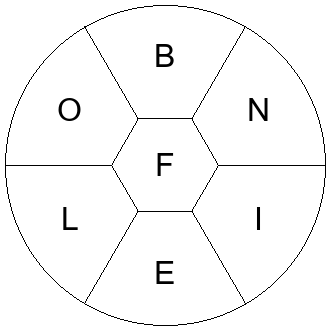
The button below will reveal a chart with the number of words by each letter. Red bars indicate that there is a pangram(s) starting with that letter.


How does this puzzle compare to other puzzles?

Today's score of 116 was in the 22nd percentile of all puzzles.
The last time there was a score this low was on June 23, 2025.
The highest score ever was 537 on January 22, 2021.
The lowest score ever was 47 on March 27, 2023.

This puzzle's 30 possible answers rank it in the 25th percentile of all puzzles.
The last time there were fewer answers than this was on June 23, 2025.
The highest number of answers was 81 on June 8, 2019.
The lowest number of answers was 16 on March 27, 2023.

It takes a 7-letter word for genius.
The last time this happened was on June 24, 2025.

Today's puzzle has an average word length of 5.1.
For all Bees, the average word length has been 5.3.


Haven't I seen these letters before?

Hover over a letter to see its first and most recent appearance in the Bee!


Haven't I seen these words before?

The most common words in the Bee are:

  • noon 203
  • loll 198
  • toot 191
  • naan 173
  • nana 173
  • lilt 140
  • till 140
  • tilt 140
  • tint 138
  • nene 135
  • mama 133
  • mamma 133
  • onto 126
  • toon 126
  • acacia 125
  • acai 125
  • onion 122
  • anal 118
  • anon 116
  • olio 116
  • boob 112
  • booboo 112
  • dodo 112
  • papa 111
  • tact 110
  • baba 109
  • poop 109
  • call 106
  • calla 106
  • lull 106
  • lulu 106
  • mitt 106
  • ratatat 105
  • tart 105
  • tartar 105
  • attar 104
  • tatty 104
  • mono 103
  • moon 103
  • tattoo 103
  • allay 102
  • ally 102
  • ammo 102
  • momma 102
  • cocci 101
  • tutu 101
  • epee 100
  • peep 100
  • loon 99
  • roar 97


How long are words in the Bee?

There have been 103,103 answers ever accepted in the Bee - with 10,632 unique words.
Below are the distributions of the lengths of these words.


Valid dictionary words not in today's official answers

You may be wondering why these words aren't here*:

  • befool
  • biffin
  • boff
  • boffin
  • boiloff
  • enfeoff
  • feeb
  • felloe
  • feoff
  • feoffee
  • fille
  • fillo
  • filo
  • fino
  • flooie
  • foin
  • infeoff
  • lief
  • lobefin
  • loof
  • neif
  • niff
  • nonlife
  • olefin
  • olefine

*Because the New York Times considers them obscure or offensive.

beef

noun
  1. The meat from a cow, bull or other bovine.
  2. (plural: beefs) A grudge; dislike (of something or someone); lack of faith or trust (in something or someone); a reason for a dislike or grudge. (often + with)
verb
  1. To complain.
  2. To add weight or strength to; to beef up.
  3. To fart; break wind.
  4. To feud or hold a grudge against.
  5. To cry
  6. To fail or mess up.
adjective
  1. Being a bovine animal that is being raised for its meat.
  2. Producing or known for raising lots of beef.
  3. Consisting of or containing beef as an ingredient.

befell

verb
  1. To fall upon; fall all over; overtake
  2. To happen.
  3. To happen to.
  4. To fall.

belief

noun
  1. Mental acceptance of a claim as true.
  2. Faith or trust in the reality of something; often based upon one's own reasoning, trust in a claim, desire of actuality, and/or evidence considered.
  3. Something believed.
  4. The quality or state of believing.
  5. Religious faith.
  6. (in the plural) One's religious or moral convictions.

biff

noun
  1. A sudden, sharp blow or punch.
  2. A wipeout.
verb
  1. To punch or hit.
  2. To discard; to throw out; to throw away.
  3. To wipe out; to faceplant; to fall.

boffo

noun
  1. (chiefly in the world of entertainment) A great success; a hit.
adjective
  1. Outstanding; very good or successful.

elfin

Etymology 1

noun
  1. An elf; an inhabitant of fairy-land.
  2. A little urchin or child.
  3. Any of the butterflies in the subgenus Incisalia of the North American lycaenid genus Callophrys.

Etymology 2

adjective
  1. Relating to or resembling an elf or elves, especially in its tiny size or features.

enfeeble

verb
  1. To make feeble.

feeble

verb
  1. To make feeble; to enfeeble.
adjective
  1. Deficient in physical strength
  2. Lacking force, vigor, or efficiency in action or expression; faint.

feel

Etymology 1

noun
  1. A quality of an object experienced by touch.
  2. A vague mental impression.
  3. An act of fondling.
  4. A vague understanding.
  5. An intuitive ability.
  6. Alternative form of feeling.
verb
  1. (heading) To use or experience the sense of touch.
  2. (heading) To sense or think emotionally or judgmentally.
  3. To be or become aware of.
  4. To experience the consequences of.
  5. To seem (through touch or otherwise).
  6. To understand.

Etymology 2

adjective
  1. Much; many.
adverb
  1. Greatly, much, very
pronoun
  1. Many (of).

feline

Etymology 1

adjective
  1. Of or pertaining to cats.
  2. Catlike (resembling a cat)

Etymology 2

noun
  1. A cat; member of the cat family Felidae.

fell

Etymology 1

noun
  1. A cutting-down of timber.
  2. The stitching down of a fold of cloth; specifically, the portion of a kilt, from the waist to the seat, where the pleats are stitched down.
  3. The end of a web, formed by the last thread of the weft.
verb
  1. To make something fall; especially to chop down a tree.
  2. To strike down, kill, destroy.
  3. To stitch down a protruding flap of fabric, as a seam allowance, or pleat.

Etymology 2

noun
  1. An animal skin, hide, pelt.
  2. Human skin (now only as a metaphorical use of previous sense).

Etymology 3

noun
  1. (obsolete outside Britain) A rocky ridge or chain of mountains.
  2. (obsolete outside Britain) A wild field or upland moor.

Etymology 4

adjective
  1. Of a strong and cruel nature; eager and unsparing; grim; fierce; ruthless; savage.
  2. Strong and fiery; biting; keen; sharp; pungent
  3. Very large; huge.
  4. Eager; earnest; intent.
adverb
  1. Sharply; fiercely.

Etymology 5

noun
  1. Anger; gall; melancholy.

Etymology 6

noun
  1. The finer portions of ore, which go through the meshes when the ore is sorted by sifting.

Etymology 7

verb
  1. (heading) To be moved downwards.
  2. To move downwards.
  3. To happen, to change negatively.
  4. To be allotted to; to arrive through chance, fate, or inheritance.
  5. To diminish; to lessen or lower.
  6. To bring forth.
  7. To issue forth into life; to be brought forth; said of the young of certain animals.
  8. To descend in character or reputation; to become degraded; to sink into vice, error, or sin.
  9. To become ensnared or entrapped; to be worse off than before.
  10. To assume a look of shame or disappointment; to become or appear dejected; said of the face.
  11. To happen; to come to pass; to chance or light (upon).
  12. To begin with haste, ardour, or vehemence; to rush or hurry.
  13. To be dropped or uttered carelessly.
  14. (of a fabric) To hang down (under the influence of gravity).

felon

Etymology 1

noun
  1. A person who has committed a felony.
  2. A person who has been tried and convicted of a felony.
  3. A wicked person.
adjective
  1. Wicked; cruel

Etymology 2

noun
  1. A bacterial infection at the end of a finger or toe.

fennel

noun
  1. A plant, Foeniculum vulgare, of the parsley family, which has a sweet, anise-like flavor.
  2. The bulb, leaves, or stalks of the plant, eaten as a vegetable.
  3. The seeds of the fennel plant used as a spice in cooking.

fief

noun
  1. An estate held by a person on condition of providing military service to a superior.
  2. Something over which one has rights or exercises control.
  3. An area of dominion, especially in a corporate or governmental bureaucracy.

fife

Etymology 1

noun
  1. A small shrill pipe, resembling the piccolo flute, used chiefly to accompany the drum in military music
verb
  1. To play this instrument.

Etymology 2

numeral
  1. Used instead of five in radio communications to avoid confusion.

file

Etymology 1

noun
  1. A collection of papers collated and archived together.
  2. A roll or list.
  3. Course of thought; thread of narration.
  4. An aggregation of data on a storage device, identified by a name.
verb
  1. To commit (official papers) to some office.
  2. To place in an archive in a logical place and order
  3. To store a file (aggregation of data) on a storage medium such as a disc or another computer.
  4. (with for) To submit a formal request to some office.
  5. To set in order; to arrange, or lay away.

Etymology 2

noun
  1. A column of people one behind another, whether "single file" or in a large group with many files side by side.
  2. A small detachment of soldiers.
  3. One of the eight vertical lines of squares on a chessboard (i.e., those identified by a letter). The analog horizontal lines are the ranks.
verb
  1. To move in a file.

Etymology 3

noun
  1. A hand tool consisting of a handle to which a block of coarse metal is attached, and used for removing sharp edges or for cutting, especially through metal.
  2. A cunning or resourceful person.
verb
  1. To smooth, grind, or cut with a file.

Etymology 4

verb
  1. To defile
  2. To corrupt

fill

Etymology 1

verb
  1. To occupy fully, to take up all of.
  2. To add contents to (a container, cavity or the like) so that it is full.
  3. To enter (something), making it full.
  4. To become full.
  5. To become pervaded with something.
  6. To satisfy or obey (an order, request or requirement).
  7. To install someone, or be installed, in (a position or office), eliminating a vacancy.
  8. To treat (a tooth) by adding a dental filling to it.
  9. To fill or supply fully with food; to feed; to satisfy.
  10. To trim (a yard) so that the wind blows on the after side of the sails.
  11. (of a male) To have sexual intercourse with (a female).

Etymology 2

noun
  1. (after a possessive) A sufficient or more than sufficient amount.
  2. An amount that fills a container.
  3. The filling of a container or area.
  4. Inexpensive material used to occupy empty spaces, especially in construction.
  5. Soil and/or human-created debris discovered within a cavity or cut in the layers and exposed by excavation; fill soil.
  6. An embankment, as in railroad construction, to fill a hollow or ravine; also, the place which is to be filled.
  7. A short passage, riff, or rhythmic sound that helps to keep the listener's attention during a break between the phrases of a melody.

Etymology 3

noun
  1. One of the thills or shafts of a carriage.

fine

Etymology 1

noun
  1. Fine champagne; French brandy.
  2. (usually in the plural) Something that is fine; fine particles.
verb
  1. To make finer, purer, or cleaner; to purify or clarify.
  2. To become finer, purer, or cleaner.
  3. To make finer, or less coarse, as in bulk, texture, etc.
  4. To change by fine gradations.
  5. To clarify (wine and beer) by filtration.
  6. To become gradually fine; to diminish; to dwindle (with away, down, or off).
adjective
  1. Senses referring to subjective quality.
  2. Senses referring to objective quality.
  3. Behind the batsman and at a small angle to the line between the wickets.
  4. Subtle; thin; tenuous.
adverb
  1. Expression of (typically) reluctant agreement.
  2. Well, nicely, in a positive way.
  3. Finely; elegantly; delicately.
  4. In a manner so that the driven ball strikes the object ball so far to one side as to be barely deflected, the object ball being driven to one side.

Etymology 2

noun
  1. A fee levied as punishment for breaking the law.
verb
  1. To issue a fine as punishment to (someone).
  2. To pay a fine.

Etymology 3

noun
  1. The end of a musical composition.
  2. The location in a musical score that indicates the end of the piece, particularly when the piece ends somewhere in the middle of the score due to a section of the music being repeated.

Etymology 4

noun
  1. End; conclusion; termination; extinction.
  2. A final agreement concerning lands or rents between persons, as the lord and his vassal.
  3. A sum of money or price paid for obtaining a benefit, favor, or privilege, as for admission to a copyhold, or for obtaining or renewing a lease.
verb
  1. To finish; to cease.
  2. To cause to cease; to stop.

flee

verb
  1. To run away; to escape.
  2. To escape from.
  3. To disappear quickly; to vanish.

floe

noun
  1. A low, flat mass of floating ice.

foible

noun
  1. A quirk, idiosyncrasy, or mannerism; unusual habit or way (usage is typically plural), that is slightly strange or silly.
  2. A weakness or failing of character.
  3. Part of a sword between the middle and the point, weaker than the forte.
adjective
  1. Weak; feeble.

foil

Etymology 1

noun
  1. A very thin sheet of metal.
  2. Thin aluminium/aluminum (or, formerly, tin) used for wrapping food.
  3. A thin layer of metal put between a jewel and its setting to make it seem more brilliant.
  4. (authorship) In literature, theatre/theater, etc., a character who helps emphasize the traits of the main character and who usually acts as an opponent or antagonist.
  5. Anything that acts by contrast to emphasise the characteristics of something.
  6. A very thin sword with a blunted (or foiled) tip
  7. A thin, transparent plastic material on which marks are made and projected for the purposes of presentation. See transparency.
  8. A stylized flower or leaf.
  9. A hydrofoil.
  10. An aerofoil/airfoil.
verb
  1. To cover or wrap with foil.

Etymology 2

noun
  1. Failure when on the point of attainment; defeat; frustration; miscarriage.
  2. One of the incorrect answers presented in a multiple-choice test.
verb
  1. To prevent (something) from being accomplished.
  2. To prevent (someone) from accomplishing something.
  3. To blunt; to dull; to spoil.
  4. To tread underfoot; to trample.

Etymology 3

noun
  1. The track of an animal.

Etymology 4

verb
  1. To expand a product of two or more algebraic expressions, typically binomials.

Etymology 5

verb
  1. To defile; to soil.

folio

noun
  1. A leaf of a book or manuscript
  2. A page of a book, that is, one side of a leaf of a book.
  3. A page number. The even folios are on the left-hand pages and the odd folios on the right-hand pages.
  4. A sheet of paper folded in half.
  5. (books) A book made of sheets of paper each folded in half (two leaves or four pages to the sheet); hence, a book of the largest kind, exceeding 30 cm in height.
  6. A page in an account book; sometimes, two opposite pages bearing the same serial number.
  7. (19th to early 20th century) A leaf containing a certain number of words; hence, a certain number of words in a writing, as in England, in law proceedings 72, and in chancery, 90; in New York, 100 words.
  8. A wrapper for loose papers.
verb
  1. To put a serial number on each folio or page of (a book); to page

fool

noun
  1. A person with poor judgment or little intelligence.
  2. A jester; a person whose role was to entertain a sovereign and the court (or lower personages).
  3. Someone who derives pleasure from something specified.
  4. Buddy, dude, man.
  5. A type of dessert made of puréed fruit and custard or cream.
  6. (often capitalized, Fool) A particular card in a tarot deck, representing a jester.
verb
  1. To trick; to deceive
  2. To act in an idiotic manner; to act foolishly
adjective
  1. Foolish.

infill

Etymology 1

noun
  1. That which fills in a space, hole or gap.
  2. The redecoration of a fingernail or toenail after it has grown, to prevent an unsightly gap.
verb
  1. To fill in a space, hole or gap.
  2. To rededicate land in an urban environment to new construction.

Etymology 2

noun
  1. Infiltration, the act of going into a place.

info

noun
  1. Information.

life

noun
  1. The state of organisms preceding their death, characterized by biological processes such as metabolism and reproduction and distinguishing them from inanimate objects; the state of being alive and living.
  2. The animating principle or force that keeps an inorganic thing or concept metaphorically alive (dynamic, relevant, etc) and makes it a "living document", "living constitution", etc.
  3. Lifeforms, generally or collectively.
  4. A living individual; the fact of a particular individual being alive. (Chiefly when indicating individuals were lost (died) or saved.)
  5. Existence.
  6. A period of time during which something has existence.
  7. Animation; spirit; vivacity.
  8. A biography.
  9. Nature, reality, and the forms that exist in it.
  10. An opportunity for existence.
  11. The life insurance industry.
  12. A life assured under a life assurance policy (equivalent to the policy itself for a single life contract).

lifeline

noun
  1. A line to which a drowning or falling victim may cling.
  2. (by extension) A source of salvation in a crisis.
  3. A means or route for transporting indispensable supplies.
  4. System or structure of vital importance to a community.
  5. On the deck of a boat, a line to which one can attach oneself to stay aboard on rough seas.
  6. A line from the diver to a tender at the surface control point.
  7. A particular crease in the palm.

nonbelief

noun
  1. Failure to believe; lack of religion

offline

verb
  1. To take (a system, etc.) offline; to demote from an active or online state.
adjective
  1. Of a system, currently not connected (generally electrically) to a larger network. For example, a power plant which is not connected to the grid, or a computer which is not connected to the Internet or to any other communications service.
  2. (by extension) Happening in the physical world (the real world) as opposed to on the internet.
adverb
  1. While offline; with an offline system.
  2. Outside the current meeting, in a more private setting.