Thursday, June 26, 2025

Answers to yesterday's Bee

Jump to answers for


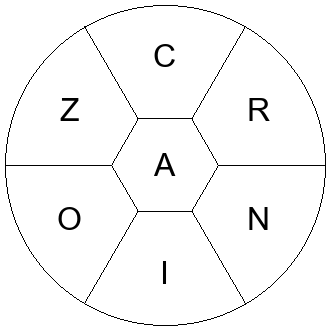
The official answers for today's puzzle are:

Click on the arrow to show the definition.
Click outside the pop-up to close it.


Number of Pangrams: 1

Maximum Puzzle Score: 184

Number of Answers: 43

Points Needed for Genius: 129

Genius requires between 20 and 37 words. You need at least a 7-letter word to reach genius. If you don't get the pangram, you need 76% of the total points to reach genius. If you get the pangram, you only need 67% of the remaining points to reach genius.

Other days with this pangram:

The button below will reveal a chart with the number of words by each letter. Red bars indicate that there is a pangram(s) starting with that letter.


How does this puzzle compare to other puzzles?

Today's score of 184 was in the 57th percentile of all puzzles.
The last time there was a score this high was on June 24, 2025.
The highest score ever was 537 on January 22, 2021.
The lowest score ever was 47 on March 27, 2023.

This puzzle's 43 possible answers rank it in the 60th percentile of all puzzles.
The last time there were more answers than this was on June 24, 2025.
The highest number of answers was 81 on June 8, 2019.
The lowest number of answers was 16 on March 27, 2023.

It takes a 7-letter word for genius.
The last time this happened was on June 25, 2025.

Today's puzzle has an average word length of 5.2.
For all Bees, the average word length has been 5.3.


Haven't I seen these letters before?

Hover over a letter to see its first and most recent appearance in the Bee!


Haven't I seen these words before?

The most common words in the Bee are:

  • noon 203
  • loll 198
  • toot 191
  • naan 174
  • nana 174
  • lilt 140
  • till 140
  • tilt 140
  • tint 138
  • nene 135
  • mama 133
  • mamma 133
  • acacia 126
  • acai 126
  • onto 126
  • toon 126
  • onion 122
  • anal 118
  • anon 117
  • olio 116
  • boob 112
  • booboo 112
  • dodo 112
  • papa 111
  • tact 110
  • baba 109
  • poop 109
  • call 106
  • calla 106
  • lull 106
  • lulu 106
  • mitt 106
  • ratatat 105
  • tart 105
  • tartar 105
  • attar 104
  • tatty 104
  • mono 103
  • moon 103
  • tattoo 103
  • allay 102
  • ally 102
  • ammo 102
  • momma 102
  • cocci 101
  • tutu 101
  • epee 100
  • peep 100
  • loon 99
  • roar 98


How long are words in the Bee?

There have been 103,146 answers ever accepted in the Bee - with 10,632 unique words.
Below are the distributions of the lengths of these words.


Valid dictionary words not in today's official answers

You may be wondering why these words aren't here*:

  • acari
  • acinar
  • acini
  • acinic
  • acro
  • acronic
  • airn
  • ancon
  • anionic
  • anna
  • annona
  • anoa
  • arroz
  • azan
  • azoic
  • azon
  • azonic
  • caca
  • cain
  • canzona
  • canzoni
  • caracara
  • carina
  • carioca
  • carn
  • carr
  • cocain
  • cooncan
  • coria
  • inia
  • izar
  • naira
  • nanna
  • nano
  • naoi
  • naric
  • nazi
  • nona
  • noria
  • orra
  • racino
  • racon
  • racoon
  • raia
  • razzia
  • ricrac
  • zanana
  • zanza
  • zoaria
  • zona

*Because the New York Times considers them obscure or offensive.

acacia

Etymology 1

noun
  1. A shrub or tree of the tribe Acacieae.
  2. The thickened or dried juice of several species in Acacieae, in particular Vachellia nilotica (syn. Acacia nilotica), the Egyptian acacia.
  3. A false acacia; robinia tree, Robinia pseudoacacia.
  4. Gum arabic; gum acacia.
  5. Any of several related trees, such as the locust tree.
  6. A light to moderate greenish yellow with a hint of red.

Etymology 2

noun
  1. (history) A roll or bag, filled with dust, borne by Byzantine emperors, as a memento of mortality. It is represented on medals.

acai

noun
  1. Any of several South American palms, of the genus Euterpe, having a dark purple drupe.
  2. The fruit of these trees, harvested for its juice.

acorn

noun
  1. The fruit of the oak, being an oval nut growing in a woody cup or cupule.
  2. A cone-shaped piece of wood on the point of the spindle above the vane, on the mast-head.
  3. See acorn-shell.
  4. (usually in the plural) A testicle.

anion

noun
  1. A negatively charged ion.

anon

Etymology 1

adverb
  1. Straight away; at once.
  2. Soon; in a little while.
  3. At another time; then; again.

Etymology 2

noun
  1. An anonymous person, especially an author.
  2. A work with an unknown author.
  3. A work without a title.
adjective
  1. Anonymous

arcana

noun
  1. Specialized knowledge that is mysterious to the uninitiated.
noun
  1. A mystery or deep secret.
  2. An elixir or secret remedy.

arco

adverb
  1. A note in string instrument musical notation indicating that the bow is to be used in the usual way, usually following a passage that is played pizzicato.

aria

noun
  1. A musical piece written typically for a solo voice with orchestral accompaniment in an opera or cantata.

arnica

noun
  1. Any of several plants, of the genus Arnica, considered to have medicinal properties, especially Arnica montana.

cacao

noun
  1. A tree, Theobroma cacao, whose seed is used to make chocolate.
  2. This tree's seed, the cocoa bean.

cairn

noun
  1. A rounded or conical heap of stones erected by early inhabitants of the British Isles, apparently as a sepulchral monument.
  2. A pile of stones heaped up as a landmark, to guide travelers on land or at sea, or to arrest attention, as in surveying, or in leaving traces of an exploring party, etc.
  3. A cairn terrier.

cancan

noun
  1. A high-kicking chorus line dance originating in France.
  2. (motocross) A trick where one leg is brought over the seat, so that both legs are on one side.
verb
  1. To dance the cancan.

canna

Etymology 1

noun
  1. Any member of the genus Canna of tropical plants with large leaves and often showy flowers.

Etymology 2

noun
  1. A measure of length in Italy, varying from six to seven feet.

cannon

noun
  1. A complete assembly, consisting of an artillery tube and a breech mechanism, firing mechanism or base cap, which is a component of a gun, howitzer or mortar. It may include muzzle appendages.
  2. Any similar device for shooting material out of a tube.
  3. A bone of a horse's leg, between the fetlock joint and the knee or hock.
  4. A cannon bit.
  5. A large muzzle-loading artillery piece.
  6. A carom.
  7. The arm of a player that can throw well.
  8. A hollow cylindrical piece carried by a revolving shaft, on which it may, however, revolve independently.
  9. (Chinese chess) A piece which moves horizontally and vertically like a rook but captures another piece by jumping over a different piece in the line of attack.
verb
  1. To bombard with cannons.
  2. To play the carom billiard shot. To strike two balls with the cue ball
  3. To fire something, especially spherical, rapidly.
  4. To collide or strike violently, especially so as to glance off or rebound.
noun
  1. A generally accepted principle; a rule.
  2. A group of literary works that are generally accepted as representing a field.
  3. The works of a writer that have been accepted as authentic.
  4. A eucharistic prayer, particularly the Roman Canon.
  5. A religious law or body of law decreed by the church.
  6. A catalogue of saints acknowledged and canonized in the Roman Catholic Church.
  7. In monasteries, a book containing the rules of a religious order.
  8. A member of a cathedral chapter; one who possesses a prebend in a cathedral or collegiate church.
  9. A piece of music in which the same melody is played by different voices, but beginning at different times; a round.
  10. (Roman law) A rent or stipend payable at some regular time, generally annual, e.g., canon frumentarius
  11. Those sources, especially including literary works, which are considered part of the main continuity regarding a given fictional universe.
  12. A rolled and filleted loin of meat; also called cannon.
  13. A large size of type formerly used for printing the church canons, standardized as 48-point.
  14. The part of a bell by which it is suspended; the ear or shank of a bell.
  15. A carom.
noun
  1. A clergy member serving a cathedral or collegiate church.
  2. A canon regular, a member of any of several Roman Catholic religious orders.
noun
  1. A Near Eastern and Caucasian musical instrument related to the zither, dulcimer, or harp having either 26 strings and a single bridge, or twice that number and two bridges.

canon

Etymology 1

noun
  1. A generally accepted principle; a rule.
  2. A group of literary works that are generally accepted as representing a field.
  3. The works of a writer that have been accepted as authentic.
  4. A eucharistic prayer, particularly the Roman Canon.
  5. A religious law or body of law decreed by the church.
  6. A catalogue of saints acknowledged and canonized in the Roman Catholic Church.
  7. In monasteries, a book containing the rules of a religious order.
  8. A member of a cathedral chapter; one who possesses a prebend in a cathedral or collegiate church.
  9. A piece of music in which the same melody is played by different voices, but beginning at different times; a round.
  10. (Roman law) A rent or stipend payable at some regular time, generally annual, e.g., canon frumentarius
  11. Those sources, especially including literary works, which are considered part of the main continuity regarding a given fictional universe.
  12. A rolled and filleted loin of meat; also called cannon.
  13. A large size of type formerly used for printing the church canons, standardized as 48-point.
  14. The part of a bell by which it is suspended; the ear or shank of a bell.
  15. A carom.

Etymology 2

noun
  1. A clergy member serving a cathedral or collegiate church.
  2. A canon regular, a member of any of several Roman Catholic religious orders.

Etymology 3

noun
  1. A Near Eastern and Caucasian musical instrument related to the zither, dulcimer, or harp having either 26 strings and a single bridge, or twice that number and two bridges.

canonic

adjective
  1. Canonical

carrion

noun
  1. Dead flesh; carcasses.
  2. A contemptible or worthless person.

ciao

noun
  1. A greeting or farewell using the word "ciao".
interjection
  1. Hello, hi.
  2. Bye, goodbye.

circa

preposition
  1. Approximately, about, around (typically in relation to time)

coca

Etymology 1

noun
  1. Any of the four cultivated plants which belong to the family Erythroxylaceae, native to western South America.
  2. The dried leaf of one of these plants, the South American shrub (Erythroxylum coca), widely cultivated in Andean countries, which is the source of cocaine.

Etymology 2

noun
  1. A pastry typically made and consumed in the Spanish Mediterranean coast.

cocoa

Etymology 1

noun
  1. The dried and partially fermented fatty seeds of the cacao tree from which chocolate is made.
  2. An unsweetened brown powder made from roasted, ground cocoa beans, used in making chocolate, and in cooking.
  3. A hot drink made with milk, cocoa powder, and sugar.
  4. A serving of this drink.
  5. A light to medium brown colour.
adjective
  1. Of a light to medium brown colour, like that of cocoa powder.

Etymology 2

noun
  1. Coconut palm.
  2. Coconut, the fruit of the coconut palm.

corona

Etymology 1

noun
  1. The luminous plasma atmosphere of the Sun or other star, extending millions of kilometres into space, most easily seen during a total solar eclipse.
  2. A circle or set of circles visible around a bright celestial object, especially the Sun or the Moon, attributable to an optical phenomenon produced by the diffraction of its light by small water droplets or tiny ice crystals.
  3. (by extension) Any luminous or crownlike ring around an object or person.
  4. A luminous appearance caused by corona discharge, often seen as a bluish glow in the air adjacent to pointed metal conductors carrying high voltages.
  5. The large, flat, projecting member of a cornice which crowns the entablature, situated above the bed moulding and below the cymatium.
  6. A large, round pendent chandelier, with spikes around its upper rim to hold candles or lamps, usually hung from the roof of a church.
  7. A crown or garland bestowed among the Romans as a reward for distinguished services.
  8. Any appendage of an organism that resembles a crown or corona.
  9. An upper or crownlike portion of certain parts of the body.
  10. A manifestation of secondary syphilis, consisting of papular lesions along the hairline, often bordering the scalp in the manner of a crown.
  11. An oval-shaped astrogeological feature, present on both the planet Venus and Uranus's moon Miranda, probably formed by upwellings of warm material below the surface.
  12. A mineral zone, consisting of one or more minerals, which surrounds another mineral or lies at the interface of two minerals, typically in a radial arrangement; a reaction rim.
verb
  1. To surround with a luminous or crownlike ring as if by the solar corona.

Etymology 2

noun
  1. A coronavirus, especially SARS-CoV-2.
  2. A coronavirus disease, especially COVID-19.

Etymology 3

noun
  1. A series of sonnets linked together in a particular manner.

Etymology 4

noun
  1. A long, straight-sided cigar with a roundly blunt end.

crania

noun
  1. The braincase or neurocranium; that part of the skull consisting of the bones enclosing the brain, but not including the bones of the face or jaw.
  2. The upper portion of the skull, including the neurocranium and facial bones, but not including the jawbone (mandible).
  3. The skull.

czar

noun
  1. An appointed official tasked to regulate or oversee a specific area.
noun
  1. An emperor of Russia (1547 to 1917) and of some South Slavic states.
  2. A person with great power; an autocrat.

czarina

noun
  1. An empress of several Eastern European countries, especially Russia, or the wife of a tsar.

naan

noun
  1. A type of round, flat bread baked in a tandoor popular in South and Central Asian cuisine.

nana

Etymology 1

noun
  1. A banana
  2. A fool

Etymology 2

noun
  1. (term of endearment) one's grandmother
  2. A nanny

narc

Etymology 1

noun
  1. A narcotics squad police officer.

Etymology 2

noun
  1. A police spy or informer.
  2. An unpleasant person, especially one who makes things difficult for others.
verb
  1. To watch; to observe.
  2. To serve or behave as a spy or informer.
  3. To annoy or irritate.
  4. To complain.
  5. (often imperative) To stop.

Etymology 3

verb
  1. (underwater diving) To suffer from impaired judgment due to nitrogen narcosis (for example, while scuba diving).

Etymology 4

noun
  1. A narcissist.

narco

Etymology 1

noun
  1. Narcotics.
  2. A South American drug baron.
  3. A police officer specializing in drug crimes

Etymology 2

noun
  1. Someone suffering from narcolepsy

niacin

noun
  1. A water-soluble vitamin, a component of vitamin B complex, found in meat, yeast, and dairy products; it is essential to metabolism.

ocarina

noun
  1. A woodwind musical instrument that is closed at both sides to produce an enclosed space, and punctured with finger holes.

orca

noun
  1. A sea mammal (Orcinus orca) related to dolphins and porpoises, commonly called the killer whale.

raccoon

noun
  1. A nocturnal omnivore native to North America, typically with a mixture of gray, brown, and black fur, a mask-like marking around the eyes and a striped tail; Procyon lotor.
  2. Any mammal of the genus Procyon.
  3. Any mammal of the subfamily Procyoninae, a procyonine.
  4. Any mammal of the family Procyonidae, a procyonid.

rain

noun
  1. Condensed water falling from a cloud.
  2. Any matter moving or falling, usually through air, and especially if liquid or otherwise figuratively identifiable with raindrops.
  3. An instance of particles or larger pieces of matter moving or falling through air.
verb
  1. To have rain fall from the sky.
  2. To fall as or like rain.
  3. To issue (something) in large quantities.
  4. To reign.

rancor

noun
  1. The deepest malignity or spite; deep-seated enmity or malice; inveterate hatred.

rani

noun
  1. The wife of a rajah.
  2. A Hindu princess or female ruler in India.

razor

noun
  1. A keen-edged knife of peculiar shape, used in shaving the hair from the face or other parts of the body.
  2. Any tool or instrument designed for shaving.
  3. The sharp tusk of a wild boar.
  4. A conceptual device that allows one to shave away unlikely explanations for a phenomenon.
verb
  1. To shave with a razor.

razz

noun
  1. A version of seven card stud where the worst poker hand wins (called lowball).
verb
  1. To tease playfully; to heckle.
  2. To drive an automobile around.

roan

Etymology 1

noun
  1. An animal such as a horse that has a coat of a dark base color with individual white hairs mixed in.
  2. The color of such an animal.
  3. A kind of leather used for slippers, bookbinding, etc., made from sheepskin, tanned with sumac and colored to imitate ungrained morocco.
adjective
  1. Especially of a horse, having a coat of a dark base color with individual white hairs mixed in
  2. Made of the leather called roan.

Etymology 2

noun
  1. Sorbus aucuparia, the European rowan.
  2. Any of various small deciduous trees or shrubs of genus Sorbus, belonging to the rose family, with pinnate leaves, corymbs of white flowers, and usually with orange-red berries.

roar

noun
  1. A long, loud, deep shout, as of rage or laughter, made with the mouth wide open.
  2. The cry of the lion.
  3. The deep cry of the bull.
  4. A loud resounding noise.
  5. A show of strength or character.
verb
  1. To make a loud, deep cry, especially from pain, anger, or other strong emotion.
  2. To laugh in a particularly loud manner.
  3. Of animals (especially the lion), to make a loud deep noise.
  4. Generally, of inanimate objects etc., to make a loud resounding noise.
  5. To proceed vigorously.
  6. To cry aloud; to proclaim loudly.
  7. To be boisterous; to be disorderly.
  8. To make a loud noise in breathing, as horses do when they have a certain disease.
  9. (North Midlands) to cry

zinnia

noun
  1. Any of several brightly coloured flowering plants, of the genus Zinnia, native to tropical America; old maid

zirconia

noun
  1. The oxide of zirconium, obtained as a white powder, and possessing both acid and basic properties. On account of its infusibility, and brilliant luminosity when incandescent, it is used as an ingredient of sticks for the Drummond light.

arancini

noun
  1. A baked rice ball, filled with cheese or other sauce, originally from Sicily.