Thursday, July 3, 2025

Answers to yesterday's Bee

Jump to answers for


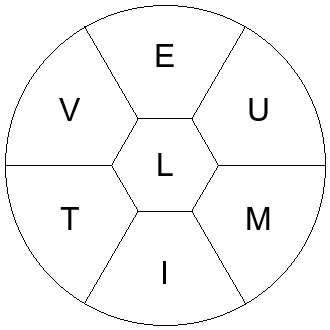
The official answers for today's puzzle are:

Click on the arrow to show the definition.
Click outside the pop-up to close it.


Number of Pangrams: 1

Maximum Puzzle Score: 146

Number of Answers: 41

Points Needed for Genius: 102

Genius requires between 17 and 36 words. You need at least a 6-letter word to reach genius. If you don't get the pangram, you need 79% of the total points to reach genius. If you get the pangram, you only need 66% of the remaining points to reach genius.

Other days with this pangram:

The button below will reveal a chart with the number of words by each letter. Red bars indicate that there is a pangram(s) starting with that letter.


How does this puzzle compare to other puzzles?

Today's score of 146 was in the 38th percentile of all puzzles.
The last time there was a score this low was on July 1, 2025.
The highest score ever was 537 on January 22, 2021.
The lowest score ever was 47 on March 27, 2023.

This puzzle's 41 possible answers rank it in the 55th percentile of all puzzles.
The last time there were more answers than this was on July 1, 2025.
The highest number of answers was 81 on June 8, 2019.
The lowest number of answers was 16 on March 27, 2023.

It takes a 6-letter word for genius.
The last time this happened was on July 1, 2025.

Today's puzzle has an average word length of 4.9.
For all Bees, the average word length has been 5.3.


Haven't I seen these letters before?

Hover over a letter to see its first and most recent appearance in the Bee!


Haven't I seen these words before?

The most common words in the Bee are:

  • noon 204
  • loll 199
  • toot 191
  • naan 174
  • nana 174
  • lilt 141
  • till 141
  • tilt 141
  • tint 138
  • nene 135
  • mama 133
  • mamma 133
  • acacia 126
  • acai 126
  • onto 126
  • toon 126
  • onion 122
  • anal 118
  • anon 118
  • olio 116
  • boob 113
  • booboo 113
  • dodo 112
  • papa 111
  • poop 110
  • tact 110
  • baba 109
  • lull 108
  • lulu 108
  • call 106
  • calla 106
  • mitt 106
  • ratatat 105
  • tart 105
  • tartar 105
  • attar 104
  • tatty 104
  • mono 103
  • moon 103
  • tattoo 103
  • allay 102
  • ally 102
  • ammo 102
  • cocci 102
  • momma 102
  • tutu 101
  • epee 100
  • loon 100
  • peep 100
  • roar 98


How long are words in the Bee?

There have been 103,471 answers ever accepted in the Bee - with 10,660 unique words.
Below are the distributions of the lengths of these words.


Valid dictionary words not in today's official answers

You may be wondering why these words aren't here*:

  • elemi
  • elute
  • eluvium
  • illite
  • illume
  • illuvium
  • leet
  • lieve
  • limuli
  • litu
  • lutetium
  • luteum
  • luvvie
  • melilite
  • mell
  • milium
  • mille
  • millieme
  • millime
  • milt
  • mulie
  • mullite
  • mutuel
  • mutule
  • teel
  • tele
  • telium
  • tillite
  • tuile
  • tuille
  • tule
  • tumuli
  • vielle
  • vill
  • villi
  • vitelli
  • vittle
  • vlei

*Because the New York Times considers them obscure or offensive.

elite

noun
  1. A special group or social class of people which have a superior intellectual, social or economic status as, the elite of society.
  2. Someone who is among the best at a certain task.
adjective
  1. Of high birth or social position; aristocratic or patrician.
  2. Representing the choicest or most select of a group.

evil

Etymology 1

noun
  1. Moral badness; wickedness; malevolence; the forces or behaviors that are the opposite or enemy of good.
  2. Something which impairs the happiness of a being or deprives a being of any good; something which causes suffering of any kind to sentient beings; harm; injury; mischief.
  3. A malady or disease; especially in the phrase king's evil (scrofula).
adjective
  1. Intending to harm; malevolent.
  2. Morally corrupt.
  3. Unpleasant, foul (of odour, taste, mood, weather, etc.).
  4. Producing or threatening sorrow, distress, injury, or calamity; unpropitious; calamitous.
  5. Having harmful qualities; not good; worthless or deleterious.
  6. Undesirable; harmful; bad practice

Etymology 2

adverb
  1. Wickedly, evilly, iniquitously
  2. Injuriously, harmfully; in a damaging way.
  3. Badly, poorly; in an insufficient way.

ileum

noun
  1. The last, and usually the longest, division of the small intestine; the part between the jejunum and large intestine.

ilium

noun
  1. The upper and widest of the three bones that make up each side of the hipbone and pelvis.
  2. The ileum, part of the small intestine.

levee

Etymology 1

noun
  1. An embankment to prevent inundation; as, the levees along the Mississippi.
  2. The steep bank of a river.
  3. The border of an irrigated field.
  4. A pier or other landing place on a river.
verb
  1. To keep within a channel by means of levees.

Etymology 2

noun
  1. The act of rising; getting up, especially in the morning after rest.
  2. A reception of visitors held after getting up.
  3. A formal reception, especially one given by royalty or other leaders.
verb
  1. To attend the levee or levees of.

level

noun
  1. A tool for finding whether a surface is level, or for creating a horizontal or vertical line of reference.
  2. A distance relative to a given reference elevation.
  3. Degree or amount.
  4. Achievement or qualification.
  5. Distance from the root node of a tree structure.
  6. One of several discrete segments of a game, generally increasing in difficulty and representing different locations in the game world.
  7. A numeric value that quantifies a character's experience and power.
  8. A floor of a multi-storey building.
  9. An area of almost perfectly flat land.
  10. A school grade or year.
verb
  1. To adjust so as to make as flat or perpendicular to the ground as possible.
  2. To destroy by reducing to ground level; to raze.
  3. To progress to the next level.
  4. To aim or direct (a weapon, a stare, an accusation, etc).
  5. To direct or impose (a penalty, fine, etc) at or upon (someone).
  6. To make the score of a game equal.
  7. To bring to a common level or plane, in respect of rank, condition, character, privilege, etc.
  8. To adjust or adapt to a certain level.
  9. (usually with "with") To speak honestly and openly with.
adjective
  1. The same height at all places; parallel to a flat ground.
  2. At the same height as some reference; constructed as level with.
  3. Unvaried in frequency.
  4. Unvaried in volume.
  5. Calm.
  6. In the same position or rank.
  7. Straightforward; direct; clear.
  8. Well balanced; even; just; steady; impartial.
  9. Of even tone; without rising or falling inflection; monotonic.
  10. Perpendicular to a gravitational force.

lieu

noun
  1. Place, stead; See in lieu or in lieu of

lilt

noun
  1. Animated, brisk motion; spirited rhythm; sprightliness.
  2. A lively song or dance; a cheerful tune.
  3. A cheerful or melodious accent when speaking.
verb
  1. To do something rhythmically, with animation and quickness, usually of music.
  2. To sing cheerfully, especially in Gaelic.
  3. To utter with spirit, animation, or gaiety; to sing with spirit and liveliness.

lime

Etymology 1

noun
  1. Any inorganic material containing calcium, usually calcium oxide (quicklime) or calcium hydroxide (slaked lime).
  2. Any gluey or adhesive substance; something which traps or captures someone; sometimes a synonym for birdlime.
verb
  1. To treat with calcium hydroxide or calcium oxide (lime).
  2. To smear with birdlime.
  3. To apply limewash.

Etymology 2

noun
  1. A deciduous tree of the genus Tilia, especially Tilia × europaea; the linden tree, or its wood.

Etymology 3

noun
  1. Any of several green citrus fruit, somewhat smaller and sharper-tasting than a lemon.
  2. Any of the trees that bear limes, especially Key lime, Citrus aurantiifolia.
  3. A brilliant, sometimes yellowish, green colour associated with the fruits of a lime tree.
  4. A fan fiction story which contains sexual references, but stops short of full, explicit descriptions of sexual activity (coined by analogy with lemon).
adjective
  1. Containing lime or lime juice.
  2. Having the aroma or flavor of lime.
  3. Lime-green.

Etymology 4

verb
  1. To hang out/socialize in an informal, relaxed environment, especially with friends, for example at a party or on the beach.

Etymology 5

noun
  1. A leash.

limit

Etymology 1

noun
  1. A restriction; a bound beyond which one may not go.
  2. A value to which a sequence converges. Equivalently, the common value of the upper limit and the lower limit of a sequence: if the upper and lower limits are different, then the sequence has no limit (i.e., does not converge).
  3. Any of several abstractions of this concept of limit.
  4. The cone of a diagram through which any other cone of that same diagram can factor uniquely.
  5. Fixed limit.
  6. The final, utmost, or furthest point; the border or edge.
  7. The space or thing defined by limits.
  8. That which terminates a period of time; hence, the period itself; the full time or extent.
  9. A restriction; a check or curb; a hindrance.
  10. A determining feature; a distinguishing characteristic.
  11. The first group of riders to depart in a handicap race.
  12. (as "the limit") A person who is exasperating, intolerable, astounding, etc.
adjective
  1. Being a fixed limit game.

Etymology 2

verb
  1. To restrict; not to allow to go beyond a certain bound, to set boundaries.
  2. To have a limit in a particular set.
  3. To beg, or to exercise functions, within a certain limited region.

lite

Etymology 1

noun
  1. Visible electromagnetic radiation. The human eye can typically detect radiation (light) in the wavelength range of about 400 to 750 nanometers. Nearby shorter and longer wavelength ranges, although not visible, are commonly called ultraviolet and infrared light.
  2. A source of illumination.
  3. Spiritual or mental illumination; enlightenment, useful information.
  4. (in the plural) Facts; pieces of information; ideas, concepts.
  5. A notable person within a specific field or discipline.
  6. The manner in which the light strikes a picture; that part of a picture which represents those objects upon which the light is supposed to fall; the more illuminated part of a landscape or other scene; opposed to shade.
  7. A point of view, or aspect from which a concept, person or thing is regarded.
  8. A flame or something used to create fire.
  9. A firework made by filling a case with a substance which burns brilliantly with a white or coloured flame.
  10. A window, or space for a window in architecture.
  11. The series of squares reserved for the answer to a crossword clue.
  12. A cross-light in a double acrostic or triple acrostic.
  13. Open view; a visible state or condition; public observation; publicity.
  14. The power of perception by vision.
  15. The brightness of the eye or eyes.
  16. A traffic light, or, by extension, an intersection controlled by one or more that will face a traveler who is receiving instructions.
adjective
  1. Having light; bright; clear; not dark or obscure.
  2. Pale or whitish in color; highly luminous and more or less deficient in chroma.
  3. (of coffee) Served with extra milk or cream.
noun
  1. A stone that is not thrown hard enough.
  2. See lights.
adjective
  1. Having little or relatively little actual weight; not cumbrous or unwieldy.
  2. Having little weight as compared with bulk; of little density or specific gravity.
  3. Of short or insufficient weight; weighing less than the legal, standard or proper amount; clipped or diminished.
  4. Lacking that which burdens or makes heavy.
  5. Not heavy or soggy; spongy; well raised.
  6. Gentle; having little force or momentum.
  7. Easy to endure or perform.
  8. Low in fat, calories, alcohol, salt, etc.
  9. Unimportant, trivial, having little value or significance.
  10. Unchaste, wanton.
  11. Not encumbered; unembarrassed; clear of impediments; hence, active; nimble; swift.
  12. Easily influenced by trifling considerations; unsteady; unsettled; volatile.
  13. Indulging in, or inclined to, levity; lacking dignity or solemnity; frivolous; airy.
  14. Not quite sound or normal; somewhat impaired or deranged; dizzy; giddy.
  15. Easily interrupted by stimulation.
adjective
  1. Light in composition, notably low in fat, calories etc. Most commonly used commercially.
  2. Lightweight
  3. (usually used postpositively) Lacking substance or seriousness; watered down.

Etymology 2

noun
  1. A little, bit.
adjective
  1. Few; little

Etymology 3

noun
  1. The act of waiting; a wait.
verb
  1. To expect; wait.
  2. To rely.

little

noun
  1. A small amount.
adjective
  1. Small in size.
  2. Insignificant, trivial.
  3. Very young.
  4. (of a sibling) Younger.
  5. (also Little) Used with the name of a place, especially of a country or its capital, to denote a neighborhood whose residents or storekeepers are from that place.
  6. Small in amount or number, having few members.
  7. Short in duration; brief.
  8. Small in extent of views or sympathies; narrow; shallow; contracted; mean; illiberal; ungenerous.
adverb
  1. Not much.
  2. Not at all.
pronoun
  1. Not much; not a large amount.

live

Etymology 1

verb
  1. To be alive; to have life.
  2. To have permanent residence somewhere, to inhabit, to reside.
  3. To survive; to persevere; to continue.
  4. To cope.
  5. To pass life in a specified manner.
  6. To spend, as one's life; to pass; to maintain; to continue in, constantly or habitually.
  7. To act habitually in conformity with; to practice; to exemplify in one's way of life.
  8. To outlast danger; to float (said of a ship, boat, etc).
  9. (followed by "on" or "upon") To maintain or support one's existence; to provide for oneself; to feed; to subsist.
  10. To make the most of life; to experience a full, rich life.

Etymology 2

noun
  1. Life
adjective
  1. (only used attributively) Having life; that is alive.
  2. Being in existence; actual
  3. Having active properties; being energized.
  4. Operational; in actual use rather than in testing etc.
  5. Taken from a living animal.
  6. Imparting power; having motion.
  7. Still in active play.
  8. Seen or heard from a broadcast, as it happens.
  9. (of a performance or speech) In person.
  10. (entertainment, performing) Recorded in front of an audience and not having been edited after recording.
  11. Of firearms or explosives, capable of causing harm.
  12. (circuitry) Electrically charged or energized, usually indicating that the item may cause electrocution if touched.
  13. Being a bet which can be raised by the bettor, usually in reference to a blind or straddle.
  14. Featuring humans; not animated, in the phrases “live actors” or “live action”.
  15. Being in a state of ignition; burning.
  16. Full of earnestness; active; wide awake; glowing.
  17. Vivid; bright.
adverb
  1. Of an event, as it happens; in real time; direct.
  2. Of making a performance or speech, in person.

lull

noun
  1. A period of rest or soothing.
  2. A period of reduced activity; a respite
  3. A period without waves or wind.
  4. An extended pause between sets of waves.
verb
  1. To cause to rest by soothing influences; to compose; to calm
  2. To become gradually calm; to subside; to cease or abate.

lulu

noun
  1. A remarkable person, object or idea.
  2. A very attractive or alluring person.
  3. A very bad mistake or error.
  4. A fixed allowance paid to a legislator in lieu of reimbursement for actual expenses.

lute

Etymology 1

noun
  1. A fretted stringed instrument of European origin, similar to the guitar, having a bowl-shaped body or soundbox; any of a wide variety of chordophones with a pear-shaped body and a neck whose upper surface is in the same plane as the soundboard, with strings along the neck and parallel to the soundboard.
verb
  1. To play on a lute, or as if on a lute.

Etymology 2

noun
  1. Thick sticky clay or cement used to close up a hole or gap, especially to make something air-tight.
  2. A packing ring, as of rubber, for fruit jars, etc.
  3. (brickmaking) A straight-edged piece of wood for striking off superfluous clay from earth.
verb
  1. To fix or fasten something with lute.

melee

noun
  1. A battle fought at close range; hand-to-hand combat; brawling.
  2. A noisy, confused or tumultuous fight, argument or scrap.
  3. Any any confused, disorganised, disordered or chaotic situation.
  4. Lively contention or debate, skirmish.
  5. A cavalry exercise in which two groups of riders try to cut paper plumes off the helmets of their opponents, the contest continuing until no member of one group retains his plume.
  6. Small cut and polished gemstones sold in lots.
verb
  1. To physically hit in close quarters, as opposed to shooting, blowing up, or other ranged means of damage. Often refers to the usage of a hand-to-hand weapon.

melt

noun
  1. Molten material, the product of melting.
  2. The transition of matter from a solid state to a liquid state.
  3. The springtime snow runoff in mountain regions.
  4. A melt sandwich.
  5. A wax-based substance for use in an oil burner as an alternative to mixing oils and water.
  6. An idiot.
verb
  1. To change (or to be changed) from a solid state to a liquid state, usually by a gradual heat.
  2. To dissolve, disperse, vanish.
  3. To soften, as by a warming or kindly influence; to relax; to render gentle or susceptible to mild influences; sometimes, in a bad sense, to take away the firmness of; to weaken.
  4. To be discouraged.
  5. To be emotionally softened or touched.
  6. To be very hot and sweat profusely.

mettle

noun
  1. A quality of endurance and courage.
  2. Good temperament and character.
  3. Metal; a metallic substance.

mile

noun
  1. The international mile: a unit of length precisely equal to 1.609344 kilometers established by treaty among Anglophone nations in 1959, divided into 5,280 feet or 1,760 yards.
  2. Any of several customary units of length derived from the 1593 English statute mile of 8 furlongs, equivalent to 5,280 feet or 1,760 yards of various precise values.
  3. Any of many customary units of length derived from the Roman mile (mille passus) of 8 stades or 5,000 Roman feet.
  4. The Scandinavian mile: a unit of length precisely equal to 10 kilometers defined in 1889.
  5. Any of many customary units of length from other measurement systems of roughly similar values, as the Chinese (里) or Arabic mile (al-mīl).
  6. (travel) An airline mile in a frequent flier program.
  7. Any similarly large distance.
  8. A race of 1 mile's length; a race of around 1 mile's length (usually 1500 or 1600 meters)
  9. One mile per hour, as a measure of speed.

milieu

noun
  1. Medium.
  2. Social setting or environment.

mill

Etymology 1

noun
  1. A grinding apparatus for substances such as grains, seeds, etc.
  2. The building housing such a grinding apparatus.
  3. A machine used for expelling the juice, sap, etc., from vegetable tissues by pressure, or by pressure in combination with a grinding, or cutting process.
  4. A machine for grinding and polishing.
  5. The raised or ridged edge or surface made in milling anything, such as a coin or screw.
  6. A manufacturing plant for paper, steel, textiles, etc.
  7. A building housing such a plant.
  8. An establishment that handles a certain type of situation or procedure routinely, or produces large quantities of an item without much regard to quality, such as a divorce mill, a puppy mill, etc.
  9. An institution awarding educational certificates not officially recognised
  10. An engine.
  11. A boxing match, fistfight.
  12. (die sinking) A hardened steel roller with a design in relief, used for imprinting a reversed copy of the design in a softer metal, such as copper.
  13. An excavation in rock, transverse to the workings, from which material for filling is obtained.
  14. A passage underground through which ore is shot.
  15. A milling cutter.
  16. A treadmill.
  17. A typewriter used to transcribe messages received.
verb
  1. To grind or otherwise process in a mill or other machine.
  2. To shape, polish, dress or finish using a machine.
  3. To engrave one or more grooves or a pattern around the edge of (a cylindrical object such as a coin).
  4. (followed by around, about, etc.) To move about in an aimless fashion.
  5. To cause to mill, or circle around.
  6. (of air-breathing creatures) To swim underwater.
  7. (of a whale) To swim suddenly in a new direction.
  8. To beat; to pound.
  9. To pass through a fulling mill; to full, as cloth.
  10. To roll (steel, etc.) into bars.
  11. To make (drinking chocolate) frothy, as by churning.
  12. To undergo hulling.
  13. To take part in a fistfight; to box.
  14. To fill (a winze or interior incline) with broken ore, to be drawn out at the bottom.
  15. (thieves' cant) To commit burglary.

Etymology 2

noun
  1. An obsolete coin worth one thousandth of a US dollar, or one tenth of a cent.
  2. One thousandth part, particularly in millage rates of property tax.

Etymology 3

noun
  1. An angular mil, a unit of angular measurement equal to 1⁄6400 of a complete circle. At 1000 metres one mil subtends about one metre (0.98 m). Also 1⁄6000 and 1⁄6300 are used in other countries.
  2. A unit of measurement equal to 1⁄1000 of an inch, usually used for thin objects, such as sheets of plastic.
  3. A former subdivision (1/1000) of the Maltese lira
  4. (plural "mil") Abbreviation of million.
noun
  1. A unit of measure of capacity, being one thousandth of a litre. Symbol: ml

Etymology 4

noun
  1. A line of three matching pieces in nine men's morris and related games.

Etymology 5

noun
  1. (trading card games) Discarding a card from one's deck.
  2. (trading card games) A strategy centered on depleting the opponent's deck.
verb
  1. (trading card games) To move (a card) from a deck to the discard pile.
  2. (Hearthstone) To destroy (a card) due to having a full hand.

millet

Etymology 1

noun
  1. Any of a group of various types of grass or its grains used as food, widely cultivated in the developing world.

Etymology 2

noun
  1. A semi-autonomous confessional community under the Ottoman Empire, especially a non-Muslim one.

mule

Etymology 1

noun
  1. The generally sterile male or female hybrid offspring of a male donkey and a female horse.
  2. The generally sterile hybrid offspring of any two species of animals.
  3. A hybrid plant.
  4. A stubborn person.
  5. A person paid to smuggle drugs.
  6. A coin or medal minted with obverse and reverse designs not normally seen on the same piece, either intentionally or in error.
  7. A MMORPG character, or NPC companion in a tabletop RPG, used mainly to store extra inventory for the owner's primary character.
  8. Any of a group of cocktails involving ginger ale or ginger beer, citrus juice, and various liquors.
  9. A kind of triangular sail for a yacht.
  10. A kind of cotton-spinning machine.
verb
  1. To smuggle (illegal drugs).

Etymology 2

noun
  1. A shoe that has no fitting or strap around the heel, but which covers the foot.

mull

Etymology 1

noun
  1. A thin, soft muslin.
  2. Marijuana that has been chopped to prepare it for smoking.
  3. A stew of meat, broth, milk, butter, vegetables, and seasonings, thickened with soda crackers.
  4. The gauze used in bookbinding to adhere a text block to a book's cover.
  5. An inferior kind of madder prepared from the smaller roots or the peelings and refuse of the larger.
verb
  1. (usually with over) To work (over) mentally; to cogitate; to ruminate.
  2. To powder; to pulverize.
  3. To chop marijuana so that it becomes a smokable form.
  4. To heat and spice something, such as wine.
  5. To join two or more individual windows at mullions.
  6. To dull or stupefy.

Etymology 2

noun
  1. A promontory.
  2. A snuffbox made of the small end of a horn.

Etymology 3

noun
  1. Dirt; rubbish

mullet

Etymology 1

noun
  1. A fish of the family Mullidae (order Syngnathiformes), especially the genus Mullus (the red mullets or goatfish).
  2. A fish of the family Mugilidae (order Mugiliformes) (the grey mullets).
  3. Any of several species of freshwater fish in the sucker family (especially in the genus Moxostoma, the redhorses)

Etymology 2

noun
  1. A fool

Etymology 3

noun
  1. A hairstyle where the hair is kept short on the top and sides and long at the back.
  2. A person who mindlessly follows a fad, a trend, or a leader.

Etymology 4

noun
  1. A star with straight edges and usually with five or six points.
  2. The rowel of a spur.

multilevel

adjective
  1. Having several levels or floors.

tell

Etymology 1

noun
  1. A reflexive, often habitual behavior, especially one occurring in a context that often features attempts at deception by persons under psychological stress (such as a poker game or police interrogation), that reveals information that the person exhibiting the behavior is attempting to withhold.
  2. That which is told; a tale or account.
  3. A private message to an individual in a chat room; a whisper.
verb
  1. (archaic outside of idioms) To count, reckon, or enumerate.
  2. To narrate.
  3. To convey by speech; to say.
  4. To instruct or inform.
  5. To order; to direct, to say to someone.
  6. To discern, notice, identify or distinguish.
  7. To reveal.
  8. To be revealed.
  9. To have an effect, especially a noticeable one; to be apparent, to be demonstrated.
  10. To use (beads or similar objects) as an aid to prayer.
  11. To inform someone in authority about a wrongdoing.
  12. (authorship) To reveal information in prose through outright expository statement -- contrasted with show

Etymology 2

noun
  1. A hill or mound, originally and especially in the Middle East, over or consisting of the ruins of ancient settlements.

tile

Etymology 1

noun
  1. A regularly-shaped slab of clay or other material, affixed to cover or decorate a surface, as in a roof-tile, glazed tile, stove tile, carpet tile etc.
  2. A rectangular graphic.
  3. Any of various flat cuboid playing pieces used in certain games, such as dominoes, Scrabble, or mahjong.
  4. A stiff hat.
verb
  1. To cover with tiles.
  2. To arrange in a regular pattern, with adjoining edges (applied to tile-like objects, graphics, windows in a computer interface).
  3. To optimize (a loop in program code) by means of the tiling technique.

Etymology 2

verb
  1. To protect from the intrusion of the uninitiated.

till

Etymology 1

preposition
  1. Until; to, up to; as late as (a given time).
  2. To, up to (physically).
  3. To make it possible that.
conjunction
  1. Until, until the time that.

Etymology 2

noun
  1. A cash register.
  2. A removable box within a cash register containing the money.
  3. The contents of a cash register, for example at the beginning or end of the day or of a cashier's shift.
  4. A tray or drawer in a chest.

Etymology 3

verb
  1. To develop so as to improve or prepare for usage; to cultivate (said of knowledge, virtue, mind etc.).
  2. To work or cultivate or plough (soil); to prepare for growing vegetation and crops.
  3. To cultivate soil.
  4. To prepare; to get.

Etymology 4

noun
  1. Glacial drift consisting of a mixture of clay, sand, pebbles and boulders
  2. Manure or other material used to fertilize land

Etymology 5

noun
  1. A vetch; a tare.

tilt

Etymology 1

noun
  1. A slope or inclination.
  2. The inclination of part of the body, such as backbone, pelvis, head, etc.
  3. The controlled vertical movement of a camera, or a device to achieve this.
  4. A jousting contest.
  5. An attempt at something, such as a tilt at public office.
  6. A thrust, as with a lance.
  7. A tilt hammer.
verb
  1. To slope or incline (something); to slant.
  2. (jousting) To charge (at someone) with a lance.
  3. To be at an angle.
  4. To point or thrust a weapon at.
  5. To point or thrust (a weapon).
  6. To forge (something) with a tilt hammer.
  7. To play worse than usual (often as a result of previous bad luck or losses).
  8. (of a machine) To intentionally let the ball fall down to the drain by disabling flippers and most targets, done as a punishment to the player when the machine is nudged too violently or frequently.

Etymology 2

noun
  1. A canvas covering for carts, boats, etc.
  2. Any covering overhead; especially, a tent.
verb
  1. To cover with a tilt, or awning.

title

noun
  1. A prefix (honorific) or suffix (post-nominal) added to a person's name to signify either veneration, official position or a professional or academic qualification. See also
  2. Legal right to ownership of a property; a deed or other certificate proving this.
  3. In canon law, that by which a beneficiary holds a benefice.
  4. A church to which a priest was ordained, and where he was to reside.
  5. The name of a book, film, musical piece, painting, or other work of art.
  6. A publication.
  7. A section or division of a subject, as of a law or a book.
  8. (chiefly in the plural) A written title, credit, or caption shown with a film, video, or performance.
  9. The panel for the name, between the bands of the back of a book.
  10. The subject of a writing; a short phrase that summarizes the entire topic.
  11. A division of an act of law
  12. The recognition given to the winner of a championship in sports.
verb
  1. To assign a title to; to entitle.

tittle

Etymology 1

noun
  1. A small, insignificant amount (of something); a modicum or speck.
  2. Any small dot, stroke, or diacritical mark, especially if part of a letter, or if a letter-like abbreviation; in particular, the dots over the Latin letters i and j.

Etymology 2

verb
  1. To chatter.

tulle

noun
  1. A kind of silk lace or light netting, used for clothing, veils, etc.

tumult

noun
  1. Confused, agitated noise as made by a crowd.
  2. Violent commotion or agitation, often with confusion of sounds.
  3. A riot or uprising.
verb
  1. To make a tumult; to be in great commotion.

utile

noun
  1. A theoretical unit of measure of utility, for indicating a supposed quantity of satisfaction derived from an economic transaction.
adjective
  1. Useful.

veil

noun
  1. Something hung up or spread out to hide or protect the face, or hide an object from view; usually of gauze, crepe, or similar diaphanous material.
  2. A cover; disguise; a mask; a pretense.
  3. The calyptra of mosses.
  4. A membrane connecting the margin of the pileus of a mushroom with the stalk; a velum.
  5. A covering for a person or thing; as, a caul (especially over the head)
  6. Velum (A circular membrane round the cap of medusa)
  7. A thin layer of tissue which is attached to or covers a mushroom.
  8. An obscuration of the clearness of the tones in pronunciation.
verb
  1. To dress in, or decorate with, a veil.
  2. To conceal as with a veil.

vellum

noun
  1. A type of parchment paper made from the skin of a lamb, baby goat, or calf.
  2. A writing paper of very high quality.

velum

noun
  1. A thin membrane, resembling a veil, such as:
  2. An accessory cloud resembling a veil extending over a large distance. Normally associated with cumulus and cumulonimbus.

velvet

noun
  1. A closely woven fabric (originally of silk, now also of cotton or man-made fibres) with a thick short pile on one side.
  2. Very fine fur, including the skin and fur on a deer's antlers.
  3. A female chinchilla; a sow.
  4. The drug dextromethorphan.
  5. Money acquired by gambling.
verb
  1. To cover with velvet or with a covering of a similar texture.
  2. To coat raw meat in starch, then in oil, preparatory to frying.
  3. To remove the velvet from a deer's antlers.
  4. To soften; to mitigate.
  5. (of a cat's claws) to retract.
adjective
  1. Made of velvet.
  2. Soft and delicate, like velvet; velvety.
  3. Peaceful, carried out without violence; especially as pertaining to the peaceful breakup of Czechoslovakia.

vile

adjective
  1. Morally low; base; despicable.
  2. Causing physical or mental repulsion; horrid.