Friday, July 4, 2025

Answers to yesterday's Bee

Jump to answers for


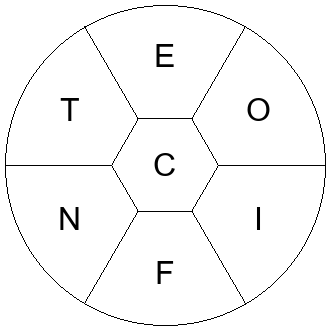
The official answers for today's puzzle are:

Click on the arrow to show the definition.
Click outside the pop-up to close it.


Number of Pangrams: 4

Maximum Puzzle Score: 404

Number of Answers: 61

Points Needed for Genius: 283

Genius requires between 31 and 52 words. You need at least a 9-letter word to reach genius. If you don't get the pangrams, you need 84% of the total points to reach genius. If you get the pangrams, you only need 64% of the remaining points to reach genius.

Other days with this pangram:

The button below will reveal a chart with the number of words by each letter. Red bars indicate that there is a pangram(s) starting with that letter.


How does this puzzle compare to other puzzles?

Today's score of 404 was in the 99th percentile of all puzzles.
The last time there was a score this high was on July 7, 2024.
The highest score ever was 537 on January 22, 2021.
The lowest score ever was 47 on March 27, 2023.

This puzzle's 61 possible answers rank it in the 93rd percentile of all puzzles.
The last time there were more answers than this was on June 29, 2025.
The highest number of answers was 81 on June 8, 2019.
The lowest number of answers was 16 on March 27, 2023.

It takes a 9-letter word for genius.
The last time this happened was on May 20, 2025.

Today's puzzle has an average word length of 6.7.
For all Bees, the average word length has been 5.3.


Haven't I seen these letters before?

Hover over a letter to see its first and most recent appearance in the Bee!


Haven't I seen these words before?

The most common words in the Bee are:

  • noon 204
  • loll 199
  • toot 191
  • naan 174
  • nana 174
  • lilt 141
  • till 141
  • tilt 141
  • tint 138
  • nene 135
  • mama 133
  • mamma 133
  • acacia 126
  • acai 126
  • onto 126
  • toon 126
  • onion 122
  • anal 118
  • anon 118
  • olio 116
  • boob 113
  • booboo 113
  • dodo 112
  • papa 111
  • poop 110
  • tact 110
  • baba 109
  • lull 108
  • lulu 108
  • call 106
  • calla 106
  • mitt 106
  • ratatat 105
  • tart 105
  • tartar 105
  • attar 104
  • tatty 104
  • cocci 103
  • mono 103
  • moon 103
  • tattoo 103
  • allay 102
  • ally 102
  • ammo 102
  • momma 102
  • tutu 101
  • epee 100
  • loon 100
  • peep 100
  • roar 98


How long are words in the Bee?

There have been 103,532 answers ever accepted in the Bee - with 10,660 unique words.
Below are the distributions of the lengths of these words.


Valid dictionary words not in today's official answers

You may be wondering why these words aren't here*:

  • cenote
  • cento
  • cete
  • cine
  • cion
  • coccic
  • coco
  • cocotte
  • coeffect
  • coff
  • coft
  • coiffe
  • coinfect
  • coinfection
  • coition
  • concent
  • confetto
  • coni
  • coniine
  • conin
  • conine
  • conn
  • conte
  • conto
  • coocoo
  • cooee
  • coof
  • coon
  • coontie
  • cotinine
  • enceinte
  • eocene
  • etic
  • fennec
  • fice
  • ficin
  • fico
  • ictic
  • incent
  • intinction
  • neotenic
  • nicotin
  • nicotinic
  • nocent
  • noetic
  • nonconnection
  • nonionic
  • nontonic
  • octette
  • offence
  • oncet
  • ontic
  • otic
  • otitic
  • tectite
  • tictoc
  • toco
  • tonetic

*Because the New York Times considers them obscure or offensive.

cent

noun
  1. (money) A subunit of currency equal to one-hundredth of the main unit of currency in many countries. Symbol: ¢.
  2. A small sum of money.
  3. (money) A subunit of currency equal to one-hundredth of the euro.
  4. (money) A coin having face value of one cent (in either of the above senses).
  5. A hundredth of a semitone or half step.
noun
  1. The point in the interior of a circle that is equidistant from all points on the circumference.
  2. The point in the interior of a sphere that is equidistant from all points on the circumference.
  3. The middle portion of something; the part well away from the edges.
  4. The point on a line that is midway between the ends.
  5. The point in the interior of any figure of any number of dimensions that has as its coordinates the arithmetic mean of the coordinates of all points on the perimeter of the figure (or of all points in the interior for a center of volume).
  6. The subgroup (respectively, subring), denoted Z(G), of those elements of a given group (respectively, ring) G that commute with every element of G.
  7. A place where the greater part of some function or activity occurs.
  8. A topic that is particularly important in a given context.
  9. A player in the middle of the playing area
  10. A player who can go all over the court, except the shooting circles.
  11. A pass played into the centre of the pitch.
  12. One of the backs operating in a central area of the pitch, either the inside centre or outside centre.
  13. A temporary structure upon which the materials of a vault or arch are supported in position until the work becomes self-supporting.
  14. One of the two conical steel pins in a lathe, etc., upon which the work is held, and about which it revolves.
  15. A conical recess or indentation in the end of a shaft or other work, to receive the point of a center, on which the work can turn, as in a lathe.
  16. The ensemble of moderate or centrist political parties.
noun
  1. A centigrade temperature scale having the freezing point of water defined as 0° and its boiling point defined as 100° at standard atmospheric pressure. Known as the Celsius scale since 1948.
  2. A single degree on this scale.
  3. A unit of angle equal to the hundredth part of a quadrant. Its symbol is gon.
noun
  1. (Sanskrit and other Indian philology) satakam, set of one hundred verses connected by the same metre or topic
  2. Perfect score on a board exam
noun
  1. A period of 100 consecutive years; often specifically a numbered period with conventional start and end dates, e.g., the twentieth century, which stretches from (strictly) 1901 through 2000, or (informally) 1900 through 1999. The first century AD was from 1 to 100.
  2. A unit in ancient Roman army, originally of 100 army soldiers as part of a cohort, later of more varied sizes (but typically containing 60 to 70 or 80) soldiers or other men (guards, police, firemen), commanded by a centurion.
  3. A political division of ancient Rome, meeting in the Centuriate Assembly.
  4. A hundred things of the same kind; a hundred.
  5. A hundred runs scored either by a single player in one innings, or by two players in a partnership.
  6. A score of one hundred points.
  7. A race a hundred units (as meters, kilometres, miles) in length.
  8. A banknote in the denomination of one hundred dollars.

cite

Etymology 1

verb
  1. To quote; to repeat, as a passage from a book, or the words of another.
  2. To list the source(s) from which one took information, words or literary or verbal context.
  3. To summon officially or authoritatively to appear in court.

Etymology 2

noun
  1. A citation

cocci

Etymology 1

noun
  1. Any approximately spherical bacterium.
  2. One of the carpels or seed-vessels of a dry fruit.

Etymology 2

noun
  1. Coccidioidomycosis

cocoon

noun
  1. The silky protective case spun by the larvae of some insects in which they metamorphose, the pupa.
  2. Any similar protective case, whether real or metaphorical.
verb
  1. To envelop in a protective case
  2. To withdraw into such a case.

coefficient

noun
  1. A constant by which an algebraic term is multiplied.
  2. A number, value or item that serves as a measure of some property or characteristic.
adjective
  1. Cooperating

coffee

noun
  1. A beverage made by infusing the beans of the coffee plant in hot water.
  2. A serving of this beverage.
  3. The seeds of the plant used to make coffee, misnamed ‘beans’ due to their shape.
  4. The powder made by roasting and grinding the seeds.
  5. A tropical plant of the genus Coffea.
  6. A pale brown colour, like that of milk coffee.
  7. The end of a meal, when coffee is served.
verb
  1. To drink coffee.
adjective
  1. Of a pale brown colour, like that of milk coffee.
  2. Of a table: a small, low table suitable for people in lounge seating to put coffee cups on.

coffin

noun
  1. A rectangular closed box in which the body of a dead person is placed for burial.
  2. The eighth Lenormand card.
  3. A basket.
  4. A casing or crust, or a mold, of pastry, as for a pie.
  5. A conical paper bag, used by grocers.
  6. The hollow crust or hoof of a horse's foot, below the coronet, in which is the coffin bone.
  7. A storage container for nuclear waste.
verb
  1. To place in a coffin.

coif

Etymology 1

noun
  1. A hairdo.
  2. A hood; a close-fitting cap covering much of the head, widespread until the 18th century; after that worn only by small children and country women.
  3. An item of chain mail headgear.
  4. An official headdress, such as that worn by certain judges in England.

Etymology 2

verb
  1. To style or arrange hair.

coin

noun
  1. (money) A piece of currency, usually metallic and in the shape of a disc, but sometimes polygonal, or with a hole in the middle.
  2. A token used in a special establishment like a casino.
  3. That which serves for payment or recompense.
  4. Money in general, not limited to coins.
  5. One of the suits of minor arcana in tarot, or a card of that suit.
  6. A corner or external angle.
  7. A small circular slice of food.
  8. A cryptocurrency.
verb
  1. To make of a definite fineness, and convert into coins, as a mass of metal.
  2. (by extension) To make or fabricate.
  3. To acquire rapidly, as money; to make.

conceit

noun
  1. Something conceived in the mind; an idea, a thought.
  2. The faculty of conceiving ideas; mental faculty; apprehension.
  3. Quickness of apprehension; active imagination; lively fancy.
  4. Opinion, (neutral) judgment.
  5. Esteem, favourable opinion.
  6. A novel or fanciful idea; a whim.
  7. An ingenious expression or metaphorical idea, especially in extended form or used as a literary or rhetorical device.
  8. Overly high self-esteem; vain pride; hubris.
  9. Design; pattern.
verb
  1. To form an idea; to think.
  2. To conceive.

concoct

verb
  1. To prepare something by mixing various ingredients, especially to prepare food for cooking.
  2. To contrive something using skill or ingenuity.
  3. To digest.

concoction

noun
  1. The preparing of a medicine, food or other substance out of many ingredients.
  2. A mixture prepared in such a way.
  3. Something made up, an invention.
  4. Digestion (of food etc.).
  5. The act of digesting in the mind; rumination.
  6. Abatement of a morbid process, such as fever, and return to a normal condition.
  7. The act of perfecting or maturing.

cone

noun
  1. A surface of revolution formed by rotating a segment of a line around another line that intersects the first line.
  2. A solid of revolution formed by rotating a triangle around one of its altitudes.
  3. A space formed by taking the direct product of a given space with a closed interval and identifying all of one end to a point.
  4. Anything shaped like a cone.
  5. The fruit of a conifer.
  6. A cone-shaped flower head of various plants, such as banksias and proteas.
  7. An ice cream cone.
  8. A traffic cone
  9. A unit of volume, applied solely to marijuana and only while it is in a smokable state; roughly 1.5 cubic centimetres, depending on use.
  10. Any of the small cone-shaped structures in the retina.
  11. The bowl piece on a bong.
  12. The process of smoking cannabis in a bong.
  13. A cone-shaped cannabis joint.
  14. A passenger on a cruise ship (so-called by employees after traffic cones, from the need to navigate around them)
  15. An object V together with an arrow going from V to each object of a diagram such that for any arrow A in the diagram, the pair of arrows from V which subtend A also commute with it. (Then V can be said to be the cone’s vertex and the diagram which the cone subtends can be said to be its base.)
  16. A shell of the genus Conus, having a conical form.
  17. A set of formal languages with certain desirable closure properties, in particular those of the regular languages, the context-free languages and the recursively enumerable languages.
verb
  1. To fashion into the shape of a cone.
  2. To form a cone shape.
  3. (frequently followed by "off") To segregate or delineate an area using traffic cones

confect

noun
  1. A rich, sweet, food item made of flavored sugar and often combined with fruit or nuts; a confection, comfit.
verb
  1. To make up, prepare, or compound; to produce by combining ingredients or materials; to concoct.
  2. To make into a confection; to prepare as a candy, sweetmeat, preserve, or the like.

confection

noun
  1. A food item prepared very sweet, frequently decorated in fine detail, and often preserved with sugar, such as a candy, sweetmeat, fruit preserve, pastry, or cake.
  2. The act or process of confecting; the process of making, compounding, or preparing something.
  3. The result of such a process; something made up or confected; a concoction.
  4. An artistic, musical, or literary work taken as frivolous, amusing, or contrived; a composition of a light nature.
  5. Something, such as a garment or a decoration, seen as very elaborate, delicate, or luxurious, usually also seen as impractical or non-utilitarian.
  6. A preparation of medicine sweetened with sugar, honey, syrup, or the like; an electuary.
verb
  1. To make into a confection, prepare as a confection.

confetti

noun
  1. Small pieces or strips (streamers) of colored paper or other material (metal, plaster, etc) generally thrown about at festive occasions, especially at weddings and in victory celebrations.
  2. Edible Italian sugar-coated almonds, especially those which are used as part of a traditional Italian wedding.

confine

noun
  1. (chiefly in the plural) A boundary or limit.
verb
  1. To restrict; to keep within bounds; to shut or keep in a limited space or area.
  2. To have a common boundary; to border; to lie contiguous; to touch; followed by on or with.

confit

noun
  1. Any of various kinds of food that have been immersed in a substance for both flavor and preservation.
verb
  1. To prepare (food) in this manner.

conic

noun
  1. A conic section.
adjective
  1. Of or relating to a cone or cones.
  2. Shaped like a cone.
  3. Describing a map projection in which meridians are mapped to equally spaced lines radiating out from the apex and parallels of latitude are mapped to circular arcs centred on the apex.

connect

verb
  1. (of an object) To join (to another object): to attach, or to be intended to attach or capable of attaching, to another object.
  2. (of two objects) To join: to attach, or to be intended to attach or capable of attaching, to each other.
  3. (of an object) To join (two other objects), or to join (one object) to (another object): to be a link between two objects, thereby attaching them to each other.
  4. (of a person) To join (two other objects), or to join (one object) to (another object): to take one object and attach it to another.
  5. To join an electrical or telephone line to a circuit or network.
  6. To associate; to establish a relation between.
  7. To make a travel connection; to switch from one means of transport to another as part of the same trip.

connection

noun
  1. The act of connecting.
  2. The point at which two or more things are connected.
  3. A feeling of understanding and ease of communication between two or more people.
  4. An established communications or transportation link.
  5. A transfer from one transportation vehicle to another in scheduled transportation service
  6. A kinship relationship between people.
  7. An individual who is related to oneself, through either family or business.
  8. A set of sets that contains the empty set, all one-element sets for any element that is included in any of the sets, and the union of any group of sets that are elements where the intersections of those sets is non-empty.
  9. Coherence; lack of disjointedness
  10. The description for a Methodist denomination as a whole, as opposed to its constituent churches, circuits, districts and conferences.
  11. Sexual intercourse

connote

verb
  1. To signify beyond its literal or principal meaning.
  2. To possess an inseparable related condition; to imply as a logical consequence.
  3. To express without overt reference; to imply.
  4. To require as a logical predicate to consequence.

content

Etymology 1

noun
  1. (except in phrases) Satisfaction, contentment; pleasure.
verb
  1. To give contentment or satisfaction; to satisfy; to make happy.
  2. To satisfy the expectations of; to pay; to requite
adjective
  1. Satisfied
interjection
  1. Alright, agreed

Etymology 2

noun
  1. That which is contained.
  2. Subject matter; that which is contained in writing or speech.
  3. The amount of material contained; contents
  4. Capacity for holding
  5. The n-dimensional space contained by an n-dimensional polytope (called volume in the case of a polyhedron and area in the case of a polygon)
  6. (of a polynomial with coefficients in a GCD domain) the greatest common divisor of the coefficients; (of a polynomial with coefficients in an integral domain) the common factor of the coefficients which, when removed, leaves the adjusted coefficients with no common factor that is noninvertible
  7. Satisfaction; contentment.
  8. Acquiescence without examination
  9. That which contents or satisfies; that which if attained would make one happy.
  10. (House of Lords) an expression of assent to a bill or motion; an affirmate vote
  11. (House of Lords) a member who votes in assent
adjective
  1. Contained.

contention

noun
  1. Argument, contest, debate, strife, struggle.
  2. A point maintained in an argument, or a line of argument taken in its support; the subject matter of discussion of strife; a position taken or contended for.
  3. Competition by parts of a system or its users for a limited resource.

continence

noun
  1. (urology) The voluntary control of urination and defecation.
  2. Moderation or self-restraint, especially in sexual activity; abstinence.
  3. Uninterrupted course; continuity.

continent

Etymology 1

noun
  1. Each of the main continuous land-masses on the earth's surface, now generally regarded as seven in number, including their related islands, continental shelves etc.
  2. A large contiguous landmass considered independent of its islands, peninsulas etc. Specifically, the Old World continent of Europe–Asia–Africa. See the Continent.
  3. Land (as opposed to the water).

Etymology 2

adjective
  1. Exercising self-restraint; controlled, temperate with respect to one's bodily needs or passions, especially sex, urination and/or defecation.
  2. Not interrupted; connected; continuous.
  3. Serving to restrain or limit; restraining; opposing.

coot

noun
  1. Any of various aquatic birds of the genus Fulica that are mainly black with a prominent frontal shield on the forehead.
  2. A foolish or eccentric fellow
  3. (with the) A success; something excellent.
  4. Body louse (Pediculus humanus).

cootie

noun
  1. A louse (Pediculus humanus).
  2. A louse (Pediculus humanus).
  3. (usually in the plural) Any germ or contaminant, real or imagined, especially from the opposite gender (for pre-pubescent children).
  4. A nest-building female American coot (counterpart to cooter).
  5. A sideswiper, a type of telegraph key.

cote

Etymology 1

noun
  1. A cottage or hut.
  2. A small structure built to contain domesticated animals such as sheep, pigs or pigeons.

Etymology 2

verb
  1. To quote.

Etymology 3

verb
  1. To go side by side with; hence, to pass by; to outrun and get before.

cotton

Etymology 1

noun
  1. Gossypium, a genus of plant used as a source of cotton fiber.
  2. Any plant that encases its seed in a thin fiber that is harvested and used as a fabric or cloth.
  3. Any fiber similar in appearance and use to Gossypium fiber.
  4. The textile made from the fiber harvested from a cotton plant, especially Gossypium.
  5. An item of clothing made from cotton.
verb
  1. To provide with cotton.
  2. To make or become cotton-like
  3. To protect from harsh stimuli, coddle, or muffle.
  4. To rub or burnish with cotton.
adjective
  1. Made of cotton.

Etymology 2

verb
  1. To get on with someone or something; to have a good relationship with someone.

ecotone

noun
  1. A transition area between two adjacent ecological communities (ecosystems).

effect

noun
  1. The result or outcome of a cause.
  2. Impression left on the mind; sensation produced.
  3. Execution; performance; realization; operation.
  4. An illusion produced by technical means (as in "special effect")
  5. (sound engineering) An alteration, or device for producing an alteration, in sound after it has been produced by an instrument.
  6. (etc.) A scientific phenomenon, usually named after its discoverer.
  7. (usually in the plural) Belongings, usually as personal effects.
  8. Consequence intended; purpose; meaning; general intent; with to.
  9. Reality; actual meaning; fact, as distinguished from mere appearance.
  10. Manifestation; expression; sign.
verb
  1. To make or bring about; to implement.

efficient

noun
  1. A cause; something that causes an effect
adjective
  1. Making good, thorough, or careful use of resources; not consuming extra. Especially, making good use of time or energy
  2. Expressing the proportion of consumed energy that was successfully used in a process; the ratio of useful output to total input
  3. Causing effects, producing results; bringing into being; initiating change (rare except in philosophical and legal expression efficient cause = causative factor or agent)
  4. (old use) effective

entice

verb
  1. To lure; to attract by arousing desire or hope.

fence

noun
  1. A thin artificial barrier that separates two pieces of land or a house perimeter.
  2. Someone who hides or buys and sells stolen goods, a criminal middleman for transactions of stolen goods.
  3. Skill in oral debate.
  4. The art or practice of fencing.
  5. A guard or guide on machinery.
  6. A barrier, for example an emotional barrier.
  7. A memory barrier.
verb
  1. To enclose, contain or separate by building fence.
  2. To defend or guard.
  3. To engage in the selling or buying of stolen goods.
  4. To engage in the sport of fencing.
  5. To jump over a fence.
  6. To conceal the truth by giving equivocal answers; to hedge; to be evasive.

fiction

noun
  1. Literary type using invented or imaginative writing, instead of real facts, usually written as prose.
  2. A verbal or written account that is not based on actual events (often intended to mislead).
  3. A legal fiction.

foci

noun
  1. A point at which reflected or refracted rays of light converge.
  2. A point of a conic at which rays reflected from a curve or surface converge.
  3. The fact of the convergence of light on the photographic medium.
  4. The quality of the convergence of light on the photographic medium.
  5. Concentration of attention.
  6. The exact point of where an earthquake occurs, in three dimensions (underneath the epicentre).
  7. The indicator of the currently active element in a user interface.
  8. The most important word or phrase in a sentence or passage, or the one that imparts information.
  9. An object used in casting a magic spell.

icon

noun
  1. An image, symbol, picture, or other representation usually as an object of religious devotion.
  2. (especially Eastern Christianity) A type of religious painting portraying a saint or scene from Scripture, often done on wooden panels.
  3. (by extension) A person or thing that is the best example of a certain profession or some doing.
  4. A small picture that represents something (such as an icon on a computer screen which when clicked performs some function.)
  5. A word, character, or sign whose form reflects and is determined by the referent; onomatopoeic words are necessarily all icons.

iconic

adjective
  1. Relating to, or having the characteristics of, an icon.
  2. Famously and distinctively representative of its type.
  3. Representing something; symbolic.

incite

verb
  1. To stir up or excite; to rouse or goad into action.

incontinence

noun
  1. Lack of self-restraint, an inability to control oneself; unchastity.
  2. (urology) The inability of any of the physical organs to restrain discharges of their contents; involuntary discharge or evacuation (of urine or feces).

incontinent

noun
  1. One who is unchaste.
adjective
  1. (often followed by of) Unable to contain or retain.
  2. Plagued by incontinence; lacking the ability to restrain natural discharges or evacuations of urination or defecation.
  3. Lacking moral or sexual restraint, moderation or self-control, especially of sexual desire.
  4. Unrestrained or unceasing.
  5. Immediate; without delay.
adverb
  1. Immediately, forthwith.

inefficient

noun
  1. A person who cannot or does not work efficiently.
adjective
  1. Not efficient; not producing the effect intended or desired; inefficacious
  2. Incapable of, or indisposed to, effective action; habitually slack or unproductive; effecting little or nothing

infect

verb
  1. To bring into contact with a substance that causes illness (a pathogen).
  2. To make somebody enthusiastic about one's own passion.
adjective
  1. Infected.

infection

noun
  1. The act or process of infecting.
  2. An uncontrolled growth of harmful microorganisms in a host.

innocence

noun
  1. Absence of responsibility for a crime, tort, etc.
  2. Lack of understanding about sensitive subjects such as sexuality and crime.
  3. Lack of ability or intention to harm or damage.
  4. Imbecility; mental deficiency.

innocent

noun
  1. One who is innocent, especially a young child.
  2. A harmless simple-minded person; an idiot.
adjective
  1. Free from guilt, sin, or immorality.
  2. Bearing no legal responsibility for a wrongful act.
  3. Naive; artless.
  4. (obsolete except medicine) Not harmful; innocuous; harmless; benign.
  5. (with of) Having no knowledge (of something).
  6. (with of) Lacking (something).
  7. Lawful; permitted.
  8. Not contraband; not subject to forfeiture.

ionic

adjective
  1. Of, relating to, or containing ions

neocon

noun
  1. A neoconservative.

nice

Etymology 1

noun
  1. Niceness.
adjective
  1. Pleasant, satisfactory.
  2. Of a person: friendly, attractive.
  3. Respectable; virtuous.
  4. (with and) Shows that the given adjective is desirable, or acts as a mild intensifier; pleasantly, quite.
  5. Silly, ignorant; foolish.
  6. Particular in one's conduct; scrupulous, painstaking; choosy.
  7. Particular as regards rules or qualities; strict.
  8. Showing or requiring great precision or sensitive discernment; subtle.
  9. Easily injured; delicate; dainty.
  10. Doubtful, as to the outcome; risky.
adverb
  1. Nicely.
interjection
  1. Used to signify a job well done.
  2. Used to signify approval.

Etymology 2

verb
  1. To run a process with a specified (usually lower) priority.

nicotine

noun
  1. An alkaloid (C10H14N2), commonly occurring in the tobacco plant. In small doses it is a habit-forming stimulant; in larger doses it is toxic and is often used in insecticides.
  2. Tobacco, cigarettes

niece

noun
  1. A daughter of one’s sibling, brother-in-law, or sister-in-law; either the daughter of one's brother ("fraternal niece"), or of one's sister ("sororal niece").

nonce

Etymology 1

noun
  1. The one or single occasion; the present reason or purpose (now only in for the nonce).
  2. A nonce word.
  3. A value constructed so as to be unique to a particular message in a stream, in order to prevent replay attacks.
adjective
  1. One-off; produced or created for a single occasion or use. Denoting something occurring once.

Etymology 2

noun
  1. (prisons) A sex offender, especially one who is guilty of sexual offences against children.
  2. (prisons) A police informer, one who betrays a criminal enterprise
  3. A stupid or worthless person.

nonfiction

noun
  1. Written works intended to give facts, or true accounts of real things and events. Often used attributively.

notice

noun
  1. The act of observing; perception.
  2. A written or printed announcement.
  3. A formal notification or warning.
  4. Advance notification of termination of employment, given by an employer to an employee or vice versa.
  5. A published critical review of a play or the like.
  6. Prior notification.
  7. Attention; respectful treatment; civility.
verb
  1. To remark upon; to mention.
  2. To become aware of; to observe.
  3. To lavish attention upon; to treat (someone) favourably.
  4. To be noticeable; to show.

octet

noun
  1. A group or set of eight of something.
  2. A group of eight musicians performing together.
  3. A composition for such a group of musicians.
  4. A byte of eight bits. Abbreviation: o
  5. A group of three bits, representing any of eight possible values.

office

noun
  1. A ceremonial duty or service, particularly:
  2. A position of responsibility.
  3. Official position, particularly high employment within government; tenure in such a position.
  4. An official or group of officials; a personification of officeholders.
  5. A duty, particularly owing to one's position or station; a charge, trust, or role; moral duty.
  6. The performance of a duty; an instance of performing a duty.
  7. Function: anything typically done by or expected of something.
  8. A bodily function, urination and defecation; an act of urination or defecation.
  9. (now usually in plural) A service, a kindness.
  10. Inside information.
  11. A room, set of rooms, or building used for non-manual work, particularly:
  12. The staff of such places.
  13. (in large organizations) The administrative departments housed in such places, particularly:
  14. (now in the plural) The parts of a house or estate devoted to manual work and storage, as the kitchen, scullery, laundry, stables, etc., particularly a house or estate's facilities for urination and defecation: outhouses or lavatories.
  15. Clipping of inquest of office: an inquest undertaken on occasions when the Crown claimed the right of possession to land or property.
  16. A piece of land used for hunting; the area of land overseen by a gamekeeper.
  17. A hangout: a place where one is normally found.
  18. A plane's cockpit, particularly an observer's cockpit.
  19. A collection of business software typically including a word processor and spreadsheet and slideshow programs.
verb
  1. To provide (someone) with an office.
  2. To have an office.

once

adverb
  1. (frequency) One and only one time.
  2. (temporal location) Formerly; during some period in the past.
  3. Multiplied by one: indicating that a number is multiplied by one.
  4. As soon as.
  5. At a future time.
conjunction
  1. As soon as; when; after.

tectonic

adjective
  1. Of or relating to construction or to architecture
  2. Structural
  3. Of, relating to, or caused by large-scale movements of the Earth's lithosphere
  4. Momentous, utter, vast

tinct

No Definition Found.

tonic

Etymology 1

noun
  1. A substance with medicinal properties intended to restore or invigorate.
  2. Tonic water.
  3. (Massachusetts) Any of various carbonated, non-alcoholic beverages; soda pop.
  4. Someone or something that revitalises or reinvigorates.
adjective
  1. Pertaining to tension, especially of muscles.
  2. Restorative, curative or invigorating.

Etymology 2

noun
  1. The first note of a diatonic scale; the keynote.
  2. The triad built on the tonic note.
  3. A tonic element or letter; a vowel or a diphthong.
adjective
  1. Pertaining to or based upon the first note of a diatonic scale.
  2. Pertaining to the accent or stress in a word or in speech.
  3. Of or relating to tones or sounds; specifically being or relating to a speech sound made with tone unmixed and undimmed by obstruction, i.e. a vowel or diphthong.