Sunday, July 20, 2025

Answers to yesterday's Bee

Jump to answers for


The official answers for today's puzzle are:

Click on the arrow to show the definition.
Click outside the pop-up to close it.


Number of Pangrams: 3

Maximum Puzzle Score: 418

Number of Answers: 72

Points Needed for Genius: 293

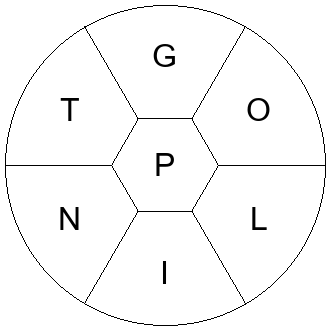
Genius requires between 37 and 60 words. You need at least an 8-letter word to reach genius. If you don't get the pangrams, you need 79% of the total points to reach genius. If you get the pangrams, you only need 66% of the remaining points to reach genius.

The button below will reveal a chart with the number of words by each letter. Red bars indicate that there is a pangram(s) starting with that letter.


How does this puzzle compare to other puzzles?

Today's score of 418 was in the 100th percentile of all puzzles.
The last time there was a score this high was on July 7, 2024.
The highest score ever was 537 on January 22, 2021.
The lowest score ever was 47 on March 27, 2023.

This puzzle's 72 possible answers rank it in the 99th percentile of all puzzles.
The last time there were more answers than this was on March 9, 2025.
The highest number of answers was 81 on June 8, 2019.
The lowest number of answers was 16 on March 27, 2023.

It takes an 8-letter word for genius.
The last time this happened was on July 17, 2025.

Today's puzzle has an average word length of 6.2.
For all Bees, the average word length has been 5.3.


Haven't I seen these letters before?

Hover over a letter to see its first and most recent appearance in the Bee!


Haven't I seen these words before?

The most common words in the Bee are:

  • noon 205
  • loll 200
  • toot 193
  • naan 175
  • nana 175
  • lilt 143
  • till 143
  • tilt 143
  • tint 138
  • nene 135
  • mama 134
  • mamma 134
  • acacia 129
  • acai 129
  • onto 127
  • toon 127
  • onion 123
  • anon 119
  • anal 118
  • olio 116
  • boob 113
  • booboo 113
  • dodo 113
  • poop 112
  • tact 112
  • papa 111
  • baba 110
  • call 108
  • calla 108
  • lull 108
  • lulu 108
  • mitt 107
  • ratatat 106
  • tart 106
  • tartar 106
  • attar 105
  • tatty 105
  • tattoo 104
  • ammo 103
  • cocci 103
  • momma 103
  • mono 103
  • moon 103
  • tutu 103
  • allay 102
  • ally 102
  • epee 100
  • loon 100
  • peep 100
  • roar 98


How long are words in the Bee?

There have been 104,319 answers ever accepted in the Bee - with 10,680 unique words.
Below are the distributions of the lengths of these words.


Valid dictionary words not in today's official answers

You may be wondering why these words aren't here*:

  • gipon
  • gipping
  • lipin
  • nonpoint
  • oping
  • piggin
  • pignoli
  • piing
  • pili
  • pingo
  • pinitol
  • pinon
  • pion
  • pipping
  • pitot
  • pogonip
  • ponging
  • pongo
  • pontil
  • ponton
  • pontooning
  • pooing
  • poon
  • poppling
  • potto
  • tinpot
  • topi
  • topo
  • topoi

*Because the New York Times considers them obscure or offensive.

gloop

noun
  1. Any gooey, viscous substance.
verb
  1. To flow like goo or goop, to move in a slushy way.
  2. To cover someone in gloop or goo.

glop

Etymology 1

verb
  1. To stare in amazement.

Etymology 2

noun
  1. Any gooey substance.
  2. A gooey blob of some substance.
verb
  1. To apply (a liquid) thickly and messily.
  2. To swallow greedily.

glopping

verb
  1. To stare in amazement.
verb
  1. To apply (a liquid) thickly and messily.
  2. To swallow greedily.

goop

noun
  1. (usually uncountable) A thick, slimy substance; goo.
  2. A silly, stupid, or boorish person.

lipo

noun
  1. Liposuction

lipping

verb
  1. To touch or grasp with the lips; to kiss; to lap the lips against (something).
  2. (of something inanimate) To touch lightly.
  3. To wash against a surface, lap.
  4. To rise or flow up to or over the edge of something.
  5. To form the rim, edge or margin of something.
  6. To utter verbally.
  7. To simulate speech by moving the lips without making any sound; to mouth.
  8. To make a golf ball hit the lip of the cup, without dropping in.
  9. To change the sound of (a musical note played on a wind instrument) by moving or tensing the lips.
noun
  1. Edging

lollipop

noun
  1. An item of confectionery consisting of a piece of candy/sweet attached to a stick.

lollop

verb
  1. To walk or move with a bouncing or undulating motion and at an unhurried pace.
  2. To act lazily, loll, lie around.

lolloping

verb
  1. To walk or move with a bouncing or undulating motion and at an unhurried pace.
  2. To act lazily, loll, lie around.
noun
  1. The motion of something that lollops.

loop

Etymology 1

noun
  1. A length of thread, line or rope that is doubled over to make an opening.
  2. The opening so formed.
  3. A shape produced by a curve that bends around and crosses itself.
  4. A ring road or beltway.
  5. An endless strip of tape or film allowing continuous repetition.
  6. A complete circuit for an electric current.
  7. A programmed sequence of instructions that is repeated until or while a particular condition is satisfied.
  8. An edge that begins and ends on the same vertex.
  9. A path that starts and ends at the same point.
  10. A bus or rail route, walking route, etc. that starts and ends at the same point.
  11. A place at a terminus where trains or trams can turn round and go back the other way without having to reverse; a balloon loop, turning loop, or reversing loop.
  12. A quasigroup with an identity element.
  13. A loop-shaped intrauterine device.
  14. An aerobatic maneuver in which an aircraft flies a circular path in a vertical plane.
  15. A small, narrow opening; a loophole.
  16. A flexible region in a protein's secondary structure.
noun
  1. A mass of iron in a pasty condition gathered into a ball for the tilt hammer or rolls.

Etymology 2

verb
  1. To form something into a loop.
  2. To fasten or encircle something with a loop.
  3. To fly an aircraft in a loop.
  4. To move something in a loop.
  5. To join electrical components to complete a circuit.
  6. To duplicate the route of a pipeline.
  7. To create an error in a computer program so that it runs in an endless loop and the computer freezes up.
  8. To form a loop.
  9. To move in a loop.

looping

Etymology 1

verb
  1. To form something into a loop.
  2. To fasten or encircle something with a loop.
  3. To fly an aircraft in a loop.
  4. To move something in a loop.
  5. To join electrical components to complete a circuit.
  6. To duplicate the route of a pipeline.
  7. To create an error in a computer program so that it runs in an endless loop and the computer freezes up.
  8. To form a loop.
  9. To move in a loop.
noun
  1. Something that loops; a looped pattern or action.

Etymology 2

noun
  1. The running together of ore into a mass, when the ore is only heated for calcination.

loping

verb
  1. To travel an easy pace with long strides.
  2. To jump, leap.

lopping

verb
  1. (usually with off) To cut off as the top or extreme part of anything, especially to prune a small limb off a shrub or tree, or sometimes to behead someone.
  2. To hang downward; to be pendent; to lean to one side.
  3. To allow to hang down.
noun
  1. The cutting off of branches, etc.
  2. That which is cut off; leavings.

nipping

verb
  1. To catch and enclose or compress tightly between two surfaces, or points which are brought together or closed; to pinch; to close in upon.
  2. To remove by pinching, biting, or cutting with two meeting edges of anything; to clip.
  3. To blast, as by frost; to check the growth or vigor of; to destroy.
  4. To annoy, as by nipping.
  5. To taunt.
  6. To squeeze or pinch.
  7. To steal; especially to cut a purse.
verb
  1. To make a quick, short journey or errand, usually a round trip.
noun
  1. The act or sensation of giving a nip.

opining

verb
  1. To have or express an opinion; to state as an opinion; to suppose, consider (that).
  2. To give one's formal opinion (on or upon something).
noun
  1. The act of giving one's opinion.

opinion

noun
  1. A subjective belief, judgment or perspective that a person has formed about a topic, issue, person or thing.
  2. The judgment or sentiment which the mind forms of persons or things; estimation.
  3. Favorable estimation; hence, consideration; reputation; fame; public sentiment or esteem.
  4. Obstinacy in holding to one's belief or impression; opiniativeness; conceitedness.
  5. The formal decision, or expression of views, of a judge, an umpire, a doctor, or other party officially called upon to consider and decide upon a matter or point submitted.
  6. (European Union law) a judicial opinion delivered by an Advocate General to the European Court of Justice where he or she proposes a legal solution to the cases for which the court is responsible
verb
  1. To have or express as an opinion.

opting

verb
  1. To choose; select.

option

noun
  1. One of a set of choices that can be made.
  2. The freedom or right to choose.
  3. A contract giving the holder the right to buy or sell an asset at a set strike price; can apply to financial market transactions, or to ordinary transactions for tangible assets such as a residence or automobile.
verb
  1. To purchase an option on something.
  2. To configure, by setting an option.

optioning

verb
  1. To purchase an option on something.
  2. To configure, by setting an option.

pigging

Etymology 1

verb
  1. (of swine) to give birth.
  2. To greedily consume (especially food).
  3. To huddle or lie together like pigs, in one bed.
  4. To clean (a pipeline) using a pig (the device).
noun
  1. The use of a pig (the device) to clean a pipeline.
adjective
  1. Damned (used as a mild intensive).

Etymology 2

noun
  1. A small pail, can or ladle with the handle on the side; a lading-can. In the colonial era, some buckets were made like a small barrel, but with one stave left extra long. This stave would be carved into a handle so the bucket could be used as an oversized scoop for scattering grain, slopping the hogs, etc.

piling

verb
  1. (often used with the preposition "up") To lay or throw into a pile or heap; to heap up; to collect into a mass; to accumulate
  2. To cover with heaps; or in great abundance; to fill or overfill; to load.
  3. To add something to a great number.
  4. (of vehicles) To create a hold-up.
  5. To place (guns, muskets, etc.) together in threes so that they can stand upright, supporting each other.
verb
  1. To drive piles into; to fill with piles; to strengthen with piles.
verb
  1. To give a pile to; to make shaggy.
noun
  1. A structural support comprising a length of wood, steel, or other construction material.
  2. The act of heaping up.
  3. (ironworking) The process of building up, heating, and working fagots or piles to form bars, etc.

pill

Etymology 1

noun
  1. A small, usually round or cylindrical object designed for easy swallowing, usually containing some sort of medication.
  2. (definite, i.e. used with "the") Contraceptive medication, usually in the form of a pill to be taken by a woman; an oral contraceptive pill.
  3. A comical or entertaining person.
  4. A contemptible, annoying, or unpleasant person.
  5. A small piece of any substance, for example a ball of fibres formed on the surface of a textile by rubbing.
  6. A baseball.
  7. A bullet (projectile).
  8. A rounded rectangle indicating the tag or category that an item belongs to.
verb
  1. Of a woven fabric surface, to form small matted balls of fiber.
  2. To form into the shape of a pill.
  3. To medicate with pills.
  4. To persuade or convince someone of something.

Etymology 2

noun
  1. The peel or skin.
verb
  1. To peel; to remove the outer layer of hair, skin, or bark.
  2. To peel; to make by removing the skin.
  3. To be peeled; to peel off in flakes.
  4. To pillage; to despoil or impoverish.

Etymology 3

noun
  1. An inlet on the coast; a small tidal pool or bay.

pilling

verb
  1. Of a woven fabric surface, to form small matted balls of fiber.
  2. To form into the shape of a pill.
  3. To medicate with pills.
  4. To persuade or convince someone of something.
verb
  1. To peel; to remove the outer layer of hair, skin, or bark.
  2. To peel; to make by removing the skin.
  3. To be peeled; to peel off in flakes.
  4. To pillage; to despoil or impoverish.
noun
  1. Balls of fibre formed on clothing through usage, often called pill or pills.

pillion

noun
  1. A pad behind the saddle of a horse for a second rider.
  2. A similar second saddle on a motorcycle for a passenger.
  3. The person riding in the pillion.
  4. The cushion of a saddle.
verb
  1. To ride on a pillion.
  2. To put a pillion on a horse.
adverb
  1. Riding behind the driving rider, as when positioned on the rump of a mount.

pilot

noun
  1. A person who steers a ship, a helmsman.
  2. A person who knows well the depths and currents of a harbor or coastal area, who is hired by a vessel to help navigate the harbor or coast.
  3. A guide book for maritime navigation.
  4. An instrument for detecting the compass error.
  5. A pilot vehicle.
  6. A person authorised to drive such a vehicle during an escort.
  7. A guide or escort through an unknown or dangerous area.
  8. Something serving as a test or trial.
  9. A person who is in charge of the controls of an aircraft.
  10. A sample episode of a proposed TV series produced to decide if it should be made or not. If approved, typically the first episode of an actual TV series.
  11. A cowcatcher.
  12. A pilot light.
  13. One who flies a kite.
  14. A short plug, sometimes made interchangeable, at the end of a counterbore to guide the tool.
verb
  1. To control (an aircraft or watercraft).
  2. To guide (a vessel) through coastal waters.
  3. To test or have a preliminary trial of (an idea, a new product, etc.)
adjective
  1. Made or used as a test or demonstration of capability.
  2. Used to control or activate another device.
  3. Being a vehicle to warn other road users of the presence of an oversize vehicle/combination.

piloting

verb
  1. To control (an aircraft or watercraft).
  2. To guide (a vessel) through coastal waters.
  3. To test or have a preliminary trial of (an idea, a new product, etc.)
noun
  1. The form of navigation in which position is determined by relation to external reference points

ping

noun
  1. A high-pitched, short and somewhat sharp sound.
  2. (submarine navigation) A pulse of high-pitched or ultrasonic sound whose echoes provide information about nearby objects and vessels.
  3. A packet which a remote host is expected to echo, thus indicating its presence.
  4. An email or other message sent requesting acknowledgement.
  5. Latency.
  6. A means of highlighting a feature on the game map so that allied players can see it.
  7. (WMF jargon) A notification.
verb
  1. To make a high-pitched, short and somewhat sharp sound.
  2. (submarine navigation) To emit a signal and then listen for its echo in order to detect objects.
  3. To send a packet in order to determine whether a host is present, particularly by use of the ping utility.
  4. (by extension) To send an email or other message to someone in hopes of eliciting a response.
  5. To flick.
  6. To bounce.
  7. To cause something to bounce.
  8. To call out audibly.
  9. To penalize.

pinging

verb
  1. To make a high-pitched, short and somewhat sharp sound.
  2. (submarine navigation) To emit a signal and then listen for its echo in order to detect objects.
  3. To send a packet in order to determine whether a host is present, particularly by use of the ping utility.
  4. (by extension) To send an email or other message to someone in hopes of eliciting a response.
  5. To flick.
  6. To bounce.
  7. To cause something to bounce.
  8. To call out audibly.
  9. To penalize.
noun
  1. The sound of a ping.
  2. The act of sending a ping, as by a submarine or over a computer network.

pining

verb
  1. To languish; to lose flesh or wear away through distress.
  2. To long, to yearn so much that it causes suffering.
  3. To grieve or mourn for.
  4. To inflict pain upon; to torment.
noun
  1. The act of one who pines.

pinion

Etymology 1

noun
  1. A wing.
  2. The joint of a bird's wing farthest from the body.
  3. Any of the outermost primary feathers on a bird's wing.
  4. A moth of the genus Lithophane.
  5. A fetter for the arm.
verb
  1. To cut off the pinion of a bird’s wing, or otherwise disable or bind its wings, in order to prevent it from flying.
  2. To bind the arms of someone, so as to deprive him of their use; to disable by so binding.
  3. (transferred sense) To restrain; to limit.

Etymology 2

noun
  1. The smallest gear in a gear train.

pinioning

verb
  1. To cut off the pinion of a bird’s wing, or otherwise disable or bind its wings, in order to prevent it from flying.
  2. To bind the arms of someone, so as to deprive him of their use; to disable by so binding.
  3. (transferred sense) To restrain; to limit.

pinning

verb
  1. To shape metal by striking it, especially with a peen.
verb
  1. (often followed by a preposition such as "to" or "on") To fasten or attach (something) with a pin.
  2. (usually in the passive) To cause (a piece) to be in a pin.
  3. To pin down (someone).
  4. To enclose; to confine; to pen; to pound.
  5. To attach (an icon, application, etc.) to another item.
  6. To fix (an array in memory, a security certificate, etc.) so that it cannot be modified.
  7. To cause an analog gauge to reach the stop pin at the high end of the range.
noun
  1. The action of the verb pin in any sense.
  2. A ceremony in which a pin badge is given.
  3. The establishment of the definite quantum state of a particle, or of the occupation number of a system of particles

pinot

noun
  1. Any of several grape varieties grown in Europe and North America.
  2. (by extension) Any of several wines made from these grapes.

pinpoint

noun
  1. The point of a pin.
verb
  1. To identify or locate precisely or with great accuracy.
adjective
  1. Extremely precise or specific, especially regarding location.

pinpointing

verb
  1. To identify or locate precisely or with great accuracy.

pint

noun
  1. A unit of volume, equivalent to:
  2. (metonym) A pint of milk.
  3. (metonymy) A glass of beer or cider, served by the pint.

pinto

noun
  1. A horse with a patchy coloration that includes white.
adjective
  1. Pied, mottled.

piping

verb
  1. To play (music) on a pipe instrument, such as a bagpipe or a flute.
  2. To shout loudly and at high pitch.
  3. To emit or have a shrill sound like that of a pipe; to whistle.
  4. Of a metal ingot: to become hollow in the process of solidifying.
  5. To convey or transport (something) by means of pipes.
  6. To install or configure with pipes.
  7. To dab moisture away from.
  8. To lead or conduct as if by pipes, especially by wired transmission.
  9. To directly feed (the output of one program) as input to another program, indicated by the pipe character (pipe) at the command line.
  10. To create or decorate with piping (icing).
  11. To order or signal by a note pattern on a boatswain's pipe.
  12. (of a male) To have sexual intercourse with a female.
  13. To see.
noun
  1. The process of an animal just beginning to break out of its egg; precedes hatching.
  2. The sound of musical pipes.
  3. An act of making music or noise with pipes.
  4. A system of pipes that compose a structure; pipework.
  5. An ornamentation on the edges of a garment; a small cord covered with cloth.
  6. Icing extruded from a piping bag.
  7. A piece cut off to be set or planted; a cutting.
  8. Propagation by cuttings
adjective
  1. High-pitched.

pipit

noun
  1. Any of various small passerine birds, mainly from the genus Anthus, that are often drab, ground feeding insectivores of open country.

pippin

Etymology 1

noun
  1. A seed

Etymology 2

noun
  1. Any of several varieties of eating apple that have a yellow or green skin with patches of red
  2. Any of several roundish or oblate apple varieties
  3. An apple tree raised from a seed (not grafted)

piton

noun
  1. A spike, wedge, or peg that is driven into a rock or ice surface as a support (as for a mountain climber).
verb
  1. To put pitons into a rock/ice to facilitate climbing.

pitting

verb
  1. To make pits in; to mark with little hollows.
  2. To put (an animal) into a pit for fighting.
  3. To bring (something) into opposition with something else.
  4. To return to the pits during a race for refuelling, tyre changes, repairs etc.
verb
  1. To remove the stone from a stone fruit or the shell from a drupe.
noun
  1. The formation of pits on a surface because of corrosion.
  2. The digging of a pit.

plop

noun
  1. A sound or action like liquid hitting a hard surface, or an object falling into a body of water.
  2. Excrement; derived from the "plop" sound made when it hits water in a toilet.
verb
  1. To make the sound of an object dropping into a body of liquid.
  2. To land heavily or loosely.
  3. To defecate; derived from the "plop" sound made when excrement hits water in a toilet.

plopping

verb
  1. To make the sound of an object dropping into a body of liquid.
  2. To land heavily or loosely.
  3. To defecate; derived from the "plop" sound made when excrement hits water in a toilet.
noun
  1. The sound or action of something that plops.

plot

noun
  1. (authorship) The course of a story, comprising a series of incidents which are gradually unfolded, sometimes by unexpected means.
  2. An area or land used for building on or planting on.
  3. A graph or diagram drawn by hand or produced by a mechanical or electronic device.
  4. A secret plan to achieve an end, the end or means usually being illegal or otherwise questionable.
  5. Contrivance; deep reach thought; ability to plot or intrigue.
  6. Participation in any stratagem or conspiracy.
  7. A plan; a purpose.
verb
  1. To conceive (a crime, etc).
  2. To trace out (a graph or diagram).
  3. To mark (a point on a graph, chart, etc).
  4. To conceive a crime, misdeed, etc.

plotting

verb
  1. To conceive (a crime, etc).
  2. To trace out (a graph or diagram).
  3. To mark (a point on a graph, chart, etc).
  4. To conceive a crime, misdeed, etc.
noun
  1. The act of scheming or making plots; machination.

pogo

Etymology 1

noun
  1. A dance associated with the 1970s punk rock movement in which participants jump up and down on the spot in the manner of someone riding a pogo stick.
  2. The act of lifting the front wheel of the bicycle in the air and jumping up and down on the rear wheel while in a stationary position.
verb
  1. To use a pogo stick.
  2. To dance the pogo.
  3. To lift the front wheel of the bicycle in the air and jump up and down on the rear wheel while in a stationary position.
  4. To move rapidly up and down like a pogo stick.

Etymology 2

noun
  1. A corndog on a stick.

pogoing

verb
  1. To use a pogo stick.
  2. To dance the pogo.
  3. To lift the front wheel of the bicycle in the air and jump up and down on the rear wheel while in a stationary position.
  4. To move rapidly up and down like a pogo stick.

point

Etymology 1

noun
  1. A discrete division of something.
  2. A sharp extremity.
  3. One of the several different parts of the escutcheon.
  4. A short piece of cordage used in reefing sails.
  5. A string or lace used to tie together certain garments.
  6. Lace worked by the needle.
  7. An item of private information; a hint; a tip; a pointer.
  8. The attitude assumed by a pointer dog when he finds game.
  9. The perpendicular rising of a hawk over the place where its prey has gone into cover.
  10. The act of pointing, as of the foot downward in certain dance positions.
  11. The gesture of extending the index finger in a direction in order to indicate something.
  12. A vaccine point.
  13. In various sports, a position of a certain player, or, by extension, the player occupying that position.

Etymology 2

verb
  1. To extend the index finger in the direction of something in order to show where it is or to draw attention to it.
  2. To draw attention to something or indicate a direction.
  3. To face in a particular direction.
  4. (sometimes figurative) To direct toward an object; to aim.
  5. To give a point to; to sharpen; to cut, forge, grind, or file to an acute end.
  6. To indicate a probability of something.
  7. To repair mortar.
  8. To fill up and finish the joints of (a wall), by introducing additional cement or mortar, and bringing it to a smooth surface.
  9. (stone-cutting) To cut, as a surface, with a pointed tool.
  10. To direct or encourage (someone) in a particular direction.
  11. To separate an integer from a decimal with a decimal point.
  12. To mark with diacritics.
  13. To supply with punctuation marks; to punctuate.
  14. To direct the central processing unit to seek information at a certain location in memory.
  15. To direct requests sent to a domain name to the IP address corresponding to that domain name.
  16. To sail close to the wind.
  17. To indicate the presence of game by a fixed and steady look, as certain hunting dogs do.
  18. (of an abscess) To approximate to the surface; to head.
  19. To give point to (something said or done); to give particular prominence or force to.

Etymology 3

verb
  1. To appoint.

pointing

verb
  1. To extend the index finger in the direction of something in order to show where it is or to draw attention to it.
  2. To draw attention to something or indicate a direction.
  3. To face in a particular direction.
  4. (sometimes figurative) To direct toward an object; to aim.
  5. To give a point to; to sharpen; to cut, forge, grind, or file to an acute end.
  6. To indicate a probability of something.
  7. To repair mortar.
  8. To fill up and finish the joints of (a wall), by introducing additional cement or mortar, and bringing it to a smooth surface.
  9. (stone-cutting) To cut, as a surface, with a pointed tool.
  10. To direct or encourage (someone) in a particular direction.
  11. To separate an integer from a decimal with a decimal point.
  12. To mark with diacritics.
  13. To supply with punctuation marks; to punctuate.
  14. To direct the central processing unit to seek information at a certain location in memory.
  15. To direct requests sent to a domain name to the IP address corresponding to that domain name.
  16. To sail close to the wind.
  17. To indicate the presence of game by a fixed and steady look, as certain hunting dogs do.
  18. (of an abscess) To approximate to the surface; to head.
  19. To give point to (something said or done); to give particular prominence or force to.
verb
  1. To appoint.
noun
  1. The action of the verb to point.
  2. (usually singular or collective, sometimes proscribed) Mortar that has been placed between bricks to hold them together.
  3. The act or art of punctuating; punctuation.
  4. The rubbing off of the point of the wheat grain in the first process of high milling.
  5. The act or process of measuring, at the various distances from the surface of a block of marble, the surface of a future piece of statuary; also, a process used in cutting the statue from the artist's model.

poling

verb
  1. To propel by pushing with poles, to push with a pole.
  2. To identify something quite precisely using a telescope.
  3. To furnish with poles for support.
  4. To convey on poles.
  5. To stir, as molten glass, with a pole.
  6. To strike (the ball) very hard.
verb
  1. To induce piezoelectricity in (a substance) by aligning the dipoles.
noun
  1. The act of supporting or of propelling by means of a pole or poles.
  2. The operation of dispersing wormcasts over the walks with poles.
  3. One of the poles or planks used in upholding the side earth in excavating a tunnel, ditch, etc.

polio

noun
  1. A sufferer from poliomyelitis.
noun
  1. Acute infection by the poliovirus, especially of the motor neurons in the spinal cord and brainstem, leading to muscle weakness, paralysis and sometimes deformity.

poll

Etymology 1

noun
  1. A survey of people, usually statistically analyzed to gauge wider public opinion.
  2. A formal election.
  3. A polling place (usually as plural, polling places)
  4. (now rare outside veterinary medicine contexts) The head, particularly the scalp or pate upon which hair (normally) grows.
  5. (in extended senses of the above) A mass of people, a mob or muster, considered as a head count.
  6. The broad or butt end of an axe or a hammer.
  7. The pollard or European chub, a kind of fish.
verb
  1. To take, record the votes of (an electorate).
  2. To solicit mock votes from (a person or group).
  3. To vote at an election.
  4. To register or deposit, as a vote; to elicit or call forth, as votes or voters.
  5. To cut off; to remove by clipping, shearing, etc.; to mow or crop.
  6. To cut the hair of (a creature).
  7. To remove the horns of (an animal).
  8. To remove the top or end of; to clip; to lop.
  9. (communication) To (repeatedly) request the status of something (such as a computer or printer on a network).
  10. (with adverb) To be judged in a poll.
  11. To extort from; to plunder; to strip.
  12. To impose a tax upon.
  13. To pay as one's personal tax.
  14. To enter, as polls or persons, in a list or register; to enroll, especially for purposes of taxation; to enumerate one by one.
  15. To cut or shave smooth or even; to cut in a straight line without indentation.
adjective
  1. (of kinds of livestock which typically have horns) Bred without horns, and thus hornless.

Etymology 2

noun
  1. A pet parrot.

Etymology 3

noun
  1. (Cambridge University) One who does not try for honors at university, but is content to take a degree merely; a passman.

polling

verb
  1. To take, record the votes of (an electorate).
  2. To solicit mock votes from (a person or group).
  3. To vote at an election.
  4. To register or deposit, as a vote; to elicit or call forth, as votes or voters.
  5. To cut off; to remove by clipping, shearing, etc.; to mow or crop.
  6. To cut the hair of (a creature).
  7. To remove the horns of (an animal).
  8. To remove the top or end of; to clip; to lop.
  9. (communication) To (repeatedly) request the status of something (such as a computer or printer on a network).
  10. (with adverb) To be judged in a poll.
  11. To extort from; to plunder; to strip.
  12. To impose a tax upon.
  13. To pay as one's personal tax.
  14. To enter, as polls or persons, in a list or register; to enroll, especially for purposes of taxation; to enumerate one by one.
  15. To cut or shave smooth or even; to cut in a straight line without indentation.
noun
  1. The action of taking a poll.
  2. A technique that continually interrogates a peripheral or service to see if it has data to transfer.
  3. The process of voting in an election.

polo

Etymology 1

noun
  1. A ball game where two teams of players on horseback use long-handled mallets to propel the ball along the ground and into their opponent's goal.
  2. The ice polo, one of the ancestors of ice hockey; a similar game played on the ice, or on a prepared floor, by players wearing skates.
  3. A polo shirt.

Etymology 2

noun
  1. A Spanish gypsy dance characterized by energetic movements of the body while the feet merely shuffle or glide, with unison singing and rhythmic clapping of hands.

Etymology 3

noun
  1. A dress shirt.

pong

Etymology 1

noun
  1. A stench, a bad smell.
verb
  1. To stink, to smell bad.
  2. To deliver a line of a play in an arch, suggestive or unnatural way, so as to draw undue attention to it.

Etymology 2

noun
  1. A packet sent in reply to a ping, thereby indicating the presence of a host.

Etymology 3

noun
  1. A set of three identical tiles.

pontoon

Etymology 1

noun
  1. A flat-bottomed boat used as a support for a temporary bridge.
  2. A floating structure supporting a bridge or dock.
  3. A box used to raise a sunken vessel.
  4. A float of a seaplane.
  5. A lighter or barge used for loading or unloading ships.

Etymology 2

noun
  1. A card game in which the object is to obtain cards whose value adds up to, or nearly to, 21 but not exceed it.

pool

Etymology 1

noun
  1. A small and rather deep collection of (usually) fresh water, as one supplied by a spring, or occurring in the course of a stream; a reservoir for water.
  2. A small body of standing or stagnant water; a puddle.
  3. A supply of resources.
  4. (by extension) A set of resources that are kept ready to use.
  5. A small amount of liquid on a surface.
  6. A localized glow of light.
verb
  1. (of a liquid) To form a pool.
noun
  1. A pool of water used for swimming, usually one which has been artificially constructed.

Etymology 2

noun
  1. (game) A game at billiards, in which each of the players stakes a certain sum, the winner taking the whole; also, in public billiard rooms, a game in which the loser pays the entrance fee for all who engage in the game.
  2. A cue sport played on a pool table. There are 15 balls, 7 of one colour, 7 of another, and the black ball (also called the 8 ball). A player must pocket all their own colour balls and then the black ball in order to win.
  3. In rifle shooting, a contest in which each competitor pays a certain sum for every shot he makes, the net proceeds being divided among the winners.
  4. Any gambling or commercial venture in which several persons join.
  5. The stake played for in certain games of cards, billiards, etc.; an aggregated stake to which each player has contributed a share; also, the receptacle for the stakes.
  6. A combination of persons contributing money to be used for the purpose of increasing or depressing the market price of stocks, grain, or other commodities; also, the aggregate of the sums so contributed.
  7. A set of players in quadrille etc.
  8. A mutual arrangement between competing lines, by which the receipts of all are aggregated, and then distributed pro rata according to agreement.
  9. An aggregation of properties or rights, belonging to different people in a community, in a common fund, to be charged with common liabilities.
verb
  1. To put together; contribute to a common fund, on the basis of a mutual division of profits or losses; to make a common interest of.
  2. To combine or contribute with others, as for a commercial, speculative, or gambling transaction.

pooling

verb
  1. (of a liquid) To form a pool.
verb
  1. To put together; contribute to a common fund, on the basis of a mutual division of profits or losses; to make a common interest of.
  2. To combine or contribute with others, as for a commercial, speculative, or gambling transaction.
noun
  1. (resource management) Grouping together of various resources or assets.

poop

Etymology 1

noun
  1. Fecal matter, feces.
  2. The sound of a steam engine's whistle; typically low pitch.
verb
  1. To make a short blast on a horn
  2. To break wind.
  3. To defecate.

Etymology 2

noun
  1. A set of data or general information, written or spoken, usually concerning machinery or a process.

Etymology 3

verb
  1. To tire, exhaust. Often used with out.

Etymology 4

noun
  1. The stern of a ship.
  2. The poop deck.
verb
  1. To break seawater with the poop of a vessel, especially the poop deck.
  2. To embark a ship over the stern.

Etymology 5

noun
  1. A slothful person.

pooping

verb
  1. To make a short blast on a horn
  2. To break wind.
  3. To defecate.
verb
  1. To tire, exhaust. Often used with out.
verb
  1. To break seawater with the poop of a vessel, especially the poop deck.
  2. To embark a ship over the stern.
noun
  1. The act of a wave (or other vessel) striking the stern of a vessel.

poplin

noun
  1. A fabric of many varieties, usually made of silk and worsted; used especially for women's dresses.

popping

verb
  1. To make a pop, or sharp, quick sound.
  2. To burst (something) with a popping sound.
  3. (with in, out, upon, etc.) To enter, or issue forth, with a quick, sudden movement; to move from place to place suddenly; to dart.
  4. To place (something) (somewhere); to move or position (something) with a short movement.
  5. (often with over, round, along, etc.) To make a short trip or visit.
  6. To stand out; to be distinctive to the senses.
  7. To hit (something or someone).
  8. To shoot (usually somebody) with a firearm.
  9. To ejaculate.
  10. To remove (a data item) from the top of a stack.
  11. To remove a data item from the top of (a stack).
  12. To pawn (something) (to raise money).
  13. To swallow or consume (especially a tablet of a drug, sometimes extended to other small items such as sweets or candy).
  14. To perform (a move or stunt) while riding a board or vehicle.
  15. (of the ears) To undergo equalization of pressure when the Eustachian tubes open.
noun
  1. The act or sound of something that pops.
  2. A funk dance.

potion

noun
  1. A small portion or dose of a liquid which is medicinal, poisonous, or magical.
verb
  1. To drug.

potting

verb
  1. To put (something) into a pot.
  2. To preserve by bottling or canning.
  3. To cause a ball to fall into a pocket.
  4. To be capable of being potted.
  5. To shoot with a firearm.
  6. To take a pot shot, or haphazard shot, with a firearm.
  7. To secure; gain; win; bag.
  8. To send someone to gaol, expeditiously.
  9. To tipple; to drink.
  10. To drain (e.g. sugar of the molasses) in a perforated cask.
  11. To seat a person, usually a young child, on a potty or toilet, typically during toilet teaching.
  12. To apply a plaster cast to a broken limb.
noun
  1. The placing of something in a pot.

tipi

noun
  1. Alternative form of teepee

tipping

verb
  1. To provide with a tip; to cover the tip of.
verb
  1. (To cause) to become knocked over, fall down or overturn.
  2. (To cause) to be, or come to be, in a tilted or sloping position; (to cause) to become unbalanced.
  3. To drink.
  4. To dump (refuse).
  5. To pour a libation or a liquid from a container, particularly from a forty of malt liquor.
  6. To deflect with one′s fingers, especially one′s fingertips.
verb
  1. To hit quickly and lightly; to tap.
verb
  1. To give a small gratuity to, especially to an employee of someone who provides a service.
  2. To give, pass.
verb
  1. To give a piece of private information to; to inform (someone) of a clue, secret knowledge, etc.
noun
  1. The practice of leaving a tip (gratuity).
  2. The act by which something is tipped or inclined.
  3. The dumping of rubbish.
  4. A distinct articulation given in playing quick notes on the flute, by striking the tongue against the roof of the mouth; double-tonguing.

tippling

verb
  1. To sell alcoholic liquor by retail.
  2. To drink too much alcohol.
  3. To drink alcohol regularly or habitually, but not to excess.
  4. To put up (hay, etc.) in bundles in order to dry it.
  5. To fall over; to topple.
noun
  1. A session of drinking alcohol.

tiptop

noun
  1. The very topmost point.
  2. The highest or utmost degree; the best of anything.
adverb
  1. Excellently; in a first-rate manner.

toping

verb
  1. To drink excessively; to get drunk.

topping

verb
  1. To cover on the top or with a top.
  2. To cut or remove the top (as of a tree)
  3. To excel, to surpass, to beat.
  4. To be in the lead, to be at number one position (of).
  5. To commit suicide.
  6. To murder.
  7. (BDSM) To be the dominant partner in a BDSM relationship or roleplay.
  8. (gay sexuality) To be the partner who penetrates in anal sex.
  9. (gay sexuality) To anally penetrate.
  10. To rise aloft; to be eminent; to tower.
  11. To predominate.
  12. To excel; to rise above others.
  13. To raise one end of (a yard, etc.), making it higher than the other.
  14. (dyeing) To cover with another dye.
  15. To put a stiffening piece or back on (a saw blade).
  16. To arrange (fruit, etc.) with the best on top.
  17. (of a horse) To strike the top of (an obstacle) with the hind feet while jumping, so as to gain new impetus.
  18. To improve (domestic animals, especially sheep) by crossing certain individuals or breeds with other superior breeds.
  19. To cut, break, or otherwise take off the top of (a steel ingot) to remove unsound metal.
  20. To strike (the ball) above the centre; also, to make (a stroke, etc.) by hitting the ball in this way.
noun
  1. Any food item added on top of another, such as sprinkles on ice cream or pepperoni on pizza.
  2. The act of cutting off the top of something.
  3. The act of raising one extremity of a spar higher than the other.
  4. Either of the cables that support the ends of a spar or boom.
  5. The tail of an artificial fly.
adjective
  1. Wonderful
  2. Assuming superiority; proud.

toppling

verb
  1. To push, throw over, overturn or overthrow something
  2. To totter and fall, or to lean as if about to do so
noun
  1. The act by which something is toppled.