Thursday, August 14, 2025

Answers to yesterday's Bee

Jump to answers for


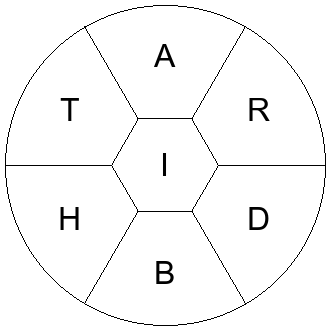
The official answers for today's puzzle are:

Click on the arrow to show the definition.
Click outside the pop-up to close it.


Number of Pangrams: 1

Maximum Puzzle Score: 124

Number of Answers: 28

Points Needed for Genius: 87

Genius requires between 15 and 24 words. You need at least a 6-letter word to reach genius. If you don't get the pangram, you need 80% of the total points to reach genius. If you get the pangram, you only need 66% of the remaining points to reach genius.

Other days with this pangram:

The button below will reveal a chart with the number of words by each letter. Red bars indicate that there is a pangram(s) starting with that letter.


How does this puzzle compare to other puzzles?

Today's score of 124 was in the 26th percentile of all puzzles.
The last time there was a score this low was on August 11, 2025.
The highest score ever was 537 on January 22, 2021.
The lowest score ever was 47 on March 27, 2023.

This puzzle's 28 possible answers rank it in the 20th percentile of all puzzles.
The last time there were fewer answers than this was on August 5, 2025.
The highest number of answers was 81 on June 8, 2019.
The lowest number of answers was 16 on March 27, 2023.

It takes a 6-letter word for genius.
The last time this happened was on August 11, 2025.

Today's puzzle has an average word length of 5.0.
For all Bees, the average word length has been 5.3.


Haven't I seen these letters before?

Hover over a letter to see its first and most recent appearance in the Bee!


Haven't I seen these words before?

The most common words in the Bee are:

  • noon 208
  • loll 201
  • toot 193
  • naan 177
  • nana 177
  • lilt 144
  • till 144
  • tilt 144
  • tint 138
  • nene 137
  • mama 135
  • mamma 135
  • acacia 130
  • acai 130
  • onto 127
  • toon 127
  • onion 124
  • anon 120
  • anal 119
  • olio 116
  • dodo 115
  • tact 114
  • boob 113
  • booboo 113
  • papa 112
  • poop 112
  • baba 111
  • lull 110
  • lulu 110
  • call 108
  • calla 108
  • mitt 108
  • ratatat 106
  • tart 106
  • tartar 106
  • tutu 106
  • attar 105
  • mono 105
  • moon 105
  • tatty 105
  • ammo 104
  • cocci 104
  • momma 104
  • tattoo 104
  • allay 103
  • ally 103
  • loon 101
  • epee 100
  • peep 100
  • roar 99


How long are words in the Bee?

There have been 105,386 answers ever accepted in the Bee - with 10,716 unique words.
Below are the distributions of the lengths of these words.


Valid dictionary words not in today's official answers

You may be wondering why these words aren't here*:

  • abri
  • adhibit
  • adit
  • airt
  • airth
  • arriba
  • attrit
  • babbitt
  • baidar
  • baith
  • bibb
  • bidi
  • birr
  • bitt
  • briard
  • brit
  • brith
  • britt
  • dahabiah
  • dita
  • hadith
  • irid
  • raia
  • riata
  • ritard
  • tabid
  • thir
  • titbit
  • titi

*Because the New York Times considers them obscure or offensive.

aria

noun
  1. A musical piece written typically for a solo voice with orchestral accompaniment in an opera or cantata.

arid

adjective
  1. Very dry.
  2. Describing a very dry climate. Typically defined as less than 25 cm or 10 inches of rainfall annually.
  3. Devoid of value.

atria

noun
  1. A central room or space in ancient Roman homes, open to the sky in the middle; a similar space in other buildings.
  2. A square hall lit by daylight from above, into which rooms open at one or more levels.
  3. A cavity, entrance, or passage.
  4. Any enclosed sexine and nexine layers, widening toward the interior of the grain.

bait

Etymology 1

noun
  1. Any substance, especially food, used in catching fish, or other animals, by alluring them to a hook, snare, trap, or net.
  2. Food containing poison or a harmful additive to kill animals that are pests.
  3. Anything which allures; something used to lure or entice someone or something into doing something
  4. A portion of food or drink, as a refreshment taken on a journey; also, a stop for rest and refreshment.
verb
  1. To attract with bait; to entice.
  2. To affix bait to a trap or a fishing hook or fishing line.

Etymology 2

verb
  1. To set dogs on (an animal etc.) to bite or worry; to attack with dogs, especially for sport.
  2. To intentionally annoy, torment, or threaten by constant rebukes or threats; to harass.
  3. To feed and water (a horse or other animal), especially during a journey.
  4. (of a horse or other animal) To take food, especially during a journey.
  5. (of a person) To stop to take a portion of food and drink for refreshment during a journey.

Etymology 3

verb
  1. To flap the wings; to flutter as if to fly; or to hover, as a hawk when she stoops to her prey.

Etymology 4

adjective
  1. Obvious; blatant.
  2. Well-known; famous; renowned.

bird

Etymology 1

noun
  1. A member of the class of animals Aves in the phylum Chordata, characterized by being warm-blooded, having feathers and wings usually capable of flight, and laying eggs.
  2. A man, fellow.
  3. A girl or woman, especially one considered sexually attractive.
  4. Girlfriend.
  5. An airplane.
  6. A satellite.
  7. A chicken; the young of a fowl; a young eaglet; a nestling.
verb
  1. To observe or identify wild birds in their natural environment.
  2. To catch or shoot birds.
  3. To seek for game or plunder; to thieve.

Etymology 2

noun
  1. A prison sentence.
  2. A yardbird
verb
  1. To bring into prison, to roof.

Etymology 3

noun
  1. The vulgar hand gesture in which the middle finger is extended.

birdbath

noun
  1. A shallow basin, sometimes ornamental, filled with water for wild birds to drink from or bathe in.
  2. Random, inconsequential amounts of residual water on a roof membrane.

birth

noun
  1. The process of childbearing; the beginning of life.
  2. An instance of childbirth.
  3. A beginning or start; a point of origin.
  4. The circumstances of one's background, ancestry, or upbringing.
  5. That which is born.
verb
  1. To bear or give birth to (a child).
  2. To produce, give rise to.
adjective
  1. A familial relationship established by childbirth.

braid

Etymology 1

noun
  1. A sudden movement; a jerk, a wrench.
  2. A weave of three or more strands of fibers, ribbons, cords or hair often for decoration.
  3. A stranded wire composed of a number of smaller wires twisted together
  4. A tubular sheath made of braided strands of metal placed around a central cable for shielding against electromagnetic interference.
  5. A fancy; freak; caprice.
verb
  1. To make a sudden movement with, to jerk.
  2. To start into motion.
  3. To weave together, intertwine (strands of fibers, ribbons, etc.); to arrange (hair) in braids.
  4. To mix, or make uniformly soft, by beating, rubbing, or straining, as in preparing food.
  5. To reproach; to upbraid.

Etymology 2

adjective
  1. Deceitful.

briar

Etymology 1

noun
  1. Any of many plants with thorny stems growing in dense clusters, such as many in the Rosa, Rubus, and Smilax genera.
  2. Anything sharp or unpleasant to the feelings.

Etymology 2

noun
  1. The white heath, Erica arborea, a thorny Mediterranean shrub.
  2. A pipe for smoking, made from the roots of that shrub.

dirt

noun
  1. Soil or earth.
  2. A stain or spot (on clothes etc); any foreign substance that worsens appearance.
  3. Previously unknown facts, or the invented "facts", about a person.
  4. Meanness; sordidness.
  5. In placer mining, earth, gravel, etc., before washing.
  6. Freckles
verb
  1. To make foul or filthy; soil; befoul; dirty

drib

No Definition Found.

habit

Etymology 1

noun
  1. An action performed on a regular basis.
  2. An action performed repeatedly and automatically, usually without awareness.
  3. A long piece of clothing worn by monks and nuns.
  4. A piece of clothing worn uniformly for a specific activity.
  5. Outward appearance; attire; dress.
  6. Form of growth or general appearance of a variety or species of plant or crystal.
  7. An addiction.

Etymology 2

verb
  1. To clothe.
  2. To inhabit.

habitat

noun
  1. Conditions suitable for an organism or population of organisms to live.
  2. A place or type of site where an organism or population naturally occurs.
  3. A terrestrial or aquatic area distinguished by geographic, abiotic and biotic features, whether entirely natural or semi-natural.
  4. A place in which a person lives.

hair

noun
  1. A pigmented filament of keratin which grows from a follicle on the skin of humans and other mammals.
  2. The collection or mass of such growths growing from the skin of humans and animals, and forming a covering for a part of the head or for any part or the whole body.
  3. A slender outgrowth from the chitinous cuticle of insects, spiders, crustaceans, and other invertebrates. Such hairs are totally unlike those of vertebrates in structure, composition, and mode of growth.
  4. A cellular outgrowth of the epidermis, consisting of one or of several cells, whether pointed, hooked, knobbed, or stellated.
  5. A locking spring or other safety device in the lock of a rifle, etc., capable of being released by a slight pressure on a hair-trigger.
  6. Haircloth; a hair shirt.
  7. Any very small distance, or degree; a hairbreadth.
  8. Complexity; difficulty; quality of being hairy
verb
  1. To remove the hair from.
  2. To grow hair (where there was a bald spot).
  3. To cause to have hair; to provide with hair
  4. To string the bow for a violin.

rabbi

noun
  1. A Jewish scholar or teacher of halacha (Jewish law), capable of making halachic decisions.
  2. A Jew who is or is qualified to be the leader of a Jewish congregation.
  3. (police) A senior officer who acts as a mentor.

rabbit

Etymology 1

noun
  1. A mammal of the family Leporidae, with long ears, long hind legs and a short, fluffy tail.
  2. The meat from this animal.
  3. The fur of a rabbit typically used to imitate another animal's fur.
  4. A runner in a distance race whose goal is mainly to set the pace, either to tire a specific rival so that a teammate can win or to help another break a record; a pacesetter.
  5. A very poor batsman; selected as a bowler or wicket-keeper.
  6. A large element at the beginning of a list of items to be bubble sorted, and thus tending to be quickly swapped into its correct position. Compare turtle.
  7. Rarebit; Welsh rabbit or a similar dish: melted cheese served atop toast.
verb
  1. To hunt rabbits.
  2. To flee.

Etymology 2

verb
  1. To talk incessantly and in a childish manner; to babble annoyingly.

Etymology 3

verb
  1. Confound; damn; drat.

rabid

noun
  1. A human or animal infected with rabies.
  2. Someone who is fanatical in opinion.
adjective
  1. Affected with rabies.
  2. Of or pertaining to rabies, or hydrophobia.
  3. Furious; raging; extremely violent.
  4. Very extreme, unreasonable, or fanatical in opinion; excessively zealous.

radii

noun
  1. The long bone in the forearm, on the side of the thumb.
  2. The lighter bone (or fused portion of bone) in the forelimb of an animal.
  3. One of the major veins of the insect wing, between the subcosta and the media; the vein running along the costal edge of the discal cell.
  4. A line segment between any point of a circle or sphere and its center.
  5. The length of this line segment.
  6. Anything resembling a radius, such as the spoke of a wheel, the movable arm of a sextant, or one of the radiating lines of a spider's web.

raid

noun
  1. A quick hostile or predatory incursion or invasion in a battle.
  2. An attack or invasion for the purpose of making arrests, seizing property, or plundering
  3. An attacking movement.
  4. An activity initiated at or towards the end of a live broadcast by the broadcaster that sends its viewers to a different broadcast, primarily intended to boost the viewership of the receiving broadcaster. This is frequently accompanied by a message in the form of a hashtag that is posted in the broadcast's chat by the viewers.
  5. A large group in a massively multiplayer online game, consisting of multiple parties who team up to defeat a powerful enemy.
verb
  1. To engage in a raid against.
  2. To lure from another; to entice away from.
  3. To indulge oneself by taking from.

raita

noun
  1. A condiment used as a dip or sauce in the cuisine of southern Asia, made from seasoned yogurt.

ribbit

noun
  1. The vocal sound made by a frog or toad.
verb
  1. To make the sound of a frog or toad.
interjection
  1. The vocal sound made by a frog or toad.

third

noun
  1. The person or thing in the third position.
  2. One of three equal parts of a whole.
  3. The third gear of a gearbox.
  4. An interval consisting of the first and third notes in a scale.
  5. Third base
  6. A handicap of one stroke every third hole.
  7. A third-class degree, awarded to the lowest achievers in an honours degree programme
  8. One sixtieth of a second, i.e., the third in a series of fractional parts in a sexagesimal number system. Also formerly known as a tierce.
verb
  1. To agree with a proposition or statement after it has already been seconded.
  2. To divide into three equal parts.
adjective
  1. The ordinal form of the cardinal number three; Coming after the second.

tiara

noun
  1. The papal crown.
  2. An ornamental coronet.

tibia

noun
  1. The inner and usually the larger of the two bones of the leg or hind limb below the knee, the shinbone
  2. The second segment from the end of an insect's leg, between the femur and tarsus.
  3. The third segment from the end of an arachnid's leg, between the patella and metatarsus.
  4. A musical instrument of the flute kind, originally made of the leg bone of an animal.

tidbit

noun
  1. A tasty morsel (of food).
  2. A quarter of a byte (Half of a nybble; two bits).
  3. A short mention of news or gossip.

trait

noun
  1. An identifying characteristic, habit or trend.
  2. An uninstantiable collection of methods that provides functionality to a class by using the class’s own interface.

triad

noun
  1. A grouping of three.
  2. A word of three syllables.
  3. A branch of a Chinese underground criminal society, mostly based in Hong Kong.
  4. On a CRT display, a group of three neighbouring phosphor dots, coloured green, red, and blue.
  5. A chord consisting of a root tone, the tone two degrees higher, and the tone four degrees higher in a given scale.

birria

No Definition Found.