Friday, August 15, 2025

Answers to yesterday's Bee

Jump to answers for


The official answers for today's puzzle are:

Click on the arrow to show the definition.
Click outside the pop-up to close it.


Number of Pangrams: 1

Maximum Puzzle Score: 173

Number of Answers: 50

Points Needed for Genius: 121

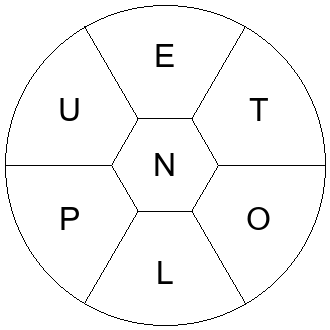
Genius requires between 18 and 44 words. You need at least a 7-letter word to reach genius. If you don't get the pangram, you need 76% of the total points to reach genius. If you get the pangram, you only need 67% of the remaining points to reach genius.

Other days with this pangram:

The button below will reveal a chart with the number of words by each letter. Red bars indicate that there is a pangram(s) starting with that letter.


How does this puzzle compare to other puzzles?

Today's score of 173 was in the 52nd percentile of all puzzles.
The last time there was a score this high was on August 13, 2025.
The highest score ever was 537 on January 22, 2021.
The lowest score ever was 47 on March 27, 2023.

This puzzle's 50 possible answers rank it in the 76th percentile of all puzzles.
The last time there were more answers than this was on August 13, 2025.
The highest number of answers was 81 on June 8, 2019.
The lowest number of answers was 16 on March 27, 2023.

It takes a 7-letter word for genius.
The last time this happened was on August 13, 2025.

Today's puzzle has an average word length of 4.9.
For all Bees, the average word length has been 5.3.


Haven't I seen these letters before?

Hover over a letter to see its first and most recent appearance in the Bee!


Haven't I seen these words before?

The most common words in the Bee are:

  • noon 209
  • loll 201
  • toot 193
  • naan 177
  • nana 177
  • lilt 144
  • till 144
  • tilt 144
  • nene 138
  • tint 138
  • mama 135
  • mamma 135
  • acacia 130
  • acai 130
  • onto 128
  • toon 128
  • onion 124
  • anon 120
  • anal 119
  • olio 116
  • dodo 115
  • tact 114
  • boob 113
  • booboo 113
  • papa 112
  • poop 112
  • baba 111
  • lull 110
  • lulu 110
  • call 108
  • calla 108
  • mitt 108
  • ratatat 106
  • tart 106
  • tartar 106
  • tutu 106
  • attar 105
  • mono 105
  • moon 105
  • tatty 105
  • ammo 104
  • cocci 104
  • momma 104
  • tattoo 104
  • allay 103
  • ally 103
  • loon 102
  • epee 100
  • peep 100
  • roar 99


How long are words in the Bee?

There have been 105,436 answers ever accepted in the Bee - with 10,716 unique words.
Below are the distributions of the lengths of these words.


Valid dictionary words not in today's official answers

You may be wondering why these words aren't here*:

  • eleoptene
  • eluent
  • enol
  • leno
  • lenten
  • leone
  • lepton
  • leptotene
  • loupen
  • lunet
  • lunt
  • lunule
  • neep
  • netop
  • nett
  • nolo
  • nonuple
  • notelet
  • nutlet
  • pelon
  • pennon
  • pentene
  • peptone
  • pleon
  • pluton
  • ponent
  • ponton
  • poon
  • poteen
  • potteen
  • punnet
  • punto
  • puton
  • telnet
  • tenne
  • tenno
  • tenuto
  • toluene
  • tonette
  • tonlet
  • touton
  • unpent
  • unpeople

*Because the New York Times considers them obscure or offensive.

entente

noun
  1. An informal alliance or friendly understanding between two states.

lent

noun
  1. A period of the ecclesiastical year preceding Easter, traditionally involving temporary abstention from certain foods and pleasures.
  2. The second term of the academic year at some British schools.
verb
  1. To allow to be used by someone temporarily, on condition that it or its equivalent will be returned.
  2. To make a loan.
  3. To be suitable or applicable, to fit.
  4. To afford; to grant or furnish in general.
  5. To borrow.

lento

noun
  1. A tempo mark directing that a passage is to be played very slowly.
adjective
  1. Very slow.
adverb
  1. Very slowly.

lone

adjective
  1. Solitary; having no companion.
  2. Isolated or lonely; lacking companionship.
  3. Sole; being the only one of a type.
  4. Situated by itself or by oneself, with no neighbours.
  5. Unfrequented by human beings; solitary.
  6. Single; unmarried, or in widowhood.

loon

Etymology 1

noun
  1. An idler, a lout.
  2. A boy, a lad.
  3. A harlot; mistress.
  4. A simpleton.
  5. A crazy or deranged person.
  6. An English soldier of an expeditionary army in Ireland.

Etymology 2

noun
  1. Any of various birds, of the order Gaviiformes, of North America and Europe that dive for fish and have a short tail, webbed feet and a yodeling cry.

lune

Etymology 1

noun
  1. A fit of lunacy or madness; a period of frenzy; a crazy or unreasonable freak.

Etymology 2

noun
  1. A concave figure formed by the intersection of the arcs of two circles on a plane, or on a sphere the intersection between two great semicircles.
  2. Anything crescent-shaped.

Etymology 3

noun
  1. (hawking) A leash for a hawk.

lunette

noun
  1. A small opening in a vaulted roof of a circular or crescent shape.
  2. A crescent-shaped recess or void in the space above a window or door.
  3. An image or other representation of a crescent moon.
  4. (fortifications) A field work consisting of two projecting faces forming a wedge each of which extends from one of two parallel flanks.
  5. A luna: a crescent-shaped receptacle, often glass, for holding the (consecrated) host (the bread of communion) upright when exposed in the monstrance.
  6. A type of flattened glass used in watch-making.
  7. The circular hole in the guillotine in which the victim's neck is placed.
  8. A type of crescent-shaped dune blown up along a lake basin, especially in dry areas of Australia.
  9. A half horseshoe, lacking the sponge.
  10. A piece of felt to cover the eye of a vicious horse.
  11. An iron shoe at the end of the stock of a gun carriage.
  12. (in the plural) See lunettes.

nene

noun
  1. The Hawaiian goose, Branta sandvicensis, which was designated the state bird of Hawaii in 1957.

neon

noun
  1. The chemical element (symbol Ne) with an atomic number of 10. The lightest of the noble gases, it is a colourless, odorless inert gas.
  2. A form or sample of the element.
  3. Neon signs or lights, collectively.
  4. A neon tetra fish.
adjective
  1. (of a color) That resembles a neon light; extremely bright; fluorescent

nettle

noun
  1. Any plant whose foliage is covered with stinging, mildly poisonous hairs, causing an instant rash.
  2. Certain plants that have spines or prickles:
  3. Certain non-stinging plants, mostly in the family Lamiaceae, that resemble the species of Urtica:
  4. Loosely, anything which causes a similarly stinging rash, such as a jellyfish or sea nettle.
verb
  1. Of the nettle plant and similar physical causes, to sting, causing a rash in someone.
  2. To pique, irritate, vex or provoke.

noel

noun
  1. Christmas
  2. A kind of hymn, or canticle, of mediaeval origin, sung in honor of the birth of Christ; a Christmas carol.

none

Etymology 1

noun
  1. A person without religious affiliation.
adverb
  1. To no extent, in no way.
  2. Not at all, not very.
  3. No, not.
pronoun
  1. Not any of a given number or group.

Etymology 2

noun
  1. Those without any religious affiliation: atheists and others outside any organized religion.
noun
  1. A light meal usually eaten around midday, notably when not as main meal of the day.
  2. A break in play between the first and second sessions.
  3. (Minnesota) Any small meal, especially one eaten at a social gathering.
noun
  1. The middle of the afternoon, normally between 2 and 4 pm.
noun
  1. (often capitalized) The notional first-quarter day of a Roman month, occurring on the 7th day of the four original 31-day months (March, May, Quintilis or July, and October) and on the 5th day of all other months.
  2. (sometimes capitalized) The ninth hour after dawn (about 3 pm).
  3. The divine office appointed to the hour.
noun
  1. The ninth hour of the day counted from sunrise; around three o'clock in the afternoon.
  2. Time of day when the sun is in its zenith; twelve o'clock in the day, midday.
  3. The corresponding time in the middle of the night; midnight.
  4. The highest point; culmination.
noun
  1. The letter ن in the Arabic script.

nonet

noun
  1. A composition for nine instruments or nine voices.
  2. A group of nine nuclear or subatomic particles.
  3. A byte of nine bits.

noon

Etymology 1

noun
  1. The ninth hour of the day counted from sunrise; around three o'clock in the afternoon.
  2. Time of day when the sun is in its zenith; twelve o'clock in the day, midday.
  3. The corresponding time in the middle of the night; midnight.
  4. The highest point; culmination.
verb
  1. To relax or sleep around midday

Etymology 2

noun
  1. The letter ن in the Arabic script.

nope

Etymology 1

noun
  1. A negative reply, no.
  2. An intensely undesirable thing, such as a circumstance or an animal, eliciting immediate repulsion without possibility of further consideration.

Etymology 2

noun
  1. (except near Staffordshire) A bullfinch

Etymology 3

noun
  1. A blow to the head.
verb
  1. To hit someone on the head.

note

Etymology 1

noun
  1. (heading) A symbol or annotation.
  2. (heading) A written or printed communication or commitment.
  3. (heading) A sound.
  4. Observation; notice; heed.
  5. Reputation; distinction.
  6. Notification; information; intelligence.
  7. Mark of disgrace.
verb
  1. To notice with care; to observe; to remark; to heed.
  2. To record in writing; to make a memorandum of.
  3. To denote; to designate.
  4. To annotate.
  5. To set down in musical characters.
  6. To record on the back of (a bill, draft, etc.) a refusal of acceptance, as the ground of a protest, which is done officially by a notary.

Etymology 2

noun
  1. That which is needed or necessary; business; duty; work.
  2. The giving of milk by a cow or sow; the period following calving or farrowing during which a cow or sow is at her most useful (i.e. gives milk); the milk given by a cow or sow during such a period.

noun

noun
  1. (grammar, narrow sense) A word that can be used to refer to a person, animal, place, thing, phenomenon, substance, quality, or idea; one of the basic parts of speech in many languages, including English.
  2. (grammar, now rare, broad sense) Either a word that can be used to refer to a person, animal, place, thing, phenomenon, substance, quality or idea, or a word that modifies or describes a previous word or its referent; a substantive or adjective, sometimes also including other parts of speech such as numeral or pronoun.
verb
  1. To convert a word to a noun.

null

noun
  1. A non-existent or empty value or set of values.
  2. Zero quantity of expressions; nothing.
  3. Something that has no force or meaning.
  4. The ASCII or Unicode character (␀), represented by a zero value, that indicates no character and is sometimes used as a string terminator.
  5. The attribute of an entity that has no valid value.
  6. One of the beads in nulled work.
  7. Null hypothesis.
verb
  1. To nullify; to annul.
  2. To form nulls, or into nulls, as in a lathe.
  3. To crack; to remove restrictions or limitations in (software).
adjective
  1. Having no validity; "null and void"
  2. Insignificant.
  3. Absent or non-existent.
  4. Of the null set.
  5. Of or comprising a value of precisely zero.
  6. (of a mutation) Causing a complete loss of gene function, amorphic.

onto

adjective
  1. (of a function) Assuming each of the values in its codomain; having its range equal to its codomain.
preposition
  1. Upon; on top of.
  2. Aware of.
  3. Being an onto function with a codomain of (see below).

open

Etymology 1

adjective
  1. Not closed
  2. Not physically drawn together, closed, folded or contracted; extended
  3. Actively conducting or prepared to conduct business.
  4. Receptive.
  5. Public
  6. Candid, ingenuous, not subtle in character.
  7. (of a formula) Having a free variable.
  8. (of a set) Which is part of a predefined collection of subsets of X, that defines a topological space on X.
  9. (of a walk) Whose first and last vertices are different.
  10. (of a file, document, etc.) In current use; mapped to part of memory.
  11. Not fulfilled.
  12. Not settled or adjusted; not decided or determined; not closed or withdrawn from consideration.
  13. (stringed instruments) Of a note, played without pressing the string against the fingerboard.
  14. (wind instruments) Of a note, played without closing any finger-hole, key or valve.
  15. Not of a quality to prevent communication, as by closing waterways, blocking roads, etc.; hence, not frosty or inclement; mild; used of the weather or the climate.
  16. (Of correspondence) Written or sent with the intention that it may made public or referred to at any trial, rather than by way of confidential private negotiation for a settlement. (Opposite of "without prejudice")
  17. Uttered with a relatively wide opening of the articulating organs; said of vowels.
  18. Uttered, as a consonant, with the oral passage simply narrowed without closure.
  19. (of a syllable) That ends in a vowel; not having a coda.
  20. Made public, usable with a free licence and without proprietary components.
  21. Resulting from an incision, puncture or any other process by which the skin no longer protects an internal part of the body.

Etymology 2

verb
  1. To make something accessible or allow for passage by moving from a shut position.
  2. To make (an open space, etc.) by clearing away an obstacle or obstacles, in order to allow for passage, access, or visibility.
  3. To bring up, broach.
  4. To enter upon, begin.
  5. To spread; to expand into an open or loose position.
  6. To make accessible to customers or clients.
  7. To start (a campaign).
  8. To become open.
  9. To begin conducting business.
  10. To begin a side's innings as one of the first two batsmen.
  11. To bet before any other player has in a particular betting round in a game of poker.
  12. To reveal one's hand.
  13. (of a file, document, etc.) To load into memory for viewing or editing.
  14. To disclose; to reveal; to interpret; to explain.

Etymology 3

noun
  1. (with the) Open or unobstructed space; an exposed location.
  2. (with the) Public knowledge or scrutiny; full view.
  3. A defect in an electrical circuit preventing current from flowing.
  4. A sports event in which anybody can compete

opponent

noun
  1. One who opposes another; one who works or takes a position against someone or something; one who attempts to stop the progress of someone or something.
adjective
  1. Opposing; adverse; antagonistic.
  2. Situated in front; opposite.

opulent

adjective
  1. Luxuriant, and ostentatiously magnificent.
  2. Rich, sumptuous and extravagant.

peen

Etymology 1

noun
  1. The (often spherical) end of the head of a hammer opposite the main hammering end.
verb
  1. To shape metal by striking it, especially with a peen.

Etymology 2

noun
  1. Penis.

peloton

noun
  1. A platoon.
  2. The main group of riders formed during a cycling road race.

penne

noun
  1. A type of short, diagonally cut pasta.

pent

Etymology 1

verb
  1. To enclose in a pen.
noun
  1. Confinement; concealment.
adjective
  1. Confined in a pen, imprisoned.

Etymology 2

noun
  1. A pentatonic scale.

Etymology 3

noun
  1. A pentacle or pentagram.

penult

noun
  1. The next-to-last syllable of a word.
  2. The next to the last in a series.

peon

noun
  1. A lowly person; a peasant or serf; a labourer who is obliged to do menial work.
  2. A person of low rank or importance.
  3. A messenger, foot soldier, or native policeman.

pollen

noun
  1. A fine granular substance produced in flowers. Technically a collective term for pollen grains (microspores) produced in the anthers of flowering plants. (This specific usage dating from mid 18th century.)
  2. Fine powder in general, fine flour. (16th-century usage documented by the OED.)
verb
  1. To cover with, or as if with, pollen.

pone

Etymology 1

noun
  1. A writ in law used by the superior courts to remove cases from inferior courts.
  2. A writ to enforce appearance in court by attaching goods or requiring securities.

Etymology 2

noun
  1. A baked or fried cornbread (bread made of cornmeal), often made without milk or eggs.

Etymology 3

noun
  1. The last player to bet or play in turn.

pontoon

Etymology 1

noun
  1. A flat-bottomed boat used as a support for a temporary bridge.
  2. A floating structure supporting a bridge or dock.
  3. A box used to raise a sunken vessel.
  4. A float of a seaplane.
  5. A lighter or barge used for loading or unloading ships.

Etymology 2

noun
  1. A card game in which the object is to obtain cards whose value adds up to, or nearly to, 21 but not exceed it.

potent

noun
  1. A heraldic fur formed by a regular tessellation of blue and white T shapes.
  2. A prince; a potentate.
  3. A staff or crutch.
adjective
  1. Possessing strength.
  2. Powerfully effective.
  3. Having a sharp or offensive taste.
  4. (of a male) Able to procreate.
  5. Very powerful or effective.

punt

Etymology 1

noun
  1. A pontoon; a narrow shallow boat propelled by a pole.
verb
  1. To propel a punt or similar craft by means of a pole.

Etymology 2

noun
  1. A kick made by a player who drops the ball and kicks it before it hits the ground.
verb
  1. To dropkick; to kick something a considerable distance.
  2. To equivocate and delay or put off (answering a question, addressing an issue, etc).
  3. To retreat from one's objective; to abandon an effort one still notionally supports.
  4. To make the best choice from a set of non-ideal alternatives.

Etymology 3

noun
  1. A point in the game of faro.
  2. The act of playing at basset, baccara, faro, etc.
  3. A bet or wager.
  4. Gambling, as a pastime, especially betting on horseraces or the dogs.
  5. A highly speculative investment or other commitment.
  6. A wild guess.
  7. An indentation in the base of a wine bottle.
  8. A thin glass rod which is temporarily attached to a larger piece in order to better manipulate the larger piece.
verb
  1. To play at basset, baccara, faro, etc.
  2. To stake against the bank, to back a horse, to gamble or take a chance more generally
  3. To make a highly speculative investment or other commitment, or take a wild guess.

Etymology 4

noun
  1. The Irish pound, used as the unit of currency of Ireland until it was replaced by the euro in 2002.

teen

Etymology 1

noun
  1. A teenager.
adjective
  1. Of or having to do with teenagers; teenage

Etymology 2

noun
  1. Grief; sorrow; trouble.
  2. Vexation; anger; hate.

Etymology 3

verb
  1. To excite; to provoke; to vex; to afflict; to injure.
  2. To become angry or distressed.

Etymology 4

verb
  1. (provincial) To hedge or fence in; to enclose.

tenet

noun
  1. An opinion, belief, or principle that is held as absolute truth by someone or especially an organization.

tenon

noun
  1. A projecting member left by cutting away the wood around it, and made to insert into a mortise, and in this way secure together the parts of a frame.
verb
  1. To make into a tenon.
  2. To fit with tenons.

tent

Etymology 1

noun
  1. A pavilion or portable lodge consisting of skins, canvas, or some strong cloth, stretched and sustained by poles, used for sheltering people from the weather.
  2. The representation of a tent used as a bearing.
  3. A portable pulpit set up outside to accommodate worshippers who cannot fit into a church.
  4. A trouser tent; a piece of fabric, etc. protruding outward like a tent.
verb
  1. To go camping.
  2. To prop up aluminum foil in an inverted "V" (reminiscent of a pop-up tent) over food to reduce splatter, before putting it in the oven.
  3. To form into a tent-like shape.

Etymology 2

noun
  1. Attention; regard, care.
  2. Intention; design.
verb
  1. To attend to; to heed
  2. To guard; to hinder.

Etymology 3

noun
  1. A roll of lint or linen, or a conical or cylindrical piece of sponge or other absorbent, used chiefly to dilate a natural canal, to keep open the orifice of a wound, or to absorb discharges.
  2. A probe for searching a wound.
verb
  1. (sometimes figurative) To probe or to search with a tent; to keep open with a tent.

Etymology 4

noun
  1. A kind of wine of a deep red color, chiefly from Galicia or Malaga in Spain; called also tent wine, and tinta.

tentpole

noun
  1. One of the poles used to hold up a tent.
  2. A large-scale entertainment production that is a major source of revenue for its studio, television network, or investors.

tone

Etymology 1

noun
  1. A specific pitch.
  2. (in the diatonic scale) An interval of a major second.
  3. (in a Gregorian chant) A recitational melody.
  4. The character of a sound, especially the timbre of an instrument or voice.
  5. General character, mood, or trend.
  6. The pitch of a word that distinguishes a difference in meaning, for example in Chinese.
  7. A whining style of speaking; a kind of mournful or artificial strain of voice; an affected speaking with a measured rhythm and a regular rise and fall of the voice.
  8. The manner in which speech or writing is expressed.
  9. State of mind; temper; mood.
  10. The shade or quality of a colour.
  11. The favourable effect of a picture produced by the combination of light and shade, or of colours.
  12. The definition and firmness of a muscle or organ; see also: tonus.
  13. The state of a living body or of any of its organs or parts in which the functions are healthy and performed with due vigor.
  14. Normal tension or responsiveness to stimuli.
  15. A gun
verb
  1. To give a particular tone to
  2. To change the colour of
  3. To make (something) firmer
  4. To harmonize, especially in colour
  5. To utter with an affected tone.

Etymology 2

pronoun
  1. The one (of two)

tonne

noun
  1. A metric unit of mass equal to 1000 kilograms. Symbol: t
  2. A score of 100.

toon

Etymology 1

noun
  1. A cartoon, especially an animated television show.
  2. A player's avatar or visible character in a massively multiplayer online role-playing game.

Etymology 2

noun
  1. A southeast Asian and Australian tree (Toona ciliata or Toona australis) of the mahogany family with fragrant dark red wood and flowers that yield a dye.
  2. The wood of this tree.

Etymology 3

noun
  1. A town.

Etymology 4

noun
  1. A melody.
  2. A song, or short musical composition.
  3. The act of tuning or maintenance.
  4. The state or condition of being correctly tuned.
  5. Temper; frame of mind.
  6. A sound; a note; a tone.
  7. Order; harmony; concord.

tune

noun
  1. A melody.
  2. A song, or short musical composition.
  3. The act of tuning or maintenance.
  4. The state or condition of being correctly tuned.
  5. Temper; frame of mind.
  6. A sound; a note; a tone.
  7. Order; harmony; concord.
verb
  1. To adjust (a musical instrument) so that it produces the correct pitches.
  2. To adjust or modify (esp. a mechanical or electrical device) so that it functions optimally.
  3. To adjust the frequency on a radio or TV set, so as to receive the desired channel.
  4. (e.g. of senses or faculties) To adapt to or direct towards a particular target.
  5. To make more precise, intense, or effective; to put into a proper state or disposition.
  6. To attune; to adapt in style of music; to make harmonious.
  7. To give a certain tone or character to.
  8. To sing with melody or harmony.
  9. To cheek; to be impudent towards.
interjection
  1. Used to show appreciation or approval of a song.

tuneup

noun
  1. A series of adjustments to an engine in order to improve its performance
  2. A series of preparations for vigorous exercise; a warm-up
  3. A match or race (frequently one exhibition in nature) contested as preparation for a match or race of high stakes.

tunnel

noun
  1. An underground or underwater passage.
  2. A passage through or under some obstacle.
  3. A hole in the ground made by an animal, a burrow.
  4. A wrapper for a protocol that cannot otherwise be used because it is unsupported, blocked, or insecure.
  5. A vessel with a broad mouth at one end, a pipe or tube at the other, for conveying liquor, fluids, etc., into casks, bottles, or other vessels; a funnel.
  6. The opening of a chimney for the passage of smoke; a flue.
  7. A level passage driven across the measures, or at right angles to veins which it is desired to reach; distinguished from the drift, or gangway, which is led along the vein when reached by the tunnel.
verb
  1. To make a tunnel through or under something; to burrow.
  2. To dig a tunnel.
  3. To transmit something through a tunnel (wrapper for insecure or unsupported protocol).
  4. To insert a catheter into a vein to allow long-term use.
  5. To undergo the quantum-mechanical phenomenon where a particle penetrates through a barrier that it classically cannot surmount.

unlet

adjective
  1. (of property) Not let (not in temporary possession in return for rent)

unopen

No Definition Found.

unpen

No Definition Found.

unto

preposition
  1. Up to, indicating a motion towards a thing and then stopping at it.
  2. To, indicating an indirect object.
conjunction
  1. Up to the time or degree that; until.

untune

No Definition Found.

upon

adverb
  1. Being the target of an action.
preposition
  1. Physically above and in contact with.
  2. Physically directly supported by.
  3. Being followed by another so as to form a series.
  4. At (a prescribed point in time).
  5. On.