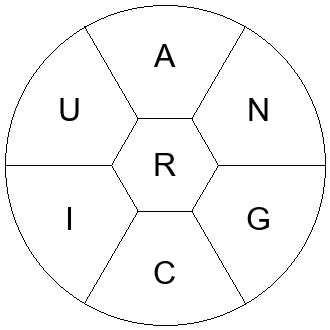
Saturday, August 16, 2025

Answers to yesterday's Bee

Jump to answers for


The official answers for today's puzzle are:

Click on the arrow to show the definition.
Click outside the pop-up to close it.


Number of Pangrams: 2

Maximum Puzzle Score: 388

Number of Answers: 71

Points Needed for Genius: 272

Genius requires between 35 and 60 words. You need at least an 8-letter word to reach genius. If you don't get the pangrams, you need 76% of the total points to reach genius. If you get the pangrams, you only need 68% of the remaining points to reach genius.

Other days with this pangram:

The button below will reveal a chart with the number of words by each letter. Red bars indicate that there is a pangram(s) starting with that letter.


How does this puzzle compare to other puzzles?

Today's score of 388 was in the 99th percentile of all puzzles.
The last time there was a score this high was on July 20, 2025.
The highest score ever was 537 on January 22, 2021.
The lowest score ever was 47 on March 27, 2023.

This puzzle's 71 possible answers rank it in the 99th percentile of all puzzles.
The last time there were more answers than this was on July 20, 2025.
The highest number of answers was 81 on June 8, 2019.
The lowest number of answers was 16 on March 27, 2023.

It takes an 8-letter word for genius.
The last time this happened was on August 9, 2025.

Today's puzzle has an average word length of 6.0.
For all Bees, the average word length has been 5.3.


Haven't I seen these letters before?

Hover over a letter to see its first and most recent appearance in the Bee!


Haven't I seen these words before?

The most common words in the Bee are:

  • noon 209
  • loll 201
  • toot 193
  • naan 177
  • nana 177
  • lilt 144
  • till 144
  • tilt 144
  • nene 138
  • tint 138
  • mama 135
  • mamma 135
  • acacia 130
  • acai 130
  • onto 128
  • toon 128
  • onion 124
  • anon 120
  • anal 119
  • olio 116
  • dodo 115
  • tact 114
  • boob 113
  • booboo 113
  • papa 112
  • poop 112
  • baba 111
  • lull 110
  • lulu 110
  • call 108
  • calla 108
  • mitt 108
  • ratatat 106
  • tart 106
  • tartar 106
  • tutu 106
  • attar 105
  • mono 105
  • moon 105
  • tatty 105
  • ammo 104
  • cocci 104
  • momma 104
  • tattoo 104
  • allay 103
  • ally 103
  • loon 102
  • epee 100
  • peep 100
  • roar 99


How long are words in the Bee?

There have been 105,507 answers ever accepted in the Bee - with 10,716 unique words.
Below are the distributions of the lengths of these words.


Valid dictionary words not in today's official answers

You may be wondering why these words aren't here*:

  • acari
  • acinar
  • agaric
  • agria
  • airn
  • angaria
  • anura
  • anuran
  • anuria
  • anuric
  • araucaria
  • araucarian
  • aurar
  • auric
  • caracara
  • caragana
  • carina
  • carn
  • carr
  • cauri
  • crucian
  • crura
  • curara
  • curari
  • curia
  • curn
  • curr
  • curran
  • curring
  • garni
  • garring
  • gaur
  • girn
  • girning
  • gnar
  • gnarr
  • gnarring
  • grana
  • grig
  • grigri
  • gringa
  • grugru
  • guarana
  • guarani
  • gunrunning
  • gurging
  • inrun
  • iring
  • naira
  • nairu
  • naric
  • niagara
  • ragg
  • ragga
  • ragi
  • raia
  • ricrac
  • rinning
  • ruana
  • ruga
  • rugging
  • uncinaria
  • urania
  • uranic
  • urari

*Because the New York Times considers them obscure or offensive.

accruing

verb
  1. To increase, to rise
  2. To reach or come to by way of increase; to arise or spring up because of growth or result, especially as the produce of money lent.
  3. To be incurred as a result of the passage of time.
  4. To accumulate
  5. To become an enforceable and permanent right.

agar

noun
  1. A gelatinous material obtained from red algae, especially Gracilaria species, used as a bacterial culture medium, in electrophoresis and as a food additive.
  2. A culture medium based on this material.

agrarian

noun
  1. A person who advocates the political interests of working farmers
adjective
  1. Of, or relating to, the ownership, tenure and cultivation of land.
  2. Agricultural or rural.
  3. Wild; said of plants growing in a cultivated field.

airing

verb
  1. To bring (something) into contact with the air, so as to freshen or dry it.
  2. To let fresh air into a room or a building, to ventilate.
  3. To discuss varying viewpoints on a given topic.
  4. To broadcast (a television show etc.).
  5. To be broadcast.
  6. To ignore.
noun
  1. An exposure to warm or fresh air.
  2. The broadcast of a television or radio show.
  3. A public expression of an opinion or discussion of a subject.

arcana

noun
  1. Specialized knowledge that is mysterious to the uninitiated.
noun
  1. A mystery or deep secret.
  2. An elixir or secret remedy.

arcing

verb
  1. To move following a curved path.
  2. To shape into an arc; to hold in the form of an arc.
  3. To form an electrical arc.
noun
  1. The shape or motion of something that arcs.

arguing

verb
  1. To show grounds for concluding (that); to indicate, imply.
  2. To debate, disagree or discuss opposing or differing viewpoints.
  3. To have an argument, a quarrel.
  4. To present (a viewpoint or an argument therefor).
  5. To prove.
  6. To accuse.
noun
  1. Argument

aria

noun
  1. A musical piece written typically for a solo voice with orchestral accompaniment in an opera or cantata.

arnica

noun
  1. Any of several plants, of the genus Arnica, considered to have medicinal properties, especially Arnica montana.

arraign

noun
  1. Arraignment.
verb
  1. To officially charge someone in a court of law.
  2. To call to account, or accuse, before the bar of reason, taste, or any other tribunal.

arraigning

verb
  1. To officially charge someone in a court of law.
  2. To call to account, or accuse, before the bar of reason, taste, or any other tribunal.
noun
  1. An arraignment.

arranging

verb
  1. To set up; to organize; to put into an orderly sequence or arrangement.
  2. To plan; to prepare in advance.
  3. To prepare and adapt an already-written composition for presentation in other than its original form.
noun
  1. Arrangement.

augur

noun
  1. A diviner who foretells events by the behaviour of birds or other animals, or by signs derived from celestial phenomena, or unusual occurrences.
  2. An official who interpreted omens before the start of public events.
verb
  1. To foretell events; to exhibit signs of future events.
  2. To anticipate, to foretell, or to indicate a favorable or an unfavorable issue.

auguring

verb
  1. To foretell events; to exhibit signs of future events.
  2. To anticipate, to foretell, or to indicate a favorable or an unfavorable issue.

aura

noun
  1. Distinctive atmosphere or quality associated with something.
  2. An invisible force surrounding a living creature.
  3. Perceptual disturbance experienced by some migraine sufferers before a migraine headache.
  4. Telltale sensation experienced by some people with epilepsy before a seizure.

cairn

noun
  1. A rounded or conical heap of stones erected by early inhabitants of the British Isles, apparently as a sepulchral monument.
  2. A pile of stones heaped up as a landmark, to guide travelers on land or at sea, or to arrest attention, as in surveying, or in leaving traces of an exploring party, etc.
  3. A cairn terrier.

caring

verb
  1. To be concerned (about), to have an interest (in); to feel concern (about).
  2. (polite) To want, to desire; to like; to be inclined towards.
  3. (with for) To look after or look out for.
  4. To mind; to object.
noun
  1. The act of one who cares.
adjective
  1. (of a person) Kind, sensitive, empathetic.

cigar

noun
  1. Tobacco rolled and wrapped with an outer covering of tobacco leaves, intended to be smoked.
  2. Penis

circa

preposition
  1. Approximately, about, around (typically in relation to time)

cirri

noun
  1. A tendril.
  2. A thin tendril-like appendage.
  3. A principal high-level cloud type characterised by white, delicate filaments or wisps, of white (or mostly white) patches, or of narrow bands, found at an altitude of above 7000 metres.

crag

Etymology 1

noun
  1. A rocky outcrop; a rugged steep rock or cliff.
  2. A rough broken fragment of rock.
  3. A partially compacted bed of gravel mixed with shells, of the Tertiary age.

Etymology 2

noun
  1. The neck or throat.

crania

noun
  1. The braincase or neurocranium; that part of the skull consisting of the bones enclosing the brain, but not including the bones of the face or jaw.
  2. The upper portion of the skull, including the neurocranium and facial bones, but not including the jawbone (mandible).
  3. The skull.

craning

verb
  1. To extend (one's neck).
  2. To raise or lower with, or as if with, a crane.
  3. To pull up before a jump.
noun
  1. The act of one who cranes.

cringing

verb
  1. To shrink, cower, tense or recoil, as in fear, disgust or embarrassment.
  2. To bow or crouch in servility.
  3. To contract; to draw together; to cause to shrink or wrinkle; to distort.
noun
  1. Act of one who cringes.

curing

Etymology 1

verb
  1. To restore to health.
  2. To bring (a disease or its bad effects) to an end.
  3. To cause to be rid of (a defect).
  4. To prepare or alter especially by chemical or physical processing for keeping or use.
  5. To bring about a cure of any kind.
  6. To be undergoing a chemical or physical process for preservation or use.
  7. To preserve (food), typically by salting
  8. To solidify or gel.
  9. To become healed.
  10. To pay heed; to care; to give attention.

Etymology 2

noun
  1. The act by which something is cured.

garaging

verb
  1. To store in a garage.
noun
  1. The act of parking a vehicle in a garage.

gracing

verb
  1. To adorn; to decorate; to embellish and dignify.
  2. To dignify or raise by an act of favour; to honour.
  3. To supply with heavenly grace.
  4. To add grace notes, cadenzas, etc., to.
noun
  1. The use of a grace note.

grain

Etymology 1

noun
  1. The harvested seeds of various grass food crops eg: wheat, corn, barley.
  2. Similar seeds from any food crop, e.g., buckwheat, amaranth, quinoa.
  3. A single seed of grass food crops.
  4. The crops from which grain is harvested.
  5. A linear texture of a material or surface.
  6. A single particle of a substance.
  7. A very small unit of weight, in England equal to 1/480 of an ounce troy, 0.0648 grams or, to be more exact, 64.79891 milligrams (0.002285714 avoirdupois ounce). A carat grain or pearl grain is 1/4 carat or 50 milligrams. The old French grain was 1/9216 livre or 53.11 milligrams, and in the mesures usuelles permitted from 1812 to 1839, with the livre redefined as 500 grams, it was 54.25 milligrams.
  8. A former unit of gold purity, also known as carat grain, equal to 1/4 "carat" (karat).
  9. (materials) A region within a material having a single crystal structure or direction.
  10. A reddish dye made from the coccus insect, or kermes; hence, a red color of any tint or hue, as crimson, scarlet, etc.; sometimes used by the poets as equivalent to Tyrian purple.
  11. The hair side of a piece of leather, or the marking on that side.
  12. (in the plural) The remains of grain, etc., after brewing or distillation; hence, any residuum. Also called draff.
  13. A rounded prominence on the back of a sepal, as in the common dock.
  14. Temper; natural disposition; inclination.
  15. (videography) Visual texture in processed photographic film due to the presence of small particles of a metallic silver, or dye clouds, developed from silver halide that have received enough photons.
verb
  1. To feed grain to.
  2. To make granular; to form into grains.
  3. To form grains, or to assume a granular form, as the result of crystallization; to granulate.
  4. To texture a surface in imitation of the grain of a substance such as wood.
  5. (tanning) To remove the hair or fat from a skin.
  6. (tanning) To soften leather.
  7. To yield fruit.

Etymology 2

noun
  1. A branch of a tree; a stalk or stem of a plant.
  2. A tine, prong, or fork.
  3. (founding) A thin piece of metal, used in a mould to steady a core.

graining

Etymology 1

verb
  1. To feed grain to.
  2. To make granular; to form into grains.
  3. To form grains, or to assume a granular form, as the result of crystallization; to granulate.
  4. To texture a surface in imitation of the grain of a substance such as wood.
  5. (tanning) To remove the hair or fat from a skin.
  6. (tanning) To soften leather.
  7. To yield fruit.
noun
  1. The practice of imitating woodgrain on a surface.
  2. Indentation; roughening; milling, as on edges of coins.
  3. A process in dressing leather, by which the skin is softened and the grain raised.
  4. (soap manufacture) The process of separating soap from spent lye, as with salt.

Etymology 2

noun
  1. A small European freshwater fish (Leuciscus leuciscus); the dobule or dace.

gran

noun
  1. (usually affectionate) a grandmother
  2. A grandfather

grin

Etymology 1

noun
  1. A smile in which the lips are parted to reveal the teeth.
verb
  1. To smile, parting the lips so as to show the teeth.
  2. To express by grinning.
  3. To show the teeth, like a snarling dog.
  4. To grin as part of producing a particular facial expression, such as a smile or sneer.

Etymology 2

noun
  1. A snare; a gin.

grinning

verb
  1. To smile, parting the lips so as to show the teeth.
  2. To express by grinning.
  3. To show the teeth, like a snarling dog.
  4. To grin as part of producing a particular facial expression, such as a smile or sneer.
noun
  1. The act or expression of one who grins.

guar

noun
  1. An annual legume (Cyamopsis tetragonoloba), used as a food for cattle and humans.

guru

noun
  1. A Hindu or Sikh spiritual teacher.
  2. (sometimes humorous) An influential advisor or mentor.

incur

verb
  1. To bring upon oneself or expose oneself to, especially something inconvenient, harmful, or onerous; to become liable or subject to
  2. To enter or pass into
  3. To fall within a period or scope; to occur; to run into danger

incurring

verb
  1. To bring upon oneself or expose oneself to, especially something inconvenient, harmful, or onerous; to become liable or subject to
  2. To enter or pass into
  3. To fall within a period or scope; to occur; to run into danger

ingrain

noun
  1. An ingrain fabric, such as a carpet.
verb
  1. To dye with a fast or lasting colour.
  2. To make (something) deeply part of something else.
adjective
  1. Dyed with grain, or kermes.
  2. Dyed before manufacture; said of the material of a textile fabric; hence, in general, thoroughly inwrought; forming an essential part of the substance.

ingraining

verb
  1. To dye with a fast or lasting colour.
  2. To make (something) deeply part of something else.

inuring

verb
  1. To cause someone to become accustomed to something (usually) unpleasant.
  2. To take effect, to be operative.
  3. To commit.

inurn

verb
  1. To place (the remains of a person who has died) in an urn or other container.
  2. To hold or contain (the remains of a person who has died).

inurning

verb
  1. To place (the remains of a person who has died) in an urn or other container.
  2. To hold or contain (the remains of a person who has died).

narc

Etymology 1

noun
  1. A narcotics squad police officer.

Etymology 2

noun
  1. A police spy or informer.
  2. An unpleasant person, especially one who makes things difficult for others.
verb
  1. To watch; to observe.
  2. To serve or behave as a spy or informer.
  3. To annoy or irritate.
  4. To complain.
  5. (often imperative) To stop.

Etymology 3

verb
  1. (underwater diving) To suffer from impaired judgment due to nitrogen narcosis (for example, while scuba diving).

Etymology 4

noun
  1. A narcissist.

racing

verb
  1. To take part in a race (in the sense of a contest).
  2. To compete against in such a race.
  3. To move or drive at high speed; to hurry or speed.
  4. Of a motor, to run rapidly when not engaged to a transmission.
verb
  1. To assign a race to; to perceive as having a (usually specified) race.
noun
  1. The sport of competing in races.
verb
  1. To demolish; to level to the ground.
  2. To scrape as if with a razor.

raga

noun
  1. Any of various melodic forms used in Indian classical music, or a piece of music composed in such a form.
  2. Passion, love, lust.

ragging

verb
  1. To decorate (a wall, etc.) by applying paint with a rag.
  2. To become tattered.
verb
  1. To break (ore) into lumps for sorting.
  2. To cut or dress roughly, as a grindstone.
verb
  1. To scold or tell off; to torment; to banter.
  2. To drive a car or another vehicle in a hard, fast or unsympathetic manner.
  3. To tease or torment, especially at a university; to bully, to haze.
verb
  1. To play or compose (a piece, melody, etc.) in syncopated time.
  2. To dance to ragtime music.
  3. To add syncopation (to a tune) and thereby make it appropriate for a ragtime song.
noun
  1. The act of one who rags or teases.
  2. An initiation in educational institutions (e.g. universities) usually involving harassment by upperclassmen.

raging

verb
  1. To act or speak in heightened anger.
  2. (sometimes figurative) To move with great violence, as a storm etc.
  3. To enrage.
noun
  1. A display of rage.
adjective
  1. Volatile, very active or unpredictable.
  2. (of a person) In a state of rage; in a state of extreme, often uncontrollable, anger.

rain

noun
  1. Condensed water falling from a cloud.
  2. Any matter moving or falling, usually through air, and especially if liquid or otherwise figuratively identifiable with raindrops.
  3. An instance of particles or larger pieces of matter moving or falling through air.
verb
  1. To have rain fall from the sky.
  2. To fall as or like rain.
  3. To issue (something) in large quantities.
  4. To reign.

raining

verb
  1. To have rain fall from the sky.
  2. To fall as or like rain.
  3. To issue (something) in large quantities.
  4. To reign.
noun
  1. A fall of rain.

rang

verb
  1. Of a bell, etc., to produce a resonant sound.
  2. To make (a bell, etc.) produce a resonant sound.
  3. To produce (a sound) by ringing.
  4. To produce the sound of a bell or a similar sound.
  5. Of something spoken or written, to appear to be, to seem, to sound.
  6. To telephone (someone).
  7. To resound, reverberate, echo.
  8. To produce music with bells.
  9. To repeat often, loudly, or earnestly.

ranging

verb
  1. To travel over (an area, etc); to roam, wander.
  2. To rove over or through.
  3. To exercise the power of something over something else; to cause to submit to, over.
  4. To bring (something) into a specified position or relationship (especially, of opposition) with something else.
  5. (followed by over) Of a variable, to be able to take any of the values in a specified range.
  6. To classify.
  7. To form a line or a row.
  8. To be placed in order; to be ranked; to admit of arrangement or classification; to rank.
  9. To set in a row, or in rows; to place in a regular line or lines, or in ranks; to dispose in the proper order.
  10. To place among others in a line, row, or order, as in the ranks of an army; usually, reflexively and figuratively, to espouse a cause, to join a party, etc.
  11. To be native to, or live in, a certain district or region.
  12. To separate into parts; to sift.
  13. To sail or pass in a direction parallel to or near.
  14. Of a player, to travel a significant distance for a defensive play.
noun
  1. Act of one who ranges.
  2. A back-and-forth movement

rani

noun
  1. The wife of a rajah.
  2. A Hindu princess or female ruler in India.

raring

verb
  1. To rear, rise up, start backwards.
  2. To rear, bring up, raise.
adjective
  1. Eager.

ricin

noun
  1. An extremely toxic protein extracted from the castor bean.

ricing

verb
  1. To squeeze through a ricer; to mash or make into rice-sized pieces (especially potatoes).
  2. To harvest wild rice (Zizania sp.)
  3. To throw rice at a person (usually at a wedding).
  4. To customize the user interface of a computer system, e.g. a desktop environment.
noun
  1. (soap-making) (Development of) undesirable, hard white granules in soap.

rigging

verb
  1. To fit out with a harness or other equipment.
  2. To equip and fit (a ship) with sails, shrouds, and yards.
  3. To dress or clothe in some costume.
  4. To make or construct something in haste or in a makeshift manner.
  5. To manipulate something dishonestly for personal gain or discriminatory purposes.
  6. To make free with; hence, to steal; to pilfer.
  7. To outfit a model with controls for animation.
verb
  1. To play the wanton; to act in an unbecoming manner; to play tricks.
noun
  1. Dress; tackle; especially , the ropes, chains, etc., that support the masts and spars of a sailing vessel, and serve as purchases for adjusting the sails, etc.
  2. Similar supporting material used for construction work, or in film, theater, etc.

ring

Etymology 1

noun
  1. (physical) A solid object in the shape of a circle.
  2. (physical) A group of objects arranged in a circle.
  3. A piece of food in the shape of a ring.
  4. A place where some sports or exhibitions take place; notably a circular or comparable arena, such as a boxing ring or a circus ring; hence the field of a political contest.
  5. An exclusive group of people, usually involving some unethical or illegal practices.
  6. A group of atoms linked by bonds to form a closed chain in a molecule.
  7. A planar geometrical figure included between two concentric circles.
  8. A diacritical mark in the shape of a hollow circle placed above or under the letter; a kroužek.
  9. An old English measure of corn equal to the coomb or half a quarter.
  10. A hierarchical level of privilege in a computer system, usually at hardware level, used to protect data and functionality (also protection ring).
  11. Either of the pair of clamps used to hold a telescopic sight to a rifle.
  12. The twenty-fifth Lenormand card.
verb
  1. To enclose or surround.
  2. To make an incision around; to girdle.
  3. To attach a ring to, especially for identification.
  4. To surround or fit with a ring, or as if with a ring.
  5. To rise in the air spirally.
  6. To steal and change the identity of (cars) in order to resell them.

Etymology 2

noun
  1. The resonant sound of a bell, or a sound resembling it.
  2. A pleasant or correct sound.
  3. A sound or appearance that is characteristic of something.
  4. A telephone call.
  5. Any loud sound; the sound of numerous voices; a sound continued, repeated, or reverberated.
  6. A chime, or set of bells harmonically tuned.
verb
  1. Of a bell, etc., to produce a resonant sound.
  2. To make (a bell, etc.) produce a resonant sound.
  3. To produce (a sound) by ringing.
  4. To produce the sound of a bell or a similar sound.
  5. Of something spoken or written, to appear to be, to seem, to sound.
  6. To telephone (someone).
  7. To resound, reverberate, echo.
  8. To produce music with bells.
  9. To repeat often, loudly, or earnestly.

Etymology 3

noun
  1. An algebraic structure which consists of a set with two binary operations: an additive operation and a multiplicative operation, such that the set is an abelian group under the additive operation, a monoid under the multiplicative operation, and such that the multiplicative operation is distributive with respect to the additive operation.
  2. An algebraic structure as above, but only required to be a semigroup under the multiplicative operation, that is, there need not be a multiplicative identity element.

ringing

verb
  1. To enclose or surround.
  2. To make an incision around; to girdle.
  3. To attach a ring to, especially for identification.
  4. To surround or fit with a ring, or as if with a ring.
  5. To rise in the air spirally.
  6. To steal and change the identity of (cars) in order to resell them.
verb
  1. Of a bell, etc., to produce a resonant sound.
  2. To make (a bell, etc.) produce a resonant sound.
  3. To produce (a sound) by ringing.
  4. To produce the sound of a bell or a similar sound.
  5. Of something spoken or written, to appear to be, to seem, to sound.
  6. To telephone (someone).
  7. To resound, reverberate, echo.
  8. To produce music with bells.
  9. To repeat often, loudly, or earnestly.
noun
  1. The sound of something that rings.
  2. The quality of being resonant.
  3. A technique used in the study of wild birds, by attaching a small, individually numbered, metal or plastic tag to their legs or wings.
  4. The theft of cars and illegally changing their identities for resale.
adjective
  1. Loud and clear.
  2. Made forcefully; powerful.

ruin

noun
  1. (sometimes in the plural) The remains of a destroyed or dilapidated construction, such as a house or castle.
  2. The state of being a ruin, destroyed or decayed.
  3. Something that leads to serious trouble or destruction.
  4. A fall or tumble.
  5. A change that destroys or defeats something; destruction; overthrow.
  6. Complete financial loss; bankruptcy.
verb
  1. To cause the fiscal ruin of.
  2. To destroy or make something no longer usable.
  3. To cause severe financial loss to; to bankrupt or drive out of business.
  4. To upset or overturn the plans or progress of, or to have a disastrous effect on something.
  5. To make something less enjoyable or likeable.
  6. To reveal the ending of (a story); to spoil.
  7. To fall into a state of decay.
  8. To seduce or debauch, and thus harm the social standing of.

ruing

verb
  1. To cause to repent of sin or regret some past action.
  2. To cause to feel sorrow or pity.
  3. To repent of or regret (some past action or event); to wish that a past action or event had not taken place.
  4. To feel compassion or pity.
  5. To feel sorrow or regret.

ruining

verb
  1. To cause the fiscal ruin of.
  2. To destroy or make something no longer usable.
  3. To cause severe financial loss to; to bankrupt or drive out of business.
  4. To upset or overturn the plans or progress of, or to have a disastrous effect on something.
  5. To make something less enjoyable or likeable.
  6. To reveal the ending of (a story); to spoil.
  7. To fall into a state of decay.
  8. To seduce or debauch, and thus harm the social standing of.
noun
  1. The act or process by which something is ruined.

rung

Etymology 1

noun
  1. A crosspiece forming a step of a ladder; a round.
  2. A crosspiece between legs of a chair.
  3. A position in a hierarchy.
  4. A floor timber in a ship.
  5. One of the stakes of a cart; a spar; a heavy staff.
  6. One of the radial handles projecting from the rim of a steering wheel.
  7. One of the pins or trundles of a lantern wheel.

Etymology 2

verb
  1. Of a bell, etc., to produce a resonant sound.
  2. To make (a bell, etc.) produce a resonant sound.
  3. To produce (a sound) by ringing.
  4. To produce the sound of a bell or a similar sound.
  5. Of something spoken or written, to appear to be, to seem, to sound.
  6. To telephone (someone).
  7. To resound, reverberate, echo.
  8. To produce music with bells.
  9. To repeat often, loudly, or earnestly.
adjective
  1. Of a pig: having a ring through the nose.

runic

No Definition Found.

running

verb
  1. To move swiftly.
  2. (fluids) To flow.
  3. (of a vessel) To sail before the wind, in distinction from reaching or sailing close-hauled.
  4. To control or manage, be in charge of.
  5. To be a candidate in an election.
  6. To make run in a race or an election.
  7. To exert continuous activity; to proceed.
  8. To be presented in the media.
  9. To print or broadcast in the media.
  10. To smuggle (illegal goods).
  11. To sort through a large volume of produce in quality control.
  12. To extend or persist, statically or dynamically, through space or time.
  13. To execute or carry out a plan, procedure or program.
  14. To pass or go quickly in thought or conversation.
  15. To become different in a way mentioned (usually to become worse).
  16. To cost a large amount of money.
  17. Of stitches or stitched clothing, to unravel.
  18. To pursue in thought; to carry in contemplation.
  19. To cause to enter; to thrust.
  20. To drive or force; to cause, or permit, to be driven.
  21. To cause to be drawn; to mark out; to indicate; to determine.
  22. To encounter or incur (a danger or risk).
  23. To put at hazard; to venture; to risk.
  24. To tease with sarcasms and ridicule.
  25. To sew (a seam) by passing the needle through material in a continuous line, generally taking a series of stitches on the needle at the same time.
  26. To control or have precedence in a card game.
  27. To be in form thus, as a combination of words.
  28. To be popularly known; to be generally received.
  29. To have growth or development.
  30. To tend, as to an effect or consequence; to incline.
  31. To have a legal course; to be attached; to continue in force, effect, or operation; to follow; to go in company.
  32. To encounter or suffer (a particular, usually bad, fate or misfortune).
  33. To strike (the ball) in such a way as to cause it to run along the ground, as when approaching a hole.
  34. To speedrun.
noun
  1. The action of the verb to run.
  2. The activity of running as a form of exercise, as a sport, or for any other reason
  3. That which runs or flows; the quantity of a liquid which flows in a certain time or during a certain operation.
  4. The discharge from an ulcer or other sore.
adjective
  1. Moving or advancing at a run.
  2. Present, current.
  3. Flowing; easy; cursive.
  4. Continuous; ongoing; keeping along step by step.
  5. Having a continuous design or pattern.
  6. Consecutive.
  7. Extending by a slender climbing or trailing stem.
  8. Discharging pus.
  9. (of a nose) Discharging snot or mucus.
adverb
  1. Consecutively; in a row
preposition
  1. Approaching; about; roughly.

uncaring

noun
  1. Lack or absence of caring
adjective
  1. Characterized by a lack of care; not caring.

unrig

verb
  1. To remove the rigging from (a vessel, etc.).
  2. To disable.
  3. To undress (someone).

unrigging

verb
  1. To remove the rigging from (a vessel, etc.).
  2. To disable.
  3. To undress (someone).

urging

verb
  1. To press; to push; to drive; to impel; to force onward.
  2. To press the mind or will of; to ply with motives, arguments, persuasion, or importunity.
  3. To provoke; to exasperate.
  4. To press hard upon; to follow closely.
  5. To present in an urgent manner; to insist upon.
  6. To treat with forcible means; to take severe or violent measures with.
  7. To press onward or forward.
  8. To be pressing in argument; to insist; to persist.

uric

adjective
  1. Pertaining to, contained in, or obtained from urine.

nigiri

noun
  1. Regular sushi: a piece of raw fish (or other topping) on top of a small oblong brick of sticky white rice.

arancini

noun
  1. A baked rice ball, filled with cheese or other sauce, originally from Sicily.

ragu

noun
  1. An Italian pasta sauce containing ground meat cooked with sautéed vegetables in tomato sauce or some other kind of liquid.