Monday, September 8, 2025

Answers to yesterday's Bee

Jump to answers for


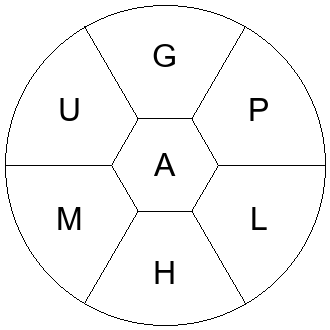
The official answers for today's puzzle are:

Click on the arrow to show the definition.
Click outside the pop-up to close it.


Number of Pangrams: 1

Maximum Puzzle Score: 126

Number of Answers: 39

Points Needed for Genius: 88

Genius requires between 15 and 35 words. You need at least a 6-letter word to reach genius. If you don't get the pangram, you need 79% of the total points to reach genius. If you get the pangram, you only need 66% of the remaining points to reach genius.

Other days with this pangram:

The button below will reveal a chart with the number of words by each letter. Red bars indicate that there is a pangram(s) starting with that letter.


How does this puzzle compare to other puzzles?

Today's score of 126 was in the 27th percentile of all puzzles.
The last time there was a score this low was on August 20, 2025.
The highest score ever was 537 on January 22, 2021.
The lowest score ever was 47 on March 27, 2023.

This puzzle's 39 possible answers rank it in the 49th percentile of all puzzles.
The last time there were fewer answers than this was on September 6, 2025.
The highest number of answers was 81 on June 8, 2019.
The lowest number of answers was 16 on March 27, 2023.

It takes a 6-letter word for genius.
The last time this happened was on September 5, 2025.

Today's puzzle has an average word length of 4.7.
For all Bees, the average word length has been 5.3.


Haven't I seen these letters before?

Hover over a letter to see its first and most recent appearance in the Bee!


Haven't I seen these words before?

The most common words in the Bee are:

  • noon 211
  • loll 203
  • toot 195
  • naan 179
  • nana 179
  • lilt 144
  • till 144
  • tilt 144
  • nene 138
  • tint 138
  • mama 137
  • mamma 137
  • acacia 132
  • acai 132
  • onto 129
  • toon 129
  • onion 125
  • anal 121
  • anon 121
  • tact 117
  • dodo 116
  • olio 116
  • boob 114
  • booboo 114
  • baba 113
  • papa 113
  • poop 112
  • lull 111
  • lulu 111
  • call 108
  • calla 108
  • mitt 108
  • tutu 107
  • cocci 106
  • mono 106
  • moon 106
  • ratatat 106
  • tart 106
  • tartar 106
  • allay 105
  • ally 105
  • attar 105
  • tattoo 105
  • tatty 105
  • ammo 104
  • momma 104
  • loon 103
  • epee 100
  • peep 100
  • roar 99


How long are words in the Bee?

There have been 106,515 answers ever accepted in the Bee - with 10,777 unique words.
Below are the distributions of the lengths of these words.


Valid dictionary words not in today's official answers

You may be wondering why these words aren't here*:

  • agama
  • agha
  • aglu
  • agma
  • ahull
  • algum
  • alma
  • almah
  • almug
  • alula
  • amah
  • ampul
  • ampulla
  • appal
  • augh
  • galah
  • gama
  • gamp
  • gaum
  • gumma
  • haha
  • halala
  • halalah
  • hallah
  • hallal
  • halm
  • halma
  • hamal
  • hamaul
  • hammal
  • hammam
  • haugh
  • haulm
  • huppah
  • lahal
  • lall
  • luma
  • mahua
  • malm
  • mughal
  • mulla
  • palpal
  • papula
  • paua
  • plagal
  • pula
  • pulpal
  • ulama
  • umma
  • ummah

*Because the New York Times considers them obscure or offensive.

alga

noun
  1. Any of many aquatic photosynthetic organisms, including the seaweeds, whose size ranges from a single cell to giant kelps and whose biochemistry and forms are very diverse, some being eukaryotic.

algal

noun
  1. An alga.
adjective
  1. Pertaining to, or like, algae

alpha

noun
  1. The name of the first letter of the Greek alphabet (Α, α), followed by beta. In the Latin alphabet it is the predecessor to A.
  2. Latin alpha
  3. The name of the symbols Α and α used in science and mathematics, often interchangeable with the symbols when used as a prefix.
  4. The return of a given asset or portfolio adjusted for systematic risk.
  5. A person, especially a male, who is dominant, successful and attractive; (see alpha male).
  6. (abbreviation) Alphabet.
  7. The first versions of a program, usually only available to the developer, and only tested by the developer.
  8. The level of translucency of a color, as determined by the alpha channel.
  9. The significance level of a statistical test; the alpha level.
  10. In omegaverse fiction, a person of a sexually-dominant (and sometimes secondary) gender/sex that is driven by biology, magic, or other means to bond with an omega, with males of this type often having canine-like genitalia.
adjective
  1. Designates the first in an order of precedence.
  2. (of person, object or action) exhibiting characteristics of the alpha male/female archetype.
  3. Designates some bright star, usually the brightest star, of a constellation.

alum

Etymology 1

noun
  1. An astringent salt, usually occurring in the form of pale crystals, much used in the dyeing and tanning trade and in certain medicines, and now understood to be a double sulphate of potassium and aluminium (K2SO4·Al2(SO4)3·24H2O).
  2. Any similar double sulphate in which either or both of the potassium and aluminium is wholly or partly replaced by other univalent or tervalent cations.
verb
  1. To steep in, or otherwise impregnate with, a solution of alum; to treat with alum.

Etymology 2

noun
  1. (shortening) A past attendee or graduate (of either gender) of a college, university or other educational institution.

amalgam

noun
  1. An alloy containing mercury.
  2. A combination of different things.
  3. One of the ingredients in an alloy.
verb
  1. To amalgamate.

appall

verb
  1. To fill with horror; to dismay.
  2. To make pale; to blanch.
  3. To weaken; to reduce in strength
  4. To grow faint; to become weak; to become dismayed or discouraged.
  5. To lose flavour or become stale.

gaga

Etymology 1

adjective
  1. Mentally senile.
  2. Crazy.
  3. Infatuated.

Etymology 2

noun
  1. A variant of dodgeball played inside a fenced area, usually a hexagon or octagon.

gala

Etymology 1

noun
  1. Pomp, show, or festivity.
  2. A showy and festive party.
adjective
  1. Celebratory; festive.

Etymology 2

noun
  1. A member of an androgynous class of priests of the Sumerian goddess Inanna.

gall

Etymology 1

noun
  1. Bile, especially that of an animal; the greenish, profoundly bitter-tasting fluid found in bile ducts and gall bladders, structures associated with the liver.
  2. The gall bladder.
  3. Great misery or physical suffering, likened to the bitterest-tasting of substances.
  4. A feeling of exasperation.
  5. Impudence or brazenness; temerity, chutzpah.
  6. A sore or open wound caused by chafing, which may become infected, as with a blister.
  7. A sore on a horse caused by an ill-fitted or ill-adjusted saddle; a saddle sore.
  8. A pit on a surface being cut caused by the friction between the two surfaces exceeding the bond of the material at a point.
verb
  1. To bother or trouble.
  2. To harass, to harry, often with the intent to cause injury.
  3. To chafe, to rub or subject to friction; to create a sore on the skin.
  4. To exasperate.
  5. To cause pitting on a surface being cut from the friction between the two surfaces exceeding the bond of the material at a point.
  6. To scoff; to jeer.

Etymology 2

noun
  1. A blister or tumor-like growth found on the surface of plants, caused by burrowing of insect larvae into the living tissues, especially that of the common oak gall wasp Cynips quercusfolii.
  2. A bump-like imperfection resembling a gall.
verb
  1. To impregnate with a decoction of gallnuts in dyeing.

galumph

verb
  1. To move heavily and clumsily, or with a sense of prancing and triumph.

gamma

noun
  1. The third letter of the Greek alphabet (Γ, γ), preceded by beta (Β, β) and followed by delta, (Δ, δ).
  2. The Gamma function, symbolized by Γ.
  3. A constant approximately equal to 0.55721566, symbolized by γ (also known as the Euler–Mascheroni constant).
  4. A non-SI unit of measure of magnetic flux density, equal to 1 nT.
  5. (industries) slope of log-log plot of video input and luminance output.
  6. A second-order measure of derivative price sensitivity, expressed as the rate of change in delta with respect to changes in the underlying asset price.
noun
  1. A nonlinear operation used to encode and decode luminance or tristimulus values in video or still image systems.

glam

noun
  1. Glamour.
  2. A style of rock music, glam rock, associated with an androgynous yet masculine look and a driving, pounding bluesy form of psychedelic rock; the fashion and culture associated with this genre.
verb
  1. To make glamorous or more glamorous.
adjective
  1. Glamorous.

gulag

noun
  1. A prison camp.
  2. The system of all Soviet prison and/or labor camps in use during the Stalinist period.
verb
  1. To force into this prison or a similar system.

halal

verb
  1. To make halal.
adjective
  1. Permissible, according to Muslim religious customs, to have or do.
  2. (of food) Fit to eat according to Muslim religious customs.
adverb
  1. In a halal manner; in accordance with Muslim religious customs.

hall

noun
  1. A corridor; a hallway.
  2. A meeting room.
  3. A manor house (originally because a magistrate's court was held in the hall of his mansion).
  4. A building providing student accommodation at a university.
  5. The principal room of a secular medieval building.
  6. Cleared passageway through a crowd, as for dancing.
  7. A place for special professional education, or for conferring professional degrees or licences.
  8. A living room.

haul

noun
  1. An act of hauling or pulling, particularly with force; a (violent) pull or tug.
  2. The distance over which something is hauled or transported, especially if long.
  3. An amount of something that has been taken, especially of fish, illegal loot, or items purchased on a shopping trip.
  4. Short for haul video.
  5. (ropemaking) A bundle of many threads to be tarred.
verb
  1. To transport by drawing or pulling, as with horses or oxen, or a motor vehicle.
  2. To draw or pull something heavy.
  3. To carry or transport something, with a connotation that the item is heavy or otherwise difficult to move.
  4. To drag, to pull, to tug.
  5. Followed by up: to summon to be disciplined or held answerable for something.
  6. To pull apart, as oxen sometimes do when yoked.
  7. To steer (a vessel) closer to the wind.
  8. Of the wind: to shift fore (more towards the bow).
  9. To haul ass.

hula

noun
  1. A form of chant and dance, which was developed in the Hawaiian Islands by the Polynesians who originally settled there.
verb
  1. To dance the hula.

lama

Etymology 1

noun
  1. A master of Tibetan Buddhism.

Etymology 2

noun
  1. A South American mammal of the camel family, Lama glama, used as a domestic beast of burden and a source of wool and meat.

lamp

noun
  1. A device that generates heat, light or other radiation. Especially an electric light bulb.
  2. A device containing oil, burnt through a wick for illumination; an oil lamp.
  3. A piece of furniture holding one or more electric light sockets.
verb
  1. To hit, clout, belt, wallop.
  2. To hunt at night using a lamp; see lamping.
  3. To hang out or chill; to do nothing in particular.

laugh

noun
  1. An expression of mirth particular to the human species; the sound heard in laughing; laughter.
  2. Something that provokes mirth or scorn.
  3. A fun person.
verb
  1. To show mirth, satisfaction, or derision, by peculiar movement of the muscles of the face, particularly of the mouth, causing a lighting up of the face and eyes, and usually accompanied by the emission of explosive or chuckling sounds from the chest and throat; to indulge in laughter.
  2. To be or appear cheerful, pleasant, mirthful, lively, or brilliant; to sparkle; to sport.
  3. (followed by "at") To make an object of laughter or ridicule; to make fun of; to deride; to mock.
  4. To affect or influence by means of laughter or ridicule.
  5. To express by, or utter with, laughter.

llama

noun
  1. A South American mammal of the camel family, Lama glama, used as a domestic beast of burden and a source of wool and meat.

luau

noun
  1. An elaborate Hawaiian feast featuring traditional foods and entertainment.

magma

noun
  1. The molten matter within the earth, the source of the material of lava flows, dikes of eruptive rocks, etc.
  2. A basic algebraic structure consisting of a set equipped with a single binary operation.
  3. Any soft doughy mass.
  4. The residuum after expressing the juice from fruits.

mall

noun
  1. A pedestrianised street, especially a shopping precinct.
  2. An enclosed shopping centre.
  3. An alley where the game of pall mall was played.
  4. A public walk; a level shaded walk, a promenade.
  5. A heavy wooden mallet or hammer used in the game of pall mall.
  6. The game of polo.
  7. An old game played with malls or mallets and balls; pall mall.
verb
  1. To beat with a mall, or mallet; to beat with something heavy; to bruise
  2. To build up with the development of shopping malls
  3. To shop at the mall

mama

noun
  1. (hypocoristic, usually childish) Mother, female parent.

mamma

Etymology 1

noun
  1. The milk-secreting organ of female humans and other mammals which includes the mammary gland and the nipple or teat; a breast; an udder. (plural: mammae)
  2. An accessory cloud like a mammary in appearance, which can form on the underside of most cloud genera

Etymology 2

noun
  1. (hypocoristic, usually childish) Mother, female parent.

mammal

noun
  1. An animal of the class Mammalia, characterized by being warm-blooded, having hair and feeding milk to its young.
  2. A vertebrate with three bones in the inner ear and one in the jaw.

maul

noun
  1. A heavy long-handled hammer, used for splitting logs by driving a wedge into them, or in combat.
  2. A situation where the player carrying the ball, who must be on his feet, is held by one or more opponents, and one or more of the ball carrier's team mates bind onto the ball carrier.
verb
  1. To handle someone or something in a rough way.
  2. To savage; to cause serious physical wounds (usually used of an animal).
  3. To criticise harshly.
  4. To beat with the heavy hammer called a maul.

mullah

Etymology 1

noun
  1. A religious scholar and teacher of sharia law.

Etymology 2

verb
  1. To grind up into, or as if into, powder.
verb
  1. To beat; to thrash (a person).
  2. To defeat or destroy utterly (as in a sport or competition).

palapa

noun
  1. An open-sided dwelling with a thatched roof made of dried palm leaves.

pall

Etymology 1

noun
  1. Senses relating to cloth.
  2. Senses relating to clothing.

Etymology 2

verb
  1. To cloak or cover with, or as if with, a pall.

Etymology 3

verb
  1. To make vapid or insipid; to make lifeless or spiritless; to dull, to weaken.
  2. To become dull, insipid, tasteless, or vapid; to lose life, spirit, strength, or taste.

Etymology 4

noun
  1. A feeling of nausea caused by disgust or overindulgence.

palm

Etymology 1

noun
  1. Any of various evergreen trees from the family Palmae or Arecaceae, which are mainly found in the tropics.
  2. A branch or leaf of the palm, anciently borne or worn as a symbol of victory or rejoicing.
  3. (by extension) Triumph; victory.
  4. Any of 23 awards that can be earned after obtaining the Eagle Scout rank, but generally only before turning 18 years old.

Etymology 2

noun
  1. The inner and somewhat concave part of the human hand that extends from the wrist to the bases of the fingers.
  2. The corresponding part of the forefoot of a lower mammal.
  3. A linear measure equal either to the breadth of the hand or to its length from the wrist to the ends of the fingers; a hand; used in measuring a horse's height.
  4. (sailmaking) A metallic disk attached to a strap and worn in the palm of the hand; used to push the needle through the canvas, in sewing sails, etc.
  5. The broad flattened part of an antler, as of a full-grown fallow deer; so called as resembling the palm of the hand with its protruding fingers.
  6. The flat inner face of an anchor fluke.
verb
  1. To hold or conceal something in the palm of the hand, e.g, for an act of sleight of hand or to steal something.
  2. To hold something without bending the fingers significantly.
  3. To move something with the palm of the hand.

palp

noun
  1. A pedipalp, an appendage found near the mouth in invertebrates; has a variety of functions but is often primarily used for predating.
noun
  1. A fleshy part of a fingertip.
  2. Short for palpation.
verb
  1. To feel, to explore by touch.
adjective
  1. Palpatory; obtained by palpation.

pampa

No Definition Found.

papa

noun
  1. Dad, daddy, father; a familiar or old-fashioned term of address to one’s father.
  2. A pet name for one's grandfather.
  3. A parish priest in the Greek Orthodox Church.
  4. The letter P in the ICAO spelling alphabet.

papal

adjective
  1. Having to do with the pope or the papacy.

puma

noun
  1. The mountain lion or cougar, Puma concolor.
  2. A woman in her 20s or 30s who seeks relationships with younger men; a younger cougar.

pupa

noun
  1. An insect in the development stage between larva and adult.

pupal

No Definition Found.