Tuesday, September 9, 2025

Answers to yesterday's Bee

Jump to answers for


The official answers for today's puzzle are:

Click on the arrow to show the definition.
Click outside the pop-up to close it.


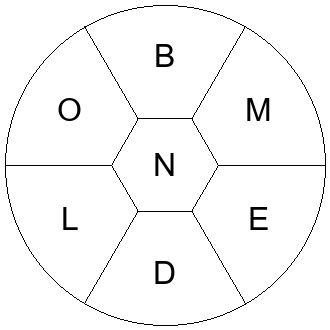
Number of Pangrams: 2

Maximum Puzzle Score: 264

Number of Answers: 59

Points Needed for Genius: 185

Genius requires between 26 and 51 words. You need at least a 7-letter word to reach genius. If you don't get the pangrams, you need 80% of the total points to reach genius. If you get the pangrams, you only need 66% of the remaining points to reach genius.

Other days with this pangram:

The button below will reveal a chart with the number of words by each letter. Red bars indicate that there is a pangram(s) starting with that letter.


How does this puzzle compare to other puzzles?

Today's score of 264 was in the 87th percentile of all puzzles.
The last time there was a score this high was on August 30, 2025.
The highest score ever was 537 on January 22, 2021.
The lowest score ever was 47 on March 27, 2023.

This puzzle's 59 possible answers rank it in the 90th percentile of all puzzles.
The last time there were more answers than this was on August 30, 2025.
The highest number of answers was 81 on June 8, 2019.
The lowest number of answers was 16 on March 27, 2023.

It takes a 7-letter word for genius.
The last time this happened was on September 7, 2025.

Today's puzzle has an average word length of 5.4.
For all Bees, the average word length has been 5.3.


Haven't I seen these letters before?

Hover over a letter to see its first and most recent appearance in the Bee!


Haven't I seen these words before?

The most common words in the Bee are:

  • noon 212
  • loll 203
  • toot 195
  • naan 179
  • nana 179
  • lilt 144
  • till 144
  • tilt 144
  • nene 139
  • tint 138
  • mama 137
  • mamma 137
  • acacia 132
  • acai 132
  • onto 129
  • toon 129
  • onion 125
  • anal 121
  • anon 121
  • tact 117
  • dodo 116
  • olio 116
  • boob 114
  • booboo 114
  • baba 113
  • papa 113
  • poop 112
  • lull 111
  • lulu 111
  • call 108
  • calla 108
  • mitt 108
  • mono 107
  • moon 107
  • tutu 107
  • cocci 106
  • ratatat 106
  • tart 106
  • tartar 106
  • allay 105
  • ally 105
  • attar 105
  • tattoo 105
  • tatty 105
  • ammo 104
  • loon 104
  • momma 104
  • epee 100
  • peep 100
  • roar 99


How long are words in the Bee?

There have been 106,574 answers ever accepted in the Bee - with 10,777 unique words.
Below are the distributions of the lengths of these words.


Valid dictionary words not in today's official answers

You may be wondering why these words aren't here*:

  • bedemen
  • belon
  • bended
  • bendee
  • bene
  • benne
  • blende
  • bondmen
  • bonebed
  • bonne
  • dene
  • denned
  • doblon
  • dolmen
  • donne
  • donnee
  • enol
  • leben
  • leno
  • leone
  • loden
  • meno
  • monde
  • neem
  • neoned
  • nobble
  • nobbled
  • noddle
  • noddled
  • nolo
  • nome
  • nomen
  • nonbonded
  • nonmen
  • nonnoble
  • oenomel
  • omened

*Because the New York Times considers them obscure or offensive.

been

noun
  1. A flying insect, of the clade Anthophila within the hymenopteran superfamily Apoidea, known for its organised societies (though only a minority have them), for collecting pollen and (in some species) producing wax and honey.

bellmen

noun
  1. A town crier
  2. A bellhop or bellboy

bend

noun
  1. A curve.
  2. Any of the various knots which join the ends of two lines.
  3. (in the plural, underwater diving, with the) A severe condition caused by excessively quick decompression, causing bubbles of nitrogen to form in the blood; decompression sickness.
  4. One of the honourable ordinaries formed by two diagonal lines drawn from the dexter chief to the sinister base; it generally occupies a fifth part of the shield if uncharged, but if charged one third.
  5. Turn; purpose; inclination; ends.
  6. In the leather trade, the best quality of sole leather; a butt; sometimes, half a butt cut lengthwise.
  7. Hard, indurated clay; bind.
  8. (in the plural) The thickest and strongest planks in a ship's sides, more generally called wales, which have the beams, knees, and futtocks bolted to them.
  9. (in the plural) The frames or ribs that form the ship's body from the keel to the top of the sides.
  10. A glissando, or glide between one pitch and another.
verb
  1. To cause (something) to change its shape into a curve, by physical force, chemical action, or any other means.
  2. To become curved.
  3. To cause to change direction.
  4. To change direction.
  5. To be inclined; to direct itself.
  6. (usually with "down") To stoop.
  7. To bow in prayer, or in token of submission.
  8. To force to submit.
  9. To submit.
  10. To apply to a task or purpose.
  11. To apply oneself to a task or purpose.
  12. To adapt or interpret to for a purpose or beneficiary.
  13. To tie, as in securing a line to a cleat; to shackle a chain to an anchor; make fast.
  14. To smoothly change the pitch of a note.
  15. To swing the body when rowing.

blend

noun
  1. A mixture of two or more things.
  2. A word formed by combining two other words; a grammatical contamination, portmanteau word.
verb
  1. To mingle; to mix; to unite intimately; to pass or shade insensibly into each other.
  2. To be mingled or mixed.
  3. To pollute by mixture or association; to spoil or corrupt; to blot; to stain.

blended

verb
  1. To mingle; to mix; to unite intimately; to pass or shade insensibly into each other.
  2. To be mingled or mixed.
  3. To pollute by mixture or association; to spoil or corrupt; to blot; to stain.
adjective
  1. Representing a mixture of something.

blond

noun
  1. A pale yellowish (golden brown) color, especially said of hair color.
  2. A person with this hair color.
verb
  1. To color or dye blond
adjective
  1. Of a bleached or pale golden (light yellowish) colour.
  2. (of a person) Having blond hair.
adjective
  1. (especially of a woman) Stupid, ignorant, naive.

blonde

noun
  1. A pale yellowish (golden brown) color, especially said of hair color.
  2. A person with this hair color.
adjective
  1. Of a bleached or pale golden (light yellowish) colour.
  2. (of a person) Having blond hair.
adjective
  1. (especially of a woman) Stupid, ignorant, naive.

bonbon

noun
  1. A sweet, especially a small chocolate-covered candy.
  2. A small, spherical savory snack or canapé.
  3. A Christmas cracker.

bond

Etymology 1

noun
  1. Evidence of a long-term debt, by which the bond issuer (the borrower) is obliged to pay interest when due, and repay the principal at maturity, as specified on the face of the bond certificate. The rights of the holder are specified in the bond indenture, which contains the legal terms and conditions under which the bond was issued. Bonds are available in two forms: registered bonds, and bearer bonds.
  2. A documentary obligation to pay a sum or to perform a contract; a debenture.
  3. A partial payment made to show a provider that the customer is sincere about buying a product or a service. If the product or service is not purchased the customer then forfeits the bond.
  4. (often in the plural) A physical connection which binds, a band.
  5. An emotional link, connection or union; that which holds two or more people together, as in a friendship; a tie.
  6. Moral or political duty or obligation.
  7. A link or force between neighbouring atoms in a molecule.
  8. A binding agreement, a covenant.
  9. A bail bond.
  10. Any constraining or cementing force or material.
  11. In building, a specific pattern of bricklaying.
  12. In Scotland, a mortgage.
  13. A heavy copper wire or rod connecting adjacent rails of an electric railway track when used as a part of the electric circuit.
verb
  1. To connect, secure or tie with a bond; to bind.
  2. To cause to adhere (one material with another).
  3. To form a chemical compound with.
  4. To guarantee or secure a financial risk.
  5. To form a friendship or emotional connection.
  6. To put in a bonded warehouse; to secure (goods) until the associated duties are paid.
  7. To lay bricks in a specific pattern.
  8. To make a reliable electrical connection between two conductors (or any pieces of metal that may potentially become conductors).
  9. To bail out by means of a bail bond.

Etymology 2

noun
  1. A peasant; churl.
  2. A vassal; serf; one held in bondage to a superior.
adjective
  1. Subject to the tenure called bondage.
  2. In a state of servitude or slavedom; not free.
  3. Servile; slavish; pertaining to or befitting a slave.

bonded

verb
  1. To connect, secure or tie with a bond; to bind.
  2. To cause to adhere (one material with another).
  3. To form a chemical compound with.
  4. To guarantee or secure a financial risk.
  5. To form a friendship or emotional connection.
  6. To put in a bonded warehouse; to secure (goods) until the associated duties are paid.
  7. To lay bricks in a specific pattern.
  8. To make a reliable electrical connection between two conductors (or any pieces of metal that may potentially become conductors).
  9. To bail out by means of a bail bond.
adjective
  1. Secured by bond.

bone

Etymology 1

noun
  1. A composite material consisting largely of calcium phosphate and collagen and making up the skeleton of most vertebrates.
  2. Any of the components of an endoskeleton, made of bone.
  3. A bone of a fish; a fishbone.
  4. A bonefish
  5. One of the rigid parts of a corset that forms its frame, the boning, originally made of whalebone.
  6. One of the fragments of bone held between the fingers of the hand and rattled together to keep time to music.
  7. Anything made of bone, such as a bobbin for weaving bone lace.
  8. The framework of anything.
  9. An off-white colour, like the colour of bone.
  10. A dollar.
  11. The wishbone formation.
  12. An erect penis; a boner.
  13. (chiefly in the plural) A domino or dice.
verb
  1. To prepare (meat, etc) by removing the bone or bones from.
  2. To fertilize with bone.
  3. To put whalebone into.
  4. To make level, using a particular procedure; to survey a level line.
  5. (usually of a man) To have sexual intercourse with.
  6. (in Aboriginal culture) To perform "bone pointing", a ritual that is intended to bring illness or even death to the victim.
  7. (usually with "up") To study.
  8. To polish boots to a shiny finish.
adjective
  1. Of an off-white colour, like the colour of bone.

Etymology 2

verb
  1. To apprehend, steal.

Etymology 3

verb
  1. To sight along an object or set of objects to check whether they are level or in line.

Etymology 4

noun
  1. A musical instrument in the brass family, having a cylindrical bore, and usually a sliding tube (but sometimes piston valves, and rarely both). Most often refers to the tenor trombone, which is the most common type of trombone and has a fundamental tone of B♭ˌ (contra B♭).
  2. The common European bittern.

boned

verb
  1. To prepare (meat, etc) by removing the bone or bones from.
  2. To fertilize with bone.
  3. To put whalebone into.
  4. To make level, using a particular procedure; to survey a level line.
  5. (usually of a man) To have sexual intercourse with.
  6. (in Aboriginal culture) To perform "bone pointing", a ritual that is intended to bring illness or even death to the victim.
  7. (usually with "up") To study.
  8. To polish boots to a shiny finish.
verb
  1. To apprehend, steal.
verb
  1. To sight along an object or set of objects to check whether they are level or in line.
adjective
  1. (in combination) Having some specific type of bone.
  2. Of computer-generated animations: based on models with simulated bones or joints.
  3. Beset with unfortunate circumstances that seem difficult or impossible to overcome; in imminent danger.
  4. Broken.
  5. Of meat or fish, having had the bones removed before cooking.
  6. Of a garment such as a corset or basque, fitted with bones.
  7. Having the legs straightened during a trick

bonobo

noun
  1. The pygmy chimpanzee, Pan paniscus, from Africa south of the Congo river.

boon

Etymology 1

noun
  1. A prayer; petition.
  2. That which is asked or granted as a benefit or favor; a gift or benefaction.
  3. A good thing; a blessing or benefit; a thing to be thankful for.
  4. An unpaid service due by a tenant to his lord.

Etymology 2

adjective
  1. Good; prosperous.
  2. Kind; bountiful; benign.
  3. (Now only in boon companion) gay; merry; jovial; convivial.

Etymology 3

noun
  1. The woody portion of flax, separated from the fiber as refuse matter by retting, braking, and scutching.

debone

verb
  1. To remove the bones from.

deboned

verb
  1. To remove the bones from.
adjective
  1. Having its bones removed.

demon

noun
  1. An evil supernatural spirit.
  2. A neutral supernatural spirit.
  3. Someone with great strength, passion or skill for a particular activity, pursuit etc.; an enthusiast.
  4. A form of patience (known as Canfield in the US).
  5. Any of various hesperiid butterflies of the genera Notocrypta and Udaspes.

done

Etymology 1

verb
  1. (auxiliary) A syntactic marker.
  2. To perform; to execute.
  3. To cause, make (someone) (do something).
  4. To suffice.
  5. To be reasonable or acceptable.
  6. (ditransitive) To have (as an effect).
  7. To fare, perform (well or poorly).
  8. (chiefly in questions) To have as one's job.
  9. To perform the tasks or actions associated with (something).
  10. To cook.
  11. To travel in, to tour, to make a circuit of.
  12. To treat in a certain way.
  13. To work for or on, by way of caring for, looking after, preparing, cleaning, keeping in order, etc.
  14. To act or behave in a certain manner; to conduct oneself.
  15. To spend (time) in jail. (See also do time)
  16. To impersonate or depict.
  17. (with 'a' and the name of a person, place, event, etc.) To copy or emulate the actions or behaviour that is associated with the person or thing mentioned.
  18. To kill.
  19. To deal with for good and all; to finish up; to undo; to ruin; to do for.
  20. To punish for a misdemeanor.
  21. To have sex with. (See also do it)
  22. To cheat or swindle.
  23. To convert into a certain form; especially, to translate.
  24. To finish.
  25. To work as a domestic servant (with for).
  26. (auxiliary) Used to form the present progressive of verbs.
  27. To cash or to advance money for, as a bill or note.
  28. (ditransitive) To make or provide.
  29. To injure (one's own body part).
  30. To take drugs.
  31. (in the form be doing [somewhere]) To exist with a purpose or for a reason.
adjective
  1. (of food) Ready, fully cooked.
  2. Having completed or finished an activity.
  3. Being exhausted or fully spent.
  4. Without hope or prospect of completion or success.
  5. Fashionable, socially acceptable, tasteful.

Etymology 2

noun
  1. A synthetic opioid analgesic, used to wean addicts off heroin or other opiate based narcotics, and in chronic pain management.

donee

noun
  1. Someone who receives a gift from a donor.

donned

verb
  1. (clothing) To put on, to dress in.

ebon

noun
  1. (now poetic) Ebony; an ebony tree.
adjective
  1. Made of ebony.
  2. Black in colour.

embolden

verb
  1. To render (someone) bolder or more courageous.
  2. To encourage, inspire, or motivate.
  3. To format text in boldface.

emboldened

verb
  1. To render (someone) bolder or more courageous.
  2. To encourage, inspire, or motivate.
  3. To format text in boldface.
adjective
  1. Having been made bold.

emend

verb
  1. To correct and revise (text or a document).

emended

verb
  1. To correct and revise (text or a document).

ended

verb
  1. To come to an end
  2. To finish, terminate.
adjective
  1. (in combination) Having (a specified kind or number of) ends.

ennoble

verb
  1. To bestow with nobility, honour or grace.
  2. To perform on a fabric the industrial processes of dry-cleaning, printing and embossing, and sizing and finishing.

ennobled

verb
  1. To bestow with nobility, honour or grace.
  2. To perform on a fabric the industrial processes of dry-cleaning, printing and embossing, and sizing and finishing.

lemon

noun
  1. A yellowish citrus fruit.
  2. A semitropical evergreen tree, Citrus limon, that bears such fruits.
  3. A taste or flavour/flavor of lemons.
  4. A more or less bright shade of yellow associated with lemon fruits.
  5. A defective or inadequate item or individual.
  6. (shortened from “lemon flavour”) Favor.
  7. A piece of fanfiction involving explicit sex (named after the erotic anime series Cream Lemon).
verb
  1. To flavour with lemon.
adjective
  1. Containing or having the flavour/flavor and/or scent of lemons.
  2. Of the pale yellow colour/color of lemons.
  3. (from "lemon tart") Smart; cheeky, vocal.

lend

Etymology 1

noun
  1. The lumbar region; loin.
  2. (of a person or animal) The loins; flank; buttocks.

Etymology 2

verb
  1. To allow to be used by someone temporarily, on condition that it or its equivalent will be returned.
  2. To make a loan.
  3. To be suitable or applicable, to fit.
  4. To afford; to grant or furnish in general.
  5. To borrow.

lone

adjective
  1. Solitary; having no companion.
  2. Isolated or lonely; lacking companionship.
  3. Sole; being the only one of a type.
  4. Situated by itself or by oneself, with no neighbours.
  5. Unfrequented by human beings; solitary.
  6. Single; unmarried, or in widowhood.

loon

Etymology 1

noun
  1. An idler, a lout.
  2. A boy, a lad.
  3. A harlot; mistress.
  4. A simpleton.
  5. A crazy or deranged person.
  6. An English soldier of an expeditionary army in Ireland.

Etymology 2

noun
  1. Any of various birds, of the order Gaviiformes, of North America and Europe that dive for fish and have a short tail, webbed feet and a yodeling cry.

melodeon

Etymology 1

noun
  1. A music hall.

Etymology 2

noun
  1. A type of reed organ with a single keyboard.
  2. An accordion where the melody-side keyboard is limited to the notes of diatonic scales in a small number of keys.

melon

Etymology 1

noun
  1. Any of various plants of the family Cucurbitaceae grown for food, generally not including the cucumber.
  2. The fruit of such plants.
  3. A light pinkish orange colour, like that of some melon flesh.
  4. (usually in the plural) Breasts.
  5. The head.
  6. A member of the Green Party, or similar environmental group.
  7. A mass of adipose tissue found in the forehead of all toothed whales, used to focus and modulate vocalizations.
adjective
  1. Of a light pinkish orange colour, like that of melon flesh.

Etymology 2

noun
  1. The result of heptazine being polymerized with the tri-s-triazine units linked through an amine (NH) link.

mend

noun
  1. A place, as in clothing, which has been repaired by mending.
  2. The act of repairing.
verb
  1. To repair, as anything that is torn, broken, defaced, decayed, or the like; to restore from partial decay, injury, or defacement.
  2. To alter for the better; to set right; to reform; hence, to quicken; as, to mend one's manners or pace.
  3. To help, to advance, to further; to add to.
  4. To grow better; to advance to a better state; to become improved.

mended

verb
  1. To repair, as anything that is torn, broken, defaced, decayed, or the like; to restore from partial decay, injury, or defacement.
  2. To alter for the better; to set right; to reform; hence, to quicken; as, to mend one's manners or pace.
  3. To help, to advance, to further; to add to.
  4. To grow better; to advance to a better state; to become improved.

mondo

Etymology 1

noun
  1. A dialogue between master and student designed to obtain an intuitive truth.

Etymology 2

adjective
  1. Big, large; major, significant.
adverb
  1. Very, extremely, really.

mono

Etymology 1

noun
  1. A viral infection marked by extreme fatigue, high fever, and swollen lymph nodes.

Etymology 2

noun
  1. A bicycle or motorcycle trick where the front wheel is lifted off the ground while riding

Etymology 3

adjective
  1. Monaural or monophonic; having only a single audio channel.

Etymology 4

adjective
  1. Monochrome.

Etymology 5

noun
  1. An injective homomorphism
  2. The absence of sexual dimorphism
  3. A morphism n such that for any other morphisms f and g, if n \circ f = n \circ g then f = g.

Etymology 6

noun
  1. A monogamous person.
adjective
  1. Monoamorous, monogamous.

Etymology 7

adjective
  1. Monosexual.

moon

proper noun
  1. The Earth's moon Luna; the sole natural satellite of the Earth, represented in astronomy and astrology by ☾.
  2. The god of the Moon in Heathenry.
  3. A surname.
  4. The 54th sura (chapter) of the Qur'an.
noun
  1. (by extension of Moon) Any natural satellite of a planet.
  2. A month, particularly a lunar month.
  3. A crescent-like outwork in a fortification.
  4. The eighteenth trump/major arcana card of the Tarot.
  5. The thirty-second Lenormand card.
  6. In hearts, the action of taking all the point cards in one hand.
verb
  1. To display one's buttocks to, typically as a jest, insult, or protest.
  2. (usually followed by over or after) To fuss over something adoringly; to be infatuated with someone.
  3. To spend time idly, absent-mindedly.
  4. To expose to the rays of the Moon.
  5. To adorn with moons or crescents.
  6. (cryptocurrency) Of a coin or token: to rise in price rapidly.
  7. To shoot the moon.

mooned

verb
  1. To display one's buttocks to, typically as a jest, insult, or protest.
  2. (usually followed by over or after) To fuss over something adoringly; to be infatuated with someone.
  3. To spend time idly, absent-mindedly.
  4. To expose to the rays of the Moon.
  5. To adorn with moons or crescents.
  6. (cryptocurrency) Of a coin or token: to rise in price rapidly.
  7. To shoot the moon.
adjective
  1. Of or resembling the moon; symbolized by the moon.

need

Etymology 1

noun
  1. A requirement for something; something needed.
  2. Lack of means of subsistence; poverty; indigence; destitution.

Etymology 2

verb
  1. To have an absolute requirement for.
  2. To want strongly; to feel that one must have something.
  3. (modal verb) To be obliged or required (to do something).
  4. To be required; to be necessary.
  5. To be necessary (to someone).

needed

verb
  1. To have an absolute requirement for.
  2. To want strongly; to feel that one must have something.
  3. (modal verb) To be obliged or required (to do something).
  4. To be required; to be necessary.
  5. To be necessary (to someone).
adjective
  1. Necessary; being required.

needle

noun
  1. A fine, sharp implement usually for piercing such as sewing, or knitting, acupuncture, tattooing, body piercing, medical injections, etc.
  2. Any slender, pointed object resembling a needle, such as a pointed crystal, a sharp pinnacle of rock, an obelisk, etc.
  3. A fine measurement indicator on a dial or graph, e.g. a compass needle.
  4. A sensor for playing phonograph records, a phonograph stylus.
  5. A needle-like leaf found on some conifers.
  6. A strong beam resting on props, used as a temporary support during building repairs.
  7. (usually preceded by the) The death penalty carried out by lethal injection.
  8. A text string that is searched for within another string. (see: needle in a haystack)
verb
  1. To pierce with a needle, especially for sewing or acupuncture.
  2. To tease in order to provoke; to poke fun at.
  3. To form, or be formed, in the shape of a needle.

needled

verb
  1. To pierce with a needle, especially for sewing or acupuncture.
  2. To tease in order to provoke; to poke fun at.
  3. To form, or be formed, in the shape of a needle.
adjective
  1. Covered or armored with needles.

nene

noun
  1. The Hawaiian goose, Branta sandvicensis, which was designated the state bird of Hawaii in 1957.

neon

noun
  1. The chemical element (symbol Ne) with an atomic number of 10. The lightest of the noble gases, it is a colourless, odorless inert gas.
  2. A form or sample of the element.
  3. Neon signs or lights, collectively.
  4. A neon tetra fish.
adjective
  1. (of a color) That resembles a neon light; extremely bright; fluorescent

noble

noun
  1. An aristocrat; one of aristocratic blood.
  2. A medieval gold coin of England in the 14th and 15th centuries, usually valued at 6s 8d.
adjective
  1. Having honorable qualities; having moral eminence and freedom from anything petty, mean or dubious in conduct and character.
  2. Grand; stately; magnificent; splendid.
  3. Of exalted rank; of or relating to the nobility; distinguished from the masses by birth, station, or title; highborn.
  4. (of a polyhedron) Both isohedral and isogonal.

noblemen

noun
  1. A peer; an aristocrat; ranks range from baron to king to emperor.

nodded

verb
  1. To incline the head up and down, as to indicate agreement.
  2. To briefly incline the head downwards as a cursory greeting.
  3. To sway, move up and down.
  4. To gradually fall asleep.
  5. To signify by a nod.
  6. To make a mistake by being temporarily inattentive or tired
  7. To head; to strike the ball with one's head.
  8. To allude to something.
  9. To fall asleep while under the influence of opiates.

node

noun
  1. A knot, knob, protuberance or swelling.
  2. The point where the orbit of a planet, as viewed from the Sun, intersects the ecliptic. The ascending and descending nodes refer respectively to the points where the planet moves from South to North and N to S; their respective symbols are ☊ and ☋.
  3. A leaf node.
  4. A computer or other device attached to a network.
  5. The point at which the lines of a funicular machine meet from different angular directions; — called also knot.
  6. The point at which a curve crosses itself, being a double point of the curve. See crunode and acnode.
  7. A similar point on a surface, where there is more than one tangent-plane.
  8. A vertex or a leaf in a graph of a network, or other element in a data structure.
  9. A hard concretion or incrustation which forms upon bones attacked with rheumatism, gout, or syphilis; sometimes also, a swelling in the neighborhood of a joint.
  10. A point along a standing wave where the wave has minimal amplitude.
  11. The knot, intrigue, or plot of a dramatic work.
  12. A hole in the gnomon of a sundial, through which passes the ray of light which marks the hour of the day, the parallels of the Sun's declination, his place in the ecliptic, etc.
  13. The word of interest in a KWIC, surrounded by left and right cotexts.

noel

noun
  1. Christmas
  2. A kind of hymn, or canticle, of mediaeval origin, sung in honor of the birth of Christ; a Christmas carol.

none

Etymology 1

noun
  1. A person without religious affiliation.
adverb
  1. To no extent, in no way.
  2. Not at all, not very.
  3. No, not.
pronoun
  1. Not any of a given number or group.

Etymology 2

noun
  1. Those without any religious affiliation: atheists and others outside any organized religion.
noun
  1. A light meal usually eaten around midday, notably when not as main meal of the day.
  2. A break in play between the first and second sessions.
  3. (Minnesota) Any small meal, especially one eaten at a social gathering.
noun
  1. The middle of the afternoon, normally between 2 and 4 pm.
noun
  1. (often capitalized) The notional first-quarter day of a Roman month, occurring on the 7th day of the four original 31-day months (March, May, Quintilis or July, and October) and on the 5th day of all other months.
  2. (sometimes capitalized) The ninth hour after dawn (about 3 pm).
  3. The divine office appointed to the hour.
noun
  1. The ninth hour of the day counted from sunrise; around three o'clock in the afternoon.
  2. Time of day when the sun is in its zenith; twelve o'clock in the day, midday.
  3. The corresponding time in the middle of the night; midnight.
  4. The highest point; culmination.
noun
  1. The letter ن in the Arabic script.

noodle

noun
  1. (usually in the plural) a string or strip of pasta
  2. A person with poor judgement; a fool
  3. The brain, the head
  4. A pool noodle
verb
  1. To think or ponder.
  2. To fiddle, play with, or mess around.
  3. To improvise music.
  4. To fish (usually for very large catfish) without any equipment other than the fisherman's own body
  5. To fossick, especially for opals.

noodled

verb
  1. To think or ponder.
  2. To fiddle, play with, or mess around.
  3. To improvise music.
  4. To fish (usually for very large catfish) without any equipment other than the fisherman's own body
  5. To fossick, especially for opals.

noon

Etymology 1

noun
  1. The ninth hour of the day counted from sunrise; around three o'clock in the afternoon.
  2. Time of day when the sun is in its zenith; twelve o'clock in the day, midday.
  3. The corresponding time in the middle of the night; midnight.
  4. The highest point; culmination.
verb
  1. To relax or sleep around midday

Etymology 2

noun
  1. The letter ن in the Arabic script.

odeon

noun
  1. An ancient Greek or Roman building used for performances of music and poetry.
  2. A theatre or concert hall.

olden

Etymology 1

adjective
  1. From or relating to a previous era.
  2. Old; ancient.

Etymology 2

verb
  1. To grow old; age; assume an older appearance or character; become affected by age.

omen

noun
  1. Something which portends or is perceived to portend either a good or evil event or circumstance in the future, or which causes a foreboding; a portent or augury.
  2. A thing of prophetic significance.
verb
  1. To be an omen of.
  2. To divine or predict from omens.

noob

noun
  1. (often pejorative) A newb or newbie; refers to the idea that someone is new to a game, concept, or idea; implying a lack of experience. Also, in some areas the word noob can mean someone is obsessed with things.