Sunday, September 21, 2025

Answers to yesterday's Bee

Jump to answers for


The official answers for today's puzzle are:

Click on the arrow to show the definition.
Click outside the pop-up to close it.


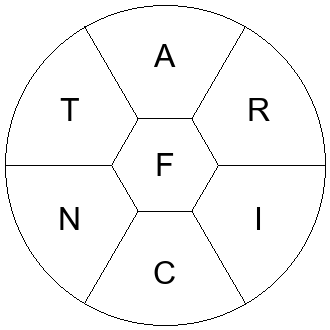
Number of Pangrams: 4

Maximum Puzzle Score: 193

Number of Answers: 34

Points Needed for Genius: 135

Genius requires between 15 and 31 words. You need at least a 7-letter word to reach genius. If you don't get the pangrams, you need 102% of the total points to reach genius. If you get the pangrams, you only need 56% of the remaining points to reach genius.

Other days with this pangram:

The button below will reveal a chart with the number of words by each letter. Red bars indicate that there is a pangram(s) starting with that letter.


How does this puzzle compare to other puzzles?

Today's score of 193 was in the 62nd percentile of all puzzles.
The last time there was a score this high was on September 20, 2025.
The highest score ever was 537 on January 22, 2021.
The lowest score ever was 47 on March 27, 2023.

This puzzle's 34 possible answers rank it in the 36th percentile of all puzzles.
The last time there were fewer answers than this was on September 20, 2025.
The highest number of answers was 81 on June 8, 2019.
The lowest number of answers was 16 on March 27, 2023.

It takes a 7-letter word for genius.
The last time this happened was on September 20, 2025.

Today's puzzle has an average word length of 5.8.
For all Bees, the average word length has been 5.3.


Haven't I seen these letters before?

Hover over a letter to see its first and most recent appearance in the Bee!


Haven't I seen these words before?

The most common words in the Bee are:

  • noon 213
  • loll 203
  • toot 196
  • naan 180
  • nana 180
  • lilt 144
  • till 144
  • tilt 144
  • nene 139
  • tint 139
  • mama 137
  • mamma 137
  • acacia 133
  • acai 133
  • onto 130
  • toon 130
  • onion 126
  • anal 122
  • anon 121
  • dodo 117
  • tact 117
  • olio 116
  • boob 115
  • booboo 115
  • baba 114
  • papa 113
  • poop 113
  • lull 111
  • lulu 111
  • call 109
  • calla 109
  • mitt 108
  • mono 107
  • moon 107
  • ratatat 107
  • tart 107
  • tartar 107
  • tutu 107
  • allay 106
  • ally 106
  • attar 106
  • cocci 106
  • tattoo 106
  • loon 105
  • tatty 105
  • ammo 104
  • momma 104
  • epee 101
  • peep 101
  • cancan 99


How long are words in the Bee?

There have been 107,059 answers ever accepted in the Bee - with 10,795 unique words.
Below are the distributions of the lengths of these words.


Valid dictionary words not in today's official answers

You may be wondering why these words aren't here*:

  • afrit
  • antifat
  • caff
  • caitiff
  • facia
  • facta
  • faff
  • fain
  • farci
  • fiar
  • ficin
  • finca
  • finnan
  • firn
  • fracti
  • frit
  • fritt
  • infanta
  • infra
  • naff
  • niff
  • raff
  • ratafia
  • taffia
  • tafia
  • tiffin

*Because the New York Times considers them obscure or offensive.

afar

adverb
  1. At, to, or from a great distance; far away.

affair

noun
  1. (often in the plural) Something which is done or is to be done; business of any kind, commercial, professional, or public.
  2. Any proceeding or action which it is wished to refer to or characterize vaguely.
  3. An action or engagement not of sufficient magnitude to be called a battle.
  4. A material object (vaguely designated).
  5. An adulterous relationship. (from affaire de cœur).
  6. A romantic relationship with someone who is not one's regular partner (boyfriend, girlfriend).
  7. A person with whom someone has an adulterous relationship.
  8. A party or social gathering, especially of a formal nature.
  9. The (male or female) genitals.

affiant

noun
  1. The individual witness whose statement is contained in an affidavit or sworn deposition.

aircraft

noun
  1. A vehicle capable of atmospheric flight due to interaction with the air, such as buoyancy or lift

antiaircraft

noun
  1. Anti-aircraft artillery.
  2. An anti-aircraft artillery organization.
  3. Anti-aircraft fire.
adjective
  1. Intended to attack aircraft.

artifact

noun
  1. An object made or shaped by human hand or labor.
  2. An object made or shaped by some agent or intelligence, not necessarily of direct human origin.
  3. Something viewed as a product of human agency or conception rather than an inherent element.
  4. A finding or structure in an experiment or investigation that is not a true feature of the object under observation, but is a result of external action, the test arrangement, or an experimental error.
  5. An object, such as a tool, ornament, or weapon of archaeological or historical interest, especially such an object found at an archaeological excavation.
  6. An appearance or structure in protoplasm due to death, the method of preparation of specimens, or the use of reagents, and not present during life.
  7. A perceptible distortion that appears in an audio or video file or a digital image as a result of applying a lossy compression algorithm.

caftan

noun
  1. A long tunic worn in the Eastern Mediterranean.
  2. A long dress or shirt similar in style to those worn in the Eastern Mediterranean.

craft

noun
  1. Strength; power; might; force .
  2. Intellectual power; skill; art.
  3. (obsolete in the general sense) A work or product of art .
  4. A device, a means; a magical device, spell or enchantment .
  5. Learning of the schools, scholarship; a branch of learning or knowledge, a science, especially one of the ‘seven liberal arts’ of the medieval universities .
  6. Skill, skilfulness, art, especially the skill needed for a particular profession .
  7. (plural crafts) A branch of skilled work or trade, especially one requiring manual dexterity or artistic skill, but sometimes applied equally to any business, calling or profession; the skilled practice of a practical occupation .
  8. A trade or profession as embodied in its practitioners collectively; the members of a trade or handicraft as a body; an association of these; a trade's union, guild, or ‘company’ .
  9. (plural craft) A vehicle designed for navigation in or on water or air or through outer space .
  10. Implements used in catching fish, such as net, line, or hook. Modern use primarily in whaling, as in harpoons, hand-lances, etc. .
verb
  1. To make by hand and with much skill.
  2. To construct, develop something (like a skilled craftsman).
  3. To combine multiple items to form a new item, such as armour or medicine.

fact

noun
  1. Something actual as opposed to invented.
  2. Something which is real.
  3. Something concrete used as a basis for further interpretation.
  4. An objective consensus on a fundamental reality that has been agreed upon by a substantial number of experts.
  5. Information about a particular subject, especially actual conditions and/or circumstances.
  6. An individual value or measurement at the lowest level of granularity in a data warehouse.
  7. Action; the realm of action.
  8. A wrongful or criminal deed.
  9. A feat or meritorious deed.
interjection
  1. Used before making a statement to introduce it as a trustworthy one.

faint

Etymology 1

noun
  1. The act of fainting, syncope.
  2. The state of one who has fainted; a swoon.
adjective
  1. (of a being) Lacking strength; weak; languid; inclined to lose consciousness
  2. Lacking courage, spirit, or energy; cowardly; dejected
  3. Barely perceptible; not bright, or loud, or sharp
  4. Performed, done, or acted, weakly; not exhibiting vigor, strength, or energy
  5. Slight; minimal.

Etymology 2

verb
  1. To lose consciousness through a lack of oxygen or nutrients to the brain, usually as a result of suddenly reduced blood flow (may be caused by emotional trauma, loss of blood or various medical conditions).
  2. To sink into dejection; to lose courage or spirit; to become depressed or despondent.
  3. To decay; to disappear; to vanish.

fair

Etymology 1

noun
  1. Something which is fair (in various senses of the adjective).
  2. A woman, a member of the ‘fair sex’; also as a collective singular, women.
  3. Fairness, beauty.
  4. A fair woman; a sweetheart.
  5. Good fortune; good luck.
verb
  1. To smoothen or even a surface (especially a connection or junction on a surface).
  2. To bring into perfect alignment (especially about rivet holes when connecting structural members).
  3. To construct or design a structure whose primary function is to produce a smooth outline or reduce air drag or water resistance.
  4. To make fair or beautiful.
adjective
  1. Beautiful, of a pleasing appearance, with a pure and fresh quality.
  2. Unblemished (figuratively or literally); clean and pure; innocent.
  3. Light in color, pale, particularly with regard to skin tone but also referring to blond hair.
  4. Just, equitable.
  5. Adequate, reasonable, or decent.
  6. (of a wind) Favorable to a ship's course.
  7. Not overcast; cloudless; clear; pleasant; propitious; said of the sky, weather, or wind, etc.
  8. Free from obstacles or hindrances; unobstructed; unencumbered; open; direct; said of a road, passage, etc.
  9. Without sudden change of direction or curvature; smooth; flowing; said of the figure of a vessel, and of surfaces, water lines, and other lines.
  10. Between the baselines.
  11. (of a catch) Taken direct from an opponent's foot, without the ball touching the ground or another player.
  12. (of a ball delivered by the bowler) Not a no-ball.
  13. Of a coin or die, having equal chance of landing on any side, unbiased.
adverb
  1. Clearly, openly, frankly, civilly, honestly, favorably, auspiciously, agreeably

Etymology 2

noun
  1. A community gathering to celebrate and exhibit local achievements.
  2. An event for public entertainment and trade, a market.
  3. An event for professionals in a trade to learn of new products and do business, a trade fair.
  4. A travelling amusement park (called a funfair in British English and a (travelling) carnival in US English).

fanatic

noun
  1. A person who is zealously enthusiastic for some cause, especially in religion.
adjective
  1. Fanatical.
  2. Showing evidence of possession by a god or demon; frenzied, overzealous.

fanfic

noun
  1. Fan fiction
  2. A work of fan fiction

farina

noun
  1. A fine flour or meal made from cereal grains or from the starch or fecula of vegetables, extracted by various processes, and used in cookery.

fart

noun
  1. An emission of digestive gases from the anus; a flatus.
  2. (impolite) An irritating person; a fool.
  3. (impolite, potentially offensive) (usually as "old fart") An elderly person; especially one perceived to hold old-fashioned views.
verb
  1. (impolite) To emit digestive gases from the anus; to flatulate.
  2. (usually as "fart around") To waste time with idle and inconsequential tasks; to go about one's activities in a lackadaisical manner; to be lazy or over-relaxed in one's manner or bearing.
  3. To emit (fumes, gases, etc.).

fiat

noun
  1. An arbitrary or authoritative command or order to do something; an effectual decree.
  2. Authorization, permission or (official) sanction.
  3. (English law) A warrant of a judge for certain processes.
  4. (English law) An authority for certain proceedings given by the Lord Chancellor's signature.
verb
  1. (used in academic debate and role-playing games) To make (something) happen.

franc

noun
  1. A former unit of currency of France, Belgium and Luxembourg, replaced by the euro.
  2. Any of several units of currency, some of which are multi-national (West African CFA Franc (XOF), Central African CFA Franc (XAF), the Swiss franc (CHF)) while others are national currencies.

frantic

noun
  1. A person who is insane or mentally unstable, madman.
adjective
  1. Insane, mentally unstable.
  2. In a state of panic, worry, frenzy or rush.
  3. Extremely energetic

frat

noun
  1. Shortened form for fraternity, college organization. (Often used as a noun modifier.)

friar

noun
  1. A member of a mendicant Christian order such as the Augustinians, Carmelites (white friars), Franciscans (grey friars) or the Dominicans (black friars).
  2. A white or pale patch on a printed page.
  3. An American fish, the silverside.

frittata

noun
  1. A form of omelette in which vegetables, cheese etc are mixed into the eggs and cooked together.

infant

noun
  1. A very young human being, from birth to somewhere between six months and two years of age, needing almost constant care and/or attention.
  2. A minor.
  3. A noble or aristocratic youth.
verb
  1. To bear or bring forth (a child); to produce, in general.

infarct

noun
  1. An area of dead tissue caused by a loss of blood supply; a localized necrosis.

infract

Etymology 1

verb
  1. To infringe, violate or disobey (a rule).
  2. To break off.

Etymology 2

adjective
  1. Not broken or fractured; unharmed; whole.

naif

noun
  1. One who is naive.
adjective
  1. Naive.

raffia

noun
  1. A fibrous material used for tying plants, originating from the leaves of the raffia palm tree (genus Raphia).

raft

Etymology 1

noun
  1. A flat-bottomed craft able to float and drift on water, used for transport or as a waterborne platform.
  2. (by extension) Any flattish thing, usually wooden, used in a similar fashion.
  3. A thick crowd of seabirds or sea mammals, particularly a group of penguins when in the water.
  4. A collection of logs, fallen trees, etc. which obstructs navigation in a river.
  5. (when ordering food) A slice of toast.
  6. A square array of sensors forming part of a large telescope.
verb
  1. To convey on a raft.
  2. To make into a raft.
  3. To travel by raft.
  4. To dock (toolbars, etc.) so that they share horizontal or vertical space.

Etymology 2

noun
  1. A large (but unspecified) number, a lot.

riff

Etymology 1

noun
  1. A repeated instrumental melody line in a song.
  2. A clever or witty remark.
  3. A variation on something.
  4. A spoof.
verb
  1. To improvise in the performance or practice of an art, especially by expanding on or making novel use of traditional themes.
  2. To riffle.

Etymology 2

noun
  1. The belly; the bowels.

riffraff

noun
  1. The rabble; crowds; the common people.
  2. Sweepings; refuse.

rift

Etymology 1

noun
  1. A chasm or fissure.
  2. A break in the clouds, fog, mist etc., which allows light through.
  3. A shallow place in a stream; a ford.
verb
  1. To form a rift; to split open.
  2. To cleave; to rive; to split.

Etymology 2

verb
  1. (obsolete outside Scotland and northern Britain) To belch.

tariff

noun
  1. A system of government-imposed duties levied on imported or exported goods; a list of such duties, or the duties themselves.
  2. A schedule of rates, fees or prices.
  3. A sentence determined according to a scale of standard penalties for certain categories of crime.
verb
  1. To levy a duty on (something)

tiff

Etymology 1

noun
  1. A small argument; a petty quarrel.
  2. Liquor; especially, a small draught of liquor.
verb
  1. To quarrel.

Etymology 2

verb
  1. To deck out; to dress.

Etymology 3

verb
  1. (British India) To have lunch.

traffic

noun
  1. Pedestrians or vehicles on roads, or the flux or passage thereof.
  2. Commercial transportation or exchange of goods, or the movement of passengers or people.
  3. Illegal trade or exchange of goods, often drugs.
  4. Exchange or flux of information, messages or data, as in a computer or telephone network.
  5. Commodities of the market.
verb
  1. To pass goods and commodities from one person to another for an equivalent in goods or money; to buy or sell goods
  2. To trade meanly or mercenarily; to bargain.
  3. To exchange in traffic; to effect by a bargain or for a consideration.

antifa

proper noun
  1. A decentralised, radical political movement that opposes fascism.
  2. A local instance of this movement.
noun
  1. Opposition to fascism
noun
  1. A person opposed to the tenets of fascism.
adjective
  1. Opposed to the tenets of fascism; antifa.