Monday, September 22, 2025

Answers to yesterday's Bee

Jump to answers for


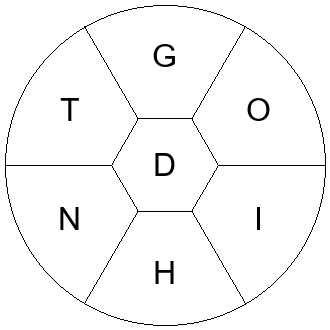
The official answers for today's puzzle are:

Click on the arrow to show the definition.
Click outside the pop-up to close it.


Number of Pangrams: 2

Maximum Puzzle Score: 175

Number of Answers: 33

Points Needed for Genius: 122

Genius requires between 16 and 29 words. You need at least a 7-letter word to reach genius. If you don't get the pangrams, you need 86% of the total points to reach genius. If you get the pangrams, you only need 63% of the remaining points to reach genius.

Other days with this pangram:

The button below will reveal a chart with the number of words by each letter. Red bars indicate that there is a pangram(s) starting with that letter.


How does this puzzle compare to other puzzles?

Today's score of 175 was in the 53rd percentile of all puzzles.
The last time there was a score this high was on September 21, 2025.
The highest score ever was 537 on January 22, 2021.
The lowest score ever was 47 on March 27, 2023.

This puzzle's 33 possible answers rank it in the 33rd percentile of all puzzles.
The last time there were fewer answers than this was on September 21, 2025.
The highest number of answers was 81 on June 8, 2019.
The lowest number of answers was 16 on March 27, 2023.

It takes a 7-letter word for genius.
The last time this happened was on September 21, 2025.

Today's puzzle has an average word length of 5.7.
For all Bees, the average word length has been 5.3.


Haven't I seen these letters before?

Hover over a letter to see its first and most recent appearance in the Bee!


Haven't I seen these words before?

The most common words in the Bee are:

  • noon 213
  • loll 203
  • toot 196
  • naan 180
  • nana 180
  • lilt 144
  • till 144
  • tilt 144
  • nene 139
  • tint 139
  • mama 137
  • mamma 137
  • acacia 133
  • acai 133
  • onto 130
  • toon 130
  • onion 126
  • anal 122
  • anon 121
  • dodo 118
  • tact 117
  • olio 116
  • boob 115
  • booboo 115
  • baba 114
  • papa 113
  • poop 113
  • lull 111
  • lulu 111
  • call 109
  • calla 109
  • mitt 108
  • mono 107
  • moon 107
  • ratatat 107
  • tart 107
  • tartar 107
  • tutu 107
  • allay 106
  • ally 106
  • attar 106
  • cocci 106
  • tattoo 106
  • loon 105
  • tatty 105
  • ammo 104
  • momma 104
  • epee 101
  • peep 101
  • cancan 99


How long are words in the Bee?

There have been 107,092 answers ever accepted in the Bee - with 10,795 unique words.
Below are the distributions of the lengths of these words.


Valid dictionary words not in today's official answers

You may be wondering why these words aren't here*:

  • dhooti
  • dido
  • dight
  • dighting
  • digitonin
  • dingdong
  • dingdonging
  • dinning
  • dinting
  • dittoing
  • doggoning
  • dogtooth
  • doit
  • donging
  • doodoo
  • godding
  • godhood
  • hoddin
  • hoodooing
  • indign
  • indigoid
  • indigotin
  • inditing
  • iodid
  • iodin
  • nidi
  • niding
  • nitid
  • nodi
  • noodging
  • odontoid
  • oidioid
  • ootid
  • tondi
  • tondo

*Because the New York Times considers them obscure or offensive.

dhoti

noun
  1. A long loincloth worn by Hindu men in India.
  2. The cotton fabric used for such loincloths.

digging

verb
  1. To move hard-packed earth out of the way, especially downward to make a hole with a shovel. Or to drill, or the like, through rocks, roads, or the like. More generally, to make any similar hole by moving material out of the way.
  2. To get by digging; to take from the ground; often with up.
  3. To take ore from its bed, in distinction from making excavations in search of ore.
  4. To work like a digger; to study ploddingly and laboriously.
  5. To investigate, to research, often followed by out or up.
  6. To thrust; to poke.
  7. To defend against an attack hit by the opposing team by successfully passing the ball
verb
  1. To understand or show interest in.
  2. To appreciate, or like.
noun
  1. The action performed by a person or thing that digs.
  2. A place where ore is dug, especially certain localities in California, Australia, etc. where gold is obtained.
  3. Region; locality

digit

noun
  1. A stage of proficiency or qualification in a course of study, now especially an award bestowed by a university or, in some countries, a college, as a certification of academic achievement. (In the United States, can include secondary schools.)
  2. A unit of measurement of angle equal to 1/360 of a circle's circumference.
  3. A unit of measurement of temperature on any of several scales, such as Celsius or Fahrenheit.
  4. The sum of the exponents of a term; the order of a polynomial.
  5. The dimensionality of a field extension.
  6. The number of edges that a vertex takes part in; a valency.
  7. The number of logical connectives in a formula.
  8. The curvature of a circular arc, expressed as the angle subtended by a fixed length of arc or chord.
  9. A unit of measurement of latitude and longitude which together identify a location on the Earth's surface.
  10. (grammar) Any of the three stages (positive, comparative, superlative) in the comparison of an adjective or an adverb.
  11. (obsolete outside heraldry) A step on a set of stairs; the rung of a ladder.
  12. An individual step, or stage, in any process or scale of values.
  13. A stage of rank or privilege; social standing.
  14. (genealogy) A ‘step’ in genealogical descent.
  15. One's relative state or experience; way, manner.
  16. The amount that an entity possesses a certain property; relative intensity, extent.
noun
  1. The whole numbers from 0 to 9 and the Arabic numerals representing them, which are combined to represent base-ten numbers.
  2. A distinct symbol representing one of an arithmetic progression of numbers between 0 and the radix.
  3. 1/12 the apparent diameter of the sun or moon, as a measure of the totality of an eclipse.
  4. A unit of length notionally based upon the width of an adult human finger, standardized differently in various places and times, the English digit of 1/16 foot (about 1.9 cm).
  5. A narrow extremity of the human hand or foot: a finger, thumb, or toe.
  6. Similar or similar-looking structures in other animals.
verb
  1. To point at or point out with the finger.
noun
  1. A unit of length equal to one twelfth of a foot, or exactly 2.54 centimetres.
  2. The amount of water which would cover a surface to the depth of an inch, used as a measurement of rainfall.
  3. The amount of an alcoholic beverage which would fill a glass or bottle to the depth of an inch.
  4. A very short distance.
noun
  1. A small island

ding

Etymology 1

noun
  1. Very minor damage, a small dent or chip.
  2. A rejection.
verb
  1. To hit or strike.
  2. To dash; to throw violently.
  3. To inflict minor damage upon, especially by hitting or striking.
  4. To fire or reject.
  5. To deduct, as points, from another, in the manner of a penalty; to penalize.
  6. To mishit (a golf ball).

Etymology 2

noun
  1. The high-pitched resonant sound of a bell.
  2. The act of levelling up.
verb
  1. To make high-pitched sound like a bell.
  2. To keep repeating; impress by reiteration, with reference to the monotonous striking of a bell.
  3. To level up.

Etymology 3

noun
  1. An ancient Chinese vessel with legs and a lid.

dinging

verb
  1. To hit or strike.
  2. To dash; to throw violently.
  3. To inflict minor damage upon, especially by hitting or striking.
  4. To fire or reject.
  5. To deduct, as points, from another, in the manner of a penalty; to penalize.
  6. To mishit (a golf ball).
verb
  1. To make high-pitched sound like a bell.
  2. To keep repeating; impress by reiteration, with reference to the monotonous striking of a bell.
  3. To level up.

dingo

noun
  1. Canis lupus dingo, a wild dog native to Australia.

dining

verb
  1. To eat; to eat dinner or supper.
  2. To give a dinner to; to furnish with the chief meal; to feed.
  3. To dine upon; to have to eat.
noun
  1. Eating dinner as a social function.
  2. Entertaining someone to dinner.

dino

noun
  1. Dinosaur.

dint

noun
  1. A blow, stroke, especially dealt in a fight.
  2. Force, power; especially in by dint of.
  3. The mark left by a blow; an indentation or impression made by violence; a dent.
verb
  1. To dent.

ditto

noun
  1. That which was stated before, the aforesaid, the above, the same, likewise.
  2. A duplicate or copy of a document, particularly one created by a spirit duplicator.
  3. A copy; an imitation.
  4. A symbol, represented by two apostrophes, inverted commas, or quotation marks (" "), when indicating that the item preceding is to be repeated.
  5. (in the plural) A suit of clothes of the same colour throughout.
verb
  1. To repeat the aforesaid, the earlier action etc.
adverb
  1. As said before, likewise.
interjection
  1. Used as an expression of agreement with what another person has said, or to indicate that what they have said equally applies to the person being addressed.

dodging

verb
  1. To avoid (something) by moving suddenly out of the way.
  2. To avoid; to sidestep.
  3. To go hither and thither.
  4. (videography) To decrease the exposure for certain areas of an image in order to make them darker (compare burn).
  5. To follow by dodging, or suddenly shifting from place to place.
  6. To trick somebody.
noun
  1. The act of dodging; a dodge.

dodo

Etymology 1

noun
  1. A large, flightless bird, †Raphus cucullatus, related to the pigeon, that is now extinct (since the 1600s) and was native to Mauritius.
  2. A person or organisation which is very old or has very old-fashioned views or is not willing to change and adapt.

Etymology 2

noun
  1. Fried plantain.

dogging

verb
  1. To pursue with the intent to catch.
  2. To follow in an annoying or harassing way.
  3. To fasten a hatch securely.
  4. To watch, or participate, in sexual activity in a public place.
  5. To intentionally restrict one's productivity as employee; to work at the slowest rate that goes unpunished.
  6. To criticize.
  7. To divide (a watch) with a comrade.
noun
  1. The act of one who dogs or harasses.
  2. The practice of having sexual intercourse in public places, especially parks, deliberately taking the chance of being watched.

doggo

noun
  1. A dog.

doing

Etymology 1

verb
  1. (auxiliary) A syntactic marker.
  2. To perform; to execute.
  3. To cause, make (someone) (do something).
  4. To suffice.
  5. To be reasonable or acceptable.
  6. (ditransitive) To have (as an effect).
  7. To fare, perform (well or poorly).
  8. (chiefly in questions) To have as one's job.
  9. To perform the tasks or actions associated with (something).
  10. To cook.
  11. To travel in, to tour, to make a circuit of.
  12. To treat in a certain way.
  13. To work for or on, by way of caring for, looking after, preparing, cleaning, keeping in order, etc.
  14. To act or behave in a certain manner; to conduct oneself.
  15. To spend (time) in jail. (See also do time)
  16. To impersonate or depict.
  17. (with 'a' and the name of a person, place, event, etc.) To copy or emulate the actions or behaviour that is associated with the person or thing mentioned.
  18. To kill.
  19. To deal with for good and all; to finish up; to undo; to ruin; to do for.
  20. To punish for a misdemeanor.
  21. To have sex with. (See also do it)
  22. To cheat or swindle.
  23. To convert into a certain form; especially, to translate.
  24. To finish.
  25. To work as a domestic servant (with for).
  26. (auxiliary) Used to form the present progressive of verbs.
  27. To cash or to advance money for, as a bill or note.
  28. (ditransitive) To make or provide.
  29. To injure (one's own body part).
  30. To take drugs.
  31. (in the form be doing [somewhere]) To exist with a purpose or for a reason.
noun
  1. A deed or action, especially when somebody is held responsible for it.

Etymology 2

interjection
  1. The sound made by an elastic object when struck by or striking a hard object.

dong

Etymology 1

noun
  1. The currency of Vietnam, 100 xus. Symbol: ₫

Etymology 2

noun
  1. A penis.
  2. (by extension) A dildo, specifically a synthetic anatomical replica of the penis.

Etymology 3

noun
  1. Onomatopoeia for the ringing sound made by a bell with a low pitch.
verb
  1. Of a bell: to make a low-pitched ringing sound.

Etymology 4

noun
  1. A submunicipal administrative unit of a city in North or South Korea.

donning

verb
  1. (clothing) To put on, to dress in.

doth

verb
  1. (auxiliary) A syntactic marker.
  2. To perform; to execute.
  3. To cause, make (someone) (do something).
  4. To suffice.
  5. To be reasonable or acceptable.
  6. (ditransitive) To have (as an effect).
  7. To fare, perform (well or poorly).
  8. (chiefly in questions) To have as one's job.
  9. To perform the tasks or actions associated with (something).
  10. To cook.
  11. To travel in, to tour, to make a circuit of.
  12. To treat in a certain way.
  13. To work for or on, by way of caring for, looking after, preparing, cleaning, keeping in order, etc.
  14. To act or behave in a certain manner; to conduct oneself.
  15. To spend (time) in jail. (See also do time)
  16. To impersonate or depict.
  17. (with 'a' and the name of a person, place, event, etc.) To copy or emulate the actions or behaviour that is associated with the person or thing mentioned.
  18. To kill.
  19. To deal with for good and all; to finish up; to undo; to ruin; to do for.
  20. To punish for a misdemeanor.
  21. To have sex with. (See also do it)
  22. To cheat or swindle.
  23. To convert into a certain form; especially, to translate.
  24. To finish.
  25. To work as a domestic servant (with for).
  26. (auxiliary) Used to form the present progressive of verbs.
  27. To cash or to advance money for, as a bill or note.
  28. (ditransitive) To make or provide.
  29. To injure (one's own body part).
  30. To take drugs.
  31. (in the form be doing [somewhere]) To exist with a purpose or for a reason.

doting

verb
  1. (usually with on) To be weakly or foolishly fond of somebody.
  2. To act in a foolish manner; to be senile.
noun
  1. Excessive fondness; reverence.
adjective
  1. Characterized by giving love and affection.

dotting

verb
  1. To cover with small spots (of some liquid).
  2. To add a dot (the symbol) or dots to.
  3. To mark by means of dots or small spots.
  4. To mark or diversify with small detached objects.
  5. To punch (a person).
noun
  1. A dotted pattern; a speckling.

good

Etymology 1

adjective
  1. (of people)
  2. (of capabilities)
  3. (properties and qualities)
  4. (when with and) Very, extremely. See good and.
  5. Holy (especially when capitalized) .
  6. (of quantities)
interjection
  1. That is good; an elliptical exclamation of satisfaction or commendation.

Etymology 2

adverb
  1. Well; satisfactorily or thoroughly.

Etymology 3

noun
  1. The forces or behaviours that are the enemy of evil. Usually consists of helping others and general benevolence.
  2. A result that is positive in the view of the speaker.
  3. The abstract instantiation of goodness; that which possesses desirable qualities, promotes success, welfare, or happiness, is serviceable, fit, excellent, kind, benevolent, etc.
  4. (usually in the plural) An item of merchandise.

Etymology 4

verb
  1. To thrive; fatten; prosper; improve.
  2. To make good; turn to good; improve.
  3. To make improvements or repairs.
  4. To benefit; gain.
  5. To do good to (someone); benefit; cause to improve or gain.
  6. To satisfy; indulge; gratify.
  7. To flatter; congratulate oneself; anticipate.

Etymology 5

verb
  1. To furnish with dung; manure; fatten with manure; fertilise.

hiding

Etymology 1

verb
  1. To put (something) in a place where it will be harder to discover or out of sight.
  2. To put oneself in a place where one will be harder to find or out of sight.
verb
  1. To beat with a whip made from hide.
noun
  1. A state of concealment.
  2. A place of concealment.

Etymology 2

noun
  1. A beating or spanking.

hind

Etymology 1

adjective
  1. Located at the rear (most often said of animals' body parts).

Etymology 2

noun
  1. A female deer, especially a red deer at least two years old.
  2. A spotted food fish of the genus Epinephelus.

Etymology 3

noun
  1. A servant, especially an agricultural labourer.

hood

Etymology 1

noun
  1. A covering for the head attached to a larger garment such as a jacket or cloak.
  2. A distinctively coloured fold of material, representing a university degree.
  3. An enclosure that protects something, especially from above.
  4. A soft top of a convertible car or carriage.
  5. The hinged cover over the engine of a motor vehicle: known as a bonnet in other countries.
  6. A metal covering that leads to a vent to suck away smoke or fumes.
verb
  1. To cover something with a hood.

Etymology 2

noun
  1. Gangster, thug.

Etymology 3

noun
  1. Neighborhood.
adjective
  1. Relating to inner-city everyday life, both positive and negative aspects; especially people’s attachment to and love for their neighborhoods.

Etymology 4

noun
  1. Person wearing a hoodie.

hooding

verb
  1. To cover something with a hood.

hoodoo

noun
  1. A practitioner of voodoo.
  2. Supernatural bad luck, or something or someone believed to bring bad luck.
  3. A tall thin spire of rock that protrudes from the bottom of arid basins and badlands.
verb
  1. To jinx; to bring bad luck or misfortune to.

hotdog

noun
  1. A sandwich consisting of a frankfurter, or wiener, in a bread roll, usually served with ketchup, mustard, relish, etc.
  2. A sausage of the type used as a general ingredient in this sandwich.
  3. A show-off or daredevil, especially in such sports as surfing, skateboarding, or skiing.
  4. A battered, deep-fried sausage or saveloy on a stick.
  5. The penis.
  6. A sexually suggestive physical gesture involving hip movement.
verb
  1. To show off, especially in surfing and other sports.

hotdogging

verb
  1. To show off, especially in surfing and other sports.

idiot

noun
  1. A person of low general intelligence.
  2. A person who makes stupid decisions; a fool.
  3. A person of the lowest intellectual standing, a person who lacks the capacity to develop beyond the mental age of a normal four-year-old; a person with an IQ below 30.
adjective
  1. Idiotic, stupid

indigo

noun
  1. A purplish-blue colour
  2. An indigo-colored dye obtained from certain plants (the indigo plant or woad), or a similar synthetic dye.
  3. An indigo plant, such as from species in genera Indigofera, Amorpha (false indigo), Baptisia (wild indigo), and Psorothamnus and Dalea (indigo bush).
adjective
  1. Having a deep purplish-blue colour

nodding

verb
  1. To incline the head up and down, as to indicate agreement.
  2. To briefly incline the head downwards as a cursory greeting.
  3. To sway, move up and down.
  4. To gradually fall asleep.
  5. To signify by a nod.
  6. To make a mistake by being temporarily inattentive or tired
  7. To head; to strike the ball with one's head.
  8. To allude to something.
  9. To fall asleep while under the influence of opiates.
noun
  1. The act by which one nods.
adjective
  1. Having the flower facing downwards.

tiding

verb
  1. To cause to float with the tide; to drive or carry with the tide or stream.
  2. To pour a tide or flood.
  3. To work into or out of a river or harbor by drifting with the tide and anchoring when it becomes adverse.
verb
  1. To happen, occur.
noun
  1. (usually in the plural) news; new information

goodnight

noun
  1. Alternative spelling of good night