Tuesday, September 23, 2025

Answers to yesterday's Bee

Jump to answers for


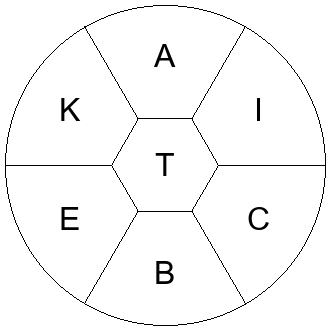
The official answers for today's puzzle are:

Click on the arrow to show the definition.
Click outside the pop-up to close it.


Number of Pangrams: 2

Maximum Puzzle Score: 158

Number of Answers: 37

Points Needed for Genius: 111

Genius requires between 15 and 33 words. You need at least a 7-letter word to reach genius. If you don't get the pangrams, you need 86% of the total points to reach genius. If you get the pangrams, you only need 64% of the remaining points to reach genius.

Other days with this pangram:

The button below will reveal a chart with the number of words by each letter. Red bars indicate that there is a pangram(s) starting with that letter.


How does this puzzle compare to other puzzles?

Today's score of 158 was in the 44th percentile of all puzzles.
The last time there was a score this low was on September 19, 2025.
The highest score ever was 537 on January 22, 2021.
The lowest score ever was 47 on March 27, 2023.

This puzzle's 37 possible answers rank it in the 44th percentile of all puzzles.
The last time there were fewer answers than this was on September 22, 2025.
The highest number of answers was 81 on June 8, 2019.
The lowest number of answers was 16 on March 27, 2023.

It takes a 7-letter word for genius.
The last time this happened was on September 22, 2025.

Today's puzzle has an average word length of 5.2.
For all Bees, the average word length has been 5.3.


Haven't I seen these letters before?

Hover over a letter to see its first and most recent appearance in the Bee!


Haven't I seen these words before?

The most common words in the Bee are:

  • noon 213
  • loll 203
  • toot 196
  • naan 180
  • nana 180
  • lilt 144
  • till 144
  • tilt 144
  • nene 139
  • tint 139
  • mama 137
  • mamma 137
  • acacia 133
  • acai 133
  • onto 130
  • toon 130
  • onion 126
  • anal 122
  • anon 121
  • dodo 118
  • tact 118
  • olio 116
  • boob 115
  • booboo 115
  • baba 114
  • papa 113
  • poop 113
  • lull 111
  • lulu 111
  • call 109
  • calla 109
  • mitt 108
  • mono 107
  • moon 107
  • ratatat 107
  • tart 107
  • tartar 107
  • tutu 107
  • allay 106
  • ally 106
  • attar 106
  • cocci 106
  • tattoo 106
  • loon 105
  • tatty 105
  • ammo 104
  • momma 104
  • epee 101
  • peep 101
  • cancan 99


How long are words in the Bee?

There have been 107,129 answers ever accepted in the Bee - with 10,795 unique words.
Below are the distributions of the lengths of these words.


Valid dictionary words not in today's official answers

You may be wondering why these words aren't here*:

  • aceta
  • acta
  • atactic
  • babbitt
  • baccate
  • backbeat
  • batata
  • batt
  • battik
  • becket
  • betta
  • bitt
  • cate
  • cattie
  • cete
  • ebbet
  • ectatic
  • etic
  • ictic
  • ikat
  • kata
  • katabatic
  • keet
  • keta
  • kibitka
  • tabetic
  • tace
  • tacket
  • taka
  • tate
  • tattie
  • tecta
  • tectite
  • tekkie
  • tektite
  • tektitic
  • ticktack
  • tictac
  • tike
  • titbit
  • titi
  • tittie

*Because the New York Times considers them obscure or offensive.

abate

Etymology 1

noun
  1. Abatement.
verb
  1. (obsolete outside law) To put an end to; to cause to cease.
  2. To become null and void.
  3. To nullify; make void.
  4. To humble; to lower in status; to bring someone down physically or mentally.
  5. To be humbled; to be brought down physically or mentally.
  6. To curtail; to deprive.
  7. To reduce in amount, size, or value.
  8. To decrease in size, value, or amount.
  9. To moderate; to lessen in force, intensity, to subside.
  10. To decrease in intensity or force; to subside.
  11. To deduct or omit.
  12. To bar or except.
  13. To cut away or hammer down, in such a way as to leave a figure in relief, as a sculpture, or in metalwork.
  14. To dull the edge or point of; to blunt.
  15. To destroy, or level to the ground.

Etymology 2

verb
  1. To enter a tenement without permission after the owner has died and before the heir takes possession.

Etymology 3

noun
  1. An Italian abbot, or other member of the clergy.

abet

noun
  1. Fraud or cunning.
  2. An act of abetting; of helping; of giving aid.
verb
  1. To urge on, stimulate (a person to do) something desirable.
  2. To incite; to assist or encourage by aid or countenance in crime.
  3. To support, countenance, maintain, uphold, or aid (any good cause, opinion, or action); to maintain.
  4. To back up one's forecast of a doubtful issue, by staking money, etc., to bet.

acetate

noun
  1. Any salt or ester of acetic acid.
  2. Cellulose acetate.
  3. A transparent sheet used for overlays.
  4. Ellipsis of acetate disc: a disc of aluminium covered in a wax used to make demonstration copies of a phonograph record.

acetic

adjective
  1. Of, pertaining to, or producing vinegar
  2. Of or pertaining to acetic acid or its derivatives

attack

noun
  1. An attempt to cause damage, injury to, or death of opponent or enemy.
  2. An attempt to detract from the worth or credibility of, a person, position, idea, object, or thing, by physical, verbal, emotional, or other assault.
  3. A time in which one attacks; the offence of a battle.
  4. (by extension) The beginning of active operations on anything.
  5. An attempt to exploit a vulnerability in a computer system.
  6. Collectively, the bowlers of a cricket side.
  7. Any contact with the ball other than a serve or block which sends the ball across the plane of the net.
  8. The three attackmen on the field or all the attackmen of a team.
  9. The sudden onset of a disease or condition.
  10. An active episode of a chronic or recurrent disease.
  11. The onset of a musical note, particularly with respect to the strength (and duration) of that onset.
  12. (audio) The amount of time it takes for the volume of an audio signal to go from zero to maximum level (e.g. an audio waveform representing a snare drum hit would feature a very fast attack, whereas that of a wave washing to shore would feature a slow attack).
verb
  1. To apply violent force to someone or something.
  2. To aggressively challenge a person, idea, etc., with words (particularly in newspaper headlines, because it typesets into less space than "criticize" or similar).
  3. To begin to affect; to act upon injuriously or destructively; to begin to decompose or waste.
  4. To deal with something in a direct way; to set to work upon.
  5. To aim balls at the batsman’s wicket.
  6. To set a field, or bowl in a manner designed to get wickets.
  7. To bat aggressively, so as to score runs quickly.
  8. To move forward in an active attempt to score a point, as opposed to trying not to concede.
  9. To accelerate quickly in an attempt to get ahead of the other riders.

attic

noun
  1. The space, often unfinished and with sloped walls, directly below the roof in the uppermost part of a house or other building, generally used for storage or habitation.

backbit

verb
  1. To make spiteful slanderous or defamatory statements about someone.
  2. To attack from behind or when out of earshot with spiteful or defamatory remarks.
  3. To speak badly of an absent individual.

backbite

noun
  1. One who engages in backbiting; a backbiter.
verb
  1. To make spiteful slanderous or defamatory statements about someone.
  2. To attack from behind or when out of earshot with spiteful or defamatory remarks.
  3. To speak badly of an absent individual.

bait

Etymology 1

noun
  1. Any substance, especially food, used in catching fish, or other animals, by alluring them to a hook, snare, trap, or net.
  2. Food containing poison or a harmful additive to kill animals that are pests.
  3. Anything which allures; something used to lure or entice someone or something into doing something
  4. A portion of food or drink, as a refreshment taken on a journey; also, a stop for rest and refreshment.
verb
  1. To attract with bait; to entice.
  2. To affix bait to a trap or a fishing hook or fishing line.

Etymology 2

verb
  1. To set dogs on (an animal etc.) to bite or worry; to attack with dogs, especially for sport.
  2. To intentionally annoy, torment, or threaten by constant rebukes or threats; to harass.
  3. To feed and water (a horse or other animal), especially during a journey.
  4. (of a horse or other animal) To take food, especially during a journey.
  5. (of a person) To stop to take a portion of food and drink for refreshment during a journey.

Etymology 3

verb
  1. To flap the wings; to flutter as if to fly; or to hover, as a hawk when she stoops to her prey.

Etymology 4

adjective
  1. Obvious; blatant.
  2. Well-known; famous; renowned.

bate

Etymology 1

verb
  1. To reduce the force of something; to abate.
  2. To restrain, usually with the sense of being in anticipation
  3. (sometimes figurative) To cut off, remove, take away.
  4. To leave out, except, bar.
  5. To waste away.
  6. To deprive of.
  7. To lessen by retrenching, deducting, or reducing; to abate; to beat down; to lower.
  8. To allow by way of abatement or deduction.

Etymology 2

noun
  1. Strife; contention.
verb
  1. To contend or strive with blows or arguments.
  2. Of a falcon: To flap the wings vigorously; to bait.

Etymology 3

noun
  1. An alkaline lye which neutralizes the effect of the previous application of lime, and makes hides supple in the process of tanning.
  2. A vat which contains this liquid.
verb
  1. To soak leather so as to remove chemicals used in tanning; to steep in bate.

Etymology 4

verb
  1. To hit; strike
  2. To strike or pound repeatedly, usually in some sort of rhythm.
  3. To strike repeatedly; to inflict repeated blows; to knock vigorously or loudly.
  4. To move with pulsation or throbbing.
  5. To win against; to defeat or overcome; to do better than, outdo, or excel (someone) in a particular, competitive event.
  6. To sail to windward using a series of alternate tacks across the wind.
  7. To strike (water, foliage etc.) in order to drive out game; to travel through (a forest etc.) for hunting.
  8. To mix food in a rapid fashion. Compare whip.
  9. (In haggling for a price) of a buyer, to persuade the seller to reduce a price
  10. To indicate by beating or drumming.
  11. To tread, as a path.
  12. To exercise severely; to perplex; to trouble.
  13. To be in agitation or doubt.
  14. To make a sound when struck.
  15. To make a succession of strokes on a drum.
  16. To sound with more or less rapid alternations of greater and less intensity, so as to produce a pulsating effect; said of instruments, tones, or vibrations, not perfectly in unison.
  17. To arrive at a place before someone.
  18. To have sexual intercourse.
  19. To rob.

Etymology 5

verb
  1. To masturbate.

batik

noun
  1. A wax-resist method of dyeing fabric.
verb
  1. To dye fabric using the wax-resist method.

beat

Etymology 1

noun
  1. A stroke; a blow.
  2. A pulsation or throb.
  3. A pulse on the beat level, the metric level at which pulses are heard as the basic unit. Thus a beat is the basic time unit of a piece.
  4. A rhythm.
  5. The interference between two tones of almost equal frequency
  6. (authorship) A short pause in a play, screenplay, or teleplay, for dramatic or comedic effect; a plot point or story development.
  7. The route patrolled by a police officer or a guard.
  8. (by extension) An area of a person's responsibility, especially
  9. An act of reporting news or scientific results before a rival; a scoop.
  10. That which beats, or surpasses, another or others.
  11. A precinct.
  12. A place of habitual or frequent resort.
  13. A low cheat or swindler.
  14. The instrumental portion of a piece of hip-hop music.
  15. The act of scouring, or ranging over, a tract of land to rouse or drive out game; also, those so engaged, collectively.
  16. A smart tap on the adversary's blade.
verb
  1. To hit; strike
  2. To strike or pound repeatedly, usually in some sort of rhythm.
  3. To strike repeatedly; to inflict repeated blows; to knock vigorously or loudly.
  4. To move with pulsation or throbbing.
  5. To win against; to defeat or overcome; to do better than, outdo, or excel (someone) in a particular, competitive event.
  6. To sail to windward using a series of alternate tacks across the wind.
  7. To strike (water, foliage etc.) in order to drive out game; to travel through (a forest etc.) for hunting.
  8. To mix food in a rapid fashion. Compare whip.
  9. (In haggling for a price) of a buyer, to persuade the seller to reduce a price
  10. To indicate by beating or drumming.
  11. To tread, as a path.
  12. To exercise severely; to perplex; to trouble.
  13. To be in agitation or doubt.
  14. To make a sound when struck.
  15. To make a succession of strokes on a drum.
  16. To sound with more or less rapid alternations of greater and less intensity, so as to produce a pulsating effect; said of instruments, tones, or vibrations, not perfectly in unison.
  17. To arrive at a place before someone.
  18. To have sexual intercourse.
  19. To rob.
adjective
  1. Exhausted
  2. Dilapidated, beat up
  3. Fabulous
  4. Boring
  5. (of a person) ugly

Etymology 2

noun
  1. A beatnik.

beet

Etymology 1

noun
  1. Beta vulgaris, a plant with a swollen root which is eaten or used to make sugar.
  2. A beetroot, a swollen root of such a plant.

Etymology 2

verb
  1. To improve; to mend.
  2. To kindle a fire.
  3. To rouse.

beta

noun
  1. The second letter of the Greek alphabet (Β, β), preceded by alpha (Α, α) and followed by gamma, (Γ, γ). In modern Greek it represents the voiced labiodental fricative sound of v found in the English words have and vase.
  2. Used in marking scheme: α, β, γ or α+, α, α-, β etc.
  3. Average sensitivity of a security's price to overall securities market prices.
  4. The phase of development after alpha testing and before launch, in which software, while not complete, has been released to potential users for testing.
  5. Software in such a phase; a preliminary version.
  6. Information about a route which may aid someone in climbing it.
  7. A beta particle or beta ray.
  8. In omegaverse fiction, a person of a (usually secondary) gender/sex that mirrors the biology of a normal human, being free from the biological drives of alphas and omegas but generally capable of bonding and mating with either.
verb
  1. To preliminarily release computer software for initial testing prior to final release.
  2. To beta-read a text.
adjective
  1. Identifying a molecular position in an organic chemical compound.
  2. Designates the second in an order of precedence.
  3. Preliminary; prerelease. Refers to an incomplete version of a product released for initial testing.
  4. (of a person, object or action) associated with the beta male/female archetype.
noun
  1. (manosphere, pickup community) A man who is less competent or desirable than an alpha male.
noun
  1. Any fish of the genus Betta, especially Betta splendens (the Siamese fighting fish).

betake

Etymology 1

verb
  1. To beteach.

Etymology 2

verb
  1. To take over to; take across (to); deliver.
  2. To seize; lay hold of; take.
  3. To take oneself to; go or move; repair; resort; have recourse.
  4. To commit to a specified action.
  5. To commend or entrust to; to commit to.
  6. To take oneself.

bite

noun
  1. The act of biting.
  2. The wound left behind after having been bitten.
  3. The swelling of one's skin caused by an insect's mouthparts or sting.
  4. A piece of food of a size that would be produced by biting; a mouthful.
  5. Something unpleasant.
  6. An act of plagiarism.
  7. A small meal or snack.
  8. Aggression
  9. The hold which the short end of a lever has upon the thing to be lifted, or the hold which one part of a machine has upon another.
  10. A cheat; a trick; a fraud.
  11. A sharper; one who cheats.
  12. A blank on the edge or corner of a page, owing to a portion of the frisket, or something else, intervening between the type and paper.
  13. A cut, a proportion of profits; an amount of money.
verb
  1. To cut into something by clamping the teeth.
  2. To hold something by clamping one's teeth.
  3. To attack with the teeth.
  4. To behave aggressively; to reject advances.
  5. To take hold; to establish firm contact with.
  6. To have significant effect, often negative.
  7. (of a fish) To bite a baited hook or other lure and thus be caught.
  8. To accept something offered, often secretly or deceptively, to cause some action by the acceptor.
  9. (of an insect) To sting.
  10. To cause a smarting sensation; to have a property which causes such a sensation; to be pungent.
  11. (sometimes figurative) To cause sharp pain or damage to; to hurt or injure.
  12. To cause sharp pain; to produce anguish; to hurt or injure; to have the property of so doing.
  13. To take or keep a firm hold.
  14. To take hold of; to hold fast; to adhere to.
  15. To lack quality; to be worthy of derision; to suck.
  16. To perform oral sex on. Used in invective.
  17. To plagiarize, to imitate.
  18. To deceive or defraud; to take in.

cacti

noun
  1. Any member of the family Cactaceae, a family of flowering New World succulent plants suited to a hot, semi-desert climate.
  2. Any succulent plant with a thick fleshy stem bearing spines but no leaves, such as euphorbs.

ciabatta

noun
  1. A broad, flat, white Italian bread.

cite

Etymology 1

verb
  1. To quote; to repeat, as a passage from a book, or the words of another.
  2. To list the source(s) from which one took information, words or literary or verbal context.
  3. To summon officially or authoritatively to appear in court.

Etymology 2

noun
  1. A citation

kite

No Definition Found.

tacet

No Definition Found.

tacit

adjective
  1. Expressed in silence; implied, but not made explicit; silent.
  2. Not derived from formal principles of reasoning; based on induction rather than deduction.

tack

Etymology 1

noun
  1. A small nail with a flat head.
  2. A thumbtack.
  3. A loose seam used to temporarily fasten pieces of cloth.
  4. The lower corner on the leading edge of a sail relative to the direction of the wind.
  5. A course or heading that enables a sailing vessel to head upwind. See also reach, gybe.
  6. A direction or course of action, especially a new one.
  7. The maneuver by which a sailing vessel turns its bow through the wind so that the wind changes from one side to the other.
  8. The distance a sailing vessel runs between these maneuvers when working to windward; a board.
  9. A rope used to hold in place the foremost lower corners of the courses when the vessel is close-hauled; also, a rope employed to pull the lower corner of a studding sail to the boom.
  10. Any of the various equipment and accessories worn by horses in the course of their use as domesticated animals. Saddles, stirrups, bridles, halters, reins, bits, harnesses, martingales, and breastplates are all forms of horse tack.
  11. The stickiness of a compound, related to its cohesive and adhesive properties.
  12. Food generally; fare, especially of the bread kind.
  13. That which is attached; a supplement; an appendix.
  14. A contract by which the use of a thing is set, or let, for hire; a lease.
  15. Confidence; reliance.

Etymology 2

verb
  1. To nail with a tack (small nail with a flat head).
  2. To sew/stich with a tack (loose seam used to temporarily fasten pieces of cloth).
  3. To maneuver a sailing vessel so that its bow turns through the wind, i.e. the wind changes from one side of the vessel to the other.
  4. To add something as an extra item.
  5. Often paired with "up", to place the tack on a horse.

Etymology 3

noun
  1. A stain; a tache.
  2. A peculiar flavour or taint.

Etymology 4

noun
  1. That which is tacky; something cheap and gaudy.

tact

noun
  1. The sense of touch; feeling.
  2. The stroke in beating time.
  3. Sensitive mental touch; special skill or faculty; keen perception or discernment; ready power of appreciating and doing what is required by circumstances; the ability to say the right thing.
  4. A verbal operant which is controlled by a nonverbal stimulus (such as an object, event, or property of an object) and is maintained by nonspecific social reinforcement (praise).
verb
  1. To use a tact (a kind of verbal operant; see noun sense).
noun
  1. A maneuver, or action calculated to achieve some end.
  2. A maneuver used against an enemy.
  3. A sequence of moves that limits the opponent's options and results in an immediate and tangible advantage, typically in the form of material.

tactic

noun
  1. A maneuver, or action calculated to achieve some end.
  2. A maneuver used against an enemy.
  3. A sequence of moves that limits the opponent's options and results in an immediate and tangible advantage, typically in the form of material.
adjective
  1. Tactical; of or relating to the art of military and naval tactics.
  2. Describing a polymer whose repeat units are identical.

take

noun
  1. The or an act of taking.
  2. Something that is taken; a haul.
  3. An interpretation or view, opinion or assessment; perspective.
  4. An approach, a (distinct) treatment.
  5. A scene recorded (filmed) at one time, without an interruption or break; a recording of such a scene.
  6. A recording of a musical performance made during an uninterrupted single recording period.
  7. A visible (facial) response to something, especially something unexpected; a facial gesture in response to an event.
  8. An instance of successful inoculation/vaccination.
  9. A catch of the ball (in cricket, especially one by the wicket-keeper).
  10. The quantity of copy given to a compositor at one time.
verb
  1. To get into one's hands, possession or control, with or without force.
  2. To receive or accept (something) (especially something given or bestowed, awarded, etc).
  3. To remove.
  4. To have sex with.
  5. To defeat (someone or something) in a fight.
  6. To grasp or grip.
  7. To select or choose; to pick.
  8. To adopt (select) as one's own.
  9. To carry or lead (something or someone).
  10. To use as a means of transportation.
  11. To visit; to include in a course of travel.
  12. To obtain for use by payment or lease.
  13. To consume.
  14. To experience, undergo, or endure.
  15. To cause to change to a specified state or condition.
  16. To regard in a specified way.
  17. To conclude or form (a decision or an opinion) in the mind.
  18. To understand (especially in a specified way).
  19. To accept or be given (rightly or wrongly); assume (especially as if by right).
  20. To believe, to accept the statements of.
  21. To assume or suppose; to reckon; to regard or consider.
  22. To draw, derive, or deduce (a meaning from something).
  23. To derive (as a title); to obtain from a source.
  24. To catch or contract (an illness, etc).
  25. To come upon or catch (in a particular state or situation).
  26. To captivate or charm; to gain or secure the interest or affection of.
  27. (of a material) To absorb or be impregnated by (dye, ink, etc); to be susceptible to being treated by (polish, etc).
  28. (of a ship) To let in (water).
  29. To require.
  30. To proceed to fill.
  31. To fill, to use up (time or space).
  32. To avail oneself of.
  33. To practice; perform; execute; carry out; do.
  34. To assume or perform (a form or role).
  35. To bind oneself by.
  36. To move into.
  37. To go into, through, or along.
  38. To have and use one's recourse to.
  39. To ascertain or determine by measurement, examination or inquiry.
  40. To write down; to get in, or as if in, writing.
  41. To make (a photograph, film, or other reproduction of something).
  42. To take a picture, photograph, etc of (a person, scene, etc).
  43. To obtain money from, especially by swindling.
  44. (now chiefly by enrolling in a class or course) To apply oneself to the study of.
  45. To deal with.
  46. To consider in a particular way, or to consider as an example.
  47. To decline to swing at (a pitched ball); to refrain from hitting at, and allow to pass.
  48. To accept as an input to a relation.
  49. To get or accept (something) into one's possession.
  50. To engage, take hold or have effect.
  51. To become; to be affected in a specified way.
  52. (possibly obsolete) To be able to be accurately or beautifully photographed.
  53. An intensifier.
  54. To deliver, bring, give (something) to (someone).
  55. (obsolete outside dialectal and slang) To give or deliver (a blow, to someone); to strike or hit.

teacake

noun
  1. A flat, round bread bun, usually containing currants, sultanas or peel and often served toasted and buttered with tea.
  2. A traditional cookie.
  3. A sweet cake, sometimes sprinkled with cinnamon and caster sugar, often served warm.

teak

noun
  1. An extremely durable timber highly valued for shipbuilding and other purposes, yielded by Tectona grandis (and Tectona spp.).
  2. A tree of the species in the genus Tectona
  3. A yellowish brown colour, like that of teak wood.
adjective
  1. Of a yellowish brown colour, like that of teak wood.

teat

noun
  1. The projection of a mammary gland from which, on female mammals, milk is secreted.
  2. Something resembling a teat, such as a small protuberance or nozzle.
  3. An artificial nipple used for bottle-feeding infants.

tibia

noun
  1. The inner and usually the larger of the two bones of the leg or hind limb below the knee, the shinbone
  2. The second segment from the end of an insect's leg, between the femur and tarsus.
  3. The third segment from the end of an arachnid's leg, between the patella and metatarsus.
  4. A musical instrument of the flute kind, originally made of the leg bone of an animal.

tibiae

noun
  1. The inner and usually the larger of the two bones of the leg or hind limb below the knee, the shinbone
  2. The second segment from the end of an insect's leg, between the femur and tarsus.
  3. The third segment from the end of an arachnid's leg, between the patella and metatarsus.
  4. A musical instrument of the flute kind, originally made of the leg bone of an animal.

tick

Etymology 1

noun
  1. A tiny woodland arachnid of the suborder Ixodida.

Etymology 2

noun
  1. A relatively quiet but sharp sound generally made repeatedly by moving machinery.
  2. A mark on any scale of measurement; a unit of measurement.
  3. A jiffy (unit of time defined by basic timer frequency).
  4. A short period of time, particularly a second.
  5. A periodic increment of damage or healing caused by an ongoing status effect.
  6. A mark (✓) made to indicate agreement, correctness or acknowledgement.
  7. A bird seen (or heard) by a birdwatcher, for the first time that day, year, trip, etc., and thus added to a list of observed birds.
  8. The whinchat.
verb
  1. To make a clicking noise similar to the movement of the hands in an analog clock.
  2. To make a tick or checkmark.
  3. To work or operate, especially mechanically.
  4. To strike gently; to pat.
  5. To add a bird to a list of birds that have been seen (or heard).

Etymology 3

noun
  1. Ticking.
  2. A sheet that wraps around a mattress; the cover of a mattress, containing the filling.

Etymology 4

noun
  1. Credit, trust.
verb
  1. To go on trust, or credit.
  2. To give tick; to trust.

Etymology 5

noun
  1. (place names) A goat.

ticket

noun
  1. A pass entitling the holder to admission to a show, concert, etc.
  2. A pass entitling the holder to board a train, a bus, a plane, or other means of transportation
  3. A citation for a traffic violation.
  4. A permit to operate a machine on a construction site.
  5. A service request, used to track complaints or requests that an issue be handled. (Generally technical support related).
  6. A list of candidates for an election, or a particular theme to a candidate's manifesto.
  7. A solution to a problem; something that is needed.
  8. A little note or notice.
  9. A tradesman's bill or account (hence the phrase on ticket and eventually on tick).
  10. A label affixed to goods to show their price or description.
  11. A certificate or token of a share in a lottery or other scheme for distributing money, goods, etc.
  12. A visiting card.
verb
  1. To issue someone a ticket, as for travel or for a violation of a local or traffic law.
  2. To mark with a ticket.

tieback

noun
  1. A loop of cloth, cord, etc., which is placed around a curtain to hold it open to one side.
  2. A newspaper rewrite or short synopsis of the information presented in the original story. in order to refresh the memories of readers who saw the old story and to update new readers.

tiki

noun
  1. Carved talisman in humanoid form, common to the cultures of the Pacific Ocean.

tikka

Etymology 1

noun
  1. A marinade made from various aromatic spices usually with a yoghurt base; often used in Indian cuisine prior to grilling in a tandoor.

Etymology 2

noun
  1. A tilak.

takeback

No Definition Found.