Thursday, October 23, 2025

Answers to yesterday's Bee

Jump to answers for


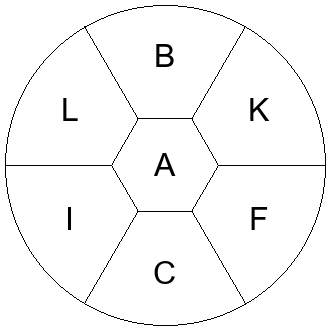
The official answers for today's puzzle are:

Click on the arrow to show the definition.
Click outside the pop-up to close it.


Number of Pangrams: 1

Maximum Puzzle Score: 234

Number of Answers: 49

Points Needed for Genius: 164

Genius requires between 23 and 42 words. You need at least an 8-letter word to reach genius. If you don't get the pangram, you need 75% of the total points to reach genius. If you get the pangram, you only need 68% of the remaining points to reach genius.

Other days with this pangram:

The button below will reveal a chart with the number of words by each letter. Red bars indicate that there is a pangram(s) starting with that letter.


How does this puzzle compare to other puzzles?

Today's score of 234 was in the 77th percentile of all puzzles.
The last time there was a score this high was on October 19, 2025.
The highest score ever was 537 on January 22, 2021.
The lowest score ever was 47 on March 27, 2023.

This puzzle's 49 possible answers rank it in the 74th percentile of all puzzles.
The last time there were more answers than this was on October 19, 2025.
The highest number of answers was 81 on June 8, 2019.
The lowest number of answers was 16 on March 27, 2023.

It takes an 8-letter word for genius.
The last time this happened was on October 20, 2025.

Today's puzzle has an average word length of 5.6.
For all Bees, the average word length has been 5.3.


Haven't I seen these letters before?

Hover over a letter to see its first and most recent appearance in the Bee!


Haven't I seen these words before?

The most common words in the Bee are:

  • noon 219
  • loll 206
  • toot 200
  • naan 181
  • nana 181
  • lilt 146
  • till 146
  • tilt 146
  • nene 141
  • tint 141
  • mama 139
  • mamma 139
  • acacia 134
  • acai 134
  • onto 133
  • toon 133
  • onion 130
  • anal 123
  • anon 121
  • dodo 119
  • olio 119
  • tact 118
  • baba 116
  • boob 115
  • booboo 115
  • papa 114
  • poop 114
  • lull 112
  • lulu 112
  • call 110
  • calla 110
  • cocci 109
  • mitt 109
  • mono 109
  • moon 109
  • ratatat 108
  • tart 108
  • tartar 108
  • tutu 108
  • attar 107
  • loon 107
  • allay 106
  • ally 106
  • tattoo 106
  • tatty 106
  • ammo 105
  • momma 105
  • epee 101
  • peep 101
  • coot 100


How long are words in the Bee?

There have been 108,443 answers ever accepted in the Bee - with 10,844 unique words.
Below are the distributions of the lengths of these words.


Valid dictionary words not in today's official answers

You may be wondering why these words aren't here*:

  • aalii
  • abaca
  • abaka
  • abba
  • alba
  • alcaic
  • alfa
  • alfaki
  • alif
  • alkalic
  • alliak
  • baal
  • bacca
  • baccala
  • baff
  • biali
  • bifacial
  • blaff
  • cabbala
  • caca
  • caff
  • calcic
  • calcific
  • calif
  • calk
  • cicala
  • facia
  • faff
  • falbala
  • fallal
  • fila
  • ilia
  • ilial
  • ilka
  • kabab
  • kabaka
  • kabala
  • kabbala
  • kabiki
  • kaiak
  • kaif
  • kail
  • kaka
  • kaki
  • kalif
  • kiack
  • kibla
  • lall
  • liblab

*Because the New York Times considers them obscure or offensive.

abaci

No Definition Found.

aback

Etymology 1

adverb
  1. Towards the back or rear; backwards.
  2. In the rear; a distance behind.
  3. By surprise; startled; dumbfounded. (see usage)
  4. Backward against the mast; said of the sails when pressed by the wind from the "wrong" (forward) side, or of a ship when its sails are set that way.

Etymology 2

noun
  1. An abacus.

acacia

Etymology 1

noun
  1. A shrub or tree of the tribe Acacieae.
  2. The thickened or dried juice of several species in Acacieae, in particular Vachellia nilotica (syn. Acacia nilotica), the Egyptian acacia.
  3. A false acacia; robinia tree, Robinia pseudoacacia.
  4. Gum arabic; gum acacia.
  5. Any of several related trees, such as the locust tree.
  6. A light to moderate greenish yellow with a hint of red.

Etymology 2

noun
  1. (history) A roll or bag, filled with dust, borne by Byzantine emperors, as a memento of mortality. It is represented on medals.

acai

noun
  1. Any of several South American palms, of the genus Euterpe, having a dark purple drupe.
  2. The fruit of these trees, harvested for its juice.

alack

interjection
  1. An expression of sorrow or mourning.

alfalfa

noun
  1. A plant, principally of Medicago sativa, grown as a pasture crop.
  2. A type or breed of this plant.

alibi

noun
  1. The plea or mode of defense under which a person on trial for a crime proves or attempts to prove being in another place when the alleged act was committed
verb
  1. To provide an alibi for.
  2. To provide an excuse for.

alkali

noun
  1. One of a class of caustic bases, such as soda, soda ash, caustic soda, potash, ammonia, and lithia, whose distinguishing peculiarities are solubility in alcohol and water, uniting with oils and fats to form soap, neutralizing and forming salts with acids, turning to brown several vegetable yellows, and changing reddened litmus to blue.
  2. (Western United States) Soluble mineral matter, other than common salt, contained in soils of natural waters.

baba

noun
  1. A kind of sponge cake soaked in rum-flavoured syrup.
  2. (esp. among people of East European ancestry) A grandmother.
  3. An old woman, especially a traditional old woman from an eastern European culture.
  4. (esp. among people of Indian ancestry) A father.
  5. (Hinduism, Islam, Sikhism) A holy man, a spiritual leader.
  6. A baby, child.
  7. In baby talk, often used for a variety of words beginning with b, such as bottle or blanket.

babka

No Definition Found.

bacilli

noun
  1. Any of various rod-shaped, spore-forming aerobic bacteria in the genus Bacillus, some of which cause disease.
  2. Any bacilliform (rod-shaped) bacterium.
  3. (by extension) Something which spreads like bacterial infection.

back

Etymology 1

noun
  1. The rear of the body, especially the part between the neck and the end of the spine and opposite the chest and belly.
  2. That which is farthest away from the front.
  3. Upper part of a natural object which is considered to resemble an animal's back.
  4. A support or resource in reserve.
  5. The keel and keelson of a ship.
  6. The roof of a horizontal underground passage.
  7. Effort, usually physical.
  8. A non-alcoholic drink (often water or a soft drink), to go with hard liquor or a cocktail.
  9. Among leather dealers, one of the thickest and stoutest tanned hides.
verb
  1. To go in the reverse direction.
  2. To support.
  3. (of the wind) To change direction contrary to the normal pattern; that is, to shift anticlockwise in the northern hemisphere, or clockwise in the southern hemisphere.
  4. (of a square sail) To brace the yards so that the wind presses on the front of the sail, to slow the ship.
  5. (of an anchor) To lay out a second, smaller anchor to provide additional holding power.
  6. (of a hunting dog) To stand still behind another dog which has pointed.
  7. To push or force backwards.
  8. To get upon the back of; to mount.
  9. To place or seat upon the back.
  10. To make a back for; to furnish with a back.
  11. To adjoin behind; to be at the back of.
  12. To write upon the back of, possibly as an endorsement.
  13. (of a justice of the peace) To sign or endorse (a warrant, issued in another county, to apprehend an offender).
  14. To row backward with (oars).
adjective
  1. Near the rear.
  2. Not current.
  3. Far from the main area.
  4. In arrear; overdue.
  5. Moving or operating backward.
  6. Pronounced with the highest part of the body of the tongue toward the back of the mouth, near the soft palate (most often describing a vowel).
adverb
  1. To or in a previous condition or place.
  2. Away from the front or from an edge.
  3. In a manner that impedes.
  4. In a reciprocal manner; in return.
  5. Earlier, ago.

Etymology 2

noun
  1. A large shallow vat; a cistern, tub, or trough, used by brewers, distillers, dyers, picklers, gluemakers, and others, for mixing or cooling wort, holding water, hot glue, etc.
  2. A ferryboat.

backfill

noun
  1. The material that has been used to refill an excavation.
  2. Reserve support personnel.
  3. That which backfills; a replacement.
  4. Material in a story set earlier in the past, providing history or context for the current action.
verb
  1. To refill a hole with the material dug out of it.
  2. To refill an excavation unit to restore the former ground surface and/or to preserve the unit and make it recognizable as having been excavated.
  3. To provide reserve support.
  4. To replenish or restock due to attrition or loss.

bail

Etymology 1

noun
  1. Security, usually a sum of money, exchanged for the release of an arrested person as a guarantee of that person's appearance for trial.
  2. Release from imprisonment on payment of such money.
  3. The person providing such payment.
  4. A bucket or scoop used for removing water from a boat etc.
  5. A person who bails water out of a boat.
  6. Custody; keeping.
verb
  1. To secure the release of an arrested person by providing bail.
  2. To release a person under such guarantee.
  3. To hand over personal property to be held temporarily by another as a bailment.
  4. To remove (water) from a boat by scooping it out.
  5. To remove water from (a boat) by scooping it out.
  6. To set free; to deliver; to release.

Etymology 2

verb
  1. To exit quickly.
  2. To fail to meet a commitment.

Etymology 3

noun
  1. A hoop, ring or handle (especially of a kettle or bucket).
  2. A stall for a cow (or other animal) (usually tethered with a semi-circular hoop).
  3. A hinged bar as a restraint for animals, or on a typewriter.
  4. A frame to restrain a cow during milking or feeding.
  5. A hoop, ring, or other object used to connect a pendant to a necklace.
  6. One of the two wooden crosspieces that rest on top of the stumps to form a wicket.
  7. (furniture) Normally curved handle suspended between sockets as a drawer pull. This may also be on a kettle or pail.
verb
  1. To secure the head of a cow during milking.

Etymology 4

verb
  1. To confine.
  2. To secure (a cow) by placing its head in a bail for milking.
  3. To keep (a traveller) detained in order to rob them; to corner (a wild animal); loosely, to detain, hold up. (Usually with up.)

bailiff

noun
  1. (law enforcement) An officer of the court, particularly:
  2. A public administrator, particularly:
  3. A private administrator, particularly
  4. Any debt collector, regardless of his or her official status.

balalaika

noun
  1. A plucked stringed instrument with a triangular body, short neck and three strings, of Russian origin.

balk

Etymology 1

noun
  1. An uncultivated ridge formed in the open field system, caused by the action of ploughing.
  2. The wall of earth at the edge of an excavation.
  3. Beam, crossbeam; squared timber; a tie beam of a house, stretching from wall to wall, especially when laid so as to form a loft, "the balks".
  4. A hindrance or disappointment; a check.
  5. A sudden and obstinate stop; a failure.
  6. An omission.
  7. A deceptive motion; a feint.
  8. The area of the table lying behind the line from which the cue ball is initially shot, and from which a ball in hand must be played.
  9. The area of the table lying behind the baulk line.
  10. The rope by which fishing nets are fastened together.
verb
  1. To pass over or by.
  2. To omit, miss or overlook by chance.
  3. To miss intentionally; to avoid.
  4. To stop, check, block.
  5. To stop short and refuse to go on.
  6. To refuse suddenly.
  7. To disappoint; to frustrate.
  8. To engage in contradiction; to be in opposition.
  9. To leave or make balks in.
  10. To leave heaped up; to heap up in piles.

Etymology 2

verb
  1. To indicate to fishermen, by shouts or signals from shore, the direction taken by the shoals of herring.

ball

Etymology 1

noun
  1. A solid or hollow sphere, or roughly spherical mass.
  2. A round or ellipsoidal object.
  3. (mildly, usually in the plural) A testicle.
  4. A leather-covered cushion, fastened to a handle called a ballstock; formerly used by printers for inking the form, then superseded by the roller.
  5. A large pill, a form in which medicine was given to horses; a bolus.
verb
  1. To form or wind into a ball.
  2. To heat in a furnace and form into balls for rolling.
  3. To have sexual intercourse with.
  4. To gather balls which cling to the feet, as of damp snow or clay; to gather into balls.
  5. (usually in present participle) To be hip or cool.
  6. To play basketball.
  7. To punish by affixing a ball and chain
interjection
  1. An appeal by the crowd for holding the ball against a tackled player. This is heard almost any time an opposition player is tackled, without regard to whether the rules about "prior opportunity" to dispose of the ball are fulfilled.

Etymology 2

noun
  1. A formal dance.
  2. A very enjoyable time.

biblical

adjective
  1. Of or relating to the Bible.
  2. In accordance with the teachings of the Bible (according to some interpretation of it).
  3. Very great; especially, exceeding previous records in scale.

bilabial

noun
  1. A speech sound articulated with both lips.
adjective
  1. Articulated with both lips.

blab

noun
  1. One who blabs; a babbler; a telltale; a gossip or gossiper.
  2. Gossip; prattle.
verb
  1. To tell tales; to gossip without reserve or discretion.

black

noun
  1. The colour/color perceived in the absence of light, but also when no light is reflected, but rather absorbed.
  2. A black dye or pigment.
  3. A pen, pencil, crayon, etc., made of black pigment.
  4. (in the plural) Black cloth hung up at funerals.
  5. (sometimes capitalised) A person of African, Aborigine, or Maori descent; a dark-skinned person.
  6. Blackness, the condition of having dark skin.
  7. The black ball.
  8. The edge of home plate.
  9. A type of firecracker that is really more dark brown in colour.
  10. Blackcurrant syrup (in mixed drinks, e.g. snakebite and black, cider and black).
  11. (in chess and similar games) The person playing with the black set of pieces.
  12. Something, or a part of a thing, which is black.
  13. A stain; a spot.
  14. A dark smut fungus, harmful to wheat.
  15. Marijuana.
verb
  1. To make black; to blacken.
  2. To apply blacking to (something).
  3. To boycott, usually as part of an industrial dispute.
adjective
  1. (of an object) Absorbing all light and reflecting none; dark and hueless.
  2. (of a place, etc) Without light.
  3. (sometimes capitalized) Of or relating to any of various ethnic groups having dark pigmentation of the skin.
  4. Designated for use by those ethnic groups which have dark pigmentation of the skin.
  5. (of a card) Of the spades or clubs suits. Compare red
  6. Bad; evil; ill-omened.
  7. Expressing menace, or discontent; threatening; sullen.
  8. (of objects, markets, etc) Illegitimate, illegal or disgraced.
  9. Overcrowded.
  10. (of coffee or tea) Without any cream, milk or creamer.
  11. Of or relating to the playing pieces of a board game deemed to belong to the "black" set (in chess the set used by the player who moves second) (often regardless of the pieces' actual colour).
  12. Said of a symbol or character that is solid, filled with color. Compare white.
  13. Related to the Christian Democratic Union of Germany.
  14. Clandestine; relating to a political, military, or espionage operation or site, the existence or details of which is withheld from the general public.
  15. Occult; relating to something (such as mystical or magical knowledge) which is unknown to or kept secret from the general public.
  16. Protestant, often with the implication of being militantly pro-British or anti-Catholic
  17. Having one or more features (hair, fur, armour, clothes, bark, etc) that is dark (or black); in taxonomy, especially: dark in comparison to another species with the same base name.
  18. Foul; dirty.

blackball

noun
  1. A rejection; a vote against admitting someone.
  2. A black ball used to indicate such a negative vote.
  3. A kind of large black sweet; a niggerball.
  4. A substance for blacking shoes, boots, etc. or for taking impressions of engraved work.
verb
  1. To vote against, especially in an exclusive organization.
  2. To ostracize.

cabal

noun
  1. # A putative, secret organization of individuals gathered for a political purpose.
  2. A secret plot.
  3. An identifiable group within the tradition of Discordianism.
verb
  1. To engage in the activities of a cabal.

cabala

proper noun
  1. A body of mystical Jewish teachings based on an esoteric reading of the Hebrew scriptures.

calf

Etymology 1

noun
  1. A young cow or bull.
  2. Leather made of the skin of the calf; especially, a fine, light-coloured leather used in bookbinding.
  3. A young deer, elephant, seal, whale or giraffe (also used of some other animals).
  4. A chunk of ice broken from a larger glacier, ice shelf, or iceberg.
  5. A small island, near a larger island.
  6. A cabless railroad engine.
  7. An awkward or silly boy or young man; any silly person; a dolt.

Etymology 2

noun
  1. The back of the leg below the knee.
  2. The muscle in the back of the leg below the knee.

call

noun
  1. A telephone conversation.
  2. A short visit, usually for social purposes.
  3. A visit by a ship or boat to a port.
  4. A cry or shout.
  5. A decision or judgement.
  6. The characteristic cry of a bird or other animal.
  7. A beckoning or summoning.
  8. The right to speak at a given time during a debate or other public event; the floor.
  9. An option to buy stock at a specified price during or at a specified time.
  10. The act of calling to the other batsman.
  11. The state of being the batsman whose role it is to call (depends on where the ball goes.)
  12. A work shift which requires one to be available when requested (see on call).
  13. The act of jumping to a subprogram, saving the means to return to the original point.
  14. A statement of a particular state, or rule, made in many games such as bridge, craps, jacks, and so on.
  15. The act of matching a bet made by a player who has previously bet in the same round of betting.
  16. A note blown on the horn to encourage the dogs in a hunt.
  17. A whistle or pipe, used by the boatswain and his mate to summon the sailors to duty.
  18. A pipe or other instrument to call birds or animals by imitating their note or cry. A game call.
  19. An invitation to take charge of or serve a church as its pastor.
  20. Vocation; employment; calling.
  21. A reference to, or statement of, an object, course, distance, or other matter of description in a survey or grant requiring or calling for a corresponding object, etc., on the land.
  22. (prostitution) A meeting with a client for paid sex; hookup; job.
verb
  1. (heading) To use one's voice.
  2. (heading) To visit.
  3. (heading) To name, identify or describe.
  4. (heading) Direct or indirect use of the voice.
  5. (sometimes with for) To require, demand.
  6. To announce the early extinction of a debt by prepayment, usually at a premium.
  7. To demand repayment of a loan.
  8. To jump to (another part of a program) to perform some operation, returning to the original point on completion.

calla

noun
  1. A marsh plant native to cooler areas throughout the northern hemisphere, Calla palustris, having pale green flowers in a white spathe.
  2. The calla lily, Zantedeschia aethiopica.

callback

noun
  1. The return of a situation to a previous position or state.
  2. A return telephone or radio call; especially one made automatically to authenticate a logon to a computer network.
  3. A product recall because of a defect or safety concern.
  4. A function pointer passed as an argument to another function.
  5. A follow-up audition (casting)
  6. A joke which references an earlier joke in the same routine

cilia

noun
  1. Hairs or similar protrusions along the margin of a plant organ.
  2. A hairlike organelle projecting from a eukaryotic cell (such as a unicellular organism or one cell of a multicelled organism). These structures serve either for locomotion by moving or as sensors.
  3. One of the fine hairs along an insect's wing.

clack

noun
  1. An abrupt, sharp sound, especially one made by two hard objects colliding repetitively; a sound midway between a click and a clunk.
  2. Anything that causes a clacking noise, such as the clapper of a mill, or a clack valve.
  3. Chatter; prattle.
  4. The tongue.
verb
  1. To make a sudden, sharp noise, or succession of noises; to click.
  2. To cause to make a sudden, sharp noise, or succession of noises; to click.
  3. To chatter or babble; to utter rapidly without consideration.
  4. To cut the sheep's mark off (wool), to make the wool weigh less and thus yield less duty.

facial

noun
  1. A personal care beauty treatment which involves cleansing and moisturizing of the human face.
  2. A kind of early silent film focusing on the facial expressions of the actor.
  3. (in some contact sports) A foul play which involves one player hitting another in the face.
  4. A sex act of male ejaculation onto another person's face.
adjective
  1. Of or affecting the face.
  2. (by extension) (of a law or regulation validity) on its face; as it appears (as opposed to as it is applied)

fail

Etymology 1

noun
  1. Poor quality; substandard workmanship.
  2. A failure (condition of being unsuccessful)
  3. A failure (something incapable of success)
  4. A failure, especially of a financial transaction (a termination of an action).
  5. A failing grade in an academic examination.
verb
  1. To be unsuccessful.
  2. Not to achieve a particular stated goal. (Usage note: The direct object of this word is usually an infinitive.)
  3. To neglect.
  4. Of a machine, etc.: to cease to operate correctly.
  5. To be wanting to, to be insufficient for, to disappoint, to desert.
  6. To receive one or more non-passing grades in academic pursuits.
  7. To give a student a non-passing grade in an academic endeavour.
  8. To miss attaining; to lose.
  9. To be wanting; to fall short; to be or become deficient in any measure or degree up to total absence.
  10. To be affected with want; to come short; to lack; to be deficient or unprovided; used with of.
  11. To fall away; to become diminished; to decline; to decay; to sink.
  12. To deteriorate in respect to vigour, activity, resources, etc.; to become weaker.
  13. To perish; to die; used of a person.
  14. To err in judgment; to be mistaken.
  15. To become unable to meet one's engagements; especially, to be unable to pay one's debts or discharge one's business obligation; to become bankrupt or insolvent.
adjective
  1. That is a failure.

Etymology 2

noun
  1. A piece of turf cut from grassland.

fall

Etymology 1

noun
  1. The act of moving to a lower position under the effect of gravity.
  2. A reduction in quantity, pitch, etc.
  3. The time of the year when the leaves typically fall from the trees; autumn; the season of the year between the autumnal equinox and the winter solstice.
  4. A loss of greatness or status.
  5. That which falls or cascades.
  6. A crucial event or circumstance.
  7. A hairpiece for women consisting of long strands of hair on a woven backing, intended primarily to cover hair loss.
  8. Blame or punishment for a failure or misdeed.
  9. The part of the rope of a tackle to which the power is applied in hoisting (usu. plural).
  10. An old Scots unit of measure equal to six ells.
  11. A short, flexible piece of leather forming part of a bullwhip, placed between the thong and the cracker.
  12. The lid, on a piano, that covers the keyboard
verb
  1. (heading) To be moved downwards.
  2. To move downwards.
  3. To happen, to change negatively.
  4. To be allotted to; to arrive through chance, fate, or inheritance.
  5. To diminish; to lessen or lower.
  6. To bring forth.
  7. To issue forth into life; to be brought forth; said of the young of certain animals.
  8. To descend in character or reputation; to become degraded; to sink into vice, error, or sin.
  9. To become ensnared or entrapped; to be worse off than before.
  10. To assume a look of shame or disappointment; to become or appear dejected; said of the face.
  11. To happen; to come to pass; to chance or light (upon).
  12. To begin with haste, ardour, or vehemence; to rush or hurry.
  13. To be dropped or uttered carelessly.
  14. (of a fabric) To hang down (under the influence of gravity).

Etymology 2

noun
  1. The chasing of a hunted whale.

fallback

noun
  1. An act of falling back.
  2. A backup plan or contingency strategy; an alternative which can be used if something goes wrong with the main plan; a recourse.
  3. A reduction in bitumen softening point, sometimes called refluxing or overheating in a relatively closed container.
  4. Pulverised material that falls back to earth after a nuclear explosion; fallout.
adjective
  1. That can be resorted to as a fallback.

filial

adjective
  1. Pertaining to or befitting a son or daughter.
  2. Respectful of the duties and attitudes of a son or daughter toward their parents.
  3. Of a generation or generations descending from a specific previous one.

flab

noun
  1. Soft, loose flesh on a person's body; fat.

flack

Etymology 1

verb
  1. To flutter; palpitate.
  2. To hang loosely; flag.
  3. To beat by flapping.

Etymology 2

noun
  1. A publicist, a publicity agent.
verb
  1. To publicise, to promote.

Etymology 3

noun
  1. Ground-based anti-aircraft guns firing explosive shells.
  2. Anti-aircraft shell fire.
  3. Adverse criticism.
  4. A public-relations spokesperson.

flail

noun
  1. A tool used for threshing, consisting of a long handle with a shorter stick attached with a short piece of chain, thong or similar material.
  2. A weapon which has the (usually spherical) striking part attached to the handle with a flexible joint such as a chain.
verb
  1. To beat using a flail or similar implement.
  2. To wave or swing vigorously
  3. To thresh.
  4. To move like a flail.

flak

noun
  1. Ground-based anti-aircraft guns firing explosive shells.
  2. Anti-aircraft shell fire.
  3. Adverse criticism.
  4. A public-relations spokesperson.

iliac

adjective
  1. Of or pertaining to the ilium.

kickback

noun
  1. A backward kick, a retrograde movement of an extremity.
  2. A covert – often illegal – payment in return for a favor consisting of providing an opportunity of chargeable transaction.
  3. (machinery) Recoil; a sudden backward motion, usually in the direction of the operator.
  4. (machinery) An accident wherein an object being cut by a rotating blade or disk, such as a circular saw, is caught by the blade and thrown outward.
  5. A dangerous buildup of gas pressure at the wellhead.
  6. The board separating one bowling lane from another at the pit end.
  7. In contract bridge, an ace asking convention initiated by the first step above four of the agreed trump suit.
  8. A feature that saves the ball from draining and propels it back into play.
  9. A relaxed party.

kickball

noun
  1. A sport similar to baseball, where a ball is kicked rather than hit.
  2. The ball used in the above sport.

labia

noun
  1. The folds of tissue at the opening of the vulva, at either side of the vagina.
noun
  1. A liplike structure; especially one of the two pairs of folds of skin either side of the vulva.
  2. The lip of a labiate corolla.
  3. The lip against which pressured air is driven to produce sound in a recorder and in a pipe organ with flue pipes.

labial

noun
  1. A consonant articulated by the lips.
  2. An organ pipe having a lip that influences its sound.
  3. Any of the scales bordering the mouth opening of a reptile.
adjective
  1. Of or pertaining to the lips or labia.
  2. Articulated by the lips, as the consonants b, m and w.
  3. Of an incisor or canine, on the side facing the lips. See mesial.
  4. Furnished with lips.

lack

noun
  1. A defect or failing; moral or spiritual degeneracy.
  2. A deficiency or need (of something desirable or necessary); an absence, want.
verb
  1. To be without, to need, to require.
  2. To be short (of or for something).
  3. To be in want.
  4. To see the deficiency in (someone or something); to find fault with, to malign, reproach.

laic

noun
  1. A layperson, as opposed to a member of the clergy.
adjective
  1. Lay, relating to laypersons, as opposed to clerical.

laical

No Definition Found.

lilac

noun
  1. A large shrub of the genus Syringa, especially Syringa vulgaris, bearing white, pale-pink or purple flowers.
  2. A flower of the lilac shrub.
  3. (color) A pale purple color, the color of some lilac flowers.
adjective
  1. Having a pale purple colour.