Sunday, October 26, 2025

Answers to yesterday's Bee

Jump to answers for


The official answers for today's puzzle are:

Click on the arrow to show the definition.
Click outside the pop-up to close it.


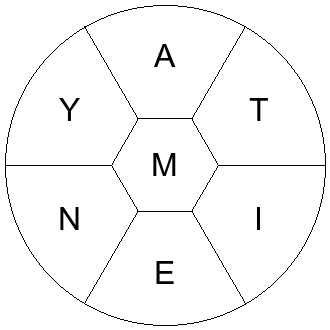
Number of Pangrams: 2

Maximum Puzzle Score: 301

Number of Answers: 70

Points Needed for Genius: 211

Genius requires between 29 and 61 words. You need at least a 7-letter word to reach genius. If you don't get the pangrams, you need 77% of the total points to reach genius. If you get the pangrams, you only need 67% of the remaining points to reach genius.

Other days with this pangram:

The button below will reveal a chart with the number of words by each letter. Red bars indicate that there is a pangram(s) starting with that letter.


How does this puzzle compare to other puzzles?

Today's score of 301 was in the 93rd percentile of all puzzles.
The last time there was a score this high was on October 24, 2025.
The highest score ever was 537 on January 22, 2021.
The lowest score ever was 47 on March 27, 2023.

This puzzle's 70 possible answers rank it in the 98th percentile of all puzzles.
The last time there were more answers than this was on September 28, 2025.
The highest number of answers was 81 on June 8, 2019.
The lowest number of answers was 16 on March 27, 2023.

It takes a 7-letter word for genius.
The last time this happened was on October 25, 2025.

Today's puzzle has an average word length of 5.3.
For all Bees, the average word length has been 5.3.


Haven't I seen these letters before?

Hover over a letter to see its first and most recent appearance in the Bee!


Haven't I seen these words before?

The most common words in the Bee are:

  • noon 219
  • loll 206
  • toot 200
  • naan 181
  • nana 181
  • lilt 146
  • till 146
  • tilt 146
  • nene 141
  • tint 141
  • mama 140
  • mamma 140
  • acacia 134
  • acai 134
  • onto 133
  • toon 133
  • onion 130
  • anal 123
  • anon 121
  • dodo 119
  • olio 119
  • tact 118
  • baba 116
  • boob 115
  • booboo 115
  • papa 114
  • poop 114
  • lull 112
  • lulu 112
  • call 110
  • calla 110
  • mitt 110
  • cocci 109
  • mono 109
  • moon 109
  • ratatat 108
  • tart 108
  • tartar 108
  • tutu 108
  • attar 107
  • loon 107
  • allay 106
  • ally 106
  • tattoo 106
  • tatty 106
  • ammo 105
  • momma 105
  • epee 102
  • peep 102
  • meme 101


How long are words in the Bee?

There have been 108,630 answers ever accepted in the Bee - with 10,846 unique words.
Below are the distributions of the lengths of these words.


Valid dictionary words not in today's official answers

You may be wondering why these words aren't here*:

  • amain
  • amanita
  • amanitin
  • ament
  • amenta
  • amentia
  • amia
  • amie
  • amin
  • amine
  • aminity
  • ammine
  • amnia
  • anaemia
  • animati
  • animi
  • antianemia
  • antiman
  • antimine
  • ataman
  • atma
  • atman
  • emanant
  • emetin
  • emetine
  • emmet
  • emmy
  • enamine
  • enemata
  • etamin
  • etamine
  • etyma
  • imamate
  • imine
  • immane
  • immanent
  • immy
  • intima
  • intimae
  • intime
  • mamee
  • mamey
  • mamie
  • mammae
  • mammate
  • mammati
  • mammee
  • mammet
  • mammey
  • mammie
  • mammy
  • mana
  • manana
  • manat
  • mannan
  • mannite
  • matin
  • matt
  • mattin
  • maya
  • mayan
  • meatman
  • meatmen
  • meinie
  • meiny
  • menta
  • metate
  • mimetite
  • mina
  • minae
  • minny
  • minyan
  • minyanim
  • mity
  • neem
  • nema
  • nimiety
  • tamein
  • tammie
  • tammy
  • tiemannite
  • tinman
  • tinmen
  • titman
  • titmen
  • yamen

*Because the New York Times considers them obscure or offensive.

amen

noun
  1. An instance of saying ‘amen’.
  2. A title of Christ; the Faithful One (especially with reference to Revelation 3:14)
verb
  1. To say amen.
  2. To say amen to; to ratify solemnly.
adverb
  1. At the end of religious prayers: so be it.
  2. In many Abrahamic religious texts and creeds: truly, verily.
interjection
  1. An expression of strong agreement. Often, though dated, in the phrase "Amen to that".

amenity

noun
  1. Pleasantness.
  2. A thing or circumstance that is welcome and makes life a little easier or more pleasant.
  3. Convenience.
  4. A unit pertaining to the infrastructure of a community, such as a public toilet, a postbox, a library etc.

amity

noun
  1. Friendship. The cooperative and supportive relationship between people, or animals. In this sense, the term connotes a relationship which involves mutual knowledge, esteem, affection, and respect along with a degree of rendering service to friends in times of need or crisis.
  2. Mutual understanding and a peaceful relationship, especially between nations; peace; accord.

anemia

noun
  1. A medical condition in which the capacity of the blood to transport oxygen to the tissues is reduced, either because of too few red blood cells, or because of too little hemoglobin, resulting in pallor and fatigue.
  2. A disease or condition that has anemia as a symptom.
  3. (obsolete) Ischemia.

anima

noun
  1. The soul or animating principle of a living thing, especially as contrasted with the animus.
  2. (Jungian psychology) The inner self (not the external persona) of a person that is in touch with the unconscious as opposed to the persona.
  3. (Jungian psychology) The unconscious feminine aspect of a person.

animate

verb
  1. To impart motion or the appearance of motion to.
  2. To give spirit or vigour to; to stimulate or enliven; to inspirit.
adjective
  1. That which lives.
  2. Possessing the quality or ability of motion.
  3. Dynamic, energetic.
  4. (grammar, of a noun or pronoun) Having a referent that includes a human, animal, plant or other entity which is considered alive.
  5. (grammar) Inflected to agree with an animate noun or pronoun.

anime

Etymology 1

noun
  1. An artistic style originating in, and associated with, Japanese animation, and that has also been adopted by a comparatively low number of animated works from other countries.
  2. An animated work that originated in Japan, regardless of the artistic style.
  3. An animated work, regardless of the country of origin.

Etymology 2

noun
  1. The resin of the courbaril (Hymenaea courbaril), used in varnishes.

anytime

adjective
  1. Suitable for any time; not associated with any particular time.
adverb
  1. At any time
interjection
  1. "you're welcome" in response to "thank you" or "thanks."

attainment

noun
  1. The act of attaining; the act of arriving at or reaching; the act of obtaining by exertion or effort.
  2. That which is attained, or obtained by exertion; acquisition; acquirement.

emanate

verb
  1. To come from a source; issue from.
  2. To send or give out; manifest.

eminent

adjective
  1. High, lofty.
  2. Noteworthy, remarkable, great.
  3. (of a person) distinguished, important, noteworthy.

emit

verb
  1. To send out or give off

enema

noun
  1. An injection of fluid into the large intestine by way of the rectum, usually for medical purposes.
  2. The fluid so injected.
  3. A device for administering such an injection.

enemy

noun
  1. Someone who is hostile to, feels hatred towards, opposes the interests of, or intends injury to someone else.
  2. A hostile force or nation; a fighting member of such a force or nation.
  3. Something harmful or threatening to another
verb
  1. To make an enemy of.
adjective
  1. Of, relating to, or belonging to an enemy

enmity

noun
  1. The quality of being an enemy; hostile or unfriendly disposition.
  2. A state or feeling of opposition, hostility, hatred or animosity.

imam

noun
  1. (usually capitalized) A Shi'ite Muslim leader.
  2. One who leads the salat prayers in a mosque.

imitate

verb
  1. To follow as a model or a pattern; to make a copy, counterpart or semblance of.

imminent

adjective
  1. About to happen, occur, or take place very soon, especially of something which won't last long.

inanimate

noun
  1. Something that is not alive.
verb
  1. To animate.
adjective
  1. Lacking the quality or ability of motion; as an inanimate object.
  2. Not being, and never having been alive, especially not like humans and animals.
  3. (grammar) Not animate.

inmate

noun
  1. A person confined to an institution such as a prison (as a convict) or hospital (as a patient).
  2. A person who shares a residence, such as a lodger, a hotel guest, or a student living on campus.

intimate

noun
  1. A very close friend.
  2. (in plural intimates) Women's underwear, sleepwear, or lingerie, especially offered for sale in a store.
verb
  1. To suggest or disclose (something) discreetly.
  2. To notify.
adjective
  1. Closely acquainted; familiar.
  2. Of or involved in a sexual relationship.
  3. Personal; private.
  4. Pertaining to details that require great familiarity to know.

item

noun
  1. A distinct physical object.
  2. (by extension) An object that can be picked up for later use.
  3. A line of text having a legal or other meaning; a separate particular in an account.
  4. (psychometrics) A question on a test, which may include its answers.
  5. A matter for discussion in an agenda.
  6. Two people who are having a relationship with each other.
  7. A short article in a newspaper.
  8. A hint; an innuendo.
verb
  1. To make a note of.
adverb
  1. Likewise

maim

noun
  1. A serious wound
verb
  1. To wound seriously; to cause permanent loss of function of a limb or part of the body.

main

Etymology 1

verb
  1. Short for mainline.
  2. To mainly play a specific character, or side, during a game.
  3. Of a road: to convert into a main or primary road.
adjective
  1. Of chief or leading importance; prime, principal.
  2. Chief, most important, or principal in extent, size, or strength; consisting of the largest part.
  3. (of force, strength, etc.) Full, sheer, undivided.
  4. Big; angry.
  5. Belonging to or connected with the principal mast in a vessel.
  6. Great in size or degree; important, powerful, strong, vast.
adverb
  1. Exceedingly, extremely, greatly, mightily, very, very much.

Etymology 2

noun
  1. That which is chief or principal; the chief or main portion; the bulk, the greater part, gross.
  2. A large cable or pipe providing utility service to an area or a building, such as a water main or electric main.
  3. Short for main course.
  4. The high seas.
  5. The mainland.
  6. Short for mainsail.
  7. (except in might and main) Force, power, strength, violent effort.

Etymology 3

noun
  1. A hand or match in a game of dice.
  2. The largest throw in a match at dice; in the game of hazard, a number from one to nine called out by a person before the dice are thrown.
  3. A stake played for at dice.
  4. A sporting contest or match, especially a cockfighting match.
  5. A banker's shovel for coins.

Etymology 4

noun
  1. A basket for gathering grapes.

maintain

verb
  1. To support (someone), to back up or assist (someone) in an action.
  2. To keep up; to preserve; to uphold (a state, condition etc.).
  3. To declare or affirm (a clause) to be true; to assert.

mama

noun
  1. (hypocoristic, usually childish) Mother, female parent.

mamma

Etymology 1

noun
  1. The milk-secreting organ of female humans and other mammals which includes the mammary gland and the nipple or teat; a breast; an udder. (plural: mammae)
  2. An accessory cloud like a mammary in appearance, which can form on the underside of most cloud genera

Etymology 2

noun
  1. (hypocoristic, usually childish) Mother, female parent.

manatee

noun
  1. Any of several plant-eating marine mammals, of family Trichechidae, found in tropical regions.

mane

noun
  1. Longer hair growth on back of neck of an animal, especially a horse or lion
  2. Long or thick hair of a person's head.

mania

noun
  1. Violent derangement of mind; madness; insanity.
  2. Excessive or unreasonable desire; insane passion affecting one or many people; fanaticism.
  3. The state of abnormally elevated or irritable mood, arousal, and/or energy levels.

manna

noun
  1. Food miraculously produced for the Israelites in the desert in the book of Exodus.
  2. (by extension) Any boon which comes into one's hands by good luck.
  3. The sugary sap of the manna gum tree which oozes out from holes drilled by insects and falls to the ground around the tree.http//www.museum.vic.gov.au/forest/plants/gum.html

manta

noun
  1. A kind of fabric or blanket used in Latin America and southwestern United States.
noun
  1. Any of several very large pelagic rays of the genus Manta, with winglike pectoral fins, a long tail, and two fins resembling horns that project from the head.

many

noun
  1. A multitude; a great aggregate; a mass of people; the generality; the common herd.
  2. A considerable number.
adjective
  1. A large number of; numerous.
pronoun
  1. An indefinite large number of people or things.

mate

Etymology 1

noun
  1. A fellow, comrade, colleague, partner or someone with whom something is shared, e.g. shipmate, classmate.
  2. (especially of a non-human animal) A breeding partner.
  3. A friend, usually of the same sex.
  4. Friendly term of address to a stranger, usually male, of similar age
  5. In naval ranks, a non-commissioned officer or his subordinate (e.g. Boatswain's Mate, Gunner's Mate, Sailmaker's Mate, etc).
  6. A ship's officer, subordinate to the master on a commercial ship.
  7. A first mate.
  8. A technical assistant in certain trades (e.g. gasfitter's mate, plumber's mate); sometimes an apprentice.
  9. The other member of a matched pair of objects.
  10. A suitable companion; a match; an equal.
verb
  1. To match, fit together without space between.
  2. To copulate.
  3. To pair in order to raise offspring
  4. To arrange in matched pairs.
  5. To introduce (animals) together for the purpose of breeding.
  6. (of an animal) To copulate with.
  7. To marry; to match (a person).
  8. To match oneself against; to oppose as equal; to compete with.
  9. To fit (objects) together without space between.
  10. To move (a space shuttle orbiter) onto the back of an aircraft that can carry it.

Etymology 2

noun
  1. The conclusive victory in a game of chess that occurs when an opponent's king is threatened with unavoidable capture.
  2. (by extension) Any losing situation with no escape; utter defeat.
verb
  1. To put the king of an opponent into checkmate.
  2. (by extension) To place in a losing situation that has no escape.
verb
  1. To confuse; to confound.

Etymology 3

noun
  1. The abovementioned plant; the leaves and shoots used for the tea
noun
  1. An evergreen tree, Ilex paraquariensis, native to South America, cultivated for its leaves.
  2. A beverage, resembling tea, made from the dried leaves of this plant.
  3. A cup of this drink.

matey

noun
  1. The conclusive victory in a game of chess that occurs when an opponent's king is threatened with unavoidable capture.
  2. (by extension) Any losing situation with no escape; utter defeat.
noun
  1. A fellow, comrade, colleague, partner or someone with whom something is shared, e.g. shipmate, classmate.
  2. (especially of a non-human animal) A breeding partner.
  3. A friend, usually of the same sex.
  4. Friendly term of address to a stranger, usually male, of similar age
  5. In naval ranks, a non-commissioned officer or his subordinate (e.g. Boatswain's Mate, Gunner's Mate, Sailmaker's Mate, etc).
  6. A ship's officer, subordinate to the master on a commercial ship.
  7. A first mate.
  8. A technical assistant in certain trades (e.g. gasfitter's mate, plumber's mate); sometimes an apprentice.
  9. The other member of a matched pair of objects.
  10. A suitable companion; a match; an equal.
noun
  1. The abovementioned plant; the leaves and shoots used for the tea
noun
  1. A fellow sailor; often used affectedly, especially as a pirate.
adjective
  1. Sociable or friendly.
noun
  1. An evergreen tree, Ilex paraquariensis, native to South America, cultivated for its leaves.
  2. A beverage, resembling tea, made from the dried leaves of this plant.
  3. A cup of this drink.

matinee

noun
  1. A showing of a movie, sporting event, or theatrical performance in the morning or afternoon.
  2. A woman's dress to be worn in the morning or before dinner.
verb
  1. To put on a matinee performance (of).

matte

noun
  1. A decorative border around a picture used to inset and center the contents of a frame.
  2. A background, often painted or created with computers
  3. (pyrometallurgy) The molten metal sulfide phases typically formed during smelting of copper, nickel, and other base metals.
adjective
  1. Dull; not reflective of light.

mean

Etymology 1

verb
  1. To lament.
verb
  1. To intend.
  2. To convey (a meaning).
  3. To have conviction in (something said or expressed); to be sincere in (what one says).
  4. To cause or produce (a given result); to bring about (a given result).
  5. (usually with to) To be of some level of importance.

Etymology 2

adjective
  1. Common; general.
  2. Of a common or low origin, grade, or quality; common; humble.
  3. Low in quality or degree; inferior; poor; shabby.
  4. Without dignity of mind; destitute of honour; low-minded; spiritless; base.
  5. Of little value or worth; worthy of little or no regard; contemptible; despicable.
  6. Ungenerous; stingy; tight-fisted.
  7. Disobliging; pettily offensive or unaccommodating
  8. Selfish; acting without consideration of others; unkind.
  9. Intending to cause harm, successfully or otherwise; bearing ill will towards another
  10. Powerful; fierce; strong
  11. Accomplished with great skill; deft; hard to compete with.
  12. Difficult, tricky.

Etymology 3

noun
  1. (now chiefly in the plural) A method or course of action used to achieve some result.
  2. (in the singular) An intermediate step or intermediate steps.
  3. Something which is intermediate or in the middle; an intermediate value or range of values; a medium.
  4. The middle part of three-part polyphonic music; now specifically, the alto part in polyphonic music; an alto instrument.
  5. The average of a set of values, calculated by summing them together and dividing by the number of terms; the arithmetic mean.
  6. Any function of multiple variables that satisfies certain properties and yields a number representative of its arguments; or, the number so yielded; a measure of central tendency.
  7. Either of the two numbers in the middle of a conventionally presented proportion, as 2 and 3 in 1:2=3:6.
adjective
  1. Having the mean (see noun below) as its value.
  2. Middling; intermediate; moderately good, tolerable.

meanie

noun
  1. A mean (unkind or miserly) person; a killjoy.
  2. A villain.

meant

verb
  1. To intend.
  2. To convey (a meaning).
  3. To have conviction in (something said or expressed); to be sincere in (what one says).
  4. To cause or produce (a given result); to bring about (a given result).
  5. (usually with to) To be of some level of importance.

meantime

noun
  1. The time spent waiting for another event; time in between.
adverb
  1. During the interval; meanwhile

meany

noun
  1. A mean (unkind or miserly) person; a killjoy.
  2. A villain.

meat

noun
  1. The flesh (muscle tissue) of an animal used as food.
  2. A type of meat, by anatomic position and provenance.
  3. Food, for animals or humans, especially solid food. See also meat and drink.
  4. A type of food, a dish.
  5. A meal.
  6. Meal; flour.
  7. Any relatively thick, solid part of a fruit, nut etc.
  8. A penis.
  9. The best or most substantial part of something.
  10. The sweet spot of a bat or club (in cricket, golf, baseball etc.).
  11. A meathead.
  12. (Australian Aboriginal) A totem, or (by metonymy) a clan or clansman which uses it.

meaty

adjective
  1. Of, relating to, or containing meat.
  2. Resembling meat in flavour, etc.
  3. Of a person or a body part, large and solid.
  4. Substantial.

meet

Etymology 1

noun
  1. A sports competition, especially for track and field (a track meet) or swimming (a swim meet).
  2. A gathering of riders, horses and hounds for foxhunting; a field meet for hunting.
  3. A meeting of two trains in opposite directions on a single track, when one is put into a siding to let the other cross.
  4. A meeting.
  5. The greatest lower bound, an operation between pairs of elements in a lattice, denoted by the symbol ∧.
  6. An act of French kissing someone.
verb
  1. To make contact (with) while in proximity.
  2. (Of groups) To come together.
  3. To make physical or perceptual contact.
  4. To satisfy; to comply with.
  5. To balance or come out correct.
  6. To perceive; to come to a knowledge of; to have personal acquaintance with; to experience; to suffer.
  7. To be mixed with, to be combined with aspects of.

Etymology 2

adjective
  1. Suitable; right; proper.

meme

noun
  1. Any unit of cultural information, such as a practice or idea, that is transmitted verbally or by repeated action from one mind to another in a comparable way to the transmission of genes.
  2. Something, usually humorous, which is copied and circulated online with slight adaptations, including quizzes, basic pictures, video templates etc.
  3. A myth circulating as truth; something ineffective presented as effective, or similar.
verb
  1. To turn into a meme; to use a meme, especially to achieve something in real life.
  2. To create and use humorous memes.
  3. To joke around.

mentee

noun
  1. A person who is being mentored

meta

Etymology 1

adjective
  1. Self-referential; structured analogously, but at a higher level.

Etymology 2

noun
  1. Boundary marker.
  2. Either of the conical columns at each end of an Ancient Roman circus.

Etymology 3

noun
  1. Metagame; the most effective tactics and strategies used in a competitive video game.
adjective
  1. Prominent in the metagame; effective and frequently used in competitive gameplay.

Etymology 4

noun
  1. Metoidioplasty.

mete

Etymology 1

verb
  1. To measure.
  2. (usually with “out”) To dispense, measure (out), allot (especially punishment, reward etc.).

Etymology 2

noun
  1. A boundary or other limit; a boundary-marker; mere.

Etymology 3

adjective
  1. Suitable; right; proper.

mien

noun
  1. Demeanor; facial expression or attitude, especially one which is intended by its bearer.
  2. A specific facial expression.

mime

noun
  1. A form of acting without words; pantomime.
  2. A pantomime actor.
  3. A classical theatrical entertainment in the form of farce.
  4. A performer of such a farce.
  5. A person who mimics others in a comical manner.
  6. Any of various papilionid butterflies of the genus Chilasa or Papilio, that mimic other species in appearance.
verb
  1. To mimic.
  2. To act without words.
  3. To represent an action or object through gesture, without the use of sound.

mine

Etymology 1

pronoun
  1. My; belonging to me; that which belongs to me.

Etymology 2

noun
  1. An excavation from which ore or solid minerals are taken, especially one consisting of underground tunnels.
  2. Any source of wealth or resources.
  3. A passage dug toward or underneath enemy lines, which is then packed with explosives.
  4. A device intended to explode when stepped upon or touched, or when approached by a ship, vehicle, or person.
  5. A type of firework that explodes on the ground, shooting sparks upward.
  6. The cavity made by a caterpillar while feeding inside a leaf.
  7. A machine or network of machines used to extract units of a cryptocurrency.
verb
  1. To remove (ore) from the ground.
  2. To dig into, for ore or metal.
  3. To sow mines (the explosive devices) in (an area).
  4. To damage (a vehicle or ship) with a mine (an explosive device).
  5. To dig a tunnel or hole; to burrow in the earth.
  6. To dig away, or otherwise remove, the substratum or foundation of; to lay a mine under; to sap; to undermine.
  7. (by extension) To ruin or destroy by slow degrees or secret means.
  8. To pick one's nose.
  9. To earn new units of cryptocurrency by doing certain calculations.

Etymology 3

noun
  1. Demeanor; facial expression or attitude, especially one which is intended by its bearer.
  2. A specific facial expression.

mini

Etymology 1

adjective
  1. Miniature, tiny, small.

Etymology 2

noun
  1. A miniskirt.
  2. A minicomputer.

minim

noun
  1. A half note, drawn as a semibreve with a stem.
  2. A unit of volume, in the Imperial and U.S. customary systems, 1/60 fluid drachm. Approximately equal to 1 drop, 62 μL or 0.9 grain (weight) of water.
  3. A short vertical stroke used in handwriting.
  4. Anything very minute; applied to animalcula and the like.
  5. The smallest kind of worker in a leaf-cutter ant colony.
  6. A little man or being; a dwarf.
  7. A small fish; a minnow.
  8. A short poetical encomium.

minima

noun
  1. The lowest limit.
  2. The smallest amount.
  3. A period of minimum brightness or energy intensity (of a star).
  4. A lower bound of a set which is also an element of that set.
  5. The smallest member of a batch or sample or the lower bound of a probability distribution.

mint

Etymology 1

noun
  1. A building or institution where money (originally, only coins) is produced under government licence.
  2. A large amount of money. A vast sum or amount, etc.
  3. Any place regarded as a source of unlimited supply; the supply itself.
verb
  1. To reproduce (coins), usually en masse, under licence.
  2. To invent; to forge; to fabricate; to fashion.
adjective
  1. (with condition) Like new.
  2. In near-perfect condition; uncirculated.
  3. Unused with original gum; as issued originally.
  4. Very good.
  5. Attractive; beautiful; handsome.

Etymology 2

noun
  1. Any plant in the genus Mentha in the family Lamiaceae, typically aromatic with square stems.
  2. The flavouring of the plant, either a sweet, a jelly or sauce.
  3. Any plant in the mint family, Lamiaceae.
  4. A green colour, like that of mint.
  5. A mint-flavored candy, often eaten to sweeten the smell of the breath.
adjective
  1. Of a green colour, like that of the mint plant.

Etymology 3

noun
  1. (provincial) Intent, purpose; an attempt, try; effort, endeavor.
verb
  1. (provincial) To try, attempt; take aim.
  2. (provincial) To try, attempt, endeavor; to take aim at; to try to hit; to purpose.
  3. To hint; suggest; insinuate.

minty

No Definition Found.

mite

noun
  1. Any of many minute arachnids which, along with the ticks, comprise subclass Acarina (aka Acari).
  2. A small coin formerly circulated in England, rated at about a third of a farthing.
  3. A lepton, a small coin used in Palestine in the time of Christ.
  4. A small weight; one twentieth of a grain.
  5. (sometimes used adverbially) Anything very small; a minute object; a very little quantity or particle
  6. (often used affectionately) A small or naughty person, or one you take pity on; rascal

mitt

noun
  1. A mitten
  2. An oversized, protective glove such as an oven mitt or a baseball mitt.
  3. (especially in plural) A hand.

mitten

noun
  1. A type of glove or garment that covers a hand with a separate sheath for the thumb, but not for other fingers, which are either enclosed in a single section or left uncovered.
  2. A cat's or dog's paw that is a different colour from the main body.
  3. (as "the mitten") A romantic rejection; dismissal of a lover.
verb
  1. To dress in mittens; to put a mitten on.

myna

noun
  1. One of the South and East Asian birds of the starling family Sturnidae.

name

Etymology 1

noun
  1. Any nounal word or phrase which indicates a particular person, place, class, or thing.
  2. Reputation.
  3. An abusive or insulting epithet.
  4. A person (or legal person).
  5. Those of a certain name; a race; a family.
  6. A unique identifier, generally a string of characters.
  7. An investor in Lloyds of London bearing unlimited liability.
  8. Authority.

Etymology 2

verb
  1. (ditransitive) To give a name to.
  2. To mention, specify.
  3. To identify as relevant or important
  4. To publicly implicate.
  5. To designate for a role.
  6. (Westminster system politics) To initiate a process to temporarily remove a member of parliament who is breaking the rules of conduct.

Etymology 3

noun
  1. Any of several types of true yam (Dioscorea) used in Caribbean Spanish cooking.

tame

Etymology 1

verb
  1. To make (an animal) tame; to domesticate.
  2. To become tame or domesticated.
  3. To make gentle or meek.
adjective
  1. Not or no longer wild; domesticated
  2. (chiefly of animals) Mild and well-behaved; accustomed to human contact
  3. Not exciting.
  4. Crushed; subdued; depressed; spiritless.
  5. (of a knot) Capable of being represented as a finite closed polygonal chain.

Etymology 2

verb
  1. To broach or enter upon; to taste, as a liquor; to divide; to distribute; to deal out.

tatami

noun
  1. Straw matting, in a standard size, used as a floor covering in Japanese houses

team

noun
  1. A set of draught animals, such as two horses in front of a carriage.
  2. Any group of people involved in the same activity, especially sports or work.
  3. A group of animals moving together, especially young ducks.
  4. A royalty or privilege granted by royal charter to a lord of a manor, of having, keeping, and judging in his court, his bondmen, neifes, and villains, and their offspring, or suit, that is, goods and chattels, and appurtenances thereto.
verb
  1. To form a group, as for sports or work.
  2. (by extension) To go together well; to harmonize.
  3. To convey or haul with a team.
  4. To form together into a team.
  5. To give work to a gang under a subcontractor.

teammate

noun
  1. One who is on the same team.

teatime

noun
  1. The traditional time, in the late afternoon, for serving tea (the meal).

teem

Etymology 1

verb
  1. To be stocked to overflowing.
  2. To be prolific; to abound; to be rife.
  3. To bring forth young, as an animal; to produce fruit, as a plant; to bear; to be pregnant; to conceive; to multiply.

Etymology 2

verb
  1. To empty.
  2. To pour (especially with rain)
  3. To pour, as steel, from a melting pot; to fill, as a mould, with molten metal.

Etymology 3

verb
  1. To think fit.

tenement

noun
  1. A building that is rented to multiple tenants, especially a low-rent, run-down one.
  2. Any form of property that is held by one person from another, rather than being owned.
  3. Dwelling; abode; habitation.

time

noun
  1. The inevitable progression into the future with the passing of present and past events.
  2. A duration of time.
  3. An instant of time.
  4. The measurement under some system of region of day or moment.
  5. Ratio of comparison.
  6. (grammar) Tense.
  7. The measured duration of sounds; measure; tempo; rate of movement; rhythmical division.
verb
  1. To measure or record the time, duration, or rate of.
  2. To choose when something begins or how long it lasts.
  3. To keep or beat time; to proceed or move in time.
  4. To pass time; to delay.
  5. To regulate as to time; to accompany, or agree with, in time of movement.
  6. To measure, as in music or harmony.
interjection
  1. Reminder by the umpire for the players to continue playing after their pause.
  2. The umpire's call in prizefights, etc.
  3. A call by a bartender to warn patrons that the establishment is closing and no more drinks will be served.