Wednesday, October 29, 2025

Answers to yesterday's Bee

Jump to answers for


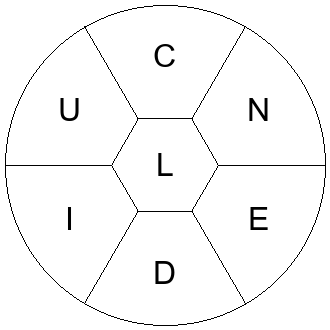
The official answers for today's puzzle are:

Click on the arrow to show the definition.
Click outside the pop-up to close it.


Number of Pangrams: 2

Maximum Puzzle Score: 278

Number of Answers: 59

Points Needed for Genius: 195

Genius requires between 27 and 50 words. You need at least a 7-letter word to reach genius. If you don't get the pangrams, you need 78% of the total points to reach genius. If you get the pangrams, you only need 67% of the remaining points to reach genius.

Other days with this pangram:

The button below will reveal a chart with the number of words by each letter. Red bars indicate that there is a pangram(s) starting with that letter.


How does this puzzle compare to other puzzles?

Today's score of 278 was in the 90th percentile of all puzzles.
The last time there was a score this high was on October 26, 2025.
The highest score ever was 537 on January 22, 2021.
The lowest score ever was 47 on March 27, 2023.

This puzzle's 59 possible answers rank it in the 90th percentile of all puzzles.
The last time there were more answers than this was on October 26, 2025.
The highest number of answers was 81 on June 8, 2019.
The lowest number of answers was 16 on March 27, 2023.

It takes a 7-letter word for genius.
The last time this happened was on October 28, 2025.

Today's puzzle has an average word length of 5.5.
For all Bees, the average word length has been 5.3.


Haven't I seen these letters before?

Hover over a letter to see its first and most recent appearance in the Bee!


Haven't I seen these words before?

The most common words in the Bee are:

  • noon 219
  • loll 206
  • toot 200
  • naan 181
  • nana 181
  • lilt 147
  • till 147
  • tilt 147
  • tint 142
  • nene 141
  • mama 140
  • mamma 140
  • acacia 134
  • acai 134
  • onto 133
  • toon 133
  • onion 131
  • anal 123
  • anon 121
  • olio 120
  • dodo 119
  • tact 118
  • baba 116
  • boob 115
  • booboo 115
  • papa 114
  • poop 114
  • lull 113
  • lulu 113
  • call 110
  • calla 110
  • mitt 110
  • cocci 109
  • mono 109
  • moon 109
  • ratatat 108
  • tart 108
  • tartar 108
  • tutu 108
  • attar 107
  • loon 107
  • allay 106
  • ally 106
  • tattoo 106
  • tatty 106
  • ammo 105
  • momma 105
  • epee 102
  • peep 102
  • meme 101


How long are words in the Bee?

There have been 108,745 answers ever accepted in the Bee - with 10,849 unique words.
Below are the distributions of the lengths of these words.


Valid dictionary words not in today's official answers

You may be wondering why these words aren't here*:

  • ceil
  • ceiled
  • ceili
  • cilice
  • cline
  • culicid
  • culicine
  • cullied
  • decile
  • deil
  • dele
  • deled
  • diel
  • dilled
  • dindle
  • dindled
  • duelled
  • duelli
  • dulce
  • dunlin
  • edile
  • icicled
  • illude
  • illuded
  • indulin
  • induline
  • inulin
  • leucin
  • leud
  • licence
  • licenced
  • licencee
  • lilied
  • linden
  • lindied
  • linin
  • linn
  • luce
  • lucence
  • lude
  • ludic
  • lunule
  • nellie
  • nielli
  • nill
  • nilled
  • nucelli
  • nuclein
  • nucleinic
  • nuclide
  • nuclidic
  • nulled
  • nuncle
  • undeluded
  • undulled
  • unled

*Because the New York Times considers them obscure or offensive.

cell

Etymology 1

noun
  1. A single-room dwelling for a hermit.
  2. A small monastery or nunnery dependent on a larger religious establishment.
  3. A small room in a monastery or nunnery accommodating one person.
  4. A room in a prison or jail for one or more inmates.
  5. Each of the small hexagonal compartments in a honeycomb.
  6. Any of various chambers in a tissue or organism having specific functions.
  7. The discal cell of the wing of a lepidopteran insect.
  8. Specifically, any of the supposed compartments of the brain, formerly thought to be the source of specific mental capacities, knowledge, or memories.
  9. A section or compartment of a larger structure.
  10. Any small dwelling; a remote nook, a den.
  11. A device which stores electrical power; used either singly or together in batteries; the basic unit of a battery.
  12. The basic unit of a living organism, consisting of a quantity of protoplasm surrounded by a cell membrane, which is able to synthesize proteins and replicate itself.
  13. A small thunderstorm, caused by convection, that forms ahead of a storm front.
  14. The minimal unit of a cellular automaton that can change state and has an associated behavior.
  15. In FreeCell-type games, a space where one card can be placed.
  16. A small group of people forming part of a larger organization, often an outlawed one.
  17. (communication) A short, fixed-length packet as in asynchronous transfer mode.
  18. (communication) A region of radio reception that is a part of a larger radio network.
  19. A three-dimensional facet of a polytope.
  20. The unit in a statistical array (a spreadsheet, for example) where a row and a column intersect.
  21. The space between the ribs of a vaulted roof.
  22. A cella.
  23. An area of an insect wing bounded by veins
verb
  1. To place or enclose in a cell.

Etymology 2

noun
  1. A cellular phone.

celled

No Definition Found.

celli

No Definition Found.

cellule

No Definition Found.

clinic

noun
  1. A medical facility, such as a hospital, especially one for the treatment and diagnosis of outpatients.
  2. (by extension) A hospital session to diagnose or treat patients.
  3. A school, or a session of a school or class, in which medicine or surgery is taught by the examination and treatment of patients in the presence of the pupils.
  4. A group practice of several physicians.
  5. A meeting for the diagnosis of problems, or training, on a particular subject.
  6. A temporary office arranged on a regular basis to allow politicians to meet their constituents.
  7. A series of workouts used to build skills of practitioners regardless of team affiliation.
  8. One confined to bed by sickness.
  9. One who receives baptism on a sickbed.

clue

noun
  1. A strand of yarn etc. as used to guide one through a labyrinth; something which points the way, a guide.
  2. Information which may lead one to a certain point or conclusion.
  3. An object or a kind of indication which may be used as evidence.
  4. Insight or understanding ("to have a clue [about]" or "to have clue". See have a clue, clue stick)
verb
  1. To provide with a clue.
  2. To provide someone with information which he or she lacks (often used with "in" or "up").

clued

verb
  1. To provide with a clue.
  2. To provide someone with information which he or she lacks (often used with "in" or "up").

cuddle

noun
  1. A snuggle; an affectionate embrace, often given to family members and close friends.
verb
  1. To embrace affectionately, lie together snugly.
  2. To cradle in one's arms so as to give comfort, warmth.
  3. To lie close or snug; to crouch; to nestle.

cuddled

verb
  1. To embrace affectionately, lie together snugly.
  2. To cradle in one's arms so as to give comfort, warmth.
  3. To lie close or snug; to crouch; to nestle.

cull

Etymology 1

noun
  1. A selection.
  2. An organised killing of selected animals.
  3. (farming) An individual animal selected to be killed, or item of produce to be discarded.
  4. (seafood industry) A lobster having only one claw.
  5. A piece unfit for inclusion within a larger group; an inferior specimen.
verb
  1. To pick or take someone or something (from a larger group).
  2. To gather, collect.
  3. To select animals from a group and then kill them in order to reduce the numbers of the group in a controlled manner.
  4. To kill (animals etc).
  5. To lay off in order to reduce the size of, get rid of.

Etymology 2

noun
  1. A fool, gullible person; a dupe.

culled

verb
  1. To pick or take someone or something (from a larger group).
  2. To gather, collect.
  3. To select animals from a group and then kill them in order to reduce the numbers of the group in a controlled manner.
  4. To kill (animals etc).
  5. To lay off in order to reduce the size of, get rid of.

decline

noun
  1. Downward movement, fall.
  2. A sloping downward, e.g. of a hill or road.
  3. A weakening.
  4. A reduction or diminution of activity.
  5. The act of declining or refusing something.
verb
  1. To move downwards, to fall, to drop.
  2. To become weaker or worse.
  3. To bend downward; to bring down; to depress; to cause to bend, or fall.
  4. To cause to decrease or diminish.
  5. To turn or bend aside; to deviate; to stray; to withdraw.
  6. To refuse, forbear.
  7. (grammar, usually of substantives, adjectives and pronouns) To inflect for case, number and sometimes gender.
  8. (by extension) To run through from first to last; to repeat like a schoolboy declining a noun.
  9. To reject a penalty against the opposing team, usually because the result of accepting it would benefit the non-penalized team less than the preceding play.

declined

verb
  1. To move downwards, to fall, to drop.
  2. To become weaker or worse.
  3. To bend downward; to bring down; to depress; to cause to bend, or fall.
  4. To cause to decrease or diminish.
  5. To turn or bend aside; to deviate; to stray; to withdraw.
  6. To refuse, forbear.
  7. (grammar, usually of substantives, adjectives and pronouns) To inflect for case, number and sometimes gender.
  8. (by extension) To run through from first to last; to repeat like a schoolboy declining a noun.
  9. To reject a penalty against the opposing team, usually because the result of accepting it would benefit the non-penalized team less than the preceding play.

deli

noun
  1. A shop that sells cooked or prepared food ready for serving.
  2. Food sold at a delicatessen.

dell

Etymology 1

noun
  1. A valley, especially in the form of a natural hollow, small and deep.

Etymology 2

noun
  1. A young woman; a wench.

delude

verb
  1. To deceive into believing something which is false; to lead into error; to dupe.
  2. To frustrate or disappoint.

deluded

verb
  1. To deceive into believing something which is false; to lead into error; to dupe.
  2. To frustrate or disappoint.
adjective
  1. Being affected by delusions.

diddle

noun
  1. In percussion, two consecutive notes played by the same hand (either RR or LL), similar to the drag, except that by convention diddles are played the same speed as the context in which they are placed.
  2. The penis.
verb
  1. To cheat; to swindle.
  2. To have sex with.
  3. To masturbate (especially of women).
  4. To waste time.
  5. To totter, like a child learning to walk; to daddle.
  6. To manipulate a value at the level of individual bits (binary digits).
interjection
  1. A meaningless word used when singing a tune or indicating a rhythm.

diddled

verb
  1. To cheat; to swindle.
  2. To have sex with.
  3. To masturbate (especially of women).
  4. To waste time.
  5. To totter, like a child learning to walk; to daddle.
  6. To manipulate a value at the level of individual bits (binary digits).

dill

Etymology 1

noun
  1. Anethum graveolens (the type species of the genus Anethum), a herb, the seeds of which are moderately warming, pungent, and aromatic, formerly used as a soothing medicine for children; also known as dillseed.
  2. A cucumber pickled with dill flavoring
  3. A fool.
verb
  1. To cook or flavor with dill

Etymology 2

verb
  1. To still; to assuage; to calm; to soothe, as one in pain.

duel

noun
  1. Arranged, regular combat between two private persons, often over a matter of honor.
  2. Historically, the wager of battle (judicial combat)
  3. Any struggle between two contending persons, groups or ideas.
verb
  1. To engage in a battle.

dueled

verb
  1. To engage in a battle.

dull

verb
  1. To render dull; to remove or blunt an edge or something that was sharp.
  2. To soften, moderate or blunt; to make dull, stupid, or sluggish; to stupefy.
  3. To lose a sharp edge; to become dull.
  4. To render dim or obscure; to sully; to tarnish.
adjective
  1. Lacking the ability to cut easily; not sharp.
  2. Boring; not exciting or interesting.
  3. Not shiny; having a matte finish or no particular luster or brightness.
  4. Not bright or intelligent; stupid; having slow understanding.
  5. Sluggish, listless.
  6. Cloudy, overcast.
  7. Insensible; unfeeling.
  8. Heavy; lifeless; inert.
  9. (of pain etc) Not intense; felt indistinctly or only slightly.
  10. (of a noise or sound) Not clear, muffled.

dulled

verb
  1. To render dull; to remove or blunt an edge or something that was sharp.
  2. To soften, moderate or blunt; to make dull, stupid, or sluggish; to stupefy.
  3. To lose a sharp edge; to become dull.
  4. To render dim or obscure; to sully; to tarnish.

elide

verb
  1. To leave out or omit (something).
  2. To cut off, as a vowel or a syllable.
  3. To conflate; to smear together; to blur the distinction between.

elided

verb
  1. To leave out or omit (something).
  2. To cut off, as a vowel or a syllable.
  3. To conflate; to smear together; to blur the distinction between.

elude

verb
  1. To evade, or escape from someone or something, especially by using cunning or skill
  2. To shake off a pursuer; to give someone the slip
  3. To escape understanding of; to be incomprehensible to

eluded

verb
  1. To evade, or escape from someone or something, especially by using cunning or skill
  2. To shake off a pursuer; to give someone the slip
  3. To escape understanding of; to be incomprehensible to

icicle

noun
  1. A drooping, tapering shape of ice.

idle

noun
  1. An idle animation.
  2. An idle game.
verb
  1. To spend in idleness; to waste; to consume.
  2. To lose or spend time doing nothing, or without being employed in business.
  3. Of an engine: to run at a slow speed, or out of gear; to tick over.
adjective
  1. Empty, vacant.
  2. Not being used appropriately; not occupied; (of time) with no, no important, or not much activity.
  3. Not engaged in any occupation or employment; unemployed; inactive; doing nothing in particular.
  4. Averse to work, labor or employment; lazy; slothful.
  5. Of no importance; useless; worthless; vain; trifling; thoughtless; silly.
  6. Light-headed; foolish.

idled

verb
  1. To spend in idleness; to waste; to consume.
  2. To lose or spend time doing nothing, or without being employed in business.
  3. Of an engine: to run at a slow speed, or out of gear; to tick over.

incline

noun
  1. A slope.
verb
  1. To bend or move (something) out of a given plane or direction, often the horizontal or vertical.
  2. To slope.
  3. (chiefly in the passive) To tend to do or believe something, or move or be moved in a certain direction, away from a point of view, attitude, etc.

inclined

verb
  1. To bend or move (something) out of a given plane or direction, often the horizontal or vertical.
  2. To slope.
  3. (chiefly in the passive) To tend to do or believe something, or move or be moved in a certain direction, away from a point of view, attitude, etc.
adjective
  1. At an angle to the horizontal; slanted or sloped.
  2. Having a tendency, preference, likelihood, or disposition.

include

noun
  1. A piece of source code or other content that is dynamically retrieved for inclusion in another item.
verb
  1. To bring into a group, class, set, or total as a (new) part or member.
  2. To contain, as parts of a whole; to comprehend.
  3. To enclose, confine.
  4. To conclude; to terminate.
  5. To use a directive that allows the use of source code from another file.

included

verb
  1. To bring into a group, class, set, or total as a (new) part or member.
  2. To contain, as parts of a whole; to comprehend.
  3. To enclose, confine.
  4. To conclude; to terminate.
  5. To use a directive that allows the use of source code from another file.

lede

Etymology 1

noun
  1. (singular) A man; person.
  2. (collective plural) Men; people, folk.
  3. (singular) A people or nation.
  4. (plural) Tenements; holdings; possessions.

Etymology 2

noun
  1. (chiefly US) The introductory paragraph(s) of a newspaper or other news article.

lend

Etymology 1

noun
  1. The lumbar region; loin.
  2. (of a person or animal) The loins; flank; buttocks.

Etymology 2

verb
  1. To allow to be used by someone temporarily, on condition that it or its equivalent will be returned.
  2. To make a loan.
  3. To be suitable or applicable, to fit.
  4. To afford; to grant or furnish in general.
  5. To borrow.

lenience

noun
  1. Leniency: mercy or forgiveness in the assignment of punishment.

leucine

noun
  1. An essential amino acid, C6H13NO2, isomeric with isoleucine, found in most animal proteins; it is essential for growth in children.

lice

noun
  1. A small parasitic wingless insect of the order Psocodea.
  2. (not usually used in plural form) A contemptible person; one who is deceitful or causes harm.

lidded

No Definition Found.

lied

Etymology 1

noun
  1. An art song, sung in German and accompanied on the piano.

Etymology 2

verb
  1. To give false information intentionally with intent to deceive.
  2. To convey a false image or impression.
  3. To be mistaken or unintentionally spread false information.

lien

Etymology 1

noun
  1. A tendon.
  2. A right to take possession of a debtor’s property as security until a debt or duty is discharged.

Etymology 2

noun
  1. (possibly obsolete) The spleen.

lieu

noun
  1. Place, stead; See in lieu or in lieu of

line

Etymology 1

noun
  1. A path through two or more points (compare ‘segment’); a continuous mark, including as made by a pen; any path, curved or straight.
  2. A rope, cord, string, or thread, of any thickness.
  3. A hose or pipe, of any size.
  4. Direction, path.
  5. The wire connecting one telegraphic station with another, a telephone or internet cable between two points: a telephone or network connection.
  6. A clothesline.
  7. A letter, a written form of communication.
  8. A connected series of public conveyances, as a roadbed or railway track; and hence, an established arrangement for forwarding merchandise, etc.
  9. A trench or rampart, or the non-physical demarcation of the extent of the territory occupied by specified forces.
  10. The exterior limit of a figure or territory: a boundary, contour, or outline; a demarcation.
  11. A long tape or ribbon marked with units for measuring; a tape measure.
  12. A measuring line or cord.
  13. That which was measured by a line, such as a field or any piece of land set apart; hence, allotted place of abode.
  14. A threadlike crease or wrinkle marking the face, hand, or body; hence, a characteristic mark.
  15. Lineament; feature; figure (of one's body).
  16. A more-or-less straight sequence of people, objects, etc., either arranged as a queue or column and often waiting to be processed or dealt with, or arranged abreast of one another in a row (and contrasted with a column), as in a military formation.
  17. The regular infantry of an army, as distinguished from militia, guards, volunteer corps, cavalry, artillery etc.
  18. A series or succession of ancestors or descendants of a given person; a family or race; compare lineage.
  19. A small amount of text. Specifically:
  20. Course of conduct, thought, occupation, or policy; method of argument; department of industry, trade, or intellectual activity.
  21. The official, stated position (or set of positions) of an individual or group, particularly a political or religious faction.
  22. A set of products or services sold by a business, or by extension, the business itself.
  23. A number of shares taken by a jobber.
  24. A measure of length:
  25. A maxwell, a unit of magnetic flux.
  26. (1800s, with "the") The batter’s box.
  27. The position in which the fencers hold their swords.
  28. Proper relative position or adjustment (of parts, not as to design or proportion, but with reference to smooth working).
  29. A small path-shaped portion or serving of a powdery illegal drug, especially cocaine.
  30. Instruction; doctrine.
  31. Population of cells derived from a single cell and containing the same genetic makeup.
  32. (perfusion line) a set composed of a spike, a drip chamber, a clamp, a Y-injection site, a three-way stopcock and a catheter.
  33. A group of forwards that play together.
  34. A vascular catheter.
verb
  1. To place (objects) into a line (usually used with "up"); to form into a line; to align.
  2. To place persons or things along the side of for security or defense; to strengthen by adding; to fortify.
  3. To form a line along.
  4. To mark with a line or lines, to cover with lines.
  5. To represent by lines; to delineate; to portray.
  6. To read or repeat line by line.
  7. To hit a line drive; to hit a line drive which is caught for an out. Compare fly and ground.
  8. To track (wild bees) to their nest by following their line of flight.
  9. To measure.

Etymology 2

noun
  1. Flax; linen, particularly the longer fiber of flax.
verb
  1. To cover the inner surface of (something), originally especially with linen.
  2. To reinforce (the back of a book) with glue and glued scrap material such as fabric or paper.
  3. To fill or supply (something), as a purse with money.

Etymology 3

verb
  1. (of a dog) To copulate with, to impregnate.

lined

verb
  1. To place (objects) into a line (usually used with "up"); to form into a line; to align.
  2. To place persons or things along the side of for security or defense; to strengthen by adding; to fortify.
  3. To form a line along.
  4. To mark with a line or lines, to cover with lines.
  5. To represent by lines; to delineate; to portray.
  6. To read or repeat line by line.
  7. To hit a line drive; to hit a line drive which is caught for an out. Compare fly and ground.
  8. To track (wild bees) to their nest by following their line of flight.
  9. To measure.
verb
  1. To cover the inner surface of (something), originally especially with linen.
  2. To reinforce (the back of a book) with glue and glued scrap material such as fabric or paper.
  3. To fill or supply (something), as a purse with money.
verb
  1. (of a dog) To copulate with, to impregnate.
adjective
  1. Having a lining, an inner layer or covering.
  2. (of paper) Having lines, ruled.
  3. (of skin) Having visible lines or wrinkles.

linen

noun
  1. Thread or cloth made from flax fiber.
  2. Domestic textiles, such as tablecloths, bedding, towels, underclothes, etc., that are made of linen or linen-like fabrics of cotton or other fibers; linens.
  3. A light beige colour, like that of linen cloth undyed.
adjective
  1. Made from linen cloth or thread.
  2. Having the colour linen, light beige.

lucid

noun
  1. A lucid dream.
adjective
  1. Clear; easily understood
  2. Mentally rational; sane
  3. Bright, luminous, translucent or transparent

lull

noun
  1. A period of rest or soothing.
  2. A period of reduced activity; a respite
  3. A period without waves or wind.
  4. An extended pause between sets of waves.
verb
  1. To cause to rest by soothing influences; to compose; to calm
  2. To become gradually calm; to subside; to cease or abate.

lulled

verb
  1. To cause to rest by soothing influences; to compose; to calm
  2. To become gradually calm; to subside; to cease or abate.

lulu

noun
  1. A remarkable person, object or idea.
  2. A very attractive or alluring person.
  3. A very bad mistake or error.
  4. A fixed allowance paid to a legislator in lieu of reimbursement for actual expenses.

lune

Etymology 1

noun
  1. A fit of lunacy or madness; a period of frenzy; a crazy or unreasonable freak.

Etymology 2

noun
  1. A concave figure formed by the intersection of the arcs of two circles on a plane, or on a sphere the intersection between two great semicircles.
  2. Anything crescent-shaped.

Etymology 3

noun
  1. (hawking) A leash for a hawk.

needle

noun
  1. A fine, sharp implement usually for piercing such as sewing, or knitting, acupuncture, tattooing, body piercing, medical injections, etc.
  2. Any slender, pointed object resembling a needle, such as a pointed crystal, a sharp pinnacle of rock, an obelisk, etc.
  3. A fine measurement indicator on a dial or graph, e.g. a compass needle.
  4. A sensor for playing phonograph records, a phonograph stylus.
  5. A needle-like leaf found on some conifers.
  6. A strong beam resting on props, used as a temporary support during building repairs.
  7. (usually preceded by the) The death penalty carried out by lethal injection.
  8. A text string that is searched for within another string. (see: needle in a haystack)
verb
  1. To pierce with a needle, especially for sewing or acupuncture.
  2. To tease in order to provoke; to poke fun at.
  3. To form, or be formed, in the shape of a needle.

needled

verb
  1. To pierce with a needle, especially for sewing or acupuncture.
  2. To tease in order to provoke; to poke fun at.
  3. To form, or be formed, in the shape of a needle.
adjective
  1. Covered or armored with needles.

nuclei

noun
  1. The core, central part of something, around which other elements are assembled.
  2. An initial part or version that will receive additions.
  3. The massive, positively charged central part of an atom, made up of protons and neutrons.
  4. A large membrane-enclosed organelle found in eukaryotic cells which contains genetic material.
  5. A ganglion, cluster of many neuronal bodies where synapsing occurs.
  6. The central part of a syllable, most commonly a vowel.

null

noun
  1. A non-existent or empty value or set of values.
  2. Zero quantity of expressions; nothing.
  3. Something that has no force or meaning.
  4. The ASCII or Unicode character (␀), represented by a zero value, that indicates no character and is sometimes used as a string terminator.
  5. The attribute of an entity that has no valid value.
  6. One of the beads in nulled work.
  7. Null hypothesis.
verb
  1. To nullify; to annul.
  2. To form nulls, or into nulls, as in a lathe.
  3. To crack; to remove restrictions or limitations in (software).
adjective
  1. Having no validity; "null and void"
  2. Insignificant.
  3. Absent or non-existent.
  4. Of the null set.
  5. Of or comprising a value of precisely zero.
  6. (of a mutation) Causing a complete loss of gene function, amorphic.

uncle

noun
  1. The brother or brother-in-law of one’s parent.
  2. The male cousin of one’s parent.
  3. A companion to one's (usually unmarried) mother.
  4. A source of advice, encouragement, or help.
  5. A pawnbroker.
  6. An affectionate term for a man of an older generation than oneself, especially a friend of one's parents, by means of fictive kin.
  7. An older male African-American person.
verb
  1. To address somebody by the term uncle.
  2. To act like, or as, an uncle.
interjection
  1. A cry used to indicate surrender.

unlined

adjective
  1. Without lining; without liner.
  2. Unmarked by lines, especially of the skin.

nucleic

No Definition Found.