Thursday, November 13, 2025

Answers to yesterday's Bee

Jump to answers for


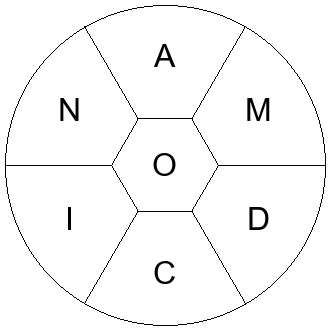
The official answers for today's puzzle are:

Click on the arrow to show the definition.
Click outside the pop-up to close it.


Number of Pangrams: 1

Maximum Puzzle Score: 271

Number of Answers: 58

Points Needed for Genius: 190

Genius requires between 29 and 49 words. You need at least a 7-letter word to reach genius. If you don't get the pangram, you need 74% of the total points to reach genius. If you get the pangram, you only need 68% of the remaining points to reach genius.

Other days with this pangram:

The button below will reveal a chart with the number of words by each letter. Red bars indicate that there is a pangram(s) starting with that letter.


How does this puzzle compare to other puzzles?

Today's score of 271 was in the 88th percentile of all puzzles.
The last time there was a score this high was on November 11, 2025.
The highest score ever was 537 on January 22, 2021.
The lowest score ever was 47 on March 27, 2023.

This puzzle's 58 possible answers rank it in the 89th percentile of all puzzles.
The last time there were more answers than this was on November 3, 2025.
The highest number of answers was 81 on June 8, 2019.
The lowest number of answers was 16 on March 27, 2023.

It takes a 7-letter word for genius.
The last time this happened was on November 12, 2025.

Today's puzzle has an average word length of 5.4.
For all Bees, the average word length has been 5.3.


Haven't I seen these letters before?

Hover over a letter to see its first and most recent appearance in the Bee!


Haven't I seen these words before?

The most common words in the Bee are:

  • noon 222
  • loll 207
  • toot 201
  • naan 184
  • nana 184
  • lilt 147
  • till 147
  • tilt 147
  • tint 143
  • nene 142
  • mama 140
  • mamma 140
  • acacia 134
  • acai 134
  • onto 134
  • toon 134
  • onion 132
  • anal 126
  • anon 124
  • olio 121
  • dodo 120
  • tact 118
  • baba 116
  • boob 115
  • booboo 115
  • papa 115
  • lull 114
  • lulu 114
  • poop 114
  • cocci 111
  • mitt 111
  • mono 111
  • moon 111
  • call 110
  • calla 110
  • tutu 109
  • ratatat 108
  • tart 108
  • tartar 108
  • allay 107
  • ally 107
  • attar 107
  • loon 107
  • ammo 106
  • momma 106
  • tattoo 106
  • tatty 106
  • epee 102
  • peep 102
  • meme 101


How long are words in the Bee?

There have been 109,380 answers ever accepted in the Bee - with 10,857 unique words.
Below are the distributions of the lengths of these words.


Valid dictionary words not in today's official answers

You may be wondering why these words aren't here*:

  • amido
  • ammino
  • ammoniac
  • ammonic
  • ammono
  • ammonoid
  • amnion
  • amnionic
  • ancon
  • anconoid
  • anionic
  • annona
  • anoa
  • anodic
  • anomic
  • camion
  • cion
  • cocain
  • coccic
  • coccid
  • coccidia
  • coccoid
  • coco
  • codomain
  • comm
  • commo
  • condominia
  • coni
  • conidia
  • conidian
  • conin
  • conn
  • conoid
  • coocoo
  • coon
  • cooncan
  • dado
  • daimio
  • daimon
  • daimonic
  • danio
  • dido
  • domic
  • dona
  • donna
  • doodoo
  • imido
  • imino
  • inion
  • iodic
  • iodid
  • iodin
  • macaco
  • macon
  • madonna
  • mandioca
  • manioc
  • manioca
  • mano
  • midnoon
  • modi
  • modica
  • momi
  • monacid
  • monacidic
  • monadic
  • monic
  • monoacid
  • monoacidic
  • monodic
  • nano
  • naoi
  • ninon
  • nodi
  • noma
  • nomina
  • nomoi
  • nona
  • nonacid
  • nonacidic
  • nonionic
  • nonman
  • odic
  • oidia
  • oidioid
  • oomiac

*Because the New York Times considers them obscure or offensive.

amino

noun
  1. The amine functional group.
adjective
  1. Relating to an amine.

ammo

noun
  1. Ammunition.
verb
  1. To load up on ammunition.

ammonia

noun
  1. A gaseous compound of hydrogen and nitrogen, NH3, with a pungent smell and taste.
  2. A solution of this compound in water used domestically as a cleaning fluid.

amnio

noun
  1. Amniocentesis

anaconda

noun
  1. Any of various large nonvenomous snakes of the genus Eunectes, found mainly in northern South America. Their length can grow to as much as 5 m (15 ft).
  2. (by extension) A large penis.
proper noun
  1. A particular variety of stud poker.

anion

noun
  1. A negatively charged ion.

anon

Etymology 1

adverb
  1. Straight away; at once.
  2. Soon; in a little while.
  3. At another time; then; again.

Etymology 2

noun
  1. An anonymous person, especially an author.
  2. A work with an unknown author.
  3. A work without a title.
adjective
  1. Anonymous

cacao

noun
  1. A tree, Theobroma cacao, whose seed is used to make chocolate.
  2. This tree's seed, the cocoa bean.

camo

noun
  1. A pattern on clothing consisting of irregularly shaped patches that are either greenish/brownish, brownish/whitish, or bluish/whitish, as used by ground combat forces.
  2. Clothes made from camouflage fabric, for concealment in combat or hunting.
verb
  1. To camouflage.
  2. To put on camouflage clothing.

cannon

noun
  1. A complete assembly, consisting of an artillery tube and a breech mechanism, firing mechanism or base cap, which is a component of a gun, howitzer or mortar. It may include muzzle appendages.
  2. Any similar device for shooting material out of a tube.
  3. A bone of a horse's leg, between the fetlock joint and the knee or hock.
  4. A cannon bit.
  5. A large muzzle-loading artillery piece.
  6. A carom.
  7. The arm of a player that can throw well.
  8. A hollow cylindrical piece carried by a revolving shaft, on which it may, however, revolve independently.
  9. (Chinese chess) A piece which moves horizontally and vertically like a rook but captures another piece by jumping over a different piece in the line of attack.
verb
  1. To bombard with cannons.
  2. To play the carom billiard shot. To strike two balls with the cue ball
  3. To fire something, especially spherical, rapidly.
  4. To collide or strike violently, especially so as to glance off or rebound.
noun
  1. A generally accepted principle; a rule.
  2. A group of literary works that are generally accepted as representing a field.
  3. The works of a writer that have been accepted as authentic.
  4. A eucharistic prayer, particularly the Roman Canon.
  5. A religious law or body of law decreed by the church.
  6. A catalogue of saints acknowledged and canonized in the Roman Catholic Church.
  7. In monasteries, a book containing the rules of a religious order.
  8. A member of a cathedral chapter; one who possesses a prebend in a cathedral or collegiate church.
  9. A piece of music in which the same melody is played by different voices, but beginning at different times; a round.
  10. (Roman law) A rent or stipend payable at some regular time, generally annual, e.g., canon frumentarius
  11. Those sources, especially including literary works, which are considered part of the main continuity regarding a given fictional universe.
  12. A rolled and filleted loin of meat; also called cannon.
  13. A large size of type formerly used for printing the church canons, standardized as 48-point.
  14. The part of a bell by which it is suspended; the ear or shank of a bell.
  15. A carom.
noun
  1. A clergy member serving a cathedral or collegiate church.
  2. A canon regular, a member of any of several Roman Catholic religious orders.
noun
  1. A Near Eastern and Caucasian musical instrument related to the zither, dulcimer, or harp having either 26 strings and a single bridge, or twice that number and two bridges.

canon

Etymology 1

noun
  1. A generally accepted principle; a rule.
  2. A group of literary works that are generally accepted as representing a field.
  3. The works of a writer that have been accepted as authentic.
  4. A eucharistic prayer, particularly the Roman Canon.
  5. A religious law or body of law decreed by the church.
  6. A catalogue of saints acknowledged and canonized in the Roman Catholic Church.
  7. In monasteries, a book containing the rules of a religious order.
  8. A member of a cathedral chapter; one who possesses a prebend in a cathedral or collegiate church.
  9. A piece of music in which the same melody is played by different voices, but beginning at different times; a round.
  10. (Roman law) A rent or stipend payable at some regular time, generally annual, e.g., canon frumentarius
  11. Those sources, especially including literary works, which are considered part of the main continuity regarding a given fictional universe.
  12. A rolled and filleted loin of meat; also called cannon.
  13. A large size of type formerly used for printing the church canons, standardized as 48-point.
  14. The part of a bell by which it is suspended; the ear or shank of a bell.
  15. A carom.

Etymology 2

noun
  1. A clergy member serving a cathedral or collegiate church.
  2. A canon regular, a member of any of several Roman Catholic religious orders.

Etymology 3

noun
  1. A Near Eastern and Caucasian musical instrument related to the zither, dulcimer, or harp having either 26 strings and a single bridge, or twice that number and two bridges.

canonic

adjective
  1. Canonical

ciao

noun
  1. A greeting or farewell using the word "ciao".
interjection
  1. Hello, hi.
  2. Bye, goodbye.

cinnamon

noun
  1. A small evergreen tree native to Sri Lanka and southern India, Cinnamomum verum or Cinnamomum zeylanicum, belonging to the family Lauraceae.
  2. Several related trees, notably the Indonesian cinnamon (Cinnamomum burmanni) and Chinese cinnamon or cassia (Cinnamomum aromaticum or Cinnamomum cassia).
  3. A spice from the dried aromatic bark of the cinnamon tree, either rolled into strips or ground into a powder. The word is commonly used as trade name for spices made of any of the species above.
  4. A warm yellowish-brown color, the color of cinnamon.
adjective
  1. Containing cinnamon, or having a cinnamon taste.
  2. Of a yellowish-brown color.

coca

Etymology 1

noun
  1. Any of the four cultivated plants which belong to the family Erythroxylaceae, native to western South America.
  2. The dried leaf of one of these plants, the South American shrub (Erythroxylum coca), widely cultivated in Andean countries, which is the source of cocaine.

Etymology 2

noun
  1. A pastry typically made and consumed in the Spanish Mediterranean coast.

cocci

Etymology 1

noun
  1. Any approximately spherical bacterium.
  2. One of the carpels or seed-vessels of a dry fruit.

Etymology 2

noun
  1. Coccidioidomycosis

cocoa

Etymology 1

noun
  1. The dried and partially fermented fatty seeds of the cacao tree from which chocolate is made.
  2. An unsweetened brown powder made from roasted, ground cocoa beans, used in making chocolate, and in cooking.
  3. A hot drink made with milk, cocoa powder, and sugar.
  4. A serving of this drink.
  5. A light to medium brown colour.
adjective
  1. Of a light to medium brown colour, like that of cocoa powder.

Etymology 2

noun
  1. Coconut palm.
  2. Coconut, the fruit of the coconut palm.

cocoon

noun
  1. The silky protective case spun by the larvae of some insects in which they metamorphose, the pupa.
  2. Any similar protective case, whether real or metaphorical.
verb
  1. To envelop in a protective case
  2. To withdraw into such a case.

coda

noun
  1. A person born hearing to deaf parents.
noun
  1. A passage that brings a movement or piece to a conclusion through prolongation.
  2. The optional final part of a syllable, placed after its nucleus, and usually composed of one or more consonants.
  3. In seismograms, the gradual return to baseline after a seismic event. The length of the coda can be used to estimate event magnitude, and the shape sometimes reveals details of subsurface structures.
  4. A conclusion (of a statement or event, for example), final portion, tail end.

codon

Etymology 1

noun
  1. A handbell used for summoning monks.
  2. The "bell" or flaring mouth of a trumpet.

Etymology 2

noun
  1. A sequence of three adjacent nucleotides, which encode for a specific amino acid during protein synthesis or translation.

coin

noun
  1. (money) A piece of currency, usually metallic and in the shape of a disc, but sometimes polygonal, or with a hole in the middle.
  2. A token used in a special establishment like a casino.
  3. That which serves for payment or recompense.
  4. Money in general, not limited to coins.
  5. One of the suits of minor arcana in tarot, or a card of that suit.
  6. A corner or external angle.
  7. A small circular slice of food.
  8. A cryptocurrency.
verb
  1. To make of a definite fineness, and convert into coins, as a mass of metal.
  2. (by extension) To make or fabricate.
  3. To acquire rapidly, as money; to make.

coma

Etymology 1

noun
  1. A state of unconsciousness from which one may not wake up, usually induced by some form of trauma.

Etymology 2

noun
  1. A cloud of dust surrounding the nucleus of a comet.
  2. A defect characterized by diffuse, pear-shaped images that in an ideal image would appear as points.
  3. A tuft or bunch, such as the assemblage of branches forming the head of a tree, a cluster of bracts when empty and terminating the inflorescence of a plant, or a tuft of long hairs on certain seeds.

comic

noun
  1. A comedian.
  2. A story composed of cartoon images arranged in sequence, usually with textual captions; a graphic novel.
  3. A children's newspaper.
adjective
  1. Funny; amusing; comical.
  2. Relating to comedy.

comma

noun
  1. The punctuation mark ⟨,⟩ used to indicate a set off parts of a sentence or between elements of a list.
  2. A similar-looking subscript diacritical mark.
  3. Any of various nymphalid butterflies of the genus Polygonia, having a comma-shaped white mark on the underwings, especially Polygonia c-album and Polygonia c-aureum of North Africa, Europe, and Asia.
  4. A difference in the calculation of nearly identical intervals by different ways.
  5. A delimiting marker between items in a genetic sequence.
  6. In Ancient Greek rhetoric, a short clause, something less than a colon, originally denoted by comma marks. In antiquity it was defined as a combination of words having no more than eight syllables in all. It was later applied to longer phrases, e.g. the Johannine comma.
  7. A brief interval.
verb
  1. To place a comma or commas within text; to follow, precede, or surround a portion of text with commas.

command

noun
  1. An order to do something.
  2. The right or authority to order, control or dispose of; the right to be obeyed or to compel obedience.
  3. Power of control, direction or disposal; mastery.
  4. A position of chief authority; a position involving the right or power to order or control.
  5. The act of commanding; exercise or authority of influence.
  6. A body or troops, or any naval or military force, under the control of a particular officer; by extension, any object or body in someone's charge.
  7. Dominating situation; range or control or oversight; extent of view or outlook.
  8. A directive to a computer program acting as an interpreter of some kind, in order to perform a specific task.
  9. The degree of control a pitcher has over his pitches.
  10. A command performance.
verb
  1. To order, give orders; to compel or direct with authority.
  2. To have or exercise supreme power, control or authority over, especially military; to have under direction or control.
  3. To require with authority; to demand, order, enjoin.
  4. To dominate through ability, resources, position etc.; to overlook.
  5. To exact, compel or secure by influence; to deserve, claim.
  6. To hold, to control the use of.
  7. To have a view, as from a superior position.
  8. To direct to come; to bestow.

commando

noun
  1. A small fighting force specially trained for making quick destructive raids against enemy-held areas.
  2. A commando trooper
  3. An organized force of Boer troops in South Africa; a raid by such troops

common

noun
  1. Mutual good, shared by more than one.
  2. A tract of land in common ownership; common land.
  3. The people; the community.
  4. The right of taking a profit in the land of another, in common either with the owner or with other persons; so called from the community of interest which arises between the claimant of the right and the owner of the soil, or between the claimants and other commoners entitled to the same right.
verb
  1. To communicate (something).
  2. To converse, talk.
  3. To have sex.
  4. To participate.
  5. To have a joint right with others in common ground.
  6. To board together; to eat at a table in common.
adjective
  1. Mutual; shared by more than one.
  2. Occurring or happening regularly or frequently; usual.
  3. Found in large numbers or in a large quantity; usual.
  4. Simple, ordinary or vulgar.
  5. (grammar) In some languages, particularly Germanic languages, of the gender originating from the coalescence of the masculine and feminine categories of nouns.
  6. (grammar) Of or pertaining to common nouns as opposed to proper nouns.
  7. Vernacular, referring to the name of a kind of plant or animal, i.e., common name vs. scientific name.
  8. Profane; polluted.
  9. Given to lewd habits; prostitute.

condo

noun
  1. Joint sovereignty over a territory by two or more countries.
  2. A region or territory under such rule.
  3. A building in which each unit is owned by an individual but the grounds, structure etc are owned jointly.
  4. The system of ownership by which such condominiums operate
  5. A unit or apartment in such a complex.
  6. The legal tenure involved.

condom

noun
  1. A flexible sleeve made of latex or other impermeable material such as sheepskin, worn over an erect penis during intercourse as a contraceptive or as a way to prevent the spread of STDs.

conic

noun
  1. A conic section.
adjective
  1. Of or relating to a cone or cones.
  2. Shaped like a cone.
  3. Describing a map projection in which meridians are mapped to equally spaced lines radiating out from the apex and parallels of latitude are mapped to circular arcs centred on the apex.

diamond

Etymology 1

noun
  1. A glimmering glass-like mineral that is an allotrope of carbon in which each atom is surrounded by four others in the form of a tetrahedron.
  2. A gemstone made from this mineral.
  3. A ring containing a diamond.
  4. A very pale blue color/colour.
  5. Something that resembles a diamond.
  6. A rhombus, especially when oriented so that its longer axis is vertical.
  7. The polyiamond made up of two triangles.
  8. The entire field of play used in the game.
  9. The infield of a baseball field.
  10. A card of the diamonds suit.
  11. A size of type, standardised as 4 1/2 point.
verb
  1. To adorn with or as if with diamonds
adjective
  1. Made of, or containing diamond, a diamond or diamonds.
  2. Of, relating to, or being a sixtieth anniversary.
  3. Of, relating to, or being a seventy-fifth anniversary.
  4. First-rate; excellent.

Etymology 2

noun
  1. The size of type between brilliant and pearl, standardized as 4 1/2-point.

dino

noun
  1. Dinosaur.

dodo

Etymology 1

noun
  1. A large, flightless bird, †Raphus cucullatus, related to the pigeon, that is now extinct (since the 1600s) and was native to Mauritius.
  2. A person or organisation which is very old or has very old-fashioned views or is not willing to change and adapt.

Etymology 2

noun
  1. Fried plantain.

domain

noun
  1. A geographic area owned or controlled by a single person or organization.
  2. A field or sphere of activity, influence or expertise.
  3. A group of related items, topics, or subjects.
  4. The set of all possible mathematical entities (points) where a given function is defined.
  5. The set of input (argument) values for which a function is defined.
  6. A ring with no zero divisors; that is, in which no product of nonzero elements is zero.
  7. An open and connected set in some topology. For example, the interval (0,1) as a subset of the real numbers.
  8. Any DNS domain name, particularly one which has been delegated and has become representative of the delegated domain name and its subdomains.
  9. A collection of DNS or DNS-like domain names consisting of a delegated domain name and all its subdomains.
  10. A collection of information having to do with a domain, the computers named in the domain, and the network on which the computers named in the domain reside.
  11. The collection of computers identified by a domain's domain names.
  12. A small region of a magnetic material with a consistent magnetization direction.
  13. Such a region used as a data storage element in a bubble memory.
  14. (data processing) A form of technical metadata that represent the type of a data item, its characteristics, name, and usage.
  15. The highest rank in the classification of organisms, above kingdom; in the three-domain system, one of the taxa Bacteria, Archaea, or Eukaryota.
  16. A folded section of a protein molecule that has a discrete function; the equivalent section of a chromosome

dominion

noun
  1. Power or the use of power; sovereignty over something; stewardship, supremacy.
  2. Predominance; ascendancy
  3. (sometimes figurative) A kingdom, nation, or other sphere of influence; governed territory.
  4. An order of angel in Christian angelology, ranked above virtues and below thrones.

domino

noun
  1. A tile divided into two squares, each having 0 to 6 (or sometimes more) dots or pips (as in dice), used in the game of dominoes.
  2. A country that is expected to react to events in a neighboring country, according to the domino effect.
  3. A masquerade costume consisting of a hooded robe and a mask covering the upper part of the face.
  4. The mask itself.
  5. The person wearing the costume.
  6. A polyomino made up of two squares.
  7. A mistake in performing.
verb
  1. To collapse in the manner of dominoes.
  2. To cause to collapse in the manner of dominoes.

doodad

noun
  1. A thing (used in a vague way to refer to something whose name one cannot recall); especially an unspecified gadget, device, or part.

doom

noun
  1. Destiny, especially terrible.
  2. An undesirable fate; an impending severe occurrence or danger that seems inevitable.
  3. A feeling of danger, impending danger, darkness or despair.
  4. A law.
  5. A judgment or decision.
  6. A sentence or penalty for illegal behaviour.
  7. Death.
  8. (sometimes capitalized) The Last Judgment; or, an artistic representation thereof.
verb
  1. To pronounce sentence or judgment on; to condemn.
  2. To destine; to fix irrevocably the ill fate of.
  3. To judge; to estimate or determine as a judge.
  4. To ordain as a penalty; hence, to mulct or fine.
  5. To assess a tax upon, by estimate or at discretion.

icon

noun
  1. An image, symbol, picture, or other representation usually as an object of religious devotion.
  2. (especially Eastern Christianity) A type of religious painting portraying a saint or scene from Scripture, often done on wooden panels.
  3. (by extension) A person or thing that is the best example of a certain profession or some doing.
  4. A small picture that represents something (such as an icon on a computer screen which when clicked performs some function.)
  5. A word, character, or sign whose form reflects and is determined by the referent; onomatopoeic words are necessarily all icons.

iconic

adjective
  1. Relating to, or having the characteristics of, an icon.
  2. Famously and distinctively representative of its type.
  3. Representing something; symbolic.

idiom

noun
  1. A manner of speaking, a mode of expression peculiar to a language, person, or group of people.
  2. A language or language variety; specifically, a restricted dialect used in a given historical period, context etc.
  3. An established expression whose meaning is not deducible from the literal meanings of its component words, often peculiar to a given language.
  4. An artistic style (for example, in art, architecture, or music); an instance of such a style.
  5. A programming construct or phraseology that is characteristic of the language.

ionic

adjective
  1. Of, relating to, or containing ions

mammon

noun
  1. The desire for wealth personified as an evil spirit or a malign influence.
  2. Often mammon: wealth, material avarice, profit.

minion

noun
  1. The lowest limit.
  2. The smallest amount.
  3. A period of minimum brightness or energy intensity (of a star).
  4. A lower bound of a set which is also an element of that set.
  5. The smallest member of a batch or sample or the lower bound of a probability distribution.
noun
  1. A loyal servant of another, usually a more powerful being.
  2. A sycophantic follower.
  3. A loved one; one highly esteemed and favoured.
  4. An ancient form of ordnance with a calibre of about three inches.
  5. The size of type between nonpareil and brevier, standardized as 7-point.
adjective
  1. Favoured, beloved; "pet".

moan

noun
  1. A low, mournful cry of pain, sorrow or pleasure
verb
  1. To complain about; to bemoan, to bewail; to mourn.
  2. To grieve.
  3. To distress (someone); to sadden.
  4. To make a moan or similar sound.
  5. To say in a moan, or with a moaning voice.
  6. To complain; to grumble.

momma

noun
  1. Mother
  2. A voluptuous woman.
  3. One's wife or girlfriend.

monad

noun
  1. An ultimate atom, or simple, unextended point; something ultimate and indivisible.
  2. A single individual (such as a pollen grain) that is free from others, not united in a group.
  3. A monoid object in the category of endofunctors of a fixed category.

mondo

Etymology 1

noun
  1. A dialogue between master and student designed to obtain an intuitive truth.

Etymology 2

adjective
  1. Big, large; major, significant.
adverb
  1. Very, extremely, really.

mono

Etymology 1

noun
  1. A viral infection marked by extreme fatigue, high fever, and swollen lymph nodes.

Etymology 2

noun
  1. A bicycle or motorcycle trick where the front wheel is lifted off the ground while riding

Etymology 3

adjective
  1. Monaural or monophonic; having only a single audio channel.

Etymology 4

adjective
  1. Monochrome.

Etymology 5

noun
  1. An injective homomorphism
  2. The absence of sexual dimorphism
  3. A morphism n such that for any other morphisms f and g, if n \circ f = n \circ g then f = g.

Etymology 6

noun
  1. A monogamous person.
adjective
  1. Monoamorous, monogamous.

Etymology 7

adjective
  1. Monosexual.

monomania

noun
  1. Excessive interest or concentration on a singular object or subject.
  2. A pathological obsession with one person, thing or idea.

monomaniac

noun
  1. A person who is obsessed with a single thing, to the exclusion of other concerns.
adjective
  1. Focused on one thing above all others.

mood

Etymology 1

noun
  1. A mental or emotional state, composure.
  2. Emotional character (of a work of music, literature, or other art).
  3. A sullen, gloomy or angry mental state; a bad mood.
  4. A disposition to do something, a state of mind receptive or disposed to do something.
  5. A prevalent atmosphere, attitude, or feeling.
  6. A familiar, relatable feeling, experience, or thing.
  7. Courage, heart, valor; also vim and vigor.

Etymology 2

noun
  1. (grammar) A verb form that depends on how its containing clause relates to the speaker’s or writer’s wish, intent, or assertion about reality.

moon

proper noun
  1. The Earth's moon Luna; the sole natural satellite of the Earth, represented in astronomy and astrology by ☾.
  2. The god of the Moon in Heathenry.
  3. A surname.
  4. The 54th sura (chapter) of the Qur'an.
noun
  1. (by extension of Moon) Any natural satellite of a planet.
  2. A month, particularly a lunar month.
  3. A crescent-like outwork in a fortification.
  4. The eighteenth trump/major arcana card of the Tarot.
  5. The thirty-second Lenormand card.
  6. In hearts, the action of taking all the point cards in one hand.
verb
  1. To display one's buttocks to, typically as a jest, insult, or protest.
  2. (usually followed by over or after) To fuss over something adoringly; to be infatuated with someone.
  3. To spend time idly, absent-mindedly.
  4. To expose to the rays of the Moon.
  5. To adorn with moons or crescents.
  6. (cryptocurrency) Of a coin or token: to rise in price rapidly.
  7. To shoot the moon.

nomad

noun
  1. A member of a society or class who herd animals from pasture to pasture with no fixed home.
  2. A person who changes residence frequently.
  3. A player who changes teams frequently.
adjective
  1. Of or relating to nomads, whether
noun
  1. One who wanders, who travels aimlessly.
  2. Any of various far-migrating nymphalid butterflies of the genus Danaus.
  3. The wandering albatross, Diomedea exulans.

nomadic

adjective
  1. Of or relating to nomads, whether

noncom

noun
  1. A non-commissioned officer, such as a sergeant (army) or petty officer (navy).

noon

Etymology 1

noun
  1. The ninth hour of the day counted from sunrise; around three o'clock in the afternoon.
  2. Time of day when the sun is in its zenith; twelve o'clock in the day, midday.
  3. The corresponding time in the middle of the night; midnight.
  4. The highest point; culmination.
verb
  1. To relax or sleep around midday

Etymology 2

noun
  1. The letter ن in the Arabic script.

onion

noun
  1. A monocotyledonous plant (Allium cepa), allied to garlic, used as vegetable and spice.
  2. The bulb of such a plant.
  3. The genus as a whole.
  4. A ball.
  5. A person from Bermuda or of Bermudian descent.