Friday, November 14, 2025

Answers to yesterday's Bee

Jump to answers for


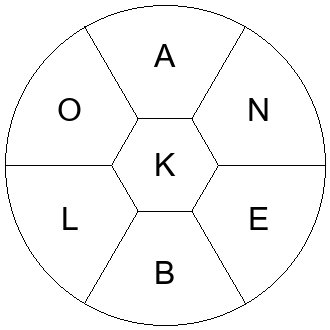
The official answers for today's puzzle are:

Click on the arrow to show the definition.
Click outside the pop-up to close it.


Number of Pangrams: 1

Maximum Puzzle Score: 134

Number of Answers: 39

Points Needed for Genius: 94

Genius requires between 15 and 35 words. You need at least a 7-letter word to reach genius. If you don't get the pangram, you need 80% of the total points to reach genius. If you get the pangram, you only need 66% of the remaining points to reach genius.

Other days with this pangram:

The button below will reveal a chart with the number of words by each letter. Red bars indicate that there is a pangram(s) starting with that letter.


How does this puzzle compare to other puzzles?

Today's score of 134 was in the 32nd percentile of all puzzles.
The last time there was a score this low was on November 7, 2025.
The highest score ever was 537 on January 22, 2021.
The lowest score ever was 47 on March 27, 2023.

This puzzle's 39 possible answers rank it in the 49th percentile of all puzzles.
The last time there were fewer answers than this was on November 12, 2025.
The highest number of answers was 81 on June 8, 2019.
The lowest number of answers was 16 on March 27, 2023.

It takes a 7-letter word for genius.
The last time this happened was on November 13, 2025.

Today's puzzle has an average word length of 4.9.
For all Bees, the average word length has been 5.3.


Haven't I seen these letters before?

Hover over a letter to see its first and most recent appearance in the Bee!


Haven't I seen these words before?

The most common words in the Bee are:

  • noon 222
  • loll 207
  • toot 201
  • naan 184
  • nana 184
  • lilt 147
  • till 147
  • tilt 147
  • tint 143
  • nene 142
  • mama 140
  • mamma 140
  • acacia 134
  • acai 134
  • onto 134
  • toon 134
  • onion 132
  • anal 126
  • anon 124
  • olio 121
  • dodo 120
  • tact 118
  • baba 116
  • boob 115
  • booboo 115
  • papa 115
  • lull 114
  • lulu 114
  • poop 114
  • cocci 111
  • mitt 111
  • mono 111
  • moon 111
  • call 110
  • calla 110
  • tutu 109
  • ratatat 108
  • tart 108
  • tartar 108
  • allay 107
  • ally 107
  • attar 107
  • loon 107
  • ammo 106
  • momma 106
  • tattoo 106
  • tatty 106
  • epee 102
  • peep 102
  • meme 101


How long are words in the Bee?

There have been 109,419 answers ever accepted in the Bee - with 10,857 unique words.
Below are the distributions of the lengths of these words.


Valid dictionary words not in today's official answers

You may be wondering why these words aren't here*:

  • abaka
  • akee
  • akela
  • akene
  • alkane
  • alkene
  • ananke
  • bankbook
  • belleek
  • bokken
  • bookoo
  • ebook
  • ekka
  • kabab
  • kabaka
  • kabala
  • kabbala
  • kabloona
  • kaka
  • kana
  • kanaka
  • kanban
  • kane
  • kaon
  • kebob
  • keek
  • kobo
  • koel
  • kokanee
  • kolo
  • konk
  • leke
  • nonbank
  • nonbook

*Because the New York Times considers them obscure or offensive.

ankle

noun
  1. The skeletal joint which connects the foot with the leg; the uppermost portion of the foot and lowermost portion of the leg, which contain this skeletal joint.
verb
  1. To walk.
  2. To cyclically angle the foot at the ankle while pedaling, to maximize the amount of work applied to the pedal during each revolution.

anklebone

noun
  1. The bone of the ankle, forming the lower part of the ankle joint and joining with the tibia and fibula.

babka

No Definition Found.

bake

noun
  1. The act of cooking food by baking.
  2. Any of various baked dishes resembling casserole.
  3. A social event at which food (such as seafood) is baked, or at which baked food is served.
  4. (Barbadian, sometimes US and UK) A small, flat (or ball-shaped) cake of dough eaten in Barbados and sometimes elsewhere, similar in appearance and ingredients to a pancake but fried (or in some places sometimes roasted).
  5. Any item that is baked.
verb
  1. (with person as subject) To cook (something) in an oven.
  2. (with baked thing as subject) To be cooked in an oven.
  3. To be warmed to drying and hardening.
  4. To dry by heat.
  5. To be hot.
  6. To cause to be hot.
  7. To smoke marijuana.
  8. To harden by cold.
  9. To fix (lighting, reflections, etc.) as part of the texture of an object to improve rendering performance.
  10. (with "in" or "into") To incorporate into something greater.

balk

Etymology 1

noun
  1. An uncultivated ridge formed in the open field system, caused by the action of ploughing.
  2. The wall of earth at the edge of an excavation.
  3. Beam, crossbeam; squared timber; a tie beam of a house, stretching from wall to wall, especially when laid so as to form a loft, "the balks".
  4. A hindrance or disappointment; a check.
  5. A sudden and obstinate stop; a failure.
  6. An omission.
  7. A deceptive motion; a feint.
  8. The area of the table lying behind the line from which the cue ball is initially shot, and from which a ball in hand must be played.
  9. The area of the table lying behind the baulk line.
  10. The rope by which fishing nets are fastened together.
verb
  1. To pass over or by.
  2. To omit, miss or overlook by chance.
  3. To miss intentionally; to avoid.
  4. To stop, check, block.
  5. To stop short and refuse to go on.
  6. To refuse suddenly.
  7. To disappoint; to frustrate.
  8. To engage in contradiction; to be in opposition.
  9. To leave or make balks in.
  10. To leave heaped up; to heap up in piles.

Etymology 2

verb
  1. To indicate to fishermen, by shouts or signals from shore, the direction taken by the shoals of herring.

bank

Etymology 1

noun
  1. An institution where one can place and borrow money and take care of financial affairs.
  2. A branch office of such an institution.
  3. An underwriter or controller of a card game; also banque.
  4. A fund from deposits or contributions, to be used in transacting business; a joint stock or capital.
  5. The sum of money etc. which the dealer or banker has as a fund from which to draw stakes and pay losses.
  6. Money; profit
  7. In certain games, such as dominos, a fund of pieces from which the players are allowed to draw.
  8. A safe and guaranteed place of storage for and retrieval of important items or goods.
  9. A device used to store coins or currency.
verb
  1. To deal with a bank or financial institution, or for an institution to provide financial services to a client.
  2. To put into a bank.
  3. To conceal in the rectum for use in prison.

Etymology 2

noun
  1. An edge of river, lake, or other watercourse.
  2. An elevation, or rising ground, under the sea; a shallow area of shifting sand, gravel, mud, and so forth (for example, a sandbank or mudbank).
  3. A slope of earth, sand, etc.; an embankment.
  4. The incline of an aircraft, especially during a turn.
  5. An incline, a hill.
  6. A mass noun for a quantity of clouds.
  7. The face of the coal at which miners are working.
  8. A deposit of ore or coal, worked by excavations above water level.
  9. The ground at the top of a shaft.
verb
  1. To roll or incline laterally in order to turn.
  2. To cause (an aircraft) to bank.
  3. To form into a bank or heap, to bank up.
  4. To cover the embers of a fire with ashes in order to retain heat.
  5. To raise a mound or dike about; to enclose, defend, or fortify with a bank; to embank.
  6. To pass by the banks of.
  7. To provide additional power for a train ascending a bank (incline) by attaching another locomotive.

Etymology 3

noun
  1. A row or panel of items stored or grouped together.
  2. A row of keys on a musical keyboard or the equivalent on a typewriter keyboard.
  3. A contiguous block of memory that is of fixed, hardware-dependent size, but often larger than a page and partitioning the memory such that two distinct banks do not overlap.
  4. A set of multiple adjacent drop targets.
verb
  1. (order and arrangement) To arrange or order in a row.

Etymology 4

noun
  1. A bench, as for rowers in a galley; also, a tier of oars.
  2. A bench or seat for judges in court.
  3. The regular term of a court of law, or the full court sitting to hear arguments upon questions of law, as distinguished from a sitting at nisi prius, or a court held for jury trials. See banc.
  4. A kind of table used by printers.
  5. A bench, or row of keys belonging to a keyboard, as in an organ.
  6. Slang for money

bankable

adjective
  1. Acceptable to a bank.
  2. Certain to bring profit and success (especially in the entertainment industry).
  3. Reliable.

beak

noun
  1. Anatomical uses.
  2. Figurative uses.
  3. Colloquial uses.
verb
  1. Strike with the beak.
  2. Seize with the beak.
  3. To play truant.

blank

noun
  1. A small French coin, originally of silver, afterwards of copper, worth 5 deniers; also a silver coin of Henry V current in the parts of France then held by the English, worth about 8 pence .
  2. A nonplus .
  3. The white spot in the centre of a target; hence the object to which anything is directed or aimed, the range of such aim .
  4. A lot by which nothing is gained; a ticket in a lottery on which no prize is indicated .
  5. An empty space; a void, for example on a paper .
  6. (now chiefly U.S.) A document, paper, or form with spaces left blank to be filled up at the pleasure of the person to whom it is given (e.g. a blank charter, ballot, form, contract, etc.), or as the event may determine; a blank form .
  7. Blank verse .
  8. A piece of metal (such as a coin, screw, nuts), cut and shaped to the required size of the thing to be made, and ready for the finishing operations; (coining) the disc of metal before stamping .
  9. A vacant space, place, or period; a void .
  10. The 1 / 230400 of a grain .
  11. An empty space in one's memory; a forgotten item or memory .
  12. A dash written in place of an omitted letter or word
  13. The space character; the character resulting from pressing the space-bar on a keyboard.
  14. A domino without points on one or both of its divisions.
  15. Short for blank cartridge. .
  16. (in the expression ‘shooting blanks’) An ineffective effort which achieves nothing .
verb
  1. To make void; to erase.
  2. To ignore (a person) deliberately.
  3. To prevent from scoring, for example in a sporting event.
  4. To become blank.
  5. To be temporarily unable to remember.
adjective
  1. White or pale; without colour.
  2. Free from writing, printing, or marks; having an empty space to be filled in
  3. Scoreless; without any goals or points.
  4. Lacking characteristics which give variety; uniform.
  5. Absolute; downright; sheer.
  6. Without expression.
  7. Utterly confounded or discomfited.
  8. Empty; void; without result; fruitless.
  9. Devoid of thoughts, memory, or inspiration.
  10. Of ammunition: having propellant but no bullets; unbulleted.

bleak

Etymology 1

adjective
  1. Without color; pale; pallid.
  2. Desolate and exposed; swept by cold winds.
  3. Unhappy; cheerless; miserable; emotionally desolate.

Etymology 2

noun
  1. A small European river fish (Alburnus alburnus), of the family Cyprinidae.

bloke

noun
  1. A man, a fellow; an ordinary man, a man on the street.
  2. A man who behaves in a particularly laddish or overtly heterosexual manner.
  3. (A lower deck term for) the Captain or Executive Officer of a warship, with particular reference to discipline and punishment.
  4. An exemplar of a certain masculine, independent male archetype.
  5. An anglophone man.

bonk

noun
  1. A bump on the head.
  2. Any minor collision or random meeting.
  3. An act of sexual intercourse.
  4. A condition of sudden, severe fatigue in an endurance sports event caused by glycogen depletion.
verb
  1. To strike or collide with something.
  2. To have sexual intercourse.
  3. To hit something with the front of the board, especially in midair.
  4. To experience sudden and severe fatigue in an endurance sports event due to glycogen depletion.

book

Etymology 1

noun
  1. A collection of sheets of paper bound together to hinge at one edge, containing printed or written material, pictures, etc.
  2. A long work fit for publication, typically prose, such as a novel or textbook, and typically published as such a bound collection of sheets, but now sometimes electronically as an e-book.
  3. A major division of a long work.
  4. A record of betting (from the use of a notebook to record what each person has bet).
  5. A convenient collection, in a form resembling a book, of small paper items for individual use.
  6. The script of a musical or opera.
  7. (usually in the plural) Records of the accounts of a business.
  8. A book award, a recognition for receiving the highest grade in a class (traditionally an actual book, but recently more likely a letter or certificate acknowledging the achievement).
  9. (whist) Six tricks taken by one side.
  10. Four of a kind
  11. A document, held by the referee, of the incidents happened in the game.
  12. (by extension) A list of all players who have been booked (received a warning) in a game.
  13. The twenty-sixth Lenormand card.
  14. Any source of instruction.

Etymology 2

verb
  1. To reserve (something) for future use.
  2. To write down, to register or record in a book or as in a book.
  3. (law enforcement) To record the name and other details of a suspected offender and the offence for later judicial action.
  4. To issue with a caution, usually a yellow card, or a red card if a yellow card has already been issued.
  5. To travel very fast.
  6. To record bets as bookmaker.
  7. (law student slang) To receive the highest grade in a class.
  8. To leave.

Etymology 3

verb
  1. (with person as subject) To cook (something) in an oven.
  2. (with baked thing as subject) To be cooked in an oven.
  3. To be warmed to drying and hardening.
  4. To dry by heat.
  5. To be hot.
  6. To cause to be hot.
  7. To smoke marijuana.
  8. To harden by cold.
  9. To fix (lighting, reflections, etc.) as part of the texture of an object to improve rendering performance.
  10. (with "in" or "into") To incorporate into something greater.

bookable

adjective
  1. Able to be booked or reserved.
  2. Warranting a booking (a yellow card).

kabob

noun
  1. A dish of pieces of meat, fish, or vegetables roasted on a skewer or spit, especially a doner kebab.
  2. A shish kebab or any other food on a skewer.
  3. The outward growing portions of a shish kebab structure.
  4. A Muslim, usually of southern European, Middle Eastern, or North African descent.
  5. The vulva.
verb
  1. To roast in the style of a kebab
  2. To stab or skewer

kale

noun
  1. An edible plant, similar to cabbage, with curled leaves that do not form a dense head (Brassica oleracea var. acephala)
  2. Any of several cabbage-like food plants that are kinds of Brassica oleracea.
  3. Broth containing kale as a chief ingredient.
  4. Money.

kebab

noun
  1. A dish of pieces of meat, fish, or vegetables roasted on a skewer or spit, especially a doner kebab.
  2. A shish kebab or any other food on a skewer.
  3. The outward growing portions of a shish kebab structure.
  4. A Muslim, usually of southern European, Middle Eastern, or North African descent.
  5. The vulva.
verb
  1. To roast in the style of a kebab
  2. To stab or skewer

keel

Etymology 1

noun
  1. Red chalk; ruddle.
verb
  1. To mark with ruddle.

Etymology 2

verb
  1. To put to death; to extinguish the life of.
  2. To render inoperative.
  3. To stop, cease or render void; to terminate.
  4. To amaze, exceed, stun or otherwise incapacitate.
  5. To cause great pain, discomfort or distress to.
  6. To produce feelings of dissatisfaction or revulsion in.
  7. To use up or to waste.
  8. To exert an overwhelming effect on.
  9. To overpower, overwhelm or defeat.
  10. To force a company out of business.
  11. To produce intense pain.
  12. To punish severely.
  13. To strike (a ball, etc.) with such force and placement as to make a shot that is impossible to defend against, usually winning a point.
  14. To cause (a ball, etc.) to be out of play, resulting in a stoppage of gameplay.
  15. To succeed with an audience, especially in comedy.
  16. To cause to assume the value zero.
  17. (IRC) To disconnect (a user) involuntarily from the network.
  18. To deadmelt.

keen

Etymology 1

verb
  1. To make cold, to sharpen.
adjective
  1. Often with a prepositional phrase, or with to and an infinitive: showing a quick and ardent responsiveness or willingness; eager, enthusiastic, interested.
  2. Fierce, intense, vehement.
  3. Having a fine edge or point; sharp.
  4. Acute of mind, having or expressing mental acuteness; penetrating, sharp.
  5. Acrimonious, bitter, piercing.
  6. Of cold, wind, etc.: cutting, penetrating, piercing, sharp.
  7. Of prices, extremely low as to be competitive.
  8. Marvelous.
  9. Brave, courageous; audacious, bold.

Etymology 2

noun
  1. A prolonged wail for a deceased person.
verb
  1. To utter a keen.
  2. To utter with a loud wailing voice or wordless cry.
  3. To mourn.

kennel

Etymology 1

noun
  1. A house or shelter for a dog.
  2. A facility at which dogs are reared or boarded.
  3. (collective) The dogs kept at such a facility; a pack of hounds.
  4. The hole of a fox or other animal.
verb
  1. To house or board a dog (or less commonly another animal).
  2. To lie or lodge; to dwell, as a dog or a fox.
  3. To drive (a fox) to covert in its hole.

Etymology 2

noun
  1. The gutter at the edge of a street; a surface drain.
  2. A puddle.

keno

noun
  1. A gambling game, a variety of the game of lotto, played with balls or knobs, numbered, and cards also numbered.

knee

noun
  1. In humans, the joint or the region of the joint in the middle part of the leg between the thigh and the shank.
  2. In the horse and allied animals, the carpal joint, corresponding to the wrist in humans.
  3. The part of a garment that covers the knee.
  4. A piece of timber or metal formed with an angle somewhat in the shape of the human knee when bent.
  5. An act of kneeling, especially to show respect or courtesy.
  6. Any knee-shaped item or sharp angle in a line; an inflection point.
  7. A blow made with the knee; a kneeing.
verb
  1. To kneel to.
  2. To poke or strike with the knee.
  3. To move on the knees; to use the knees to move.

kneel

verb
  1. To rest on one's bent knees, sometimes only one; to move to such a position.
  2. To cause to kneel.
  3. To rest on (one's) knees

knell

noun
  1. The sound of a bell knelling; a toll (particularly one signalling a death).
  2. A sign of the end or demise of something or someone.
verb
  1. To ring a bell slowly, especially for a funeral; to toll.
  2. To signal or proclaim something (especially a death) by ringing a bell.
  3. To summon by, or as if by, ringing a bell.

knob

noun
  1. A rounded protuberance, especially one arising from a flat surface; a fleshy lump or caruncle.
  2. A rounded control switch that can be turned on its axis, designed to be operated by the fingers.
  3. A ball-shaped part of a handle, lever, etc., designed to be grabbed by the hand.
  4. A rounded ornament on the hilt of an edged weapon; a pommel.
  5. A prominent, rounded bump along a mountain ridge.
  6. A prominent rounded hill.
  7. (chiefly in the plural) A woman's breast.
  8. The penis.
  9. The head of the penis; the glans.
  10. (by analogy with above) A contemptible person.
  11. A dollop, an amount just larger than a spoonful (usually referring to butter).
  12. A chunky branch-like piece, especially of a ginger rhizome.
  13. A bulb of the garlic plant consisting of multiple cloves.
verb
  1. (of a man) To have sex with.

knoll

Etymology 1

noun
  1. A small mound or rounded hill.

Etymology 2

noun
  1. A knell.
verb
  1. To ring (a bell) mournfully; to knell.
  2. To sound, like a bell; to knell.

Etymology 3

verb
  1. To arrange related objects in parallel or at 90 degree angles.

koala

noun
  1. A tree-dwelling marsupial, Phascolarctos cinereus, that resembles a small bear with a broad head, large ears and sharp claws, mainly found in eastern Australia.

koan

noun
  1. A story about a Zen master and his student, sometimes like a riddle, other times like a fable, which has become an object of Zen study, and which, when meditated upon, may unlock mechanisms in the Zen student’s mind leading to satori.
  2. A riddle with no solution, used to provoke reflection on the inadequacy of logical reasoning, and to lead to enlightenment.

kola

noun
  1. The kola plant, genus Cola, famous for its nut, or one of these nuts.
  2. A beverage or a drink made with kola nut flavoring, caramel and carbonated water.
noun
  1. A tree, genus Cola, bearing large brown seeds ("nuts") that are the source of cola extract.
  2. A nut of this tree.

kook

noun
  1. An eccentric, strange or crazy person.
  2. (kiteboarding, wakeboarding) A boardsport participant who lacks style or skill; a newbie who acts as if they are better at the sport than they are.

lake

Etymology 1

noun
  1. A small stream of running water; a channel for water; a drain.
  2. A large, landlocked stretch of water.
  3. A large amount of liquid; as, a wine lake.
  4. A pit, or ditch

Etymology 2

noun
  1. An offering, sacrifice, gift.
  2. Play; sport; game; fun; glee.
verb
  1. To present an offering.
  2. To leap, jump, exert oneself, play.

Etymology 3

noun
  1. A kind of fine, white linen.

Etymology 4

noun
  1. In dyeing and painting, an often fugitive crimson or vermillion pigment derived from an organic colorant (cochineal or madder, for example) and an inorganic, generally metallic mordant.
  2. In the composition of colors for use in products intended for human consumption, made by extending on a substratum of alumina, a salt prepared from one of the certified water-soluble straight colors.
verb
  1. To make lake-red.

lank

verb
  1. To become lank.
adjective
  1. Slender or thin; not well filled out; not plump; shrunken; lean.
  2. Meagre, paltry, scant in quantity.
  3. (of hair) Straight and flat; thin and limp. (Often associated with being greasy.)
  4. Languid; drooping, slack.

leak

noun
  1. A crack, crevice, fissure, or hole which admits water or other fluid, or lets it escape.
  2. The entrance or escape of a fluid through a crack, fissure, or other aperture.
  3. A divulgation, or disclosure, of information previously held secret.
  4. The person through whom such divulgation, or disclosure, occurs.
  5. A loss of electricity through imperfect insulation, or the point where it occurs.
  6. The gradual loss of a system resource caused by failure to deallocate previously reserved portions.
  7. (especially with the verb "take") An act of urination.
verb
  1. To allow fluid or gas to pass through an opening that should be sealed.
  2. (of a fluid or gas) To pass through an opening that should be sealed.
  3. To disclose secret information surreptitiously or anonymously.
adjective
  1. Leaky.

leek

noun
  1. The vegetable Allium ampeloprasum var. porrum, having edible leaves and an onion-like bulb but with a milder flavour than the onion.
  2. Any of several species of Allium, broadly resembling the domesticated plant in appearance in the wild.

look

No Definition Found.

nankeen

noun
  1. A type of cotton cloth originally from Nanking in China.

nook

noun
  1. A small corner formed by two walls; an alcove.
  2. A hidden or secluded spot; a secluded retreat.
  3. A recess, cove or hollow.
  4. An English unit of land area, originally 1/4 of a yardland but later 12 1/2 or 20 acres.
  5. A corner of a piece of land; an angled piece of land, especially one extending into other land.
verb
  1. To withdraw into a nook.
  2. To situate in a nook.

oaken

adjective
  1. Made from the wood of the oak tree. Also in metaphorical uses, suggesting robustness.

lookbook

noun
  1. A comprehensive directory of fashion-related companies and people, such as fashion designers, industry figures, brands and retail stores.
  2. A printed showcase of still images of a fashion designer or fashion brand’s collection with pages bound along one side.
  3. A showcase of photographs etc. describing how a film should look.
verb
  1. To locate fashion-related information by means of a directory.