Tuesday, December 2, 2025

Answers to yesterday's Bee

Jump to answers for


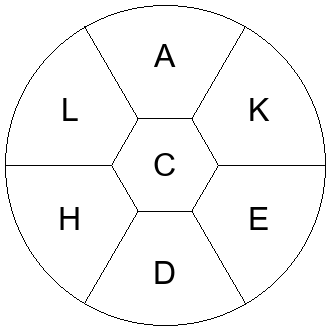
The official answers for today's puzzle are:

Click on the arrow to show the definition.
Click outside the pop-up to close it.


Number of Pangrams: 1

Maximum Puzzle Score: 245

Number of Answers: 53

Points Needed for Genius: 172

Genius requires between 27 and 44 words. You need at least a 7-letter word to reach genius. If you don't get the pangram, you need 74% of the total points to reach genius. If you get the pangram, you only need 68% of the remaining points to reach genius.

Other days with this pangram:

The button below will reveal a chart with the number of words by each letter. Red bars indicate that there is a pangram(s) starting with that letter.


How does this puzzle compare to other puzzles?

Today's score of 245 was in the 81st percentile of all puzzles.
The last time there was a score this high was on November 29, 2025.
The highest score ever was 537 on January 22, 2021.
The lowest score ever was 47 on March 27, 2023.

This puzzle's 53 possible answers rank it in the 81st percentile of all puzzles.
The last time there were more answers than this was on November 29, 2025.
The highest number of answers was 81 on June 8, 2019.
The lowest number of answers was 16 on March 27, 2023.

It takes a 7-letter word for genius.
The last time this happened was on November 29, 2025.

Today's puzzle has an average word length of 5.3.
For all Bees, the average word length has been 5.3.


Haven't I seen these letters before?

Hover over a letter to see its first and most recent appearance in the Bee!


Haven't I seen these words before?

The most common words in the Bee are:

  • noon 225
  • loll 208
  • toot 202
  • naan 185
  • nana 185
  • lilt 148
  • till 148
  • tilt 148
  • nene 144
  • tint 144
  • mama 141
  • mamma 141
  • onion 136
  • onto 135
  • toon 135
  • acacia 134
  • acai 134
  • anal 126
  • anon 126
  • olio 122
  • dodo 120
  • tact 118
  • baba 116
  • boob 116
  • booboo 116
  • papa 116
  • poop 115
  • lull 114
  • lulu 114
  • cocci 112
  • mitt 112
  • mono 112
  • moon 112
  • call 111
  • calla 111
  • ratatat 109
  • tart 109
  • tartar 109
  • tutu 109
  • attar 108
  • loon 108
  • allay 107
  • ally 107
  • ammo 107
  • momma 107
  • tattoo 106
  • tatty 106
  • epee 103
  • peep 103
  • roar 103


How long are words in the Bee?

There have been 110,288 answers ever accepted in the Bee - with 10,869 unique words.
Below are the distributions of the lengths of these words.


Valid dictionary words not in today's official answers

You may be wondering why these words aren't here*:

  • ackee
  • alcade
  • alcalde
  • alec
  • caca
  • cachaca
  • cade
  • cadelle
  • caeca
  • caecal
  • caleche
  • calk
  • calked
  • callee
  • ceca
  • cecal
  • cella
  • cellae
  • chachka
  • chalah
  • chaleh
  • challa
  • cheeked
  • chela
  • chelae
  • clach
  • cladded
  • cleek
  • cleeked
  • dace
  • decadal
  • deckel
  • eche
  • eched
  • echelle
  • hacek
  • hackee
  • hackled
  • halacha
  • keck
  • kecked
  • keckle
  • keckled
  • leched

*Because the New York Times considers them obscure or offensive.

accede

verb
  1. To approach; to arrive, to come forward.
  2. To give one's adhesion; to join up with (a group, etc.); to become part of.
  3. To agree or assent to a proposal or a view; to give way.
  4. To come to an office, state or dignity; to attain, assume (a position).
  5. To become a party to an agreement or a treaty.

acceded

verb
  1. To approach; to arrive, to come forward.
  2. To give one's adhesion; to join up with (a group, etc.); to become part of.
  3. To agree or assent to a proposal or a view; to give way.
  4. To come to an office, state or dignity; to attain, assume (a position).
  5. To become a party to an agreement or a treaty.

aced

verb
  1. (US) To pass (a test, interviews etc.) perfectly.
  2. To win a point by an ace.
  3. To make an ace (hole in one).

ache

Etymology 1

noun
  1. Continued dull pain, as distinguished from sudden twinges, or spasmodic pain.
verb
  1. To suffer pain; to be the source of, or be in, pain, especially continued dull pain; to be distressed.
  2. To cause someone or something to suffer pain.

Etymology 2

noun
  1. Parsley

Etymology 3

noun
  1. The name of the Latin-script letter H.

ached

verb
  1. To suffer pain; to be the source of, or be in, pain, especially continued dull pain; to be distressed.
  2. To cause someone or something to suffer pain.

alack

interjection
  1. An expression of sorrow or mourning.

cache

noun
  1. A store of things that may be required in the future, which can be retrieved rapidly, protected or hidden in some way.
  2. A fast temporary storage where recently or frequently used information is stored to avoid having to reload it from a slower storage medium.
  3. (geocaching) A container containing treasure in a global treasure-hunt game.
verb
  1. To place in a cache.

cached

verb
  1. To place in a cache.

cackle

noun
  1. The cry of a hen or goose, especially when laying an egg.
  2. A laugh resembling the cry of a hen or goose.
  3. Futile or excessively noisy talk.
  4. A group of hyenas.
verb
  1. To make a sharp, broken noise or cry, as a hen or goose does.
  2. To laugh with a broken sound similar to a hen's cry.
  3. To talk in a silly manner; to prattle.

cackled

verb
  1. To make a sharp, broken noise or cry, as a hen or goose does.
  2. To laugh with a broken sound similar to a hen's cry.
  3. To talk in a silly manner; to prattle.

cake

Etymology 1

noun
  1. A rich, sweet dessert food, typically made of flour, sugar and eggs and baked in an oven, and often covered in icing.
  2. A small mass of baked dough, especially a thin loaf from unleavened dough.
  3. A thin wafer-shaped mass of fried batter; a griddlecake or pancake.
  4. A block of any of various dense materials.
  5. A trivially easy task or responsibility; from a piece of cake.
  6. Money.
  7. Used to describe the doctrine of having one's cake and eating it too.
  8. A buttock, especially one that is exceptionally plump.
verb
  1. Coat (something) with a crust of solid material.
  2. To form into a cake, or mass.

Etymology 2

verb
  1. To cackle like a goose.

caked

verb
  1. Coat (something) with a crust of solid material.
  2. To form into a cake, or mass.
verb
  1. To cackle like a goose.
adjective
  1. (smoking, of a pipe) Empty with nothing left to smoke but ash.

call

noun
  1. A telephone conversation.
  2. A short visit, usually for social purposes.
  3. A visit by a ship or boat to a port.
  4. A cry or shout.
  5. A decision or judgement.
  6. The characteristic cry of a bird or other animal.
  7. A beckoning or summoning.
  8. The right to speak at a given time during a debate or other public event; the floor.
  9. An option to buy stock at a specified price during or at a specified time.
  10. The act of calling to the other batsman.
  11. The state of being the batsman whose role it is to call (depends on where the ball goes.)
  12. A work shift which requires one to be available when requested (see on call).
  13. The act of jumping to a subprogram, saving the means to return to the original point.
  14. A statement of a particular state, or rule, made in many games such as bridge, craps, jacks, and so on.
  15. The act of matching a bet made by a player who has previously bet in the same round of betting.
  16. A note blown on the horn to encourage the dogs in a hunt.
  17. A whistle or pipe, used by the boatswain and his mate to summon the sailors to duty.
  18. A pipe or other instrument to call birds or animals by imitating their note or cry. A game call.
  19. An invitation to take charge of or serve a church as its pastor.
  20. Vocation; employment; calling.
  21. A reference to, or statement of, an object, course, distance, or other matter of description in a survey or grant requiring or calling for a corresponding object, etc., on the land.
  22. (prostitution) A meeting with a client for paid sex; hookup; job.
verb
  1. (heading) To use one's voice.
  2. (heading) To visit.
  3. (heading) To name, identify or describe.
  4. (heading) Direct or indirect use of the voice.
  5. (sometimes with for) To require, demand.
  6. To announce the early extinction of a debt by prepayment, usually at a premium.
  7. To demand repayment of a loan.
  8. To jump to (another part of a program) to perform some operation, returning to the original point on completion.

calla

noun
  1. A marsh plant native to cooler areas throughout the northern hemisphere, Calla palustris, having pale green flowers in a white spathe.
  2. The calla lily, Zantedeschia aethiopica.

called

verb
  1. (heading) To use one's voice.
  2. (heading) To visit.
  3. (heading) To name, identify or describe.
  4. (heading) Direct or indirect use of the voice.
  5. (sometimes with for) To require, demand.
  6. To announce the early extinction of a debt by prepayment, usually at a premium.
  7. To demand repayment of a loan.
  8. To jump to (another part of a program) to perform some operation, returning to the original point on completion.

cede

verb
  1. To give up; yield to another.
  2. To give way.

ceded

verb
  1. To give up; yield to another.
  2. To give way.

cell

Etymology 1

noun
  1. A single-room dwelling for a hermit.
  2. A small monastery or nunnery dependent on a larger religious establishment.
  3. A small room in a monastery or nunnery accommodating one person.
  4. A room in a prison or jail for one or more inmates.
  5. Each of the small hexagonal compartments in a honeycomb.
  6. Any of various chambers in a tissue or organism having specific functions.
  7. The discal cell of the wing of a lepidopteran insect.
  8. Specifically, any of the supposed compartments of the brain, formerly thought to be the source of specific mental capacities, knowledge, or memories.
  9. A section or compartment of a larger structure.
  10. Any small dwelling; a remote nook, a den.
  11. A device which stores electrical power; used either singly or together in batteries; the basic unit of a battery.
  12. The basic unit of a living organism, consisting of a quantity of protoplasm surrounded by a cell membrane, which is able to synthesize proteins and replicate itself.
  13. A small thunderstorm, caused by convection, that forms ahead of a storm front.
  14. The minimal unit of a cellular automaton that can change state and has an associated behavior.
  15. In FreeCell-type games, a space where one card can be placed.
  16. A small group of people forming part of a larger organization, often an outlawed one.
  17. (communication) A short, fixed-length packet as in asynchronous transfer mode.
  18. (communication) A region of radio reception that is a part of a larger radio network.
  19. A three-dimensional facet of a polytope.
  20. The unit in a statistical array (a spreadsheet, for example) where a row and a column intersect.
  21. The space between the ribs of a vaulted roof.
  22. A cella.
  23. An area of an insect wing bounded by veins
verb
  1. To place or enclose in a cell.

Etymology 2

noun
  1. A cellular phone.

celled

No Definition Found.

chad

Etymology 1

noun
  1. Small pieces of paper punched out from the edges of continuous stationery, or from ballot papers, paper tape, punched cards, etc.
  2. One of these pieces of paper.

Etymology 2

noun
  1. (pickup community) A very handsome, usually tall, man whom women find sexually attractive; at times seen as an alpha male of a group.

chalk

noun
  1. A soft, white, powdery limestone.
  2. A piece of chalk, or nowadays processed compressed gypsum, that is used for drawing and for writing on a blackboard.
  3. Tailor's chalk.
  4. A white powdery substance used to prevent hands slipping from holds when climbing, sometimes but not always limestone-chalk.
  5. A platoon-sized group of airborne soldiers.
  6. (horseracing) The favorite in a sporting event.
  7. The prediction that there will be no upsets, and the favored competitor will win.
verb
  1. To apply chalk to anything, such as the tip of a billiard cue.
  2. To record something, as on a blackboard, using chalk.
  3. To use powdered chalk to mark the lines on a playing field.
  4. To record a score or event, as if on a chalkboard.
  5. To manure (land) with chalk.
  6. To make white, as if with chalk; to make pale; to bleach.

chalked

verb
  1. To apply chalk to anything, such as the tip of a billiard cue.
  2. To record something, as on a blackboard, using chalk.
  3. To use powdered chalk to mark the lines on a playing field.
  4. To record a score or event, as if on a chalkboard.
  5. To manure (land) with chalk.
  6. To make white, as if with chalk; to make pale; to bleach.

challah

noun
  1. A traditional bread eaten by Ashkenazi Jews, usually braided for the Sabbath and round for Yom Tov.
  2. The commandment to separate a portion of bread or bread dough for the cohanim (Numbers 15:17–21); in contemporary practice, the portion is burned until inedible.
  3. The portion separated in fulfillment of the above.

check

Etymology 1

noun
  1. A situation in which the king is directly threatened by an opposing piece.
  2. An inspection or examination.
  3. A control; a limit or stop.
  4. A mark (especially a checkmark: ✓) used as an indicator.
  5. An order to a bank to pay money to a named person or entity.
  6. A bill, particularly in a restaurant.
  7. A maneuver performed by a player to take another player out of the play.
  8. A token used instead of cash in gaming machines, or in gambling generally.
  9. A lengthwise separation through the growth rings in wood.
  10. A mark, certificate or token by which errors may be prevented, or a thing or person may be identified.
  11. The forsaking by a hawk of its proper game to follow other birds.
  12. A small chink or crack.

Etymology 2

verb
  1. To inspect; to examine.
  2. To verify the accuracy of a text or translation, usually making some corrections (proofread) or many (copyedit).
  3. (often used with "off") To mark items on a list (with a checkmark or by crossing them out) that have been chosen for keeping or removal or that have been dealt with (for example, completed or verified as correct or satisfactory).
  4. To control, limit, or halt.
  5. To verify or compare with a source of information.
  6. To leave in safekeeping.
  7. To leave with a shipping agent for shipping.
  8. To pass or bounce the ball to an opponent from behind the three-point line and have the opponent pass or bounce it back to start play.
  9. To disrupt another player with the stick or body to obtain possession of the ball or puck.
  10. To remain in a hand without betting. Only legal if no one has yet bet.
  11. To make a move which puts an adversary's king in check; to put in check.
  12. To chide, rebuke, or reprove.
  13. To slack or ease off, as a brace which is too stiffly extended.
  14. To crack or gape open, as wood in drying; or to crack in small checks, as varnish, paint, etc.
  15. To make checks or chinks in; to cause to crack.
  16. To make a stop; to pause; with at.
  17. To clash or interfere.
  18. To act as a curb or restraint.
  19. To turn, when in pursuit of proper game, and fly after other birds.

Etymology 3

noun
  1. (usually pluralized) A pattern made up of a grid of squares of alternating colors; a checkered pattern.
  2. Any fabric woven with such a pattern.
verb
  1. To mark with a check pattern.
adjective
  1. Divided into small squares by transverse, perpendicular, and horizontal lines.

checked

verb
  1. To inspect; to examine.
  2. To verify the accuracy of a text or translation, usually making some corrections (proofread) or many (copyedit).
  3. (often used with "off") To mark items on a list (with a checkmark or by crossing them out) that have been chosen for keeping or removal or that have been dealt with (for example, completed or verified as correct or satisfactory).
  4. To control, limit, or halt.
  5. To verify or compare with a source of information.
  6. To leave in safekeeping.
  7. To leave with a shipping agent for shipping.
  8. To pass or bounce the ball to an opponent from behind the three-point line and have the opponent pass or bounce it back to start play.
  9. To disrupt another player with the stick or body to obtain possession of the ball or puck.
  10. To remain in a hand without betting. Only legal if no one has yet bet.
  11. To make a move which puts an adversary's king in check; to put in check.
  12. To chide, rebuke, or reprove.
  13. To slack or ease off, as a brace which is too stiffly extended.
  14. To crack or gape open, as wood in drying; or to crack in small checks, as varnish, paint, etc.
  15. To make checks or chinks in; to cause to crack.
  16. To make a stop; to pause; with at.
  17. To clash or interfere.
  18. To act as a curb or restraint.
  19. To turn, when in pursuit of proper game, and fly after other birds.
verb
  1. To mark with a check pattern.
adjective
  1. Having a pattern of checks; checkered.
  2. Of syllables, having a coda.
  3. Of consonants, glottalized.
  4. Verified or validated in some way.

cheek

noun
  1. The soft skin on each side of the face, below the eyes; the outer surface of the sides of the oral cavity.
  2. (usually in the plural) The lower part of the buttocks that is often exposed beneath very brief underwear, swimwear, or extremely short shorts.
  3. Impudence.
  4. One of the genae, flat areas on the sides of a trilobite's cephalon.
  5. One of the pieces of a machine, or of timber or stonework, that form corresponding sides or a similar pair.
  6. (in plural) The branches of a bridle bit.
  7. Either side of an axehead.
  8. The middle section of a flask, made so that it can be moved laterally, to permit the removal of the pattern from the mould.
verb
  1. To be impudent towards.
  2. To pull a horse's head back toward the saddle using the cheek strap of the bridle.

clack

noun
  1. An abrupt, sharp sound, especially one made by two hard objects colliding repetitively; a sound midway between a click and a clunk.
  2. Anything that causes a clacking noise, such as the clapper of a mill, or a clack valve.
  3. Chatter; prattle.
  4. The tongue.
verb
  1. To make a sudden, sharp noise, or succession of noises; to click.
  2. To cause to make a sudden, sharp noise, or succession of noises; to click.
  3. To chatter or babble; to utter rapidly without consideration.
  4. To cut the sheep's mark off (wool), to make the wool weigh less and thus yield less duty.

clacked

verb
  1. To make a sudden, sharp noise, or succession of noises; to click.
  2. To cause to make a sudden, sharp noise, or succession of noises; to click.
  3. To chatter or babble; to utter rapidly without consideration.
  4. To cut the sheep's mark off (wool), to make the wool weigh less and thus yield less duty.

clad

verb
  1. (past tense clad) To clothe.
  2. (past tense clad or cladded) To cover (with insulation or another material); to surround, envelop.
  3. (figuratively) To imbue (with a specified quality)
adjective
  1. (in compounds) Wearing clothing of a specified type.
  2. (in compounds) Covered, enveloped in or surrounded by a specified material or substance.
verb
  1. To adorn or cover with clothing; to dress; to supply clothes or clothing.
  2. To cover or invest, as if with a garment.

clade

noun
  1. A group of animals or other organisms derived from a common ancestor species.
  2. A higher level grouping of a genetic haplogroup.
verb
  1. To be part of a clade; to form a clade.

dacha

noun
  1. A Russian villa or summer house in the countryside.

decade

noun
  1. A group, set, or series of ten , particularly:
  2. A set of resistors, capacitors, etc. connected so as to provide even increments between one and ten times a base electrical resistance.
  3. The interval between any two quantities having a ratio of 10 to 1.

decal

noun
  1. A design or picture produced in order to be transferred to another surface either permanently or temporarily.
  2. A decorative sticker.
verb
  1. To apply decals to.

deck

Etymology 1

noun
  1. Any raised flat surface that can be walked on: a balcony; a porch; a raised patio; a flat rooftop.
  2. The floorlike covering of the horizontal sections, or compartments, of a ship. Small vessels have only one deck; larger ships have two or three decks.
  3. A main aeroplane surface, especially of a biplane or multiplane.
  4. A pack or set of playing cards.
  5. (by extension) A set of cards owned by each individual player and from which they draw when playing.
  6. A set of slides for a presentation.
  7. A heap or store.
  8. A folded paper used for distributing illicit drugs.
  9. The floor.
verb
  1. To furnish with a deck, as a vessel.
  2. To knock someone to the floor, especially with a single punch.
  3. To cause a player to run out of cards to draw and usually lose the game as a result.

Etymology 2

verb
  1. (sometimes with out) To dress (someone) up, to clothe with more than ordinary elegance
  2. (sometimes with out) To decorate (something).
  3. To cover; to overspread.

decked

verb
  1. To furnish with a deck, as a vessel.
  2. To knock someone to the floor, especially with a single punch.
  3. To cause a player to run out of cards to draw and usually lose the game as a result.
verb
  1. (sometimes with out) To dress (someone) up, to clothe with more than ordinary elegance
  2. (sometimes with out) To decorate (something).
  3. To cover; to overspread.
adjective
  1. Adorned or embellished.
  2. (in combination) Having a specified number or type of decks.

deckle

noun
  1. (paper-making) A frame or edge which limits the pulp and, consequently, the size of the resulting paper.
  2. A membrane covering the outermost side of a brisket of beef, where it was attached to the rib cage
  3. (Jewish cuisine) The fattier, smaller point-cut portion of a brisket of beef, being the superficial pectoral muscle.

each

noun
  1. (operations) An individual item: the least quantitative unit in a grouping.
adverb
  1. For one; apiece; per.
pronoun
  1. Every one; every thing.

hack

Etymology 1

noun
  1. A tool for chopping.
  2. A hacking blow.
  3. A gouge or notch made by such a blow.
  4. A dry cough.
  5. A hacking; a catch in speaking; a short, broken cough.
  6. A try, an attempt.
  7. The foothold traditionally cut into the ice from which the person who throws the rock pushes off for delivery.
  8. A mattock or a miner's pickaxe.
  9. An expedient, temporary solution, such as a small patch or change to code, meant to be replaced with a more elegant solution at a later date.
  10. An interesting technical achievement, particularly in computer programming.
  11. A trick, shortcut, skill, or novelty method to increase productivity, efficiency or ease.
  12. An illegal attempt to gain access to a computer network.
  13. A video game or any computer software that has been altered from its original state.
  14. Time check.
  15. A swing of the bat at a pitched ball by the batter.
  16. A kick on the shins in football.
  17. Confinement of an officer to their stateroom as a punishment.
verb
  1. To chop or cut down in a rough manner.
  2. To cough noisily.
  3. To withstand or put up with a difficult situation.
  4. To make a quick code change to patch a computer program, often one that, while being effective, is inelegant or makes the program harder to maintain.
  5. To accomplish a difficult programming task.
  6. To work with something on an intimately technical level.
  7. (by extension) To apply a trick, shortcut, skill, or novelty method to something to increase productivity, efficiency or ease.
  8. To hack into; to gain unauthorized access to (a computer system, e.g., a website, or network) by manipulating code.
  9. (by extension) To gain unauthorised access to a computer or online account belonging to (a person or organisation).
  10. To strike an opponent's leg with one's hockey stick.
  11. To make a flailing attempt to hit the puck with a hockey stick.
  12. To swing at a pitched ball.
  13. (soccer and rugby) To kick (a player) on the shins.
  14. To strike in a frantic movement.
  15. To strike lightly as part of tapotement massage.

Etymology 2

noun
  1. A board which the falcon's food is placed on; used by extension for the state of partial freedom in which they are kept before being trained.
  2. A food-rack for cattle.
  3. A rack used to dry something, such as bricks, fish, or cheese.
  4. A grating in a mill race.
verb
  1. To lay (bricks) on a rack to dry.
  2. To keep (young hawks) in a state of partial freedom, before they are trained.

Etymology 3

noun
  1. A horse for hire, especially one which is old and tired.
  2. A person, often a journalist, hired to do routine work.
  3. Someone who is available for hire; hireling, mercenary.
  4. A taxicab (hackney cab) driver.
  5. A vehicle let for hire; originally, a hackney coach, now typically a taxicab.
  6. A hearse.
  7. (authorship) An untalented writer.
  8. One who is professionally successful despite producing mediocre work. (Usually applied to persons in a creative field.)
  9. A talented writer-for-hire, paid to put others' thoughts into felicitous language.
  10. A political agitator. (slightly derogatory)
  11. A writer who hires himself out for any sort of literary work; an overworked man; a drudge.
  12. A procuress.
verb
  1. To make common or cliched; to vulgarise.
  2. To ride a horse at a regular pace; to ride on a road (as opposed to riding cross-country etc.).
  3. To be exposed or offered or to common use for hire; to turn prostitute.
  4. To live the life of a drudge or hack.
  5. To use as a hack; to let out for hire.
  6. To use frequently and indiscriminately, so as to render trite and commonplace.

Etymology 4

noun
  1. A small ball usually made of woven cotton or suede and filled with rice, sand or some other filler, for use in hackeysack.
verb
  1. To play hackeysack.

hacked

verb
  1. To chop or cut down in a rough manner.
  2. To cough noisily.
  3. To withstand or put up with a difficult situation.
  4. To make a quick code change to patch a computer program, often one that, while being effective, is inelegant or makes the program harder to maintain.
  5. To accomplish a difficult programming task.
  6. To work with something on an intimately technical level.
  7. (by extension) To apply a trick, shortcut, skill, or novelty method to something to increase productivity, efficiency or ease.
  8. To hack into; to gain unauthorized access to (a computer system, e.g., a website, or network) by manipulating code.
  9. (by extension) To gain unauthorised access to a computer or online account belonging to (a person or organisation).
  10. To strike an opponent's leg with one's hockey stick.
  11. To make a flailing attempt to hit the puck with a hockey stick.
  12. To swing at a pitched ball.
  13. (soccer and rugby) To kick (a player) on the shins.
  14. To strike in a frantic movement.
  15. To strike lightly as part of tapotement massage.
verb
  1. To lay (bricks) on a rack to dry.
  2. To keep (young hawks) in a state of partial freedom, before they are trained.
verb
  1. To make common or cliched; to vulgarise.
  2. To ride a horse at a regular pace; to ride on a road (as opposed to riding cross-country etc.).
  3. To be exposed or offered or to common use for hire; to turn prostitute.
  4. To live the life of a drudge or hack.
  5. To use as a hack; to let out for hire.
  6. To use frequently and indiscriminately, so as to render trite and commonplace.
verb
  1. To play hackeysack.

hackle

noun
  1. An instrument with steel pins used to comb out flax or hemp.
  2. (usually now in the plural) One of the long, narrow feathers on the neck of birds, most noticeable on the rooster.
  3. A feather used to make a fishing lure or a fishing lure incorporating a feather.
  4. (usually now in the plural) By extension (because the hackles of a rooster are lifted when it is angry), the hair on the nape of the neck in dogs and other animals; also used figuratively for humans.
  5. A plate with rows of pointed needles used to blend or straighten hair.
  6. A feather plume on some soldier's uniforms, especially the hat or helmet.
  7. Any flimsy substance unspun, such as raw silk.
verb
  1. To dress (flax or hemp) with a hackle; to prepare fibres of flax or hemp for spinning.
  2. To separate, as the coarse part of flax or hemp from the fine, by drawing it through the teeth of a hackle or hatchel.
  3. To tear asunder; to break into pieces.

headache

noun
  1. A pain or ache in the head.
  2. A nuisance or unpleasant problem.

heck

Etymology 1

noun
  1. Hell.
interjection
  1. Hell.

Etymology 2

noun
  1. The bolt or latch of a door.
  2. A rack for cattle to feed at.
  3. A door, especially one partly of latticework.
  4. A latticework contrivance for catching fish.
  5. An apparatus for separating the threads of warps into sets, as they are wound upon the reel from the bobbins, in a warping machine.
  6. A bend or winding of a stream.

heckle

noun
  1. An instrument with steel pins used to comb out flax or hemp.
  2. (usually now in the plural) One of the long, narrow feathers on the neck of birds, most noticeable on the rooster.
  3. A feather used to make a fishing lure or a fishing lure incorporating a feather.
  4. (usually now in the plural) By extension (because the hackles of a rooster are lifted when it is angry), the hair on the nape of the neck in dogs and other animals; also used figuratively for humans.
  5. A plate with rows of pointed needles used to blend or straighten hair.
  6. A feather plume on some soldier's uniforms, especially the hat or helmet.
  7. Any flimsy substance unspun, such as raw silk.
noun
  1. The long shining feathers on a cock's neck.
  2. A feather ornament in the full-dress bonnets of Highland regiments.
verb
  1. To question harshly in an attempt to find or reveal weaknesses.
  2. To insult, tease, make fun of or badger.
  3. To prepare flax for spinning using special combs called hackles

heckled

verb
  1. To question harshly in an attempt to find or reveal weaknesses.
  2. To insult, tease, make fun of or badger.
  3. To prepare flax for spinning using special combs called hackles

lace

Etymology 1

noun
  1. A light fabric containing patterns of holes, usually built up from a single thread. Wp
  2. A cord or ribbon passed through eyelets in a shoe or garment, pulled tight and tied to fasten the shoe or garment firmly. Wp
  3. A snare or gin, especially one made of interwoven cords; a net.
  4. Spirits added to coffee or another beverage.

Etymology 2

verb
  1. To fasten (something) with laces.
  2. To add alcohol, poison, a drug or anything else potentially harmful to (food or drink).
  3. To interweave items.
  4. To interweave the spokes of a bicycle wheel.
  5. To beat; to lash; to make stripes on.
  6. To adorn with narrow strips or braids of some decorative material.

laced

verb
  1. To fasten (something) with laces.
  2. To add alcohol, poison, a drug or anything else potentially harmful to (food or drink).
  3. To interweave items.
  4. To interweave the spokes of a bicycle wheel.
  5. To beat; to lash; to make stripes on.
  6. To adorn with narrow strips or braids of some decorative material.
adjective
  1. Fastened or adorned with lace.
  2. Tainted with something, especially a drug.

lack

noun
  1. A defect or failing; moral or spiritual degeneracy.
  2. A deficiency or need (of something desirable or necessary); an absence, want.
verb
  1. To be without, to need, to require.
  2. To be short (of or for something).
  3. To be in want.
  4. To see the deficiency in (someone or something); to find fault with, to malign, reproach.

lacked

verb
  1. To be without, to need, to require.
  2. To be short (of or for something).
  3. To be in want.
  4. To see the deficiency in (someone or something); to find fault with, to malign, reproach.

leach

Etymology 1

noun
  1. A quantity of wood ashes, through which water passes, and thus imbibes the alkali.
  2. A tub or vat for leaching ashes, bark, etc.
  3. A jelly-like sweetmeat popular in the fifteenth century.
noun
  1. An aquatic blood-sucking annelid of class Hirudinea, especially Hirudo medicinalis.
  2. A person who derives profit from others in a parasitic fashion.
  3. A glass tube designed for drawing blood from damaged tissue by means of a vacuum.
noun
  1. A physician.
  2. (Heathenry) A healer.
noun
  1. The vertical edge of a square sail.
  2. The aft edge of a triangular sail.

Etymology 2

verb
  1. To purge a soluble matter out of something by the action of a percolating fluid.
  2. To part with soluble constituents by percolation.

leached

verb
  1. To purge a soluble matter out of something by the action of a percolating fluid.
  2. To part with soluble constituents by percolation.

lech

Etymology 1

noun
  1. A strong, lecherous desire or craving.
  2. A lecher.
verb
  1. To behave lecherously

Etymology 2

noun
  1. The capstone of a cromlech.

leech

Etymology 1

noun
  1. An aquatic blood-sucking annelid of class Hirudinea, especially Hirudo medicinalis.
  2. A person who derives profit from others in a parasitic fashion.
  3. A glass tube designed for drawing blood from damaged tissue by means of a vacuum.
verb
  1. To apply a leech medicinally, so that it sucks blood from the patient.
  2. To drain (resources) without giving back.

Etymology 2

noun
  1. A physician.
  2. (Heathenry) A healer.

Etymology 3

verb
  1. To treat, cure or heal.

Etymology 4

noun
  1. The vertical edge of a square sail.
  2. The aft edge of a triangular sail.

leeched

verb
  1. To apply a leech medicinally, so that it sucks blood from the patient.
  2. To drain (resources) without giving back.
verb
  1. To treat, cure or heal.