Wednesday, December 3, 2025

Answers to yesterday's Bee

Jump to answers for


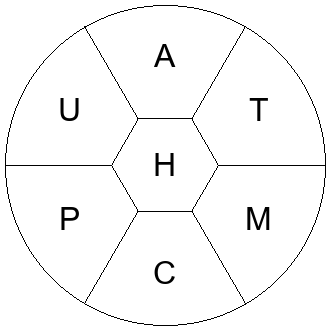
The official answers for today's puzzle are:

Click on the arrow to show the definition.
Click outside the pop-up to close it.


Number of Pangrams: 1

Maximum Puzzle Score: 121

Number of Answers: 29

Points Needed for Genius: 85

Genius requires between 13 and 25 words. You need at least a 7-letter word to reach genius. If you don't get the pangram, you need 79% of the total points to reach genius. If you get the pangram, you only need 66% of the remaining points to reach genius.

Other days with this pangram:

The button below will reveal a chart with the number of words by each letter. Red bars indicate that there is a pangram(s) starting with that letter.


How does this puzzle compare to other puzzles?

Today's score of 121 was in the 24th percentile of all puzzles.
The last time there was a score this low was on December 1, 2025.
The highest score ever was 537 on January 22, 2021.
The lowest score ever was 47 on March 27, 2023.

This puzzle's 29 possible answers rank it in the 22nd percentile of all puzzles.
The last time there were fewer answers than this was on November 7, 2025.
The highest number of answers was 81 on June 8, 2019.
The lowest number of answers was 16 on March 27, 2023.

It takes a 7-letter word for genius.
The last time this happened was on December 2, 2025.

Today's puzzle has an average word length of 5.1.
For all Bees, the average word length has been 5.3.


Haven't I seen these letters before?

Hover over a letter to see its first and most recent appearance in the Bee!


Haven't I seen these words before?

The most common words in the Bee are:

  • noon 225
  • loll 208
  • toot 202
  • naan 185
  • nana 185
  • lilt 148
  • till 148
  • tilt 148
  • nene 144
  • tint 144
  • mama 141
  • mamma 141
  • onion 136
  • onto 135
  • toon 135
  • acacia 134
  • acai 134
  • anal 126
  • anon 126
  • olio 122
  • dodo 120
  • tact 118
  • baba 116
  • boob 116
  • booboo 116
  • papa 116
  • poop 115
  • lull 114
  • lulu 114
  • cocci 112
  • mitt 112
  • mono 112
  • moon 112
  • call 111
  • calla 111
  • ratatat 109
  • tart 109
  • tartar 109
  • tutu 109
  • attar 108
  • loon 108
  • allay 107
  • ally 107
  • ammo 107
  • momma 107
  • tattoo 106
  • tatty 106
  • epee 103
  • peep 103
  • roar 103


How long are words in the Bee?

There have been 110,317 answers ever accepted in the Bee - with 10,869 unique words.
Below are the distributions of the lengths of these words.


Valid dictionary words not in today's official answers

You may be wondering why these words aren't here*:

  • amah
  • aphtha
  • cachaca
  • cachucha
  • caph
  • chacma
  • cham
  • champac
  • champaca
  • chapt
  • chuppa
  • cutch
  • haha
  • hammam
  • haut
  • hmmm
  • huppah
  • mach
  • machaca
  • mahua
  • muchacha
  • mutch
  • mutha
  • pacha
  • phpht
  • phut
  • tacamahac
  • tathata
  • ummah
  • umph

*Because the New York Times considers them obscure or offensive.

attach

verb
  1. To fasten, to join to (literally and figuratively).
  2. To adhere; to be attached.
  3. To come into legal operation in connection with anything; to vest.
  4. To win the heart of; to connect by ties of love or self-interest; to attract; to fasten or bind by moral influence; with to.
  5. To connect, in a figurative sense; to ascribe or attribute; to affix; with to.
  6. To take, seize, or lay hold of.
  7. To arrest, seize.

catch

noun
  1. The act of seizing or capturing.
  2. The act of catching an object in motion, especially a ball.
  3. The act of noticing, understanding or hearing.
  4. The game of catching a ball.
  5. Something which is captured or caught.
  6. (by extension) A find, in particular a boyfriend or girlfriend or prospective spouse.
  7. A stopping mechanism, especially a clasp which stops something from opening.
  8. A hesitation in voice, caused by strong emotion.
  9. (sometimes noun adjunct) A concealed difficulty, especially in a deal or negotiation.
  10. A crick; a sudden muscle pain during unaccustomed positioning when the muscle is in use.
  11. A fragment of music or poetry.
  12. A state of readiness to capture or seize; an ambush.
  13. A crop which has germinated and begun to grow.
  14. A type of strong boat, usually having two masts; a ketch.
  15. A type of humorous round in which the voices gradually catch up with one another; usually sung by men and often having bawdy lyrics.
  16. The refrain; a line or lines of a song which are repeated from verse to verse.
  17. The act of catching a hit ball before it reaches the ground, resulting in an out.
  18. A player in respect of his catching ability; particularly one who catches well.
  19. The first contact of an oar with the water.
  20. A stoppage of breath, resembling a slight cough.
  21. Passing opportunities seized; snatches.
  22. A slight remembrance; a trace.
verb
  1. (heading) To capture, overtake.
  2. (heading) To seize hold of.
  3. (heading) To intercept.
  4. (heading) To receive (by being in the way).
  5. (heading) To take in with one's senses or intellect.
  6. (heading) To seize attention, interest.
  7. (heading) To obtain or experience

catchup

noun
  1. A tomato-vinegar-based sauce, sometimes containing spices, onion or garlic, and (especially in the US) sweeteners.
  2. Such a sauce more generally (not necessarily based on tomatoes).

champ

Etymology 1

noun
  1. Buddy, sport, mate (as a term of address)
noun
  1. An ongoing winner in a game or contest.
  2. Someone who is chosen to represent a group of people in a contest.
  3. Someone who fights for a cause or status.
  4. Someone who fights on another's behalf.

Etymology 2

noun
  1. A meal of mashed potatoes and scallions
verb
  1. To bite or chew, especially noisily or impatiently.

Etymology 3

noun
  1. Champagne

Etymology 4

noun
  1. (obsolete or rare) the field or ground on which carving appears in relief
  2. (obsolete or rare) the field of a shield

chap

Etymology 1

noun
  1. (obsolete outside Britain and Australia) A man, a fellow.
  2. A customer, a buyer.
  3. A child.

Etymology 2

noun
  1. A cleft, crack, or chink, as in the surface of the earth, or in the skin.
  2. A division; a breach, as in a party.
  3. A blow; a rap.
verb
  1. Of the skin, to split or flake due to cold weather or dryness.
  2. To cause to open in slits or chinks; to split; to cause the skin of to crack or become rough.
  3. To strike, knock.

Etymology 3

noun
  1. (often in the plural) The jaw.
  2. One of the jaws or cheeks of a vice, etc.

Etymology 4

noun
  1. (authorship) One of the main sections into which the text of a book is divided.
  2. A section of a social or religious body.
  3. A sequence (of events), especially when presumed related and likely to continue.
  4. A decretal epistle.
  5. A location or compartment.

chat

Etymology 1

noun
  1. Informal conversation.
  2. A conversation to stop an argument or settle situations.
  3. (totum pro parte, typically with definite article) The entirety of users in a chatroom or a single member thereof.
  4. An exchange of text or voice messages in real time through a computer network, resembling a face-to-face conversation.
  5. Any of various small Old World passerine birds in the muscicapid tribe Saxicolini or subfamily Saxicolinae that feed on insects.
  6. Any of several small Australian honeyeaters in the genus Epthianura.
verb
  1. To be engaged in informal conversation.
  2. To talk more than a few words.
  3. To talk of; to discuss.
  4. To exchange text or voice messages in real time through a computer network, as if having a face-to-face conversation.

Etymology 2

noun
  1. A small potato, such as is given to swine.

Etymology 3

noun
  1. (local use) Mining waste from lead and zinc mines.

Etymology 4

noun
  1. A louse (small, parasitic insect).

Etymology 5

noun
  1. Any savory snack, sold from a roadside stall in India, or served as a starter in an Indian restaurant

chum

Etymology 1

noun
  1. A friend; a pal.
  2. A roommate, especially in a college or university.
verb
  1. To share rooms with someone; to live together.
  2. To lodge (somebody) with another person or people.
  3. To make friends; to socialize.
  4. To accompany.

Etymology 2

noun
  1. A mixture of (frequently rancid) fish parts and blood, dumped into the water to attract predator fish, such as sharks
verb
  1. To cast chum into the water to attract fish.

Etymology 3

noun
  1. A coarse mould for holding the clay while being worked on a whirler, lathe or manually.

chump

verb
  1. To bite or chew loudly or heavily.
  2. (Perl) To remove the final character from (a text string) if it is a newline (or, less commonly, some other programmer-specified character).
noun
  1. An incompetent person, a blockhead; a loser.
  2. A gullible person; a sucker; someone easily taken advantage of; someone lacking common sense.
  3. The thick end, especially of a piece of wood or of a joint of meat.

chuppah

noun
  1. The canopy over a Jewish couple during their marriage ceremony.
  2. A marriage ceremony, wedding.

hatch

Etymology 1

noun
  1. A horizontal door in a floor or ceiling.
  2. A trapdoor.
  3. An opening in a wall at window height for the purpose of serving food or other items. A pass through.
  4. A small door in large mechanical structures and vehicles such as aircraft and spacecraft often provided for access for maintenance.
  5. An opening through the deck of a ship or submarine
  6. A gullet.
  7. A frame or weir in a river, for catching fish.
  8. A floodgate; a sluice gate.
  9. A bedstead.
  10. An opening into, or in search of, a mine.
verb
  1. To close with a hatch or hatches.

Etymology 2

noun
  1. The act of hatching.
  2. Development; disclosure; discovery.
  3. (poultry) A group of birds that emerged from eggs at a specified time.
  4. (often as mayfly hatch) The phenomenon, lasting 1–2 days, of large clouds of mayflies appearing in one location to mate, having reached maturity.
  5. A birth, the birth records (in the newspaper) — compare the phrase "hatched, matched, and dispatched."
verb
  1. (of young animals) To emerge from an egg.
  2. (of eggs) To break open when a young animal emerges from it.
  3. To incubate eggs; to cause to hatch.
  4. To devise.

Etymology 3

verb
  1. To shade an area of (a drawing, diagram, etc.) with fine parallel lines, or with lines which cross each other (cross-hatch).
  2. To cross; to spot; to stain; to steep.

hath

verb
  1. To possess, own.
  2. To hold, as something at someone's disposal.
  3. Used to state the existence or presence of someone in a specified relationship with the subject.
  4. To partake of (a particular substance, especially food or drink, or action or activity).
  5. To be scheduled to attend, undertake or participate in.
  6. To experience, go through, undergo.
  7. To be afflicted with, suffer from.
  8. (auxiliary verb, taking a past participle) Used in forming the perfect aspect.
  9. Used as an interrogative verb before a pronoun to form a tag question, echoing a previous use of 'have' as an auxiliary verb or, in certain cases, main verb. (For further discussion, see the appendix English tag questions.)
  10. (auxiliary verb, taking a to-infinitive) See have to.
  11. To give birth to.
  12. To engage in sexual intercourse with.
  13. To accept as a romantic partner.
  14. (transitive with bare infinitive) To cause to, by a command, request or invitation.
  15. (transitive with adjective or adjective-phrase complement) To cause to be.
  16. (transitive with bare infinitive) To be affected by an occurrence. (Used in supplying a topic that is not a verb argument.)
  17. (transitive with adjective or adjective-phrase complement) To depict as being.
  18. To defeat in a fight; take.
  19. (obsolete outside Ireland) To be able to speak (a language).
  20. To feel or be (especially painfully) aware of.
  21. To trick, to deceive.
  22. (often with present participle) To allow; to tolerate.
  23. (often used in the negative) To believe, buy, be taken in by.
  24. To host someone; to take in as a guest.
  25. To get a reading, measurement, or result from an instrument or calculation.
  26. (of a jury) To consider a court proceeding that has been completed; to begin deliberations on a case.
  27. To make an observation of (a bird species).

hump

noun
  1. A mound of earth.
  2. A deformity in humans caused by abnormal curvature of the upper spine.
  3. (animals) A rounded fleshy mass, such as on a camel or zebu.
  4. An act of sexual intercourse.
  5. (with definite article) A bad mood.
  6. A painfully boorish person.
  7. A speed hump.
  8. A wave that forms in front of an operating hovercraft and impedes progress at low speeds.
verb
  1. To bend something into a hump.
  2. To carry (something), especially with some exertion.
  3. To rhythmically thrust the pelvis in a manner conducive to sexual intercourse
  4. To prepare for a great exertion; to put forth effort.
  5. To vex or annoy.
  6. To shunt wagons / freight cars over the hump in a hump yard.

humph

verb
  1. To utter "humph!" in doubt or disapproval.
interjection
  1. Used to express doubt or disapproval

hutch

noun
  1. A cage for keeping rabbits, guinea pigs, etc.
  2. A piece of furniture in which items may be displayed.
  3. A measure of two Winchester bushels.
  4. The case of a flour bolt.
  5. A car on low wheels, in which coal is drawn in the mine and hoisted out of the pit.
  6. A jig or trough for ore dressing or washing ore.
  7. A baker's kneading-trough.
verb
  1. To hoard or lay up, in a chest.
  2. To wash (ore) in a box or jig.

mahatma

noun
  1. An epithet granted in India and Tibet to people thought to have great knowledge and love of humanity
  2. Such a person.

match

Etymology 1

noun
  1. A competitive sporting event such as a boxing meet, a baseball game, or a cricket match.
  2. Any contest or trial of strength or skill, or to determine superiority.
  3. Someone with a measure of an attribute equaling or exceeding the object of comparison.
  4. A marriage.
  5. A candidate for matrimony; one to be gained in marriage.
  6. Suitability.
  7. Equivalence; a state of correspondence.
  8. Equality of conditions in contest or competition.
  9. A pair of items or entities with mutually suitable characteristics.
  10. An agreement or compact.
  11. A perforated board, block of plaster, hardened sand, etc., in which a pattern is partly embedded when a mould is made, for giving shape to the surfaces of separation between the parts of the mould.
verb
  1. To agree; to be equal; to correspond.
  2. To agree with; to be equal to; to correspond to.
  3. To make a successful match or pairing.
  4. To equal or exceed in achievement.
  5. To unite in marriage, to mate.
  6. To fit together, or make suitable for fitting together; specifically, to furnish with a tongue and groove at the edges.

Etymology 2

noun
  1. A device made of wood or paper, at the tip coated with chemicals that ignite with the friction of being dragged (struck) against a rough dry surface.

matchup

noun
  1. A pairing of two things, people or teams, especially for a competition

math

Etymology 1

noun
  1. A mowing; what is gathered from mowing.

Etymology 2

noun
  1. Arithmetic calculations; (see do the math).
  2. A math course.
verb
  1. To do mathematical calculations
noun
  1. An abstract representational system used in the study of numbers, shapes, structure, change and the relationships between these concepts.
  2. A person's ability to count, calculate, and use different systems of mathematics at differing levels.

Etymology 3

noun
  1. A monastic or similar religious establishment in Hinduism and Jainism, usually more formal and hierarchical than an ashram.

much

adjective
  1. Large, great.
  2. Long in duration.
adverb
  1. To a great extent.
  2. Often; frequently.
  3. (in combinations such as 'as much', 'this much') Used to indicate or compare extent.
  4. Almost.
pronoun
  1. A large amount or great extent.

patch

Etymology 1

noun
  1. A piece of cloth, or other suitable material, sewed or otherwise fixed upon a garment to repair or strengthen it, especially upon an old garment to cover a hole.
  2. A small piece of anything used to repair damage or a breach; as, a patch on a kettle, a roof, etc.
  3. A piece of any size, used to repair something for a temporary period only, or that it is temporary because it is not meant to last long or will be removed as soon as a proper repair can be made, which will happen in the near future.
  4. A small, usually contrasting but always somehow different or distinct, part of something else (location, time, size)
  5. (specifically) A small area, a small plot of land or piece of ground.
  6. A local region of professional responsibility.
  7. A small piece of black silk stuck on the face or neck to heighten beauty by contrast, worn by ladies in the 17th and 18th centuries; an imitation beauty mark.
  8. A piece of material used to cover a wound.
  9. An adhesive piece of material, impregnated with a drug, which is worn on the skin, the drug being slowly absorbed over a period of time.
  10. A cover worn over a damaged eye, an eyepatch.
  11. A block on the muzzle of a gun, to do away with the effect of dispart, in sighting.
  12. A patch file, a file that describes changes to be made to a computer file or files, usually changes made to a computer program that fix a programming bug.
  13. A small piece of material that is manually passed through a gun barrel to clean it.
  14. A piece of greased cloth or leather used as wrapping for a rifle ball, to make it fit the bore.
  15. (often patch cable, patch cord etc.; see also patch panel) A cable connecting two pieces of electrical equipment.
  16. A sound setting for a musical synthesizer (originally selected by means of a patch cable).
  17. An overlay used to obtain a stronger impression.
verb
  1. To mend by sewing on a piece or pieces of cloth, leather, or the like
  2. To mend with pieces; to repair by fastening pieces on.
  3. To make out of pieces or patches, like a quilt.
  4. To join or unite the pieces of; to patch the skirt.
  5. To employ a temporary, removable electronic connection, as one between two components in a communications system.
  6. (generally with the particle "up") To repair or arrange in a hasty or clumsy manner
  7. To make the changes a patch describes; to apply a patch to the files in question. Hence:
  8. To connect two pieces of electrical equipment using a cable.

Etymology 2

noun
  1. A paltry fellow; a rogue; a ninny; a fool.

path

Etymology 1

noun
  1. A trail for the use of, or worn by, pedestrians.
  2. A course taken.
  3. A Pagan tradition, for example witchcraft, Wicca, druidism, Heathenry.
  4. A metaphorical course.
  5. A method or direction of proceeding.
  6. A human-readable specification for a location within a hierarchical or tree-like structure, such as a file system or as part of a URL.
  7. A sequence of vertices from one vertex to another using the arcs (edges). A path does not visit the same vertex more than once (unless it is a closed path, where only the first and the last vertex are the same).
  8. A continuous map f from the unit interval I = [0,1] to a topological space X.
  9. A slot available for allocation to a railway train over a given route in between other trains.
verb
  1. To make a path in, or on (something), or for (someone).

Etymology 2

noun
  1. (abbreviation) Pathology.

phat

adjective
  1. (originally African American Vernacular English) Excellent; cool; very good.
  2. Sexy.
  3. Rich in texture; prominent.

tach

Etymology 1

noun
  1. Tachometer

Etymology 2

noun
  1. (costers) A hat.

Etymology 3

noun
  1. Tachycardia.

that

noun
  1. Something being indicated that is there; one of those.
adverb
  1. (degree) To a given extent or degree.
  2. (degree) To a great extent or degree; very, particularly (in negative constructions).
  3. To such an extent; so. (in positive constructions).
pronoun
  1. (demonstrative) The thing, person, idea, quality, event, action or time indicated or understood from context, especially if more remote geographically, temporally or mentally than one designated as "this", or if expressing distinction.
  2. The known (thing); used to refer to something just said.
  3. (demonstrative) The aforementioned quality or proposition; used to emphatically affirm or deny a previous statement or question.
  4. (relative) (plural that) Which, who; representing a subject, direct object, indirect object, or object of a preposition.
  5. Used in place of relative adverbs such as where or when; often omitted.
conjunction
  1. Introducing a clause which is the subject or object of a verb (such as one involving reported speech), or which is a complement to a previous statement.
  2. Introducing a subordinate clause expressing a reason or cause: because, in that.
  3. Introducing a subordinate clause that expresses an aim, purpose or goal ("final"), and usually contains the auxiliaries may, might or should: so, so that.
  4. Introducing — especially, but not exclusively, with an antecedent like so or such — a subordinate clause expressing a result, consequence or effect.
  5. Introducing a premise or supposition for consideration: seeing as; inasmuch as; given that; as would appear from the fact that.
  6. Introducing a subordinate clause modifying an adverb.
  7. Introducing an exclamation expressing a desire or wish.
  8. Introducing an exclamation expressing a strong emotion such as sadness or surprise.

thatch

Etymology 1

noun
  1. Straw, rushes, or similar, used for making or covering the roofs of buildings, or of stacks of hay or grain.
  2. Any of several kinds of palm, the leaves of which are used for thatching.
  3. A buildup of cut grass, stolons or other material on the soil in a lawn.
  4. (by extension) Any straw-like material, such as a person's hair.

Etymology 2

verb
  1. To cover the roof with straw, reed, leaves, etc.

thump

noun
  1. A blow that produces a muffled sound.
  2. The sound of such a blow; a thud.
  3. Used to replace the vulgar or blasphemous element in "what the hell" and similar phrases.
verb
  1. To hit (someone or something) as if to make a thump.
  2. To cause to make a thumping sound.
  3. To thud or pound.
  4. To throb with a muffled rhythmic sound.

matcha

noun
  1. A type of powdered green tea, traditionally used in Japanese tea ceremonies.

hatha

No Definition Found.

captcha

noun
  1. A computerized test requiring the human user to perform a task deemed to be difficult to automate, such as entering a displayed series of distorted characters or describing images, to demonstrate that he/she is a human and not a computer program.