Sunday, December 7, 2025

Answers to yesterday's Bee

Jump to answers for


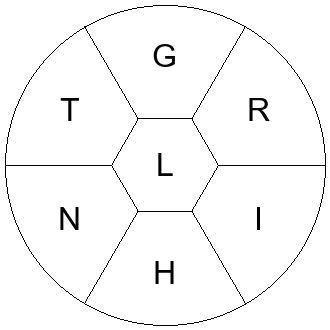
The official answers for today's puzzle are:

Click on the arrow to show the definition.
Click outside the pop-up to close it.


Number of Pangrams: 1

Maximum Puzzle Score: 213

Number of Answers: 37

Points Needed for Genius: 149

Genius requires between 18 and 31 words. You need at least an 8-letter word to reach genius. If you don't get the pangram, you need 76% of the total points to reach genius. If you get the pangram, you only need 68% of the remaining points to reach genius.

Other days with this pangram:

The button below will reveal a chart with the number of words by each letter. Red bars indicate that there is a pangram(s) starting with that letter.


How does this puzzle compare to other puzzles?

Today's score of 213 was in the 70th percentile of all puzzles.
The last time there was a score this high was on December 6, 2025.
The highest score ever was 537 on January 22, 2021.
The lowest score ever was 47 on March 27, 2023.

This puzzle's 37 possible answers rank it in the 44th percentile of all puzzles.
The last time there were fewer answers than this was on December 6, 2025.
The highest number of answers was 81 on June 8, 2019.
The lowest number of answers was 16 on March 27, 2023.

It takes an 8-letter word for genius.
The last time this happened was on December 1, 2025.

Today's puzzle has an average word length of 6.4.
For all Bees, the average word length has been 5.3.


Haven't I seen these letters before?

Hover over a letter to see its first and most recent appearance in the Bee!


Haven't I seen these words before?

The most common words in the Bee are:

  • noon 225
  • loll 208
  • toot 203
  • naan 185
  • nana 185
  • lilt 149
  • till 149
  • tilt 149
  • nene 145
  • tint 144
  • mama 141
  • mamma 141
  • onion 136
  • onto 135
  • toon 135
  • acacia 134
  • acai 134
  • anal 126
  • anon 126
  • olio 122
  • dodo 120
  • tact 118
  • baba 116
  • boob 116
  • booboo 116
  • papa 116
  • poop 115
  • lull 114
  • lulu 114
  • cocci 112
  • mitt 112
  • mono 112
  • moon 112
  • call 111
  • calla 111
  • ratatat 109
  • tart 109
  • tartar 109
  • tutu 109
  • attar 108
  • loon 108
  • allay 107
  • ally 107
  • ammo 107
  • momma 107
  • tattoo 107
  • tatty 106
  • roar 104
  • epee 103
  • meme 103


How long are words in the Bee?

There have been 110,510 answers ever accepted in the Bee - with 10,873 unique words.
Below are the distributions of the lengths of these words.


Valid dictionary words not in today's official answers

You may be wondering why these words aren't here*:

  • gingili
  • gingilli
  • grrrl
  • higgling
  • hili
  • hilting
  • intitling
  • lighttight
  • lignin
  • ling
  • linin
  • linn
  • linting
  • liri
  • nihil
  • nill
  • nilling
  • nitril
  • rilling
  • thill
  • thirl
  • thirling
  • tirl
  • tirling
  • trilith

*Because the New York Times considers them obscure or offensive.

giggling

verb
  1. To laugh gently or in a high-pitched voice; to laugh in a silly or giddy way.
noun
  1. The act of producing giggles; high-pitched laughter

gill

Etymology 1

noun
  1. (animal anatomy) a breathing organ of fish and other aquatic animals
  2. (of a fish) a gill slit or gill cover
  3. One of the radial folds on the underside of the cap of a mushroom, on the surface of which the spore-producing organs are borne
  4. (animal anatomy) the fleshy flap that hangs below the beak of a fowl; a wattle
  5. The flesh under or about the chin; a wattle
  6. (spinning) one of the combs of closely ranged steel pins which divide the ribbons of flax fiber or wool into fewer parallel filaments
verb
  1. To remove the gills from a fish as part of gutting and cleaning it
  2. To catch (a fish) in a gillnet
  3. To be or become entangled in a gillnet

Etymology 2

noun
  1. A drink measure for spirits and wine (size varies regionally but it is about one quarter of a pint)
  2. A measuring jug holding a quarter or half a pint

Etymology 3

noun
  1. Rivulet
  2. Ravine

Etymology 4

noun
  1. A two-wheeled frame for transporting timber

Etymology 5

noun
  1. A leech

Etymology 6

noun
  1. A female ferret
  2. A promiscuous woman; harlot, wanton
  3. A prostitute
verb
  1. To act as a prostitute.

gilling

verb
  1. To remove the gills from a fish as part of gutting and cleaning it
  2. To catch (a fish) in a gillnet
  3. To be or become entangled in a gillnet
verb
  1. To act as a prostitute.

gilt

Etymology 1

verb
  1. To cover with a thin layer of gold; to cover with gold leaf.
  2. To adorn.
  3. To decorate with a golden surface appearance.
  4. To give a bright or pleasing aspect to.
  5. To make appear drunk.
noun
  1. Gold or other metal in a thin layer; gilding.
  2. Money.
  3. A security issued by the Bank of England (see gilt-edged)
  4. A gilded object, an object covered with gold.
adjective
  1. Golden coloured.

Etymology 2

noun
  1. A young female pig, at or nearing the age of first breeding.

girl

noun
  1. A female child, adolescent, or a young woman.
  2. A young female animal.
  3. (sometimes offensive) A woman, especially a young woman
  4. A female servant; a maid. (see usage notes)
  5. A queen (the playing card.)
  6. A term of endearment. (see usage notes)
  7. One's girlfriend.
  8. One's daughter.
  9. A roebuck two years old.
  10. Cocaine, especially in powder form.
  11. (somewhat childish) A female (tree, gene, etc).
  12. A boy or man who is weak or sentimental.
verb
  1. To feminize or girlify; to gender as a girl or as for girls.
  2. (somewhat informal) To staff with or as a girl or girls.

glint

noun
  1. A short flash of light.
verb
  1. To flash or gleam briefly.
  2. To glance; to peep forth, as a flower from the bud; to glitter.
  3. To cause to flash or gleam; to reflect.
  4. To dry; to wither.
adjective
  1. (of a blade) Not sharp; dull.

glinting

verb
  1. To flash or gleam briefly.
  2. To glance; to peep forth, as a flower from the bud; to glitter.
  3. To cause to flash or gleam; to reflect.
  4. To dry; to wither.
noun
  1. A glint.

grill

Etymology 1

noun
  1. A grating; a grid of wire or a sheet of material with a pattern of holes or slots, usually used to protect something while allowing the passage of air and liquids. Typical uses: to allow air through a fan while preventing fingers or objects from passing; to allow people to talk to somebody, while preventing attack.
  2. On a vehicle, a slotted cover as above, to protect and hide the radiator, while admitting air to cool it.
  3. A cooking device comprising a source of radiative heat and a means of holding food under it; a broiler in US English
  4. A cooking device comprising a source of radiative and convective heat and a means of holding food above it; a barbecue.
  5. Food (designed to be) cooked on a grill.
  6. A grillroom; a restaurant serving grilled food.
  7. A type of jewelry worn on the front teeth.
  8. (by extension) The front teeth regarded collectively.
verb
  1. To cook (food) on a grill; to barbecue.
  2. To cook food under the element of a stove or only under the top element of an oven – broil, salamander.
  3. To interrogate; to question aggressively or harshly.
  4. To feel very hot; to swelter.
  5. To stamp or mark with a grill.

Etymology 2

verb
  1. To make angry; provoke; incite.
  2. To terrify; make tremble.
  3. To tremble; shiver.
  4. To snarl; snap.

Etymology 3

noun
  1. Harm.
adjective
  1. Harsh, rough, severe; cruel.

grilling

verb
  1. To cook (food) on a grill; to barbecue.
  2. To cook food under the element of a stove or only under the top element of an oven – broil, salamander.
  3. To interrogate; to question aggressively or harshly.
  4. To feel very hot; to swelter.
  5. To stamp or mark with a grill.
verb
  1. To make angry; provoke; incite.
  2. To terrify; make tremble.
  3. To tremble; shiver.
  4. To snarl; snap.
noun
  1. A thorough interrogation.
  2. The act or process of grilling, or broiling.

highlight

noun
  1. An area or a spot in a drawing, painting, or photograph that is strongly illuminated.
  2. An especially significant or interesting detail or event or period of time.
  3. A strand or spot of hair dyed a different color than the rest.
verb
  1. To make prominent; emphasize.
  2. To be a highlight of.
  3. To mark (important passages of text), e.g. with a fluorescent marker pen or in a wordprocessor, as a means of memory retention or for later reference.
  4. To dye (part of the hair) a different color than the rest.
  5. To seek the attention of (a user) on IRC by mentioning their name in a message, causing that message to appear highlighted on their screen.

highlighting

verb
  1. To make prominent; emphasize.
  2. To be a highlight of.
  3. To mark (important passages of text), e.g. with a fluorescent marker pen or in a wordprocessor, as a means of memory retention or for later reference.
  4. To dye (part of the hair) a different color than the rest.
  5. To seek the attention of (a user) on IRC by mentioning their name in a message, causing that message to appear highlighted on their screen.
noun
  1. The visual emphasis of text by means of a highlight.
  2. An area of the skin or hair containing highlights.
adjective
  1. Causing emphasis, drawing attention; revealing.

hill

noun
  1. An elevated location smaller than a mountain.
  2. A sloping road.
  3. A heap of earth surrounding a plant.
  4. A single cluster or group of plants growing close together, and having the earth heaped up about them.
  5. The pitcher’s mound.
verb
  1. To form into a heap or mound.
  2. To heap or draw earth around plants.

hilling

verb
  1. To form into a heap or mound.
  2. To heap or draw earth around plants.
noun
  1. The act or process of heaping or drawing earth around plants.

hilt

noun
  1. The handle of a sword, consisting of grip, guard, and pommel, designed to facilitate use of the blade and afford protection to the hand.
  2. The base of the penis.
verb
  1. To provide with a hilt.
  2. To insert (a bodily extremity) as far as it can go into a sexual orifice so that it is impeded by the wider base to which it is attached (finger until palm, penis until pelvis).

light

Etymology 1

noun
  1. Visible electromagnetic radiation. The human eye can typically detect radiation (light) in the wavelength range of about 400 to 750 nanometers. Nearby shorter and longer wavelength ranges, although not visible, are commonly called ultraviolet and infrared light.
  2. A source of illumination.
  3. Spiritual or mental illumination; enlightenment, useful information.
  4. (in the plural) Facts; pieces of information; ideas, concepts.
  5. A notable person within a specific field or discipline.
  6. The manner in which the light strikes a picture; that part of a picture which represents those objects upon which the light is supposed to fall; the more illuminated part of a landscape or other scene; opposed to shade.
  7. A point of view, or aspect from which a concept, person or thing is regarded.
  8. A flame or something used to create fire.
  9. A firework made by filling a case with a substance which burns brilliantly with a white or coloured flame.
  10. A window, or space for a window in architecture.
  11. The series of squares reserved for the answer to a crossword clue.
  12. A cross-light in a double acrostic or triple acrostic.
  13. Open view; a visible state or condition; public observation; publicity.
  14. The power of perception by vision.
  15. The brightness of the eye or eyes.
  16. A traffic light, or, by extension, an intersection controlled by one or more that will face a traveler who is receiving instructions.

Etymology 2

verb
  1. To start (a fire).
  2. To set fire to; to set burning.
  3. To illuminate; to provide light for when it is dark.
  4. To become ignited; to take fire.
  5. To attend or conduct with a light; to show the way to by means of a light.
  6. To make (a bonus) available to be collected by hitting a target, and thus light up the feature light corresponding to that bonus to indicate its availability.

Etymology 3

adjective
  1. Having light; bright; clear; not dark or obscure.
  2. Pale or whitish in color; highly luminous and more or less deficient in chroma.
  3. (of coffee) Served with extra milk or cream.

Etymology 4

noun
  1. A stone that is not thrown hard enough.
  2. See lights.
verb
  1. To unload a ship, or to jettison material to make it lighter
  2. To lighten; to ease of a burden; to take off.
adjective
  1. Having little or relatively little actual weight; not cumbrous or unwieldy.
  2. Having little weight as compared with bulk; of little density or specific gravity.
  3. Of short or insufficient weight; weighing less than the legal, standard or proper amount; clipped or diminished.
  4. Lacking that which burdens or makes heavy.
  5. Not heavy or soggy; spongy; well raised.
  6. Gentle; having little force or momentum.
  7. Easy to endure or perform.
  8. Low in fat, calories, alcohol, salt, etc.
  9. Unimportant, trivial, having little value or significance.
  10. Unchaste, wanton.
  11. Not encumbered; unembarrassed; clear of impediments; hence, active; nimble; swift.
  12. Easily influenced by trifling considerations; unsteady; unsettled; volatile.
  13. Indulging in, or inclined to, levity; lacking dignity or solemnity; frivolous; airy.
  14. Not quite sound or normal; somewhat impaired or deranged; dizzy; giddy.
  15. Easily interrupted by stimulation.
adverb
  1. Carrying little.

Etymology 5

verb
  1. To find by chance.
  2. To stop upon (of eyes or a glance); to notice
  3. To alight; to land or come down.

lighting

verb
  1. To start (a fire).
  2. To set fire to; to set burning.
  3. To illuminate; to provide light for when it is dark.
  4. To become ignited; to take fire.
  5. To attend or conduct with a light; to show the way to by means of a light.
  6. To make (a bonus) available to be collected by hitting a target, and thus light up the feature light corresponding to that bonus to indicate its availability.
verb
  1. To unload a ship, or to jettison material to make it lighter
  2. To lighten; to ease of a burden; to take off.
verb
  1. To find by chance.
  2. To stop upon (of eyes or a glance); to notice
  3. To alight; to land or come down.
noun
  1. The equipment used to provide illumination; the illumination so provided.
  2. The act of activating such equipment, or of igniting a flame etc.
  3. The process of annealing metals.

lightning

noun
  1. A flash of light produced by short-duration, high-voltage discharge of electricity within a cloud, between clouds, or between a cloud and the earth.
  2. A discharge of this kind.
  3. Anything that moves very fast.
  4. The act of making bright, or the state of being made bright; enlightenment; brightening, as of the mental powers.
verb
  1. To produce lightning.
adjective
  1. Extremely fast or sudden; moving (as if) at the speed of lightning.

lilt

noun
  1. Animated, brisk motion; spirited rhythm; sprightliness.
  2. A lively song or dance; a cheerful tune.
  3. A cheerful or melodious accent when speaking.
verb
  1. To do something rhythmically, with animation and quickness, usually of music.
  2. To sing cheerfully, especially in Gaelic.
  3. To utter with spirit, animation, or gaiety; to sing with spirit and liveliness.

lilting

verb
  1. To do something rhythmically, with animation and quickness, usually of music.
  2. To sing cheerfully, especially in Gaelic.
  3. To utter with spirit, animation, or gaiety; to sing with spirit and liveliness.
noun
  1. A type of lively singing without any musical accompaniment, where the tune itself is sung, often to nonsense syllables.
adjective
  1. Having a lilt; with energy, spirit and sprightliness; lively and cheerful.

lining

verb
  1. To place (objects) into a line (usually used with "up"); to form into a line; to align.
  2. To place persons or things along the side of for security or defense; to strengthen by adding; to fortify.
  3. To form a line along.
  4. To mark with a line or lines, to cover with lines.
  5. To represent by lines; to delineate; to portray.
  6. To read or repeat line by line.
  7. To hit a line drive; to hit a line drive which is caught for an out. Compare fly and ground.
  8. To track (wild bees) to their nest by following their line of flight.
  9. To measure.
verb
  1. To cover the inner surface of (something), originally especially with linen.
  2. To reinforce (the back of a book) with glue and glued scrap material such as fabric or paper.
  3. To fill or supply (something), as a purse with money.
verb
  1. (of a dog) To copulate with, to impregnate.
noun
  1. A covering for the inside surface of something.
  2. The material used for such a covering.
  3. The act of attaching such a covering.

lint

Etymology 1

noun
  1. A fine material made by scraping cotton or linen cloth; used for dressing wounds.
  2. Clinging fuzzy fluff that clings to fabric or accumulates in one's pockets or navel etc.
  3. The fibrous coat of thick hairs covering the seeds of the cotton plant.
  4. Raw cotton ready for baling.

Etymology 2

verb
  1. To perform a static check on (source code) to detect stylistic or programmatic errors.

niggling

verb
  1. To trifle with; to deceive; to mock.
  2. To use, spend, or do in a petty or trifling manner.
  3. To dwell too much on minor points or on trifling details.
  4. To fidget, fiddle, be restless.
noun
  1. A sensation that niggles.
adjective
  1. Petty

nightlight

noun
  1. A small, dim light or lamp left on overnight
  2. Light that shines at night such as moonlight, starlight, etc.

riling

verb
  1. To make angry
  2. To stir or move from a state of calm or order

rill

noun
  1. A very small brook; a streamlet.
verb
  1. To trickle, pour, or run like a small stream.
noun
  1. A long, narrow depression that resembles a channel, found on the surface of various lunar and planetary bodies.

thrill

Etymology 1

noun
  1. A trembling or quivering, especially one caused by emotion.
  2. A cause of sudden excitement; a kick.
  3. A slight quivering of the heart that accompanies a cardiac murmur.
  4. A breathing place or hole; a nostril, as of a bird.
verb
  1. To suddenly excite someone, or to give someone great pleasure; to (figuratively) electrify; to experience such a sensation.
  2. To (cause something to) tremble or quiver.
  3. To perforate by a pointed instrument; to bore; to transfix; to drill.
  4. To hurl; to throw; to cast.

Etymology 2

verb
  1. To drill and thread in one operation, using a tool bit that cuts the hole and the threads in one series of computer-controlled movements.

thrilling

verb
  1. To suddenly excite someone, or to give someone great pleasure; to (figuratively) electrify; to experience such a sensation.
  2. To (cause something to) tremble or quiver.
  3. To perforate by a pointed instrument; to bore; to transfix; to drill.
  4. To hurl; to throw; to cast.
verb
  1. To drill and thread in one operation, using a tool bit that cuts the hole and the threads in one series of computer-controlled movements.
noun
  1. A thrill.
adjective
  1. Causing a feeling of sudden excitement.

tiling

verb
  1. To cover with tiles.
  2. To arrange in a regular pattern, with adjoining edges (applied to tile-like objects, graphics, windows in a computer interface).
  3. To optimize (a loop in program code) by means of the tiling technique.
verb
  1. To protect from the intrusion of the uninitiated.
noun
  1. A covering of tiles.
  2. The act of applying tiles.
  3. A tessellation; the covering of a plane with shapes, without overlaps or gaps.
  4. A technique for optimizing loops by partitioning the iteration space into smaller chunks or blocks that will more easily fit in a cache.

till

Etymology 1

preposition
  1. Until; to, up to; as late as (a given time).
  2. To, up to (physically).
  3. To make it possible that.
conjunction
  1. Until, until the time that.

Etymology 2

noun
  1. A cash register.
  2. A removable box within a cash register containing the money.
  3. The contents of a cash register, for example at the beginning or end of the day or of a cashier's shift.
  4. A tray or drawer in a chest.

Etymology 3

verb
  1. To develop so as to improve or prepare for usage; to cultivate (said of knowledge, virtue, mind etc.).
  2. To work or cultivate or plough (soil); to prepare for growing vegetation and crops.
  3. To cultivate soil.
  4. To prepare; to get.

Etymology 4

noun
  1. Glacial drift consisting of a mixture of clay, sand, pebbles and boulders
  2. Manure or other material used to fertilize land

Etymology 5

noun
  1. A vetch; a tare.

tilling

Etymology 1

verb
  1. To develop so as to improve or prepare for usage; to cultivate (said of knowledge, virtue, mind etc.).
  2. To work or cultivate or plough (soil); to prepare for growing vegetation and crops.
  3. To cultivate soil.
  4. To prepare; to get.

Etymology 2

noun
  1. The act of one who tills.

tilt

Etymology 1

noun
  1. A slope or inclination.
  2. The inclination of part of the body, such as backbone, pelvis, head, etc.
  3. The controlled vertical movement of a camera, or a device to achieve this.
  4. A jousting contest.
  5. An attempt at something, such as a tilt at public office.
  6. A thrust, as with a lance.
  7. A tilt hammer.
verb
  1. To slope or incline (something); to slant.
  2. (jousting) To charge (at someone) with a lance.
  3. To be at an angle.
  4. To point or thrust a weapon at.
  5. To point or thrust (a weapon).
  6. To forge (something) with a tilt hammer.
  7. To play worse than usual (often as a result of previous bad luck or losses).
  8. (of a machine) To intentionally let the ball fall down to the drain by disabling flippers and most targets, done as a punishment to the player when the machine is nudged too violently or frequently.

Etymology 2

noun
  1. A canvas covering for carts, boats, etc.
  2. Any covering overhead; especially, a tent.
verb
  1. To cover with a tilt, or awning.

tilth

noun
  1. Agricultural labour; husbandry.
  2. The state of being tilled, or prepared for a crop; culture.
  3. Rich cultivated soil.

tilting

verb
  1. To slope or incline (something); to slant.
  2. (jousting) To charge (at someone) with a lance.
  3. To be at an angle.
  4. To point or thrust a weapon at.
  5. To point or thrust (a weapon).
  6. To forge (something) with a tilt hammer.
  7. To play worse than usual (often as a result of previous bad luck or losses).
  8. (of a machine) To intentionally let the ball fall down to the drain by disabling flippers and most targets, done as a punishment to the player when the machine is nudged too violently or frequently.
verb
  1. To cover with a tilt, or awning.
noun
  1. The motion of something that tilts; a tilt.
  2. The process by which blister steel is rendered ductile by being forged with a tilt hammer.
  3. A charging with a lance, as in jousting.
adjective
  1. Having the property that it is the quotient of a projective module by a projective submodule, having an ext functor with itself of 0, and there being a right module as the kernel of a surjective morphism between finite direct sums of its direct summands.

tingling

verb
  1. To feel a prickling or mildly stinging sensation.
  2. To cause to feel a prickling or mildly stinging sensation.
  3. To ring, to tinkle.
  4. To cause to ring, to tinkle.
  5. To make ringing sounds; to twang.
noun
  1. A tingling sensation; pins and needles.

titling

Etymology 1

verb
  1. To assign a title to; to entitle.
noun
  1. The act of giving something a title, or of impressing the title on the back of a book.
  2. A legal right to a property; holding a title.

Etymology 2

noun
  1. The hedge sparrow, dunnock, titlene, Prunella modularis.
  2. The meadow pipit (Anthus pratensis).
  3. (in customhouses) Stockfish.

trill

Etymology 1

noun
  1. A rapid alternation between an indicated note and the one above it, in musical notation usually indicated with the letters tr written above the staff.
  2. A type of consonantal sound that is produced by vibrations of the tongue against the place of articulation: for example, Spanish rr.
  3. A tremulous high-pitched vocal sound produced by cats.
verb
  1. To create a trill sound; to utter trills or a trill; to play or sing in tremulous vibrations of sound; to have a trembling sound; to quaver.
  2. To impart the quality of a trill to; to utter as, or with, a trill.

Etymology 2

verb
  1. To trickle.

Etymology 3

verb
  1. To twirl.

trilling

Etymology 1

verb
  1. To create a trill sound; to utter trills or a trill; to play or sing in tremulous vibrations of sound; to have a trembling sound; to quaver.
  2. To impart the quality of a trill to; to utter as, or with, a trill.
verb
  1. To trickle.
verb
  1. To twirl.
noun
  1. The production of a trill sound.

Etymology 2

noun
  1. A compound crystal consisting of three individuals.
  2. One of three children born at the same birth; a triplet.