Monday, December 8, 2025

Answers to yesterday's Bee

Jump to answers for


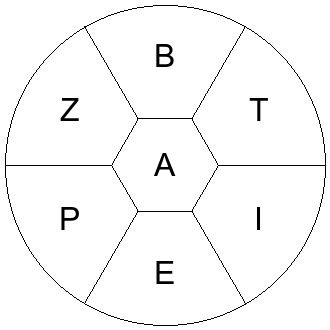
The official answers for today's puzzle are:

Click on the arrow to show the definition.
Click outside the pop-up to close it.


Number of Pangrams: 1

Maximum Puzzle Score: 103

Number of Answers: 28

Points Needed for Genius: 72

Genius requires between 10 and 25 words. You need at least a 7-letter word to reach genius. If you don't get the pangram, you need 81% of the total points to reach genius. If you get the pangram, you only need 65% of the remaining points to reach genius.

Other days with this pangram:

The button below will reveal a chart with the number of words by each letter. Red bars indicate that there is a pangram(s) starting with that letter.


How does this puzzle compare to other puzzles?

Today's score of 103 was in the 14th percentile of all puzzles.
The last time there was a score this low was on November 7, 2025.
The highest score ever was 537 on January 22, 2021.
The lowest score ever was 47 on March 27, 2023.

This puzzle's 28 possible answers rank it in the 19th percentile of all puzzles.
The last time there were fewer answers than this was on November 7, 2025.
The highest number of answers was 81 on June 8, 2019.
The lowest number of answers was 16 on March 27, 2023.

It takes a 7-letter word for genius.
The last time this happened was on December 6, 2025.

Today's puzzle has an average word length of 5.0.
For all Bees, the average word length has been 5.3.


Haven't I seen these letters before?

Hover over a letter to see its first and most recent appearance in the Bee!


Haven't I seen these words before?

The most common words in the Bee are:

  • noon 225
  • loll 208
  • toot 203
  • naan 185
  • nana 185
  • lilt 149
  • till 149
  • tilt 149
  • nene 145
  • tint 144
  • mama 141
  • mamma 141
  • onion 136
  • onto 135
  • toon 135
  • acacia 134
  • acai 134
  • anal 126
  • anon 126
  • olio 122
  • dodo 120
  • tact 118
  • baba 117
  • papa 117
  • boob 116
  • booboo 116
  • poop 115
  • lull 114
  • lulu 114
  • cocci 112
  • mitt 112
  • mono 112
  • moon 112
  • call 111
  • calla 111
  • ratatat 109
  • tart 109
  • tartar 109
  • tutu 109
  • attar 108
  • loon 108
  • allay 107
  • ally 107
  • ammo 107
  • momma 107
  • tattoo 107
  • tatty 106
  • roar 104
  • epee 103
  • meme 103


How long are words in the Bee?

There have been 110,538 answers ever accepted in the Bee - with 10,874 unique words.
Below are the distributions of the lengths of these words.


Valid dictionary words not in today's official answers

You may be wondering why these words aren't here*:

  • abba
  • abbe
  • apatite
  • atap
  • babbitt
  • baiza
  • batata
  • batt
  • bazz
  • betta
  • bezazz
  • etape
  • pappi
  • pattee
  • pattie
  • pazazz
  • piazze
  • pieta
  • pipa
  • pitta
  • pizzaz
  • pzazz
  • tapeta
  • tappet
  • tate
  • tattie
  • tazza
  • tazze
  • tepa

*Because the New York Times considers them obscure or offensive.

abate

Etymology 1

noun
  1. Abatement.
verb
  1. (obsolete outside law) To put an end to; to cause to cease.
  2. To become null and void.
  3. To nullify; make void.
  4. To humble; to lower in status; to bring someone down physically or mentally.
  5. To be humbled; to be brought down physically or mentally.
  6. To curtail; to deprive.
  7. To reduce in amount, size, or value.
  8. To decrease in size, value, or amount.
  9. To moderate; to lessen in force, intensity, to subside.
  10. To decrease in intensity or force; to subside.
  11. To deduct or omit.
  12. To bar or except.
  13. To cut away or hammer down, in such a way as to leave a figure in relief, as a sculpture, or in metalwork.
  14. To dull the edge or point of; to blunt.
  15. To destroy, or level to the ground.

Etymology 2

verb
  1. To enter a tenement without permission after the owner has died and before the heir takes possession.

Etymology 3

noun
  1. An Italian abbot, or other member of the clergy.

abet

noun
  1. Fraud or cunning.
  2. An act of abetting; of helping; of giving aid.
verb
  1. To urge on, stimulate (a person to do) something desirable.
  2. To incite; to assist or encourage by aid or countenance in crime.
  3. To support, countenance, maintain, uphold, or aid (any good cause, opinion, or action); to maintain.
  4. To back up one's forecast of a doubtful issue, by staking money, etc., to bet.

appetite

noun
  1. Desire to eat food or consume drink.
  2. Any strong desire; an eagerness or longing.
  3. The desire for some personal gratification, either of the body or of the mind.

baba

noun
  1. A kind of sponge cake soaked in rum-flavoured syrup.
  2. (esp. among people of East European ancestry) A grandmother.
  3. An old woman, especially a traditional old woman from an eastern European culture.
  4. (esp. among people of Indian ancestry) A father.
  5. (Hinduism, Islam, Sikhism) A holy man, a spiritual leader.
  6. A baby, child.
  7. In baby talk, often used for a variety of words beginning with b, such as bottle or blanket.

babe

noun
  1. A baby or infant; a very young human or animal.
  2. An attractive person, especially a young woman.
  3. Darling (term of endearment).

bait

Etymology 1

noun
  1. Any substance, especially food, used in catching fish, or other animals, by alluring them to a hook, snare, trap, or net.
  2. Food containing poison or a harmful additive to kill animals that are pests.
  3. Anything which allures; something used to lure or entice someone or something into doing something
  4. A portion of food or drink, as a refreshment taken on a journey; also, a stop for rest and refreshment.
verb
  1. To attract with bait; to entice.
  2. To affix bait to a trap or a fishing hook or fishing line.

Etymology 2

verb
  1. To set dogs on (an animal etc.) to bite or worry; to attack with dogs, especially for sport.
  2. To intentionally annoy, torment, or threaten by constant rebukes or threats; to harass.
  3. To feed and water (a horse or other animal), especially during a journey.
  4. (of a horse or other animal) To take food, especially during a journey.
  5. (of a person) To stop to take a portion of food and drink for refreshment during a journey.

Etymology 3

verb
  1. To flap the wings; to flutter as if to fly; or to hover, as a hawk when she stoops to her prey.

Etymology 4

adjective
  1. Obvious; blatant.
  2. Well-known; famous; renowned.

baize

noun
  1. A thick, soft, usually woolen cloth resembling felt; often colored green and used for coverings on card tables, billiard and snooker tables, etc.
  2. A coarse woolen material with a long nap; usually dyed in plain colors.
verb
  1. To cover or line with baize.

baptize

verb
  1. To perform the sacrament of baptism by sprinkling or pouring water over someone or immersing them in water.
  2. To dedicate or christen.
  3. Of rum, brandy, or any other spirits, to dilute with water.
  4. To ensure proper burning of a joint by moistening the exterior with saliva.

bate

Etymology 1

verb
  1. To reduce the force of something; to abate.
  2. To restrain, usually with the sense of being in anticipation
  3. (sometimes figurative) To cut off, remove, take away.
  4. To leave out, except, bar.
  5. To waste away.
  6. To deprive of.
  7. To lessen by retrenching, deducting, or reducing; to abate; to beat down; to lower.
  8. To allow by way of abatement or deduction.

Etymology 2

noun
  1. Strife; contention.
verb
  1. To contend or strive with blows or arguments.
  2. Of a falcon: To flap the wings vigorously; to bait.

Etymology 3

noun
  1. An alkaline lye which neutralizes the effect of the previous application of lime, and makes hides supple in the process of tanning.
  2. A vat which contains this liquid.
verb
  1. To soak leather so as to remove chemicals used in tanning; to steep in bate.

Etymology 4

verb
  1. To hit; strike
  2. To strike or pound repeatedly, usually in some sort of rhythm.
  3. To strike repeatedly; to inflict repeated blows; to knock vigorously or loudly.
  4. To move with pulsation or throbbing.
  5. To win against; to defeat or overcome; to do better than, outdo, or excel (someone) in a particular, competitive event.
  6. To sail to windward using a series of alternate tacks across the wind.
  7. To strike (water, foliage etc.) in order to drive out game; to travel through (a forest etc.) for hunting.
  8. To mix food in a rapid fashion. Compare whip.
  9. (In haggling for a price) of a buyer, to persuade the seller to reduce a price
  10. To indicate by beating or drumming.
  11. To tread, as a path.
  12. To exercise severely; to perplex; to trouble.
  13. To be in agitation or doubt.
  14. To make a sound when struck.
  15. To make a succession of strokes on a drum.
  16. To sound with more or less rapid alternations of greater and less intensity, so as to produce a pulsating effect; said of instruments, tones, or vibrations, not perfectly in unison.
  17. To arrive at a place before someone.
  18. To have sexual intercourse.
  19. To rob.

Etymology 5

verb
  1. To masturbate.

beat

Etymology 1

noun
  1. A stroke; a blow.
  2. A pulsation or throb.
  3. A pulse on the beat level, the metric level at which pulses are heard as the basic unit. Thus a beat is the basic time unit of a piece.
  4. A rhythm.
  5. The interference between two tones of almost equal frequency
  6. (authorship) A short pause in a play, screenplay, or teleplay, for dramatic or comedic effect; a plot point or story development.
  7. The route patrolled by a police officer or a guard.
  8. (by extension) An area of a person's responsibility, especially
  9. An act of reporting news or scientific results before a rival; a scoop.
  10. That which beats, or surpasses, another or others.
  11. A precinct.
  12. A place of habitual or frequent resort.
  13. A low cheat or swindler.
  14. The instrumental portion of a piece of hip-hop music.
  15. The act of scouring, or ranging over, a tract of land to rouse or drive out game; also, those so engaged, collectively.
  16. A smart tap on the adversary's blade.
verb
  1. To hit; strike
  2. To strike or pound repeatedly, usually in some sort of rhythm.
  3. To strike repeatedly; to inflict repeated blows; to knock vigorously or loudly.
  4. To move with pulsation or throbbing.
  5. To win against; to defeat or overcome; to do better than, outdo, or excel (someone) in a particular, competitive event.
  6. To sail to windward using a series of alternate tacks across the wind.
  7. To strike (water, foliage etc.) in order to drive out game; to travel through (a forest etc.) for hunting.
  8. To mix food in a rapid fashion. Compare whip.
  9. (In haggling for a price) of a buyer, to persuade the seller to reduce a price
  10. To indicate by beating or drumming.
  11. To tread, as a path.
  12. To exercise severely; to perplex; to trouble.
  13. To be in agitation or doubt.
  14. To make a sound when struck.
  15. To make a succession of strokes on a drum.
  16. To sound with more or less rapid alternations of greater and less intensity, so as to produce a pulsating effect; said of instruments, tones, or vibrations, not perfectly in unison.
  17. To arrive at a place before someone.
  18. To have sexual intercourse.
  19. To rob.
adjective
  1. Exhausted
  2. Dilapidated, beat up
  3. Fabulous
  4. Boring
  5. (of a person) ugly

Etymology 2

noun
  1. A beatnik.

beta

noun
  1. The second letter of the Greek alphabet (Β, β), preceded by alpha (Α, α) and followed by gamma, (Γ, γ). In modern Greek it represents the voiced labiodental fricative sound of v found in the English words have and vase.
  2. Used in marking scheme: α, β, γ or α+, α, α-, β etc.
  3. Average sensitivity of a security's price to overall securities market prices.
  4. The phase of development after alpha testing and before launch, in which software, while not complete, has been released to potential users for testing.
  5. Software in such a phase; a preliminary version.
  6. Information about a route which may aid someone in climbing it.
  7. A beta particle or beta ray.
  8. In omegaverse fiction, a person of a (usually secondary) gender/sex that mirrors the biology of a normal human, being free from the biological drives of alphas and omegas but generally capable of bonding and mating with either.
verb
  1. To preliminarily release computer software for initial testing prior to final release.
  2. To beta-read a text.
adjective
  1. Identifying a molecular position in an organic chemical compound.
  2. Designates the second in an order of precedence.
  3. Preliminary; prerelease. Refers to an incomplete version of a product released for initial testing.
  4. (of a person, object or action) associated with the beta male/female archetype.
noun
  1. (manosphere, pickup community) A man who is less competent or desirable than an alpha male.
noun
  1. Any fish of the genus Betta, especially Betta splendens (the Siamese fighting fish).

papa

noun
  1. Dad, daddy, father; a familiar or old-fashioned term of address to one’s father.
  2. A pet name for one's grandfather.
  3. A parish priest in the Greek Orthodox Church.
  4. The letter P in the ICAO spelling alphabet.

pate

Etymology 1

noun
  1. (somewhat obsolete) The head, particularly the top or crown.
  2. Wit, cleverness, cognitive abilities.

Etymology 2

noun
  1. The interior body, or non-rind portion of cheese, described by its texture, density, and color.
noun
  1. A finely-ground paste of meat, fish or vegetables, sometimes with the addition of alcohol.

peat

Etymology 1

noun
  1. Soil formed of dead but not fully decayed plants found in bog areas, often burned as fuel.

Etymology 2

noun
  1. A pet, a darling; a woman.

pepita

noun
  1. An edible seed from a pumpkin or similar squash, which may - after being roasted (and, if needed, shelled) - be eaten as a snack or used as an ingredient in cooking.
  2. A gold nugget, or pepito.

piazza

noun
  1. A public square, especially in Italian cities.
  2. A veranda; a porch.
  3. A roofed gallery or arcade (for example around a public square or in front of a building).

pita

Etymology 1

noun
  1. A flat bread pouch used for making sandwiches such as gyros or falafels.

Etymology 2

noun
  1. A fiber obtained from the Agave americana and related species, used for making cordage and paper.
  2. The plant which yields the fiber.

pitapat

noun
  1. A series of quick tapping sounds
verb
  1. To make a series of quick tapping sounds; to palpitate
adverb
  1. With a quick tapping sound

pizazz

noun
  1. Flair, vitality, or zest; energy; vigor.

pizza

noun
  1. A baked Italian dish of a thinly rolled bread dough crust typically topped before baking with tomato sauce, cheese and other ingredients such as meat, vegetables or fruit
  2. A single instance of this dish

pizzazz

noun
  1. Flair, vitality, or zest; energy; vigor.

tapa

Etymology 1

noun
  1. A kind of cloth prepared by the Polynesians from the inner bark of the paper mulberry.

Etymology 2

noun
  1. Any appetizer or snack served in the evening as part of tapas.

Etymology 3

noun
  1. Seasoned slices of dried or cured meat in Filipino cuisine.

tape

noun
  1. Flexible material in a roll with a sticky surface on one or both sides; adhesive tape.
  2. Thin and flat paper, plastic or similar flexible material, usually produced in the form of a roll.
  3. Finishing tape, stretched across a track to mark the end of a race.
  4. Magnetic or optical recording media in a roll; videotape or audio tape.
  5. (by extension) Any video or audio recording, regardless of the method used to produce it.
  6. An unthinking, patterned response triggered by a particular stimulus.
  7. (from ticker tape) The series of prices at which a financial instrument trades.
  8. The wrapping of the primary puck-handling surface of a hockey stick
  9. A strong flexible band rotating on pulleys for directing the sheets in a printing machine.
verb
  1. To bind with adhesive tape.
  2. To record, particularly onto magnetic tape.
  3. (passive) To understand, figure out.

teat

noun
  1. The projection of a mammary gland from which, on female mammals, milk is secreted.
  2. Something resembling a teat, such as a small protuberance or nozzle.
  3. An artificial nipple used for bottle-feeding infants.

tibia

noun
  1. The inner and usually the larger of the two bones of the leg or hind limb below the knee, the shinbone
  2. The second segment from the end of an insect's leg, between the femur and tarsus.
  3. The third segment from the end of an arachnid's leg, between the patella and metatarsus.
  4. A musical instrument of the flute kind, originally made of the leg bone of an animal.

tibiae

noun
  1. The inner and usually the larger of the two bones of the leg or hind limb below the knee, the shinbone
  2. The second segment from the end of an insect's leg, between the femur and tarsus.
  3. The third segment from the end of an arachnid's leg, between the patella and metatarsus.
  4. A musical instrument of the flute kind, originally made of the leg bone of an animal.

zeta

noun
  1. The sixth letter of the modern Greek alphabet (Ζ, ζ) preceded by epsilon (Ε, ε) and followed by eta, (Η, η); or the seventh letter in the ancient Greek alphabet, in which it is preceded by digamma (Ϝ, ϝ)
  2. A mathematical function formally known as the Riemann zeta function.

appetize

No Definition Found.