Tuesday, December 9, 2025

Answers to yesterday's Bee

Jump to answers for


The official answers for today's puzzle are:

Click on the arrow to show the definition.
Click outside the pop-up to close it.


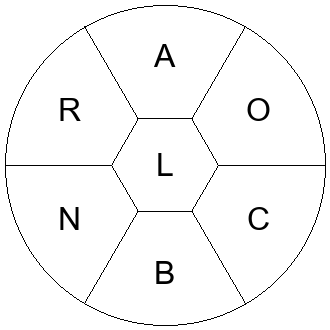
Number of Pangrams: 1

Maximum Puzzle Score: 208

Number of Answers: 49

Points Needed for Genius: 146

Genius requires between 21 and 43 words. You need at least a 7-letter word to reach genius. If you don't get the pangram, you need 76% of the total points to reach genius. If you get the pangram, you only need 68% of the remaining points to reach genius.

Other days with this pangram:

The button below will reveal a chart with the number of words by each letter. Red bars indicate that there is a pangram(s) starting with that letter.


How does this puzzle compare to other puzzles?

Today's score of 208 was in the 67th percentile of all puzzles.
The last time there was a score this high was on December 7, 2025.
The highest score ever was 537 on January 22, 2021.
The lowest score ever was 47 on March 27, 2023.

This puzzle's 49 possible answers rank it in the 74th percentile of all puzzles.
The last time there were more answers than this was on December 6, 2025.
The highest number of answers was 81 on June 8, 2019.
The lowest number of answers was 16 on March 27, 2023.

It takes a 7-letter word for genius.
The last time this happened was on December 8, 2025.

Today's puzzle has an average word length of 5.3.
For all Bees, the average word length has been 5.3.


Haven't I seen these letters before?

Hover over a letter to see its first and most recent appearance in the Bee!


Haven't I seen these words before?

The most common words in the Bee are:

  • noon 225
  • loll 209
  • toot 203
  • naan 185
  • nana 185
  • lilt 149
  • till 149
  • tilt 149
  • nene 145
  • tint 144
  • mama 141
  • mamma 141
  • onion 136
  • onto 135
  • toon 135
  • acacia 134
  • acai 134
  • anal 127
  • anon 126
  • olio 122
  • dodo 120
  • tact 118
  • baba 117
  • papa 117
  • boob 116
  • booboo 116
  • poop 115
  • lull 114
  • lulu 114
  • call 112
  • calla 112
  • cocci 112
  • mitt 112
  • mono 112
  • moon 112
  • loon 109
  • ratatat 109
  • tart 109
  • tartar 109
  • tutu 109
  • attar 108
  • allay 107
  • ally 107
  • ammo 107
  • momma 107
  • tattoo 107
  • tatty 106
  • roar 104
  • epee 103
  • meme 103


How long are words in the Bee?

There have been 110,587 answers ever accepted in the Bee - with 10,874 unique words.
Below are the distributions of the lengths of these words.


Valid dictionary words not in today's official answers

You may be wondering why these words aren't here*:

  • abolla
  • aboral
  • alan
  • alar
  • alba
  • alcool
  • allobar
  • anconal
  • baal
  • babool
  • bacalao
  • baccala
  • balboa
  • ballon
  • barbal
  • bolar
  • boral
  • cabbala
  • calcar
  • callan
  • calo
  • caracal
  • caracol
  • carl
  • claro
  • cloacal
  • clon
  • clonal
  • coala
  • coccal
  • cocobola
  • cocobolo
  • craal
  • labara
  • labra
  • labral
  • lall
  • lallan
  • larn
  • lobar
  • loca
  • loral
  • loran
  • lorn
  • nala
  • nolo
  • noncola
  • noncolor
  • nonlabor
  • nonoral
  • obol
  • olla
  • orlon
  • robalo

*Because the New York Times considers them obscure or offensive.

anal

noun
  1. Any of the anal scales of a reptile.
  2. Anal sex.
adjective
  1. Of, related to, intended for or involving the anus.
  2. Of the stage in psychosexual development when the child's interest is alleged to be concentrated on the anal region.
  3. Of a person, compulsive and stubborn, obsessed with neatness and accuracy, supposedly from not having progressed beyond the anal stage.
  4. (of a vein) Proximate to the thorax.

annal

noun
  1. The record of a single event or item.

ball

Etymology 1

noun
  1. A solid or hollow sphere, or roughly spherical mass.
  2. A round or ellipsoidal object.
  3. (mildly, usually in the plural) A testicle.
  4. A leather-covered cushion, fastened to a handle called a ballstock; formerly used by printers for inking the form, then superseded by the roller.
  5. A large pill, a form in which medicine was given to horses; a bolus.
verb
  1. To form or wind into a ball.
  2. To heat in a furnace and form into balls for rolling.
  3. To have sexual intercourse with.
  4. To gather balls which cling to the feet, as of damp snow or clay; to gather into balls.
  5. (usually in present participle) To be hip or cool.
  6. To play basketball.
  7. To punish by affixing a ball and chain
interjection
  1. An appeal by the crowd for holding the ball against a tackled player. This is heard almost any time an opposition player is tackled, without regard to whether the rules about "prior opportunity" to dispose of the ball are fulfilled.

Etymology 2

noun
  1. A formal dance.
  2. A very enjoyable time.

balloon

noun
  1. An inflatable buoyant object, often (but not necessarily) round and flexible.
  2. Such an object as a child’s toy or party decoration.
  3. Such an object designed to transport people through the air.
  4. A sac inserted into part of the body for therapeutic reasons; such as angioplasty.
  5. A speech bubble.
  6. A type of glass cup, sometimes used for brandy.
  7. A ball or globe on the top of a pillar, church, etc.
  8. A round vessel, usually with a short neck, to hold or receive whatever is distilled; a glass vessel of a spherical form.
  9. A bomb or shell.
  10. A game played with a large inflated ball.
  11. (engraving) The outline enclosing words represented as coming from the mouth of a pictured figure.
  12. A woman's breast.
  13. A small container for illicit drugs made from a condom or the finger of a latex glove, etc.
verb
  1. To increase or expand rapidly.
  2. To go up or voyage in a balloon.
  3. To take up in, or as if in, a balloon.
  4. To inflate like a balloon.
  5. To strike (a ball) so that it flies high in the air.
noun
  1. An unusually large payment due at the end of the term of a loan agreement.

banal

adjective
  1. Common in a boring way, to the point of being predictable; containing nothing new or fresh.
  2. (history) Relating to a type of feudal jurisdiction or service.

blab

noun
  1. One who blabs; a babbler; a telltale; a gossip or gossiper.
  2. Gossip; prattle.
verb
  1. To tell tales; to gossip without reserve or discretion.

blob

Etymology 1

noun
  1. A shapeless or amorphous mass; a vague shape or amount, especially of a liquid or semisolid substance; a clump, group or collection that lacks definite shape.
  2. In astronomy, a large cloud of gas. In particular, an extended Lyman-Alpha blob is a huge body of gas that may be the precursor to a galaxy.
  3. A bubble; a bleb.
  4. A small freshwater fish (Cottus bairdii); the miller's thumb.
  5. The partially inflated air bag used in the sport of blobbing.
  6. A score of zero.
verb
  1. To drop in the form of a blob or blobs
  2. To drop a blob or blobs onto, cover with blobs.
  3. To fall in the form of a blob or blobs.
  4. To relax idly and mindlessly; to veg out.

Etymology 2

noun
  1. Acronym of binary large object. (a data type that allows storage of binary data often of indeterminate length).

bloc

noun
  1. A group of voters or politicians who share common goals.
  2. A group of countries acting together for political or economic goals, an alliance: e.g., the eastern bloc, the western bloc, a trading bloc, the Eurozone, the European Union.

bola

noun
  1. A throwing weapon made of weights on the ends of a cord.

boll

noun
  1. The rounded seed-bearing capsule of a cotton or flax plant.
  2. An old dry measure equal to six bushels.
verb
  1. To form a boll or seed vessel; to go to seed.

bolo

Etymology 1

noun
  1. A long, heavy, single-edged machete.
  2. A type of punch; an uppercut.
verb
  1. To attack or despatch with a bolo knife.

Etymology 2

noun
  1. A soldier not capable of the minimum standards of marksmanship.
verb
  1. To fail to meet the minimum standards of marksmanship.

Etymology 3

noun
  1. A string or leather necktie secured with an ornamental slide.
verb
  1. To dress (somebody) in a bolo.

Etymology 4

noun
  1. A request for law enforcement officers to be on the lookout for a suspect.

cabal

noun
  1. # A putative, secret organization of individuals gathered for a political purpose.
  2. A secret plot.
  3. An identifiable group within the tradition of Discordianism.
verb
  1. To engage in the activities of a cabal.

cabala

proper noun
  1. A body of mystical Jewish teachings based on an esoteric reading of the Hebrew scriptures.

call

noun
  1. A telephone conversation.
  2. A short visit, usually for social purposes.
  3. A visit by a ship or boat to a port.
  4. A cry or shout.
  5. A decision or judgement.
  6. The characteristic cry of a bird or other animal.
  7. A beckoning or summoning.
  8. The right to speak at a given time during a debate or other public event; the floor.
  9. An option to buy stock at a specified price during or at a specified time.
  10. The act of calling to the other batsman.
  11. The state of being the batsman whose role it is to call (depends on where the ball goes.)
  12. A work shift which requires one to be available when requested (see on call).
  13. The act of jumping to a subprogram, saving the means to return to the original point.
  14. A statement of a particular state, or rule, made in many games such as bridge, craps, jacks, and so on.
  15. The act of matching a bet made by a player who has previously bet in the same round of betting.
  16. A note blown on the horn to encourage the dogs in a hunt.
  17. A whistle or pipe, used by the boatswain and his mate to summon the sailors to duty.
  18. A pipe or other instrument to call birds or animals by imitating their note or cry. A game call.
  19. An invitation to take charge of or serve a church as its pastor.
  20. Vocation; employment; calling.
  21. A reference to, or statement of, an object, course, distance, or other matter of description in a survey or grant requiring or calling for a corresponding object, etc., on the land.
  22. (prostitution) A meeting with a client for paid sex; hookup; job.
verb
  1. (heading) To use one's voice.
  2. (heading) To visit.
  3. (heading) To name, identify or describe.
  4. (heading) Direct or indirect use of the voice.
  5. (sometimes with for) To require, demand.
  6. To announce the early extinction of a debt by prepayment, usually at a premium.
  7. To demand repayment of a loan.
  8. To jump to (another part of a program) to perform some operation, returning to the original point on completion.

calla

noun
  1. A marsh plant native to cooler areas throughout the northern hemisphere, Calla palustris, having pale green flowers in a white spathe.
  2. The calla lily, Zantedeschia aethiopica.

callaloo

noun
  1. Any of various tropical plants grown in the Americas, especially of the genus Xanthosoma, cultivated for their edible leaves.
  2. A spicy soup or stew made from such leaves.

canal

noun
  1. An artificial waterway or artificially improved river used for travel, shipping, or irrigation.
  2. A tubular channel within the body.
  3. One of the faint, hazy markings resembling straight lines on early telescopic images of the surface of Mars.
verb
  1. To dig an artificial waterway in or to (a place), especially for drainage
  2. To travel along a canal by boat

cannonball

Etymology 1

noun
  1. (artillery)

Etymology 2

noun
  1. The act of running and jumping in a flexed position into a swimming pool to create a large splash, mimicking the flight and shape of a cannonball.
verb
  1. To jump/dive into water doing a cannonball landing.
  2. To careen; to move rapidly
interjection
  1. Yelled when jumping/diving into the water, doing a cannonball landing.

canola

noun
  1. Any of a number of cultivars of rapeseed (Brassica napus) and closely related field mustard (Brassica rapa), which have a lower erucic acid and glucosinolate content than traditional rapeseed.

carnal

adjective
  1. Relating to the physical and especially sexual appetites.
  2. Worldly or earthly; temporal.
  3. Of or relating to the body or flesh.

carol

noun
  1. A small closet or enclosure built against a window on the inner side, to sit in for study.
  2. Hence, a partially partitioned space for studying or reading, often in a library.

clan

noun
  1. A group of people all descended from a common ancestor, in fact or belief.
  2. A traditional social group of families in the Scottish Highlands having a common hereditary chieftain
  3. Any group defined by family ties with some sort of political unity.
  4. A group of players who habitually play on the same team in multiplayer games.
  5. A badger colony.

cloaca

noun
  1. (sometimes figurative) A sewer.
  2. The duct in reptiles, amphibians and birds, as well as most fish and some mammals, which serves as the common outlet for urination, defecation, and reproduction.
  3. An outhouse or lavatory.
  4. A duct through which gangrenous material escapes a body.

coal

noun
  1. A black rock formed from prehistoric plant remains, composed largely of carbon and burned as a fuel.
  2. A piece of coal used for burning (this use is less common in American English)
  3. A type of coal, such as bituminous, anthracite, or lignite, and grades and varieties thereof.
  4. A glowing or charred piece of coal, wood, or other solid fuel.
  5. Charcoal.
verb
  1. To take on a supply of coal (usually of steam ships).
  2. To supply with coal.
  3. To be converted to charcoal.
  4. To burn to charcoal; to char.
  5. To mark or delineate with charcoal.

cola

Etymology 1

noun
  1. The kola plant, genus Cola, famous for its nut, or one of these nuts.
  2. A beverage or a drink made with kola nut flavoring, caramel and carbonated water.

Etymology 2

noun
  1. The punctuation mark ":".
  2. The triangular colon (especially in context of not being able to type the actual triangular colon).
  3. A rhetorical figure consisting of a clause which is grammatically, but not logically, complete.
  4. A clause or group of clauses written as a line, or taken as a standard of measure in ancient manuscripts or texts.
noun
  1. Part of the large intestine; the final segment of the digestive system, after (distal to) the ileum and before (proximal to) the anus.

Etymology 3

noun
  1. A cluster of buds on a cannabis plant.

colcannon

noun
  1. A traditional Irish dish made from mashed potatoes and cabbage or kale, with scallions, butter, salt and pepper added.

collar

noun
  1. Anything that encircles the neck.
  2. A piece of meat from the neck of an animal.
  3. Any encircling device or structure.
  4. (in compounds) Of or pertaining to a certain category of professions as symbolized by typical clothing.
  5. The neck or line of junction between the root of a plant and its stem.
  6. A ringlike part of a mollusk in connection with the esophagus.
  7. An eye formed in the bight or bend of a shroud or stay to go over the masthead; also, a rope to which certain parts of rigging, as dead-eyes, are secured.
  8. An arrest.
  9. A trading strategy using options such that there is both an upper limit on profit and a lower limit on loss, constructed through taking equal but opposite positions in a put and a call with different strike prices.
verb
  1. To grab or seize by the collar or neck.
  2. To place a collar on, to fit with one.
  3. To seize, capture or detain.
  4. To preempt, control stringently and exclusively.
  5. (law enforcement) To arrest.
  6. To bind in conversation.
  7. To roll up (beef or other meat) and bind it with string preparatory to cooking.
  8. (BDSM) To bind (a submissive) to a dominant under specific conditions or obligations.

colon

Etymology 1

noun
  1. The punctuation mark ":".
  2. The triangular colon (especially in context of not being able to type the actual triangular colon).
  3. A rhetorical figure consisting of a clause which is grammatically, but not logically, complete.
  4. A clause or group of clauses written as a line, or taken as a standard of measure in ancient manuscripts or texts.

Etymology 2

noun
  1. Part of the large intestine; the final segment of the digestive system, after (distal to) the ileum and before (proximal to) the anus.

Etymology 3

noun
  1. A husbandman.
  2. A European colonial settler, especially in a French colony.

color

noun
  1. The spectral composition of visible light
  2. A subset thereof:
  3. A paint.
  4. Human skin tone, especially as an indicator of race or ethnicity.
  5. Skin color, noted as normal, jaundiced, cyanotic, flush, mottled, pale, or ashen as part of the skin signs assessment.
  6. A flushed appearance of blood in the face; redness of complexion.
  7. Richness of expression; detail or flavour that is likely to generate interest or enjoyment.
  8. A standard, flag, or insignia:
  9. (in the plural) An award for sporting achievement, particularly within a school or university.
  10. (in the plural) The morning ceremony of raising the flag.
  11. A property of quarks, with three values called red, green, and blue, which they can exchange by passing gluons.
  12. A third-order measure of derivative price sensitivity, expressed as the rate of change of gamma with respect to time, or equivalently the rate of change of charm with respect to changes in the underlying asset price.
  13. The relative lightness or darkness of a mass of written or printed text on a page. (See type color.)
  14. Any of the colored balls excluding the reds.
  15. A front or facade; an ostensible truth actually false; pretext.
  16. An appearance of right or authority; color of law.
verb
  1. To give something color.
  2. To apply colors to the areas within the boundaries of a line drawing using colored markers or crayons.
  3. (of a person or their face) To become red through increased blood flow.
  4. To affect without completely changing.
  5. To attribute a quality to; to portray (as).
  6. To assign colors to the vertices of a graph (or the regions of a map) so that no two vertices connected by an edge (regions sharing a border) have the same color.
adjective
  1. Conveying color, as opposed to shades of gray.

cool

Etymology 1

noun
  1. A moderate or refreshing state of cold; moderate temperature of the air between hot and cold; coolness.
  2. A calm temperament.
  3. The property of being cool, popular or in fashion.
adjective
  1. Having a slightly low temperature; mildly or pleasantly cold.
  2. Allowing or suggesting heat relief.
  3. Of a color, in the range of violet to green.
  4. Of a person, not showing emotion; calm and in control of oneself.
  5. Unenthusiastic, lukewarm, skeptical.
  6. Calmly audacious.
  7. Applied facetiously to a sum of money, commonly as if to give emphasis to the largeness of the amount.
  8. Of a person, knowing what to do and how to behave; considered popular by others.
  9. In fashion, part of or fitting the in crowd; originally hipster slang.
  10. Of an action, all right; acceptable; that does not present a problem.
  11. Of a person, not upset by circumstances that might ordinarily be upsetting.
  12. Quietly impudent, defiant, or selfish; deliberately presuming: said of persons and acts.

Etymology 2

verb
  1. To lose heat, to get colder.
  2. To make cooler, less warm.
  3. To become less intense, e.g. less amicable or passionate.
  4. To make less intense, e.g. less amicable or passionate.
  5. To kill.

coral

noun
  1. A hard substance made of the limestone skeletons of marine polyps.
  2. A colony of marine polyps.
  3. A somewhat yellowish pink colour, the colour of red coral.
  4. The ovaries of a cooked lobster; so called from their colour.
  5. A piece of coral, usually fitted with small bells and other appurtenances, used by children as a plaything.
adjective
  1. Made of coral.
  2. Having the yellowish pink colour of coral.

cornball

noun
  1. A ball of popped corn stuck together with soft candy from molasses or sugar.
  2. An unsophisticated person.
  3. Something excessively corny.

corolla

noun
  1. An outermost-but-one whorl of a flower, composed of petals, when it is not the same in appearance as the outermost whorl (the calyx); it usually comprises the petal, which may be fused.

coronal

Etymology 1

noun
  1. A crown or coronet.
  2. A wreath or garland of flowers.
  3. The frontal bone, over which the ancients wore their coronae or garlands.
  4. A consonant produced with the tip or blade of the tongue.
adjective
  1. Relating to a crown or coronation.
  2. Relating to the corona of a star.
  3. Relating to the corona of a flower.
  4. Relating to a sound made with the tip or blade of the tongue.
  5. Relating to the coronal plane that divides a body into dorsal (back) and ventral (front).

Etymology 2

noun
  1. A commissioned officer in an armed military organization, typically the highest rank before flag officer ranks (generals). It is generally found in armies, air forces or naval infantry (marines).

corral

noun
  1. An enclosure for livestock, especially a circular one.
  2. An enclosure or area to concentrate a dispersed group.
  3. A circle of wagons, either for the purpose of trapping livestock, or for defense.
verb
  1. To capture or round up.
  2. To place inside of a corral.
  3. To make a circle of vehicles, as of wagons so as to form a corral.

labor

noun
  1. Effort expended on a particular task; toil, work.
  2. That which requires hard work for its accomplishment; that which demands effort.
  3. Workers in general; the working class, the workforce; sometimes specifically the labour movement, organised labour.
  4. A political party or force aiming or claiming to represent the interests of labour.
  5. The act of a mother giving birth.
  6. The time period during which a mother gives birth.
  7. The pitching or tossing of a vessel which results in the straining of timbers and rigging.
  8. An old measure of land area in Mexico and Texas, approximately 177 acres.
verb
  1. To toil, to work.
  2. To belabour, to emphasise or expand upon (a point in a debate, etc).
  3. To be oppressed with difficulties or disease; to do one's work under conditions which make it especially hard or wearisome; to move slowly, as against opposition, or under a burden.
  4. To suffer the pangs of childbirth.
  5. To pitch or roll heavily, as a ship in a turbulent sea.

llano

noun
  1. A plain or steppe in parts of Latin America.

loan

Etymology 1

noun
  1. An act or instance of lending, an act or instance of granting something for temporary use.
  2. A sum of money or other property that a natural or legal person borrows from another with the condition that it be returned or repaid over time or at a later date (sometimes with interest).
  3. The contract and array of legal or ethical obligations surrounding a loan.
  4. The permission to borrow any item.
verb
  1. To lend (something) to (someone).

Etymology 2

noun
  1. A lonnen.

lobo

noun
  1. A wolf.

local

noun
  1. A person who lives near a given place.
  2. A branch of a nationwide organization such as a trade union.
  3. A train that stops at all, or almost all, stations between its origin and destination, including very small ones.
  4. One's nearest or regularly frequented public house or bar.
  5. A locally scoped identifier.
  6. An item of news relating to the place where the newspaper is published.
adjective
  1. From or in a nearby location.
  2. (of a variable or identifier) Having limited scope (either lexical or dynamic); only being accessible within a certain portion of a program.
  3. (of a condition or state) Applying to each point in a space rather than the space as a whole.
  4. Of or pertaining to a restricted part of an organism.
  5. Descended from an indigenous population.
adverb
  1. In the local area; within a city, state, country, etc.
noun
  1. An anesthetic (anesthetic substance) that causes loss of sensation only to the area to which it is applied.

loco

Etymology 1

adverb
  1. A direction in written or printed music to be returning to the proper pitch after having played an octave higher or lower.

Etymology 2

noun
  1. A certain species of Astragalus or Oxytropis, capable of causing locoism.
verb
  1. To poison with the loco plant; to affect with locoism.
  2. (by extension) To render insane.
adjective
  1. Crazy.
  2. Intoxicated by eating locoweed.

Etymology 3

noun
  1. A locomotive.

loll

verb
  1. To act lazily or indolently while reclining; to lean; to lie at ease.
  2. To hang extended from the mouth, like the tongue of an animal heated from exertion.
  3. To let (the tongue) hang from the mouth in this way.

loon

Etymology 1

noun
  1. An idler, a lout.
  2. A boy, a lad.
  3. A harlot; mistress.
  4. A simpleton.
  5. A crazy or deranged person.
  6. An English soldier of an expeditionary army in Ireland.

Etymology 2

noun
  1. Any of various birds, of the order Gaviiformes, of North America and Europe that dive for fish and have a short tail, webbed feet and a yodeling cry.

nonlocal

No Definition Found.

oral

noun
  1. A spoken test or examination, particularly in a language class.
  2. A physical examination of the mouth.
  3. Oral sex.
adjective
  1. Relating to the mouth.
  2. Spoken rather than written.

robocall

noun
  1. An automated phone call, commonly for telemarketing purposes, that uses both an autodialer and a recorded message.
verb
  1. To make robocalls.

roll

Etymology 1

noun
  1. The act or result of rolling, or state of being rolled.
  2. A forward or backward roll in gymnastics; going head over heels. A tumble.
  3. Something which rolls.
  4. A swagger or rolling gait.
  5. A heavy, reverberatory sound.
  6. The uniform beating of a drum with strokes so rapid as scarcely to be distinguished by the ear.
  7. The oscillating movement of a nautical vessel as it rotates from side to side, on its fore-and-aft axis, causing its sides to go up and down, as distinguished from the alternate rise and fall of bow and stern called pitching; or the equivalent in an aircraft.
  8. The measure or extent to which a vessel rotates from side to side, on its fore-and-aft axis.
  9. The rotation angle about the longitudinal axis.
  10. The act of, or total resulting from, rolling one or more dice.
  11. A winning streak of continuing luck, especially at gambling (and especially in the phrase on a roll).
  12. A training match for a fighting dog.
  13. (paddlesport) An instance of the act of righting a canoe or kayak which has capsized, without exiting the watercraft, or being assisted.
  14. (paddlesport) The skill of righting a canoe or kayak which has capsized.
verb
  1. To cause to revolve by turning over and over; to move by turning on an axis; to impel forward by causing to turn over and over on a supporting surface.
  2. To turn over and over.
  3. To tumble in gymnastics; to do a somersault.
  4. To wrap (something) round on itself; to form into a spherical or cylindrical body by causing to turn over and over.
  5. To bind or involve by winding, as in a bandage; to enwrap; often with up.
  6. To be wound or formed into a cylinder or ball.
  7. To drive or impel forward with an easy motion, as of rolling.
  8. To utter copiously, especially with sounding words; to utter with a deep sound; — often with forth, or out.
  9. To press or level with a roller; to spread or form with a roll, roller, or rollers.
  10. To spread itself under a roller or rolling-pin.
  11. To move, or cause to be moved, upon, or by means of, rollers or small wheels.
  12. To leave or begin a journey.
  13. To compete, especially with vigor.
  14. To beat with rapid, continuous strokes, as a drum; to sound a roll upon.
  15. To apply (one line or surface) to another without slipping; to bring all the parts of (one line or surface) into successive contact with another, in such a manner that at every instant the parts that have been in contact are equal.
  16. To turn over in one's mind; to revolve.
  17. To behave in a certain way; to adopt a general disposition toward a situation.
  18. To throw dice.
  19. To roll dice such that they form a given pattern or total.
  20. To create a new character in a role-playing game, especially by using dice to determine properties.
  21. To generate a random number.
  22. (of a vessel) To rotate on its fore-and-aft axis, causing its sides to go up and down. Compare with pitch.
  23. (in folk songs) To travel by sailing.
  24. To beat up; to attack and cause physical damage to.
  25. To cause to betray secrets or to testify for the prosecution.
  26. To betray secrets.
  27. To be under the influence of MDMA (a psychedelic stimulant, also known as ecstasy).
  28. (of a camera) To (cause to) film.
  29. To slip past (a defender) with the ball.
  30. To have a rolling aspect.
  31. To perform a periodical revolution; to move onward as with a revolution.
  32. To move, like waves or billows, with alternate swell and depression.
  33. To move and cause an effect on someone
  34. To make a loud or heavy rumbling noise.
  35. To utter with an alveolar trill.
  36. To enrobe in toilet-paper (as a prank or spectacle).
  37. To create a customized version of.
  38. To engage in sparring in the context of jujitsu or other grappling disciplines.

Etymology 2

noun
  1. That which is rolled up.
  2. A document written on a piece of parchment, paper, or other materials which may be rolled up; a scroll.
  3. An official or public document; a register; a record
  4. A catalogue or list
  5. A quantity of cloth wound into a cylindrical form.
  6. A cylindrical twist of tobacco.
  7. A kind of shortened raised biscuit or bread, often rolled or doubled upon itself; see also bread roll.
  8. Part; office; duty; rôle.
  9. A measure of parchments, containing five dozen.
  10. (paddlesport) An instance of the act of righting a canoe or kayak which has capsized, without exiting the watercraft, or being assisted.

rollbar

noun
  1. A strong U-shaped bar fastened to the frame of a vehicle, such as an off-road vehicle or a race car to protect the driver and passengers from being crushed in the event that the vehicle rolls over.
  2. An anti-roll bar.

collab

noun
  1. A collaboration, especially a work produced by several musicians who do not usually work together.
verb
  1. To collaborate.