Saturday, December 13, 2025

Answers to yesterday's Bee

Jump to answers for


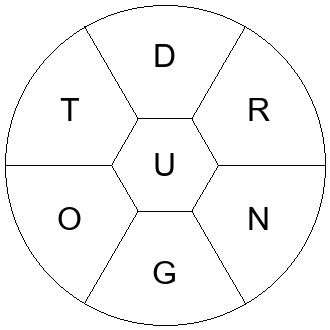
The official answers for today's puzzle are:

Click on the arrow to show the definition.
Click outside the pop-up to close it.


Number of Pangrams: 1

Maximum Puzzle Score: 164

Number of Answers: 40

Points Needed for Genius: 115

Genius requires between 18 and 35 words. You need at least a 6-letter word to reach genius. If you don't get the pangram, you need 78% of the total points to reach genius. If you get the pangram, you only need 67% of the remaining points to reach genius.

Other days with this pangram:

The button below will reveal a chart with the number of words by each letter. Red bars indicate that there is a pangram(s) starting with that letter.


How does this puzzle compare to other puzzles?

Today's score of 164 was in the 46th percentile of all puzzles.
The last time there was a score this low was on December 8, 2025.
The highest score ever was 537 on January 22, 2021.
The lowest score ever was 47 on March 27, 2023.

This puzzle's 40 possible answers rank it in the 51st percentile of all puzzles.
The last time there were more answers than this was on December 11, 2025.
The highest number of answers was 81 on June 8, 2019.
The lowest number of answers was 16 on March 27, 2023.

It takes a 6-letter word for genius.
The last time this happened was on December 11, 2025.

Today's puzzle has an average word length of 5.1.
For all Bees, the average word length has been 5.3.


Haven't I seen these letters before?

Hover over a letter to see its first and most recent appearance in the Bee!


Haven't I seen these words before?

The most common words in the Bee are:

  • noon 225
  • loll 209
  • toot 203
  • naan 186
  • nana 186
  • lilt 149
  • till 149
  • tilt 149
  • nene 145
  • tint 144
  • mama 141
  • mamma 141
  • onion 136
  • onto 135
  • toon 135
  • acacia 134
  • acai 134
  • anal 128
  • anon 127
  • olio 122
  • dodo 120
  • tact 118
  • baba 117
  • papa 117
  • boob 116
  • booboo 116
  • poop 115
  • lull 114
  • lulu 114
  • call 112
  • calla 112
  • cocci 112
  • mitt 112
  • mono 112
  • moon 112
  • tutu 110
  • loon 109
  • ratatat 109
  • tart 109
  • tartar 109
  • allay 108
  • ally 108
  • attar 108
  • ammo 107
  • momma 107
  • tattoo 107
  • tatty 106
  • roar 104
  • epee 103
  • meme 103


How long are words in the Bee?

There have been 110,785 answers ever accepted in the Bee - with 10,875 unique words.
Below are the distributions of the lengths of these words.


Valid dictionary words not in today's official answers

You may be wondering why these words aren't here*:

  • dout
  • dunt
  • durn
  • duro
  • durr
  • groundnut
  • grugru
  • gundog
  • nondrug
  • notturno
  • nurd
  • odour
  • outroot
  • outrung
  • outtrot
  • outturn
  • rudd
  • runround
  • touton
  • trou
  • trug
  • tung
  • turd
  • turgor
  • turnon
  • turnround
  • turr
  • ungot
  • unroot
  • unround
  • untorn
  • untrod

*Because the New York Times considers them obscure or offensive.

donut

noun
  1. A deep-fried piece of dough or batter, commonly made in a toroidal or ellipsoidal shape, and mixed with various sweeteners and flavors, sometimes filled with jelly, custard or cream.
  2. Anything in the shape of a torus.
  3. (automobile) A peel-out or skid-mark in the shape of donut; a 360-degree skid.
  4. A spare tire, smaller and less durable than a full-sized tire, only intended for temporary use.
  5. A toroidal cushion typically used by hemorrhoid patients.
  6. An idiot.

dour

adjective
  1. Stern, harsh and forbidding.
  2. Unyielding and obstinate.
  3. Expressing gloom or melancholy; sullenly unhappy.

drug

Etymology 1

noun
  1. A substance used to treat an illness, relieve a symptom, or modify a chemical process in the body for a specific purpose.
  2. A psychoactive substance, especially one which is illegal and addictive, ingested for recreational use, such as cocaine.
  3. Anything, such as a substance, emotion or action, to which one is addicted.
  4. Any commodity that lies on hand, or is not salable; an article of slow sale, or in no demand.
verb
  1. To administer intoxicating drugs to, generally without the recipient's knowledge or consent.
  2. To add intoxicating drugs to with the intention of drugging someone.
  3. To prescribe or administer drugs or medicines.

Etymology 2

verb
  1. To pull along a surface or through a medium, sometimes with difficulty.
  2. To move onward heavily, laboriously, or slowly; to advance with weary effort; to go on lingeringly.
  3. To act or proceed slowly or without enthusiasm; to be reluctant.
  4. To draw along (something burdensome); hence, to pass in pain or with difficulty.
  5. To serve as a clog or hindrance; to hold back.
  6. To move (an item) on the computer display by means of a mouse or other input device.
  7. (chiefly of a vehicle) To unintentionally rub or scrape on a surface.
  8. To hit or kick off target.
  9. To fish with a dragnet.
  10. To search for something, as a lost object or body, by dragging something along the bottom of a body of water.
  11. To break (land) by drawing a drag or harrow over it; to harrow.
  12. To search exhaustively, as if with a dragnet.
  13. To roast, say negative things about, or call attention to the flaws of (someone).

Etymology 3

noun
  1. A drudge.

dugong

noun
  1. A plant-eating aquatic marine mammal, of the genus Dugong, found in tropical regions.

dugout

noun
  1. A canoe made from a hollowed-out log.
  2. A pit dug into the ground as a shelter, especially from enemy fire.
  3. A sunken shelter at the side of a baseball or football (soccer) field where non-playing team members and staff sit during a game.
  4. A device used to smoke marijuana.
  5. A pit used to catch and store rainwater or runoff.

dung

Etymology 1

noun
  1. Manure; animal excrement.
  2. A type of manure, as from a particular species or type of animal.
verb
  1. To fertilize with dung.
  2. (calico printing) To immerse or steep, as calico, in a bath of hot water containing cow dung, done to remove the superfluous mordant.
  3. To release dung: to defecate.

Etymology 2

verb
  1. To hit or strike.
  2. To dash; to throw violently.
  3. To inflict minor damage upon, especially by hitting or striking.
  4. To fire or reject.
  5. To deduct, as points, from another, in the manner of a penalty; to penalize.
  6. To mishit (a golf ball).

Etymology 3

verb
  1. To discard (especially rubbish); to chuck out.

dunno

noun
  1. An utterance of the word dunno.

gourd

noun
  1. Any of the trailing or climbing vines producing fruit with a hard rind or shell, from the genera Lagenaria and Cucurbita (in Cucurbitaceae).
  2. A hard-shelled fruit from a plant in Lagenaria or Cucurbita.
  3. The dried and hardened shell of such fruit, made into a drinking vessel, bowl, spoon, or other objects designed for use or decoration.
  4. Any of the climbing or trailing plants from the family Cucurbitaceae, which includes watermelon, pumpkins, and cucumbers.
  5. Loaded dice.
  6. Head.

gout

Etymology 1

noun
  1. An extremely painful inflammation of joints, especially of the big toe, caused by a metabolic defect resulting in the accumulation of uric acid in the blood and the deposition of urates around the joints.
  2. (usually followed by of) A spurt or splotch.
  3. A disease of wheat and cornstalks, caused by insect larvae.
verb
  1. To spurt.

Etymology 2

noun
  1. Taste; relish

ground

Etymology 1

noun
  1. The surface of the Earth, as opposed to the sky or water or underground.
  2. Terrain.
  3. Soil, earth.
  4. The bottom of a body of water.
  5. Basis, foundation, groundwork, legwork.
  6. (chiefly in the plural) Reason, (epistemic) justification, cause.
  7. Background, context, framework, surroundings.
  8. The area on which a battle is fought, particularly as referring to the area occupied by one side or the other. Often, according to the eventualities, "to give ground" or "to gain ground".
  9. (by extension) Advantage given or gained in any contest; e.g. in football, chess, debate or academic discourse.
  10. The plain surface upon which the figures of an artistic composition are set.
  11. In sculpture, a flat surface upon which figures are raised in relief.
  12. In point lace, the net of small meshes upon which the embroidered pattern is applied.
  13. In etching, a gummy substance spread over the surface of a metal to be etched, to prevent the acid from eating except where an opening is made by the needle.
  14. (chiefly in the plural) One of the pieces of wood, flush with the plastering, to which mouldings etc. are attached.
  15. A soccer stadium.
  16. An electrical conductor connected to the earth, or a large conductor whose electrical potential is taken as zero (such as a steel chassis).
  17. The area of grass on which a match is played (a cricket field); the entire arena in which it is played; the part of the field behind a batsman's popping crease where he can not be run out (hence to make one's ground).
  18. A composition in which the bass, consisting of a few bars of independent notes, is continually repeated to a varying melody.
  19. The tune on which descants are raised; the plain song.
  20. The pit of a theatre.
verb
  1. To connect (an electrical conductor or device) to a ground.
  2. To punish, especially a child or teenager, by forcing him/her to stay at home and/or give up certain privileges.
  3. To forbid (an aircraft or pilot) to fly.
  4. To give a basic education in a particular subject; to instruct in elements or first principles.
  5. To hit a ground ball. Compare fly (verb(regular)) and line (verb).
  6. To place something on the ground.
  7. To run aground; to strike the bottom and remain fixed.
  8. To found; to fix or set, as on a foundation, reason, or principle; to furnish a ground for; to fix firmly.
  9. To cover with a ground, as a copper plate for etching, or as paper or other materials with a uniform tint as a preparation for ornament.
  10. To improve or focus the mental or emotional state of.

Etymology 2

verb
  1. To reduce to smaller pieces by crushing with lateral motion.
  2. To shape with the force of friction.
  3. To remove material by rubbing with an abrasive surface.
  4. To become ground, pulverized, or polished by friction.
  5. To move with much difficulty or friction; to grate.
  6. To slide the flat portion of a skateboard or snowboard across an obstacle such as a railing.
  7. To oppress, hold down or weaken.
  8. To rotate the hips erotically.
  9. To dance in a sexually suggestive way with both partners in very close proximity, often pressed against each other.
  10. To repeat a task a large number of times in a row to achieve a specific goal.
  11. To operate by turning a crank.
  12. To produce mechanically and repetitively as if by turning a crank.
  13. To automatically format and indent code.
  14. To instill through repetitive teaching.
  15. To eat.
  16. To work or study hard; to hustle or drudge.
  17. To annoy or irritate (a person); to grind one's gears.
adjective
  1. Crushed, or reduced to small particles.
  2. Processed by grinding.

groundout

noun
  1. An instance of grounding out.

grout

noun
  1. A thin mortar used to fill the gaps between tiles and cavities in masonry.
  2. Coarse meal; groats.
  3. (typically used in the plural) Dregs, sediment.
  4. A kind of beer or ale.
verb
  1. To insert mortar between tiles.

grunt

noun
  1. A short snorting sound, often to show disapproval, or used as a reply when one is reluctant to speak.
  2. The snorting cry of a pig.
  3. Any fish of the perciform family Haemulidae.
  4. A person who does ordinary and boring work.
  5. (United States Army and Marine Corps slang) An infantry soldier.
  6. The amount of power of which a vehicle is capable.
  7. A dessert of steamed berries and dough, usually blueberries; blueberry grunt.
verb
  1. (of a person) To make a grunt or grunts.
  2. (of a pig) To make a grunt or grunts.
  3. To break wind; to fart.

guru

noun
  1. A Hindu or Sikh spiritual teacher.
  2. (sometimes humorous) An influential advisor or mentor.

noun

noun
  1. (grammar, narrow sense) A word that can be used to refer to a person, animal, place, thing, phenomenon, substance, quality, or idea; one of the basic parts of speech in many languages, including English.
  2. (grammar, now rare, broad sense) Either a word that can be used to refer to a person, animal, place, thing, phenomenon, substance, quality or idea, or a word that modifies or describes a previous word or its referent; a substantive or adjective, sometimes also including other parts of speech such as numeral or pronoun.
verb
  1. To convert a word to a noun.

orotund

adjective
  1. Characterized by fullness, clarity, strength, and smoothness of sound.
  2. Pompous; bombastic.

outdo

verb
  1. To excel; go beyond in performance; surpass.

outdoor

verb
  1. (in some African communities) To publicly display a child after it has been named
adjective
  1. Situated in, designed to be used in, or carried on in the open air.
  2. Pertaining to charity administered or received away from, or independently from, a workhouse or other institution.

outgo

noun
  1. The act or process of going out.
  2. A quantity of a substance or thing that has flowed out; an outflow.
  3. An expenditure, cost or outlay.
verb
  1. To go out, to set forth.
  2. To go further; to exceed or surpass; go beyond.
  3. To overtake; to travel faster than.
  4. To outdo; exceed; surpass.
  5. To come to an end.

outgun

verb
  1. To defeat in terms of firepower.

outro

noun
  1. A portion of music at the end of a song; like an intro, but at the end instead of the beginning.
  2. The closing sequence at the end of a film, television program, video game etc.

outrun

noun
  1. (sheepdog trials) The sheepdog's initial run towards the sheep, done in a curving motion so as not to startle them.
verb
  1. To run faster than.
  2. To exceed or overextend.

rotgut

noun
  1. Raw or poor-quality alcoholic liquor

rotund

adjective
  1. Having a round or spherical shape; circular; orbicular.
  2. Having a round body shape; portly or plump; podgy.
  3. (of a sound) Full and rich; orotund; sonorous; full-toned.

round

Etymology 1

adverb
  1. So as to form a circle or trace a circular path, or approximation thereof.
  2. So as to surround or be near.
  3. Nearly; approximately; about.
  4. From place to place.
  5. From one state or condition to an opposite or very different one; with a metaphorical change in direction; bringing about awareness or agreement.
  6. (with turn, spin etc.) So as to partially or completely rotate; so as to face in the opposite direction.
  7. Used with verbs to indicate repeated or continuous action, or in numerous locations or with numerous people.
  8. Used with certain verbs to suggest unproductive activity.
preposition
  1. Defining a circle or closed curve containing a thing.
  2. (of abstract things) Centred upon; surrounding.
  3. Following the perimeter of a specified area and returning to the starting point.
  4. Following a path which curves near an object, with the object on the inside of the curve.
  5. Near; in the vicinity of.
  6. At or to various places within.
noun
  1. A circular or spherical object or part of an object.
  2. A circular or repetitious route.
  3. A general outburst from a group of people at an event.
  4. A song that is sung by groups of people with each subset of people starting at a different time.
  5. A serving of something; a portion of something to each person in a group.
  6. A single individual portion or dose of medicine.
  7. One sandwich (two full slices of bread with filling).
  8. A long-bristled, circular-headed paintbrush used in oil and acrylic painting.
  9. A firearm cartridge, bullet, or any individual ammunition projectile. Originally referring to the spherical projectile ball of a smoothbore firearm. Compare round shot and solid shot.
  10. One of the specified pre-determined segments of the total time of a sport event, such as a boxing or wrestling match, during which contestants compete before being signaled to stop.
  11. A stage, level, set of events in a game
  12. (drafting, CAD) A rounded relief or cut at an edge, especially an outside edge, added for a finished appearance and to soften sharp edges.
  13. A strip of material with a circular face that covers an edge, gap, or crevice for decorative, sanitary, or security purposes.
  14. (butchery) The hindquarters of a bovine.
  15. A rung, as of a ladder.
  16. A crosspiece that joins and braces the legs of a chair.
  17. A series of changes or events ending where it began; a series of like events recurring in continuance; a cycle; a periodical revolution.
  18. A course of action or conduct performed by a number of persons in turn, or one after another, as if seated in a circle.
  19. A series of duties or tasks which must be performed in turn, and then repeated.
  20. A circular dance.
  21. Rotation, as in office; succession.
  22. A general discharge of firearms by a body of troops in which each soldier fires once.
  23. An assembly; a group; a circle.
  24. A brewer's vessel in which the fermentation is concluded, the yeast escaping through the bunghole.
  25. A vessel filled, as for drinking.
  26. A round-top.
  27. A round of beef.
verb
  1. To shape something into a curve.
  2. To become shaped into a curve.
  3. (with "out") To finish; to complete; to fill out.
  4. To approximate a number, especially a decimal number by the closest whole number.
  5. To turn past a boundary.
  6. To turn and attack someone or something (used with on).
  7. To advance to home plate.
  8. To go round, pass, go past.
  9. To encircle; to encompass.
  10. To grow round or full; hence, to attain to fullness, completeness, or perfection.
  11. To do ward rounds.
  12. To go round, as a guard; to make the rounds.
  13. To go or turn round; to wheel about.
adjective
  1. (physical) Shape.
  2. Complete, whole, not lacking.
  3. (of a number) Convenient for rounding other numbers to; for example, ending in a zero.
  4. Pronounced with the lips drawn together; rounded.
  5. Outspoken; plain and direct; unreserved; not mincing.
  6. Finished; polished; not defective or abrupt; said of authors or their writing style.
  7. Consistent; fair; just; applied to conduct.
  8. Large in magnitude.
  9. (authorship, of a fictional character) Well-written and well-characterized; complex and reminiscent of a real person.
  10. Vaulted.

Etymology 2

verb
  1. To speak in a low tone; whisper; speak secretly; take counsel.
  2. To address or speak to in a whisper, utter in a whisper.

Etymology 3

noun
  1. A whisper; whispering.
  2. Discourse; song.

rout

Etymology 1

noun
  1. A noise, especially a loud one
  2. A disturbance; tumult.
  3. Snoring.
verb
  1. To make a noise; roar; bellow; snort.
  2. To snore, especially loudly.
  3. To belch.
  4. To howl as the wind; make a roaring noise.

Etymology 2

noun
  1. A violent movement; a great or violent stir; a heavy blow; a stunning blow; a stroke.
verb
  1. To beat; strike; assail with blows.

Etymology 3

noun
  1. A troop or group, especially of a traveling company or throng.
  2. A disorderly and tumultuous crowd; a mob; hence, the rabble; the herd of common people.
  3. The state of being disorganized and thrown into confusion, especially when retreating from a fight.
  4. The act of defeating and breaking up an army or another opponent.
  5. A disturbance of the peace by persons assembled together with the intent to do a thing which, if executed, would make them rioters, and actually making a motion toward the executing thereof.
  6. A fashionable assembly, or large evening party.
verb
  1. To defeat completely, forcing into disorderly retreat.
  2. To retreat from a confrontation in disorder.
  3. To assemble in a crowd, whether orderly or disorderly; to collect in company.

Etymology 4

verb
  1. To search or root in the ground, like a pig.
  2. To scoop out with a gouge or other tool; to furrow.
  3. To use a router in woodworking.

Etymology 5

noun
  1. The brent goose.

rung

Etymology 1

noun
  1. A crosspiece forming a step of a ladder; a round.
  2. A crosspiece between legs of a chair.
  3. A position in a hierarchy.
  4. A floor timber in a ship.
  5. One of the stakes of a cart; a spar; a heavy staff.
  6. One of the radial handles projecting from the rim of a steering wheel.
  7. One of the pins or trundles of a lantern wheel.

Etymology 2

verb
  1. Of a bell, etc., to produce a resonant sound.
  2. To make (a bell, etc.) produce a resonant sound.
  3. To produce (a sound) by ringing.
  4. To produce the sound of a bell or a similar sound.
  5. Of something spoken or written, to appear to be, to seem, to sound.
  6. To telephone (someone).
  7. To resound, reverberate, echo.
  8. To produce music with bells.
  9. To repeat often, loudly, or earnestly.
adjective
  1. Of a pig: having a ring through the nose.

runout

noun
  1. Something that has been run out.
  2. A run out, a running out. The method of getting out in which a batsman, in making a run, has not reached the popping crease when a fielder breaks his wicket with the ball.
  3. A relatively flat portion at the end of a ski run to slow down, or to connect trails.
  4. Slowing down at the end of a ski run, skiing on a runout.
  5. The end portion of the groove of a phonographic record, after the recorded sound.
  6. A supposed auction employing shill bidders in order to convince legitimate buyers to purchase worthless articles.
  7. Deviation of the axis of rotation of a rotating object (especially a milling cutter or workpiece) relative to that object's centerline; the specific amount of deviation.

runt

noun
  1. The smallest animal of a litter.
  2. (by extension) The smallest child in the family.
  3. Undersized or stunted plant, animal or person.
  4. An Ethernet packet that does not meet the medium's minimum packet size of 64 bytes.
  5. A single word (or portion of a hyphenated word) that appears as the last line of a paragraph.
  6. A breed of pigeon related to the carrier pigeon.
  7. A hardened stem or stalk of a plant.
  8. A bow.

tour

Etymology 1

noun
  1. A journey through a particular building, estate, country, etc.
  2. A guided visit to a particular place, or virtual place.
  3. A journey through a given list of places, such as by an entertainer performing concerts.
  4. A trip taken to another country in which several matches are played.
  5. A street and road race, frequently multiday.
  6. A set of competitions which make up a championship.
  7. A tour of duty.
  8. A closed trail.
  9. A going round; a circuit.
  10. A turn; a revolution.
verb
  1. To make a journey
  2. To make a circuit of a place

Etymology 2

noun
  1. A tower.

Etymology 3

verb
  1. To toot a horn.

tout

Etymology 1

noun
  1. Someone advertising for customers in an aggressive way.
  2. A person, at a racecourse, who offers supposedly inside information on which horse is likely to win.
  3. A spy for a smuggler, thief, or similar.
  4. An informer in the Irish Republican Army.
verb
  1. To flaunt, to publicize/publicise; to boast or brag; to promote.
  2. To look upon or watch.
  3. To spy out information about (a horse, a racing stable, etc.).
  4. To give a tip on (a racehorse) to a person, with the expectation of sharing in any winnings.
  5. To spy out the movements of racehorses at their trials, or to get by stealth or other improper means the secrets of the stable, for betting purposes.
  6. To act as a tout; to give a tip on a racehorse.
  7. To look for, try to obtain; used with for.

Etymology 2

noun
  1. In the game of solo, a proposal to win all eight tricks.

trout

noun
  1. Any of several species of fish in Salmonidae, closely related to salmon, and distinguished by spawning more than once.
  2. An objectionable elderly woman.
verb
  1. To (figuratively) slap someone with a slimy, stinky, wet trout; to admonish jocularly.

turn

Etymology 1

verb
  1. (heading) to make a non-linear physical movement.
  2. (heading) To change condition or attitude.
  3. To change one's course of action; to take a new approach.
  4. (usually with over) To complete.
  5. To make (money); turn a profit.
  6. Of a player, to go past an opposition player with the ball in one's control.
  7. To undergo the process of turning on a lathe.
  8. To bring down the feet of a child in the womb, in order to facilitate delivery.
  9. To invert a type of the same thickness, as a temporary substitute for any sort which is exhausted.
  10. To translate.
  11. To magically or divinely attack undead.

Etymology 2

noun
  1. A change of direction or orientation.
  2. A movement of an object about its own axis in one direction that continues until the object returns to its initial orientation.
  3. A walk to and fro.
  4. A chance to use (something) shared in sequence with others.
  5. A spell of work, especially the time allotted to a person in a rota or schedule.
  6. One's chance to make a move in a game having two or more players.
  7. A figure in music, often denoted ~, consisting of the note above the one indicated, the note itself, the note below the one indicated, and the note itself again.
  8. The time required to complete a project.
  9. A fit or a period of giddiness.
  10. A change in temperament or circumstance.
  11. A sideways movement of the ball when it bounces (caused by rotation in flight).
  12. The fourth communal card in Texas hold 'em.
  13. The flop (the first three community cards) in Texas hold 'em.
  14. A deed done to another; an act of kindness or malice.
  15. A single loop of a coil.
  16. (rope) A pass behind or through an object.
  17. Character; personality; nature.
  18. An instance of going past an opposition player with the ball in one's control.
  19. (circus, especially physical comedy) A short skit, act, or routine.
  20. A type turned upside down to serve for another character that is not available.
  21. The profit made by a stockjobber, being the difference between the buying and selling prices.

turnout

noun
  1. The act of coming forth.
  2. The number of people who attend or participate in an event (especially an election) or are present at a venue.
  3. A place to pull off a road.
  4. A place where moveable rails allow a train to switch tracks; a set of points.
  5. A quitting of employment for the purpose of forcing increase of wages; a strike.
  6. A striker.
  7. That which is prominently brought forward or exhibited; hence, an equipage.
  8. Net quantity of produce yielded.

tutor

noun
  1. One who teaches another (usually called a student, learner, or tutee) in a one-on-one or small-group interaction.
  2. A university officer responsible for students in a particular hall.
  3. One who has the charge of a child or pupil and his estate; a guardian.
  4. (trading card games) A card that allows you to search your deck for one or more other cards.
verb
  1. To instruct or teach, especially an individual or small group.
  2. To treat with authority or sternness.

tutu

Etymology 1

noun
  1. A ballet skirt made of layered stiff but light netting.

Etymology 2

noun
  1. Any of the genus Coriaria of shrubs and trees found in New Zealand.

udon

noun
  1. A Japanese wheat noodle

undo

noun
  1. An operation that reverses a previous action.
verb
  1. To reverse the effects of an action.
  2. To unfasten.
  3. To impoverish or ruin, as in reputation; to cause the downfall of.

unground

verb
  1. To remove a connection to ground potential.
  2. To free from the punishment of being grounded (restricted to home).
adjective
  1. Not having been ground; unpulverized.

unto

preposition
  1. Up to, indicating a motion towards a thing and then stopping at it.
  2. To, indicating an indirect object.
conjunction
  1. Up to the time or degree that; until.