Friday, December 19, 2025

Answers to yesterday's Bee

Jump to answers for


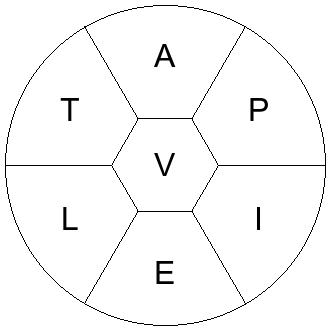
The official answers for today's puzzle are:

Click on the arrow to show the definition.
Click outside the pop-up to close it.


Number of Pangrams: 1

Maximum Puzzle Score: 141

Number of Answers: 32

Points Needed for Genius: 99

Genius requires between 14 and 29 words. You need at least an 8-letter word to reach genius. If you don't get the pangram, you need 80% of the total points to reach genius. If you get the pangram, you only need 66% of the remaining points to reach genius.

The button below will reveal a chart with the number of words by each letter. Red bars indicate that there is a pangram(s) starting with that letter.


How does this puzzle compare to other puzzles?

Today's score of 141 was in the 35th percentile of all puzzles.
The last time there was a score this low was on December 8, 2025.
The highest score ever was 537 on January 22, 2021.
The lowest score ever was 47 on March 27, 2023.

This puzzle's 32 possible answers rank it in the 30th percentile of all puzzles.
The last time there were fewer answers than this was on December 8, 2025.
The highest number of answers was 81 on June 8, 2019.
The lowest number of answers was 16 on March 27, 2023.

It takes an 8-letter word for genius.
The last time this happened was on December 14, 2025.

Today's puzzle has an average word length of 5.4.
For all Bees, the average word length has been 5.3.


Haven't I seen these letters before?

Hover over a letter to see its first and most recent appearance in the Bee!


Haven't I seen these words before?

The most common words in the Bee are:

  • noon 225
  • loll 209
  • toot 204
  • naan 186
  • nana 186
  • lilt 149
  • till 149
  • tilt 149
  • nene 145
  • tint 144
  • mama 141
  • mamma 141
  • onion 136
  • onto 136
  • toon 136
  • acacia 134
  • acai 134
  • anal 128
  • anon 127
  • olio 122
  • dodo 120
  • baba 118
  • papa 118
  • tact 118
  • boob 116
  • booboo 116
  • poop 115
  • lull 114
  • lulu 114
  • call 112
  • calla 112
  • cocci 112
  • mitt 112
  • mono 112
  • moon 112
  • ratatat 110
  • tart 110
  • tartar 110
  • tutu 110
  • attar 109
  • loon 109
  • allay 108
  • ally 108
  • tattoo 108
  • ammo 107
  • momma 107
  • tatty 106
  • roar 104
  • epee 103
  • meme 103


How long are words in the Bee?

There have been 111,044 answers ever accepted in the Bee - with 10,876 unique words.
Below are the distributions of the lengths of these words.


Valid dictionary words not in today's official answers

You may be wondering why these words aren't here*:

  • appellative
  • elative
  • evite
  • illative
  • lavalava
  • leva
  • lieve
  • teevee
  • titillative
  • tittivate
  • vail
  • vallate
  • valval
  • valvate
  • valvelet
  • veepee
  • vela
  • velate
  • vielle
  • vill
  • villae
  • villi
  • vita
  • vitae
  • vitelli
  • vitta
  • vittae
  • vittate
  • vittle
  • viva
  • vivat
  • vive
  • vlei

*Because the New York Times considers them obscure or offensive.

alive

adjective
  1. Having life; living; not dead
  2. In a state of action; in force or operation; existent
  3. Busy with activity of many living beings; swarming; thronged; busy.
  4. Sprightly; lively; brisk.
  5. Susceptible; easy to impress; having keen feelings, as opposed to apathy
  6. (as an intensifier) out of all living creatures.
adjective
  1. (only used attributively) Having life; that is alive.
  2. Being in existence; actual
  3. Having active properties; being energized.
  4. Operational; in actual use rather than in testing etc.
  5. Taken from a living animal.
  6. Imparting power; having motion.
  7. Still in active play.
  8. Seen or heard from a broadcast, as it happens.
  9. (of a performance or speech) In person.
  10. (entertainment, performing) Recorded in front of an audience and not having been edited after recording.
  11. Of firearms or explosives, capable of causing harm.
  12. (circuitry) Electrically charged or energized, usually indicating that the item may cause electrocution if touched.
  13. Being a bet which can be raised by the bettor, usually in reference to a blind or straddle.
  14. Featuring humans; not animated, in the phrases “live actors” or “live action”.
  15. Being in a state of ignition; burning.
  16. Full of earnestness; active; wide awake; glowing.
  17. Vivid; bright.

alleviate

verb
  1. To make less severe, as a pain or difficulty.

appetitive

adjective
  1. Having the quality of desiring gratification.

avail

noun
  1. Effect in achieving a goal or aim; purpose, use (now usually in negative constructions).
  2. Proceeds; profits from business transactions.
  3. An advertising slot or package.
  4. A press avail.
  5. Non-binding notice of availability for work.
  6. A readily available stock of oil.
  7. Benefit; value, profit; advantage toward success.
  8. Effort; striving.
verb
  1. To turn to the advantage of.
  2. To be of service to.
  3. To promote; to assist.
  4. To be of use or advantage; to answer or serve the purpose; to have strength, force, or efficacy sufficient to accomplish the object.
  5. To provide; to make available.

aviate

verb
  1. To operate an aircraft.

eave

noun
  1. Eaves: the underside of a roof that extends beyond the external walls of a building.

elevate

verb
  1. To raise (something) to a higher position.
  2. To promote (someone) to a higher rank.
  3. To confer honor or nobility on (someone).
  4. To make (something or someone) more worthy or of greater value.
  5. To direct (the mind, thoughts, etc.) toward more worthy things.
  6. To increase the intensity or degree of (something).
  7. To lift the spirits of (someone)
  8. To intoxicate in a slight degree; to make (someone) tipsy.
  9. (Latinism) To attempt to make (something) seem less important, remarkable, etc.
adjective
  1. Elevated; raised aloft.

evil

Etymology 1

noun
  1. Moral badness; wickedness; malevolence; the forces or behaviors that are the opposite or enemy of good.
  2. Something which impairs the happiness of a being or deprives a being of any good; something which causes suffering of any kind to sentient beings; harm; injury; mischief.
  3. A malady or disease; especially in the phrase king's evil (scrofula).
adjective
  1. Intending to harm; malevolent.
  2. Morally corrupt.
  3. Unpleasant, foul (of odour, taste, mood, weather, etc.).
  4. Producing or threatening sorrow, distress, injury, or calamity; unpropitious; calamitous.
  5. Having harmful qualities; not good; worthless or deleterious.
  6. Undesirable; harmful; bad practice

Etymology 2

adverb
  1. Wickedly, evilly, iniquitously
  2. Injuriously, harmfully; in a damaging way.
  3. Badly, poorly; in an insufficient way.

lava

noun
  1. The molten rock ejected by a volcano from its crater or fissured sides.
  2. Magma.
  3. A shade of red, named after the volcanic lava.

lave

Etymology 1

verb
  1. To pour or throw out, as water; lade out; bail; bail out.
  2. To draw, as water; drink in.
  3. To give bountifully; lavish.
  4. To run down or gutter, as a candle.
  5. To hang or flap down.
  6. To wash.

Etymology 2

noun
  1. (archaic or dialectal) The remainder, rest; that which is left, remnant; others.
  2. (dialectal) A crowd

leave

Etymology 1

verb
  1. To have a consequence or remnant.
  2. To depart; to separate from.
  3. To transfer something.
  4. To remain (behind); to stay.
  5. To stop, desist from; to "leave off" (+ noun / gerund).

Etymology 2

noun
  1. The action of the batsman not attempting to play at the ball.
  2. The arrangement of balls in play that remains after a shot is made (which determines whether the next shooter — who may be either the same player, or an opponent — has good options, or only poor ones).

Etymology 3

noun
  1. Permission to be absent; time away from one's work.
  2. Permission.
  3. Farewell, departure.

Etymology 4

verb
  1. To give leave to; allow; permit; let; grant.

Etymology 5

verb
  1. To produce leaves or foliage.

Etymology 6

verb
  1. To raise; to levy.

levee

Etymology 1

noun
  1. An embankment to prevent inundation; as, the levees along the Mississippi.
  2. The steep bank of a river.
  3. The border of an irrigated field.
  4. A pier or other landing place on a river.
verb
  1. To keep within a channel by means of levees.

Etymology 2

noun
  1. The act of rising; getting up, especially in the morning after rest.
  2. A reception of visitors held after getting up.
  3. A formal reception, especially one given by royalty or other leaders.
verb
  1. To attend the levee or levees of.

level

noun
  1. A tool for finding whether a surface is level, or for creating a horizontal or vertical line of reference.
  2. A distance relative to a given reference elevation.
  3. Degree or amount.
  4. Achievement or qualification.
  5. Distance from the root node of a tree structure.
  6. One of several discrete segments of a game, generally increasing in difficulty and representing different locations in the game world.
  7. A numeric value that quantifies a character's experience and power.
  8. A floor of a multi-storey building.
  9. An area of almost perfectly flat land.
  10. A school grade or year.
verb
  1. To adjust so as to make as flat or perpendicular to the ground as possible.
  2. To destroy by reducing to ground level; to raze.
  3. To progress to the next level.
  4. To aim or direct (a weapon, a stare, an accusation, etc).
  5. To direct or impose (a penalty, fine, etc) at or upon (someone).
  6. To make the score of a game equal.
  7. To bring to a common level or plane, in respect of rank, condition, character, privilege, etc.
  8. To adjust or adapt to a certain level.
  9. (usually with "with") To speak honestly and openly with.
adjective
  1. The same height at all places; parallel to a flat ground.
  2. At the same height as some reference; constructed as level with.
  3. Unvaried in frequency.
  4. Unvaried in volume.
  5. Calm.
  6. In the same position or rank.
  7. Straightforward; direct; clear.
  8. Well balanced; even; just; steady; impartial.
  9. Of even tone; without rising or falling inflection; monotonic.
  10. Perpendicular to a gravitational force.

levitate

verb
  1. To cause to rise in the air and float, as if in defiance of gravity.
  2. To be suspended in the air, as if in defiance of gravity.

live

Etymology 1

verb
  1. To be alive; to have life.
  2. To have permanent residence somewhere, to inhabit, to reside.
  3. To survive; to persevere; to continue.
  4. To cope.
  5. To pass life in a specified manner.
  6. To spend, as one's life; to pass; to maintain; to continue in, constantly or habitually.
  7. To act habitually in conformity with; to practice; to exemplify in one's way of life.
  8. To outlast danger; to float (said of a ship, boat, etc).
  9. (followed by "on" or "upon") To maintain or support one's existence; to provide for oneself; to feed; to subsist.
  10. To make the most of life; to experience a full, rich life.

Etymology 2

noun
  1. Life
adjective
  1. (only used attributively) Having life; that is alive.
  2. Being in existence; actual
  3. Having active properties; being energized.
  4. Operational; in actual use rather than in testing etc.
  5. Taken from a living animal.
  6. Imparting power; having motion.
  7. Still in active play.
  8. Seen or heard from a broadcast, as it happens.
  9. (of a performance or speech) In person.
  10. (entertainment, performing) Recorded in front of an audience and not having been edited after recording.
  11. Of firearms or explosives, capable of causing harm.
  12. (circuitry) Electrically charged or energized, usually indicating that the item may cause electrocution if touched.
  13. Being a bet which can be raised by the bettor, usually in reference to a blind or straddle.
  14. Featuring humans; not animated, in the phrases “live actors” or “live action”.
  15. Being in a state of ignition; burning.
  16. Full of earnestness; active; wide awake; glowing.
  17. Vivid; bright.
adverb
  1. Of an event, as it happens; in real time; direct.
  2. Of making a performance or speech, in person.

palliative

noun
  1. Something that palliates, particularly a palliative medicine.
adjective
  1. Serving to palliate; serving to extenuate or mitigate.
  2. Minimising the progression of a disease and relieving undesirable symptoms for as long as possible, rather than attempting to cure the (usually incurable) disease.

pave

verb
  1. To cover something with paving slabs.
  2. To cover with stone, concrete, blacktop or other solid covering, especially to aid travel.
  3. To pave the way for; to make easy and smooth.

peeve

noun
  1. An annoyance or grievance.
verb
  1. To annoy; vex.

titivate

verb
  1. To make small improvements or alterations to (one's appearance etc.); to add some finishing touches to.

vale

Etymology 1

noun
  1. A valley.

Etymology 2

interjection
  1. (usually seen in obituaries) Farewell.

valet

noun
  1. A man's personal male attendant, responsible for his clothes and appearance.
  2. A hotel employee performing such duties for guests.
  3. (professional wrestling) A female performer in professional wrestling, acting as either a manager or personal chaperone; often used to attract and titillate male members of the audience.
  4. A female chaperone who accompanies a man, and is usually not married to him.
  5. A person employed to clean or park cars.
  6. A person employed to assist the jockey and trainer at a racecourse.
  7. A wooden stand on which to hold clothes and accessories in preparation for dressing.
  8. A kind of goad or stick with an iron point.
verb
  1. To serve (someone) as a valet.
  2. To clean and service (a car), as a valet does.
  3. To leave (a car) with a valet to park it.

valve

noun
  1. A device that controls the flow of a gas or fluid through a pipe.
  2. A device that admits fuel and air into the cylinder of an internal combustion engine, or one that allows combustion gases to exit.
  3. One or more membranous partitions, flaps, or folds, which permit the passage of the contents of a vessel or cavity in one direction, but stop or control the flow in the opposite direction
  4. One of the leaves of a folding-door, or a window-sash.
  5. A vacuum tube.
  6. One of the pieces into which certain fruits naturally separate when they dehisce.
  7. A small portion of certain anthers, which opens like a trapdoor to allow the pollen to escape, such as in the barberry.
  8. One of the pieces or divisions of bivalve or multivalve shells.
  9. One of the two similar portions of the shell of a diatom.
verb
  1. To control (flow) by means of a valve.

veal

noun
  1. The flesh of a calf (i.e. a young bovine) used for food.

veep

noun
  1. (US politics) The Vice President of the United States; the office of Vice President of the United States, especially during an election cycle where several are in the running for the nomination.
  2. Any vice president (in a corporation, organization, etc.)

veil

noun
  1. Something hung up or spread out to hide or protect the face, or hide an object from view; usually of gauze, crepe, or similar diaphanous material.
  2. A cover; disguise; a mask; a pretense.
  3. The calyptra of mosses.
  4. A membrane connecting the margin of the pileus of a mushroom with the stalk; a velum.
  5. A covering for a person or thing; as, a caul (especially over the head)
  6. Velum (A circular membrane round the cap of medusa)
  7. A thin layer of tissue which is attached to or covers a mushroom.
  8. An obscuration of the clearness of the tones in pronunciation.
verb
  1. To dress in, or decorate with, a veil.
  2. To conceal as with a veil.

velvet

noun
  1. A closely woven fabric (originally of silk, now also of cotton or man-made fibres) with a thick short pile on one side.
  2. Very fine fur, including the skin and fur on a deer's antlers.
  3. A female chinchilla; a sow.
  4. The drug dextromethorphan.
  5. Money acquired by gambling.
verb
  1. To cover with velvet or with a covering of a similar texture.
  2. To coat raw meat in starch, then in oil, preparatory to frying.
  3. To remove the velvet from a deer's antlers.
  4. To soften; to mitigate.
  5. (of a cat's claws) to retract.
adjective
  1. Made of velvet.
  2. Soft and delicate, like velvet; velvety.
  3. Peaceful, carried out without violence; especially as pertaining to the peaceful breakup of Czechoslovakia.

vial

noun
  1. A glass vessel or bottle, especially a small tube-shaped bottle used to store medicine, perfume or other chemical.
verb
  1. To put or keep in, or as in, a vial.

vile

adjective
  1. Morally low; base; despicable.
  2. Causing physical or mental repulsion; horrid.

villa

noun
  1. (plural "villas") A house, often larger and more expensive than average, in the countryside or on the coast, often used as a retreat.
  2. (plural "villas") A family house, often semi-detached, in a middle class street.
  3. (plural "villae") A country house, with farm buildings around a courtyard.

vital

adjective
  1. Relating to, or characteristic of life.
  2. Necessary to the continuation of life; being the seat of life; being that on which life depends.
  3. Invigorating or life-giving.
  4. Necessary to continued existence.
  5. Relating to the recording of life events.
  6. Very important.
  7. Containing life; living.
  8. Capable of living; in a state to live; viable.

vitiate

verb
  1. To spoil, make faulty; to reduce the value, quality, or effectiveness of something
  2. To debase or morally corrupt
  3. To violate, to rape
  4. To make something ineffective, to invalidate

vape

Etymology 1

noun
  1. A device with a heating element, used to vaporize a liquid.
  2. A device with a heating element, used to vaporize a liquid solution with medicine. The produced vapor condensates into fine aerosols, forming a mist inside the device, to be inhaled by the patient for delivery of the medicine into the lungs.

Etymology 2

noun
  1. The smoking of a non-combustible cigarette, most commonly an electronic cigarette.
verb
  1. To inhale the vapor produced by a non-combustible cigarette, most commonly an electronic cigarette.