Sunday, December 28, 2025

Answers to yesterday's Bee

Jump to answers for


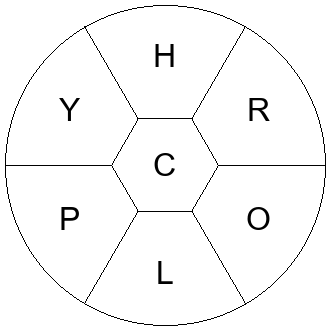
The official answers for today's puzzle are:

Click on the arrow to show the definition.
Click outside the pop-up to close it.


Number of Pangrams: 1

Maximum Puzzle Score: 72

Number of Answers: 20

Points Needed for Genius: 50

Genius requires between 7 and 19 words. You need at least a 6-letter word to reach genius. If you don't get the pangram, you need 93% of the total points to reach genius. If you get the pangram, you only need 59% of the remaining points to reach genius.

Other days with this pangram:

The button below will reveal a chart with the number of words by each letter. Red bars indicate that there is a pangram(s) starting with that letter.


How does this puzzle compare to other puzzles?

Today's score of 72 was in the 2nd percentile of all puzzles.
The last time there was a score this low was on March 4, 2025.
The highest score ever was 537 on January 22, 2021.
The lowest score ever was 47 on March 27, 2023.

This puzzle's 20 possible answers rank it in the 1st percentile of all puzzles.
The last time there were fewer answers than this was on November 7, 2025.
The highest number of answers was 81 on June 8, 2019.
The lowest number of answers was 16 on March 27, 2023.

It takes a 6-letter word for genius.
The last time this happened was on December 25, 2025.

Today's puzzle has an average word length of 4.9.
For all Bees, the average word length has been 5.3.


Haven't I seen these letters before?

Hover over a letter to see its first and most recent appearance in the Bee!


Haven't I seen these words before?

The most common words in the Bee are:

  • noon 226
  • loll 209
  • toot 205
  • naan 187
  • nana 187
  • lilt 150
  • till 150
  • tilt 150
  • nene 147
  • tint 144
  • mama 141
  • mamma 141
  • onion 137
  • onto 136
  • toon 136
  • acacia 134
  • acai 134
  • anal 128
  • anon 127
  • olio 123
  • dodo 120
  • papa 119
  • tact 119
  • baba 118
  • boob 116
  • booboo 116
  • lull 116
  • lulu 116
  • poop 115
  • cocci 113
  • call 112
  • calla 112
  • mitt 112
  • mono 112
  • moon 112
  • tutu 111
  • ratatat 110
  • tart 110
  • tartar 110
  • attar 109
  • loon 109
  • tattoo 109
  • allay 108
  • ally 108
  • ammo 107
  • momma 107
  • tatty 106
  • roar 104
  • epee 103
  • meme 103


How long are words in the Bee?

There have been 111,453 answers ever accepted in the Bee - with 10,887 unique words.
Below are the distributions of the lengths of these words.


Valid dictionary words not in today's official answers

You may be wondering why these words aren't here*:

  • choc
  • cholo
  • coco
  • collop
  • colly
  • coly
  • cooch
  • coocoo
  • cooly
  • cory
  • cyclo
  • lych
  • ochry
  • poco

*Because the New York Times considers them obscure or offensive.

chlorophyll

noun
  1. Any of a group of green pigments that are found in the chloroplasts of plants and in other photosynthetic organisms such as cyanobacteria.

chop

Etymology 1

noun
  1. A cut of meat, often containing a section of a rib.
  2. A blow with an axe, cleaver, or similar utensil.
  3. A blow delivered with the hand rigid and outstretched.
  4. Ocean waves, generally caused by wind, distinguished from swell by being smaller and not lasting as long.
  5. A hand where two or more players have an equal-valued hand, resulting in the chips being shared equally between them.
  6. (with "the") Termination, especially from employment; the sack.
  7. A woodchopping competition.
  8. A crack or cleft; a chap.
verb
  1. To cut into pieces with short, vigorous cutting motions.
  2. To sever with an axe or similar implement.
  3. To give a downward cutting blow or movement, typically with the side of the hand.
  4. To hit the ball downward so that it takes a high bounce.
  5. To divide the pot (or tournament prize) between two or more players.
  6. To make a quick, heavy stroke or a series of strokes, with or as with an ax.
  7. To do something suddenly with an unexpected motion; to catch or attempt to seize.
  8. To interrupt; with in or out.
  9. (Perl) To remove the final character from (a text string).

Etymology 2

noun
  1. A turn of fortune; change; a vicissitude.
verb
  1. To exchange, to barter; to swap.
  2. To chap or crack.
  3. To vary or shift suddenly.
  4. To twist words.
  5. To converse, discuss, or speak with another.

Etymology 3

noun
  1. (chiefly in the plural) A jaw of an animal.
  2. A movable jaw or cheek, as of a vice.
  3. The land at each side of the mouth of a river, harbour, or channel.

Etymology 4

noun
  1. An official stamp or seal, as in China and India.
  2. A mark indicating nature, quality, or brand.
  3. A license or passport that has been sealed.
  4. A complete shipment.

Etymology 5

noun
  1. An IRC channel operator.

choppy

adjective
  1. (of the surface of water) Having many small, rough waves.
  2. Discontinuous, intermittent.
  3. (of wind) Shifting, variable

clop

noun
  1. The sound of a horse's shod hoof striking the ground.
  2. My Little Pony-themed pornography
verb
  1. To make this sound; to walk so as to make this sound.

cloy

verb
  1. To fill up or choke up; to stop up.
  2. To clog, to glut, or satisfy, as the appetite; to satiate.
  3. To fill to loathing; to surfeit.

coho

noun
  1. An anadromus and semelparous salmon, Oncorhynchus kisutch, found in the coastal regions of the northern Pacific Ocean, used as a symbol by several Native American tribes.

color

noun
  1. The spectral composition of visible light
  2. A subset thereof:
  3. A paint.
  4. Human skin tone, especially as an indicator of race or ethnicity.
  5. Skin color, noted as normal, jaundiced, cyanotic, flush, mottled, pale, or ashen as part of the skin signs assessment.
  6. A flushed appearance of blood in the face; redness of complexion.
  7. Richness of expression; detail or flavour that is likely to generate interest or enjoyment.
  8. A standard, flag, or insignia:
  9. (in the plural) An award for sporting achievement, particularly within a school or university.
  10. (in the plural) The morning ceremony of raising the flag.
  11. A property of quarks, with three values called red, green, and blue, which they can exchange by passing gluons.
  12. A third-order measure of derivative price sensitivity, expressed as the rate of change of gamma with respect to time, or equivalently the rate of change of charm with respect to changes in the underlying asset price.
  13. The relative lightness or darkness of a mass of written or printed text on a page. (See type color.)
  14. Any of the colored balls excluding the reds.
  15. A front or facade; an ostensible truth actually false; pretext.
  16. An appearance of right or authority; color of law.
verb
  1. To give something color.
  2. To apply colors to the areas within the boundaries of a line drawing using colored markers or crayons.
  3. (of a person or their face) To become red through increased blood flow.
  4. To affect without completely changing.
  5. To attribute a quality to; to portray (as).
  6. To assign colors to the vertices of a graph (or the regions of a map) so that no two vertices connected by an edge (regions sharing a border) have the same color.
adjective
  1. Conveying color, as opposed to shades of gray.

cool

Etymology 1

noun
  1. A moderate or refreshing state of cold; moderate temperature of the air between hot and cold; coolness.
  2. A calm temperament.
  3. The property of being cool, popular or in fashion.
adjective
  1. Having a slightly low temperature; mildly or pleasantly cold.
  2. Allowing or suggesting heat relief.
  3. Of a color, in the range of violet to green.
  4. Of a person, not showing emotion; calm and in control of oneself.
  5. Unenthusiastic, lukewarm, skeptical.
  6. Calmly audacious.
  7. Applied facetiously to a sum of money, commonly as if to give emphasis to the largeness of the amount.
  8. Of a person, knowing what to do and how to behave; considered popular by others.
  9. In fashion, part of or fitting the in crowd; originally hipster slang.
  10. Of an action, all right; acceptable; that does not present a problem.
  11. Of a person, not upset by circumstances that might ordinarily be upsetting.
  12. Quietly impudent, defiant, or selfish; deliberately presuming: said of persons and acts.

Etymology 2

verb
  1. To lose heat, to get colder.
  2. To make cooler, less warm.
  3. To become less intense, e.g. less amicable or passionate.
  4. To make less intense, e.g. less amicable or passionate.
  5. To kill.

coolly

adjective
  1. Coolish; somewhat cool in temperature
adverb
  1. In a cool, unpanicked or collected manner.
  2. With calm impudence.

coop

Etymology 1

noun
  1. A basket, pen or enclosure for birds or small animals.
  2. A wickerwork basket (kipe) or other enclosure for catching fish.
  3. A narrow place of confinement, a cage; a jail, a prison.
  4. A barrel or cask for holding liquids.
verb
  1. To keep in a coop.
  2. To shut up or confine in a narrow space; to cramp.
  3. To unlawfully confine one or more voters to prevent them from casting their ballots in an election.
  4. (law enforcement) Of a police officer: to sleep or relax while on duty.
  5. To make or repair barrels, casks and other wooden vessels; to work upon in the manner of a cooper.

Etymology 2

noun
  1. A cart with sides and ends made from boards, enabling it to carry manure, etc.
  2. A cart which opens at the back to release its load; a tumbril.

Etymology 3

noun
  1. A small heap.

Etymology 4

noun
  1. A unit of a housing co-operative; a purchased apartment where the apartment owners collectively are responsible for maintenance of common areas and upkeep.
  2. Any co-operative, including housing, retail, utility, agricultural, banking or worker cooperatives.
  3. Any shop owned by a co-operative.
  4. A co-operative game, as opposed to a competitive game or deathmatch.

copy

noun
  1. The result of copying; an identical duplicate of an original.
  2. An imitation, sometimes of inferior quality.
  3. The text that is to be typeset.
  4. A gender-neutral abbreviation for copy boy.
  5. The output of copywriters, who are employed to write material which encourages consumers to buy goods or services.
  6. The text of newspaper articles.
  7. A school work pad.
  8. A printed edition of a book or magazine.
  9. Writing paper of a particular size, called also bastard.
  10. That which is to be imitated, transcribed, or reproduced; a pattern, model, or example.
  11. An abundance or plenty of anything.
  12. Copyhold; tenure; lease
  13. (genetics) The result of gene or chromosomal duplication.
verb
  1. To produce an object identical to a given object.
  2. To give or transmit a copy to (a person).
  3. To place a copy of an object in memory for later use.
  4. To imitate.
  5. To receive a transmission successfully.

coyly

adverb
  1. In a coy manner.

croc

Etymology 1

noun
  1. A crocodile.

Etymology 2

noun
  1. A plastic slip-on shoe.

crop

Etymology 1

noun
  1. A plant, especially a cereal, grown to be harvested as food, livestock fodder or fuel or for any other economic purpose.
  2. The natural production for a specific year, particularly of plants.
  3. A group, cluster or collection of things occurring at the same time.
  4. A group of vesicles at the same stage of development in a disease
  5. The lashing end of a whip
  6. An entire short whip, especially as used in horse-riding; a riding crop.
  7. A rocky outcrop.
  8. The act of cropping.
  9. A photograph or other image that has been reduced by removing the outer parts.
  10. A short haircut.
  11. A pouch-like part of the alimentary tract of some birds (and some other animals), used to store food before digestion, or for regurgitation; a craw.
  12. The foliate part of a finial.
  13. The head of a flower, especially when picked; an ear of corn; the top branches of a tree.
  14. Tin ore prepared for smelting.
  15. Outcrop of a vein or seam at the surface.
  16. An entire oxhide.

Etymology 2

verb
  1. To remove the top end of something, especially a plant.
  2. To mow, reap or gather.
  3. To cut (especially hair or an animal's tail or ears) short.
  4. To remove the outer parts of a photograph or other image, typically in order to frame the subject better.
  5. To yield harvest.
  6. To cause to bear a crop.

hooch

Etymology 1

noun
  1. Alcoholic liquor, especially inferior or illicit whisky.

Etymology 2

noun
  1. A thatched hut, CHU, or any simple dwelling.

loch

Etymology 1

noun
  1. A lake.
  2. A bay or arm of the sea.

Etymology 2

noun
  1. A medicine in a soft form taken by licking; a lambative, a linctus.

loco

Etymology 1

adverb
  1. A direction in written or printed music to be returning to the proper pitch after having played an octave higher or lower.

Etymology 2

noun
  1. A certain species of Astragalus or Oxytropis, capable of causing locoism.
verb
  1. To poison with the loco plant; to affect with locoism.
  2. (by extension) To render insane.
adjective
  1. Crazy.
  2. Intoxicated by eating locoweed.

Etymology 3

noun
  1. A locomotive.

pooch

Etymology 1

noun
  1. A dog.
  2. A dog of mixed breed; a mongrel.

Etymology 2

noun
  1. A bulge, an enlarged part
  2. A distended or swelled condition.
verb
  1. To distend, to swell or extend beyond normal limits; usually used with out.

porch

noun
  1. A covered and enclosed entrance to a building, whether taken from the interior, and forming a sort of vestibule within the main wall, or projecting without and with a separate roof.
  2. A portico; a covered walk.
  3. The platform outside the external hatch of a spacecraft.

rococo

noun
  1. A style of baroque architecture and decorative art, from 18th-century France, having elaborate ornamentation.
adjective
  1. Of or relating to the rococo style.
  2. Over-elaborate or complicated; opulent.
  3. Old-fashioned.