Monday, December 29, 2025

Answers to yesterday's Bee

Jump to answers for


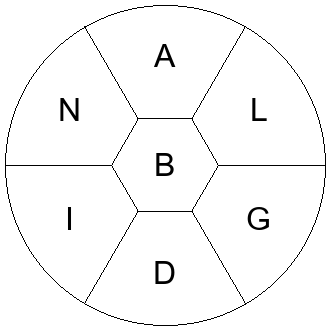
The official answers for today's puzzle are:

Click on the arrow to show the definition.
Click outside the pop-up to close it.


Number of Pangrams: 3

Maximum Puzzle Score: 329

Number of Answers: 55

Points Needed for Genius: 230

Genius requires between 29 and 46 words. You need at least a 7-letter word to reach genius. If you don't get the pangrams, you need 80% of the total points to reach genius. If you get the pangrams, you only need 65% of the remaining points to reach genius.

Other days with this pangram:

The button below will reveal a chart with the number of words by each letter. Red bars indicate that there is a pangram(s) starting with that letter.


How does this puzzle compare to other puzzles?

Today's score of 329 was in the 96th percentile of all puzzles.
The last time there was a score this high was on December 20, 2025.
The highest score ever was 537 on January 22, 2021.
The lowest score ever was 47 on March 27, 2023.

This puzzle's 55 possible answers rank it in the 84th percentile of all puzzles.
The last time there were more answers than this was on December 27, 2025.
The highest number of answers was 81 on June 8, 2019.
The lowest number of answers was 16 on March 27, 2023.

It takes a 7-letter word for genius.
The last time this happened was on December 27, 2025.

Today's puzzle has an average word length of 6.2.
For all Bees, the average word length has been 5.3.


Haven't I seen these letters before?

Hover over a letter to see its first and most recent appearance in the Bee!


Haven't I seen these words before?

The most common words in the Bee are:

  • noon 226
  • loll 209
  • toot 205
  • naan 187
  • nana 187
  • lilt 150
  • till 150
  • tilt 150
  • nene 147
  • tint 144
  • mama 141
  • mamma 141
  • onion 137
  • onto 136
  • toon 136
  • acacia 134
  • acai 134
  • anal 128
  • anon 127
  • olio 123
  • dodo 120
  • baba 119
  • papa 119
  • tact 119
  • boob 116
  • booboo 116
  • lull 116
  • lulu 116
  • poop 115
  • cocci 113
  • call 112
  • calla 112
  • mitt 112
  • mono 112
  • moon 112
  • tutu 111
  • ratatat 110
  • tart 110
  • tartar 110
  • attar 109
  • loon 109
  • tattoo 109
  • allay 108
  • ally 108
  • ammo 107
  • momma 107
  • tatty 106
  • roar 104
  • epee 103
  • meme 103


How long are words in the Bee?

There have been 111,508 answers ever accepted in the Bee - with 10,887 unique words.
Below are the distributions of the lengths of these words.


Valid dictionary words not in today's official answers

You may be wondering why these words aren't here*:

  • abba
  • abigail
  • alba
  • albinal
  • alibiing
  • baal
  • badinaging
  • badland
  • banda
  • bandaid
  • bani
  • banian
  • baning
  • biali
  • bibb
  • bibbing
  • bidi
  • biggin
  • bigging
  • bilging
  • binal
  • bing
  • blag
  • blagging
  • blain
  • blinging
  • dibbing
  • dibbling
  • gabba
  • gabling
  • galabia
  • gangbang
  • gangbanging
  • gibbing
  • indaba
  • liblab
  • nibbing

*Because the New York Times considers them obscure or offensive.

abiding

Etymology 1

verb
  1. To endure without yielding; to withstand; await defiantly; to encounter; to persevere.
  2. To bear patiently; to tolerate; to put up with; stand.
  3. To pay for; to stand the consequences of; to answer for; to suffer for; to atone for.
  4. To wait in expectation.
  5. To pause; to delay.
  6. To stay; to continue in a place; to remain stable or fixed in some state or condition; to be left.
  7. To have one's abode; to dwell; to reside; to sojourn.
  8. To endure; to remain; to last.
  9. To stand ready for; to await for someone; watch for.
  10. To endure or undergo a hard trial or a task; to stand up under.
  11. To await submissively; accept without question; submit to.
adjective
  1. Continuing or persisting in the same state: lasting, enduring; steadfast.

Etymology 2

noun
  1. The action of one who abides; the state of an abider.
  2. An abode.

alibi

noun
  1. The plea or mode of defense under which a person on trial for a crime proves or attempts to prove being in another place when the alleged act was committed
verb
  1. To provide an alibi for.
  2. To provide an excuse for.

baaing

verb
  1. To make the characteristic cry of a sheep.
noun
  1. The bleating of a sheep.

baba

noun
  1. A kind of sponge cake soaked in rum-flavoured syrup.
  2. (esp. among people of East European ancestry) A grandmother.
  3. An old woman, especially a traditional old woman from an eastern European culture.
  4. (esp. among people of Indian ancestry) A father.
  5. (Hinduism, Islam, Sikhism) A holy man, a spiritual leader.
  6. A baby, child.
  7. In baby talk, often used for a variety of words beginning with b, such as bottle or blanket.

babbling

verb
  1. To utter words indistinctly or unintelligibly; to utter inarticulate sounds
  2. To talk incoherently; to utter meaningless words.
  3. To talk too much; to chatter; to prattle.
  4. To make a continuous murmuring noise, like shallow water running over stones.
  5. To utter in an indistinct or incoherent way; to repeat words or sounds in a childish way without understanding.
  6. To reveal; to give away (a secret).
noun
  1. A stage in child language acquisition, during which an infant appears to be experimenting with uttering sounds of language, but not yet producing any recognizable words
  2. Sounds produced by infant during the babbling period
  3. Idle senseless talk; prattle.
  4. A confused murmur, as of a stream.

badging

verb
  1. To mark or distinguish with a badge.
  2. To show a badge to.
  3. To enter a restricted area by showing one's badge.

bagging

Etymology 1

verb
  1. To put into a bag.
  2. To catch or kill, especially when fishing or hunting.
  3. To gain possession of something, or to make first claim on something.
  4. To furnish or load with a bag.
  5. (African American Vernacular) To bring a woman one met on the street with one.
  6. (African American Vernacular) To laugh uncontrollably.
  7. To criticise sarcastically.
  8. To provide with artificial ventilation via a bag valve mask (BVM) resuscitator.
  9. To fit with a bag to collect urine.
  10. To (cause to) swell or hang down like a full bag.
  11. To hang like an empty bag.
  12. To drop away from the correct course.
  13. To swell with arrogance.
  14. To become pregnant.
noun
  1. The act of putting anything into a bag.
  2. Cloth or other material for bags.
  3. Use of BVM to ventilate a patient.
  4. Peak bagging

Etymology 2

noun
  1. Bootstrap aggregating

bail

Etymology 1

noun
  1. Security, usually a sum of money, exchanged for the release of an arrested person as a guarantee of that person's appearance for trial.
  2. Release from imprisonment on payment of such money.
  3. The person providing such payment.
  4. A bucket or scoop used for removing water from a boat etc.
  5. A person who bails water out of a boat.
  6. Custody; keeping.
verb
  1. To secure the release of an arrested person by providing bail.
  2. To release a person under such guarantee.
  3. To hand over personal property to be held temporarily by another as a bailment.
  4. To remove (water) from a boat by scooping it out.
  5. To remove water from (a boat) by scooping it out.
  6. To set free; to deliver; to release.

Etymology 2

verb
  1. To exit quickly.
  2. To fail to meet a commitment.

Etymology 3

noun
  1. A hoop, ring or handle (especially of a kettle or bucket).
  2. A stall for a cow (or other animal) (usually tethered with a semi-circular hoop).
  3. A hinged bar as a restraint for animals, or on a typewriter.
  4. A frame to restrain a cow during milking or feeding.
  5. A hoop, ring, or other object used to connect a pendant to a necklace.
  6. One of the two wooden crosspieces that rest on top of the stumps to form a wicket.
  7. (furniture) Normally curved handle suspended between sockets as a drawer pull. This may also be on a kettle or pail.
verb
  1. To secure the head of a cow during milking.

Etymology 4

verb
  1. To confine.
  2. To secure (a cow) by placing its head in a bail for milking.
  3. To keep (a traveller) detained in order to rob them; to corner (a wild animal); loosely, to detain, hold up. (Usually with up.)

bailing

verb
  1. To secure the release of an arrested person by providing bail.
  2. To release a person under such guarantee.
  3. To hand over personal property to be held temporarily by another as a bailment.
  4. To remove (water) from a boat by scooping it out.
  5. To remove water from (a boat) by scooping it out.
  6. To set free; to deliver; to release.
verb
  1. To exit quickly.
  2. To fail to meet a commitment.
verb
  1. To secure the head of a cow during milking.
verb
  1. To confine.
  2. To secure (a cow) by placing its head in a bail for milking.
  3. To keep (a traveller) detained in order to rob them; to corner (a wild animal); loosely, to detain, hold up. (Usually with up.)
noun
  1. The act by which something is bailed.

bald

noun
  1. A mountain summit or crest that lacks forest growth despite a warm climate conducive to such, as is found in many places in the Southern Appalachian Mountains.
verb
  1. To become bald.
adjective
  1. Having no hair, fur or feathers.
  2. (by extension) Denuded of any hair- or fur-like covering.
  3. Of tyres: whose surface is worn away.
  4. (of a statement or account) Unembellished.
  5. (of a statement) Without evidence or support being provided.

balding

verb
  1. To become bald.
adjective
  1. Becoming bald, especially having male pattern baldness

baling

verb
  1. To remove water from a boat with buckets etc.
noun
  1. A collection of material packaged into a bale.

ball

Etymology 1

noun
  1. A solid or hollow sphere, or roughly spherical mass.
  2. A round or ellipsoidal object.
  3. (mildly, usually in the plural) A testicle.
  4. A leather-covered cushion, fastened to a handle called a ballstock; formerly used by printers for inking the form, then superseded by the roller.
  5. A large pill, a form in which medicine was given to horses; a bolus.
verb
  1. To form or wind into a ball.
  2. To heat in a furnace and form into balls for rolling.
  3. To have sexual intercourse with.
  4. To gather balls which cling to the feet, as of damp snow or clay; to gather into balls.
  5. (usually in present participle) To be hip or cool.
  6. To play basketball.
  7. To punish by affixing a ball and chain
interjection
  1. An appeal by the crowd for holding the ball against a tackled player. This is heard almost any time an opposition player is tackled, without regard to whether the rules about "prior opportunity" to dispose of the ball are fulfilled.

Etymology 2

noun
  1. A formal dance.
  2. A very enjoyable time.

ballad

noun
  1. A kind of narrative poem, adapted for recitation or singing; especially, a sentimental or romantic poem in short stanzas.
  2. A slow romantic song.
verb
  1. To make mention of in ballads.
  2. To compose or sing ballads.

balling

verb
  1. To form or wind into a ball.
  2. To heat in a furnace and form into balls for rolling.
  3. To have sexual intercourse with.
  4. To gather balls which cling to the feet, as of damp snow or clay; to gather into balls.
  5. (usually in present participle) To be hip or cool.
  6. To play basketball.
  7. To punish by affixing a ball and chain

banal

adjective
  1. Common in a boring way, to the point of being predictable; containing nothing new or fresh.
  2. (history) Relating to a type of feudal jurisdiction or service.

banana

noun
  1. An elongated curved tropical fruit that grows in bunches and has a creamy flesh and a smooth skin.
  2. The tropical tree-like plant which bears clusters of bananas. The plant, usually of the genus Musa but sometimes also including plants from Ensete, has large, elongated leaves and is related to the plantain.
  3. A yellow colour, like that of a banana's skin.
  4. (mildly) A person of Asian descent, especially a Chinese American, who has assimilated into Western culture or married a Caucasian (from the "yellow" outside and "white" inside). Compare coconut or Oreo.
  5. A banana equivalent dose.
  6. A catamorphism (from the use of banana brackets in the notation).
  7. The penis.
  8. A banana kick.
adjective
  1. Curved like a banana, especially of a ball in flight.

band

Etymology 1

noun
  1. A strip of material used for strengthening or coupling.
  2. A long strip of material, color, etc, that is different from the surrounding area.
  3. A strip of decoration.
  4. That which serves as the means of union or connection between persons; a tie.
  5. A linen collar or ruff worn in the 16th and 17th centuries.
  6. (in the plural) Two strips of linen hanging from the neck in front as part of a clerical, legal, or academic dress.
  7. A part of the electromagnetic spectrum.
  8. A group of energy levels in a solid state material.
  9. A bond.
  10. Pledge; security.
  11. A ring, such as a wedding ring (wedding band), or a ring put on a bird's leg to identify it.
  12. Any distinguishing line formed by chromatography, electrophoresis etc
  13. Short for band cell.
  14. (hiphop, often in the plural) A wad of money totaling $1K, held together by a band; (by extension) money
verb
  1. To fasten with a band.
  2. To fasten an identifying band around the leg of (a bird).

Etymology 2

noun
  1. A group of musicians who perform together as an ensemble, usually for a professional recording artist.
  2. A type of orchestra originally playing janissary music.
  3. A marching band.
  4. A group of people loosely united for a common purpose (a band of thieves).
  5. A small group of people living in a simple society, contrasted with tribes, chiefdoms, and states.
  6. A group of aboriginals that has official recognition as an organized unit by the federal government of Canada.
verb
  1. To group together for a common purpose; to confederate.
  2. To group (students) together by perceived ability; to stream.

Etymology 3

verb
  1. To tie; to confine by any ligature.
  2. To cohere or stick together in a mass.
  3. To be restrained from motion, or from customary or natural action, as by friction.
  4. To exert a binding or restraining influence.
  5. To tie or fasten tightly together, with a cord, band, ligature, chain, etc.
  6. To confine, restrain, or hold by physical force or influence of any kind.
  7. To couple.
  8. To oblige, restrain, or hold, by authority, law, duty, promise, vow, affection, or other social tie.
  9. To put (a person) under definite legal obligations, especially, under the obligation of a bond or covenant.
  10. To place under legal obligation to serve.
  11. To protect or strengthen by applying a band or binding, as the edge of a carpet or garment.
  12. To make fast (a thing) about or upon something, as by tying; to encircle with something.
  13. To cover, as with a bandage.
  14. To prevent or restrain from customary or natural action, as by producing constipation.
  15. To put together in a cover, as of books.
  16. To make two or more elements stick together.
  17. To associate an identifier with a value; to associate a variable name, method name, etc. with the content of a storage location.
  18. To complain; to whine about something.

bandaging

verb
  1. To apply a bandage to something.
noun
  1. Strips of cloth or other material used to create a bandage.

bandana

noun
  1. A large kerchief, usually colourful and used either as headgear or as a handkerchief, neckerchief, bikini, or sweatband.
  2. A style of calico printing, in which white or bright spots are produced upon cloth previously dyed a uniform red or dark colour, by discharging portions of the color by chemical means, while the rest of the cloth is under pressure.

bandanna

noun
  1. A large kerchief, usually colourful and used either as headgear or as a handkerchief, neckerchief, bikini, or sweatband.
  2. A style of calico printing, in which white or bright spots are produced upon cloth previously dyed a uniform red or dark colour, by discharging portions of the color by chemical means, while the rest of the cloth is under pressure.

banding

verb
  1. To fasten with a band.
  2. To fasten an identifying band around the leg of (a bird).
verb
  1. To group together for a common purpose; to confederate.
  2. To group (students) together by perceived ability; to stream.
noun
  1. A pattern of band-like markings.
  2. A technique used in the study of wild birds, by attaching a small, individually numbered, metal or plastic tag to their legs or wings.
  3. A division into bands or brackets.
  4. The formation of a band or brigade.

bang

Etymology 1

noun
  1. A sudden percussive noise.
  2. A strike upon an object causing such a noise.
  3. An explosion.
  4. The symbol !, known as an exclamation point.
  5. A factorial, in mathematics, because the factorial of n is often written as n!
  6. An act of sexual intercourse.
  7. An offbeat figure typical of reggae songs and played on guitar and piano.
  8. An explosive product.
  9. An injection, a shot (of a narcotic drug).
  10. (Boston area) An abrupt left turn.
  11. Strong smell (of)
  12. A thrill.
verb
  1. To make sudden loud noises, and often repeatedly, especially by exploding or hitting something.
  2. To hit hard.
  3. To engage in sexual intercourse.
  4. (with "in") To hammer or to hit anything hard.
  5. To cut squarely across, as the tail of a horse, or a person's forelock; to cut (the hair).
  6. To inject intravenously.
adverb
  1. Right, directly.
  2. Precisely.
  3. With a sudden impact.
interjection
  1. A sudden percussive sound, such as made by the firing of a gun, slamming of a door, etc.
noun
  1. Hair hanging over the forehead.
  2. A hairstyle including such hair, especially cut straight across the forehead.
noun
  1. Brucellosis, a bacterial disease.

Etymology 2

noun
  1. Cannabis, especially as used in the Indian subcontinent.

banging

verb
  1. To make sudden loud noises, and often repeatedly, especially by exploding or hitting something.
  2. To hit hard.
  3. To engage in sexual intercourse.
  4. (with "in") To hammer or to hit anything hard.
  5. To cut squarely across, as the tail of a horse, or a person's forelock; to cut (the hair).
  6. To inject intravenously.
noun
  1. The action of the verb to bang.
adjective
  1. Excellent, brilliant, very exciting, top, great.
  2. Attractive; sexually appealing.
  3. Huge; great in size.

banning

verb
  1. To summon; to call out.
  2. To anathematize; to pronounce an ecclesiastical curse upon; to place under a ban.
  3. To curse; to execrate.
  4. To prohibit; to interdict; to proscribe; to forbid or block from participation.
  5. To curse; to utter curses or maledictions.
noun
  1. The act by which something is banned; a prohibition.

bidding

verb
  1. To issue a command; to tell.
  2. To invite; to summon.
  3. To utter a greeting or salutation.
verb
  1. To make an offer to pay or accept a certain price.
  2. To offer as a price.
  3. To make an attempt.
  4. To announce (one's goal), before starting play.
  5. To proclaim (a bede, prayer); to pray.
noun
  1. That which one is bidden to do; a command.
  2. The act of placing a bid.

biding

Etymology 1

noun
  1. An awaiting; expectation.
  2. Residence; habitation.

Etymology 2

verb
  1. To bear; to endure; to tolerate.
  2. To dwell or reside in a location; to abide.
  3. To wait; to be in expectation; to stay; to remain.
  4. To wait for; to await.

bilabial

noun
  1. A speech sound articulated with both lips.
adjective
  1. Articulated with both lips.

bill

Etymology 1

noun
  1. Any of various bladed or pointed hand weapons, originally designating an Anglo-Saxon sword, and later a weapon of infantry, especially in the 14th and 15th centuries, commonly consisting of a broad, heavy, double-edged, hook-shaped blade, with a short pike at the back and another at the top, attached to the end of a long staff.
  2. A cutting instrument, with hook-shaped point, and fitted with a handle, used in pruning, etc.; a billhook.
  3. Somebody armed with a bill; a billman.
  4. A pickaxe, or mattock.
  5. The extremity of the arm of an anchor; the point of or beyond the fluke (also called the peak).
verb
  1. To dig, chop, etc., with a bill.

Etymology 2

noun
  1. The beak of a bird, especially when small or flattish; sometimes also used with reference to a platypus, turtle, or other animal.
  2. A beak-like projection, especially a promontory.
  3. Of a cap or hat: the brim or peak, serving as a shade to keep sun off the face and out of the eyes.
verb
  1. To peck
  2. To stroke bill against bill, with reference to doves; to caress in fondness

Etymology 3

noun
  1. A written list or inventory. (Now obsolete except in specific senses or set phrases; bill of lading, bill of goods, etc.)
  2. A document, originally sealed; a formal statement or official memorandum. (Now obsolete except with certain qualifying words; bill of health, bill of sale etc.)
  3. A draft of a law, presented to a legislature for enactment; a proposed or projected law.
  4. A declaration made in writing, stating some wrong the complainant has suffered from the defendant, or a fault committed by some person against a law.
  5. A piece of paper money; a banknote.
  6. A written note of goods sold, services rendered, or work done, with the price or charge; an invoice.
  7. A paper, written or printed, and posted up or given away, to advertise something, as a lecture, a play, or the sale of goods
  8. A writing binding the signer or signers to pay a certain sum at a future day or on demand, with or without interest, as may be stated in the document; a bill of exchange. In the United States, it is usually called a note, a note of hand, or a promissory note.
  9. A set of items presented together.
verb
  1. To advertise by a bill or public notice.
  2. To charge; to send a bill to.

Etymology 4

noun
  1. The bell, or boom, of the bittern.

billing

verb
  1. To dig, chop, etc., with a bill.
verb
  1. To peck
  2. To stroke bill against bill, with reference to doves; to caress in fondness
verb
  1. To advertise by a bill or public notice.
  2. To charge; to send a bill to.
noun
  1. Amounts billed.
  2. Accounts receivable.
  3. The tracking of bills and amounts owed; the department within an institution or business that deals with the tracking of bills and amounts owed.
  4. The act or situation of including someone or something to those that make up a complete list.

bind

noun
  1. That which binds or ties.
  2. A troublesome situation; a problem; a predicament or quandary.
  3. Any twining or climbing plant or stem, especially a hop vine; a bine.
  4. A ligature or tie for grouping notes.
  5. A strong grip or stranglehold on a position that is difficult for the opponent to break.
  6. The indurated clay of coal mines.
verb
  1. To tie; to confine by any ligature.
  2. To cohere or stick together in a mass.
  3. To be restrained from motion, or from customary or natural action, as by friction.
  4. To exert a binding or restraining influence.
  5. To tie or fasten tightly together, with a cord, band, ligature, chain, etc.
  6. To confine, restrain, or hold by physical force or influence of any kind.
  7. To couple.
  8. To oblige, restrain, or hold, by authority, law, duty, promise, vow, affection, or other social tie.
  9. To put (a person) under definite legal obligations, especially, under the obligation of a bond or covenant.
  10. To place under legal obligation to serve.
  11. To protect or strengthen by applying a band or binding, as the edge of a carpet or garment.
  12. To make fast (a thing) about or upon something, as by tying; to encircle with something.
  13. To cover, as with a bandage.
  14. To prevent or restrain from customary or natural action, as by producing constipation.
  15. To put together in a cover, as of books.
  16. To make two or more elements stick together.
  17. To associate an identifier with a value; to associate a variable name, method name, etc. with the content of a storage location.
  18. To complain; to whine about something.

bindi

Etymology 1

noun
  1. The “holy dot” traditionally worn on the forehead of married Hindu women.
  2. Makeup or jewellery worn in imitation of such a dot.

Etymology 2

noun
  1. The common lawn weed, Soliva sessilis, introduced to Australia from South America.
  2. A seed of this plant, having small sharp spines which stick painfully into bare feet.
  3. Any of a number of plants of the genus Calotis which have small burrs with fine barbed awns.
  4. Any of a various plants of the genus Sclerolaena.

binding

verb
  1. To tie; to confine by any ligature.
  2. To cohere or stick together in a mass.
  3. To be restrained from motion, or from customary or natural action, as by friction.
  4. To exert a binding or restraining influence.
  5. To tie or fasten tightly together, with a cord, band, ligature, chain, etc.
  6. To confine, restrain, or hold by physical force or influence of any kind.
  7. To couple.
  8. To oblige, restrain, or hold, by authority, law, duty, promise, vow, affection, or other social tie.
  9. To put (a person) under definite legal obligations, especially, under the obligation of a bond or covenant.
  10. To place under legal obligation to serve.
  11. To protect or strengthen by applying a band or binding, as the edge of a carpet or garment.
  12. To make fast (a thing) about or upon something, as by tying; to encircle with something.
  13. To cover, as with a bandage.
  14. To prevent or restrain from customary or natural action, as by producing constipation.
  15. To put together in a cover, as of books.
  16. To make two or more elements stick together.
  17. To associate an identifier with a value; to associate a variable name, method name, etc. with the content of a storage location.
  18. To complain; to whine about something.
noun
  1. An item (usually rope, tape, or string) used to hold two or more things together.
  2. The spine of a book where the pages are held together.
  3. A finishing on a seam or hem of a garment.
  4. The association of a named item with an element of a program.
  5. The interface of a library with a programming language other than one it is written in.
  6. The action or result of making two or more molecules stick together.
adjective
  1. (of an agreement, contract, etc.) Imposing stipulations or requirements that must be honoured.
  2. (of food) Having the effect of counteracting diarrhea.

binging

Etymology 1

verb
  1. To engage in a short period of excessive consumption, especially of excessive alcohol consumption.

Etymology 2

verb
  1. To go; walk; come; run
verb
  1. Making the sound of a bounce
  2. To bounce

binning

verb
  1. To dispose of (something) by putting it into a bin, or as if putting it into a bin.
  2. To throw away, reject, give up.
  3. To convert continuous data into discrete groups.
  4. To place into a bin for storage.
noun
  1. A data pre-processing technique in which original data values fall into a small interval ("bin") and are replaced by a value representative of that interval, often the central value. Wp
  2. The process of grouping reads or contigs and assigning them to operational taxonomic units. Wp
  3. The categorization of finished products based on their characteristics. Wp
  4. The process of combining charge from adjacent pixels in a CCD image sensor during readout.

blab

noun
  1. One who blabs; a babbler; a telltale; a gossip or gossiper.
  2. Gossip; prattle.
verb
  1. To tell tales; to gossip without reserve or discretion.

blabbing

verb
  1. To tell tales; to gossip without reserve or discretion.
noun
  1. Gossip; the telling of tales.

blading

verb
  1. To skate on rollerblades.
  2. To furnish with a blade.
  3. To put forth or have a blade.
  4. To stab with a blade
  5. To cut (a person) so as to provoke bleeding.

bland

Etymology 1

adjective
  1. Having a soothing effect; not irritating or stimulating.
  2. Lacking in taste, flavor, or vigor.
  3. Lacking interest; boring; dull.
  4. Mild; soft, gentle, balmy; smooth in manner; suave.

Etymology 2

verb
  1. To mix; blend; mingle.
  2. To connect; associate.

Etymology 3

noun
  1. Mixture; union.
  2. A summer beverage prepared from the whey of churned milk, common among the inhabitants of the Shetland Islands.

blin

Etymology 1

noun
  1. Cessation; end.
verb
  1. To cease (from); to stop; to desist, to let up.

Etymology 2

noun
  1. A blintz.

blind

noun
  1. A covering for a window to keep out light. The covering may be made of cloth or of narrow slats that can block light or allow it to pass.
  2. A destination sign mounted on a public transport vehicle displaying the route destination, number, name and/or via points, etc.
  3. Any device intended to conceal or hide.
  4. Something to mislead the eye or the understanding, or to conceal some covert deed or design; a subterfuge.
  5. A blindage.
  6. A halting place.
  7. The blindside.
  8. (1800s) No score.
  9. A forced bet: the small blind or the big blind.
  10. A player who is forced to pay such a bet.
  11. (as a plural) Those who are blind, taken as a group.
verb
  1. To make temporarily or permanently blind.
  2. To curse.
  3. To darken; to obscure to the eye or understanding; to conceal.
  4. To cover with a thin coating of sand and fine gravel, for example a road newly paved, in order that the joints between the stones may be filled.
adjective
  1. (of a person or animal) Unable to see, due to physiological or neurological factors.
  2. (of an eye) Unable to be used to see, due to physiological or neurological factors.
  3. Failing to see, acknowledge, perceive.
  4. Of a place, having little or no visibility.
  5. Closed at one end; having a dead end
  6. Having no openings for light or passage.
  7. (in certain phrases) Smallest or slightest.
  8. Without any prior knowledge.
  9. Unconditional; without regard to evidence, logic, reality, accidental mistakes, extenuating circumstances, etc.
  10. Unintelligible or illegible.
  11. Abortive; failing to produce flowers or fruit.
adverb
  1. Without seeing; unseeingly.
  2. Absolutely, totally.
  3. (three card brag) Without looking at the cards dealt.

blinding

verb
  1. To make temporarily or permanently blind.
  2. To curse.
  3. To darken; to obscure to the eye or understanding; to conceal.
  4. To cover with a thin coating of sand and fine gravel, for example a road newly paved, in order that the joints between the stones may be filled.
noun
  1. The act of causing blindness.
  2. A thin coat of sand or gravel used to fill holes in a new road surface.
  3. A thin sprinkling of sand or chippings laid on a newly tarred surface.
adjective
  1. Very bright (as if to cause blindness).
  2. Making blind or as if blind; depriving of sight or of understanding.
  3. Brilliant; marvellous.
adverb
  1. To an extreme degree; blindingly.

bling

noun
  1. Ostentatious display of richness or style.
noun
  1. Shiny jewelry that displays wealth, such as a diamond ring or a stylish gold necklace or bracelet.

blini

noun
  1. A small pancake, of Russian origin, made from buckwheat flour; traditionally served with melted butter, sour cream and caviar or smoked salmon.

dabbing

verb
  1. To press lightly in a repetitive motion with a soft object without rubbing.
  2. To apply a substance in this way.
  3. To strike by a thrust; to hit with a sudden blow or thrust.
  4. To apply hash oil to a heated surface for the purpose of efficient combustion.
  5. To perform the dab dance move, by moving both arms to one side of the body parallel with your head.
noun
  1. The act by which something is dabbed.

dabbling

verb
  1. To make slightly wet or soiled by spattering or sprinkling a liquid (such as water, mud, or paint) on it; to bedabble.
  2. To cause splashing by moving a body part like a bill or limb in soft mud, water, etc., often playfully; to play in shallow water; to paddle.
  3. To participate or have an interest in an activity in a casual or superficial way.
  4. To interfere or meddle in; to tamper with.
noun
  1. (gerund of dabble) An act in which something is dabbled in

gabbing

verb
  1. To jest; to tell lies in jest; exaggerate; lie.
  2. To talk or chatter a lot, usually on trivial subjects.
  3. To speak or tell falsely.

gabbling

verb
  1. To talk fast, idly, foolishly, or without meaning.
  2. To utter inarticulate sounds with rapidity.
noun
  1. Rapid, confused speech.

gibing

verb
  1. Alternative spelling of gybe
  2. Alternative spelling of jibe
noun
  1. A gibe.

glib

Etymology 1

verb
  1. To make glib.
adjective
  1. Having a ready flow of words but lacking thought or understanding; superficial; shallow.
  2. Smooth or slippery.
  3. Artfully persuasive but insincere in nature; smooth-talking, honey-tongued, silver-tongued.

Etymology 2

noun
  1. A mass of matted hair worn down over the eyes, formerly worn in Ireland.

Etymology 3

verb
  1. To castrate; to geld; to emasculate.

labia

noun
  1. The folds of tissue at the opening of the vulva, at either side of the vagina.
noun
  1. A liplike structure; especially one of the two pairs of folds of skin either side of the vulva.
  2. The lip of a labiate corolla.
  3. The lip against which pressured air is driven to produce sound in a recorder and in a pipe organ with flue pipes.

labial

noun
  1. A consonant articulated by the lips.
  2. An organ pipe having a lip that influences its sound.
  3. Any of the scales bordering the mouth opening of a reptile.
adjective
  1. Of or pertaining to the lips or labia.
  2. Articulated by the lips, as the consonants b, m and w.
  3. Of an incisor or canine, on the side facing the lips. See mesial.
  4. Furnished with lips.

libidinal

adjective
  1. Relating or pertaining to the libido.

nabbing

verb
  1. To seize, arrest or take into custody (a criminal or fugitive).
  2. To grab or snatch something.

nibbling

verb
  1. To eat with small, quick bites.
  2. To bite lightly.
  3. To consume gradually.
  4. To find fault; to cavil.
noun
  1. The act or sound of one who nibbles.
  2. A small adjustment or encroachment.