Tuesday, December 30, 2025

Answers to yesterday's Bee

Jump to answers for


The official answers for today's puzzle are:

Click on the arrow to show the definition.
Click outside the pop-up to close it.


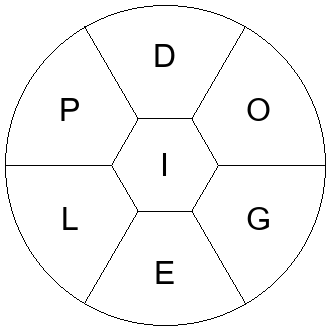
Number of Pangrams: 2

Maximum Puzzle Score: 303

Number of Answers: 62

Points Needed for Genius: 212

Genius requires between 32 and 51 words. You need at least a 6-letter word to reach genius. If you don't get the pangrams, you need 77% of the total points to reach genius. If you get the pangrams, you only need 67% of the remaining points to reach genius.

Other days with this pangram:

The button below will reveal a chart with the number of words by each letter. Red bars indicate that there is a pangram(s) starting with that letter.


How does this puzzle compare to other puzzles?

Today's score of 303 was in the 94th percentile of all puzzles.
The last time there was a score this high was on December 29, 2025.
The highest score ever was 537 on January 22, 2021.
The lowest score ever was 47 on March 27, 2023.

This puzzle's 62 possible answers rank it in the 93rd percentile of all puzzles.
The last time there were more answers than this was on December 20, 2025.
The highest number of answers was 81 on June 8, 2019.
The lowest number of answers was 16 on March 27, 2023.

It takes a 6-letter word for genius.
The last time this happened was on December 28, 2025.

Today's puzzle has an average word length of 5.4.
For all Bees, the average word length has been 5.3.


Haven't I seen these letters before?

Hover over a letter to see its first and most recent appearance in the Bee!


Haven't I seen these words before?

The most common words in the Bee are:

  • noon 226
  • loll 209
  • toot 205
  • naan 187
  • nana 187
  • lilt 150
  • till 150
  • tilt 150
  • nene 147
  • tint 144
  • mama 141
  • mamma 141
  • onion 137
  • onto 136
  • toon 136
  • acacia 134
  • acai 134
  • anal 128
  • anon 127
  • olio 124
  • dodo 120
  • baba 119
  • papa 119
  • tact 119
  • boob 116
  • booboo 116
  • lull 116
  • lulu 116
  • poop 115
  • cocci 113
  • call 112
  • calla 112
  • mitt 112
  • mono 112
  • moon 112
  • tutu 111
  • ratatat 110
  • tart 110
  • tartar 110
  • attar 109
  • loon 109
  • tattoo 109
  • allay 108
  • ally 108
  • ammo 107
  • momma 107
  • tatty 106
  • roar 104
  • epee 103
  • meme 103


How long are words in the Bee?

There have been 111,570 answers ever accepted in the Bee - with 10,889 unique words.
Below are the distributions of the lengths of these words.


Valid dictionary words not in today's official answers

You may be wondering why these words aren't here*:

  • deil
  • didie
  • dido
  • diel
  • digged
  • dildoe
  • dilled
  • diol
  • diploe
  • diplopod
  • doiled
  • doilied
  • doolie
  • edile
  • eide
  • eolipile
  • eolopile
  • giddied
  • gied
  • gillie
  • gillied
  • gipped
  • goolie
  • igged
  • iodid
  • lido
  • lilied
  • lilo
  • lipe
  • lipide
  • lipoid
  • loggie
  • logoi
  • loid
  • loided
  • looie
  • oidioid
  • ollied
  • piggie
  • pilei
  • pili
  • pipped
  • poppied

*Because the New York Times considers them obscure or offensive.

deli

noun
  1. A shop that sells cooked or prepared food ready for serving.
  2. Food sold at a delicatessen.

diddle

noun
  1. In percussion, two consecutive notes played by the same hand (either RR or LL), similar to the drag, except that by convention diddles are played the same speed as the context in which they are placed.
  2. The penis.
verb
  1. To cheat; to swindle.
  2. To have sex with.
  3. To masturbate (especially of women).
  4. To waste time.
  5. To totter, like a child learning to walk; to daddle.
  6. To manipulate a value at the level of individual bits (binary digits).
interjection
  1. A meaningless word used when singing a tune or indicating a rhythm.

diddled

verb
  1. To cheat; to swindle.
  2. To have sex with.
  3. To masturbate (especially of women).
  4. To waste time.
  5. To totter, like a child learning to walk; to daddle.
  6. To manipulate a value at the level of individual bits (binary digits).

died

verb
  1. To stop living; to become dead; to undergo death.
  2. To (stop living and) undergo (a specified death).
  3. To yearn intensely.
  4. To be or become hated or utterly ignored or cut off, as if dead.
  5. To become spiritually dead; to lose hope.
  6. To be mortified or shocked by a situation.
  7. To be so overcome with emotion or laughter as to be incapacitated.
  8. (of a machine) To stop working, to break down.
  9. (of a computer program) To abort, to terminate (as an error condition).
  10. To perish; to cease to exist; to become lost or extinct.
  11. To sink; to faint; to pine; to languish, with weakness, discouragement, love, etc.
  12. (often with "to") To become indifferent; to cease to be subject.
  13. To disappear gradually in another surface, as where mouldings are lost in a sloped or curved face.
  14. To become vapid, flat, or spiritless, as liquor.
  15. (of a stand-up comedian or a joke) To fail to evoke laughter from the audience.
verb
  1. To colour with dye, or as if with dye.

dildo

Etymology 1

noun
  1. An artificial phallus (penis) for sexual use.
  2. An idiot, a bore.
  3. A columnar cactaceous plant of the West Indies (Pilosocereus royenii).
verb
  1. To penetrate with a dildo or with another object as if it were a dildo.

Etymology 2

interjection
  1. A burden: a phrase or theme that recurs at the end of a verse of a folk song.

dill

Etymology 1

noun
  1. Anethum graveolens (the type species of the genus Anethum), a herb, the seeds of which are moderately warming, pungent, and aromatic, formerly used as a soothing medicine for children; also known as dillseed.
  2. A cucumber pickled with dill flavoring
  3. A fool.
verb
  1. To cook or flavor with dill

Etymology 2

verb
  1. To still; to assuage; to calm; to soothe, as one in pain.

diode

noun
  1. An electronic device that allows current to flow in one direction only; used chiefly as a rectifier.

diploid

noun
  1. A cell which is diploid.
  2. An organism with diploid cells.
adjective
  1. Of a cell, having a pair of each type of chromosome, one of the pair being derived from the ovum and the other from the spermatozoon. Most somatic cells of higher organisms are diploid.
  2. Of an organism, having diploid cells.
  3. Of a certain symmetry class with 24 congruent irregular quadrilateral faces.

dipole

noun
  1. Any object (such as a magnet, polar molecule or antenna) that is oppositely charged at two points (or poles)
  2. Any molecule or radical that has delocalised positive and negative charges
  3. A dipole antenna

dipped

verb
  1. To lower into a liquid.
  2. To immerse oneself; to become plunged in a liquid; to sink.
  3. (of a value or rate) To decrease slightly.
  4. To lower a light's beam.
  5. To lower (a flag), particularly a national ensign, to a partially hoisted position in order to render or to return a salute. While lowered, the flag is said to be “at the dip.” A flag being carried on a staff may be dipped by leaning it forward at an approximate angle of 45 degrees.
  6. To treat cattle or sheep by immersion in chemical solution.
  7. To use a dip stick to check oil level in an engine.
  8. To consume snuff by placing a pinch behind the lip or under the tongue so that the active chemical constituents of the snuff may be absorbed into the system for their narcotic effect.
  9. To immerse for baptism.
  10. To wet, as if by immersing; to moisten.
  11. To plunge or engage thoroughly in any affair.
  12. To take out, by dipping a dipper, ladle, or other receptacle, into a fluid and removing a part; often with out.
  13. To perform the action of plunging a dipper, ladle. etc. into a liquid or soft substance and removing a part.
  14. To engage as a pledge; to mortgage.
  15. To perform (a bow or curtsey) by inclining the body.
  16. To incline downward from the plane of the horizon.
  17. To perform a dip dance move (often phrased with the leader as the subject noun and the follower as the subject noun being dipped)
  18. To lower the body by bending the knees while keeping the body in an upright position, as in movement to the rhythm of music.
  19. To leave.
  20. To miss out on seeing a sought after bird.
adjective
  1. That has been briefly immersed in a liquid.
  2. Of headlights: lowered.
  3. Caught up in debt; mortgaged.

doggie

noun
  1. A dog, especially a small one.
  2. Doggy style
  3. (armed services) A junior temporarily assigned to do minor duties for a senior; a gofer.

dogie

noun
  1. A motherless calf in a range herd of cattle; a calf separated from its cow.

dollied

verb
  1. To hit a dolly.
  2. To move (an object) using a dolly.
  3. To wash (laundry) in a tub using the stirring device called a dolly.
  4. To beat (red-hot metal) with a hammer.
  5. To crush ore with a dolly.

eddied

verb
  1. To form an eddy; to move in, or as if in, an eddy; to move in a circle.

elide

verb
  1. To leave out or omit (something).
  2. To cut off, as a vowel or a syllable.
  3. To conflate; to smear together; to blur the distinction between.

elided

verb
  1. To leave out or omit (something).
  2. To cut off, as a vowel or a syllable.
  3. To conflate; to smear together; to blur the distinction between.

epilog

noun
  1. A short speech, spoken directly at the audience at the end of a play
  2. The performer who gives this speech
  3. A brief oration or script at the end of a literary piece; an afterword
  4. A component of a computer program that prepares the computer to return from a routine.

gelid

adjective
  1. Very cold; icy or frosty.

geoid

noun
  1. (geodesy) The shape that the surface of the oceans of the Earth would take under the influence of the Earth's gravity and rotation alone, extending also through the continents, disregarding other factors such as winds and tides; that is, a surface of constant gravitational potential at zero elevation.

gigged

verb
  1. To fish or catch with a gig, or fish spear.
  2. To engage in musical performances.
  3. To make fun of; to make a joke at someone's expense, often condescending.
  4. To impose a demerit for an infraction of a dress or deportment code.
verb
  1. To engender.

giggle

noun
  1. A high-pitched, silly laugh.
  2. Fun; an amusing episode.
verb
  1. To laugh gently or in a high-pitched voice; to laugh in a silly or giddy way.

giggled

verb
  1. To laugh gently or in a high-pitched voice; to laugh in a silly or giddy way.

gigolo

noun
  1. A man who has a sexual relationship with a woman from whom he receives payment.
  2. A hired escort or dancing partner for a woman.

gild

Etymology 1

verb
  1. To cover with a thin layer of gold; to cover with gold leaf.
  2. To adorn.
  3. To decorate with a golden surface appearance.
  4. To give a bright or pleasing aspect to.
  5. To make appear drunk.

Etymology 2

noun
  1. A group or association mainly of tradespeople made up of merchants, craftspeople, or artisans for mutual aid, particularly in the Middle Ages.
  2. A corporation.
  3. A group of diverse species that share common characteristics or habits.
  4. An organized group of players who regularly play together in a multiplayer game.

gilded

verb
  1. To cover with a thin layer of gold; to cover with gold leaf.
  2. To adorn.
  3. To decorate with a golden surface appearance.
  4. To give a bright or pleasing aspect to.
  5. To make appear drunk.
adjective
  1. Having the color or quality of gold.
  2. Made of gold or covered by a thin layer of gold.
  3. Having a falsely pleasant appearance; sugarcoated.

gill

Etymology 1

noun
  1. (animal anatomy) a breathing organ of fish and other aquatic animals
  2. (of a fish) a gill slit or gill cover
  3. One of the radial folds on the underside of the cap of a mushroom, on the surface of which the spore-producing organs are borne
  4. (animal anatomy) the fleshy flap that hangs below the beak of a fowl; a wattle
  5. The flesh under or about the chin; a wattle
  6. (spinning) one of the combs of closely ranged steel pins which divide the ribbons of flax fiber or wool into fewer parallel filaments
verb
  1. To remove the gills from a fish as part of gutting and cleaning it
  2. To catch (a fish) in a gillnet
  3. To be or become entangled in a gillnet

Etymology 2

noun
  1. A drink measure for spirits and wine (size varies regionally but it is about one quarter of a pint)
  2. A measuring jug holding a quarter or half a pint

Etymology 3

noun
  1. Rivulet
  2. Ravine

Etymology 4

noun
  1. A two-wheeled frame for transporting timber

Etymology 5

noun
  1. A leech

Etymology 6

noun
  1. A female ferret
  2. A promiscuous woman; harlot, wanton
  3. A prostitute
verb
  1. To act as a prostitute.

gilled

adjective
  1. Having gills

glide

noun
  1. The act of gliding.
  2. A transitional sound, especially a semivowel.
  3. An attack or preparatory movement made by sliding down the opponent’s blade, keeping it in constant contact.
  4. A bird, the glede or kite.
  5. A kind of cap affixed to the base of the legs of furniture to prevent it from damaging the floor.
  6. The joining of two sounds without a break.
  7. A smooth and sliding step in dancing the waltz.
verb
  1. To move softly, smoothly, or effortlessly.
  2. To fly unpowered, as of an aircraft. Also relates to gliding birds and flying fish.
  3. To cause to glide.
  4. To pass with a glide, as the voice.

glided

verb
  1. To move softly, smoothly, or effortlessly.
  2. To fly unpowered, as of an aircraft. Also relates to gliding birds and flying fish.
  3. To cause to glide.
  4. To pass with a glide, as the voice.

goodie

noun
  1. A good character in a story, often a hero.
interjection
  1. Expression of pleasure; yippee.

idle

noun
  1. An idle animation.
  2. An idle game.
verb
  1. To spend in idleness; to waste; to consume.
  2. To lose or spend time doing nothing, or without being employed in business.
  3. Of an engine: to run at a slow speed, or out of gear; to tick over.
adjective
  1. Empty, vacant.
  2. Not being used appropriately; not occupied; (of time) with no, no important, or not much activity.
  3. Not engaged in any occupation or employment; unemployed; inactive; doing nothing in particular.
  4. Averse to work, labor or employment; lazy; slothful.
  5. Of no importance; useless; worthless; vain; trifling; thoughtless; silly.
  6. Light-headed; foolish.

idled

verb
  1. To spend in idleness; to waste; to consume.
  2. To lose or spend time doing nothing, or without being employed in business.
  3. Of an engine: to run at a slow speed, or out of gear; to tick over.

idol

noun
  1. A graven image or representation of anything that is revered, or believed to convey spiritual power.
  2. A cultural icon, or especially popular person.
  3. (originally Japan) Popular entertainer; usually young, captivating, attractive; and often female, with an image of being close to fans.
  4. An eidolon or phantom; something misleading or elusive.

igloo

noun
  1. A dome-shaped Inuit shelter, constructed of blocks cut from snow.
  2. A cavity, or excavation, made in the snow by a seal, over its breathing hole in the sea ice.
  3. A reinforced bunker for the storage of nuclear weapons.
  4. (logistics) A kind of airfreight cargo container.

iodide

noun
  1. A binary compound of iodine and another element or radical.

lidded

No Definition Found.

lied

Etymology 1

noun
  1. An art song, sung in German and accompanied on the piano.

Etymology 2

verb
  1. To give false information intentionally with intent to deceive.
  2. To convey a false image or impression.
  3. To be mistaken or unintentionally spread false information.

liege

noun
  1. A free and independent person; specifically, a lord paramount; a sovereign.
  2. (in full liege lord) A king or lord.
  3. The subject of a sovereign or lord; a liegeman.
adjective
  1. Sovereign; independent; having authority or right to allegiance.
  2. Serving an independent sovereign or master; bound by a feudal tenure; obliged to be faithful and loyal to a superior, such as a vassal to his lord; faithful.
  3. Full; perfect; complete; pure.

lipid

noun
  1. Any of a group of organic compounds including the fats, oils, waxes, sterols, and triglycerides. Lipids are characterized by being insoluble in water, and account for most of the fat present in the human body.

lipo

noun
  1. Liposuction

lipped

verb
  1. To touch or grasp with the lips; to kiss; to lap the lips against (something).
  2. (of something inanimate) To touch lightly.
  3. To wash against a surface, lap.
  4. To rise or flow up to or over the edge of something.
  5. To form the rim, edge or margin of something.
  6. To utter verbally.
  7. To simulate speech by moving the lips without making any sound; to mouth.
  8. To make a golf ball hit the lip of the cup, without dropping in.
  9. To change the sound of (a musical note played on a wind instrument) by moving or tensing the lips.
adjective
  1. Having a raised lip.
  2. (in combination) Having some specific type of lip.

lollipop

noun
  1. An item of confectionery consisting of a piece of candy/sweet attached to a stick.

oiled

verb
  1. To lubricate with oil.
  2. To grease with oil for cooking.
adjective
  1. Covered in, or supplied with, oil.
  2. Drunk. Usually in conjunction with well.

oldie

noun
  1. Something or someone old.
  2. A song or record from a previous era.
  3. (in the plural) The genre of music composed of popular music from previous eras.

olio

noun
  1. A rich, thick, Spanish stew consisting of meat and vegetables.
  2. A medley or mixture; a hotchpotch.
  3. A collection of various musical, theatrical or other artistic works; a miscellany.
  4. (by extension) Vaudeville or similar miscellaneous musical or theatrical entertainment skits presented between the main acts of burlesque or minstrel shows.

ollie

noun
  1. An aerial maneuver in which one catches air by leaping off the ground with the skateboard and into the air.
verb
  1. To perform an ollie.

opioid

noun
  1. A substance that has effects similar to opium.
  2. Any of the natural substances, such as an endorphin, released in the body in response to pain.
  3. Any of a group of synthetic compounds that exhibit similarities to the opium alkaloids that occur in nature.

piddle

verb
  1. To eat with small, quick bites.
  2. To bite lightly.
  3. To consume gradually.
  4. To find fault; to cavil.
verb
  1. To strike or pierce with the beak or bill (of a bird).
  2. To form by striking with the beak or a pointed instrument.
  3. To strike, pick, thrust against, or dig into, with a pointed instrument, especially with repeated quick movements.
  4. To seize and pick up with the beak, or as if with the beak; to bite; to eat; often with up.
  5. To do something in small, intermittent pieces.
  6. To type by searching for each key individually.
  7. To type in general.
  8. To kiss briefly.
verb
  1. To throw.
  2. To lurch forward; especially, of a horse, to stumble after hitting the ground with the toe instead of the flat of the foot.
noun
  1. Piss: urine.
  2. A piss: an act of urination.
  3. Nonsense or a trivial matter.
verb
  1. Often followed by about or around: to act or work ineffectually and wastefully.
  2. (Namibia) To urinate.

piddled

verb
  1. To eat with small, quick bites.
  2. To bite lightly.
  3. To consume gradually.
  4. To find fault; to cavil.
verb
  1. To strike or pierce with the beak or bill (of a bird).
  2. To form by striking with the beak or a pointed instrument.
  3. To strike, pick, thrust against, or dig into, with a pointed instrument, especially with repeated quick movements.
  4. To seize and pick up with the beak, or as if with the beak; to bite; to eat; often with up.
  5. To do something in small, intermittent pieces.
  6. To type by searching for each key individually.
  7. To type in general.
  8. To kiss briefly.
verb
  1. To throw.
  2. To lurch forward; especially, of a horse, to stumble after hitting the ground with the toe instead of the flat of the foot.
verb
  1. Often followed by about or around: to act or work ineffectually and wastefully.
  2. (Namibia) To urinate.

pied

Etymology 1

adjective
  1. Having two or more colors, especially black and white.
  2. Decorated or colored in blotches.

Etymology 2

verb
  1. To spill or mix printing type.

Etymology 3

verb
  1. To hit in the face with a pie, either for comic effect or as a means of protest (see also pieing).
  2. To go around (a corner) in a guarded manner.
  3. (of printing types) To reduce to confusion; to jumble.

pigged

verb
  1. (of swine) to give birth.
  2. To greedily consume (especially food).
  3. To huddle or lie together like pigs, in one bed.
  4. To clean (a pipeline) using a pig (the device).

pile

Etymology 1

noun
  1. A mass of things heaped together; a heap.
  2. A group or list of related items up for consideration, especially in some kind of selection process.
  3. A mass formed in layers.
  4. A funeral pile; a pyre.
  5. A large amount of money.
  6. A large building, or mass of buildings.
  7. A bundle of pieces of wrought iron to be worked over into bars or other shapes by rolling or hammering at a welding heat; a fagot.
  8. A vertical series of alternate disks of two dissimilar metals (especially copper and zinc), laid up with disks of cloth or paper moistened with acid water between them, for producing a current of electricity; a voltaic pile, or galvanic pile.
  9. An atomic pile; an early form of nuclear reactor.
  10. The reverse (or tails) of a coin.
  11. A list or league
verb
  1. (often used with the preposition "up") To lay or throw into a pile or heap; to heap up; to collect into a mass; to accumulate
  2. To cover with heaps; or in great abundance; to fill or overfill; to load.
  3. To add something to a great number.
  4. (of vehicles) To create a hold-up.
  5. To place (guns, muskets, etc.) together in threes so that they can stand upright, supporting each other.

Etymology 2

noun
  1. A dart; an arrow.
  2. The head of an arrow or spear.
  3. A large stake, or piece of pointed timber, steel etc., driven into the earth or sea-bed for the support of a building, a pier, or other superstructure, or to form a cofferdam, etc.
  4. One of the ordinaries or subordinaries having the form of a wedge, usually placed palewise, with the broadest end uppermost.
verb
  1. To drive piles into; to fill with piles; to strengthen with piles.

Etymology 3

noun
  1. (usually in the plural) A hemorrhoid.

Etymology 4

noun
  1. Hair, especially when very fine or short; the fine underfur of certain animals. (Formerly countable, now treated as a collective singular.)
  2. The raised hairs, loops or strands of a fabric; the nap of a cloth.
verb
  1. To give a pile to; to make shaggy.

piled

verb
  1. (often used with the preposition "up") To lay or throw into a pile or heap; to heap up; to collect into a mass; to accumulate
  2. To cover with heaps; or in great abundance; to fill or overfill; to load.
  3. To add something to a great number.
  4. (of vehicles) To create a hold-up.
  5. To place (guns, muskets, etc.) together in threes so that they can stand upright, supporting each other.
verb
  1. To drive piles into; to fill with piles; to strengthen with piles.
verb
  1. To give a pile to; to make shaggy.
adjective
  1. (iron manufacturing) Formed from a pile or fagot.
  2. Having a pile or point; pointed.
  3. Having a pile or nap.

pill

Etymology 1

noun
  1. A small, usually round or cylindrical object designed for easy swallowing, usually containing some sort of medication.
  2. (definite, i.e. used with "the") Contraceptive medication, usually in the form of a pill to be taken by a woman; an oral contraceptive pill.
  3. A comical or entertaining person.
  4. A contemptible, annoying, or unpleasant person.
  5. A small piece of any substance, for example a ball of fibres formed on the surface of a textile by rubbing.
  6. A baseball.
  7. A bullet (projectile).
  8. A rounded rectangle indicating the tag or category that an item belongs to.
verb
  1. Of a woven fabric surface, to form small matted balls of fiber.
  2. To form into the shape of a pill.
  3. To medicate with pills.
  4. To persuade or convince someone of something.

Etymology 2

noun
  1. The peel or skin.
verb
  1. To peel; to remove the outer layer of hair, skin, or bark.
  2. To peel; to make by removing the skin.
  3. To be peeled; to peel off in flakes.
  4. To pillage; to despoil or impoverish.

Etymology 3

noun
  1. An inlet on the coast; a small tidal pool or bay.

pilled

verb
  1. Of a woven fabric surface, to form small matted balls of fiber.
  2. To form into the shape of a pill.
  3. To medicate with pills.
  4. To persuade or convince someone of something.
verb
  1. To peel; to remove the outer layer of hair, skin, or bark.
  2. To peel; to make by removing the skin.
  3. To be peeled; to peel off in flakes.
  4. To pillage; to despoil or impoverish.
adjective
  1. In a state of believing, especially from evidence but not necessarily.

pipe

noun
  1. Meanings relating to a wind instrument.
  2. Meanings relating to a hollow conduit.
  3. Meanings relating to a container.
  4. Meanings relating to something resembling a tube.
  5. Meanings relating to computing.
  6. Meanings relating to a smoking implement.
verb
  1. To play (music) on a pipe instrument, such as a bagpipe or a flute.
  2. To shout loudly and at high pitch.
  3. To emit or have a shrill sound like that of a pipe; to whistle.
  4. Of a metal ingot: to become hollow in the process of solidifying.
  5. To convey or transport (something) by means of pipes.
  6. To install or configure with pipes.
  7. To dab moisture away from.
  8. To lead or conduct as if by pipes, especially by wired transmission.
  9. To directly feed (the output of one program) as input to another program, indicated by the pipe character (pipe) at the command line.
  10. To create or decorate with piping (icing).
  11. To order or signal by a note pattern on a boatswain's pipe.
  12. (of a male) To have sexual intercourse with a female.
  13. To see.

piped

verb
  1. To play (music) on a pipe instrument, such as a bagpipe or a flute.
  2. To shout loudly and at high pitch.
  3. To emit or have a shrill sound like that of a pipe; to whistle.
  4. Of a metal ingot: to become hollow in the process of solidifying.
  5. To convey or transport (something) by means of pipes.
  6. To install or configure with pipes.
  7. To dab moisture away from.
  8. To lead or conduct as if by pipes, especially by wired transmission.
  9. To directly feed (the output of one program) as input to another program, indicated by the pipe character (pipe) at the command line.
  10. To create or decorate with piping (icing).
  11. To order or signal by a note pattern on a boatswain's pipe.
  12. (of a male) To have sexual intercourse with a female.
  13. To see.
adjective
  1. Shaped like a pipe; tubular.

plie

noun
  1. A smooth and continuous bending of the knees

plied

verb
  1. To bend; to fold; to mould; to adapt, to modify; to change (a person's) mind, to cause (a person) to submit.
  2. To bend, to flex; to be bent by something, to give way or yield (to a force, etc.).
verb
  1. To work at (something) diligently.
  2. To wield or use (a tool, a weapon, etc.) steadily or vigorously.
  3. To press upon; to urge persistently.
  4. To persist in offering something to, especially for the purpose of inducement or persuasion.
  5. To travel over (a route) regularly.
  6. To work diligently.
  7. To manoeuvre a sailing vessel so that the direction of the wind changes from one side of the vessel to the other; to work to windward, to beat, to tack.

polio

noun
  1. A sufferer from poliomyelitis.
noun
  1. Acute infection by the poliovirus, especially of the motor neurons in the spinal cord and brainstem, leading to muscle weakness, paralysis and sometimes deformity.

dogpile

noun
  1. A disorderly pile of people formed by jumping upon a victim.
  2. Any similarly disorderly pile of people or things.
  3. A pile of dogshit.
verb
  1. (often with 'on') To jump into a dogpile.
  2. To pile on, to overwhelm in other senses.

dogpiled

verb
  1. (often with 'on') To jump into a dogpile.
  2. To pile on, to overwhelm in other senses.