Wednesday, December 31, 2025

Answers to yesterday's Bee

Jump to answers for


The official answers for today's puzzle are:

Click on the arrow to show the definition.
Click outside the pop-up to close it.


Number of Pangrams: 1

Maximum Puzzle Score: 94

Number of Answers: 28

Points Needed for Genius: 66

Genius requires between 9 and 26 words. You need at least a 7-letter word to reach genius. If you don't get the pangram, you need 84% of the total points to reach genius. If you get the pangram, you only need 65% of the remaining points to reach genius.

Other days with this pangram:

The button below will reveal a chart with the number of words by each letter. Red bars indicate that there is a pangram(s) starting with that letter.


How does this puzzle compare to other puzzles?

Today's score of 94 was in the 10th percentile of all puzzles.
The last time there was a score this low was on December 28, 2025.
The highest score ever was 537 on January 22, 2021.
The lowest score ever was 47 on March 27, 2023.

This puzzle's 28 possible answers rank it in the 19th percentile of all puzzles.
The last time there were fewer answers than this was on December 28, 2025.
The highest number of answers was 81 on June 8, 2019.
The lowest number of answers was 16 on March 27, 2023.

It takes a 7-letter word for genius.
The last time this happened was on December 29, 2025.

Today's puzzle has an average word length of 4.9.
For all Bees, the average word length has been 5.3.


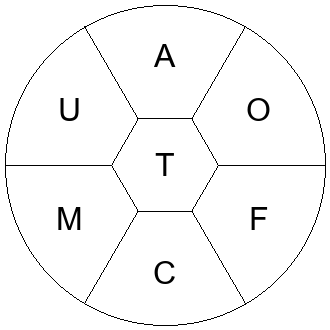
Haven't I seen these letters before?

Hover over a letter to see its first and most recent appearance in the Bee!


Haven't I seen these words before?

The most common words in the Bee are:

  • noon 226
  • loll 209
  • toot 206
  • naan 187
  • nana 187
  • lilt 150
  • till 150
  • tilt 150
  • nene 147
  • tint 144
  • mama 141
  • mamma 141
  • onion 137
  • onto 136
  • toon 136
  • acacia 134
  • acai 134
  • anal 128
  • anon 127
  • olio 124
  • dodo 120
  • tact 120
  • baba 119
  • papa 119
  • boob 116
  • booboo 116
  • lull 116
  • lulu 116
  • poop 115
  • cocci 113
  • call 112
  • calla 112
  • mitt 112
  • mono 112
  • moon 112
  • tutu 112
  • ratatat 110
  • tart 110
  • tartar 110
  • tattoo 110
  • attar 109
  • loon 109
  • allay 108
  • ally 108
  • ammo 107
  • momma 107
  • tatty 106
  • roar 104
  • coot 103
  • epee 103


How long are words in the Bee?

There have been 111,598 answers ever accepted in the Bee - with 10,889 unique words.
Below are the distributions of the lengths of these words.


Valid dictionary words not in today's official answers

You may be wondering why these words aren't here*:

  • acta
  • atma
  • coact
  • cocomat
  • coft
  • commata
  • cotta
  • facta
  • factum
  • matt
  • maut
  • motmot
  • mott
  • offcut
  • otto
  • outa
  • outact
  • outfoot
  • outta
  • toco
  • toff
  • toft
  • toom
  • tufa
  • tuff

*Because the New York Times considers them obscure or offensive.

afoot

adjective
  1. (predicative) That is on foot, in motion, in action, in progress.
adverb
  1. On foot. (means of locomotion, walking)
  2. On foot. (support of the body, standing)
  3. In motion; in action; astir; stirring; in progress.

atom

noun
  1. The smallest possible amount of matter which still retains its identity as a chemical element, now known to consist of a nucleus surrounded by electrons.
  2. (history of science) A hypothetical particle posited by Greek philosophers as an ultimate and indivisible component of matter.
  3. The smallest, indivisible constituent part or unit of something.
  4. In logical atomism, a fundamental fact that cannot be further broken down.
  5. The smallest medieval unit of time, equal to fifteen ninety-fourths of a second.
  6. A mote of dust in a sunbeam.
  7. A very small amount; a whit.
  8. (Lisp) An individual number or symbol, as opposed to a list; a scalar value.
  9. A non-zero member of a Boolean algebra that is not a union of any other elements. Or, a non-zero member of a Boolean lattice that has only zero below it.
  10. An element of a set that is not itself a set; an urelement.
  11. (usually capitalised as "Atom") A member of an age group division in hockey for ten- to 11-year-olds.

auto

Etymology 1

noun
  1. An automobile.
  2. A setting for automatic operation.
  3. An automatic gearbox / transmission.
  4. A car with an automatic gearbox / transmission.
verb
  1. To travel by automobile.
adjective
  1. Capable of operating without external control or intervention.
  2. Done out of habit or without conscious thought.
  3. Necessary, inevitable, prescribed by logic, law, etc.
  4. (of a firearm such as a machine gun) Firing continuously as long as the trigger is pressed until ammunition is exhausted.
  5. (of a handgun) An autoloader; a semi-automatic or self-loading pistol, as opposed to a revolver or other manually actuated handgun, which fires one shot per pull of the trigger; distinct from machine guns.
  6. (of a local variable) Automatically added to and removed from the stack during the course of function calls.
  7. (of a group) Having one or more finite-state automata

Etymology 2

noun
  1. An autorickshaw.

automat

noun
  1. A vending machine for food.
  2. A cafeteria consisting of vending machines.

automata

noun
  1. A machine or robot designed to follow a precise sequence of instructions.
  2. A person who acts like a machine or robot, often defined as having a monotonous lifestyle and lacking in emotion.
  3. A formal system, such as finite automaton.
  4. A toy in the form of a mechanical figure.
  5. The self-acting power of the muscular and nervous systems, by which movement is effected without intelligent determination.

coat

noun
  1. An outer garment covering the upper torso and arms.Wp
  2. A covering of material, such as paint.Wp
  3. The fur or feathers covering an animal's skin.Wp
  4. Canvas painted with thick tar and secured round a mast or bowsprit to prevent water running down the sides into the hold (now made of rubber or leather).
  5. A petticoat.
  6. The habit or vesture of an order of men, indicating the order or office; cloth.
  7. A coat of arms.Wp
  8. A coat card.
verb
  1. To cover with a coating of some material.
  2. To cover like a coat.
  3. To clothe.

coot

noun
  1. Any of various aquatic birds of the genus Fulica that are mainly black with a prominent frontal shield on the forehead.
  2. A foolish or eccentric fellow
  3. (with the) A success; something excellent.
  4. Body louse (Pediculus humanus).

cutoff

noun
  1. The point at which something terminates or to which it is limited.
  2. A road, path or channel that provides a shorter or quicker path; a shortcut.
  3. A device that stops the flow of a current.
  4. A device for saving steam by regulating its admission to the cylinder (see quotation at cut-off).
  5. A cessation in a flow or activity.
  6. The player who acts directly before the player on the button pre-flop.
  7. (chiefly in the plural) shorts made by cutting off the legs from trousers
  8. A horizontal line separating sections of the page.
adjective
  1. Constituting a limit or ending.
  2. Designating a score or value demarcating the presence (or absence) of a disease, condition, or similar.

cutout

noun
  1. A hole or space produced when something is removed by cutting.
  2. A piece cut out of something.
  3. A trusted middleman or intermediary, especially in espionage.
  4. Clip art.
  5. Any of several devices that halts the flow of a current, especially an electric current; a trip-switch or trip.
  6. A switch that changes the current from one circuit to another, or for shortening a circuit.
  7. A railway cutting.
  8. The separation of a group of cattle from a herd; the place where they are collected.

fact

noun
  1. Something actual as opposed to invented.
  2. Something which is real.
  3. Something concrete used as a basis for further interpretation.
  4. An objective consensus on a fundamental reality that has been agreed upon by a substantial number of experts.
  5. Information about a particular subject, especially actual conditions and/or circumstances.
  6. An individual value or measurement at the lowest level of granularity in a data warehouse.
  7. Action; the realm of action.
  8. A wrongful or criminal deed.
  9. A feat or meritorious deed.
interjection
  1. Used before making a statement to introduce it as a trustworthy one.

factotum

noun
  1. A person having many diverse activities or responsibilities.
  2. A general servant.
  3. An individual employed to do all sorts of duties.
  4. A jack of all trades.
  5. A printer's ornament forming a decorative border into which any letter can be inserted to mark the beginning of a section of text.

foot

noun
  1. A biological structure found in many animals that is used for locomotion and that is frequently a separate organ at the terminal part of the leg.
  2. Specifically, a human foot, which is found below the ankle and is used for standing and walking.
  3. (often used attributively) Travel by walking.
  4. The base or bottom of anything.
  5. The part of a flat surface on which the feet customarily rest.
  6. The end of a rectangular table opposite the head.
  7. A short foot-like projection on the bottom of an object to support it.
  8. A unit of measure equal to twelve inches or one third of a yard, equal to exactly 30.48 centimetres.
  9. A unit of measure for organ pipes equal to the wavelength of two octaves above middle C, approximately 328 mm.
  10. (collective) Foot soldiers; infantry.
  11. (cigars) The end of a cigar which is lit, and usually cut before lighting.
  12. The part of a sewing machine which presses downward on the fabric, and may also serve to move it forward.
  13. The bottommost part of a typed or printed page.
  14. The base of a piece of type, forming the sides of the groove.
  15. The basic measure of rhythm in a poem.
  16. The parsing of syllables into prosodic constituents, which are used to determine the placement of stress in languages along with the notions of constituent heads.
  17. The bottom edge of a sail.
  18. The end of a billiard or pool table behind the foot point where the balls are racked.
  19. In a bryophyte, that portion of a sporophyte which remains embedded within and attached to the parent gametophyte plant.
  20. The muscular part of a bivalve mollusc or a gastropod by which it moves or holds its position on a surface.
  21. The globular lower domain of a protein.
  22. The point of intersection of one line with another that is perpendicular to it.
  23. Fundamental principle; basis; plan.
  24. Recognized condition; rank; footing.
verb
  1. To use the foot to kick (usually a ball).
  2. To pay (a bill).
  3. To tread to measure or music; to dance; to trip; to skip.
  4. To walk.
  5. To tread.
  6. To set on foot; to establish; to land.
  7. To renew the foot of (a stocking, etc.).
  8. To sum up, as the numbers in a column; sometimes with up.

moat

noun
  1. A deep, wide defensive ditch, normally filled with water, surrounding a fortified habitation.
  2. An aspect of a business which makes it more "defensible" from competitors, either because of the nature of its products, services, franchise or other reason.
  3. A circular lowland between a resurgent dome and the walls of the caldera surrounding it.
  4. A hill or mound.
verb
  1. To surround with a moat.

moot

Etymology 1

noun
  1. A moot court.
  2. A system of arbitration in many areas of Africa in which the primary goal is to settle a dispute and reintegrate adversaries into society rather than assess penalties.
  3. A gathering of Rovers, usually in the form of a camp lasting 2 weeks.
  4. A social gathering of pagans, normally held in a public house.
  5. An assembly (usually for decision-making in a locality).
  6. A ring for gauging wooden pins.
adjective
  1. Subject to discussion (originally at a moot); arguable, debatable, unsolved or impossible to solve.
  2. Being an exercise of thought; academic.
  3. Having no practical impact or relevance.

Etymology 2

noun
  1. A whisper, or an insinuation, also gossip or rumors.
  2. (rural) Talk.
verb
  1. To bring up as a subject for debate, to propose.
  2. To discuss or debate.
  3. To make or declare irrelevant.
  4. To argue or plead in a supposed case.
  5. To talk or speak.
  6. To say, utter, also insinuate.

Etymology 3

noun
  1. Vagina.

Etymology 4

noun
  1. The stump of a tree; the roots and bottom end of a felled tree.
verb
  1. To take root and begin to grow.
  2. To turn up soil or dig up roots, especially an animal with the snout.

motto

noun
  1. A sentence, phrase, or word, forming part of an heraldic achievement.
  2. A sentence, phrase, or word, prefixed to an essay, discourse, chapter, canto, or the like, suggestive of its subject matter; a short, suggestive expression of a guiding principle; a maxim.
  3. A paper packet containing a sweetmeat, cracker, etc., together with a scrap of paper bearing a motto.

mutt

Etymology 1

noun
  1. A mongrel dog (or sometimes cat); an animal of mixed breed or uncertain origin.
  2. (sometimes derogatory) A person of diverse ancestry.
  3. An idiot, a stupid person.

Etymology 2

noun
  1. A monastic or similar religious establishment in Hinduism and Jainism, usually more formal and hierarchical than an ashram.

taco

noun
  1. A Mexican snack food; a small tortilla (soft or hard shelled), with typically some type of meat, rice, beans, cheese, diced vegetables (usually tomatoes and lettuce, as served in the United States, and cilantro, onion, and avocado, as served in México) and salsa.
  2. The vulva.
  3. A yellow stain on a shirt armpit caused by sweat or deodorant.
verb
  1. To fold or cause to buckle in half, similar to the way a taco is folded.

tact

noun
  1. The sense of touch; feeling.
  2. The stroke in beating time.
  3. Sensitive mental touch; special skill or faculty; keen perception or discernment; ready power of appreciating and doing what is required by circumstances; the ability to say the right thing.
  4. A verbal operant which is controlled by a nonverbal stimulus (such as an object, event, or property of an object) and is maintained by nonspecific social reinforcement (praise).
verb
  1. To use a tact (a kind of verbal operant; see noun sense).
noun
  1. A maneuver, or action calculated to achieve some end.
  2. A maneuver used against an enemy.
  3. A sequence of moves that limits the opponent's options and results in an immediate and tangible advantage, typically in the form of material.

tattoo

Etymology 1

noun
  1. An image made in the skin with ink and a needle.
  2. A method of decorating the skin by inserting colored substances under the surface with a sharp instrument (usually a solenoid-driven needle).
verb
  1. To apply a tattoo to (someone or something).
  2. To hit the ball hard, as if to figuratively leave a tattoo on the ball.

Etymology 2

noun
  1. A signal played five minutes before taps (lights out).
  2. A signal by drum or bugle ordering soldiers to return to their quarters.
  3. A military display or pageant.
verb
  1. To tap rhythmically on, to drum.

Etymology 3

noun
  1. A breed of pony from India; a pony of that breed.

taut

verb
  1. To make taut; to tauten, to tighten.
adjective
  1. Under tension, like a stretched bowstring, rope, or sail; tight.
  2. (of a body, muscles, etc.) Not flabby; firm, toned; (of a person) having a lean, strong body.
  3. (of music, writing, etc.) Containing only relevant parts; brief and controlled.
  4. Experiencing anxiety or stress.
  5. (of a sailor, a ship, etc.) Neat and well-disciplined; (by extension) efficient and in order.
  6. Strong; uncompromising.

toccata

noun
  1. A piece of music (usually for a keyboard instrument) designed to emphasise the dexterity of the performer.

tofu

noun
  1. A protein-rich food made from curdled soy milk.
  2. A box or rectangle, empty or with a question mark or hexadecimal code inside, displayed by some systems in place of a character not supported by available fonts. (such as □ or ժ)

tomato

noun
  1. A widely cultivated plant, Solanum lycopersicum, having edible fruit.
  2. The savory fruit of this plant, red when ripe, treated as a vegetable in horticulture and cooking.
  3. A shade of red, the colour of a ripe tomato.
  4. A desirable-looking woman.
  5. A stupid act or person.
verb
  1. To pelt with tomatoes
  2. To add tomatoes to (a dish)

tomcat

noun
  1. A tom, a male cat.
verb
  1. To prowl for sexual gratification.

toot

Etymology 1

noun
  1. The noise of a horn or whistle.
  2. (by extension) A fart; flatus.
  3. Cocaine.
  4. A portion of cocaine that a person snorts.
  5. A spree of drunkness.
  6. (pronounced /tʊt/) Rubbish; tat.
  7. A message on the social networking software Mastodon.
verb
  1. To stand out, or be prominent.
  2. To peep; to look narrowly.
  3. To see; to spy.
  4. To flatulate.
  5. To make the sound of a horn or whistle.
  6. To cause a horn or whistle to make its sound.
  7. To go on a drinking binge.
  8. To snort (a recreational drug).
  9. To post a message on a Mastodon instance (a self-hosted version of the networking software).

Etymology 2

noun
  1. A toilet.

tout

Etymology 1

noun
  1. Someone advertising for customers in an aggressive way.
  2. A person, at a racecourse, who offers supposedly inside information on which horse is likely to win.
  3. A spy for a smuggler, thief, or similar.
  4. An informer in the Irish Republican Army.
verb
  1. To flaunt, to publicize/publicise; to boast or brag; to promote.
  2. To look upon or watch.
  3. To spy out information about (a horse, a racing stable, etc.).
  4. To give a tip on (a racehorse) to a person, with the expectation of sharing in any winnings.
  5. To spy out the movements of racehorses at their trials, or to get by stealth or other improper means the secrets of the stable, for betting purposes.
  6. To act as a tout; to give a tip on a racehorse.
  7. To look for, try to obtain; used with for.

Etymology 2

noun
  1. In the game of solo, a proposal to win all eight tricks.

tuft

noun
  1. A bunch of feathers, grass or hair, etc., held together at the base.
  2. A cluster of threads drawn tightly through upholstery, a mattress or a quilt, etc., to secure and strengthen the padding.
  3. A small clump of trees or bushes.
  4. A gold tassel on the cap worn by titled undergraduates at English universities.
  5. A person entitled to wear such a tassel.
verb
  1. To provide or decorate with a tuft or tufts.
  2. To form into tufts.
  3. To secure and strengthen (a mattress, quilt, etc.) with tufts.
  4. To be formed into tufts.

tutu

Etymology 1

noun
  1. A ballet skirt made of layered stiff but light netting.

Etymology 2

noun
  1. Any of the genus Coriaria of shrubs and trees found in New Zealand.