Tuesday, January 6, 2026

Answers to yesterday's Bee

Jump to answers for


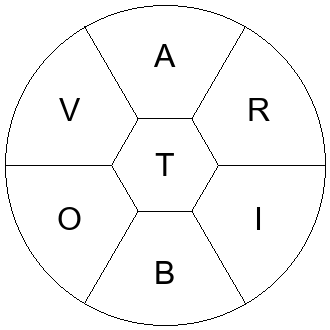
The official answers for today's puzzle are:

Click on the arrow to show the definition.
Click outside the pop-up to close it.


Number of Pangrams: 2

Maximum Puzzle Score: 245

Number of Answers: 53

Points Needed for Genius: 172

Genius requires between 25 and 46 words. You need at least a 7-letter word to reach genius. If you don't get the pangrams, you need 80% of the total points to reach genius. If you get the pangrams, you only need 66% of the remaining points to reach genius.

Other days with this pangram:

The button below will reveal a chart with the number of words by each letter. Red bars indicate that there is a pangram(s) starting with that letter.


How does this puzzle compare to other puzzles?

Today's score of 245 was in the 80th percentile of all puzzles.
The last time there was a score this high was on January 1, 2026.
The highest score ever was 537 on January 22, 2021.
The lowest score ever was 47 on March 27, 2023.

This puzzle's 53 possible answers rank it in the 81st percentile of all puzzles.
The last time there were more answers than this was on January 1, 2026.
The highest number of answers was 81 on June 8, 2019.
The lowest number of answers was 16 on March 27, 2023.

It takes a 7-letter word for genius.
The last time this happened was on January 5, 2026.

Today's puzzle has an average word length of 5.3.
For all Bees, the average word length has been 5.3.


Haven't I seen these letters before?

Hover over a letter to see its first and most recent appearance in the Bee!


Haven't I seen these words before?

The most common words in the Bee are:

  • noon 227
  • loll 209
  • toot 207
  • naan 189
  • nana 189
  • lilt 150
  • till 150
  • tilt 150
  • nene 148
  • tint 145
  • mama 141
  • mamma 141
  • onion 137
  • onto 136
  • toon 136
  • acacia 134
  • acai 134
  • anal 129
  • anon 128
  • olio 124
  • dodo 120
  • tact 120
  • baba 119
  • papa 119
  • boob 116
  • booboo 116
  • lull 116
  • lulu 116
  • poop 115
  • cocci 114
  • call 112
  • calla 112
  • mitt 112
  • mono 112
  • moon 112
  • tutu 112
  • ratatat 111
  • tart 111
  • tartar 111
  • tattoo 111
  • attar 110
  • loon 109
  • allay 108
  • ally 108
  • ammo 107
  • momma 107
  • tatty 106
  • roar 104
  • coot 103
  • epee 103


How long are words in the Bee?

There have been 111,855 answers ever accepted in the Bee - with 10,894 unique words.
Below are the distributions of the lengths of these words.


Valid dictionary words not in today's official answers

You may be wondering why these words aren't here*:

  • abator
  • abattoir
  • airt
  • attrit
  • babbitt
  • barbot
  • barrator
  • batata
  • batt
  • bitt
  • boart
  • bort
  • bota
  • bott
  • briarroot
  • brit
  • britt
  • irritator
  • obviator
  • ottar
  • ottava
  • otto
  • rabat
  • rabato
  • rato
  • riata
  • robata
  • rota
  • roto
  • tatar
  • tiro
  • titbit
  • titi
  • titrator
  • toit
  • tora
  • torot
  • torr
  • viator
  • vita
  • vitiator
  • vitta
  • vivat

*Because the New York Times considers them obscure or offensive.

abbot

noun
  1. The superior or head of an abbey or monastery.
  2. The pastor and/or administrator of an order, including minor and major orders starting with the minor order of porter.
  3. A layman who received the abbey's revenues, after the closing of the monasteries.
  4. (British slang) A brothel-owner's husband or lover.
  5. (British slang) A ponce; a man employed by a prostitute to find clients, and who may also act as a bodyguard or equivalent to a bouncer.

abort

Etymology 1

noun
  1. A miscarriage; an untimely birth; an abortion.
  2. The product of a miscarriage; an aborted offspring; an abortion.
  3. An early termination of a mission, action, or procedure in relation to missiles or spacecraft; the craft making such a mission.
  4. The function used to abort a process.
  5. An event involving the abort of a process.

Etymology 2

verb
  1. (now rare outside medicine) To miscarry; to bring forth (non-living) offspring prematurely.
  2. To cause a premature termination of (a fetus); to end a pregnancy before term.
  3. To end prematurely; to stop in the preliminary stages; to turn back.
  4. To stop or fail at something in the preliminary stages.
  5. To become checked in normal development, so as either to remain rudimentary or shrink away wholly; to cease organic growth before maturation; to become sterile.
  6. To cause an organism to develop minimally; to cause rudimentary development to happen; to prevent maturation.
  7. To abandon a mission at any point after the beginning of the mission and prior to its completion.
  8. To terminate a mission involving a missile or rocket; to destroy a missile or rocket prematurely.
  9. To terminate a process prior to completion.

airboat

noun
  1. A flat-bottomed boat driven by an in-air propeller and used in shallow water.

aorta

noun
  1. The great artery which carries the blood from the heart to all parts of the body except the lungs; the main trunk of the arterial system.
  2. The liveliest part of something.

arbitrator

noun
  1. A person to whom the authority to settle or judge a dispute is delegated.

atria

noun
  1. A central room or space in ancient Roman homes, open to the sky in the middle; a similar space in other buildings.
  2. A square hall lit by daylight from above, into which rooms open at one or more levels.
  3. A cavity, entrance, or passage.
  4. Any enclosed sexine and nexine layers, widening toward the interior of the grain.

attar

noun
  1. An essential oil extracted from flowers.
  2. A perfume made from this oil.

avatar

noun
  1. The incarnation of a deity, particularly Vishnu.
  2. The physical embodiment of an idea or concept; a personification.
  3. A digital representation of a person or being; often, it can take on any of various forms, as a participant chooses. e.g. 3D, animated, photo, sketch of a person or a person's alter ego, sometimes used in a virtual world or virtual chat room.

aviator

noun
  1. An aircraft pilot. The use of the word may imply claims of superior airmanship, as in navy aviator vs. air force pilot.
  2. An experimenter in aviation.
  3. A flying machine.

bait

Etymology 1

noun
  1. Any substance, especially food, used in catching fish, or other animals, by alluring them to a hook, snare, trap, or net.
  2. Food containing poison or a harmful additive to kill animals that are pests.
  3. Anything which allures; something used to lure or entice someone or something into doing something
  4. A portion of food or drink, as a refreshment taken on a journey; also, a stop for rest and refreshment.
verb
  1. To attract with bait; to entice.
  2. To affix bait to a trap or a fishing hook or fishing line.

Etymology 2

verb
  1. To set dogs on (an animal etc.) to bite or worry; to attack with dogs, especially for sport.
  2. To intentionally annoy, torment, or threaten by constant rebukes or threats; to harass.
  3. To feed and water (a horse or other animal), especially during a journey.
  4. (of a horse or other animal) To take food, especially during a journey.
  5. (of a person) To stop to take a portion of food and drink for refreshment during a journey.

Etymology 3

verb
  1. To flap the wings; to flutter as if to fly; or to hover, as a hawk when she stoops to her prey.

Etymology 4

adjective
  1. Obvious; blatant.
  2. Well-known; famous; renowned.

biota

noun
  1. The living organisms of a region.
  2. Platycladus orientalis (syn. Biota orientalis, Oriental arborvitae).

boat

noun
  1. A craft used for transportation of goods, fishing, racing, recreational cruising, or military use on or in the water, propelled by oars or outboard motor or inboard motor or by wind.
  2. A full house.
  3. A vehicle, utensil, or dish somewhat resembling a boat in shape.
  4. One of two possible conformations of cyclohexane rings (the other being chair), shaped roughly like a boat.
  5. The refugee boats arriving in Australian waters, and by extension, refugees generally.
verb
  1. To travel by boat.
  2. To transport in a boat.
  3. To place in a boat.

boot

Etymology 1

noun
  1. A heavy shoe that covers part of the leg.
  2. A blow with the foot; a kick.
  3. A flexible cover of rubber or plastic, which may be preformed to a particular shape and used to protect a shaft, lever, switch, or opening from dust, dirt, moisture, etc.
  4. (usually preceded by definite article) A torture device used on the feet or legs, such as a Spanish boot.
  5. A parking enforcement device used to immobilize a car until it can be towed or a fine is paid; a wheel clamp.
  6. A rubber bladder on the leading edge of an aircraft’s wing, which is inflated periodically to remove ice buildup. A deicing boot.
  7. A place at the side of a coach, where attendants rode; also, a low outside place before and behind the body of the coach.
  8. A place for baggage at either end of an old-fashioned stagecoach.
  9. (police) A recently arrived recruit; a rookie.
  10. The luggage storage compartment of a sedan or saloon car.
  11. The act or process of removing or firing someone (give someone the boot).
  12. Unattractive person, ugly woman (usually as "old boot")
  13. A hard plastic case for a long firearm, typically moulded to the shape of the gun and intended for use in a vehicle.
  14. A bobbled ball.
  15. The inflated flag leaf sheath of a wheat plant.
verb
  1. To kick.
  2. To put boots on, especially for riding.
  3. To apply corporal punishment (compare slippering).
  4. To forcibly eject.
  5. To disconnect forcibly; to eject from an online service, conversation, etc.
  6. To vomit.
  7. (criminal slang) To shoot, to kill by gunfire.

Etymology 2

noun
  1. Remedy, amends.
  2. Profit, plunder.
  3. That which is given to make an exchange equal, or to make up for the deficiency of value in one of the things exchanged; compensation; recompense.
  4. Profit; gain; advantage; use.
  5. Repair work; the act of fixing structures or buildings.
  6. A medicinal cure or remedy.
verb
  1. To avail, benefit, profit.
  2. To benefit, to enrich; to give in addition.

Etymology 3

noun
  1. The act or process of bootstrapping; the starting or re-starting of a computing device.
verb
  1. To bootstrap; to start a system, e.g. a computer, by invoking its boot process or bootstrap.

Etymology 4

noun
  1. A bootleg recording.

brat

Etymology 1

noun
  1. A child who is regarded as mischievous, unruly, spoiled, or selfish.
  2. A son or daughter (at any age) of an active military service member.
  3. A turbot or flatfish
  4. A rough cloak or ragged garment
  5. A coarse kind of apron for keeping the clothes clean; a bib.
  6. The young of an animal.

Etymology 2

noun
  1. Bratwurst

Etymology 3

noun
  1. A thin bed of coal mixed with pyrites or carbonate of lime.

Etymology 4

noun
  1. Acronym of Born, Raised, And Transferred.

iota

noun
  1. The ninth letter of the Greek alphabet.
  2. A jot; a very small, insignificant quantity.

obit

Etymology 1

noun
  1. Death of a person.
  2. A mass or other service held for the soul of a dead person.
  3. A record of a person's death.

Etymology 2

noun
  1. An obituary.

orator

noun
  1. Someone who orates or delivers an oration.
  2. A skilled and eloquent public speaker.

oratorio

noun
  1. A musical composition, often based on a religious theme; similar to opera but with no costume, scenery or acting.

orbit

noun
  1. A circular or elliptical path of one object around another object, particularly in astronomy and space travel.
  2. A sphere of influence; an area of control.
  3. The course of one's usual progression, or the extent of one's typical range.
  4. The bony cavity containing the eyeball; the eye socket.
  5. A mathematical function that describes the wave-like behavior of an electron in an atom; area of the highest probability of electron´s occurrence around the atom's nucleus.
  6. A collection of points related by the evolution function of a dynamical system.
  7. The subset of elements of a set X to which a given element can be moved by members of a specified group of transformations that act on X.
  8. A state of increased excitement, activity, or anger.
  9. A path for the ball on the outer edge of the playfield, usually connected so that the ball entering in one end will come out of the other.
verb
  1. To circle or revolve around another object.
  2. To move around the general vicinity of something.
  3. To place an object into an orbit around a planet.

rabbit

Etymology 1

noun
  1. A mammal of the family Leporidae, with long ears, long hind legs and a short, fluffy tail.
  2. The meat from this animal.
  3. The fur of a rabbit typically used to imitate another animal's fur.
  4. A runner in a distance race whose goal is mainly to set the pace, either to tire a specific rival so that a teammate can win or to help another break a record; a pacesetter.
  5. A very poor batsman; selected as a bowler or wicket-keeper.
  6. A large element at the beginning of a list of items to be bubble sorted, and thus tending to be quickly swapped into its correct position. Compare turtle.
  7. Rarebit; Welsh rabbit or a similar dish: melted cheese served atop toast.
verb
  1. To hunt rabbits.
  2. To flee.

Etymology 2

verb
  1. To talk incessantly and in a childish manner; to babble annoyingly.

Etymology 3

verb
  1. Confound; damn; drat.

raita

noun
  1. A condiment used as a dip or sauce in the cuisine of southern Asia, made from seasoned yogurt.

ratatat

noun
  1. A swiftly repeated knocking sound.

ratio

noun
  1. A number representing a comparison between two named things.
  2. The relative magnitudes of two quantities (usually expressed as a quotient).
  3. Short for ratio decidendi.
  4. The amount of comments to a post or other expression on social media relative to the number of likes.
verb
  1. (social media) To respond to a post or message on social media in a greater number than the number of likes the post receives.

ribbit

noun
  1. The vocal sound made by a frog or toad.
verb
  1. To make the sound of a frog or toad.
interjection
  1. The vocal sound made by a frog or toad.

riot

noun
  1. Wanton or unrestrained behavior; uproar; tumult.
  2. The tumultuous disturbance of the public peace by an unlawful assembly of three or more persons in the execution of some private object.
  3. A wide and unconstrained variety.
  4. Excessive and expensive feasting; wild and loose festivity; revelry.
verb
  1. To create or take part in a riot; to raise an uproar or sedition.
  2. To act in an unrestrained or wanton manner; to indulge in excess of feasting, luxury, etc.
  3. To cause to riot; to throw into a tumult.
  4. To annoy.

robot

noun
  1. A machine built to carry out some complex task or group of tasks by physically moving, especially one which can be programmed.
  2. An intelligent mechanical being designed to look like a human or other creature, and usually made from metal.
  3. A person who does not seem to have any emotions.
  4. A traffic light (from earlier robot policeman).
  5. A theodolite which follows the movements of a prism and can be used by a one-man crew.
  6. A style of dance popular in disco in which the dancer imitates the stiff movements of a stereotypical android robot.

root

Etymology 1

noun
  1. The part of a plant, generally underground, that anchors and supports the plant body, absorbs and stores water and nutrients, and in some plants is able to perform vegetative reproduction.
  2. A root vegetable.
  3. The part of a tooth extending into the bone holding the tooth in place.
  4. The part of a hair under the skin that holds the hair in place.
  5. The part of a hair near the skin that has not been dyed, permed, or otherwise treated.
  6. The primary source; origin.
  7. Of a number or expression, a number which, when raised to a specified power, yields the specified number or expression.
  8. A square root (understood if no power is specified; in which case, “the root of” is often abbreviated to “root”).
  9. A zero (of an equation).
  10. The single node of a tree that has no parent.
  11. The primary lexical unit of a word, which carries the most significant aspects of semantic content and cannot be reduced into smaller constituents. Inflectional stems often derive from roots.
  12. (philology) A word from which another word or words are derived.
  13. The fundamental tone of any chord; the tone from whose harmonics, or overtones, a chord is composed.
  14. The lowest place, position, or part.
  15. In UNIX terminology, the first user account with complete access to the operating system and its configuration, found at the root of the directory structure; the person who manages accounts on a UNIX system.
  16. The highest directory of a directory structure which may contain both files and subdirectories.
  17. A penis, especially the base of a penis.
verb
  1. To grow roots; to enter the earth, as roots; to take root and begin to grow.
  2. To prepare, oversee, or otherwise cause the rooting of cuttings
  3. To be firmly fixed; to be established.
  4. To get root or priviledged access on a computer system or mobile phone, often through bypassing some security mechanism.

Etymology 2

noun
  1. An act of sexual intercourse.
  2. A sexual partner.
verb
  1. To turn up or dig with the snout.
  2. (by extension) To seek favour or advancement by low arts or grovelling servility; to fawn.
  3. To rummage; to search as if by digging in soil.
  4. To root out; to abolish.
  5. To have sexual intercourse.

Etymology 3

verb
  1. (with "for" or "on") To cheer (on); to show support (for) and hope for the success of. (See root for.)

rotator

noun
  1. One who or that which rotates.
  2. A muscle by which a joint can be rotated.
  3. A revolving reverberatory furnace.
  4. A banner ad that cycles through multiple advertisements.

roti

noun
  1. A kind of unleavened flatbread commonly consumed in South Asia and the Caribbean.

rotor

noun
  1. A rotating part of a mechanical device, for example in an electric motor, generator, alternator or pump.
  2. The wing of a helicopter or similar aircraft.
  3. A quantity having magnitude, direction and position.

taboo

noun
  1. An inhibition or ban that results from social custom or emotional aversion.
  2. (in Polynesia) Something which may not be used, approached or mentioned because it is sacred.
verb
  1. To mark as taboo.
  2. To ban.
  3. To avoid.
adjective
  1. Excluded or forbidden from use, approach or mention.
  2. Culturally forbidden.

tabor

Etymology 1

noun
  1. A small drum.
verb
  1. To make (a sound) with a tabor.
  2. To strike lightly and frequently.

Etymology 2

noun
  1. A military train of men and wagons; an encampment of such resources.

taro

noun
  1. Colocasia esculenta, raised as a food primarily for its corm, which distantly resembles potato.
  2. Any of several other species with similar corms and growth habit in Colocasia, Alocasia etc.
  3. Food from a taro plant.

tarot

noun
  1. (singular or plural) A card game played in various different variations.
  2. Any of the set of 78 playing cards (divided into five suits, including one of permanent trumps), often used for mystical divination.

tart

Etymology 1

adjective
  1. Sharp to the taste; acid; sour.
  2. (of wine) high or too high in acidity.
  3. Sharp; keen; severe.

Etymology 2

noun
  1. A type of small open pie, or piece of pastry, containing jelly or conserve; a sort of fruit pie.

Etymology 3

noun
  1. A prostitute.
  2. By extension, any woman with loose sexual morals.
verb
  1. To practice prostitution
  2. To practice promiscuous sex
  3. To dress garishly, ostentatiously, whorishly, or sluttily

tartar

Etymology 1

noun
  1. A red compound deposited during wine making; mostly potassium hydrogen tartrate - a source of cream of tartar.
  2. A hard yellow deposit on the teeth.

Etymology 2

noun
  1. A fearsome or angrily violent person.

tattoo

Etymology 1

noun
  1. An image made in the skin with ink and a needle.
  2. A method of decorating the skin by inserting colored substances under the surface with a sharp instrument (usually a solenoid-driven needle).
verb
  1. To apply a tattoo to (someone or something).
  2. To hit the ball hard, as if to figuratively leave a tattoo on the ball.

Etymology 2

noun
  1. A signal played five minutes before taps (lights out).
  2. A signal by drum or bugle ordering soldiers to return to their quarters.
  3. A military display or pageant.
verb
  1. To tap rhythmically on, to drum.

Etymology 3

noun
  1. A breed of pony from India; a pony of that breed.

tiara

noun
  1. The papal crown.
  2. An ornamental coronet.

tibia

noun
  1. The inner and usually the larger of the two bones of the leg or hind limb below the knee, the shinbone
  2. The second segment from the end of an insect's leg, between the femur and tarsus.
  3. The third segment from the end of an arachnid's leg, between the patella and metatarsus.
  4. A musical instrument of the flute kind, originally made of the leg bone of an animal.

toot

Etymology 1

noun
  1. The noise of a horn or whistle.
  2. (by extension) A fart; flatus.
  3. Cocaine.
  4. A portion of cocaine that a person snorts.
  5. A spree of drunkness.
  6. (pronounced /tʊt/) Rubbish; tat.
  7. A message on the social networking software Mastodon.
verb
  1. To stand out, or be prominent.
  2. To peep; to look narrowly.
  3. To see; to spy.
  4. To flatulate.
  5. To make the sound of a horn or whistle.
  6. To cause a horn or whistle to make its sound.
  7. To go on a drinking binge.
  8. To snort (a recreational drug).
  9. To post a message on a Mastodon instance (a self-hosted version of the networking software).

Etymology 2

noun
  1. A toilet.

tori

Etymology 1

noun
  1. A topological space which is a product of two circles.
  2. The standard representation of such a space in 3-dimensional Euclidean space: a shape consisting of a ring with a circular cross-section: the shape of an inner tube or hollow doughnut.
  3. (in combination, n-torus, 4-torus, etc.) The product of the specified number of circles.
  4. A molding which projects at the base of a column and above the plinth.
  5. The end of the peduncle or flower stalk to which the floral parts (or in the Asteraceae, the florets of a flower head) are attached; receptacle, thalamus.
  6. A rounded ridge, especially one on the occipital bone.

Etymology 2

noun
  1. One who executes a technique against the training partner, or uke.

torii

noun
  1. A traditional Japanese gate at Shinto shrines, symbolically marking the transition from the profane to the sacred.

toro

Etymology 1

noun
  1. A traditional Japanese lantern.

Etymology 2

noun
  1. Rapanea salicina, a species of shrub or small tree native to New Zealand.

tort

Etymology 1

noun
  1. An injury or wrong.
  2. A wrongful act, whether intentional or negligent, which causes an injury and can be remedied in civil court, usually through the awarding of damages.
  3. (only in the plural torts) Tort law (the area of law dealing with such wrongful acts).

Etymology 2

adjective
  1. Tart; sharp.

Etymology 3

adjective
  1. Stretched tight; taut.

Etymology 4

noun
  1. A tortoise.

Etymology 5

noun
  1. A tortoiseshell (animal with coloured markings on fur).

torta

noun
  1. A sandwich, served either hot or cold, on an oblong white sandwich roll, derived from Mexican cuisine
  2. A Philippine omelette of ground meat and potatoes.
  3. A flat heap of moist, crushed silver ore, prepared for the patio process.

trait

noun
  1. An identifying characteristic, habit or trend.
  2. An uninstantiable collection of methods that provides functionality to a class by using the class’s own interface.

traitor

noun
  1. Someone who violates an allegiance and betrays their country; someone guilty of treason; one who, in breach of trust, delivers their country to an enemy, or yields up any fort or place entrusted to his defense, or surrenders an army or body of troops to the enemy, unless when vanquished
  2. Someone who takes arms and levies war against their country; or one who aids an enemy in conquering his country.
  3. Hence, one who betrays any confidence or trust.
verb
  1. To act the traitor toward; to betray; to deceive.
adjective
  1. Traitorous

trattoria

noun
  1. A small, informal Italian-style restaurant.

trio

noun
  1. A group of three people or things.
  2. A group of three musicians.
  3. A piece of music written for three musicians.
  4. A passage in the middle of a minuet, frequently in a different key.
  5. Any cocktail made with a spirit, a liqueur, and a creamy ingredient.

trivia

Etymology 1

noun
  1. Insignificant trifles of little importance, especially items of unimportant information
  2. A quiz game that involves obscure facts.

Etymology 2

noun
  1. (in medieval universities) The lower division of the liberal arts; grammar, logic and rhetoric.
  2. The three anterior ambulacra of echinoderms, collectively.

trot

Etymology 1

noun
  1. Any of several animals related to Equus ferus caballus.
  2. Equipment with legs.
  3. Type of equipment.
  4. A mass of earthy matter, or rock of the same character as the wall rock, occurring in the course of a vein, as of coal or ore; hence, to take horse (said of a vein) is to divide into branches for a distance.
  5. The sedative, antidepressant, and anxiolytic drug morphine, chiefly when used illicitly.
  6. An informal variant of basketball in which players match shots made by their opponent(s), each miss adding a letter to the word "horse", with 5 misses spelling the whole word and eliminating a player, until only the winner is left. Also HORSE, H-O-R-S-E or H.O.R.S.E. (see Variations of basketball#H-O-R-S-E).
  7. (among students) A translation or other illegitimate aid in study or examination.
  8. (among students) horseplay; tomfoolery
noun
  1. Heroin (drug).
noun
  1. An ugly old woman, a hag.
  2. (chiefly of horses) A gait of a four-legged animal between walk and canter, a diagonal gait (in which diagonally opposite pairs of legs move together).
  3. A gait of a person or animal faster than a walk but slower than a run.
  4. A brisk journey or progression.
  5. A toddler.
  6. A young animal.
  7. A moderately rapid dance.
  8. A succession of heads thrown in a game of two-up.
  9. (with "good" or "bad") A run of luck or fortune.
  10. (as 'the trots') Diarrhoea.
verb
  1. To move along briskly; specifically, to move at a pace between a walk and a run.
  2. (of a horse) To move at a gait between a walk and a canter.
  3. To cause to move, as a horse or other animal, in the pace called a trot; to cause to run without galloping or cantering.

Etymology 2

noun
  1. A genre of Korean pop music employing repetitive rhythm and vocal inflections.

Etymology 3

noun
  1. A supporter of Trotskyism.

vibrato

noun
  1. The musical effect or technique where the pitch or frequency of a note or sound is quickly and repeatedly raised and lowered over a small distance for the duration of that note or sound.

vibrator

noun
  1. A device that vibrates or causes vibration.