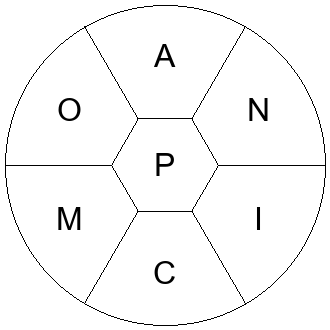
Sunday, January 11, 2026

Answers to yesterday's Bee

Jump to answers for


The official answers for today's puzzle are:

Click on the arrow to show the definition.
Click outside the pop-up to close it.


Number of Pangrams: 1

Maximum Puzzle Score: 153

Number of Answers: 31

Points Needed for Genius: 107

Genius requires between 14 and 27 words. You need at least an 8-letter word to reach genius. If you don't get the pangram, you need 78% of the total points to reach genius. If you get the pangram, you only need 66% of the remaining points to reach genius.

Other days with this pangram:

The button below will reveal a chart with the number of words by each letter. Red bars indicate that there is a pangram(s) starting with that letter.


How does this puzzle compare to other puzzles?

Today's score of 153 was in the 41st percentile of all puzzles.
The last time there was a score this low was on January 5, 2026.
The highest score ever was 537 on January 22, 2021.
The lowest score ever was 47 on March 27, 2023.

This puzzle's 31 possible answers rank it in the 27th percentile of all puzzles.
The last time there were fewer answers than this was on January 2, 2026.
The highest number of answers was 81 on June 8, 2019.
The lowest number of answers was 16 on March 27, 2023.

It takes an 8-letter word for genius.
The last time this happened was on January 10, 2026.

Today's puzzle has an average word length of 5.7.
For all Bees, the average word length has been 5.3.


Haven't I seen these letters before?

Hover over a letter to see its first and most recent appearance in the Bee!


Haven't I seen these words before?

The most common words in the Bee are:

  • noon 227
  • loll 209
  • toot 207
  • naan 189
  • nana 189
  • lilt 150
  • till 150
  • tilt 150
  • nene 148
  • tint 145
  • mama 142
  • mamma 142
  • onion 137
  • onto 136
  • toon 136
  • acacia 134
  • acai 134
  • anal 129
  • anon 128
  • olio 124
  • dodo 120
  • papa 120
  • tact 120
  • baba 119
  • boob 116
  • booboo 116
  • lull 116
  • lulu 116
  • poop 116
  • cocci 114
  • call 112
  • calla 112
  • mitt 112
  • mono 112
  • moon 112
  • tutu 112
  • ratatat 111
  • tart 111
  • tartar 111
  • tattoo 111
  • attar 110
  • loon 109
  • allay 108
  • ally 108
  • ammo 107
  • momma 107
  • tatty 107
  • epee 104
  • peep 104
  • roar 104


How long are words in the Bee?

There have been 112,100 answers ever accepted in the Bee - with 10,894 unique words.
Below are the distributions of the lengths of these words.


Valid dictionary words not in today's official answers

You may be wondering why these words aren't here*:

  • acapnia
  • anopia
  • apimania
  • apocopic
  • campi
  • campion
  • compo
  • impi
  • napa
  • nappa
  • nipa
  • paan
  • paca
  • panino
  • papain
  • pappi
  • pian
  • piani
  • pianic
  • pima
  • pina
  • pinna
  • pinon
  • pion
  • pionic
  • pipa
  • poco
  • pomo
  • pompon
  • poon

*Because the New York Times considers them obscure or offensive.

apian

noun
  1. (very rare) A bee.
adjective
  1. Relating to bees.

camp

Etymology 1

noun
  1. An outdoor place acting as temporary accommodation in tents or other temporary structures.
  2. An organised event, often taking place in tents or temporary accommodation.
  3. A base of a military group, not necessarily temporary.
  4. A single hut or shelter.
  5. The company or body of persons encamped.
  6. A group of people with the same strong ideals or political leanings.
  7. Campus
  8. A summer camp.
  9. A prison.
  10. A mound of earth in which potatoes and other vegetables are stored for protection against frost
  11. Conflict; battle.
  12. An ancient game of football, played in some parts of England.
verb
  1. To live in a tent or similar temporary accommodation.
  2. To set up a camp.
  3. To afford rest or lodging for.
  4. To stay in an advantageous location in a video game, such as next to a power-up's spawning point or in order to guard an area.
  5. To fight; contend in battle or in any kind of contest; to strive with others in doing anything; compete.
  6. To wrangle; argue.

Etymology 2

noun
  1. An affected, exaggerated or intentionally tasteless style.
adjective
  1. Theatrical; making exaggerated gestures.
  2. (of a man) Ostentatiously effeminate.
  3. Intentionally tasteless or vulgar, self-parodying.

campo

Etymology 1

noun
  1. A police officer assigned to a university campus.

Etymology 2

noun
  1. A field or plain in a Spanish- or Portuguese-speaking area.

canopic

No Definition Found.

capo

Etymology 1

noun
  1. A movable bar placed across the fingerboard of a guitar used to raise the pitch of all strings.

Etymology 2

noun
  1. A leader in the Mafia; a caporegime.
  2. A leader and organizer of supporters at a sporting event, particularly association football matches.

capon

noun
  1. A cockerel which has been gelded and fattened for the table.
verb
  1. To castrate; to make a capon of.

cioppino

noun
  1. An Italian-American shellfish and tomato stew.

comp

noun
  1. Clipping of comprehensive layout, a graphic design showing final proposed layout of text and images.
  2. Clipping of comprehensive examination.
  3. Clipping of complimentary ticket or item.
verb
  1. To accompany, in music.
  2. To compose (a visual design); to make a composite.
  3. To provide someone with (a complimentary item, such as a ticket).
  4. To provide a complimentary item, such as a ticket to (someone).
noun
  1. (in bibliographies) Abbreviation of compiled.
noun
  1. Something suitable for comparison.
noun
  1. (grammar) A construction showing a relative quality, in English usually formed by adding more or appending -er. For example, the comparative of green is greener; of evil, more evil.
  2. (grammar) A word in the comparative form.
  3. (chiefly in the plural) Data used to make a comparison.
  4. An equal; a rival; a compeer.
  5. One who makes comparisons; one who affects wit.
noun
  1. Comparison.
  2. An instruction or command that compares two values.
  3. Illustration by comparison; simile.
noun
  1. The act or principle of compensating.
  2. Something which is regarded as an equivalent; something which compensates for loss.
  3. The extinction of debts of which two persons are reciprocally debtors by the credits of which they are reciprocally creditors; the payment of a debt by a credit of equal amount.
  4. A recompense or reward for service.
  5. An equivalent stipulated for in contracts for the sale of real estate, in which it is customary to provide that errors in description, etc., shall not avoid, but shall be the subject of compensation.
  6. The relationship between air temperature outside a building and a calculated target temperature for provision of air or water to contained rooms or spaces for the purpose of efficient heating. In building control systems the compensation curve is defined to a compensator for this purpose.
  7. The ability of one part of the brain to overfunction in order to take over the function of a damaged part (e.g. following a stroke).
noun
  1. The action of competing.
  2. A contest for a prize or award.
  3. The competitors in such a contest.
noun
  1. The act or process of compiling or gathering together from various sources.
  2. That which is compiled; especially, a book or document composed of materials gathering from other books or documents.
  3. Translation of source code into object code by a compiler.
verb
  1. To put together; to assemble; to make by gathering things from various sources.
  2. To construct, build.
  3. To use a compiler to process source code and produce executable code.
  4. To be successfully processed by a compiler into executable code.
  5. To contain or comprise.
  6. To write; to compose.
noun
  1. One who compiles.
  2. A computer program which transforms source code into object code.
adjective
  1. In the nature of a compliment.
  2. Free; provided at no charge.
  3. With respect to the closing of a letter, formal and professional.
noun
  1. A mixture of different components.
  2. A structural material that gains its strength from a combination of complementary materials.
  3. A plant belonging to the family Asteraceae, syn. Compositae.
  4. A function of a function.
  5. (chiefly law enforcement) A drawing, photograph, etc. that combines several separate pictures or images.
noun
  1. A (nonzero) natural number that is expressible as the product of two (or more) natural numbers other than itself and 1.
noun
  1. The act of putting together; assembly.
  2. A mixture or compound; the result of composing.
  3. The proportion of different parts to make a whole.
  4. The general makeup of a thing or person.
  5. An agreement or treaty used to settle differences; later especially, an agreement to stop hostilities; a truce.
  6. A payment of money in order to clear a liability or obligation; a settling or fine.
  7. An agreement or compromise by which a creditor or group of creditors accepts partial payment from a debtor.
  8. An essay.
  9. The formation of compound words from separate words.
  10. A work of music, literature or art.
  11. Typesetting.
  12. Applying a function to the result of another.
  13. The compounding of two velocities or forces into a single equivalent velocity or force.
  14. Consistency; accord; congruity.
  15. Synthesis as opposed to analysis.
  16. The arrangement and flow of elements in a picture.
  17. Way to combine simple objects or data types into more complex ones.
noun
  1. A person who sets type; a typesetter.
  2. One who, or that which, composes or sets in order.
noun
  1. A normal secondary school, accepting pupils of all abilities; replaced the secondary modern schools and grammar schools
noun
  1. The chief accountant of a company or government.
noun
  1. A person employed to perform computations; one who computes.
  2. (by restriction) A male computer, where the female computer is called a computress.
  3. A programmable electronic device that performs mathematical calculations and logical operations, especially one that can process, store and retrieve large amounts of data very quickly; now especially, a small one for personal or home use employed for manipulating text or graphics, accessing the Internet, or playing games or media.
noun
  1. The study of computers and their architecture, languages, and applications, in all aspects, as well as the mathematical structures that relate to computers and computation.

companion

noun
  1. A friend, acquaintance, or partner; someone with whom one spends time or keeps company
  2. A person employed to accompany or travel with another.
  3. The framework on the quarterdeck of a sailing ship through which daylight entered the cabins below.
  4. The covering of a hatchway on an upper deck which leads to the companionway; the stairs themselves.
  5. A knot in whose neighborhood another, specified knot meets every meridian disk.
  6. A thing or phenomenon that is closely associated with another thing, phenomenon, or person.
  7. An appended source of media or information, designed to be used in conjunction with and to enhance the main material.
  8. A celestial object that is associated with another.
  9. A knight of the lowest rank in certain orders.
  10. A fellow; a rogue.
verb
  1. To be a companion to; to attend on; to accompany.
  2. To qualify as a companion; to make equal.

coop

Etymology 1

noun
  1. A basket, pen or enclosure for birds or small animals.
  2. A wickerwork basket (kipe) or other enclosure for catching fish.
  3. A narrow place of confinement, a cage; a jail, a prison.
  4. A barrel or cask for holding liquids.
verb
  1. To keep in a coop.
  2. To shut up or confine in a narrow space; to cramp.
  3. To unlawfully confine one or more voters to prevent them from casting their ballots in an election.
  4. (law enforcement) Of a police officer: to sleep or relax while on duty.
  5. To make or repair barrels, casks and other wooden vessels; to work upon in the manner of a cooper.

Etymology 2

noun
  1. A cart with sides and ends made from boards, enabling it to carry manure, etc.
  2. A cart which opens at the back to release its load; a tumbril.

Etymology 3

noun
  1. A small heap.

Etymology 4

noun
  1. A unit of a housing co-operative; a purchased apartment where the apartment owners collectively are responsible for maintenance of common areas and upkeep.
  2. Any co-operative, including housing, retail, utility, agricultural, banking or worker cooperatives.
  3. Any shop owned by a co-operative.
  4. A co-operative game, as opposed to a competitive game or deathmatch.

minicamp

noun
  1. A short training session for members of a professional sports team, held before the main preseason training

nincompoop

noun
  1. A foolish or silly person.

opinion

noun
  1. A subjective belief, judgment or perspective that a person has formed about a topic, issue, person or thing.
  2. The judgment or sentiment which the mind forms of persons or things; estimation.
  3. Favorable estimation; hence, consideration; reputation; fame; public sentiment or esteem.
  4. Obstinacy in holding to one's belief or impression; opiniativeness; conceitedness.
  5. The formal decision, or expression of views, of a judge, an umpire, a doctor, or other party officially called upon to consider and decide upon a matter or point submitted.
  6. (European Union law) a judicial opinion delivered by an Advocate General to the European Court of Justice where he or she proposes a legal solution to the cases for which the court is responsible
verb
  1. To have or express as an opinion.

pain

Etymology 1

noun
  1. An ache or bodily suffering, or an instance of this; an unpleasant sensation, resulting from a derangement of functions, disease, or injury by violence; hurt.
  2. The condition or fact of suffering or anguish especially mental, as opposed to pleasure; torment; distress
  3. (from pain in the neck) An annoying person or thing.
  4. Suffering inflicted as punishment or penalty.
  5. (chiefly in the plural) Labour; effort; great care or trouble taken in doing something.
verb
  1. To hurt; to put to bodily uneasiness or anguish; to afflict with uneasy sensations of any degree of intensity; to torment; to torture.
  2. To render uneasy in mind; to disquiet; to distress; to grieve.
  3. To inflict suffering upon as a penalty; to punish.

Etymology 2

noun
  1. Any of various breads stuffed with a filling.

pampa

No Definition Found.

panama

No Definition Found.

panic

Etymology 1

noun
  1. Overpowering fright, often affecting groups of people or animals.
  2. Rapid reduction in asset prices due to broad efforts to raise cash in anticipation of continuing decline in asset prices.
  3. A kernel panic or system crash.
verb
  1. To feel overwhelming fear.
  2. To cause somebody to panic.
  3. (by extension) To crash.
  4. (by extension) To cause the system to crash.
adjective
  1. Pertaining to the god Pan.
  2. Of fear, fright etc: sudden or overwhelming (attributed by the ancient Greeks to the influence of Pan).

Etymology 2

noun
  1. A plant of the genus Panicum.

panini

noun
  1. A type of grilled sandwich made of a small loaf of bread, cut horizontally, filled with meat such as salami or ham, cheese or other food.

papa

noun
  1. Dad, daddy, father; a familiar or old-fashioned term of address to one’s father.
  2. A pet name for one's grandfather.
  3. A parish priest in the Greek Orthodox Church.
  4. The letter P in the ICAO spelling alphabet.

piano

Etymology 1

noun
  1. A percussive keyboard musical instrument, usually ranging over seven octaves, with white and black colored keys, played by pressing these keys, causing hammers to strike strings
adjective
  1. Soft, quiet
  2. In extended use; quiet, subdued

Etymology 2

adverb
  1. Softly, as a musical direction (abbreviated to p. in sheet music)

pica

Etymology 1

noun
  1. A disorder characterized by craving and appetite for non-edible substances, such as ice, clay, chalk, dirt, or sand.

Etymology 2

noun
  1. A size of type between small pica and English, standardized as 12-point.
  2. (usually with qualifier) A font of this size.
  3. A unit of length equivalent to 12 points, officially 35/83 cm (0.166 in) after 1886 but now 1/6 in.
  4. A pie or directory: the book directing Roman Catholic observance of saints' days and other feasts under various calendars.

Etymology 3

noun
  1. Any of several small, furry mammals, similar to guinea pigs, but related to rabbits, of the family Ochotonidae, from the mountains of North America and Asia.

Etymology 4

noun
  1. A magpie.

picnic

noun
  1. An informal social gathering, usually in a natural outdoor setting, to which the participants bring their own food and drink.
  2. The meal eaten at such a gathering.
  3. An easy or pleasant task.
  4. An entertainment at which each person contributed some dish to a common table.
verb
  1. To take part in a picnic.

pimp

Etymology 1

noun
  1. Someone who solicits customers for prostitution and acts as manager for a group of prostitutes; a pander.
  2. A man who can easily attract women.
verb
  1. To act as a procurer of prostitutes; to pander.
  2. To prostitute someone.
  3. To excessively customize something, especially a vehicle, according to ghetto standards (also pimp out).
  4. To ask progressively harder and ultimately unanswerable questions of a resident or medical student (said of a senior member of the medical staff).
  5. To promote, to tout.
  6. To persuade, smooth talk or trick another into doing something for your benefit.
adjective
  1. Excellent, fashionable, stylish

Etymology 2

numeral
  1. Five in Cumbrian and Welsh sheep counting

pinion

Etymology 1

noun
  1. A wing.
  2. The joint of a bird's wing farthest from the body.
  3. Any of the outermost primary feathers on a bird's wing.
  4. A moth of the genus Lithophane.
  5. A fetter for the arm.
verb
  1. To cut off the pinion of a bird’s wing, or otherwise disable or bind its wings, in order to prevent it from flying.
  2. To bind the arms of someone, so as to deprive him of their use; to disable by so binding.
  3. (transferred sense) To restrain; to limit.

Etymology 2

noun
  1. The smallest gear in a gear train.

pippin

Etymology 1

noun
  1. A seed

Etymology 2

noun
  1. Any of several varieties of eating apple that have a yellow or green skin with patches of red
  2. Any of several roundish or oblate apple varieties
  3. An apple tree raised from a seed (not grafted)

poinciana

noun
  1. A tropical shrub with bright orange-red flowers

pomp

noun
  1. Show of magnificence; parade; display; power.
  2. A procession distinguished by ostentation and splendor; a pageant.
verb
  1. To make a pompous display; to conduct.

pompano

noun
  1. Any of various carangid fish, of the genus Trachinotus or species Alectis ciliaris, the African pompano, from coastal parts of the North Atlantic.
  2. An edible butterfish, Peprilus simillimus, the Pacific pompano.

pompom

noun
  1. A decorative ball made of pieces of soft fabric bound at the centre, most notably used in cheerleading.

poop

Etymology 1

noun
  1. Fecal matter, feces.
  2. The sound of a steam engine's whistle; typically low pitch.
verb
  1. To make a short blast on a horn
  2. To break wind.
  3. To defecate.

Etymology 2

noun
  1. A set of data or general information, written or spoken, usually concerning machinery or a process.

Etymology 3

verb
  1. To tire, exhaust. Often used with out.

Etymology 4

noun
  1. The stern of a ship.
  2. The poop deck.
verb
  1. To break seawater with the poop of a vessel, especially the poop deck.
  2. To embark a ship over the stern.

Etymology 5

noun
  1. A slothful person.

poppa

noun
  1. (sometimes childish) father, papa.