Monday, January 12, 2026

Answers to yesterday's Bee

Jump to answers for


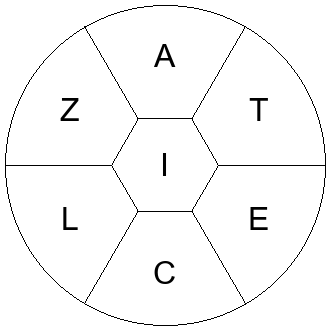
The official answers for today's puzzle are:

Click on the arrow to show the definition.
Click outside the pop-up to close it.


Number of Pangrams: 1

Maximum Puzzle Score: 223

Number of Answers: 46

Points Needed for Genius: 156

Genius requires between 23 and 39 words. You need at least a 7-letter word to reach genius. If you don't get the pangram, you need 75% of the total points to reach genius. If you get the pangram, you only need 68% of the remaining points to reach genius.

Other days with this pangram:

The button below will reveal a chart with the number of words by each letter. Red bars indicate that there is a pangram(s) starting with that letter.


How does this puzzle compare to other puzzles?

Today's score of 223 was in the 73rd percentile of all puzzles.
The last time there was a score this high was on January 10, 2026.
The highest score ever was 537 on January 22, 2021.
The lowest score ever was 47 on March 27, 2023.

This puzzle's 46 possible answers rank it in the 66th percentile of all puzzles.
The last time there were more answers than this was on January 10, 2026.
The highest number of answers was 81 on June 8, 2019.
The lowest number of answers was 16 on March 27, 2023.

It takes a 7-letter word for genius.
The last time this happened was on January 9, 2026.

Today's puzzle has an average word length of 5.5.
For all Bees, the average word length has been 5.3.


Haven't I seen these letters before?

Hover over a letter to see its first and most recent appearance in the Bee!


Haven't I seen these words before?

The most common words in the Bee are:

  • noon 227
  • loll 209
  • toot 207
  • naan 189
  • nana 189
  • lilt 151
  • till 151
  • tilt 151
  • nene 148
  • tint 145
  • mama 142
  • mamma 142
  • onion 137
  • onto 136
  • toon 136
  • acacia 135
  • acai 135
  • anal 129
  • anon 128
  • olio 124
  • dodo 120
  • papa 120
  • tact 120
  • baba 119
  • boob 116
  • booboo 116
  • lull 116
  • lulu 116
  • poop 116
  • cocci 114
  • call 112
  • calla 112
  • mitt 112
  • mono 112
  • moon 112
  • tutu 112
  • ratatat 111
  • tart 111
  • tartar 111
  • tattoo 111
  • attar 110
  • loon 109
  • allay 108
  • ally 108
  • ammo 107
  • momma 107
  • tatty 107
  • epee 104
  • peep 104
  • roar 104


How long are words in the Bee?

There have been 112,146 answers ever accepted in the Bee - with 10,894 unique words.
Below are the distributions of the lengths of these words.


Valid dictionary words not in today's official answers

You may be wondering why these words aren't here*:

  • aalii
  • acatalectic
  • aecia
  • aecial
  • alcaic
  • allelic
  • atactic
  • atelic
  • atticize
  • calcic
  • calcitic
  • calicle
  • catalatic
  • catalectic
  • cattie
  • ceil
  • ceili
  • cicala
  • cicale
  • ciliate
  • cilice
  • clit
  • clitella
  • clitic
  • cliticize
  • ectatic
  • etic
  • ictic
  • ilea
  • ileac
  • ileal
  • ilia
  • ilial
  • illite
  • illitic
  • lati
  • latilla
  • lezzie
  • litai
  • taille
  • tattie
  • tectite
  • telia
  • telial
  • telic
  • tical
  • tictac
  • tillite
  • titi
  • tittie
  • tizz
  • tzitzit
  • zetetic
  • zill
  • zizit
  • zizz
  • zizzle

*Because the New York Times considers them obscure or offensive.

acacia

Etymology 1

noun
  1. A shrub or tree of the tribe Acacieae.
  2. The thickened or dried juice of several species in Acacieae, in particular Vachellia nilotica (syn. Acacia nilotica), the Egyptian acacia.
  3. A false acacia; robinia tree, Robinia pseudoacacia.
  4. Gum arabic; gum acacia.
  5. Any of several related trees, such as the locust tree.
  6. A light to moderate greenish yellow with a hint of red.

Etymology 2

noun
  1. (history) A roll or bag, filled with dust, borne by Byzantine emperors, as a memento of mortality. It is represented on medals.

acai

noun
  1. Any of several South American palms, of the genus Euterpe, having a dark purple drupe.
  2. The fruit of these trees, harvested for its juice.

acetic

adjective
  1. Of, pertaining to, or producing vinegar
  2. Of or pertaining to acetic acid or its derivatives

alit

No Definition Found.

atilt

adjective
  1. At an angle from the vertical or horizontal.
adverb
  1. At an angle from the vertical or horizontal; at the point of falling over.
  2. Tilting or as if tilting (charging with a lance, like a knight on horseback in a joust).
preposition
  1. Diagonally over or across.

attic

noun
  1. The space, often unfinished and with sloped walls, directly below the roof in the uppermost part of a house or other building, generally used for storage or habitation.

cacti

noun
  1. Any member of the family Cactaceae, a family of flowering New World succulent plants suited to a hot, semi-desert climate.
  2. Any succulent plant with a thick fleshy stem bearing spines but no leaves, such as euphorbs.

calcite

noun
  1. A very widely distributed crystalline form of calcium carbonate, CaCO3, found as limestone, chalk and marble

cattail

noun
  1. Any of several perennial herbs, of the genus Typha, that have long flat leaves, and grow in marshy places

celiac

noun
  1. Someone who has celiac disease.
adjective
  1. Of, pertaining to or located within the abdomen or abdominal cavity.
  2. Of or pertaining to celiac disease.

celli

No Definition Found.

cilia

noun
  1. Hairs or similar protrusions along the margin of a plant organ.
  2. A hairlike organelle projecting from a eukaryotic cell (such as a unicellular organism or one cell of a multicelled organism). These structures serve either for locomotion by moving or as sensors.
  3. One of the fine hairs along an insect's wing.

cite

Etymology 1

verb
  1. To quote; to repeat, as a passage from a book, or the words of another.
  2. To list the source(s) from which one took information, words or literary or verbal context.
  3. To summon officially or authoritatively to appear in court.

Etymology 2

noun
  1. A citation

eclectic

noun
  1. Someone who selects according to the eclectic method.
adjective
  1. Selecting a mixture of what appears to be best of various doctrines, methods or styles.
  2. Unrelated and unspecialized; heterogeneous.

elicit

verb
  1. To evoke, educe (emotions, feelings, responses, etc.); to generate, obtain, or provoke as a response or answer.
  2. To draw out, bring out, bring forth (something latent); to obtain information from someone or something.
  3. To use logic to arrive at truth; to derive by reason
adjective
  1. Elicited; drawn out; made real; open; evident.

elite

noun
  1. A special group or social class of people which have a superior intellectual, social or economic status as, the elite of society.
  2. Someone who is among the best at a certain task.
adjective
  1. Of high birth or social position; aristocratic or patrician.
  2. Representing the choicest or most select of a group.

icicle

noun
  1. A drooping, tapering shape of ice.

iliac

adjective
  1. Of or pertaining to the ilium.

illicit

noun
  1. A banned or unlawful item.
adjective
  1. Not approved by law, but not invalid.
  2. Breaking social norms.
  3. Unlawful.

italic

noun
  1. A typeface in which the letters slant to the right.
  2. An oblique handwriting style, such as used by Italian calligraphers of the Renaissance.
adjective
  1. (of a typeface or font) Designed to resemble a handwriting style developed in Italy in the 16th century.
  2. (of a typeface or font) Having letters that slant or lean to the right; oblique.

italicize

verb
  1. To put into italics.
  2. To emphasize.

lactic

adjective
  1. Of, relating to, or derived from milk
  2. (of fermentation) That produces lactic acid

laic

noun
  1. A layperson, as opposed to a member of the clergy.
adjective
  1. Lay, relating to laypersons, as opposed to clerical.

laical

No Definition Found.

laicize

verb
  1. To convert from church controlled to independent of the church; to secularize.
  2. To reduce from clergy to layman.
  3. To convert to lay status.

lattice

noun
  1. A flat panel constructed with widely-spaced crossed thin strips of wood or other material, commonly used as a garden trellis.
  2. A bearing with vertical and horizontal bands that cross each other.
  3. A regular spacing or arrangement of geometric points, often decorated with a motif.
  4. A discrete subgroup of Rn which is isomorphic to Zn (considered as an additive group) and spans the real vector space Rn.
  5. A model of the tuning relationships of a just intonation system, comprising an array of points in a periodic multidimensional pattern.
  6. (Lie theory) A discrete subgroup L of a given locally compact group G whose quotient space G/L has finite invariant measure.
  7. A partially ordered set in which every pair of elements has a unique supremum and a unique infimum.
verb
  1. To make a lattice of.
  2. To close, as an opening, with latticework; to furnish with a lattice.

lice

noun
  1. A small parasitic wingless insect of the order Psocodea.
  2. (not usually used in plural form) A contemptible person; one who is deceitful or causes harm.

licit

adjective
  1. Not forbidden by formal or informal rules.
  2. Explicitly established or constituted by law.

lilac

noun
  1. A large shrub of the genus Syringa, especially Syringa vulgaris, bearing white, pale-pink or purple flowers.
  2. A flower of the lilac shrub.
  3. (color) A pale purple color, the color of some lilac flowers.
adjective
  1. Having a pale purple colour.

lilt

noun
  1. Animated, brisk motion; spirited rhythm; sprightliness.
  2. A lively song or dance; a cheerful tune.
  3. A cheerful or melodious accent when speaking.
verb
  1. To do something rhythmically, with animation and quickness, usually of music.
  2. To sing cheerfully, especially in Gaelic.
  3. To utter with spirit, animation, or gaiety; to sing with spirit and liveliness.

lite

Etymology 1

noun
  1. Visible electromagnetic radiation. The human eye can typically detect radiation (light) in the wavelength range of about 400 to 750 nanometers. Nearby shorter and longer wavelength ranges, although not visible, are commonly called ultraviolet and infrared light.
  2. A source of illumination.
  3. Spiritual or mental illumination; enlightenment, useful information.
  4. (in the plural) Facts; pieces of information; ideas, concepts.
  5. A notable person within a specific field or discipline.
  6. The manner in which the light strikes a picture; that part of a picture which represents those objects upon which the light is supposed to fall; the more illuminated part of a landscape or other scene; opposed to shade.
  7. A point of view, or aspect from which a concept, person or thing is regarded.
  8. A flame or something used to create fire.
  9. A firework made by filling a case with a substance which burns brilliantly with a white or coloured flame.
  10. A window, or space for a window in architecture.
  11. The series of squares reserved for the answer to a crossword clue.
  12. A cross-light in a double acrostic or triple acrostic.
  13. Open view; a visible state or condition; public observation; publicity.
  14. The power of perception by vision.
  15. The brightness of the eye or eyes.
  16. A traffic light, or, by extension, an intersection controlled by one or more that will face a traveler who is receiving instructions.
adjective
  1. Having light; bright; clear; not dark or obscure.
  2. Pale or whitish in color; highly luminous and more or less deficient in chroma.
  3. (of coffee) Served with extra milk or cream.
noun
  1. A stone that is not thrown hard enough.
  2. See lights.
adjective
  1. Having little or relatively little actual weight; not cumbrous or unwieldy.
  2. Having little weight as compared with bulk; of little density or specific gravity.
  3. Of short or insufficient weight; weighing less than the legal, standard or proper amount; clipped or diminished.
  4. Lacking that which burdens or makes heavy.
  5. Not heavy or soggy; spongy; well raised.
  6. Gentle; having little force or momentum.
  7. Easy to endure or perform.
  8. Low in fat, calories, alcohol, salt, etc.
  9. Unimportant, trivial, having little value or significance.
  10. Unchaste, wanton.
  11. Not encumbered; unembarrassed; clear of impediments; hence, active; nimble; swift.
  12. Easily influenced by trifling considerations; unsteady; unsettled; volatile.
  13. Indulging in, or inclined to, levity; lacking dignity or solemnity; frivolous; airy.
  14. Not quite sound or normal; somewhat impaired or deranged; dizzy; giddy.
  15. Easily interrupted by stimulation.
adjective
  1. Light in composition, notably low in fat, calories etc. Most commonly used commercially.
  2. Lightweight
  3. (usually used postpositively) Lacking substance or seriousness; watered down.

Etymology 2

noun
  1. A little, bit.
adjective
  1. Few; little

Etymology 3

noun
  1. The act of waiting; a wait.
verb
  1. To expect; wait.
  2. To rely.

little

noun
  1. A small amount.
adjective
  1. Small in size.
  2. Insignificant, trivial.
  3. Very young.
  4. (of a sibling) Younger.
  5. (also Little) Used with the name of a place, especially of a country or its capital, to denote a neighborhood whose residents or storekeepers are from that place.
  6. Small in amount or number, having few members.
  7. Short in duration; brief.
  8. Small in extent of views or sympathies; narrow; shallow; contracted; mean; illiberal; ungenerous.
adverb
  1. Not much.
  2. Not at all.
pronoun
  1. Not much; not a large amount.

tacit

adjective
  1. Expressed in silence; implied, but not made explicit; silent.
  2. Not derived from formal principles of reasoning; based on induction rather than deduction.

tactic

noun
  1. A maneuver, or action calculated to achieve some end.
  2. A maneuver used against an enemy.
  3. A sequence of moves that limits the opponent's options and results in an immediate and tangible advantage, typically in the form of material.
adjective
  1. Tactical; of or relating to the art of military and naval tactics.
  2. Describing a polymer whose repeat units are identical.

tactical

noun
  1. A combinator of proof tactics.
  2. A private war reenactment event involving mock battles or skirmishes.
adjective
  1. Of, or relating to tactics
  2. Of, or relating to military operations that are smaller or more local than strategic ones
  3. Adroit, skilful or ingenious
  4. Having a military appearance, typically with accessories such as a bipod, adjustable stock, detachable magazine or black coloration

tactile

adjective
  1. Tangible; perceptible to the sense of touch.
  2. Used for feeling.
  3. Of or relating to the sense of touch.

tail

Etymology 1

noun
  1. The caudal appendage of an animal that is attached to its posterior and near the anus.
  2. An object or part of an object resembling a tail in shape, such as the thongs on a cat-o'-nine-tails.
  3. The back, last, lower, or inferior part of anything.
  4. The feathers attached to the pygostyle of a bird.
  5. The tail-end of an object, e.g. the rear of an aircraft's fuselage, containing the tailfin.
  6. The rear structure of an aircraft, the empennage.
  7. The visible stream of dust and gases blown from a comet by the solar wind.
  8. The latter part of a time period or event, or (collectively) persons or objects represented in this part.
  9. The part of a distribution most distant from the mode; as, a long tail.
  10. One who surreptitiously follows another.
  11. The lower order of batsmen in the batting order, usually specialist bowlers.
  12. The lower loop of the letters in the Roman alphabet, as in g, q or y.
  13. (chiefly in the plural) The side of a coin not bearing the head; normally the side on which the monetary value of the coin is indicated; the reverse.
  14. All the last terms of a sequence, from some term on.
  15. The buttocks or backside.
  16. The penis of a person or animal.
  17. Sexual intercourse.
  18. (kayaking) The stern; the back of the kayak.
  19. A train or company of attendants; a retinue.
  20. The distal tendon of a muscle.
  21. A filamentous projection on the tornal section of each hind wing of certain butterflies.
  22. A downy or feathery appendage of certain achens, formed of the permanent elongated style.
  23. A portion of an incision, at its beginning or end, which does not go through the whole thickness of the skin, and is more painful than a complete incision; called also tailing.
  24. One of the strips at the end of a bandage formed by splitting the bandage one or more times.
  25. A rope spliced to the strap of a block, by which it may be lashed to anything.
  26. The part of a note which runs perpendicularly upward or downward from the head; the stem.
  27. A tailing.
  28. The bottom or lower portion of a member or part such as a slate or tile.
  29. A tailcoat.
verb
  1. To follow and observe surreptitiously.
  2. To hold by the end; said of a timber when it rests upon a wall or other support; with in or into
  3. To swing with the stern in a certain direction; said of a vessel at anchor.
  4. To follow or hang to, like a tail; to be attached closely to, as that which can not be evaded.
  5. To pull or draw by the tail.

Etymology 2

noun
  1. Limitation of inheritance to certain heirs.
adjective
  1. Limited; abridged; reduced; curtailed.

tali

noun
  1. The bone of the ankle.

tallit

No Definition Found.

tile

Etymology 1

noun
  1. A regularly-shaped slab of clay or other material, affixed to cover or decorate a surface, as in a roof-tile, glazed tile, stove tile, carpet tile etc.
  2. A rectangular graphic.
  3. Any of various flat cuboid playing pieces used in certain games, such as dominoes, Scrabble, or mahjong.
  4. A stiff hat.
verb
  1. To cover with tiles.
  2. To arrange in a regular pattern, with adjoining edges (applied to tile-like objects, graphics, windows in a computer interface).
  3. To optimize (a loop in program code) by means of the tiling technique.

Etymology 2

verb
  1. To protect from the intrusion of the uninitiated.

till

Etymology 1

preposition
  1. Until; to, up to; as late as (a given time).
  2. To, up to (physically).
  3. To make it possible that.
conjunction
  1. Until, until the time that.

Etymology 2

noun
  1. A cash register.
  2. A removable box within a cash register containing the money.
  3. The contents of a cash register, for example at the beginning or end of the day or of a cashier's shift.
  4. A tray or drawer in a chest.

Etymology 3

verb
  1. To develop so as to improve or prepare for usage; to cultivate (said of knowledge, virtue, mind etc.).
  2. To work or cultivate or plough (soil); to prepare for growing vegetation and crops.
  3. To cultivate soil.
  4. To prepare; to get.

Etymology 4

noun
  1. Glacial drift consisting of a mixture of clay, sand, pebbles and boulders
  2. Manure or other material used to fertilize land

Etymology 5

noun
  1. A vetch; a tare.

tilt

Etymology 1

noun
  1. A slope or inclination.
  2. The inclination of part of the body, such as backbone, pelvis, head, etc.
  3. The controlled vertical movement of a camera, or a device to achieve this.
  4. A jousting contest.
  5. An attempt at something, such as a tilt at public office.
  6. A thrust, as with a lance.
  7. A tilt hammer.
verb
  1. To slope or incline (something); to slant.
  2. (jousting) To charge (at someone) with a lance.
  3. To be at an angle.
  4. To point or thrust a weapon at.
  5. To point or thrust (a weapon).
  6. To forge (something) with a tilt hammer.
  7. To play worse than usual (often as a result of previous bad luck or losses).
  8. (of a machine) To intentionally let the ball fall down to the drain by disabling flippers and most targets, done as a punishment to the player when the machine is nudged too violently or frequently.

Etymology 2

noun
  1. A canvas covering for carts, boats, etc.
  2. Any covering overhead; especially, a tent.
verb
  1. To cover with a tilt, or awning.

titillate

verb
  1. To stimulate or excite sensually

title

noun
  1. A prefix (honorific) or suffix (post-nominal) added to a person's name to signify either veneration, official position or a professional or academic qualification. See also
  2. Legal right to ownership of a property; a deed or other certificate proving this.
  3. In canon law, that by which a beneficiary holds a benefice.
  4. A church to which a priest was ordained, and where he was to reside.
  5. The name of a book, film, musical piece, painting, or other work of art.
  6. A publication.
  7. A section or division of a subject, as of a law or a book.
  8. (chiefly in the plural) A written title, credit, or caption shown with a film, video, or performance.
  9. The panel for the name, between the bands of the back of a book.
  10. The subject of a writing; a short phrase that summarizes the entire topic.
  11. A division of an act of law
  12. The recognition given to the winner of a championship in sports.
verb
  1. To assign a title to; to entitle.

tittle

Etymology 1

noun
  1. A small, insignificant amount (of something); a modicum or speck.
  2. Any small dot, stroke, or diacritical mark, especially if part of a letter, or if a letter-like abbreviation; in particular, the dots over the Latin letters i and j.

Etymology 2

verb
  1. To chatter.

ziti

noun
  1. A type of penne pasta in the form of long smooth hollow tubes.