Thursday, January 15, 2026

Answers to yesterday's Bee

Jump to answers for


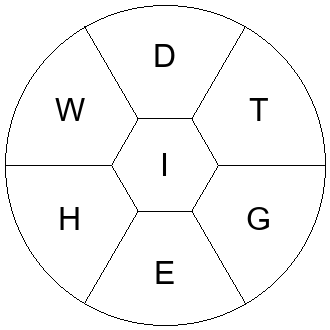
The official answers for today's puzzle are:

Click on the arrow to show the definition.
Click outside the pop-up to close it.


Number of Pangrams: 1

Maximum Puzzle Score: 165

Number of Answers: 37

Points Needed for Genius: 115

Genius requires between 18 and 31 words. You need at least a 6-letter word to reach genius. If you don't get the pangram, you need 77% of the total points to reach genius. If you get the pangram, you only need 67% of the remaining points to reach genius.

Other days with this pangram:

The button below will reveal a chart with the number of words by each letter. Red bars indicate that there is a pangram(s) starting with that letter.


How does this puzzle compare to other puzzles?

Today's score of 165 was in the 47th percentile of all puzzles.
The last time there was a score this low was on January 11, 2026.
The highest score ever was 537 on January 22, 2021.
The lowest score ever was 47 on March 27, 2023.

This puzzle's 37 possible answers rank it in the 44th percentile of all puzzles.
The last time there were fewer answers than this was on January 11, 2026.
The highest number of answers was 81 on June 8, 2019.
The lowest number of answers was 16 on March 27, 2023.

It takes a 6-letter word for genius.
The last time this happened was on January 14, 2026.

Today's puzzle has an average word length of 5.2.
For all Bees, the average word length has been 5.3.


Haven't I seen these letters before?

Hover over a letter to see its first and most recent appearance in the Bee!


Haven't I seen these words before?

The most common words in the Bee are:

  • noon 227
  • loll 210
  • toot 207
  • naan 189
  • nana 189
  • lilt 151
  • till 151
  • tilt 151
  • nene 148
  • tint 145
  • mama 142
  • mamma 142
  • onion 137
  • onto 136
  • toon 136
  • acacia 135
  • acai 135
  • anal 129
  • anon 128
  • olio 124
  • dodo 120
  • papa 120
  • tact 120
  • baba 119
  • boob 117
  • booboo 117
  • poop 117
  • lull 116
  • lulu 116
  • cocci 114
  • mitt 113
  • call 112
  • calla 112
  • mono 112
  • moon 112
  • tutu 112
  • ratatat 111
  • tart 111
  • tartar 111
  • tattoo 111
  • attar 110
  • loon 109
  • allay 108
  • ally 108
  • ammo 107
  • momma 107
  • tatty 107
  • epee 104
  • meme 104
  • peep 104


How long are words in the Bee?

There have been 112,281 answers ever accepted in the Bee - with 10,894 unique words.
Below are the distributions of the lengths of these words.


Valid dictionary words not in today's official answers

You may be wondering why these words aren't here*:

  • didie
  • digged
  • dight
  • dighted
  • dite
  • eide
  • giddied
  • gied
  • gighe
  • gite
  • gitted
  • heigh
  • heighth
  • hided
  • hied
  • hight
  • highted
  • highth
  • igged
  • teiid
  • thighed
  • titi
  • tittie
  • twigged
  • twitted
  • whid
  • whidded
  • whig
  • whited
  • widdie
  • wite
  • wited
  • withe
  • withed
  • witted

*Because the New York Times considers them obscure or offensive.

died

verb
  1. To stop living; to become dead; to undergo death.
  2. To (stop living and) undergo (a specified death).
  3. To yearn intensely.
  4. To be or become hated or utterly ignored or cut off, as if dead.
  5. To become spiritually dead; to lose hope.
  6. To be mortified or shocked by a situation.
  7. To be so overcome with emotion or laughter as to be incapacitated.
  8. (of a machine) To stop working, to break down.
  9. (of a computer program) To abort, to terminate (as an error condition).
  10. To perish; to cease to exist; to become lost or extinct.
  11. To sink; to faint; to pine; to languish, with weakness, discouragement, love, etc.
  12. (often with "to") To become indifferent; to cease to be subject.
  13. To disappear gradually in another surface, as where mouldings are lost in a sloped or curved face.
  14. To become vapid, flat, or spiritless, as liquor.
  15. (of a stand-up comedian or a joke) To fail to evoke laughter from the audience.
verb
  1. To colour with dye, or as if with dye.

diet

Etymology 1

noun
  1. The food and beverage a person or animal consumes.
  2. A controlled regimen of food and drink, as to gain or lose weight or otherwise influence health.
  3. (by extension) Any habitual intake or consumption.
adjective
  1. (of a food or beverage) Containing less fat, salt, sugar, or calories than normal, or claimed to have such.
  2. Having certain traits subtracted.

Etymology 2

verb
  1. To regulate the food of (someone); to put on a diet.
  2. To modify one's food and beverage intake so as to decrease or increase body weight or influence health.
  3. To eat; to take one's meals.
  4. To cause to take food; to feed.

Etymology 3

noun
  1. (usually capitalized as a proper noun) A council or assembly of leaders; a formal deliberative assembly.
  2. A session of exams
  3. The proceedings under a criminal libel.
  4. A clerical or ecclesiastical function in Scotland.

dieted

verb
  1. To regulate the food of (someone); to put on a diet.
  2. To modify one's food and beverage intake so as to decrease or increase body weight or influence health.
  3. To eat; to take one's meals.
  4. To cause to take food; to feed.

digit

noun
  1. A stage of proficiency or qualification in a course of study, now especially an award bestowed by a university or, in some countries, a college, as a certification of academic achievement. (In the United States, can include secondary schools.)
  2. A unit of measurement of angle equal to 1/360 of a circle's circumference.
  3. A unit of measurement of temperature on any of several scales, such as Celsius or Fahrenheit.
  4. The sum of the exponents of a term; the order of a polynomial.
  5. The dimensionality of a field extension.
  6. The number of edges that a vertex takes part in; a valency.
  7. The number of logical connectives in a formula.
  8. The curvature of a circular arc, expressed as the angle subtended by a fixed length of arc or chord.
  9. A unit of measurement of latitude and longitude which together identify a location on the Earth's surface.
  10. (grammar) Any of the three stages (positive, comparative, superlative) in the comparison of an adjective or an adverb.
  11. (obsolete outside heraldry) A step on a set of stairs; the rung of a ladder.
  12. An individual step, or stage, in any process or scale of values.
  13. A stage of rank or privilege; social standing.
  14. (genealogy) A ‘step’ in genealogical descent.
  15. One's relative state or experience; way, manner.
  16. The amount that an entity possesses a certain property; relative intensity, extent.
noun
  1. The whole numbers from 0 to 9 and the Arabic numerals representing them, which are combined to represent base-ten numbers.
  2. A distinct symbol representing one of an arithmetic progression of numbers between 0 and the radix.
  3. 1/12 the apparent diameter of the sun or moon, as a measure of the totality of an eclipse.
  4. A unit of length notionally based upon the width of an adult human finger, standardized differently in various places and times, the English digit of 1/16 foot (about 1.9 cm).
  5. A narrow extremity of the human hand or foot: a finger, thumb, or toe.
  6. Similar or similar-looking structures in other animals.
verb
  1. To point at or point out with the finger.
noun
  1. A unit of length equal to one twelfth of a foot, or exactly 2.54 centimetres.
  2. The amount of water which would cover a surface to the depth of an inch, used as a measurement of rainfall.
  3. The amount of an alcoholic beverage which would fill a glass or bottle to the depth of an inch.
  4. A very short distance.
noun
  1. A small island

eddied

verb
  1. To form an eddy; to move in, or as if in, an eddy; to move in a circle.

edit

noun
  1. A change to the text of a document.
  2. A change in the text of a file, a website or the code of software.
  3. An interruption or change to an improvised scene.
  4. An alteration to the DNA sequence of a chromosome; an act of gene splicing.
verb
  1. To change a text, or a document.
  2. To be the editor of a publication.
  3. To change the contents of a file, website, etc.
  4. To alter the DNA sequence of a chromosome; to perform gene splicing.
  5. To alter a film by cutting and splicing frames.
  6. To cut short or otherwise alter an improvised scene.
  7. To lend itself to editing in a certain way.

edited

verb
  1. To change a text, or a document.
  2. To be the editor of a publication.
  3. To change the contents of a file, website, etc.
  4. To alter the DNA sequence of a chromosome; to perform gene splicing.
  5. To alter a film by cutting and splicing frames.
  6. To cut short or otherwise alter an improvised scene.
  7. To lend itself to editing in a certain way.
adjective
  1. Having been altered from the original version.

eight

Etymology 1

noun
  1. The digit/figure 8.
  2. Any of the four cards in a normal deck with the value eight.
  3. A light, narrow rowing boat, especially one used in competitive rowing, steered by a cox, in which eight rowers each have two oars.
  4. (especially in plural) A race in which such craft participate.
  5. The eight people who crew a rowing-boat.
numeral
  1. A numerical value equal to 8; the number occurring after seven and before nine.
  2. Describing a group or set with eight elements.
adjective
  1. The ordinal form of the number eight.

Etymology 2

noun
  1. An island in a river, especially the River Thames in England.

eighth

noun
  1. The person or thing in the eighth position.
  2. One of eight equal parts of a whole.
  3. An eighth of an ounce, or approximately 3.5 grams, of marijuana or other drugs.
verb
  1. To divide by eight
adjective
  1. The ordinal form of the number eight.

eightieth

No Definition Found.

gigged

verb
  1. To fish or catch with a gig, or fish spear.
  2. To engage in musical performances.
  3. To make fun of; to make a joke at someone's expense, often condescending.
  4. To impose a demerit for an infraction of a dress or deportment code.
verb
  1. To engender.

height

noun
  1. The distance from the base of something to the top.
  2. The vertical distance from the ground to the highest part of a standing person or animal (withers in the case of a horse).
  3. The highest point or maximum degree.
  4. A high point.
  5. An area of land at the top of a cliff.

hide

Etymology 1

verb
  1. To put (something) in a place where it will be harder to discover or out of sight.
  2. To put oneself in a place where one will be harder to find or out of sight.

Etymology 2

noun
  1. The skin of an animal.
  2. The human skin.
  3. (usually United States) One's own life or personal safety, especially when in peril.
  4. (mainly British) A covered structure from which hunters, birdwatchers, etc can observe animals without scaring them.
  5. A secret room for hiding oneself or valuables; a hideaway.
  6. A covered structure to which a pet animal can retreat, as is recommended for snakes.
verb
  1. To beat with a whip made from hide.

Etymology 3

noun
  1. A unit of land and tax assessment of varying size, originally as intended to support one household with dependents.

high

Etymology 1

noun
  1. A high point or position, literally or figuratively; an elevated place; a superior region; a height; the sky; heaven.
  2. A point of success or achievement; a time when things are at their best.
  3. A period of euphoria, from excitement or from an intake of drugs.
  4. A drug that gives such a high.
  5. A large area of elevated atmospheric pressure; an anticyclone.
  6. The maximum value attained by some quantity within a specified period.
  7. The maximum atmospheric temperature recorded at a particular location, especially during one 24-hour period.
  8. The highest card dealt or drawn.
verb
  1. To rise.
adjective
  1. Very elevated; extending or being far above a base; tall; lofty.
  2. Relatively elevated; rising or raised above the average or normal level from which elevation is measured.
  3. Having a specified elevation or height; tall.
  4. Elevated in status, esteem, prestige; exalted in rank, station, or character.
  5. Of great importance and consequence: grave (if negative) or solemn (if positive).
  6. Consummate; advanced (e.g. in development) to the utmost extent or culmination, or possessing a quality in its supreme degree, at its zenith.
  7. (in several set phrases) Remote in distance or time.
  8. (in several set phrases) Very traditionalist and conservative, especially in favoring older ways of doing things; see e.g. high church, High Tory.
  9. Elevated in mood; marked by great merriment, excitement, etc.
  10. (of a lifestyle) Luxurious; rich.
  11. Lofty, often to the point of arrogant, haughty, boastful, proud.
  12. (with "on" or "about") Keen, enthused.
  13. (of a body of water) With tall waves.
  14. Large, great (in amount or quantity, value, force, energy, etc).
  15. (acoustics) Acute or shrill in pitch, due to being of greater frequency, i.e. produced by more rapid vibrations (wave oscillations).
  16. Made with some part of the tongue positioned high in the mouth, relatively close to the palate.
  17. Greater in value than other cards, denominations, suits, etc.
  18. (of meat, especially venison) Strong-scented; slightly tainted/spoiled; beginning to decompose.
  19. Intoxicated; under the influence of a mood-altering drug, formerly usually alcohol, but now (from the mid-20th century) usually not alcohol but rather marijuana, cocaine, heroin, etc.
  20. (of a sailing ship) Near, in its direction of travel, to the (direction of the) wind.
adverb
  1. In or to an elevated position.
  2. In or at a great value.
  3. At a pitch of great frequency.

Etymology 2

noun
  1. Thought; intention; determination; purpose.

Etymology 3

verb
  1. To hie; to hasten.

thigh

noun
  1. The upper leg of a human, between the hip and the knee.
  2. That part of the leg of vertebrates (or sometimes other animals) which corresponds to the human thigh in position or function; the tibia of a horse, the tarsus of a bird; the third leg-section of an insect.

tide

Etymology 1

noun
  1. The periodic change of the sea level, particularly when caused by the gravitational influence of the sun and the moon.
  2. A stream, current or flood.
  3. (chronology, except in liturgy) Time, notably anniversary, period or season linked to an ecclesiastical feast.
  4. A time.
  5. A point or period of time identified or described by a qualifier (found in compounds).
  6. The period of twelve hours.
  7. Something which changes like the tides of the sea.
  8. Tendency or direction of causes, influences, or events; course; current.
  9. Violent confluence
verb
  1. To cause to float with the tide; to drive or carry with the tide or stream.
  2. To pour a tide or flood.
  3. To work into or out of a river or harbor by drifting with the tide and anchoring when it becomes adverse.

Etymology 2

verb
  1. To happen, occur.

tided

verb
  1. To cause to float with the tide; to drive or carry with the tide or stream.
  2. To pour a tide or flood.
  3. To work into or out of a river or harbor by drifting with the tide and anchoring when it becomes adverse.
verb
  1. To happen, occur.
adjective
  1. Affected by the tide; having a tide.

tidied

verb
  1. To make tidy; to neaten.

tied

verb
  1. To twist (a string, rope, or the like) around itself securely.
  2. To form (a knot or the like) in a string or the like.
  3. To attach or fasten (one thing to another) by string or the like.
  4. To secure (something) by string or the like.
  5. To have the same score or position as another in a competition or ordering.
  6. To have the same score or position as (another) in a competition or ordering.
  7. To unite (musical notes) with a line or slur in the notation.
  8. To believe; to credit.
  9. In the Perl programming language, to extend (a variable) so that standard operations performed upon it invoke custom functionality instead.
adjective
  1. Closely connected or associated.
  2. Restricted.
  3. Conditional on other agreements being upheld.
  4. That resulted in a tie.
  5. Provided for use by an employer for as long as one is employed, often with restrictions on the conditions of use.
  6. Having walls that are connected in a few places by a single stone overlapping from one wall to another.

tight

No Definition Found.

tithe

Etymology 1

noun
  1. A tenth.
  2. The tenth part of the increase arising from the profits of land and stock, allotted to the clergy for their support, as in England, or devoted to religious or charitable uses.
  3. A contribution to one's religious community or congregation of worship (notably to the LDS church)
  4. A small part or proportion.
verb
  1. To give one-tenth or a tithe of something, particularly:
  2. To take one-tenth or a tithe of something, particularly:
  3. To compose the tenth part of something.
adjective
  1. Tenth.

Etymology 2

noun
  1. A boon (a grant or concession).
verb
  1. To grant, concede.
adjective
  1. Receiving a concession or grant; successful in prayer or request.

tithed

verb
  1. To give one-tenth or a tithe of something, particularly:
  2. To take one-tenth or a tithe of something, particularly:
  3. To compose the tenth part of something.
verb
  1. To grant, concede.
adjective
  1. (of items) Subject to tithe.
  2. (of persons) Liable for tithe.
  3. (of items) Taken as or paid for tithe.

twig

Etymology 1

noun
  1. A small thin branch of a tree or bush.
verb
  1. To beat with twigs.

Etymology 2

verb
  1. To realise something; to catch on; to recognize someone or something.
  2. To understand the meaning of (a person); to comprehend.
  3. To observe slyly; also, to perceive; to discover.

Etymology 3

verb
  1. To twitch; to pull; to tweak.

twit

noun
  1. A reproach, gibe or taunt.
  2. A foolish or annoying person.
  3. A euphemism for "twat", a contemptible or stupid person.
  4. A person who twitters, i.e. chatters inanely (see usage notes).
verb
  1. To reproach, blame; to ridicule or tease.
  2. To ignore or killfile (a user on a bulletin board system).

wedgie

noun
  1. A wedge-heeled shoe.
  2. A prank in which a person's underpants are pulled up sharply from behind in order to wedge the clothing uncomfortably between the person's buttocks.
  3. A situation where a person's underpants are stuck uncomfortably between their buttocks.
  4. A basketball stuck between the rim and the backboard following a field goal, free throw, rebound, or block attempt.
  5. Wedge-tailed eagle
verb
  1. To play the wedgie prank on.

weigh

verb
  1. To determine the weight of an object.
  2. Often with "out", to measure a certain amount of something by its weight, e.g. for sale.
  3. To determine the intrinsic value or merit of an object, to evaluate.
  4. To judge; to estimate.
  5. To consider a subject.
  6. To have a certain weight.
  7. To have weight; to be heavy; to press down.
  8. To be considered as important; to have weight in the intellectual balance.
  9. To raise an anchor free of the seabed.
  10. To weigh anchor.
  11. To bear up; to raise; to lift into the air; to swing up.
  12. To consider as worthy of notice; to regard.

weighed

verb
  1. To determine the weight of an object.
  2. Often with "out", to measure a certain amount of something by its weight, e.g. for sale.
  3. To determine the intrinsic value or merit of an object, to evaluate.
  4. To judge; to estimate.
  5. To consider a subject.
  6. To have a certain weight.
  7. To have weight; to be heavy; to press down.
  8. To be considered as important; to have weight in the intellectual balance.
  9. To raise an anchor free of the seabed.
  10. To weigh anchor.
  11. To bear up; to raise; to lift into the air; to swing up.
  12. To consider as worthy of notice; to regard.

weight

noun
  1. (physical) Matter, material.
  2. A large quantity; a sum.
noun
  1. The Eucharist, now especially in Roman Catholicism.
  2. Celebration of the Eucharist.
  3. (usually as the Mass) The sacrament of the Eucharist.
  4. A musical setting of parts of the mass.
noun
  1. The force on an object due to the gravitational attraction between it and the Earth (or whatever astronomical object it is primarily influenced by).
  2. An object used to make something heavier.
  3. A standardized block of metal used in a balance to measure the mass of another object.
  4. Importance or influence.
  5. An object, such as a weight plate or barbell, used for strength training.
  6. (lubricants) viscosity rating.
  7. Mass (atomic weight, molecular weight, etc.) (in restricted circumstances)
  8. (measurement) Mass (net weight, troy weight, carat weight, etc.).
  9. A variable which multiplies a value for ease of statistical manipulation.
  10. The smallest cardinality of a base.
  11. The boldness of a font; the relative thickness of its strokes.
  12. (visual art) The relative thickness of a drawn rule or painted brushstroke, line weight.
  13. (visual art) The illusion of mass.
  14. (visual art) The thickness and opacity of paint.
  15. Pressure; burden.
  16. The resistance against which a machine acts, as opposed to the power which moves it.
  17. Shipments of (often illegal) drugs.
  18. One pound (1 lb) of drugs, especially cannabis.
verb
  1. To add weight to something; to make something heavier.
  2. To load, burden or oppress someone.
  3. To assign weights to individual statistics.
  4. To bias something; to slant.
  5. To handicap a horse with a specified weight.
  6. To give a certain amount of force to a throw, kick, hit, etc.

weighted

verb
  1. To add weight to something; to make something heavier.
  2. To load, burden or oppress someone.
  3. To assign weights to individual statistics.
  4. To bias something; to slant.
  5. To handicap a horse with a specified weight.
  6. To give a certain amount of force to a throw, kick, hit, etc.
adjective
  1. Having weights on it.
  2. Biased, so as to favour one party.
  3. (of a graph) having values assigned to its edges
  4. With the components of an average multiplied by particular factors so as to take account of their relative importance.
  5. Containing a large proportion (of something).

whit

Etymology 1

noun
  1. The smallest part or particle imaginable; an iota.

Etymology 2

preposition
  1. Against.
  2. In the company of; alongside, close to; near to.
  3. In addition to; as an accessory to.
  4. Used to indicate simultaneous happening, or immediate succession or consequence.
  5. In support of.
  6. In regard to.
  7. To denote the accomplishment of cause, means, instrument, etc; – sometimes equivalent to by.
  8. Using as an instrument; by means of.
  9. Using as nourishment; more recently replaced by on.
  10. Having, owning.
  11. Affected by (a certain emotion or condition).
  12. Prompted by (a certain emotion).

white

noun
  1. The color/colour of snow or milk; the colour of light containing equal amounts of all visible wavelengths.
  2. A person of European descent with light-coloured skin.
  3. Any butterfly of the family Pieridae.
  4. White wine.
  5. Any object or substance that is of the color white.
  6. The central part of the butt, which was formerly painted white; the centre of a mark at which a missile is shot.
  7. The enclosed part of a letter of the alphabet, especially when handwritten.
verb
  1. To make white; to whiten; to bleach.
adjective
  1. Bright and colourless; reflecting equal quantities of all frequencies of visible light.
  2. (sometimes capitalized) Of or relating to Caucasians, people of European descent with light-coloured skin.
  3. Designated for use by Caucasians.
  4. Relatively light or pale in colour.
  5. Pale or pallid, as from fear, illness, etc.
  6. (of a person or skin) Lacking coloration (tan) from ultraviolet light; not tanned.
  7. (of coffee or tea) Containing cream, milk, or creamer.
  8. The standard denomination of the playing pieces of a board game deemed to belong to the white set, no matter what the actual colour.
  9. Pertaining to an ecclesiastical order whose adherents dress in white habits; Cistercian.
  10. Honourable, fair; decent.
  11. Grey, as from old age; having silvery hair; hoary.
  12. Characterized by freedom from that which disturbs, and the like; fortunate; happy; favourable.
  13. Regarded with especial favour; favourite; darling.
  14. Pertaining to constitutional or anti-revolutionary political parties or movements.
  15. (of tea) Made from immature leaves and shoots.
  16. Not containing characters; see white space.
  17. Said of a symbol or character outline, not solid, not filled with color. Compare black.
  18. Characterised by the presence of snow.

wide

noun
  1. A ball that passes so far from the batsman that the umpire deems it unplayable; the arm signal used by an umpire to signal a wide; the extra run added to the batting side's score
adjective
  1. Having a large physical extent from side to side.
  2. Large in scope.
  3. Operating at the side of the playing area.
  4. On one side or the other of the mark; too far sideways from the mark, the wicket, the batsman, etc.
  5. Made, as a vowel, with a less tense, and more open and relaxed, condition of the organs in the mouth.
  6. (now rare) Vast, great in extent, extensive.
  7. Located some distance away; distant, far.
  8. Far from truth, propriety, necessity, etc.
  9. Of or supporting a greater range of text characters than can fit into the traditional 8-bit representation.
adverb
  1. Extensively
  2. Completely
  3. Away from a given goal
  4. So as to leave or have a great space between the sides; so as to form a large opening.

widget

Etymology 1

noun
  1. A placeholder name for an unnamed, unspecified, or hypothetical manufactured good or product.
  2. Portable code that can be easily installed and executed by an end user.
  3. A floating device inside a beer can, meant to create foam when opened.
  4. A small scraping tool consisting of a blade and a handle, commonly used to remove paint from glass and other smooth surfaces.

Etymology 2

noun
  1. Any one of the components of a computer application's graphical user interface, such as a Cancel button or text input box that a user interacts with.

width

noun
  1. The state of being wide.
  2. The measurement of the extent of something from side to side.
  3. A piece of material measured along its smaller dimension, especially fabric.
  4. The horizontal distance between a batsman and the ball as it passes him.
  5. The use of all the width of the pitch, from one side to the other.

wigged

verb
  1. To put on a wig; to provide with a wig (especially of an actor etc.).
  2. To upbraid, reprimand.
  3. To become extremely emotional or excitable; to lose control of one's emotions.

wight

Etymology 1

noun
  1. A living creature, especially a human being.
  2. A being of one of the Nine Worlds of Heathen belief, especially a nature spirit, elf or ancestor.
  3. A ghost, deity or other supernatural entity.
  4. A wraith-like creature.

Etymology 2

adjective
  1. (except in dialects) Brave, valorous, strong.
  2. Strong; stout; active.

with

Etymology 1

adverb
  1. Along, together with others, in a group, etc.
preposition
  1. Against.
  2. In the company of; alongside, close to; near to.
  3. In addition to; as an accessory to.
  4. Used to indicate simultaneous happening, or immediate succession or consequence.
  5. In support of.
  6. In regard to.
  7. To denote the accomplishment of cause, means, instrument, etc; – sometimes equivalent to by.
  8. Using as an instrument; by means of.
  9. Using as nourishment; more recently replaced by on.
  10. Having, owning.
  11. Affected by (a certain emotion or condition).
  12. Prompted by (a certain emotion).

Etymology 2

noun
  1. A flexible, slender twig or shoot, especially when used as a band or for binding; a withy.
  2. A band of twisted twigs.
  3. An elastic handle to a tool to save the hand from the shock of blows.
  4. An iron attachment on one end of a mast or boom, with a ring, through which another mast or boom is rigged out and secured.
  5. A partition between flues in a chimney.